• Skip to primary navigation
  • Skip to main content
  • Skip to primary sidebar

Earth Wise

A look at our changing environment.

  • Home
  • About Earth Wise
  • Where to Listen
  • All Articles
  • Show Search
Hide Search
You are here: Home / Archives for process

process

Bitcoin Mining And The Environment | Earth Wise

November 7, 2022 By EarthWise Leave a Comment

Bitcoin mining, the process by which the prominent cryptocurrency is created, is well-known to be energy intensive, but the environmental impact of it has not been extensively studied.  People have described Bitcoin as ‘digital gold.’  A new analysis by researchers at the University of New Mexico has found that Bitcoin mining shouldn’t be compared to gold mining.  It is more appropriately compared to the creation of much more energy-intensive products such as beef, natural gas, and crude oil.

Furthermore, the study found that rather than becoming more sustainable over time, Bitcoin mining is becoming dirtier and more damaging to the climate as long as it relies upon fossil-fuel generated electricity.  Estimates are that in 2020, Bitcoin mining used 75.4 terawatt hours of electricity, which is more electricity than the entire country of Austria, as well as 150 other nations around the world.

The study looked at the economic cost of the air pollution and carbon emissions associated with Bitcoin mining and found that in many instances, the negative economic impact of creating a single Bitcoin is more than what the resultant coin is worth.

Based on the market value of Bitcoins, the cost of climate damage for that value is a little less that that of electricity produced by natural gas and gasoline produced from crude oil, but actually more than that of beef production.

There are multiple cryptocurrencies.  Ether is one that voluntarily switched away from so-called proof-of-work mining.  Whether Bitcoin or others will act similarly absent potential regulation remains to be seen.  Until such time, Bitcoin mining remains an increasingly dirty and damaging business.

**********

Web Links

Technology: UNM researchers find Bitcoin mining is environmentally unsustainable

Photo, posted May 11, 2017, courtesy of Komers Real via Flickr.

Earth Wise is a production of WAMC Northeast Public Radio

Recycling Shingles | Earth Wise

May 27, 2022 By EarthWise Leave a Comment

A process to recycle asphalt shingles

Every year in the US, about 13 million tons of asphalt material is removed from old roofs to be replaced with new shingles.  Only about 10% of that is recycled for use in paving and various roadway projects.  The other 12 million tons of asphalt ends up in landfills where it takes a very long time to break down.

GAF, the largest roofing manufacturer in North America, has developed a shingle recycling process for which it has received three patents.  The process involves grinding torn-off shingles into a refined material which can then be introduced into the shingle manufacturing process.  The material – referred to as RAS for recycled asphalt shingles – has the potential to significantly reduce the amount of virgin asphalt needed to make new shingles.

Tests by GAF reclaimed upwards of 90% of the waste shingle material and produced new shingles containing up to 15% recycled content.  Underwriters Laboratories certified the shingles containing RAS material with regard to their safety and effectiveness.  The GAF process opens to door to creating a circular, sustainable economy for asphalt used for roofing shingles.

Roofs play an important role in the transition to a green economy.  Apart from recycling asphalt shingles, there are increasing options for solar shingles, which take the place of both traditional asphalt shingles and ordinary solar panels by integrating them into a single roofing product.  There are also so-called green roofs, which replace conventional roofing materials with a contained green space atop a building. Such roofs provide stormwater management, cooling, and an interesting aesthetic.

All aspects of buildings play important roles in our environment – even their roofs.

**********

Web Links

5 Ways Roofers Can Celebrate Earth Day, Everyday

Photo, posted April 15, 2012, courtesy of Robert Taylor via Flickr.

Earth Wise is a production of WAMC Northeast Public Radio.

Capturing Carbon Dioxide With Plastic | Earth Wise

May 11, 2022 By EarthWise 2 Comments

The world is awash in both waste plastic and in carbon dioxide emissions.   Researchers at Rice University have discovered a chemical technique for making waste plastic into an effective carbon dioxide absorbent for industry.

Chemists at Rice reported in the journal ACS Nano that heating plastic waste in the presence of potassium acetate produces particles with nanometer-scale pores that trap carbon dioxide molecules.   According to the researchers, these particles could be used to remove CO2 from the flue gas streams of power plants.

Significant sources of CO2 emissions like power plant exhaust stacks could be fitted with this waste-plastic-derived material to absorb large amounts of carbon dioxide that would otherwise enter the atmosphere. 

The Rice University process is an enhancement to the current process of pyrolyzing waste plastic – that is, breaking it down in the presence of heat.  By pyrolyzing plastic in the presence of potassium acetate, porous particles are formed that can hold up to 18% of their own weight in carbon dioxide.

According to the researchers, the cost of capturing carbon from a power plant would be $21 a ton, which is far less expensive than existing energy-intensive processes used to pull carbon dioxide from natural gas feeds.

The sorbent material can be reused.  Heating it to about 167 degrees Fahrenheit releases trapped carbon dioxide from the pores and regenerates about 90% of the material’s binding sites.

The Rice process may represent a much better way to capture carbon dioxide from power plant exhaust stacks.  It could be a way to make use of one environmental problem – waste plastic – to deal with another one.

**********

Web Links

Treated plastic waste good at grabbing carbon dioxide

Photo, posted April 19, 2021, courtesy of Ivan Radic via Flickr.

Earth Wise is a production of WAMC Northeast Public Radio.

Turning Pollution Into Cash | Earth Wise     

April 22, 2022 By EarthWise Leave a Comment

Developing ways to turn pollution into cash

Power plants and other industrial facilities are a major source of carbon emissions.  There are a variety of techniques under development to prevent those emissions by capturing them rather than releasing them into the atmosphere.  All of them add costs to the functioning of the facility.  A good way to offset those costs is to convert the emissions into useful products, ideally making it profitable to capture emissions.

Engineers at the University of Cincinnati have developed an electrochemical system that converts carbon dioxide into ethylene, which is a chemical used in a wide range of manufacturing.  Ethylene has sometimes been called “the world’s most important chemical”.  It is used in many kinds of plastics, textiles, and the rubber found in tires and insulation. It is also used in heavy industry such as steel and cement plants as well as in the oil and gas industry.

The Cincinnati process is a two-stage cascade reaction that converts carbon dioxide to carbon monoxide and then into ethylene.  It is based on the underlying principle of the plug-flow reactor that is used for variety of production applications.  The study, published in the journal Nature Catalysis, demonstrates that the process has high ethylene selectivity – meaning that it effectively isolates the desired compound – as well as high productivity – meaning that it makes a lot of it.  The system will take more time to become truly economical, but the researchers are continuing to make progress on that front with improved catalysts.

The researchers believe that this technique can reduce carbon emissions and make a profit doing it.  Power plants and other facilities emit a lot of carbon dioxide.  With this process, it may be possible to capture it and produce a valuable chemical.

**********

Web Links

Conversion process turns pollution into cash

Photo, posted February 27, 2018, courtesy of Cyprien Hauser via Flickr.

Earth Wise is a production of WAMC Northeast Public Radio.

Clean Energy In Rochester | Earth Wise

October 26, 2021 By EarthWise Leave a Comment

New York’s largest community choice clean energy program has been activated in the City of Rochester.   The program, offered by Rochester Community Power, offers 57,000 residences and small businesses access to clean energy from hydropower and wind sources.  It requires customers to opt out rather than enroll in order to provide clean energy to the greatest number of people.

Rochester Community Power is the city’s local community choice aggregation (CCA) program that leverages the collective buying power of participating residents to purchase renewable electricity and negotiate better terms for energy supply contracts.

The program will supply customers with more than 300 million kWh of renewable energy each year, which will avoid the emission of about 250,000 tons of carbon dioxide.  Rochester plans to add a community solar program next year which will provide additional clean energy opportunities, including offering guaranteed savings to thousands of participants in its Home Energy Assistance Program.

The project will be managed by Joule Assets, which is a provider of energy reduction market analysis, tools, and financing. Joule Assets, as program administrator for the Rochester program, managed the competitive bidding process that secured a fixed rate for electricity for the next two years, shielding participating residences and businesses from volatile market prices.

Community choice aggregation programs are local, not-for-profit public agencies that are an alternative to investor-owned utilities.  They give municipalities the ability to make decisions about the procurement, sourcing, and rates for energy for its residents.

**********

Web Links

New York activates its largest opt-out 100% renewable energy program

Photo, posted June 25, 2011, courtesy of Paulo Valdivieso via Flickr.

Earth Wise is a production of WAMC Northeast Public Radio.

Tracking Endangered Species From Space | Earth Wise

March 4, 2021 By EarthWise Leave a Comment

Using satellites to monitor endangered species

Scientists at the University of Bath and the University of Oxford in the UK have developed a technique for remotely surveying elephants and other wildlife using satellite images and deep learning.  The technique has the same accuracy as human counts done on the ground or from low-flying airplanes.

The new computer algorithm can analyze high-resolution satellite images and detect African elephants in both grasslands and forests.  Previous techniques for monitoring wildlife from space were limited to homogenous habitats, such as the case of tracking whales in the open ocean.

On-the-ground or airplane surveys to monitor animal numbers are expensive and time-consuming.  Satellites can collect nearly 2,000 square miles of imagery in a few minutes thereby eliminating the risk of double counting and reducing a process that previously took weeks to just a few days.  The use of satellites also eliminates the logistical problems of monitoring species populations that cross international borders.

Accurate monitoring is important for efforts to save endangered species.  There are only 40,000 – 50,000 African elephants left in the wild.  It is essential to know where the animals are and how many there are in various locations. The new method is able to count elephants in mixed ecosystems, such as savannah and forests, where tree cover would previously have made satellite tracking difficult.

With satellite imagery resolution increasing every few years, it should be possible to see ever-smaller things in greater detail.  The new algorithm works well for elephants; it may eventually become practical to track animals as small as an albatross from space.

**********

Web Links

A New Way to Track Endangered Wildlife Populations from Space

Photo, posted March 15, 2008, courtesy of Michelle Gadd/USFWS via Flickr.

Earth Wise is a production of WAMC Northeast Public Radio.

Finding Methane Leaks from Space | Earth Wise

December 23, 2020 By EarthWise Leave a Comment

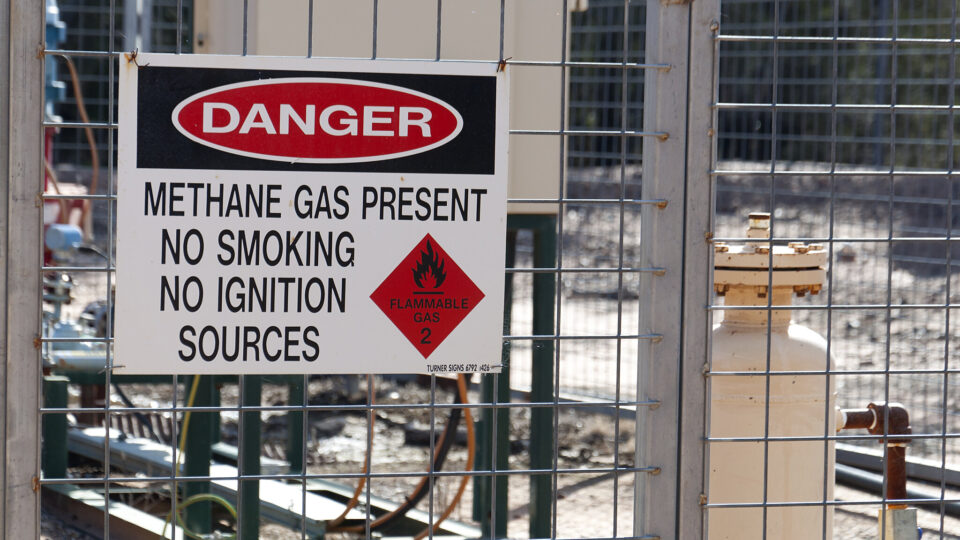
Innovations to detect methane leaks

There is growing concern about the climate effects of methane leaking from oil and gas wells.  The 20-year global warming potential of methane is 84, meaning that over a 20-year period, it traps 84 times more heat per mass unit than carbon dioxide.  Global methane concentrations have increased by nearly a factor of 3 since the industrial revolution.

More than a century of oil and gas drilling has left behind millions of abandoned wells, many of which are leaching pollutants into the air and water.   In the U.S. alone, more than 3.2 million abandoned oil and gas wells emitted 280,000 tons of methane just in 2018.  And the data is incomplete.

Part of the problem is finding out which wells are leaking.  Ground-based sensors or airplanes and drones are effective ways to find leaks but considering how many wells there are to check, the costs are considerable, and the process is time consuming and complicated. 

New technology is coming along that uses satellites to detect methane leaks.  A Canadian company called GHGSat recently used satellites to detect what it has called the smallest methane leak ever seen from space and has begun selling data to emitters interested in pinpointing leaks.

Another company, New York-based Bluefield Technologies, plans a group of satellites for launch in 2023 that promises even finer resolution.  The Environmental Defense Fund, with support from Jeff Bezos’ Earth Fund, plans to launch MethaneSAT in the next couple of years, which is designed to find small sources of methane.

Research at Stanford University determined that just 5% of methane leaks produce around half the total leakage. 

**********

Web Links

New Technology Claims to Pinpoint Even Small Methane Leaks From Space

Photo, posted June 8, 2011, courtesy of Jeremy Buckingham via Flickr.

Earth Wise is a production of WAMC Northeast Public Radio.

A Palm Oil Replacement | Earth Wise

December 15, 2020 By EarthWise Leave a Comment

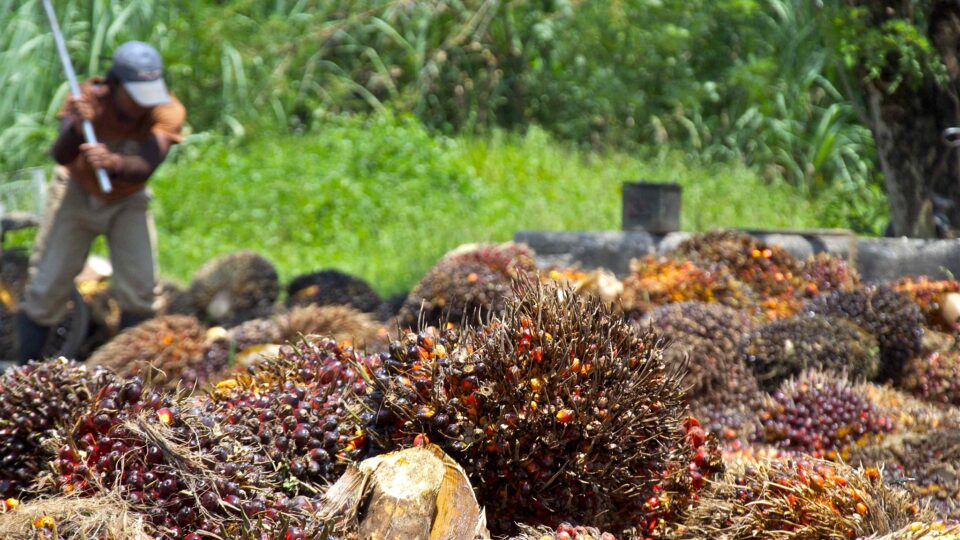
A possible replacement for palm oil

In the 1990s, cardiovascular health issues associated with partially hydrogenated oils containing harmful trans fats became a focus of great concern.  As a result, food companies looked for substitutes and the alternative they identified was palm oil.  Its ability to remain solid at room temperature made it well suited for many food applications.  Unfortunately, that property stems from its high saturated fat content, which means it also increases the risk of coronary heart disease.

The widespread use of palm oil has also caused significant environmental problems.  Palm oil plantations have replaced millions of acres of tropical forests, destroying the habitat for numerous species and threatening biodiversity.

Other potential replacements for partially hydrogenated oils such as coconut oil tend to be more costly, limited in supply, and also high in saturated fats.

Food scientists at the University of Guelph in Ontario, Canada, recently demonstrated the use of enzymatic glycerolysis (EG) to turn liquid vegetable oils into solid fats.  Their process is able to produce solid fats with the textural and structural properties desired by consumers.

The process is fairly simple, relatively easy to scale up, and is amenable to smaller food production or even local production.  Using it would enable food producers to use all sorts of readily available vegetable oils that can be produced in parts of the world that are not necessarily tropical regions.

Palm oil use is not going to go away, but this work may point a way to help slow down the destruction of ecosystems and animal habitats as well lead to more sustainable and healthy food sources.

*********

Web Links

U of G Food Scientists Find Palm Oil Alternative That’s Good for Human, Planet Health

Photo, posted February 21, 2010, courtesy of Craig Morey via Flickr.

Earth Wise is a production of WAMC Northeast Public Radio.

Making Use Of Invasive Seaweed | Earth Wise

June 26, 2020 By EarthWise Leave a Comment

In recent years, millions of tons of brown Sargassum seaweed have formed gigantic blooms stretching all the way across the Atlantic Ocean from West Africa to the Gulf of Mexico.  The seaweed has become a problem for shorelines in the Caribbean, the Gulf of Mexico, and the east coast of Florida.  The massive increase in seaweed populations is related to changes in ocean chemistry resulting from nutrients from fertilizer use entering the water as well as from changes to the climate affecting ocean currents and temperatures.  The seaweed is harming the tourism industry as well as fisheries and ocean ecosystems.

Cleaning up the seaweed that washes ashore is labor-intensive and therefore expensive.  A research team led by two British universities has developed a cheap and simple way to pre-process seaweed to facilitate making it into bulk chemicals and biofuels.  With the new process, cleaning up the seaweed can be both economically and environmentally viable.

Previous techniques for processing seaweed generally required removing it from the saltwater, washing it in fresh water, and drying it – all of which add significant costs.  The new technique makes use of catalysts to release sugars from untreated seaweed that feed a yeast to produce a palm oil substitute.  At the same time, the process creates heat and pressure, turning the residual materials into a bio-oil that can be processed further into fuels, and a high-quality, low-cost fertilizer.

Apart from getting economic value out of the seaweed that is collected, any plastic collected alongside the seaweed can be converted to useful materials as well. 

It appears that the seaweed scourge is here to stay, so finding an economically viable way to deal with it is a welcome development.

**********

Web Links

Solve invasive seaweed problem by turning it into biofuels and fertilisers

Photo, posted August 10, 2015, courtesy of Flickr.

Earth Wise is a production of WAMC Northeast Public Radio.

Safe And Simple Hydrogen Peroxide

November 29, 2019 By EarthWise Leave a Comment

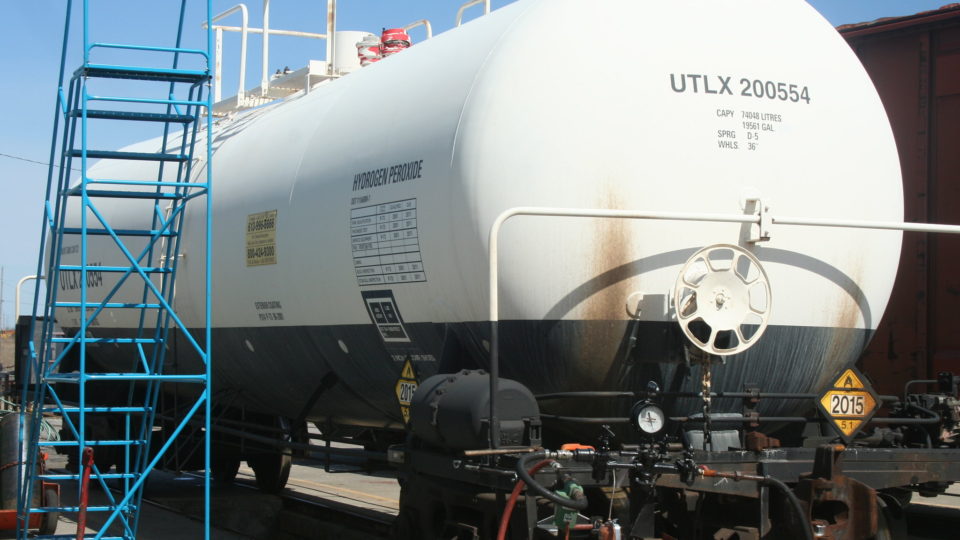
We don’t think about hydrogen peroxide very often.  Perhaps we have a bottle of it under our bathroom sink that we haven’t touched in a few years.   But it is an important product manufactured in the millions of tons each year and the basis of a $6 billion global business.

Hydrogen peroxide is widely used as an antiseptic, a detergent, in cosmetics, as a bleaching agent, in water purification, and in many other applications.  It is produced in industrial concentrations of up to 60% in solution with water in order to maximize the economics of transportation.  This makes transportation hazardous and costly because the concentrated form is unstable.  Most applications use a far more diluted form.

Researchers at Rice University have developed a new method for producing hydrogen peroxide that is much simpler and safer than the current technology, which actually dates back to the 1930s.  The Rice technique requires only air, water and electricity to produce the chemical.  The electrosynthesis process, which is detailed in the journal Science, uses an oxidized carbon nanoparticle-based catalyst.

The process could enable point-of-use production of pure hydrogen peroxide solutions, which would eliminate the need to transport the hazardous concentrated chemical.  The use of a solid electrolyte instead of the traditional liquid electrolyte eliminates the need for product separation or purification that is part of the current technology.

In the future, instead of storing containers of hydrogen peroxide, hospitals that use it as a disinfectant could turn on a spigot and get, for example a 3% solution on demand.  Instead of storing chemicals to disinfect swimming pool water, future homeowners could flick a switch and turn on their peroxide reactor to clean their pools.

**********

Web Links

Water + air + electricity = hydrogen peroxide

Photo, posted April 19, 2009, courtesy of Robert Taylor via Flickr.

Earth Wise is a production of WAMC Northeast Public Radio.

Plant-Based Jet Fuels

May 9, 2019 By EarthWise Leave a Comment

The global aviation industry uses a whole lot of fuel:  more than 5 million barrels a day.  It is an incredibly energy-intensive industry and almost all of its energy comes from petroleum-based fuels.

While other large energy sectors such as electric power, ground transportation and commercial buildings have well-defined pathways to adopting renewable energy sources, the aviation industry does not have such a straightforward way to make a transition to sustainability.  Electrifying planes using batteries or fuel cells is very challenging for a number of reasons, notably the weight restrictions on aircraft.  So liquid biofuels as replacements for petroleum-based fuels remain the most promising approach.

A new study at the Lawrence Berkeley National Laboratory concludes that sustainable plant-based biofuels could provide a competitive alternative to conventional petroleum fuels if current development and scale-up initiatives are successful.

Multidisciplinary teams based at the Department of Energy’s Joint BioEnergy Institute are focused on optimizing each stage of the bio-jet fuel production process.  This includes bioengineering ideal source plants and developing methods for efficiently isolating the carbohydrates in non-food biomass that bacteria can digest and bioconvert into fuel molecules.

The critical issue is cost.  The theoretical cost of bio-jet fuel has come down dramatically in recent years but is still around $16 a gallon.  The cost of standard jet fuel is about $2.50 a gallon.  So, the real challenge is bridging that gap.

Reducing the cost of the fuel could come both from the material and process improvements that are underway as well as by finding ways to turn the leftover lignin residuals from the bioconversion process into valuable chemicals. 

**********

Web Links

Bright Skies for Plant-Based Jet Fuels

Photo, posted March 28, 2009, courtesy of Yasuhiro Chatani via Flickr.

Earth Wise is a production of WAMC Northeast Public Radio.

Deforestation-Free Palm Oil

July 10, 2018 By EarthWise Leave a Comment

https://earthwiseradio.org/wp-content/uploads/2018/07/EW-07-10-18-Deforestation-Free-Palm-Oil.mp3

Few of us cook with palm oil or have ever even seen the stuff.  Nevertheless, 50% of all packaged grocery items – everything from ice cream and pizza to detergents and cosmetics – include it as an ingredient.  The global market for palm oil was $65 billion in 2015, and that number was projected to grow by more than 7% each year through 2021.

[Read more…] about Deforestation-Free Palm Oil

The High Cost Of The Cloud

May 2, 2018 By EarthWise Leave a Comment

https://earthwiseradio.org/wp-content/uploads/2018/05/EW-05-02-18-The-High-Cost-of-the-Cloud.mp3

More and more often we make use of “the cloud” – that mysterious place where we store, move, process and analyze data.  We keep our photos there.  We stream music and videos from there.  We do our work there.  Perhaps we have a mental image of all of this digital information floating above our heads in some ethereal way:  like in a cloud.

[Read more…] about The High Cost Of The Cloud

  • « Go to Previous Page
  • Page 1
  • Page 2

Primary Sidebar

Recent Episodes

  • An uninsurable future
  • Clean energy and jobs
  • Insect declines in remote regions
  • Fossil fuel producing nations ignoring climate goals
  • Trouble for clownfishes

WAMC Northeast Public Radio

WAMC/Northeast Public Radio is a regional public radio network serving parts of seven northeastern states (more...)

Copyright © 2026 ·