
• Skip to primary navigation
  • Skip to main content
  • Skip to primary sidebar

Earth Wise

A look at our changing environment.

  • Home
  • About Earth Wise
  • Where to Listen
  • All Articles
  • Show Search
Hide Search
You are here: Home / Archives for plants

plants

Bananas In Danger

October 8, 2019 By EarthWise Leave a Comment

For a few years we have been talking about the precarious position of the global banana crop, which is almost entirely based upon a single cloned cultivar known as the Cavendish banana.  The banana you buy in Rome is identical to the one in Rochester.  And therein lies the danger:  if a fungal blight can kill one banana shrub, it can kill them all.

For decades, a fungal disease known as Panama Disease Tropical Race 4 has been wreaking havoc on banana plantations in the Eastern Hemisphere.   Even though it was first identified in Taiwanese soil samples in the early 1990s, the destructive fungus remained confined to Southeast Asia and Australia until it was confirmed in both the Middle East and Africa in 2013.  Experts continued to fear its eventual appearance in Latin America, which is the epicenter of the global banana export industry.

In August, Colombian agricultural authorities announced that laboratory tests have positively identified the presence of Tropical Race 4 in the Caribbean coastal region and declared a national state of emergency.

The infection of the banana plant does not produce bananas that are unsafe for humans.  What happens is that the infected plants eventually stop bearing fruit.

Cavendish bananas are a prime example of the dangers of growing crops with limited genetic diversity – known as monoculture.  It leaves food systems dangerously vulnerable to disease epidemics.

This has happened to the global banana crop before when the predecessor to the Cavendish banana – the Gros Michel – was mostly eradicated by another fungal outbreak.  At the moment, there is no ready replacement banana to bail out the industry, but scientists are desperately trying to breed one.  In the meantime, the world’s supply of bananas is in real danger.

**********

Web Links

The banana is one step closer to disappearing

Photo, posted July 9, 2009, courtesy of Dabin Lambert via Flickr.

Earth Wise is a production of WAMC Northeast Public Radio.
Mexico’s Wonder Plant

September 13, 2019 By EarthWise Leave a Comment

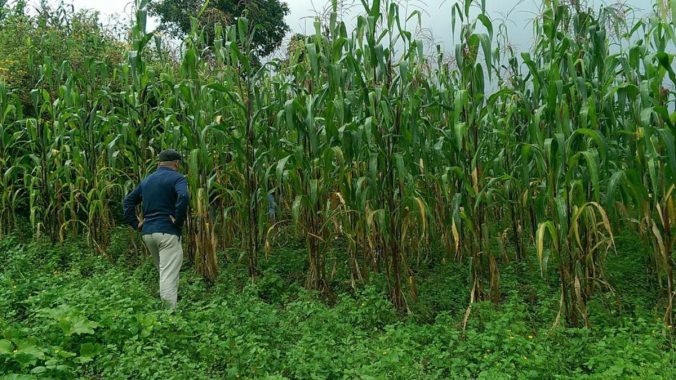
In 1979, an American naturalist named Thomas Hallberg visiting a small town in Oaxaca, Mexico was amazed to find a type of local maize – or corn – that grew nearly 20 feet high in poor-quality soil even though the local farmers did not use any fertilizer.

The unique corn plant had aerial roots that grew a mucous-like gel just before harvest season.  It seemed totally implausible, but the plant seemed to be fixing its own nitrogen:  extracting it from the air and somehow making it useful to the plant.

In 1992, Hallberg returned with a group of Mexican scientists and collected samples to study in his lab.  His research showed that the maize indeed received nitrogen from the air through its aerial roots.  It took over 20 years to figure out what was going on in the plants.  It turns out that bacteria that thrive in the low-oxygen environment of the maize’s mucus pulls nitrogen from the air and feeds it to the plant.

Scientists will probably spend years figuring out if a commercial application of this indigenous maize is viable.  It isn’t guaranteed that the self-fertilizing trait of the plant can be bred into a commercial crop.  But if it can, the payoff would be huge.  Farmers spend more than $3 billion a year on corn fertilizer in the US alone.

A vexing problem is who should reap the financial benefits of the maize.  The isolated village where the plant is grown has already signed an agreement to share in any such benefits.   But there are other Oaxacan villages that also grow the plant. 

Mexico’s wonder plant is likely to be caught up in the growing issue of biopiracy, which is the exploitation of indigenous knowledge and biological resources without permission.

**********

Web Links

Indigenous Maize: Who Owns the Rights to Mexico’s ‘Wonder’ Plant?

Photo credit: ALLEN VAN DEYNZE/UC DAVIS

Earth Wise is a production of WAMC Northeast Public Radio.
Climate Change And Nutrients

August 15, 2019 By EarthWise Leave a Comment

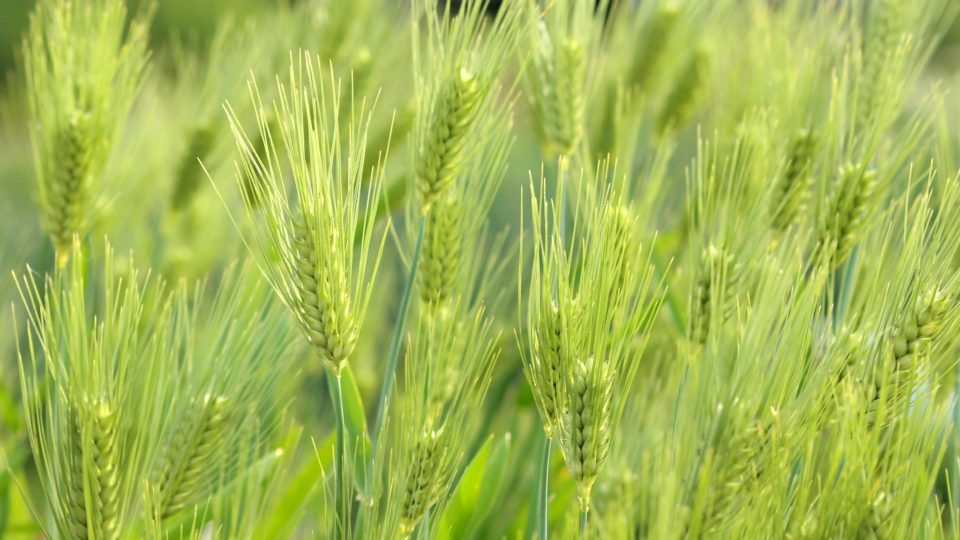
Ending hunger isn’t a question of producing enough food.  Globally, enough food is produced to feed all 7.7 billion people on the planet.  But despite this, approximately 1 in 9 people go hungry.  Conflict, natural disasters, and extreme poverty are some of the main drivers of global hunger. 

Climate change is another.  The more frequent and intense extreme weather events increase food insecurity and malnutrition by destroying land, livestock, crops, and food supplies.  Climate change makes growing crops harder every year, especially for those who lack the tools and technology to adapt. 

But the challenge of reducing hunger and malnutrition is to not only produce foods that provide enough calories, but to also produce foods that make enough necessary nutrients widely available.  According to new research, climate change is projected to significantly reduce the availability of critical nutrients such as protein, iron, and zinc over the next 30 years.  The total impact of climate change could reduce global per capita nutrient availability of protein, iron, and zinc by 19.5%, 14.4%, and 14.6%, respectively.

While higher levels of carbon dioxide can boost growth in plants, wheat, rice, corn, barley, potatoes, soybeans, and vegetables are all projected to suffer nutrient losses of about 3% on average by 2050 due to the elevated CO2 levels.

The study, which was co-authored by an international group of researchers and published in the peer-reviewed journal, Lancet Planetary Health, represents the most comprehensive synthesis of the impacts of climate change on the availability of nutrients in the global food supply to date. 

Climate change is complicating the quest to end global hunger and malnutrition. 

**********

Web Links

Rising CO2, climate change projected to reduce availability of nutrients worldwide

Photo, posted April 30, 2015, courtesy of Flickr.

Earth Wise is a production of WAMC Northeast Public Radio.

Why Choose Chicken Over Beef?

July 22, 2019 By EarthWise Leave a Comment

Food production is a major driver of climate change.  It’s responsible for more than a quarter of all greenhouse gas emissions.  But the environmental impact of different foods varies greatly, and making seemingly insignificant changes can actually have significant impacts. 

According to a first-ever national study of U.S. eating habits and their carbon footprints, choosing chicken over beef will cut your dietary carbon footprint in half.

The National Health and Nutrition Examination Survey asked more than 16,000 participating Americans to name all the foods they consumed in the past 24 hours. The research team then calculated the carbon footprint of what people said they ate.  If a respondent consumed broiled beef steak, for example, researchers calculated what the carbon footprint would have been had broiled chicken been consumed instead.   

The study’s findings illustrate how making one simple substitution can significantly reduce a person’s dietary carbon footprint.  A diet’s carbon footprint is the amount of greenhouse gas emissions that result from the energy, fertilizer, land use, and other inputs necessary to produce food.

In general, animal-based foods have a bigger carbon footprint than plant-based foods.  For example, producing beef uses 20 times the land and emits 20 times the emissions as growing beans (per gram of protein), and requires 10 times more resources than producing chicken. 

According to the World Resources Institute, keeping the increase in global warming below 2°C will be impossible without limiting the global rise in meat consumption. 

Last year, the EAT-Lancet Commission report found that a radical transformation of the global food system was needed because it’s threatening the stability of the climate. 

Make a change – big or small – today. 

**********

Web Links

Choosing chicken over beef cuts our carbon footprints a surprising amount

Photo, posted August 30, 2011, courtesy of Ken Hawkins via Flickr.

Earth Wise is a production of WAMC Northeast Public Radio.
The American Bumblebee

May 29, 2019 By EarthWise Leave a Comment

Pollinators, such as bees and bats, are vital for global food production.  They provide an ecological service that’s necessary for the reproduction of nearly 75% of the world’s flowering plants, including more than two-thirds of the world’s food crops.

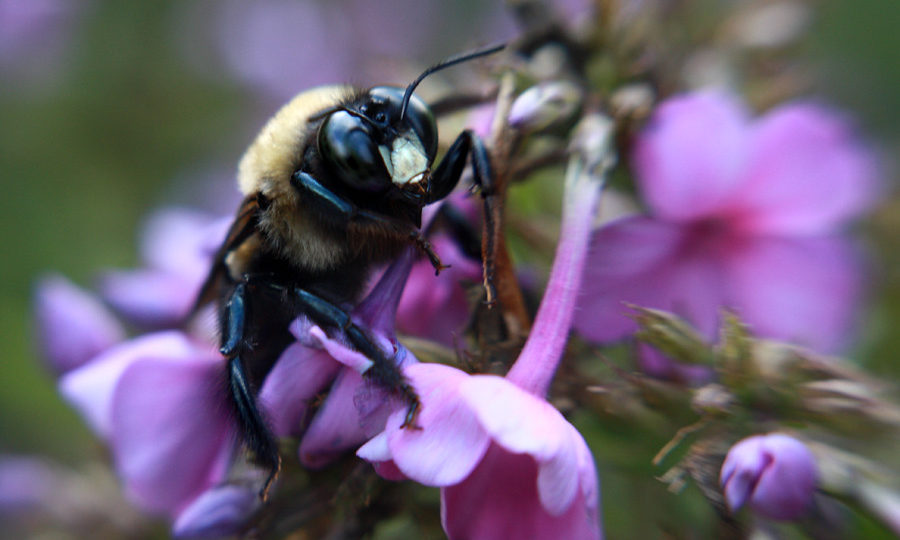
Bumblebees are among the most important plant pollinators.  They pollinate many food crops, including apples, tomatoes, blueberries and legumes, as well as countless types of trees, shrubs, and wildflowers.  But researchers have documented declines in both the abundance and range of many bumblebee species.

The American bumblebee, which is native to North America, is one of them.  The species can currently be found in eastern Canada, throughout much of the Eastern United States, and much of Mexico. 

According to a new study led by York University and recently published in the Journal of Insect Conservation, the American bumblebee is critically endangered, and it faces imminent local extinction from Canada.  This is considered the highest and most at-risk classification before extinction. 

The researchers used data from three sources in their study: the Bumble Bee Watch (which is a citizen science project), the Bumble Bees of North America database (that has records dating back to the late-1800s), and their own field survey work.  They used the IUCN’s Red List assessment criteria to evaluate the status of the American bumblebee within its Canadian range.

The research team found that the species’ area of occurrence has decreased by approximately 70% and its relative abundance dropped by 89% from 2007-2016 when compared to 1907-2006. 

The American bumblebee can still be found throughout its Canadian range.  But immediate conservation action is desperately needed.  

*********

Web Links

Disappearing bumblebee species under threat of extinction

Photo, posted August 22, 2011, courtesy of Rachel Elaine via Flickr.

Earth Wise is a production of WAMC Northeast Public Radio.

Deepwater Impacts Lingering

May 10, 2019 By EarthWise Leave a Comment

On April 20, 2010, an explosion on the BP-owned Deepwater Horizon drilling rig released an estimated 210 million of gallons of oil into the Gulf of Mexico.  Some of the oil was recovered, burned, or dispersed at sea, while some washed up onto coastal shorelines. 

Now, more than nine years later, a long-term study suggests the oil is still affecting the salt marshes of the Gulf Coast.  A multi-institutional research team began sampling in the region once the spill was contained and continue their work to this day.

The researchers found that heavily-oiled marsh areas remained less healthy than less polluted sites more than six years after the spill.  They fear that complete recovery of these oil-soaked regions will likely take more than a decade. 

But the researchers also discovered that salt marsh grasses play a key role in coastal wetland recovery.  Two plants dominate healthy salt marshes in the Gulf: smooth cordgrass and black needlerush.  Single-celled, plant-like organisms known as benthic microalgae also abound in healthy salt marshes, as do many small invertebrates. 

In heavily-oiled areas, the researchers found that nearly all the plants died, and benthic microalgae and small invertebrate populations declined significantly.  Importantly, however, they also found that it was only after smooth cordgrass started its comeback in these areas that invertebrate populations began to recover.  They noted that these salt marsh grasses provide habitat, bind soil, slow water, facilitate colonization, and fuel the food web. 

Plants are the foundation of and play a crucial role in salt marshes.  The researchers hope these findings will help shape the mitigation strategies of any future oil spills. 

**********

Web Links

Continuing impacts of Deepwater Horizon oil spill

Photo, posted April 21, 2010, courtesy of Deepwater Horizon Response via Flickr.

Earth Wise is a production of WAMC Northeast Public Radio.
Earth Day

April 22, 2019 By EarthWise Leave a Comment

Today is Earth Day.  On April 22, 1970, millions of Americas took to the streets in peaceful demonstrations in favor of environmental reform.  Since that first time, Earth Day has now become a global event each year.  Estimates are that as many as a billion people in 192 countries take part in Earth Day events.

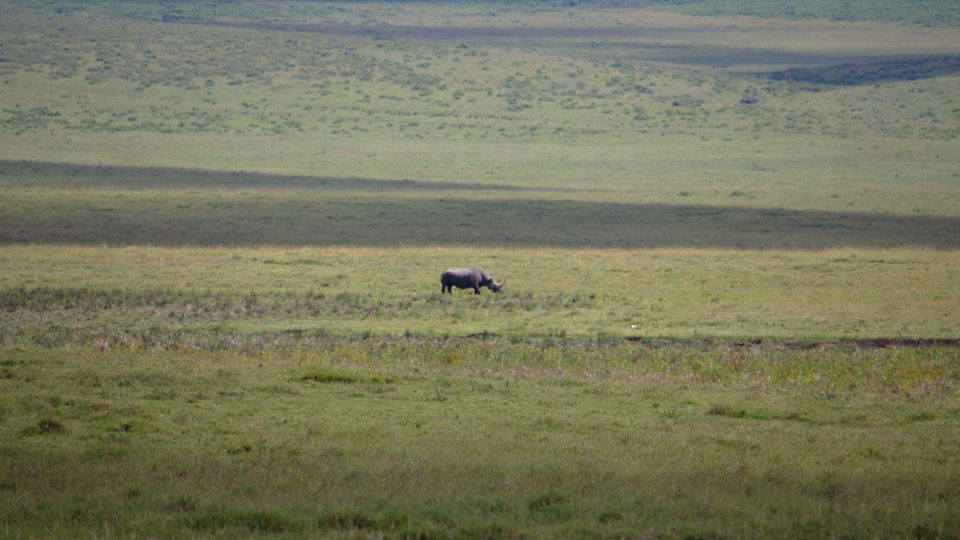
This year, the theme for Earth Day is “Protect our Species.”  The focus is on the fact that the world is facing the greatest rate of extinction since the demise of the dinosaurs more than 60 million years ago.

But unlike the extinctions from that time that were linked to so-called acts of god like asteroid collisions, the rapid extinction of species in our world today is mostly the result of human activity.

The global destruction and rapid reduction of plant and wildlife populations are directly linked to climate change, deforestation, habitat loss, trafficking and poaching, unsustainable agriculture, pollution, and pesticides.

In order to stem the tide of destruction, the Earth Day Network is asking people to help raise awareness about the accelerating rate of extinction of millions of species and the causes and consequences of this phenomenon.  We need to push for the creation of policies that protect broad groups of species as well as individual species and their habitats.  There needs to be a global movement that embraces nature and its values. And we need to eat less meat and curtail the use of pesticides and herbicides.

We share the planet with many species, and we need them to be here in order to sustain our own species.  Something to remember on Earth Day 2019.

**********

Web Links

Earth Day Network

Photo, posted January 24, 2012, courtesy of Jonas Bengtsson via Flickr.

Earth Wise is a production of WAMC Northeast Public Radio.

Rigs To Reefs

March 29, 2019 By EarthWise Leave a Comment

There are about 6,000 offshore oil platforms in the world’s oceans.  They have an immense presence physically, financially and environmentally.  As these massive structures extract hydrocarbons from deep beneath the sea, they also undergo a remarkable transformation under the water.  The enormous substructures that support the platforms become vertical reefs, home to millions of individual plants and animals.

Over time, many oil platforms are decommissioned, and their owners are faced with the choice of either removing them entirely or transitioning them into permanent reefs.   Traditional practice was to restore the site to its original condition, but more recently the idea of “reefing” old platforms has gained popularity.  As of 2016, more than 11% of decommissioned platforms in the U.S. portion of the Gulf of Mexico have become permanent reefs.

Decommissioning and completely removing a platform is a daunting and pricey proposition.  The most recent estimate for removing all platforms off the coast of California alone totals $8 billion.  Modifying the platforms to serve as permanent reefs cuts these costs significantly, especially those associated with hauling, cleaning and disposing of the underwater support structure, which will have thousands of tons of sea-life clinging to it by the time it is removed.

Converting the structure into a permanent reef means making it free of any hydrocarbons or other hazardous materials. But this is still a far cheaper venture than total removal.  Studies of oil rigs as underwater habitats have shown them to be some of the most productive in the world.  They are 3-dimensional reefs whose open construction allows currents to pass through bringing lots of nutrients.

Over time, more and more oil platforms will be decommissioned. Many may end up remaining as permanent homes for undersea life.

**********

Web Links

Rigs to Reefs

Photo, posted August 21, 2011, courtesy of Marianne Muegenburg via Flickr

Earth Wise is a production of WAMC Northeast Public Radio.

Thoreau And Climate Change

March 27, 2019 By EarthWise Leave a Comment

Henry David Thoreau was a 19th-century American naturalist, philosopher, poet, essayist, and social reformer.  He is best known for “Civil Disobedience,” an essay advocating for the rebellion against an unjust government, and for “Walden,” a book about his experiences living simply in nature.  Now, Thoreau’s observations from “Walden” are the foundation of a new study exploring the effects of climate change on tree leaf-out and the emergence of spring wildflowers. 

This research, which was recently published in the journal Ecology Letters, relies on Thoreau’s scientific observations gathered during the 1850s when he spent 26 months living in isolation at Walden Pond in Concord, Massachusetts.  These observations from Thoreau were combined with current research to measure tree and wildflower leaf-out dates for 37 different years between 1852 and 2018.  “Leaf out” refers to the time in spring when plants and trees begin producing leaves.  An alteration in this timing can have a domino effect throughout an ecosystem.

Over the past century, temperatures in Concord, Massachusetts have warmed five degrees Fahrenheit.  As a result, leaf-out dates have changed significantly.  According to researchers, wildflowers are leafing out about one week earlier, while trees are leafing out about two weeks earlier than they did 160 years ago. 

Ground-dwelling plants like wildflowers have a narrow window to accomplish growth, photosynthesis, and reproduction, before the canopy trees leaf out and block the sunlight.  Temperature-driven shifts in the timing of tree leaf-out between Thoreau’s time and now are likely already hindering wildflower abundance and flowering. 

As the climate continues to warm, the already small window of time between wildflower emergence and tree leaf-out will likely shorten further. 

**********

Web Links

Using Thoreau, scientists measure the impact of climate change on wildflowers

Photo, posted August 13, 2008, courtesy of Adam Pieniazek via Flickr.

Earth Wise is a production of WAMC Northeast Public Radio.

Shrinking Arctic Glaciers

March 18, 2019 By EarthWise Leave a Comment

The glaciers on Baffin Island, located in Canada’s northeastern Arctic, have been shrinking as the climate warms.  The melting, receding glaciers have exposed fragments of ancient plants that had frozen in the places where they once grew.  New research has shown that these spots have not seen the light of day for at least 40,000 years.

The entire planet has been warming since humanity started flooding the atmosphere with greenhouse gases at the start of the Industrial Revolution, but the effects are not uniform across the globe.  Some regions – like the Arctic – are seeing temperature rises that are greater and faster than anywhere else in the world.  As a result, glaciers in the Arctic have been melting away at rates never before observed in modern human history.

Researchers at the University of Colorado performed radiocarbon dating experiments in order to find out when the last time was that the Arctic was as warm as today.   There have been natural variations in Arctic temperatures caused by the complicated way the Earth wobbles on its axis.  For example, 10,000 years ago the northern latitudes pointed at the sun more directly during the summer than they do now, providing about 9% more sunshine during the summer.

The results of the study showed that the newly-uncovered plants had died at least 40,000 years earlier, indicating that the glaciers had not melted back to today’s size for at least that long.  Global measurements indicate that the planet as a whole has not been as warm as it is today for about 115,000 years, back then again a result of the orientation of the Earth.

Well, the Earth hasn’t wobbled recently.  The Arctic is melting because we are dumping massive amounts of greenhouse gases into the atmosphere.

**********

Web Links

These Arctic glaciers are smaller than ever before in human history

Photo, posted September 1, 2010, courtesy of Doryce S. via Flickr.

Earth Wise is a production of WAMC Northeast Public Radio.
Renewables Taking Over In Britain

March 14, 2019 By EarthWise Leave a Comment

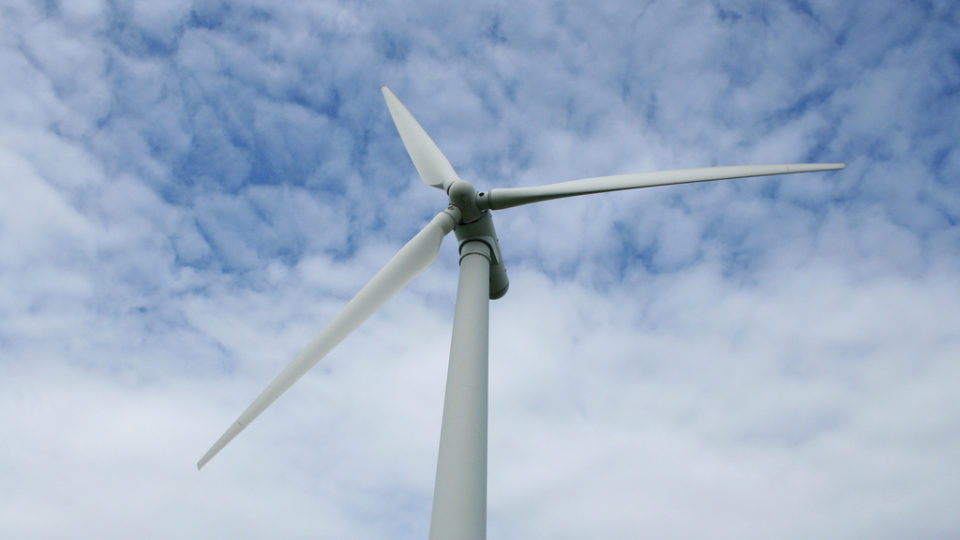
A year-and-a-half ago, we reported on the steep decline in the use of coal in Britain, including the conversion of the giant Drax Power Station from burning coal to running on wood chips.  Since then, Britain has been steadily moving away from fossil fuels and towards renewable energy sources.  The transformation is being driven by a surge in offshore wind farms currently under construction or about to begin operating.  Britain is in the process of adding over 6 GW of offshore wind to its current total of 8 GW.  Renewables generated one-third of the UK’s electricity last year, and half of that came from wind power. 

In 2018, coal- and gas-fired power stations generated about 131 terawatt-hours of electricity in Britain.  Renewable energy plants – including wind, solar, biomass, and hydropower – produced about 96 terawatt-hours.  Based on the new projects coming online, renewable sources could generate 121 TWh by 2020 and fossil fuel plants are likely to fall to 105.6 TWh as more coal plants are retired.  Thus, within the next year or so, renewables in Britain are likely to surpass fossil fuels in electricity generation.

The transformation in Britain has been rapid and dramatic.  In 1974, the country generated 80% of its electricity using coal.  By 2016, that number had dropped to 9%.  Last April, the British power grid went three days in a row without burning any coal.  The UK is expected to shut down its remaining coal plants by 2025, if not sooner. 

At the same time, Britain’s renewable energy capacity has more than quadrupled since 2010, jumping from 21 TWh that year to 96 TWh last year.  Britain’s energy mix is changing fast and getting significantly cleaner every year.

**********

Web Links

Renewables Could Surpass Fossil Fuels in Britain by 2020

Photo, posted August 2, 2008, courtesy of Richard Allaway via Flickr.

Earth Wise is a production of WAMC Northeast Public Radio.
Forecasting A Bad Year For Carbon

March 11, 2019 By EarthWise Leave a Comment

Carbon dioxide levels in the atmosphere are higher than they have been for hundreds of thousands of years, and they continue to grow.  The United Kingdom’s national meteorological service – known as the Met Office – issues annual predictions of global CO2 levels based in part on readings taken at the Mauna Loa observatory in Hawaii.  Their forecast for this year is that there will be one of the largest rises in atmospheric carbon-dioxide concentration in the 62 years of measurements at Mauna Loa.

Since 1958, there has been a 30% increase in the concentration of carbon dioxide in the atmosphere.  This has been caused by emissions from fossil fuels, deforestation and cement production.  The increase would actually have been even larger if it were not for natural carbon sinks in the form of various ecosystems that soak up some of the excess CO2.

Weather patterns linked to year-by-year swings in Pacific Ocean temperatures are known to affect the uptake of carbon dioxide by land ecosystems.  In years with a warmer tropical Pacific – such as El Niño years – many regions become warmer and drier, which limits the ability of plants to grow and to absorb CO2 .  The opposite happens when the Pacific is cool, as was the case last year.

The Met Office predicts that the contribution of natural carbon sinks will be relatively weak, so the impact of human-caused emissions will be larger than last year.  The predicted rise in atmospheric CO2 is 2.75 parts-per-million, which is among the highest rises on record.  The forecast for the average carbon dioxide concentration is 411 ppm, with peak monthly averages reaching almost 415 ppm.  With global emissions not really declining, the numbers just get higher and higher.

**********

Web Links

Faster CO₂ rise expected in 2019

Photo, posted March 18, 2006, courtesy of Darin Marshall via Flickr.

Earth Wise is a production of WAMC Northeast Public Radio.

Hydrogen From Water And Sun

March 7, 2019 By EarthWise 1 Comment

There are research efforts around the world seeking ways to produce hydrogen starting from water and using clean energy.  Finding an economical and scalable way to do this is a key to the so-called hydrogen economy.

A recent study at Argonne National Laboratory makes use of a chemical reaction pathway central to plant biology to create a process that converts water into hydrogen using energy from the sun.

The process combines two membrane-bound protein complexes to perform the conversion of water molecules into hydrogen and oxygen.

The first protein complex, which the researchers call Photosystem I, is a membrane protein that uses energy from light to feed electrons to an inorganic catalyst that makes hydrogen.  But this represents only half of the overall process.

A second protein complex that they call Photosystem II uses energy from light to split water and take electrons from it.  The electrons are then fed to Photosystem I.

The two protein complexes are embedded in thylakoid membranes, which are like those found inside the oxygen-creating chloroplasts in plants.  This membrane is an essential part of pairing the two photosystems.  It supports both of the photosystems and provides a pathway for transferring electrons between the proteins.

The researchers also make use of a synthetic catalyst made from nickel or cobalt that replaces expensive platinum catalysts used in conventional water-splitting schemes.  Combining the light-triggered transport of electrons with the synthetic catalyst results in what the researchers call the “Z-scheme”, an adaptation of photosynthesis to produce hydrogen.

The next step is to incorporate the scheme into a living system which the researchers hope will lead to a practical system for hydrogen production.

**********

Web Links

Discovery adapts natural membrane to make hydrogen fuel from water

Photo, posted December 25, 2017, courtesy of Flickr.

Earth Wise is a production of WAMC Northeast Public Radio.
Hacking Photosynthesis

February 25, 2019 By EarthWise Leave a Comment

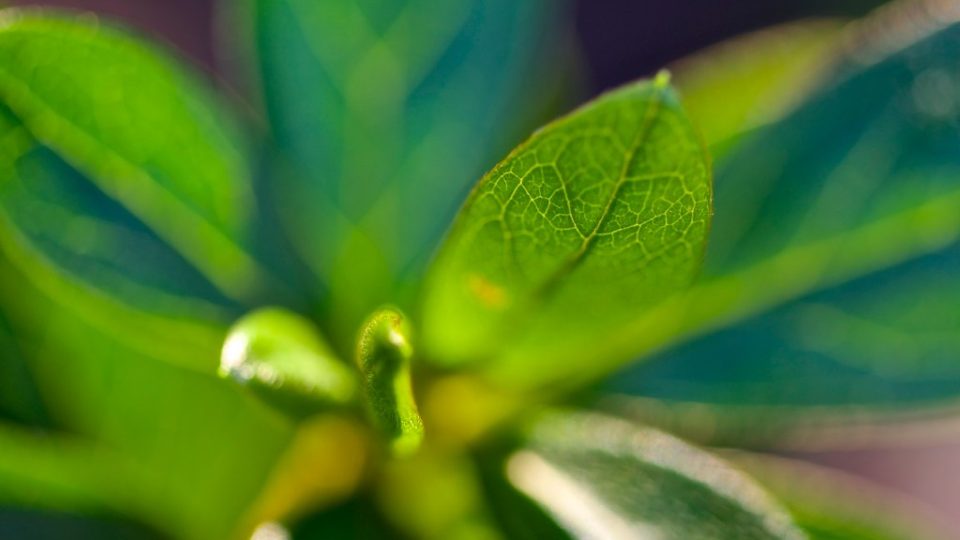
There is an enzyme known as RuBisCo that is involved in carbon fixation, the process plants use to convert carbon dioxide into sugar molecules.  The RuBisCo molecule is inside the leaves of most plants and is probably the most abundant protein in the world.

RuBisCo picks up carbon dioxide from the air and uses energy from the sun to turn the carbon into sugar molecules.  This process of photosynthesis is pretty much the foundation of life on Earth.

Wonderful as it is, the process is not perfect.  RuBisCo is not very selective in grabbing molecules from the air.  It picks up oxygen as well as CO2 and it produces a toxic compound when it does that.

Plants operate a whole other complicated chemical process to deal with this toxic byproduct and uses up a lot of energy along the way, leaving less energy for making leaves or food that we can eat.

A research program at the University of Illinois called Realizing Increased Photosynthetic Efficiency (or RIPE) has been trying to correct this problem; they have been trying to hack photosynthesis.  And they may well have succeeded.

Using genetic modification on tobacco plants, they have shut down the existing detoxification process and set up a much more efficient new one.  The result is super plants that grow faster and up to 40% bigger.

The next step is to get it to work on plants that people actually rely upon for food, like tomatoes, soybeans and black-eyed peas (which are a staple food crop in sub-Saharan Africa where food is scarce.)

It will be years before we know if the process can really produce more food and be safe, but it may end up leading to a major increase in crop productivity.

**********

Web Links

Scientists Have ‘Hacked Photosynthesis’ In Search Of More Productive Crops

Photo, posted June 10, 2013, courtesy of Boon Hong Seto via Flickr.

Earth Wise is a production of WAMC Northeast Public Radio.

Liquid Fuel From The Sun

February 21, 2019 By EarthWise Leave a Comment

Most forms of energy we use ultimately come from the sun in one way or another.  Even fossil fuels are the end product of millions of years of plant life that captured solar energy.  The advantage fossil fuels have over direct solar power is that they are, in fact, fuels and therefore can be stored for use when needed.

Scientists in Sweden have now developed a specialized fluid that absorbs some of the sun’s energy, holds it for months or even years, and then releases it when needed.  This solar thermal fuel is like a rechargeable battery for heat rather than electricity.

The special fluid is pumped through transparent tubes where ultraviolet light from the sun excites its molecules into an energized state.  A compound called norbornadiene is converted into quadricyclane. The quadricyclane is a quite stable substance until it is passed over a cobalt-based catalyst, which causes it to turn back into norbornadiene and release copious amounts of heat.

Such a solar thermal fuel could be stored in uninsulated tanks in homes or factories or piped or trucked to where it was needed.  It could then be used for water heaters, dishwashers, or clothes driers.  The room temperature fluid quickly warms to about 183 degrees when passed over the catalyst, plenty warm enough for heating a home or office.  Both the fuel and the catalyst are damaged very little by the reactions, so the process can be recycled many times.

There is much development work needed to optimize shelf life, energy density, good recyclability and other properties before this technology can be commercialized but there are at least 15 groups around the world now studying this intriguing way to get liquid fuel from the sun.

**********

Web Links

Scientists transform sunlight into a liquid fuel that can be stored for 18 years

Photo, posted August 17, 2009, courtesy of Hiromichi Torihara via Flickr.

Earth Wise is a production of WAMC Northeast Public Radio.

Wildlife And The Border Wall

February 14, 2019 By EarthWise Leave a Comment

The border between the United States and Mexico is nearly 2,000 miles long, stretching from San Ysidro, California to Brownsville, Texas.  Discontinuous barriers currently cover approximately 650 miles of our southern border. As the particulars of how to better secure the remaining 1,350 miles of border are worked out, one thing is abundantly clear: extending physical barriers would negatively impact wildlife and the environment.

The Trump Administration has called for a 1,000-mile wall, which would cut across land that includes important habitats for wildlife.  According to an article signed by nearly 3,000 scientists, this plan would “threaten some of the continent’s most biologically diverse regions” by inhibiting species movement and triggering flooding. The paper, which was published in the journal Bioscience, highlights how more than 1,500 native animal and plant species would be affected by the wall, including 62 that are listed as endangered or vulnerable.

An extended border wall would not only impede movement of many wildlife species but it would also put pressure on creatures already in peril, such as the Mexican gray wolf and the Sonoran pronghorn.  Other at risk animals include the ocelot, black bear, and desert bighorn sheep. 

According to researchers, extending the border wall could cause problems for low-flying birds and insects. Even plants, including the endangered wildflower Zapata bladderpod and the threatened whiskerbush cactus, are particularly at risk.

According to a 2011 study, bird-watching and other forms of ecotourism in the Lower Rio Grande Valley brought in more than $344 million in economic activity and approximately 4,400 jobs. 

Preserving our natural heritage must be part of this national security discussion. 

**********

Web Links

Nature Divided, Scientists United: US–Mexico Border Wall Threatens Biodiversity and Binational Conservation

Photo, posted December 14, 2014, courtesy of Tony Webster via Flickr.

Earth Wise is a production of WAMC Northeast Public Radio.

Collecting Clean Water From The Air

February 6, 2019 By EarthWise Leave a Comment

Clean water is an essential requirement for human life and there are many places where it is a scarce commodity.   In the world’s deserts, getting water to people requires feats of engineering and irrigation that can be cumbersome and expensive.

Researchers at Ohio State University have produced a couple of new studies that explore options for gathering water from fog and condensation that are based on principles of biomimicry:  copying strategies already in use by plants and animals.

The researchers looked at how cactus, beetles and desert grasses all collect water condensed from nighttime fog, gathering droplets from the air and filtering them to roots or reservoirs.

The cactus they studied collects water on its barbed tips before guiding droplets down conical spines to the base of the plant. They learned that conical shapes gather more water than do cylindrical shapes.  This is because of a physics phenomenon called the Laplace pressure gradient.

The beetles they studied collect drops of water on waxy, water-repellent bumps on their backs.  The water then slides towards the beetle’s mouth on the flat surface between the bumps.  Based on this, the researchers experimented with structures that include multiple hydrophilic cones with spaces in between where water droplets can coalesce.

From grasses, they learned that grooved surfaces move water more quickly than ungrooved surfaces – in fact, about twice as much.

The work so far has been on a laboratory-level, but the researchers envision scaling up to structures in the desert that can gather water from fog or condensation and supplement public systems or wells either on a house-by-house basis or on a community-wide basis.  Copying cacti, beetles and grasses could supply clean water to people in the desert.

**********

Web Links

Collecting clean water from air, inspired by desert life

Photo, posted February 7, 2010, courtesy of Remko van Dokkum via Flickr.

Earth Wise is a production of WAMC Northeast Public Radio.

Sustainable Plastics

January 28, 2019 By EarthWise Leave a Comment

According to the United Nations, plastic accounts for up to 90% of all the pollutants in the ocean. Conventional plastics take hundreds of years to decay, so all the plastic that gets into the oceans piles up and endangers marine life and pollutes the environment. Unfortunately, there are few comparable, environmentally friendly alternatives.  

An often-proposed solution is bioplastics, which are not made from petroleum and degrade quickly.  The downside of bioplastics is that growing the plants or bacteria used to make the plastic requires fertile soil and fresh water, which are scarce commodities in many places.

One such place is Israel.  So, researchers there at Tel Aviv University have developed a process to make a bioplastic polymer that doesn’t require land or fresh water.  The new polymer is derived from microorganisms that feed on seaweed.  It is biodegradable, produces zero toxic waste and recycles into organic waste.

The polymer is called polyhydroxyalkanoate, or PHA for short.  The raw material is multicellular seaweed, cultivated in the ocean.  These algae are eaten by single-celled microorganisms, which also grow in salty seawater and produce a polymer that can be used to make bioplastic.  PHA is already produced in commercial quantities, but it is currently made from plants that require agricultural land and fresh water.  The new process would enable countries with limited fresh water, such as Israel, China and India, to switch from petroleum-based plastics to biodegradable plastics.

Plastics from fossil sources are one of the world’s biggest pollution problems.  The new study shows that it is possible to produce bioplastic completely based on marine resources in an environmentally-friendly process. 

**********

Web Links

Sustainable ‘plastics’ are on the horizon

Photo, posted March 14, 2015, courtesy of Flickr.

Earth Wise is a production of WAMC Northeast Public Radio.

Wildfire Pollution

January 24, 2019 By EarthWise Leave a Comment

California’s record-breaking wildfires this past season have been an unmitigated disaster with respect to loss of life, property, impact on human health, and in multiple other ways.  And as if all of that was not bad enough, the impact on carbon emissions into the atmosphere was equally catastrophic.  The wildfires were deadly and cost billions of dollars but were also terrible for the environment and for the public’s health.

According to estimates from the U.S. Department of the Interior, the California wildfires released emissions equivalent to about 68 million tons of carbon dioxide into the atmosphere.  That is equal to the emissions from generating one year’s worth of electricity in the state, or about 15% of the total annual emissions in the state of California.

It is a vicious circle in which the changes to the climate that have lengthened the fire season and shortened the precipitation season are creating additional contributions to the warming of the climate.

Over the past century, California has warmed by about 3 degrees Fahrenheit.  That extra-warmed air sucks water out of plants and soils, resulting in trees, shrubs, and rolling grasslands that are dry and primed to burn. That vegetation-drying effect compounds with every additional degree of warming.  Plants lose their water more efficiently as temperatures get higher.

The result is that wildfires are increasing in size both in California and across the western United States. Fire experts at Columbia University estimate that since the 1980s, the warming climate has contributed to an extra 10 million acres of burning in western forests – an area about the size of Massachusetts and Connecticut combined.

It’s a bad situation that is getting worse.

**********

Web Links

California’s 2018 Wildfires Have Emitted A Year’s Worth of Power Pollution

Photo, posted October 11, 2017, courtesy of Bob Dass via Flickr. 

Earth Wise is a production of WAMC Northeast Public Radio.

Speed Breeding Of Crops

January 4, 2019 By EarthWise Leave a Comment

A technique pioneered by NASA for the purpose of growing plants extra-terrestrially is now being applied here on earth to fast-track improvements in a range of crops.  The technique, known as speed breeding, has been adapted for use by British and Australian researchers on a scale ranging from vast greenhouses to desktop growth chambers.

Speed breeding uses enhanced LED lighting and day-long regimes of up to 22 hours to optimize photosynthesis and promote rapid growth of crops.  By speeding up the breeding cycle of plants,it is possible, for example, to grow six generations of wheat in a year compared with two generations using traditional breeding methods.

With shortened breeding cycles, genetic improvements such as yield gain, disease resistance and climate resistance can be fast-tracked in crops such as wheat, barley, chickpeas, various Brassica species, oil seed rape and peas.

The ability to do this in compact desktop chambers permits cutting-edge research to be performed inexpensively before being scaled up to large greenhouses.

Crop development is an increasingly important activity and speed breeding is increasingly attractive in light of the opposition in some quarters to modern gene-editing techniques to create GMO crops.  Speed breeding allows crop improvements via anon-GMO route.

The new technique is already being applied in Australia, which is experiencing one of the worst droughts on record.  It is being used to rapidly cycle genetic improvements to make crops more drought resilient.

Generation time in most plant species is a major bottleneck in applied research programs and breeding.  Speed breeding can greatly reduce this bottleneck, allowing scientists to respond more quickly to emerging diseases, the changing climate and increased demand for specific plant traits.

**********

Web Links

JIC joins European scientists to safeguard precision breeding

Photo, posted May 8, 2016, courtesy of Yair Aronshtam via Flickr. 

Earth Wise is a production of WAMC Northeast Public Radio.

  • « Go to Previous Page
  • Page 1
  • Interim pages omitted …
  • Page 8
  • Page 9
  • Page 10
  • Page 11
  • Page 12
  • Page 13
  • Go to Next Page »

Primary Sidebar

Recent Episodes

  • An uninsurable future
  • Clean energy and jobs
  • Insect declines in remote regions
  • Fossil fuel producing nations ignoring climate goals
  • Trouble for clownfishes

WAMC Northeast Public Radio

WAMC/Northeast Public Radio is a regional public radio network serving parts of seven northeastern states (more...)

Copyright © 2026 ·