
• Skip to primary navigation
  • Skip to main content
  • Skip to primary sidebar

Earth Wise

A look at our changing environment.

  • Home
  • About Earth Wise
  • Where to Listen
  • All Articles
  • Show Search
Hide Search
You are here: Home / Archives for emissions

emissions

Green Steel | Earth Wise

October 5, 2022 By EarthWise Leave a Comment

Construction using Green Steel

The Inflation Reduction Act provides $369 billion in investments to ramp up renewable energy generation and manufacturing of solar panels, wind turbines, energy storage, and electric vehicles. 

Every megawatt of solar power deployed requires 35 to 45 tons of steel.  Every megawatt of wind power uses 120 to 180 tons of steel.   Estimates are that it will take 1.7 billion tons of steel just to build all the wind turbines needed to reach net zero emissions by 2050.

This is a big problem because steel production accounts for roughly 10% of global carbon emissions and is one of the most carbon-intensive industries in the world.

Making steel is a complex and age-old process that hasn’t changed much over time.  Green steel is steel made with little or no carbon emissions.  There are a few ways to do it.  One is called the direct reduced iron method that uses green hydrogen instead of fossil fuel gas to produce iron and then a renewable-powered electric arc furnace to make the steel. 

Molten Oxide Electrolysis is an alternative green steel approach that doesn’t depend on having a green hydrogen infrastructure.  It uses electrolysis, powered by renewable energy, to separate the bonds of iron ore and produce liquid metal while releasing only oxygen in the process.

Green steel solutions rely on the availability of renewable energy, but the ultimate success of renewable energy will depend on the success of green steel.  The U.S. steel industry will leverage about $6 billion under the Inflation Reduction Act to make progress on it.

**********

Web Links

Building tomorrow’s clean energy systems on green steel

Photo, posted October 30, 2008, courtesy of Paul Bica via Flickr.

Earth Wise is a production of WAMC Northeast Public Radio

Timber Cities | Earth Wise

October 3, 2022 By EarthWise 2 Comments

More than half of the world’s population lives in cities and by 2100, this percentage is predicted to be much higher.  This means that more homes will be built with steel and concrete, which both have very large carbon footprints.  According to a study by the Potsdam Institute in Germany, housing a growing population in homes made of wood instead could avoid more than 100 billion tons of carbon dioxide emissions over the remainder of the century.  This is about 10% of the remaining global carbon budget for staying below the 2-degree Celsius climate target.

The study presents the alternative of housing new urban populations in mid-rise buildings – no more than 4-12 stories high – that are substantially made of wood.  Wood is a renewable resource that carries the lowest carbon footprint of any comparable building material.  Trees take up CO2 from the atmosphere to grow.  Producing engineered wood releases far less CO2 than production of concrete and steel and the finished product continues to store carbon.

The study shows that sufficient wood for new mid-rise urban buildings can be produced without a major impact on food production.  The wood would come from timber plantations as well as natural forests.  The study also looked at biodiversity impacts and ways that ecosystems could be protected while still providing the necessary timber.

Overall, the Potsdam study demonstrates that urban homes made out of wood could play a vital role in climate change mitigation based on their long-term carbon storage potential coupled with the reduced utilization of the carbon-intensive concrete and steel industries.

**********

Web Links

Living in timber cities could avoid emissions – without using farmland for wood production

Photo, posted May 24, 2005, courtesy of Stig Anderson via Flickr.

Earth Wise is a production of WAMC Northeast Public Radio

Low Fares Clean German Air | Earth Wise

September 29, 2022 By EarthWise Leave a Comment

Low fare for public transportation help clean the air in Germany

Germany’s parliament set summer public transport fares at 9 euros a month as a way to slash pollution and reduce imports of Russian oil.   The low price included all buses, trams, subways, and regional trains, effectively lowering prices by more than 90% in some cities.  Berliners saved 98 euros on their monthly travel pass; commuters in Hamburg saved even more.

The program began June 1 and ended August 31.  The bargain rates drove widespread use of public transport and discouraged the use of cars, which already was undesirable due to high gasoline prices.   Over the three-month period, transit authorities sold over 50 million subsidized tickets.  One out of five travelers were using public transport for the first time, according to surveys.

According to an estimate from the Association of German Transport Companies, the program helped to avoid 1.8 million tons of carbon dioxide emissions.  This is roughly equivalent to taking 1.5 million cars off the road for the summer or planting 30 million trees.

The discount transit program had a clearly positive effect on the climate and, obviously, was a source of financial relief for German citizens.  Last year, Germany was the largest buyer of Russian oil in Europe and it wanted to make drastic reductions in its purchases.  The success of the program prompted many to ask for it to be continued.  However, the program cost the government about 2.5 billion euros in reimbursements to transit companies.  The German government has said it would not be extended.

Nonetheless, German policymakers are weighing other proposals for low-cost public transit.  Clearly encouraging people to use public transit pays dividends.

**********

Web Links

Germany’s Cheap Summer Train Fares Prevented 1.8 Million Tons of Carbon Pollution

Photo, posted June 6, 2022, courtesy of 7C0 via Flickr.

Earth Wise is a production of WAMC Northeast Public Radio

Carbon Storage In Harvested Wood | Earth Wise

September 26, 2022 By EarthWise Leave a Comment

Carbon storage in harvested wood

Trees are an exceedingly important carbon sink on our planet.  For this reason, deforestation is a major contributor to climate change.  But when trees are harvested for wood products like lumber, much of the carbon in that wood continues to be stored.  Even when a wood product is discarded at the end of its useful life, it can keep storing carbon.

Over 90% of new single-family homes in the U.S. are built with wood.  Each year, about 400,000 homes, apartment buildings, and other housing units are lost to floods and other natural disasters.  Others fall apart from decay or are torn down to be replaced with newer structures.  Given how much carbon is stored in houses, it is important to understand what the future trajectory of residential structures will be.

A new study by the USDA Forest Service published in the journal PLOS ONE looks at the future of harvested wood products in residential structures.  According to the study, wood products in these structures will continue to increase the country’s carbon storage for the next 50 years. 

Even after residential structures reach the end of their useful life and much of the materials end up in landfills (which is typical in this country), the wood products do not immediately release their carbon.  It may take decades for that to happen.

The study looked at various scenarios for future home construction.  Although housing starts are projected to decline in the future, residential housing and the need to maintain existing structures are projected to continue to increase carbon storage in wood products for the next several decades.

The role of trees as a carbon sink does not end when they are harvested for their wood.

**********

Web Links

Carbon Storage in Harvested Wood Products

Photo, posted January 27, 2022, courtesy of Luke McKernan via Flickr.

Earth Wise is a production of WAMC Northeast Public Radio
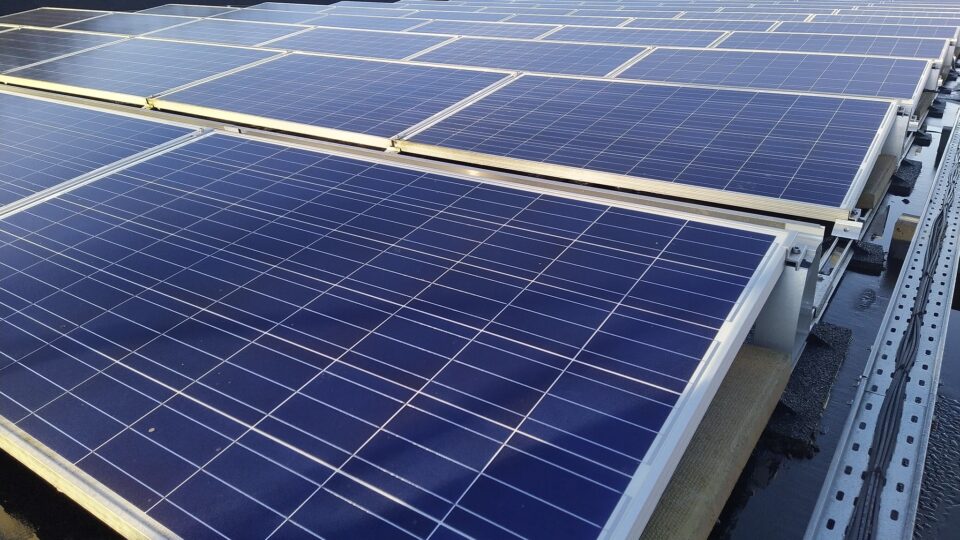
Colorful Solar Panels | Earth Wise

September 22, 2022 By EarthWise Leave a Comment

Creating color solar panels

More and more buildings and public spaces are incorporating solar panels and not only just on rooftops.  Some buildings are incorporating power-generating structures all over their facades.

Using solar panels in this way puts some design constraints on buildings because solar panels are typically a deep black color.  This is because solar panels need to absorb light and making them any other color decreases their ability to do so and generate power.  But the problem is that people don’t necessarily want a black building.

One alternative to traditional solar panel design is to use structural sources of color that include microscopic shapes that only reflect specific light frequencies, like the scales on butterfly wings.  But this approach generally leads to iridescence – which might not be what is wanted – and is often quite expensive to implement.

A team of researchers at a university in Shanghai has now demonstrated a way to give solar panels color that is easy and inexpensive to apply and that does not reduce their ability to produce energy efficiently.

The technique involves spraying a thin layer of a material called a photonic glass onto the surface of solar cells.  The photonic glass is made of a thin, disorderly layer of dielectric microscopic zinc sulfide spheres.  Even though most light can pass through the photonic glass, certain colors are reflected back, depending on the sizes of the spheres.  By varying that size, the researchers created solar panels that were blue, green, or purple with only a very small drop in solar panel efficiency.

The solar panels made this way maintained their color and performance under durability testing.  With this new technology, there may soon be colorful solar panels on our buildings.

***********

Web Links

Colorful solar panels could make the technology more attractive

Photo, posted December 15, 2021, courtesy of Pete via Flickr.

Earth Wise is a production of WAMC Northeast Public Radio
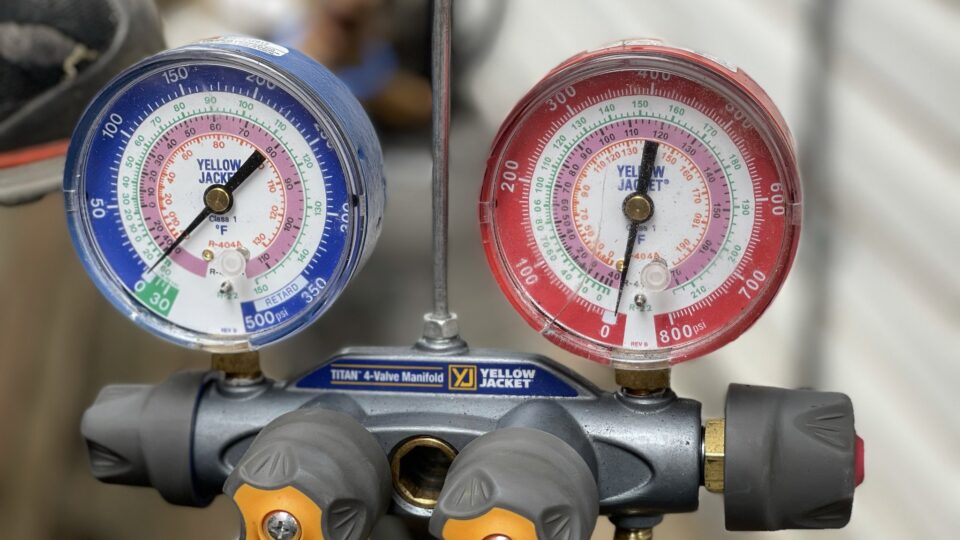
Propane Refrigerants | Earth Wise

September 20, 2022 By EarthWise Leave a Comment

Propane refrigerants a climate-friendly solution

About 10% of the world’s total electricity supply is used for air conditioning.  If current temperature trends continue, the energy demands for space cooling will more than triple by the year 2050.  Air conditioning is a double threat to the environment.  Apart from using lots of energy, ACs also make use of halogenated refrigerants that are extremely powerful greenhouse gases.

The most common space cooling appliances are split-air conditioners, which use an indoor unit and an outdoor unit connected by pipes.  These split ACS mostly utilize HCFC-22 and HFC-410 as refrigerants, which have global warming potential scores as high as 2,256 – meaning they trap 2,256 times more heat than carbon dioxide. 

A study by the International Institute of Applied Systems Analysis in Austria has shown that propane is a far better choice as an air conditioning refrigerant.  Its global warming potential is actually less than 1 meaning it traps less heat than carbon dioxide.  According to the study, if air conditioners switched to propane refrigerants, the world would avoid about a tenth of a degree Celsius of additional warming, which is a significant contribution to meeting the goals of the Paris climate agreement.

Propane-based split-ACs are already available commercially in China and India.  Elsewhere, many national regulations prohibit their use, primarily due to codes restricting the use of refrigerants with higher flammability.  Given the increasingly urgent need for climate action, it seems to be time to reconsider regulations on refrigerants.

**********

Web Links

Propane — a solution for more sustainable air conditioning

Photo, posted March 24, 2021, courtesy of Phyxter Home Services via Flickr.

Earth Wise is a production of WAMC Northeast Public Radio

A Food For The Future | Earth Wise

September 19, 2022 By EarthWise Leave a Comment

Breadfruit is a climate resilient food for the future

Researchers predict that climate change will negatively impact most staple food crops, including rice, corn, and soybeans.  Therefore, climate resilient food crops – those that are salt, drought, and heat resilient – will have an important role to play in global food security.  Examples of climate resilient crops include quinoa, kernza, amaranth, millet, and tepary beans.    

According to a new study by researchers from Northwestern University, breadfruit – a starchy tree fruit native to the Pacific Islands – will be relatively unaffected by climate change.  Because breadfruit is climate resilient and well-suited to grow in regions with high levels of food insecurity, the research team suggests breadfruit could be a part of the solution to global hunger.

While it has ”fruit” in its name, breadfruit is more like a potato.  It’s starchy and seedless, and is closely related to jackfruit.  Breadfruit is nutrient-rich, and high in fiber, vitamins, and minerals.  It can be steamed, roasted, fried, fermented, and even turned into flour.  People in tropical regions around the world have been eating breadfruit for thousands of years. 

In the study, which was recently published in the journal PLOS Climate, researchers determined the climate conditions necessary to cultivate breadfruit and then looked at how these conditions are predicted to change in the future.  They examined two future climate scenarios: one that reflects high greenhouse-gas emissions and another in which emissions stabilize.

In both scenarios, the regions suitable for breadfruit cultivation were mostly unaffected.  Additionally, the researchers identified new suitable land where breadfruit cultivation could expand.   

As the climate continues to change, breadfruit might soon be on a table near you.

**********

Web Links

Climate-resilient breadfruit might be the food of the future

Photo, posted August 11, 2007, courtesy of Malcolm Manners via Flickr.

Earth Wise is a production of WAMC Northeast Public Radio

A Cheap Material For Carbon Capture | Earth Wise

September 12, 2022 By EarthWise Leave a Comment

The recently passed Inflation Reduction Act includes significant support for carbon capture technologies. Eliminating fossil fuel burning is essential for halting climate change, but in the interim, methods for capturing emissions of carbon dioxide and either storing it or turning it into usable products are increasingly necessary.

There are a variety of techniques being developed for carbon capture but at this point, none of them are commercially viable.  The best technique in use today involves piping flue gases through chemicals called liquid amines, which bind CO2.  The process requires large amounts of energy to release the bound carbon dioxide so it can be concentrated and stored.  As a result, it is complicated and expensive.

Researchers at UC Berkeley, Stanford, and Texas A&M University have developed a carbon capture method using melamine, which is an inexpensive polymer used to make Formica, as well as low-cost dinnerware, industrial coatings, and other plastics.  Porous melamine itself adsorbs CO2 to a limited extent.  But the researchers discovered that adsorption could be much improved by adding the chemical DETA (diethylenetriamine) to bind the CO2.  In addition, adding cyanuric acid increased the melamine pore size and radically improved CO2 capture efficiency even more.

The result is a material that is more efficient even than exotic carbon capture materials like metalorganic frameworks and is much cheaper and easier to make. The researchers aim to design equipment that can used in industrial facilities, attached to buildings and other structures, or even to the tailpipes of gas-powered vehicles.

**********

Web Links

A simple, cheap material for carbon capture, perhaps from tailpipes

Photo, posted June 10, 2006, courtesy of Flickr.

Earth Wise is a production of WAMC Northeast Public Radio.

Plant-Based Foods And CO2 Emissions | Earth Wise

September 9, 2022 By EarthWise Leave a Comment

We often hear how eating locally-sourced food is a way to minimize the carbon footprint of our diet.  But from a climate impact perspective, this only has a significant impact if transportation is responsible for a large portion of a food’s final carbon footprint.  In many cases, the greenhouse gas emissions related to transportation make up only a small portion of the total emissions from food, and what we eat is far more important.

In general, beef and lamb have the biggest climate footprint per gram of protein.  Plant-based foods tend to have the smallest impact. Pork and chicken are somewhere in the middle. 

According to new research, U.S. food production could reduce its agricultural carbon footprint between 2.5% and 13.5% by embracing plant-based alternatives to beef.  The study, from researchers at Cornell University, Johns Hopkins University, and international partners, found that most of the reduction would be achieved by decreasing the number of cows needed for beef production by two to twelve million animals.  The research was recently published in the journal Lancet Planetary Health.

However, the researchers also found that acting to reduce climate change in this manner could have unintended consequences.  For example, economic models from the research team show that the growth in popularity of plant-based beef could disrupt the agricultural workforce, threatening more than 1.5 million jobs. 

But in the big picture, doing nothing will cost much more than doing something to slow climate change.  Shifting diets away from meat and other animal products and towards more plant-based foods will help shrink carbon footprints and mitigate climate change.  It’s a win-win for the planet and for human health. 

**********

Web Links

Plant-based ‘beef’ reduces CO2 but threatens ag jobs

Photo, posted November 27, 2018, courtesy of Sarah Stierch via Flickr.

Earth Wise is a production of WAMC Northeast Public Radio.

A Law To Tackle Climate Change | Earth Wise

September 8, 2022 By EarthWise Leave a Comment

The Inflation Reduction Act signed into law in mid-August is the most comprehensive U.S. legislation addressing climate change ever enacted.   It contains $369 billion in funding for clean energy and electric vehicle tax breaks, domestic manufacturing of batteries and solar panels, and pollution reduction.

The legislation for the most part makes use of carrots rather than sticks to coax American consumers and industry away from reliance on fossil fuels.  Rather than establishing more carbon taxes, mandates, and penalties, the law largely makes use of tax credits to provide incentives for the use of clean energy.

The law provides a large mix of tax breaks intended to bring down the costs of solar, wind, batteries, electric cars, heat pumps, and other clean technology.  For example, consumers will get a $7,500 credit for purchasing many new electric car models and about $4,000 for buying a used vehicle.

On the stick side of the ledger, oil and gas companies that emit methane above certain threshold levels will incur fees that escalate over time.  The law also increases the cost to the oil industry for extracting fossil fuels from public lands.

The act provides $60 billion for overall environmental justice priorities, including $15 billion targeted specifically for low-income and disadvantaged communities. There are many other provisions in the law addressing multiple climate-related issues.

According to three separate analyses by economic modelers, the investments from the Inflation Reduction Act are likely to cut pollution by about 40% below 2005 levels by the year 2030.

**********

Web Links

The US finally has a law to tackle climate change

Photo, posted December 15, 2021, courtesy of Mario Duran-Ortiz via Flickr.

Earth Wise is a production of WAMC Northeast Public Radio.

Saving Lives With Air Conditioning | Earth Wise

August 26, 2022 By EarthWise Leave a Comment

This summer, extreme heatwaves struck the United States, Europe, and Africa.  Thousands of people died as a result.  In July, the impact of extreme heat in places ill-prepared for it was evident.  In the U.K., where air conditioning is uncommon, public transportation shut down, schools and offices closed, and hospitals cancelled non-emergency procedures.

Air conditioning, which we mostly take for granted in this country, is a life-saving tool during extreme heat waves.  However, only about 8% of the 2.8 billion people living in the hottest – and often poorest – parts of the world have AC in their homes.

A new study at Harvard modeled the future demand for air conditioning as the number of days with extreme heat continues to increase across the globe.  The researchers identified a massive gap between current AC capacity and what will be needed by 2050 to save lives, particularly in low-income and developing countries.

If the rate of greenhouse gas emissions continues on its present course, the study concluded that that at least 70% of the population in several countries will require air conditioning by 2050.  The number will be even higher in equatorial countries like India and Indonesia.  At this point, even if the goals of the Paris Climate Accords are met, an average of 40-50% of the population in many of the world’s warmest countries will still require AC.

The research looked at various scenarios.  One in which emissions continue to increase leads to widespread need for air conditioning even in temperate countries.  In Germany, 92% of the population would need it, and here in the U.S., 96% would need it.

Planning for future power systems must take into account the essential needs of a warming world.

**********

Web Links

In a hotter world, air conditioning isn’t a luxury, it’s a lifesaver

Photo, posted July 24, 2021, courtesy of Phyxter Home Services via Flickr.

Earth Wise is a production of WAMC Northeast Public Radio.

Space Tourism And The Climate | Earth Wise

July 29, 2022 By EarthWise Leave a Comment

Space tourism could be terrible for the climate

Space tourism is human space travel for recreational purposes.  A few well-known billionaires have taken rocket rides in recent years and at least a dozen companies are at the vanguard of what they are expecting to be a burgeoning industry.  If space tourism truly takes off – pun intended – it could be a serious threat to the climate and the environment.

Black carbon – essentially soot – is emitted when fossil fuels, including rocket fuels, are burned.  Black carbon absorbs light from the sun and releases thermal energy, making it a powerful climate warming agent.  At lower altitudes, black carbon quickly falls from the sky, remaining in the atmosphere for only a matter of days or weeks.

Rockets are another story entirely.  They dump black carbon into the stratosphere as they blast into space, and up there black carbon is 500 times worse for the climate and sticks around for several years.

A detailed study by researchers at University College London looked at the climate impact of present-day space launches compared with the potential massive expansion of launches from a large space tourism industry.

The overall result is that current space launches are not a significant source of emissions, but space launches would become incredibly significant if projections of tourist space flights proved to be true.  Currently, there are roughly 100 space launches a year world-wide.  If that number becomes thousands, the impact on the climate would be substantial.

The same researchers looked at the ozone impact of rocket launches and reached a similar conclusion.  The current impact of spaceflights is not very significant, but a massive increase in launches could have a major impact on atmospheric ozone concentrations.

Space tourism may be exciting, but it also could be very dangerous for the planet.

**********

Web Links

Space Tourism Poses a Significant ‘Risk to the Climate’

Impact of Rocket Launch and Space Debris Air Pollutant Emissions on Stratospheric Ozone and Global Climate

Photo, posted May 30, 2020, courtesy of Daniel Oberhaus (2020) via Flickr.

Earth Wise is a production of WAMC Northeast Public Radio.

A Better Way To Recycle Plastic | Earth Wise

July 25, 2022 By EarthWise Leave a Comment

Researchers are developing a better way to recycle plastic

The current state of plastic recycling is not very effective.  Plastic recycling is only able to replace 15-20% of the fossil-fuel-derived raw material needed to produce society’s demand for plastic.

Researchers at Chalmers University in Sweden have now demonstrated how the carbon content in mixed waste could be used to replace all of the fossil raw materials in the production of new plastic.  In principle, their technology could completely eliminate the climate impact of plastic materials.

According to the researchers, there are enough carbon atoms in waste to meet the needs of all global plastic production.

The Chalmers process is based on thermochemical technology and involves heating waste to 1100-1500 degrees Fahrenheit.  The waste is thereby vaporized and when hydrogen is added, becomes a carbon-based substance that can replace the fossil-fuel building blocks of plastic.  The method does not require sorting the waste materials.  Different types of waste, such as old plastic products and even paper cups, with or without food residues, can be fed into the recycling reactors.  The researchers are now developing the techniques required to utilize their recycling technology in the same factories in which plastic products are currently being made from fossil oil or gas.

The principle of the process is inspired by the natural carbon cycle in which plants break down into carbon dioxide when they wither and die, and then photosynthesis uses carbon dioxide and solar energy to grow new plants.

Producing new plastics would no longer require petroleum or other fossil fuels as raw materials.  If the energy needed to drive the recycling reactors is taken from renewable sources, plastics could become the basis of a sustainable and circular economy.

**********

Web Links

Pioneering recycling turns mixed waste into premium plastics with no climate impact

Photo, posted August 10, 2013, courtesy of Lisa Risager via Flickr.

Earth Wise is a production of WAMC Northeast Public Radio.

A Geoengineering Research Plan | Earth Wise

July 22, 2022 By EarthWise Leave a Comment

The 2022 federal appropriations act, signed into law in March, directed the Office of Science and Technology Policy to develop a cross-agency group to coordinate research on climate interventions, in partnership with NASA, the National Oceanic and Atmospheric Administration, and the Department of Energy.

The group is tasked with creating a research framework to “provide guidance on transparency, engagement, and risk management for publicly funded work on solar geoengineering research.”  The group is supposed to develop a five-year plan that will define research goals for the field, assess the potential hazards of climate interventions, and evaluate the level of federal funding required to carry out the work.

This marks the first federally coordinated effort of this kind and is especially significant because it contributes to the perception that geoengineering is an appropriate and important area of research as the climate continues to warm.

It is an understatement to say that such research is controversial.  Geoengineering has often been a taboo topic among scientists. There are significant questions about potential environmental side effects and concerns that the impact of any such efforts would be felt unevenly in different parts of the world.  There are challenging questions about global governance , including who should be able to make decisions about any potential deployment of climate interventions and what the goals of such interventions should be.

These are momentous issues to grapple with, but as the threat of climate change grows and nations continue to fail to make rapid progress on emissions, researchers, universities, and nations are increasingly motivated to seriously explore the potential effects of geoengineering approaches.  We can’t hide from the fact that these issues are going to be explored.

**********

Web Links

The US government is developing a solar geoengineering research plan

Photo, posted June 28, 2013, courtesy of Fernando Aramburu via Flickr.

Earth Wise is a production of WAMC Northeast Public Radio.

Lithium-Sulfur Batteries | Earth Wise

July 19, 2022 By EarthWise Leave a Comment

Existuje také spousta přípravků ve formě vitaminových a minerálních komplexů, které nasycují tělo všemi užitečnými zdroji pro správné fungování celého těla a sexuálního systému. Nejoblíbenější jsou dnes syntetické stimulanty, protože poskytují silný apothekeein.com a stabilní účinek, doplňky stravy a homeopatické léky se častěji používají pro prevenci problémů tohoto druhu.

The growing use of electric vehicles as well as energy storage systems has created a major focus on the batteries for these applications.  Lithium-ion batteries dominate these applications and the demand for the materials needed to manufacture them continues to grow.

The raw materials for these batteries include not only lithium, but also can include nickel, manganese, and cobalt. 

Sulfur has been a desirable alternative for use in lithium-based batteries for quite a while because it is an abundant element and can be extracted in ways that are safe and environmentally friendly.  However, previous attempts to create lithium batteries that combine sulfur cathodes and the standard carbonate electrolytes used in lithium-ion batteries have not been successful because of irreversible chemical reactions between intermediate sulfur products and the electrolytes.

A group of chemical engineers at Drexel University has now found a way to introduce sulfur into lithium-ion batteries that solves the stability problem and also has major performance advantages.  The new batteries have three times the capacity of conventional lithium-ion batteries, and last more than 4,000 recharges, which is also a substantial improvement.

The new battery technology involves creating a stable form of sulfur called monoclinic gamma sulfur by depositing the sulfur on carbon nanofibers.   Previously, this sulfur phase was only observed at high temperatures and was only stable for 20 or 30 minutes.  This chemical phase of sulfur does not react with carbonate electrolytes and therefore produces a battery that is chemically stable over time.

 Incorporating this sulfur into battery cathodes results in a better battery that doesn’t need any cobalt, nickel, or manganese.  It could be the next big thing in electric vehicle batteries.

**********

Web Links

Breakthrough in Cathode Chemistry Clears Path for Lithium-Sulfur Batteries’ Commercial Viability

Photo, posted April 5, 2022, courtesy of Oregon Department of Transportation via Flickr.

Earth Wise is a production of WAMC Northeast Public Radio.

Feeding Cows Seaweed | Earth Wise

July 15, 2022 By EarthWise Leave a Comment

When cows digest their food, they burp, and when they burp, they release methane.  This is called enteric methane and it’s a real problem.  A single cow belches out 220 pounds of methane each year, which is the greenhouse gas equivalent of burning over 900 gallons of gasoline.  That’s more than the average car uses in a year.

Several studies have shown that feeding cows seaweed has the potential to substantially reduce the amount of methane in cow burps.  The latest comes from a trial that took place at the Straus Family Creamery, an organic dairy producer in Marin County, California.

The trial used a new seaweed-derived feed additive called Brominata.  Brominata is made of a red seaweed called Asparagopsis taxiformis.  The addition of the seaweed to the cows’ diets on the Straus farm resulted in an 52% average reduction in enteric methane emissions.  One cow in the study showed a reduction of 92%.

Cutting enteric methane emissions in half would be a huge improvement that would be quite difficult to achieve by convincing enough people to reduce meat and dairy consumption.

The California Air Resources Board has identified feed additives as an emissions-reduction strategy for the dairy industry.  There are now some synthetic feed additives that have been developed that reduce enteric methane, but they haven’tyet  received FDA approval for use in the U.S.  Brominata has been approved as Generally Regarded as Safe by the California Food and Drug Administration.  Whether it and similar seaweed-based feeds can be produced in sufficient quantity and without adverse environmental effects remains to be seen.  But it is an intriguing approach to solving a complicated problem.

**********

Web Links

Feeding Cows Seaweed Reduces Their Methane Emissions, but California Farms Are a Long Way From Scaling Up the Practice

Photo, posted November 10, 2015, courtesy of Lance Cheung/USDA via Flickr.

Earth Wise is a production of WAMC Northeast Public Radio.

Carbon Capture: Solution Or Band-Aid? | Earth Wise

July 13, 2022 By EarthWise Leave a Comment

Can carbon is part of the solution to climate change

The idea of capturing the CO2 emissions from industry and locking them up is nothing new.  It’s been going on for decades in some places.  Norway’s state-owned oil company Equinor has been holing away a million tons of CO2 a year for a long time.  But overall, CCS – carbon capture and storage – has had very limited use.  As of last year, there were only about 30 large-scale projects in operation around the world, capturing only 0.1% of global emissions.

There is now growing interest in CCS and many new projects are underway.  A combination of rising carbon prices in Europe, tax breaks for CCS in the US, national net-zero targets, and the increasing need to ramp down global emissions are all driving rising CCS activities. 

While recent reports from the Intergovernmental Panel on Climate change still claim that it is possible to remain below 2 degrees Celsius of warming without using carbon capture, there is growing belief that it may be necessary given the present pace of the transition away from fossil fuels.

Two industries that together produce about 14% of global CO2 emissions are cement and steel.  These are both industries for which it is difficult to eliminate emissions regardless of the energy sources used. CCS may be the best approach to reducing their emissions.

But there is considerable pushback against CCS.  The concern is that CCS is primarily a way to delay decarbonization.  It encourages various industries to continue to use fossil fuels instead of shifting away from them.  Nonetheless, CCS no doubt has its place as part of the solution to climate change.

**********

Web Links

Solution or Band-Aid? Carbon Capture Projects Are Moving Ahead

Photo, posted June 5, 2022, courtesy of Mark Dixon via Flickr.

Earth Wise is a production of WAMC Northeast Public Radio.

Reshaping Our Planet | Earth Wise

July 12, 2022 By EarthWise Leave a Comment

Human activity is changing the planet

Human activity – especially agriculture – has altered 70% of the land on our planet.  According to a new report from the United Nations, damage to the Earth’s lands has put the planet on “crisis footing”.

Our health, our economy, and our well-being depend on land.  The food we eat, the water we drink, and the air we breathe all rely on status of the land to at least some extent.

According to the report, up to 40% of the planet’s land is already degraded, affecting half of the people alive today.  At current rates, an additional area nearly the size of South America will be degraded by 2050.

Degradation of land occurs in various ways, including deforestation, desertification, and the loss of wetlands or grasslands.  All of these things are caused by human activities.  As forests, savannas, wetlands, and mangrove swamps are converted to agriculture or are lost to urban expansion, greenhouse gas emissions rapidly increase, adding to the effects of climate change.  The climate crisis, biodiversity loss, and land degradation are integrally linked.

Much of the blame for degraded landscapes is on humanity’s ever-expanding need for food and the modern farming systems that produce it.  The global food system is responsible for 80% of the world’s deforestation, 70% of freshwater use, and is the greatest driver of land-based biodiversity loss.  Modern agriculture has altered the face of the planet more than any other human activity.

The report urges efforts at restoration of land.  Restoration can take multiple forms, including planting forests and shrubs or grazing livestock and growing crops between trees instead of clearing existing forests.

**********

Web Links

UN Report Says Humanity Has Altered 70 Percent of the Earth’s Land, Putting the Planet on a ‘Crisis Footing’

Photo, posted June 20, 2010, courtesy of Nicholas A. Tonelli via Flickr.

Earth Wise is a production of WAMC Northeast Public Radio.

Methane From Thawing Permafrost | Earth Wise

June 29, 2022 By EarthWise Leave a Comment

The Arctic permafrost contains a massive amount of carbon in the form of frozen soil, which contains remnants of plants and animals that died millennia ago.  Estimates are that there is 2 ½ times as much carbon trapped in this Arctic soil than there is in total in the atmosphere today.

As the Arctic warms, the permafrost is starting to thaw.  Once that happens, microbes begin to consume the previously frozen organic matter trapped in the soil.  As part of this process, the microbes produce large amounts of methane, which is an extremely potent greenhouse gas.   Thus, there continues to be great concern that wide-scale thawing of the permafrost would result in massive amounts of methane being released into the atmosphere.

A recent study in northern Sweden revealed a glimmer of hope.  The study gauged methane emissions from a swath of permafrost that thawed in the 1980s and another that thawed 10 or 15 years later. 

In the first area, as ice melted underground, water on the surface sank down into the soil.  As the surface dried out, new plants emerged that helped to keep methane emissions buried underground.

Grasses found in wet areas have straw-like structures that convey oxygen to their roots.  The straws also allow methane in the soil to escape into the atmosphere.  As the areas dry out, other plants lacking the straws can sometimes replace the grasses.  When methane can’t escape, soil bacteria break it down into carbon dioxide.

The result is that the permafrost releases only a tenth of the methane as expected.  The hope is that changes in plant cover driven by climate change may limit methane emissions from thawing permafrost.

**********

Web Links

Thawing Permafrost In Sweden Releases Less Methane Than Feared, Study Finds

Photo, posted July 7, 2014, courtesy of NPS Climate Change Response via Flickr.

Earth Wise is a production of WAMC Northeast Public Radio.

Air Pollution: The Greatest Danger | Earth Wise            

June 27, 2022 By EarthWise Leave a Comment

Air pollution is one of the greatest dangers

The effort to reduce and ultimately eliminate the use of fossil fuels has largely been driven by the potentially catastrophic consequences of global climate change.  The need to stop dumping greenhouse gases into the atmosphere has become increasingly urgent.  But there is an equally compelling reason to stop burning fossil fuels.  According to a study published in the journal Lancet Planetary Health, outdoor air pollution is “the largest existential threat to human and planetary health.”

Pollution of various types was responsible for an estimated 9 million deaths around the world in 2019.  Half of those fatalities – 4.5 million deaths – were the result of outdoor air pollution coming from vehicles and industrial sources like power plants and factories.

The number of deaths attributed to air pollution has increased by 55% just since the year 2000.

The growth in air pollution deaths has offset a decline in deaths from other pollution sources that especially affect people living in extreme poverty, such as indoor air pollution and water pollution.  Overall, countries with lower collective incomes tend to bear a disproportionate share of pollution deaths.  Roughly 16% of deaths around the world are attributable to pollution, also resulting in more than $4 trillion in economic losses.

The peer-reviewed study was produced by the 2017 Lancet Commission on Pollution and Health.  The study notes that despite the enormous health, social, and economic impacts of pollution, preventing it is largely overlooked in the international development agenda.  The study calls upon governments, businesses, and other entities to abandon fossil fuels and adopt clean energy sources.

**********

Web Links

Study Identifies Outdoor Air Pollution as the ‘Largest Existential Threat to Human and Planetary Health’

Photo, posted November 4, 2019, courtesy of Ninara via Flickr.

Earth Wise is a production of WAMC Northeast Public Radio.

  • « Go to Previous Page
  • Page 1
  • Interim pages omitted …
  • Page 18
  • Page 19
  • Page 20
  • Page 21
  • Page 22
  • Interim pages omitted …
  • Page 35
  • Go to Next Page »

Primary Sidebar

Recent Episodes

  • An uninsurable future
  • Clean energy and jobs
  • Insect declines in remote regions
  • Fossil fuel producing nations ignoring climate goals
  • Trouble for clownfishes

WAMC Northeast Public Radio
WAMC/Northeast Public Radio is a regional public radio network serving parts of seven northeastern states (more...)

Copyright © 2026 ·