• Skip to primary navigation
  • Skip to main content
  • Skip to primary sidebar

Earth Wise

A look at our changing environment.

  • Home
  • About Earth Wise
  • Where to Listen
  • All Articles
  • Show Search
Hide Search
You are here: Home / Archives for chemical

chemical

Hacking Photosynthesis | Earth Wise

September 14, 2020 By EarthWise Leave a Comment

benefits of hacking photosynthesis

A team led by the University of Illinois has been pursuing a project called Realizing Increased Photosynthetic Efficiency or RIPE, which has the aim of improving photosynthesis in order to provide farmers with higher-yielding crops in an increasingly challenging climate.  Photosynthesis is the natural, sunlight-powered process that plants use to convert carbon dioxide into sugars that fuel growth, development, and for us, crop yield.

If we think of photosynthesis as a factory line composed of multiple machines, the growth of plants is limited by the slowest machines in the line.  The RIPE project has identified some steps in photosynthesis that are slower than others and are attempting to enable plants to build more machines to speed up those slower steps.

The researchers modeled a total of 170 steps in the process of photosynthesis to identify how plants could manufacture sugars more efficiently.  In the study, the team increased crop growth by 27% by resolving two constraints:  one in the first part of photosynthesis where plants turn light energy into chemical energy and one in the second part when carbon dioxide is turned into sugars.

The researchers effectively hacked photosynthesis by adding a more efficient transport protein from algae to enhance the energy conversion process. 

In the greenhouse, these changes improved crop productivity by 52%, but in field trials, which are a more important test, these photosynthetic hacks boosted crop production by 27%.

Ultimately, the team hopes to translate these discoveries to a series of staple food crops, such as cassava, cowpea, corn, soybean and rice, which are needed to feed the world’s growing population this century.

**********

Web Links

Photosynthetic hacks can boost crop yield, conserve water

Photo, posted June 14, 2017, courtesy of Alex Holyoake via Flickr.

Earth Wise is a production of WAMC Northeast Public Radio.

Concrete Production And Diminishing Coal Burning | Earth Wise

June 5, 2020 By EarthWise Leave a Comment

electricity generation and concrete production

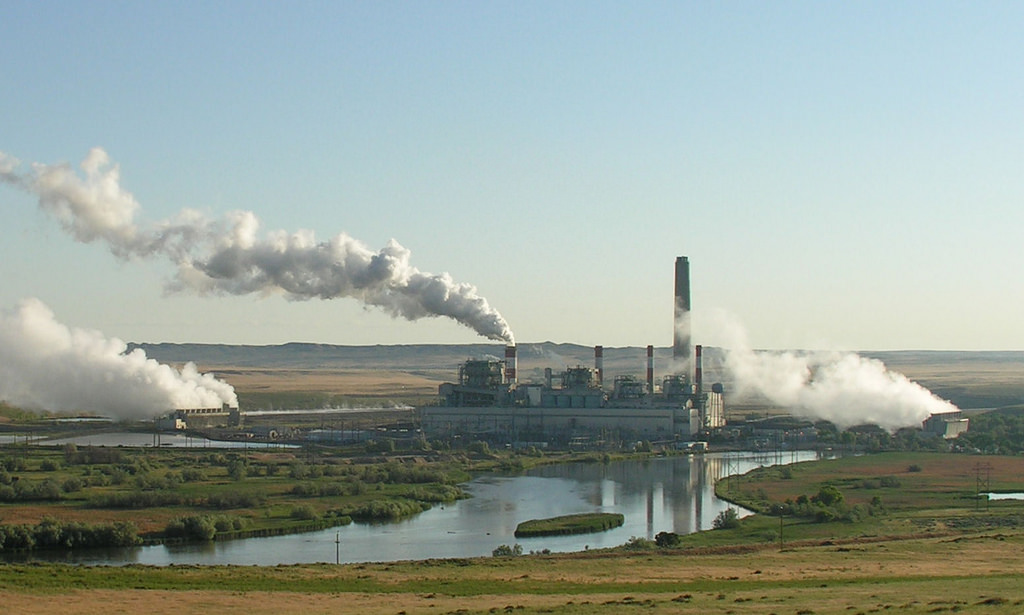
Coal burning is still one of the primary means of generating electricity in the United States, but its use is diminishing and doing so fairly rapidly.  The coal burning process produces residual, incombustible materials.  One of them is fly ash, which is composed of fine, glassy, rounded particles rich in silicon, aluminum, calcium, and iron oxides.  Fly ash is captured from coal plant flue gas by precipitators and bag filters. It turns out that two-thirds of this fly ash is not dumped into landfills or impoundments, but rather is put to use.

Because of its chemical and physical characteristics, fly ash can substitute for a portion of portland cement in concrete.  Using this byproduct material in making cement actually reduces its cost. Beyond cost, the addition of fly ash as a so-called supplementary cementitious material or SCM improves concrete’s long-term strength and reduces porosity and permeability.  It reduces the risk of thermal cracking and provides good long-term mechanical properties.

The amount of fly ash used in concrete products increased by 5% between 2011 and 2017 while the amount produced dropped by 36%.  Concrete production continues to increase steadily while fly ash production is steadily dropping.

Therefore, the concrete industry is looking for alternative sources of SCM.  The most obvious is the approximately 1/3 of fly ash that hasn’t been used to make concrete.  Much of that is landfilled or ponded onsite at power plants.  So, opportunities exist for excavating or dredging and recovering these materials.

As coal burning goes away, concrete manufacturing needs to make some changes.

**********

Web Links

What Does the Changing Face of Electricity Production Mean for Concrete?

Photo, posted February 16, 2017, courtesy of Flickr.

Earth Wise is a production of WAMC Northeast Public Radio.

A New Membrane For Converting Carbon Dioxide | Earth Wise

March 24, 2020 By EarthWise Leave a Comment

Efficiently transforming CO2 into fuel

Methanol is a valuable chemical used as fuel in the production of countless products. Carbon dioxide is a greenhouse gas that is produced by countless industrial processes.  Carbon dioxide can be converted into methanol, which is one way all that CO2 can be put to good use instead of causing harm. 

In research recently published in Science, chemical engineers from Rensselaer Polytechnic Institute have developed a process that converts CO2 to methanol in a more efficient way by using a highly effective separation membrane they produced.  

The chemical reaction responsible for the transformation of CO2 into methanol also produces water, which severely restricts the continued reaction. The Rensselaer team has found a way to filter out the water as the reaction is happening, without losing other essential gas molecules. 

They produced a membrane made up of sodium ions and zeolite crystals that was able to carefully and quickly permeate water through small pores — known as water-conduction nanochannels — without losing gas molecules. The sodium ions effectively only allow water to go through. When water was effectively removed from the process, the team found that the chemical reaction was able to happen very quickly. By removing the water, the equilibrium shifts, which means more CO2 will be converted and more methanol will be produced.  

The team is now working to develop a scalable process and a startup company that would allow this membrane to be used commercially to produce high purity methanol.  This membrane could also be used to improve a number of other reactions. 

In industry there are many reactions limited by water and this RPI membrane could be an important enhancement for many of them. 

**********

Web Links

Water-Conducting Membrane Allows Carbon Dioxide To Transform into Fuel More Efficiently

Photo courtesy of RPI.

Earth Wise is a production of WAMC Northeast Public Radio.
Converting A Toxin Into An Industrial Chemical | Earth Wise

January 16, 2020 By EarthWise Leave a Comment

Converting toxin into industrial chemical

Nitrogen dioxide is a prominent air pollutant produced by internal combustion engines burning fossil fuels as well as by a variety of industrial processes.  It is a toxic material associated with a number of respiratory illnesses. 

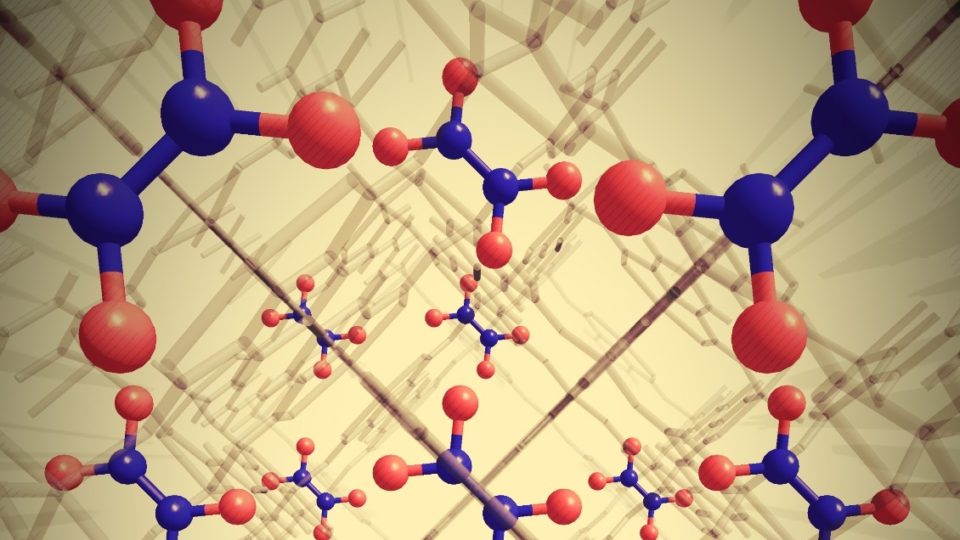
Researchers at the University of Manchester in the UK along with an international team of scientists have developed a new advanced material that can convert nitrogen dioxide from an exhaust gas stream into useful industrial chemical using only water and air.

The material is a metal-organic framework (or MOF) that provides a selective, fully reversible, and repeatable capability to capture nitrogen dioxide.  MOFs are tiny three-dimensional structures that are porous and can trap gases inside as though there were tiny cages.  MOFs have enormous amounts of surface area for their size.  One gram of material can have a surface area as large as a football field.

The material, named MOF-520, can capture nitrogen dioxide at ambient temperatures and pressures and even at low concentration and during flow in the presence of moisture, sulfur dioxide, and carbon dioxide.  Such conditions are typical of the exhaust of internal combustion engines. In fact, the process works best at the typical temperature of automobile exhausts.

Once the nitrogen oxide is absorbed, treating the material with water in air converts it into nitric acid and restores the MOF for additional use.  Nitric acid is the basis of a multi-billion dollar industry with uses including agricultural fertilizers, rocket propellant, and nylon.  Thus, there is great potential for recouping the costs of using the MOF technology and even profiting from it.

It would be great to convert a toxic pollutant into valuable industrial chemicals.

**********

Web Links

Clean air research converts toxic air pollutant into industrial chemical

Photo courtesy of the University of Manchester.

Earth Wise is a production of WAMC Northeast Public Radio.

Keeping Plants Plump

December 3, 2019 By EarthWise Leave a Comment

The leading cause of crop failures worldwide is drought.  Ironically, the very close runner-up is flooding.  Facing a changing and increasingly erratic climate, farmers need all the help they can get in protecting their crops.

Researchers at the University of California, Riverside, have created a chemical to help plants hold onto water, which could stem the tide of massive annual crop losses from drought.  Details of the team’s work is described in a paper published in Science.

The chemical is called Opabactin, but is also known as “OP.” OP is gamer slang for overpowered, referring to the best character or weapon in a game.

OP mimics abscisic acid, or ABA, which is the natural hormone produced by plants in response to drought stress.  ABA slows a plant’s growth, so it doesn’t consume more water than is available and doesn’t wilt.  OP is 10-times stronger than ABA, which makes it a super hormone.  It works fast.  Within hours, there is a measurable improvement in the amount of water plants release.  Because it works so quickly, OP could give farmers more flexibility in how they deal with drought.   Plants can’t predict the future, but if, for example, farmers think there is a reasonable chance of drought, they could make decisions such as to apply OP to improve crop yields.

The research team is now trying to find a second chemical tool.  Whereas OP slows down plant growth, the team wants to find a molecule that will accelerate it.  Such a molecule could be useful in controlled environments such as indoor greenhouses.  There are times when you want to speed up growth and times when you want to slow it down.

**********

Web Links

Game changer: New chemical keeps plants plump

Photo, posted June 7, 2013, courtesy of Bayer CropScience UK via Flickr.

Earth Wise is a production of WAMC Northeast Public Radio.
Safe And Simple Hydrogen Peroxide

November 29, 2019 By EarthWise Leave a Comment

We don’t think about hydrogen peroxide very often.  Perhaps we have a bottle of it under our bathroom sink that we haven’t touched in a few years.   But it is an important product manufactured in the millions of tons each year and the basis of a $6 billion global business.

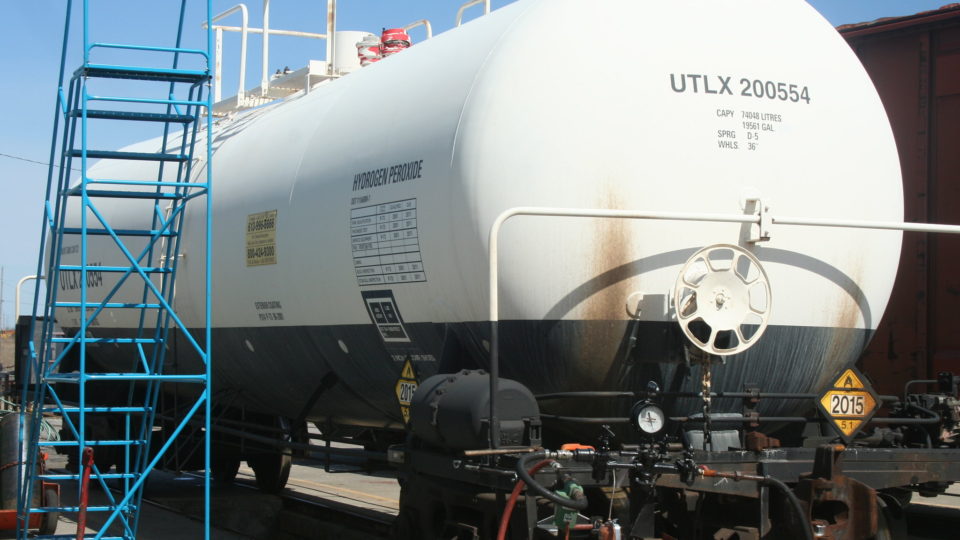
Hydrogen peroxide is widely used as an antiseptic, a detergent, in cosmetics, as a bleaching agent, in water purification, and in many other applications.  It is produced in industrial concentrations of up to 60% in solution with water in order to maximize the economics of transportation.  This makes transportation hazardous and costly because the concentrated form is unstable.  Most applications use a far more diluted form.

Researchers at Rice University have developed a new method for producing hydrogen peroxide that is much simpler and safer than the current technology, which actually dates back to the 1930s.  The Rice technique requires only air, water and electricity to produce the chemical.  The electrosynthesis process, which is detailed in the journal Science, uses an oxidized carbon nanoparticle-based catalyst.

The process could enable point-of-use production of pure hydrogen peroxide solutions, which would eliminate the need to transport the hazardous concentrated chemical.  The use of a solid electrolyte instead of the traditional liquid electrolyte eliminates the need for product separation or purification that is part of the current technology.

In the future, instead of storing containers of hydrogen peroxide, hospitals that use it as a disinfectant could turn on a spigot and get, for example a 3% solution on demand.  Instead of storing chemicals to disinfect swimming pool water, future homeowners could flick a switch and turn on their peroxide reactor to clean their pools.

**********

Web Links

Water + air + electricity = hydrogen peroxide

Photo, posted April 19, 2009, courtesy of Robert Taylor via Flickr.

Earth Wise is a production of WAMC Northeast Public Radio.

Ocean Acidification And Mass Extinction

November 26, 2019 By EarthWise Leave a Comment

Since the industrial revolution, the concentration of carbon dioxide in the atmosphere has increased due to the burning of fossil fuels and land use changes.  The ocean absorbs about 30% of the CO2 that is released in the atmosphere.  As the levels of atmospheric CO2 increase, so do the levels in the ocean.

When CO2 is absorbed by the ocean, a series of chemical reactions occur, resulting in seawater becoming more acidic.  Ocean acidification threatens calcifying organisms, such as clams and corals, as well as other marine animals, like fish.  When these organisms are at risk, the entire marine ecosystem may also be at risk.

In fact, according to research recently published in the journal Proceedings of the National Academy of Sciences, fossil evidence from 66 million years ago has revealed that ocean acidification can cause the mass extinction of marine life.  Researchers analyzed seashells in sediment laid down shortly after a giant meteorite hit earth.  This strike wiped out the dinosaurs and 75% of marine species.  Chemical analysis of the shells revealed a sharp drop in the PH of the ocean over hundreds of years after the meteorite strike.  The meteorite impact vaporized rocks, causing carbonic acid and sulphuric acid to rain down, acidifying the ocean.  The strike also resulted in mass die-off of plants on land, increasing atmospheric CO2.  

Researchers found that the pH dropped by 0.25 pH units in the 100 to 1,000 years after the meteorite strike.  Alarmingly, scientists expect the pH of the ocean to drop by 0.4 pH units by 2100 if our carbon emissions continue as projected. 

**********

Web Links

Ocean acidification can cause mass extinctions, fossils reveal

Photo, posted March 16, 2017, courtesy of Zachary Martin via Flickr.

Earth Wise is a production of WAMC Northeast Public Radio.

Contrails And Climate Change

September 6, 2019 By EarthWise Leave a Comment

The white wispy trails of condensation produced by the exhaust from aircraft engines have been the subject of a popular conspiracy theory for quite a while.  The story goes that the long-lasting condensation trails are actually “chemtrails” composed of chemical or biological agents left in the sky by aircraft and are intentionally sprayed for a variety of nefarious purposes undisclosed to the general public.  This story, of course, is nonsense.

But while contrails are not deliberate efforts to modify weather, control population, manipulate psychology, or any of the other bizarre things attributed to them, it turns out that they are having unfortunate effects on the climate.

It turns out that contrails are creating an often-invisible thermal blanket of cloud across the planet that has a significant effect on atmospheric temperatures.  Contrails are essentially human-made clouds that form above 25,000 feet where the air is moist and colder than -40 degrees Celsius.  At times, contrails stick around in the sky, either as tight, white lines like chalk marks, or by spreading to create thin layers of ice clouds.  At any one time, contrail-created clouds cover more than half a percent of global skies.

Research has shown that when contrails are around, nighttime temperatures can go up appreciably.  After 9/11, when all U.S. flights were grounded for three days, the difference between daytime and nighttime temperatures actually increased by about 3 degrees Fahrenheit because nights were cooler.

The effects of aviation on climate, both from the CO2 emissions from aircraft engines and from these contrail effects are becoming an increasingly important issue. To complicate matters further, as aircraft engines become more efficient, they will create more, whiter, and longer-lasting contrails.

**********

Web Links

How Airplane Contrails Are Helping Make the Planet Warmer

Photo, posted May 15, 2012, courtesy of Mike Lewinski via Flickr.

Earth Wise is a production of WAMC Northeast Public Radio.

Return Of An Old Threat

July 3, 2019 By EarthWise Leave a Comment

The 1987 signing of the Montreal Protocol was one of the biggest victories for global environmental stewardship. The 197 signatory nations banded together to address a planetary emergency:  the depletion of the ozone layer in the upper atmosphere resulting from the use of chlorofluorocarbons or CFCs.

Over the years, there were celebratory headlines like “The Earth’s Ozone Hole is Shrinking” and “Without the Ozone Treaty, You’d Get Sunburned in 5 Minutes”.  And indeed, the hole in the ozone layer has shrunk over time.

However, the presence of CFCs in the atmosphere is continually monitored and studies in recent years reported new emissions of about 13,000 tons of CFC-11 a year from somewhere in eastern Asia starting in 2012.  That was two years after the 2010 date for ending all CFC production under the terms of the Montreal Protocol.

A new study published in Nature has pinned down the source of more than half of the new CFC emissions to the provinces of Shandong and Hebei on the northeastern coast of China.  The bulk of these emissions are believed to come from small factories using the chemical to manufacture foam insulation used in refrigerators and buildings.

The Chinese government has already shut down two manufacturing locations, but undercover agents have found that 18 out of 21 manufacturers in the region are using the banned substance.  They appear to be quite adept at circumventing enforcement.

The new emissions aren’t large enough so far to be catastrophic, but the Chinese government needs to crack down on this illegal activity.  It is difficult to stop because these are small companies operating in meth lab-like facilities.  Saving the earth’s atmosphere from ourselves is a tricky business.

**********

Web Links

How an Illicit Chemical Is Jeopardizing Recovery of the Ozone Layer

Photo, posted July 28, 2012, courtesy of Beth Scupham via Flickr.

Earth Wise is a production of WAMC Northeast Public Radio.

Cleaning And Splitting Water

December 18, 2018 By EarthWise Leave a Comment

https://earthwiseradio.org/wp-content/uploads/2018/12/EW-12-18-18-Cleaning-and-Splitting-Water.mp3

Researchers at EPFL in Lausanne, Switzerland, have developed a photocatalytic system that can be used to degrade pollutants present in water while simultaneously producing hydrogen that can be captured and put to use.

[Read more…] about Cleaning And Splitting Water

A New Low-Cost Battery

March 15, 2017 By EarthWise

https://earthwiseradio.org/wp-content/uploads/2017/02/EW-03-15-17-A-New-Low-Cost-Battery.mp3

Batteries have never been more important.  Not only do we all depend on cell phones, tablets and laptop computers that run on batteries, but two enormous industries are in major transitions that rely upon battery technology: personal transportation and the utility industry.   The electricity grid is increasingly turning to solar and wind power for generation and both will require effective energy storage if they are to truly become the predominant sources of electricity.

[Read more…] about A New Low-Cost Battery

Accidental Ethanol From Carbon Dioxide

December 27, 2016 By EarthWise

https://earthwiseradio.org/wp-content/uploads/2016/12/EW-12-27-16-Accidental-Ethanol.mp3

Scientists at the Oak Ridge National Laboratory in Tennessee were trying to find a series of chemical reactions that could turn carbon dioxide into a useful fuel.  But the unexpected occurred:  they found that the first step in their process actually got the job done all by itself.   The reaction turns CO2 into ethanol, which is already used to power generators and vehicles.

[Read more…] about Accidental Ethanol From Carbon Dioxide

  • « Go to Previous Page
  • Page 1
  • Page 2

Primary Sidebar

Recent Episodes

  • An uninsurable future
  • Clean energy and jobs
  • Insect declines in remote regions
  • Fossil fuel producing nations ignoring climate goals
  • Trouble for clownfishes

WAMC Northeast Public Radio

WAMC/Northeast Public Radio is a regional public radio network serving parts of seven northeastern states (more...)

Copyright © 2026 ·