• Skip to primary navigation
  • Skip to main content
  • Skip to primary sidebar

Earth Wise

A look at our changing environment.

  • Home
  • About Earth Wise
  • Where to Listen
  • All Articles
  • Show Search
Hide Search
You are here: Home / Archives for challenge

challenge

Nanotech Water Purification | Earth Wise

July 14, 2020 By EarthWise Leave a Comment

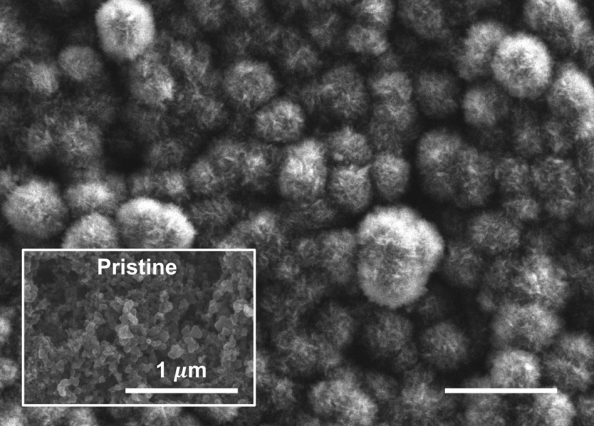
Ultrathin nanosheets separate ions from water

We have occasionally talked about metal-organic frameworks, which are organic-inorganic hybrid crystalline structures that have a microscopic cage-like structure.  MOFs have been under development for a diverse set of applications including gas storage and separation, liquid purification, energy storage, catalysis, and sensing.

For the first time, an international research team, led by researchers from Monash University in Australia, has created an ultrathin porous membrane based on MOF technology that can completely separate potentially harmful ions, such as lead and mercury, from water.

This innovation could enhance water desalination and transform even the dirtiest water into something potable for millions of people around the world.  The new membrane performed steadily in tests for more than 750 hours using only limited energy.

The technology uses water-stable monolayer aluminum-based MOFs just a millionth of a millimeter in thickness.  These are essentially two-dimensional structures.  The ultrathin membrane is permeable to water – it achieves maximum porosity – but rejects nearly 100 percent of ions.  It has been a daunting challenge to fabricate ultra-thin MOFs for water-based processing.  Most previous membranes were too thick and unstable in water. 

Most existing ion separation membrane technologies are based on polymers and have the limitation that they have limited selectivity.  They don’t reject all unwanted ions.

The new membrane technology has great potential based on its precise and fast ion separation and could be ideal for a variety of filtration applications such as gas separation and separation of organic solvents such as paint.  Such membranes might also be used to remove harmful carcinogens from the atmosphere.

**********

Web Links

Ultrathin nanosheets separate ions from water

Photo courtesy of Monash University.

Earth Wise is a production of WAMC Northeast Public Radio.

Climate Change And Nutrients

August 15, 2019 By EarthWise Leave a Comment

Ending hunger isn’t a question of producing enough food.  Globally, enough food is produced to feed all 7.7 billion people on the planet.  But despite this, approximately 1 in 9 people go hungry.  Conflict, natural disasters, and extreme poverty are some of the main drivers of global hunger. 

Climate change is another.  The more frequent and intense extreme weather events increase food insecurity and malnutrition by destroying land, livestock, crops, and food supplies.  Climate change makes growing crops harder every year, especially for those who lack the tools and technology to adapt. 

But the challenge of reducing hunger and malnutrition is to not only produce foods that provide enough calories, but to also produce foods that make enough necessary nutrients widely available.  According to new research, climate change is projected to significantly reduce the availability of critical nutrients such as protein, iron, and zinc over the next 30 years.  The total impact of climate change could reduce global per capita nutrient availability of protein, iron, and zinc by 19.5%, 14.4%, and 14.6%, respectively.

While higher levels of carbon dioxide can boost growth in plants, wheat, rice, corn, barley, potatoes, soybeans, and vegetables are all projected to suffer nutrient losses of about 3% on average by 2050 due to the elevated CO2 levels.

The study, which was co-authored by an international group of researchers and published in the peer-reviewed journal, Lancet Planetary Health, represents the most comprehensive synthesis of the impacts of climate change on the availability of nutrients in the global food supply to date. 

Climate change is complicating the quest to end global hunger and malnutrition. 

**********

Web Links

Rising CO2, climate change projected to reduce availability of nutrients worldwide

Photo, posted April 30, 2015, courtesy of Flickr.

Earth Wise is a production of WAMC Northeast Public Radio.
Big Success From A Big Battery

January 1, 2019 By EarthWise Leave a Comment

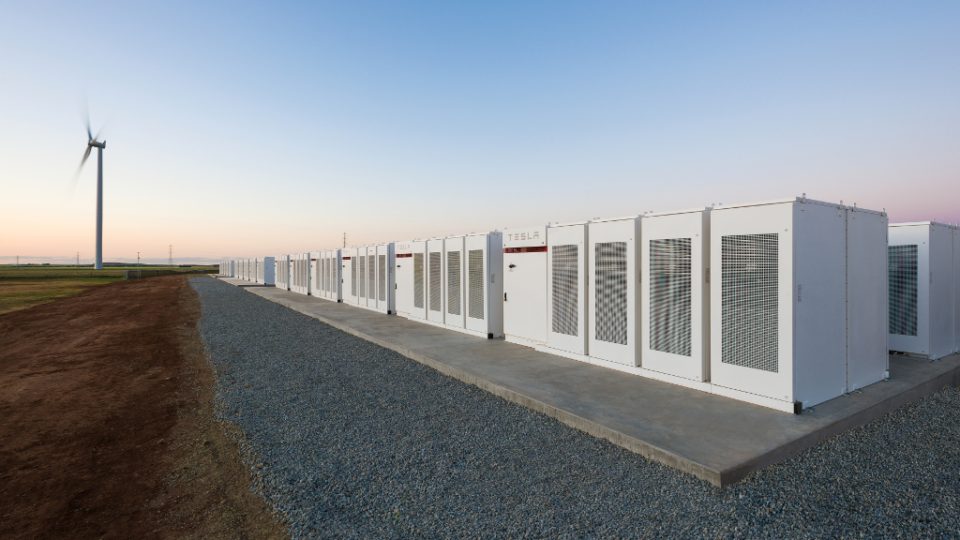
In the fall of 2017, Tesla took on the challenge of installing a 100-megawatt battery storage system in South Australia in under 100 days, promising that the system would be free if it was not built in time.  The project was actually completed in 54 days.

The system is located at the Hornsdale Wind Farm, which consists of 99 wind turbines with a generation capacity of 315 MW.  The Hornsdale Power Reserve installation is the world’s largest lithium-ion battery system and, after a year of operation,has proven to be a smashing success. Estimates are that the project has reduced costs associated with stabilizing the energy grid by about $29 million. The cost of the system was about $87 million, so it is paying for itself quite rapidly. The wind farm and battery systems are owned and operated by a French renewable energy company.

The battery storage system provides a variety of different services to the electric grid.  The primary motivation for it was to achieve system security and reduce the risk of blackouts and load shedding.   Having the battery system in place protects the regional interconnection from tripping,which reduces the risk of separation of South Australia from the National Electricity market.  The system also provides so-called ancillary services such as frequency control and other forms of electricity supply regulation.

The most significant contribution of the Hornsdale Power Reserve is that it has raised the profile of energy storage technology and demonstrated its unique capabilities.  Based on the success of the system, there are now about 2,500 MWh of new storage projects announced by the public and private sectors in Australia.

**********

Web Links

Tesla’s Battery Has Already Saved South Australia a Huge Amount of Money

Photo courtesy of Hornsdale Power Reserve. 

Earth Wise is a production of WAMC Northeast Public Radio.

New Ocean Energy Technologies

December 26, 2018 By EarthWise Leave a Comment

https://earthwiseradio.org/wp-content/uploads/2018/12/EW-12-26-18-New-Ocean-Energy-Technologies.mp3

The ocean energy sector is still at an early stage of development.  Despite the fact that the ocean is permanently in motion, extracting energy from that motion on a major scale continues to be a challenge.  But the potential benefits of ocean technologies are compelling enough that many approaches continue to be pursued.

[Read more…] about New Ocean Energy Technologies

A Battery That Eats Carbon Dioxide

October 30, 2018 By EarthWise Leave a Comment

https://earthwiseradio.org/wp-content/uploads/2018/10/EW-10-30-18-A-Battery-That-Eats-CO2.mp3

Fossil fuel-based power plants are increasingly considering the use of carbon capture technologies as a way to reduce emissions.  The biggest challenge to the wide-spread adoption of such technology is its energy cost, which of course equates to economic cost.  Present-day power plants equipped with carbon capture systems can use up to 30% of the electricity they generate just to power the capture, release, and storage of carbon dioxide.

[Read more…] about A Battery That Eats Carbon Dioxide

Bacteria-Powered Solar Cell

August 29, 2018 By EarthWise 1 Comment

https://earthwiseradio.org/wp-content/uploads/2018/08/EW-08-29-18-Bacteria-Powered-Solar-Cell.mp3

Commercially-available solar panels are composed of solar cells that are most often made from various forms of silicon.  Some panels use thin-film cells made from other semiconductor materials.  Solar cells utilize a property of semiconductors that allows them to convert light energy into electrical energy.

[Read more…] about Bacteria-Powered Solar Cell

Infinitely Recyclable Plastic

June 8, 2018 By EarthWise Leave a Comment

https://earthwiseradio.org/wp-content/uploads/2018/06/EW-06-08-18-Infinitely-Recyclable-Plastic.mp3

Less than 10% of discarded plastic is recycled.  This is one of the major reasons that plastic waste is such a threat to the environment.  There are many challenges to recycling plastics.  For one thing, there are many different types of plastic and if they are melted together, they tend to phase-separate like oil and water and the resultant substance is structurally weak.  Sorting plastics by type is not a simple task.   More generally, it is very difficult to produce plastic with its original properties from recycled feedstock.  So recycled plastics generally end up being useful in only more limited applications.

[Read more…] about Infinitely Recyclable Plastic

Making Room For Wildlife

February 28, 2018 By EarthWise Leave a Comment

https://earthwiseradio.org/wp-content/uploads/2018/01/EW-02-28-18-Making-Room-for-Wildlife.mp3

Protecting biodiversity is a critical challenge facing humanity.  Global vertebrate populations – from elephants to amphibians – declined by 58% from 1970 to 2012 and losses are expected to reach 67% in the next two years.  Think about it:  at least two-thirds of all vertebrate animals on earth have vanished over the lifetime of anyone fifty years old or over.

[Read more…] about Making Room For Wildlife

Cities Can Help Bees

December 14, 2017 By EarthWise Leave a Comment

https://earthwiseradio.org/wp-content/uploads/2017/12/EW-12-14-17-Cities-Can-Help-Bees.mp3

Global bee populations have been drastically declining as a result of habitat loss, pesticides and climate change.  But studies are showing that planting flower patches in urban gardens and green spaces can make a real difference in restoring natural pollinators.   There are already positive results in cities from Chicago to London to Melbourne.

[Read more…] about Cities Can Help Bees

Yellowstone Grizzlies

July 27, 2017 By EarthWise

https://earthwiseradio.org/wp-content/uploads/2017/07/EW-07-27-17-Yellowstone-Grizzlies.mp3

Grizzly bears once roamed much of North America and symbolized the continent’s untamed wilderness.  But hunters and trappers nearly wiped them out across most of the Lower 48 states by the late 1800s.

[Read more…] about Yellowstone Grizzlies

Spray-On Solar Cells

May 15, 2017 By EarthWise

https://earthwiseradio.org/wp-content/uploads/2017/04/EW-05-15-17-Spray-On-Solar-Cells.mp3

One of the most exciting possibilities for future solar energy technology is that of solar cells that can be sprayed or printed on to surfaces like the windows of skyscrapers, the roofs of sports utility vehicles, or the walls of houses.  And the expectation is that such technology would be far cheaper than today’s silicon-based solar panels.

[Read more…] about Spray-On Solar Cells

Cradle-to-Cradle

August 15, 2016 By WAMC WEB

https://earthwiseradio.org/wp-content/uploads/2016/07/EW-08-15-16-Thinking-Cradle-to-Cradle.mp3

The circular economy refers to the concept of an economic system in which there is no waste.  Materials are recycled, repurposed and reinvented to create new raw materials thereby reducing the need to extract new resources and thus saving money, energy and water resources.

[Read more…] about Cradle-to-Cradle

Half A Degree

July 28, 2016 By WAMC WEB

https://earthwiseradio.org/wp-content/uploads/2016/07/EW-07-28-16-Half-A-Degree.mp3

The average global temperature is one degree Celsius above pre-industrial levels.   There has long been a goal to limit global warming to no more than 2 degrees above those levels.  But the Paris climate conference has set a more ambitious goal of limiting global warming to 1.5 degrees.   What difference would that half a degree make?

[Read more…] about Half A Degree

Global Water Scarcity

March 23, 2016 By WAMC WEB

https://earthwiseradio.org/wp-content/uploads/2016/03/EW-03-23-16-Global-Water-Scarcity.mp3

Water is a simple chemical compound containing two hydrogen atoms and one oxygen atom connected by covalent bonds.  It covers 71% of Earth’s surface and is vital for all forms of life.  Despite its abundance, water that is safe for drinking is globally in short supply. 

[Read more…] about Global Water Scarcity

  • « Go to Previous Page
  • Page 1
  • Page 2

Primary Sidebar

Recent Episodes

  • An uninsurable future
  • Clean energy and jobs
  • Insect declines in remote regions
  • Fossil fuel producing nations ignoring climate goals
  • Trouble for clownfishes

WAMC Northeast Public Radio

WAMC/Northeast Public Radio is a regional public radio network serving parts of seven northeastern states (more...)

Copyright © 2026 ·