• Skip to primary navigation
  • Skip to main content
  • Skip to primary sidebar

Earth Wise

A look at our changing environment.

  • Home
  • About Earth Wise
  • Where to Listen
  • All Articles
  • Show Search
Hide Search
You are here: Home / Archives for carbon

carbon

Forest Regrowth In The Amazon | Earth Wise

January 20, 2020 By EarthWise Leave a Comment

Forest Regrowth Amazon deforestation rainforest

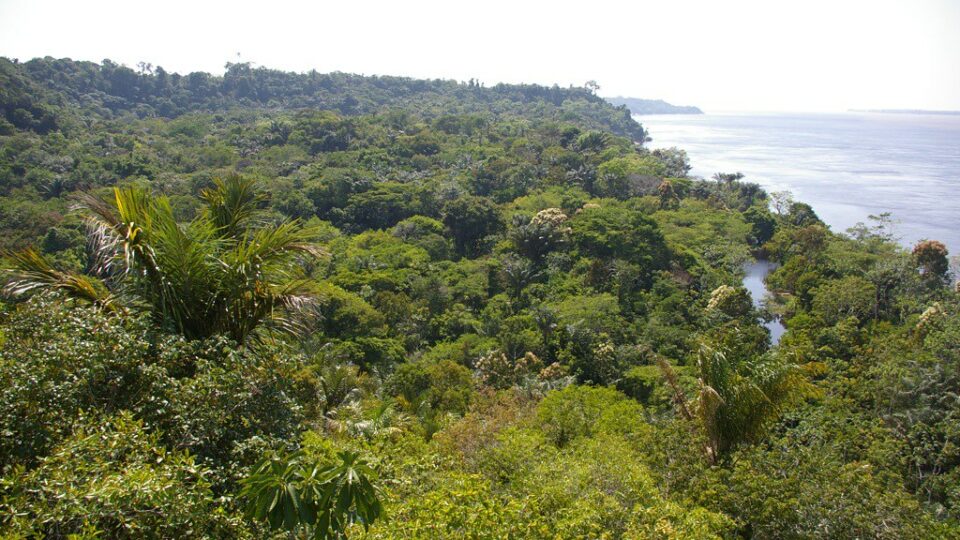
The Amazon is the largest tropical rainforest in the world.  It covers an area approximately equal in size to the lower 48 states, and is home to an estimated 10% of the world’s biodiversity and 15% of its freshwater.  These so-called “lungs of the planet” provide many important global ecological services, including carbon storage, and regulating air quality and climate.

Deforestation in the Amazon exploded in the 1970s and remains one of its biggest threats today.  Since the 1970s, more than 20% of the Amazon rainforest has been cleared.  Cattle ranching, soy and palm plantations, logging, and climate change are some of the biggest drivers of deforestation.  

Now, according to a new study recently published in the journal Ecology, the regrowth of Amazonian forests following deforestation may happen more slowly than previously thought.  These findings could have significant impacts on climate change predictions as the ability of forest regrowth in the Amazon – so-called secondary forests – may have been overestimated.  The research, which was conducted in Bragança, Brazil and includes two decades of forest monitoring, reveals that climate change and the wider loss of forests could be hampering regrowth.    

After 60 years of regrowth, the research team found that secondary forests only held 40% of the carbon when compared with forests undisturbed by humans.  Secondary forests also take less carbon from the atmosphere during periods of drought, and climate change is increasing the number of drought-years in the Amazon.  (During their 20 years of monitoring, the researchers also found biodiversity levels in secondary forests were only 56% of those seen in undisturbed forests). 

More long-term studies are needed to better understand the impacts of reforestation efforts.  

**********

Web Links

Amazon forest regrowth much slower than previously thought

Photo, posted September 6, 2009, courtesy of Nao Lizuka via Flickr.

Earth Wise is a production of WAMC Northeast Public Radio.
The Arctic As A Carbon Source

December 16, 2019 By EarthWise Leave a Comment

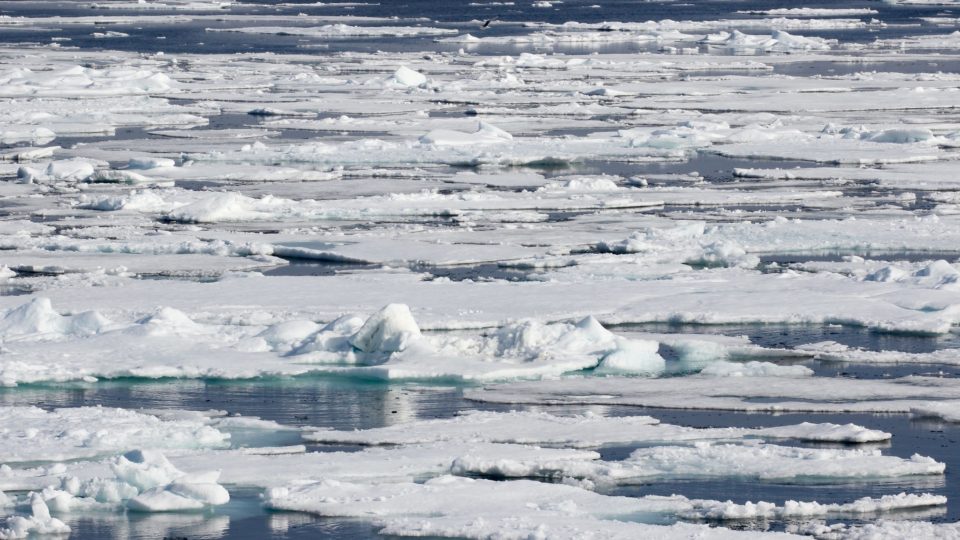
According to a new NASA-funded study, the Arctic may now be a source for carbon in the atmosphere rather than being the sink for it that is has been for tens of thousands of years.

The study, published in Nature Climate Change, warns that carbon dioxide loss from the world’s permafrost regions could increase by more than 40% over the next century if human-caused greenhouse gas emissions continue at their current pace.  Worse yet, carbon emitted from thawing permafrost has not even been included in most climate models.

Permafrost is the carbon-rich frozen soil and organic matter that covers nearly a quarter of Northern Hemisphere land area, mostly in Alaska, Canada, Siberia, and Greenland.  Permafrost holds more carbon than has ever been released by humans from fossil fuel burning, but it has been safely locked away by ice for tens of thousands of years.

As global temperatures rise, the permafrost is starting to thaw and release greenhouse gases into the atmosphere.

The recent findings indicate that the loss of carbon dioxide during the winter in the Arctic may already be offsetting carbon uptake during the growing season.  The researchers compiled on-the-ground observations of carbon dioxide emissions across many sites and combined these with remote sensing data and modeling.  They estimate that the permafrost region is now losing 1.7 billion metric tons of carbon during the winter season but taking up only 1 billion during the growing season.

The major concern is that as the Arctic continues to warm, more carbon will be released into the atmosphere from the permafrost region, which will further the warming.  Climate modeling teams across the globe are trying to incorporate these findings into their projections.

**********

Web Links

Arctic Shifts to a Carbon Source due to Winter Soil Emissions

Photo, posted July 27, 2015, courtesy of Gary Bembridge via Flickr.

Earth Wise is a production of WAMC Northeast Public Radio.

A New Way To Remove CO2 From The Air

December 13, 2019 By EarthWise Leave a Comment

Researchers at MIT have developed a new way of removing carbon dioxide from a stream of air that could be a powerful tool in the battle against climate change.  The new system can pull carbon dioxide out of almost any concentration level of the gas, even including the roughly 400 parts per million level currently found in the atmosphere.

The technique is described in a new paper in the journal Energy and Environmental Science and is based on passing air through a stack of electrochemical plates. The device is essentially a large battery that absorbs carbon dioxide from the air passing over its electrodes as it is being charged up, and then releases the gas as it is being discharged.

To use it, the device would simply alternate between charging and discharging.  Fresh air or some other feed gas would be blown through the system during the charging cycle and then pure, concentrated carbon dioxide would be blown out during discharging.

The specialized battery uses electrodes coated with a compound called polyanthraquinone, which is composited with carbon nanotubes.  These unique electrodes have a binary affinity to carbon dioxide, which means that they either strongly want to capture carbon dioxide or not at all, depending upon whether the device is charging or discharging.

Carbon dioxide is important in many industries such as soft drinks and greenhouse agriculture.  With this device, the stuff could literally be pulled out of the air.  And, of course, in power plants where exhaust gas is dumped into the air, these novel electrochemical cells could be used to prevent the emission of CO2 into the atmosphere.  At the right price, this could be a game changer.

**********

Web Links

MIT engineers develop a new way to remove carbon dioxide from air

Photo, posted August 9, 2007, courtesy of William Clifford via Flickr.

Earth Wise is a production of WAMC Northeast Public Radio.

A Powerful Case For Protecting Whales

October 24, 2019 By EarthWise Leave a Comment

Efforts to mitigate climate change typically face two major challenges.  One is to find effective ways to reduce the amount of atmospheric carbon dioxide.  The other is how to raise enough money to implement climate mitigation strategies. 

Many proposed solutions to climate change, like carbon capture and storage, are complex, expensive, and in some cases, untested.  What if there was a low-tech solution that was effective and economical?

Well, it turns out there is one, and it comes from a surprisingly simple, “no-tech” strategy to capture CO2: increase global whale populations. 

According to a recent analysis by economists with the International Monetary Fund, whales help fight climate change by sequestering CO2 in the ocean. 

Whales sequester carbon in a few ways.  They hoard it in their fat and protein-rich bodies, stockpiling tons of carbon apiece.  When whales die, they turn into literal carbon sinks on the ocean floor.  While alive, whales dive to feed on tiny marine organisms like krill and plankton before surfacing to breathe and excrete. Those latter activities release an enormous plume of nutrients, including nitrogen, iron, and phosphorous, into the water.  These so-called “poo-namis” stimulate the growth of phytoplankton, microscopic marine algae that pull CO2 out of the air and return oxygen to the air via photosynthesis.  Phytoplankton are responsible for every other breath we take, contributing at least 50% of all oxygen to the atmosphere and capturing approximately 40% of all CO2 produced. 

With other economic benefits like ecotourism factored in, economists estimate that each whale is worth $2 million over its lifetime, making the entire global population possibly a one trillion dollar asset to humanity.

*********

Web Links

How much is a whale worth?

Photo, posted June 12, 2013, courtesy of Gregory Smith via Flickr.

XXXXXXXXXXXXXXXXXX

Eco-Friendly Agriculture

October 21, 2019 By EarthWise Leave a Comment

Modern agriculture has steadily destroyed native grasslands, among other ecosystems.  In fact, farming is one of the most ecologically destructive things that humans do.  But we do have to eat.  In response, there is a growing movement for agrarian reform, from grain farming on the prairie, to agroforestry, to raising livestock more sustainably.  Efforts are accelerating to develop a kinder, gentler agriculture adapted to a changing world.

One such effort has come from the Land Institute, an organization in Kansas that works on natural systems agriculture, which seeks to retain the ecological stability of the prairie with its perennial seed plants along with a grain and seed yield comparable to that from annual crops.

After four decades of effort, the institute has introduced its first commercial grain, a trademarked variety called Kernza.  Kernza is a domesticated perennial wild grass – a so-called intermediate wheatgrass – that has a long, slender head that resembles wheat seeds.  People describe its taste as sweet and nutty.   Kernza is already being made into a cereal called Honey Toasted Kernza by Cascadian Farms.  Patagonia Provisions – a spin-off from the clothing company – is making beer from the new grain.

Although Kernza is already being grown and sold commercially, it is not yet ready for prime time.  Last year, there were only about 1,000 acres in cultivation and the yield is only a third to a tenth of the yield of wheat. 

Developing a sustainable perennial polyculture of edible plants would have major benefits such as not having to plow every year, plants developing large root systems that can reach water far beneath the surface and, without annual plowing, having soil carbon remain in the ground.

**********

Web Links

With New Perennial Grain, a Step Forward for Eco-Friendly Agriculture

Photo courtesy of Cascadian Farms/General Mills.

Earth Wise is a production of WAMC Northeast Public Radio.

New Membranes For Carbon Capture

October 2, 2019 By EarthWise Leave a Comment

Drastically reducing the amount of carbon dioxide being emitted into the atmosphere is an essential goal in the effort to mitigate the effects of climate change.  While the ultimate solution is to avoid combustion of fossil fuels by the use of clean alternative energy sources, that transition will take time – possibly more time than we have.  As a result, there is a great deal of effort underway to develop techniques for capturing the carbon emitted by fossil fuel combustion and either recycling it or storing it.

There are multiple ways to capture carbon emissions, but the ultimate goal is to find a technique that is both inexpensive and scalable.  One promising technique involves the use of high-performance membranes, which are filters that can specifically pick out CO2 from a mix of gases, such as those coming out of a factory smokestack.

Scientists at a Swiss laboratory have now developed a new class of high-performance membranes that exceeds the targeted performance for carbon capture by a significant margin.  The membranes are based on single-layer graphene with a selective layer thinner than 20 nanometers – only about 40 atoms thick. The membranes are highly tunable in terms of chemistry, meaning that they can be designed to capture specific molecules.

The membranes are highly permeable – meaning that they don’t impede gas flow too much – but highly selective.  The CO2/N2 separation factor is 22.5, which means that 22.5 times more nitrogen can get through the membrane than carbon dioxide.

The work is just at the laboratory stage at this point, but it is a very promising step towards developing a practical scheme for keeping carbon dioxide from escaping from power-plant and factory smokestacks.

**********

Web Links

Next-gen membranes for carbon capture

Photo, posted December 28, 2010, courtesy of Emilian Robert Vicol via Flickr.

Earth Wise is a production of WAMC Northeast Public Radio.
Floating Solar Fuel Farms

September 20, 2019 By EarthWise Leave a Comment

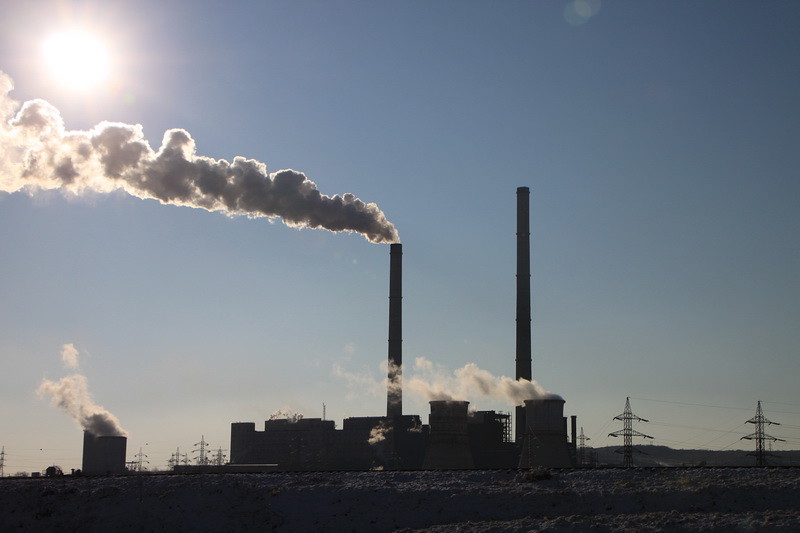
Limiting global warming will require a massive reduction in CO2 emissions from fossil fuel burning.  Renewable energy sources are playing a growing role in the power grid and electric cars are becoming increasingly popular.  Despite all this, carbon-based liquid fuels will continue to dominate our energy use for the foreseeable future.

Researchers in Norway and Switzerland have described a potential scheme that would help remove CO2 from the atmosphere and produce a valuable liquid fuel.

The idea is to create floating islands containing large numbers of solar panels that convert carbon dioxide in seawater into methanol, which can fuel airplanes and trucks.

A combination of largely existing technologies would be the basis of these floating islands, which would be similar to present-day floating fish farms.  The researchers envision clusters each composed of 70 circular solar panels that in total cover an area of roughly half a square mile.  The solar panels would produce electricity, which would split water molecules and isolate hydrogen.  The hydrogen would then react with carbon dioxide pulled from seawater to produce usable methanol.

The technology already exists to build the floating methanol islands on a large scale in areas of the ocean free from large waves and extreme weather.  Suitable locations are off the coasts of South America, North Australia, the Arabian Gulf, and Southeast Asia.

A single floating solar farm could produce more than 15,000 tons of methanol a year – enough to fuel a Boeing 737 airliner for more than 300 round-trip flights across the country.  Floating energy islands would not be a magic bullet for limiting the effects of climate change, but they could well be an important part of an overall strategy.

**********

Web Links

Giant Floating Solar Farms Could Make Fuel and Help Solve the Climate Crisis, Says Study

Photo courtesy of PNAS.

Earth Wise is a production of WAMC Northeast Public Radio.

Wildfires And Carbon

September 17, 2019 By EarthWise Leave a Comment

This summer has been an unprecedented year for fires in the Arctic.  Major fires have burned throughout the Arctic in Russia, Canada, and Greenland.  In total these fires released 50 million tons of carbon dioxide in June alone, which is as much as Sweden emits in an entire year.

In an average year, wildfires around the world burn an area equivalent to the size of India and emit more carbon dioxide to the atmosphere than global road, rail, shipping and air transport combined.

Ordinarily, this is part of a natural cycle.  As vegetation in burned areas regrows, it draws CO2 back out of the atmosphere through photosynthesis.  This is part of the fire-recovery cycle, which can take less than a year in grasslands, but decades in forests.  But in Arctic or tropical peatlands, full recovery may not occur for centuries.

A recent study looked at and quantified the important role that charcoal plays in helping to compensate for carbon emissions from fires.  In wildfires, some of the vegetation is not consumed by burning, but instead is transformed to charcoal – referred to as pyrogenic carbon.   This carbon-rich material can be stored in soils and oceans over very long time periods.

Researchers have combined field studies, satellite data, and modelling to quantify the amount of carbon that is placed in storage in the form of charcoal.  Their results are that the production of pyrogenic carbon amounts to about 12% of the CO2 emissions from fires and can be considered a significant buffer for landscape fire emissions.

Charcoal does not represent a solution to the problem of increasingly intense wildfires, but it is important to take it into account in understanding what is happening.

**********

Web Links

How wildfires trap carbon for centuries to millennia

Photo, posted August 17, 2018, courtesy of the Bureau of Land Management Oregon and Washington via Flickr.

Earth Wise is a production of WAMC Northeast Public Radio.

Falling U.S. Carbon Emissions

September 16, 2019 By EarthWise Leave a Comment

Reducing carbon emissions is a goal embraced by nearly every country in the world, but actually accomplishing it isn’t easy. It is true that renewable energy sources are playing a growing role in energy systems, but counterbalancing that trend is growing energy demand, especially in developing countries.

Here in the US, energy-related CO2 emissions actually went up nearly 3% in 2018 compared with 2017.  But the US Energy Information Administration is now forecasting a 2% drop in emissions this year.

The main reason energy-related emissions are headed lower at this point is coal-fired power plant retirements.  More than 90% of the coal used in the US goes toward electric power and utilities are increasingly turning away from coal.

The rapid shift away from coal has mostly been due to the increasing use of natural gas.  Natural gas is not actually a clean and green fuel, but it is definitely less carbon-intensive than coal.  Overall, the total installed capacity of renewable sources – hydropower, wind, solar, geothermal, and biomass – has now actually surpassed the capacity of coal plants.  Given that renewables have in many places become the cheapest power option, there is little chance that coal has much of a future, despite efforts by the current administration.

The electric power sector is gradually moving away from all carbon-emitting sources – a trend that is being reinforced by legislation in many states.  The real CO2 emissions leader is petroleum, which accounts for nearly half of the total.  We have a long way to go to reduce emissions from the use of petroleum.  There are over 250 million cars and trucks on US roads and only a little over a million of them don’t burn fossil fuels.

**********

Web Links

US energy-related CO2 emissions expected to fall this year, almost solely due to a drop in coal use

Photo, posted November 6, 2017, courtesy of Cindy Shebley via Flickr.

Earth Wise is a production of WAMC Northeast Public Radio.
The Importance Of The Amazon Rainforest Fires

September 10, 2019 By EarthWise Leave a Comment

The Amazon rainforest covers extensive parts of Brazil, Peru, Colombia, and small parts of six other countries.  It is the largest rainforest in the world and is instrumental in driving the weather and climate in South America.

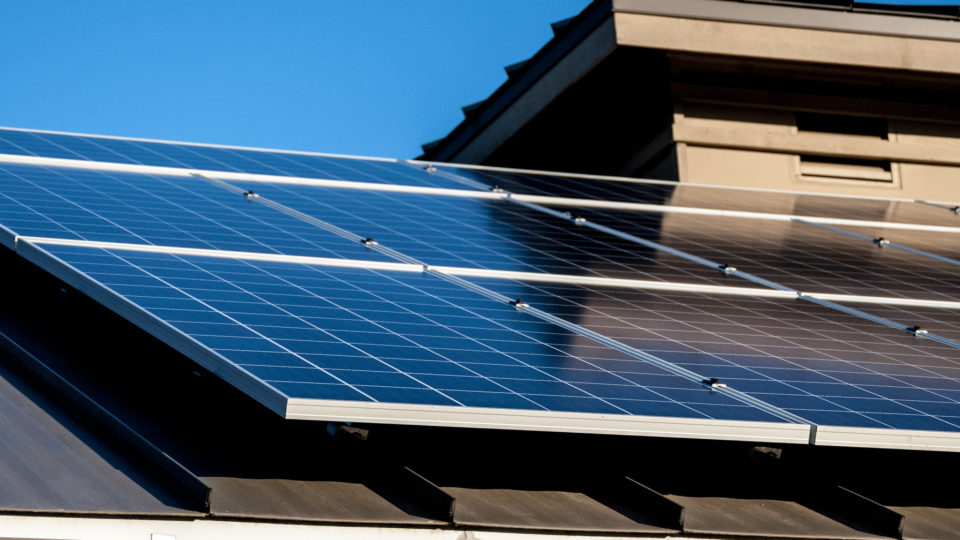
The raging wildfires in the Amazon rainforest are a source of great concern.  The Amazon is always prone to wildfires during the dry season in South America, but the extent and number of fires this year cannot be attributed simply to drought.  The surge in fires has come from illegal deforestation by loggers and farmers, who are using the cleared-out land for cattle ranching.

Rainforests produce consistently high amounts of rainfall throughout the year by pulling water from the soil and then releasing it into the atmosphere.  The Amazon rainforest essentially makes it rain in South America. 

Over time, the forest plays a crucial role in cycling carbon out of the atmosphere by turning it into biomass.  The Amazon jungle sucks up as much as a quarter of the planet’s atmospheric carbon dioxide.

Pristine rainforest burns less frequently and less intensely than cleared and recovering forest.  As more and more of the Amazon rainforest is deforested, it becomes more likely to burn each year.

The major disruption of the water dynamics in South America has the potential to not only drive the weather in South American countries but even potentially influence natural resources like snow packs in the Northern Hemisphere.

The skies of Sāo Paulo, Brazil’s financial hub have been dark at midday because of the Amazon fires.  This is like having a fire in California and seeing the smoke in Boston.  The Amazon rainforest fires are a big problem for the whole world.

**********

Web Links

The Amazon Rainforest has been burning for weeks. Here’s why that matters.

Photo, posted August 21, 2019, courtesy of NASA Goddard Space Flight Center via Flickr.

Earth Wise is a production of WAMC Northeast Public Radio.
Trees And Methane

August 14, 2019 By EarthWise Leave a Comment

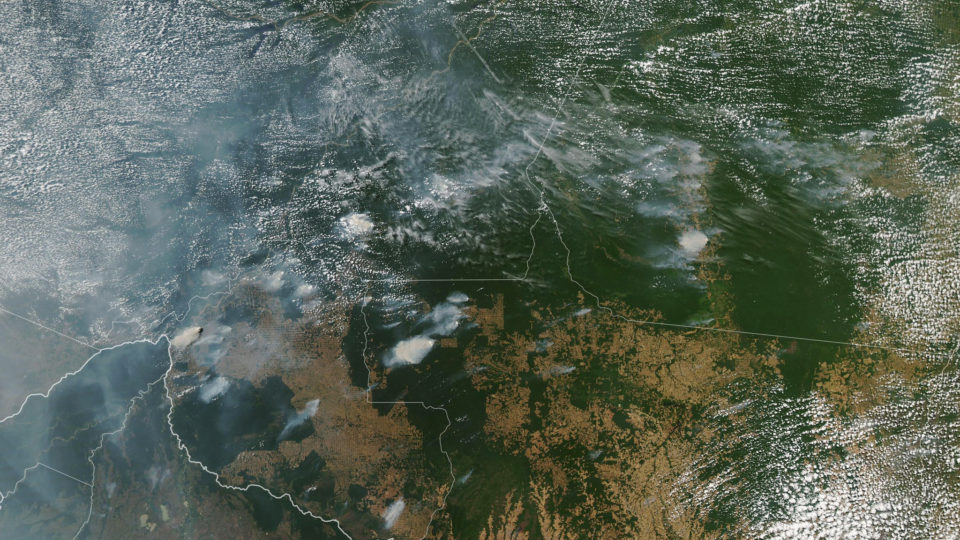
The Amazon is a source of many mysteries.  One that was as troubling as it was mysterious was the large amounts of methane emissions coming from the rainforest that were observed by satellites but that nobody could find on the ground.  In total, there were 20 million tons of methane whose origin was unknown.

An expedition by a British postdoctoral researcher who spent two months strapping gas-measuring equipment to thousands of trees has solved the mystery.  It turns out that trees, especially in the extensive flooded forests, were stimulating methane production in the waterlogged soils and pumping it into the atmosphere.

This research has uncovered a previously-ignored major source of the second most important greenhouse gas in the world.  Apparently, most of the world’s estimated 3 trillion trees emit methane at least some of the time.

This in no way implies that trees are bad for the climate and therefore should be cut down.  The reality is that the carbon storage capability of trees far outweighs their methane emissions.  But since corporations these days are planting trees to offset their carbon emissions, it is essential to know if their numbers add up.  Carbon accounting has to include the complex chemistry of trees and methane.

Wetland tree trunks can act as passive conduits for methane generated by micro-organisms in waterlogged soils.  The solid-looking trunks contain spaces and channels through which gases travel up and down.  But in wetland systems, trees also create the conditions, and provide the raw materials, for methane generation by micro-organisms.  Trees are essentially bioreactors.  Some trees even actively generate methane from photochemical reactions in their foliage.

Understanding the interactions of ecosystems and the atmosphere is a complicated business.

**********

Web Links

Scientists Zero in on Trees as a Surprisingly Large Source of Methane

Photo, posted December 13, 2008, courtesy of Ivan Mlinaric via Flickr.

Earth Wise is a production of WAMC Northeast Public Radio.
100% Renewables Does Not Necessarily Mean Carbon-Free

July 16, 2019 By EarthWise Leave a Comment

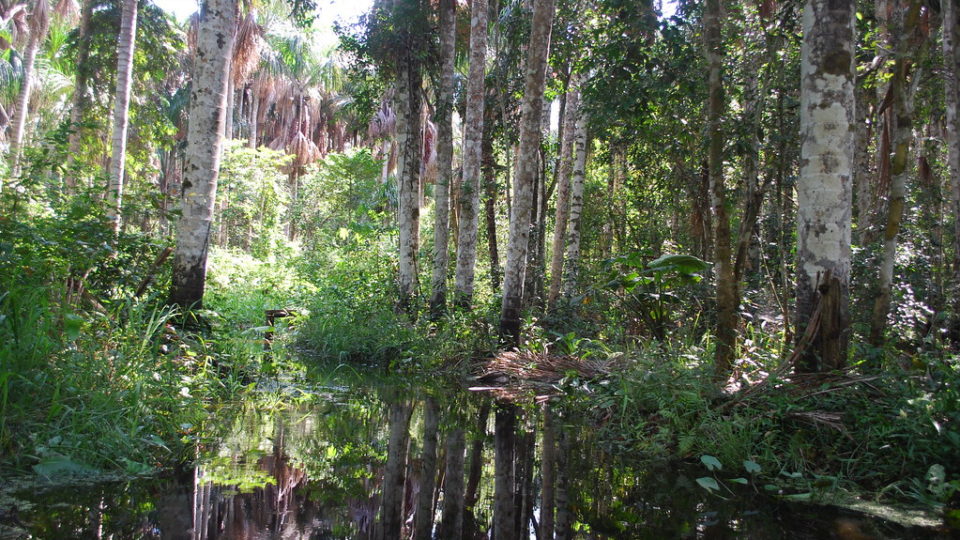
Hundreds of companies around the world have committed to use 100% renewable energy in order to fight climate change.  But a new study from Stanford University points out that 100% renewable energy does not necessarily mean 100% carbon-free energy.

The problem is that the carbon content of electricity can vary a lot over the course of a day in many locations.  Using yearly averages can overstate the carbon reductions associated with a particular power source, in some cases by significant amounts.

Suppose a California company purchases or generates enough solar power to match 100% or more of their electricity use over the course of the year.  In reality, it may generate far more electricity than it uses during the afternoon and sell the excess.  Then, at nighttime, it purchases power from the grid, which would be far more carbon-intensive if it involves the burning of fossil fuels.

But in Britain, for example, the situation is very different.  With a high reliance on wind power, grid carbon intensity is actually lower at night.  So very different consumption patterns over the course of a day would be less carbon-intensive.

If sufficient energy storage capacity can be implemented into the grid as well as suitable long-range transmission, these time-based fluctuations in the electricity supply could be ironed out.  Until such time, electricity consumers need to evaluate the environmental benefits of their renewable strategies on an hourly basis rather than using averages.  And the best strategies are entirely dependent upon the characteristics of the specific grid they interact with.  The need for this kind of analysis will only grow as renewable generation expands.  Transparent, precise and meaningful carbon accounting is necessary.

**********

Web Links

100% renewables doesn’t equal zero-carbon energy, and the difference is growing

Photo, posted January 29, 2013, courtesy of U.S. Fish and Wildlife Service via Flickr.

Earth Wise is a production of WAMC Northeast Public Radio.
Getting Rid Of Plastic Here And Abroad

May 23, 2019 By EarthWise Leave a Comment

Efforts in the fight against plastic pollution are really stepping up these days. 

New York State lawmakers have agreed to impose a statewide ban on most types of single-use plastic bags from retail sales.  The ban would be the second statewide ban after California, which banned the bags in 2016.  Hawaii effectively also has such a ban since all of the state’s counties have their own bans.

The New York ban would begin next March and would forbid stores from providing customers with single-use plastic bags.  There are a number of exceptions, including food takeout bags in restaurants, bags used to wrap deli or meat counter products, and newspaper bags.  New York counties could opt into a plan to charge a 5-cent fee on paper bags, with proceeds going to the state’s Environmental Protection Fund.  Some environmentalists point out, however, that paper bags have their own issues.  While they do decompose in landfills, they have a substantial carbon footprint since they are made from wood and being heavier, they are more costly to ship.  Business groups are concerned about the forthcoming ban based on increased costs.

Meanwhile, European Union member states have reached a provisional agreement to introduce restrictions on single-use plastic products.  In 2021. European citizens will say goodbye to plastic cutlery, plastic plates and plastic straws among other products.

According to the European Commission, plastics make up 85% of beach litter in the Mediterranean.  Large plastic pieces injure, suffocate, and often kill marine animals but microplastics have reached record levels of concentration – over a million fragments per square kilometer – in the Mediterranean.

Both here and abroad, the war on plastics is heating up.

**********

Web Links

Plastic Bags to Be Banned in New York; Second Statewide Ban, After California

The End Of Plastic Cutlery, Plates And Straws: EU Market Says Goodbye To Single-Use Plastic Products

Photo, posted March 20, 2007, courtesy of Flickr.

Earth Wise is a production of WAMC Northeast Public Radio.

Growing Rocks To Store Carbon

April 24, 2019 By EarthWise Leave a Comment

The US Geological Survey recently published a comprehensive review of geological carbon storage in sedimentary rocks through carbon mineralization.   That is the process by which carbon dioxide becomes a solid mineral, such as a form of carbonate.  Certain rocks undergo a chemical reaction when exposed to carbon dioxide and turn into different minerals as a result.

The idea is to use carbon mineralization as a way to permanently store carbon dioxide that has been captured from power plant emissions, other industrial activities, or even directly from the atmosphere.

Two basic approaches are injecting the CO2 deep underground or exposing it to crushed rocks at the surface.  The two types of rock best suited for mineralization through injection are basalt and various ultramafic rocks.  Pilot studies have shown that injection into basalt can lead to mineralization in under two years.

Exposing carbon dioxide to crushed rock at the surface generally makes use of crushed mining waste.  Mineralization can be much faster in this case because there is more surface area on the crushed rock where mineralization occurs.  (However, the quantities of rock available at the surface are much less than what exists deep underground).

Like all carbon capture and storage approaches, the key consideration is cost.  The USGS study estimates that underground injection would cost around $30 per metric ton of CO2.  The crushed rock approach might only cost $8 per metric ton, but that assumes the crushed rock is already available.  If it must be newly mined, the costs would obviously go up significantly.  To put this into perspective, a typical car produces around 4 metric tons of CO22 per year.  So, it would cost somewhere between $30 and $120 a year to eliminate the emissions from one car.  Perhaps that is a price we need to pay until we ditch gasoline cars.

**********

Web Links

How Growing Rocks Can Help Reduce Carbon Emissions

Photo, posted October 17, 2011, courtesy of Glen Bledsoe via Flickr.

Earth Wise is a production of WAMC Northeast Public Radio.

Forecasting A Bad Year For Carbon

March 11, 2019 By EarthWise Leave a Comment

Carbon dioxide levels in the atmosphere are higher than they have been for hundreds of thousands of years, and they continue to grow.  The United Kingdom’s national meteorological service – known as the Met Office – issues annual predictions of global CO2 levels based in part on readings taken at the Mauna Loa observatory in Hawaii.  Their forecast for this year is that there will be one of the largest rises in atmospheric carbon-dioxide concentration in the 62 years of measurements at Mauna Loa.

Since 1958, there has been a 30% increase in the concentration of carbon dioxide in the atmosphere.  This has been caused by emissions from fossil fuels, deforestation and cement production.  The increase would actually have been even larger if it were not for natural carbon sinks in the form of various ecosystems that soak up some of the excess CO2.

Weather patterns linked to year-by-year swings in Pacific Ocean temperatures are known to affect the uptake of carbon dioxide by land ecosystems.  In years with a warmer tropical Pacific – such as El Niño years – many regions become warmer and drier, which limits the ability of plants to grow and to absorb CO2 .  The opposite happens when the Pacific is cool, as was the case last year.

The Met Office predicts that the contribution of natural carbon sinks will be relatively weak, so the impact of human-caused emissions will be larger than last year.  The predicted rise in atmospheric CO2 is 2.75 parts-per-million, which is among the highest rises on record.  The forecast for the average carbon dioxide concentration is 411 ppm, with peak monthly averages reaching almost 415 ppm.  With global emissions not really declining, the numbers just get higher and higher.

**********

Web Links

Faster CO₂ rise expected in 2019

Photo, posted March 18, 2006, courtesy of Darin Marshall via Flickr.

Earth Wise is a production of WAMC Northeast Public Radio.
A Quiet Clean Energy Revolution

March 5, 2019 By EarthWise Leave a Comment

While the Trump administration seeks to prop up and promote use of fossil fuels, the country continues to move in the opposite direction.  Last year was actually a pretty positive year for clean energy in the U.S.

In terms of public opinion, 70% of Americans surveyed believe the country should produce 100% of its electricity from renewable energy sources and more than half of survey respondents think renewables are a good idea even if they raise energy bills.

Companies in the U.S. purchased a record 6.43 gigawatts of renewable power, enough to power 1.5 million homes.  The number of corporations entering into renewable energy deals doubled last year.

More than 300 U.S. cities, towns or counties have made commitments to climate action and, as of November, 99 cities have committed to 100% renewable energy, doubling the total from a year ago.

A number of gubernatorial candidates running on ambitious renewable energy platforms were elected in November including those in Illinois, Colorado, New Mexico, Maine and Nevada.

Utilities are responding to the growing demand for clean energy.  Consumers Energy in Michigan plans to cut carbon emissions by 80% and stop using coal.  Iowa-based MidAmerican Energy will become the first U.S. utility to source 100% of its electricity from renewable sources next year.  Xcel Energy, one of the biggest utilities in the country, has committed to be 80% carbon-free by 2030 and go completely carbon-free by 2050.

The fossil fuel industry with its supporters in high places is still kicking and screaming, but there is no doubt that the U.S. energy system is changing, and the quiet clean energy revolution will only pick up more steam in 2019.

**********

Web Links

The US Underwent a Quiet Clean Energy Revolution Last Year

Photo, posted August 15, 2009, courtesy of Ken via Flickr.

Earth Wise is a production of WAMC Northeast Public Radio.
Wildfire Pollution

January 24, 2019 By EarthWise Leave a Comment

California’s record-breaking wildfires this past season have been an unmitigated disaster with respect to loss of life, property, impact on human health, and in multiple other ways.  And as if all of that was not bad enough, the impact on carbon emissions into the atmosphere was equally catastrophic.  The wildfires were deadly and cost billions of dollars but were also terrible for the environment and for the public’s health.

According to estimates from the U.S. Department of the Interior, the California wildfires released emissions equivalent to about 68 million tons of carbon dioxide into the atmosphere.  That is equal to the emissions from generating one year’s worth of electricity in the state, or about 15% of the total annual emissions in the state of California.

It is a vicious circle in which the changes to the climate that have lengthened the fire season and shortened the precipitation season are creating additional contributions to the warming of the climate.

Over the past century, California has warmed by about 3 degrees Fahrenheit.  That extra-warmed air sucks water out of plants and soils, resulting in trees, shrubs, and rolling grasslands that are dry and primed to burn. That vegetation-drying effect compounds with every additional degree of warming.  Plants lose their water more efficiently as temperatures get higher.

The result is that wildfires are increasing in size both in California and across the western United States. Fire experts at Columbia University estimate that since the 1980s, the warming climate has contributed to an extra 10 million acres of burning in western forests – an area about the size of Massachusetts and Connecticut combined.

It’s a bad situation that is getting worse.

**********

Web Links

California’s 2018 Wildfires Have Emitted A Year’s Worth of Power Pollution

Photo, posted October 11, 2017, courtesy of Bob Dass via Flickr. 

Earth Wise is a production of WAMC Northeast Public Radio.

Car Parts From Agricultural Waste

January 11, 2019 By EarthWise Leave a Comment

A new bio-composite material made from date palm fiber biomass could be used to produce sustainable, lightweight and low-cost parts for the automobile and marine industries.

A team of researchers from the UK has developed a date palm fiber polycaprolactone composite that is completely biodegradable, renewable,sustainable and recyclable, in contrast to synthetic composite materials reinforced by glass and carbon fibers. The team tested the mechanical properties of the material and found that it achieved better low-velocity impact resistance than traditional man-made composites.

The idea would be to use the material in non-structural auto parts such as car bumpers and door linings.   The result would be to reduce the weight of vehicles, contributing to less fuel consumption and lower emissions.  The new material can be produced using less energy than glass and carbon fibers and is biodegradable and therefore easier to recycle.

Date palm fibers are one of the most available natural fibers in many parts of the world.  The trees produce a large quantity of agricultural waste, which is mostly burned or land-filled,causing serious environmental problems.

Convincing industry to use a new class of materials such as natural-fiber reinforced composites is challenging.  First it is necessary to obtain consistent,reliable properties from the material. Then the industries need to work closely with the developers to test the materials and convince themselves of the viability of using them.  The team, led by researchers at the University of Portsmouth, has been working with industry to test the viability of parts made from a variety of other sustainable materials as well including flax, hemp, and jute.  Someday, our cars may have bumpers made from agricultural waste.

**********

Web Links

Agricultural waste drives us closer to greener transport

Photo, posted October 27, 2017, courtesy of David Stanley via Flickr. 

Earth Wise is a production of WAMC Northeast Public Radio.
Turning Plastic Waste Into Green Energy

November 14, 2018 By EarthWise 1 Comment

https://earthwiseradio.org/wp-content/uploads/2018/11/EW-11-14-18-Turning-Plastic-Waste-into-Green-Energy.mp3

In the Back to the Future movies, the DeLorean time machine ran on garbage.  We aren’t any closer to building time machines, but it might soon be practical to produce fuel from garbage.

[Read more…] about Turning Plastic Waste Into Green Energy

How To Measure Carbon Emissions

November 5, 2018 By EarthWise Leave a Comment

https://earthwiseradio.org/wp-content/uploads/2018/11/EW-11-05-18-How-To-Measure-Carbon-Emissions.mp3

The Paris climate accord by nearly 200 countries seeks to reduce global carbon emissions.  But how can the actions of these countries be monitored, reported, and verified?  It is not an easy task.

[Read more…] about How To Measure Carbon Emissions

  • « Go to Previous Page
  • Page 1
  • Interim pages omitted …
  • Page 5
  • Page 6
  • Page 7
  • Page 8
  • Page 9
  • Interim pages omitted …
  • Page 11
  • Go to Next Page »

Primary Sidebar

Recent Episodes

  • An uninsurable future
  • Clean energy and jobs
  • Insect declines in remote regions
  • Fossil fuel producing nations ignoring climate goals
  • Trouble for clownfishes

WAMC Northeast Public Radio

WAMC/Northeast Public Radio is a regional public radio network serving parts of seven northeastern states (more...)

Copyright © 2026 ·