• Skip to primary navigation
  • Skip to main content
  • Skip to primary sidebar

Earth Wise

A look at our changing environment.

  • Home
  • About Earth Wise
  • Where to Listen
  • All Articles
  • Show Search
Hide Search
You are here: Home / Archives for carbon footprint

carbon footprint

Meal Kits And The Environment

June 11, 2019 By EarthWise Leave a Comment

Meal kit services have become extremely popular in recent years.  These are companies that deliver a box of pre-portioned ingredients and a chef-created recipe to your door to make home-cooked meals easy and practical for busy people.  Leading companies like Blue Apron, HelloFresh, and Plated have been joined by dozens of others competing in the meal kit market.  As of last year, annual sales for these things were over $3 billion and growing at more than a 20% annual rate.

A major rap against meal kits has been their environmental impact, mostly centered around the amount of packaging waste they generate.  While there is most certainly lots of packaging waste associated with meal kits, it turns out that their overall carbon footprint is actually rather good compared with conventional ways to make homecooked meals.

A study from the University of Michigan looked at the cradle-to-grave impact of meal kits, taking into account every major step in the lifetime of the food ingredients and the packaging – agricultural production, packaging production, distribution, supply chain losses, consumption, and waste generation.

Surprisingly, meal kits have a much lower overall carbon footprint than the same meals made from ingredients purchased at the grocery store – even including their packaging.  The main reason is that pre-portioned ingredients and a streamlined supply chain lower overall food losses and waste for meal kits compared to store-bought meals.  Pre-portioning simply results in fewer ingredients that end up being wasted.  Meal kits also have radically different supply chain structures than foods sold in supermarkets.

Whether the economics and culinary aspects of meals kits are advantageous for many people is an open question, but apparently from an environmental perspective, they are just fine.

**********

Web Links

Climate change has worsened global economic inequality

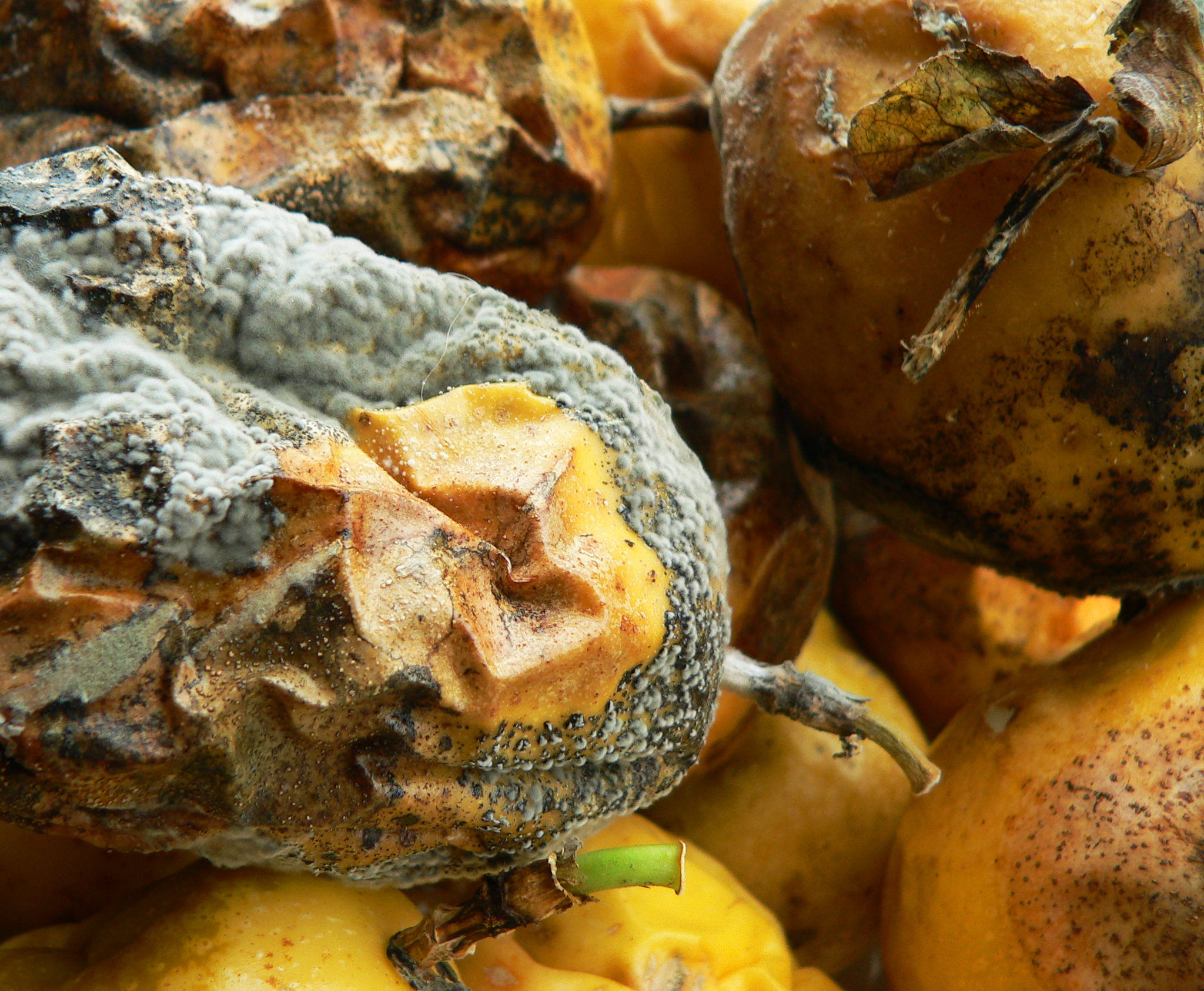
Photo, posted June 11, 2018, courtesy of Marco Verch via Flickr.

Earth Wise is a production of WAMC Northeast Public Radio.
A Quiet Clean Energy Revolution

March 5, 2019 By EarthWise Leave a Comment

While the Trump administration seeks to prop up and promote use of fossil fuels, the country continues to move in the opposite direction.  Last year was actually a pretty positive year for clean energy in the U.S.

In terms of public opinion, 70% of Americans surveyed believe the country should produce 100% of its electricity from renewable energy sources and more than half of survey respondents think renewables are a good idea even if they raise energy bills.

Companies in the U.S. purchased a record 6.43 gigawatts of renewable power, enough to power 1.5 million homes.  The number of corporations entering into renewable energy deals doubled last year.

More than 300 U.S. cities, towns or counties have made commitments to climate action and, as of November, 99 cities have committed to 100% renewable energy, doubling the total from a year ago.

A number of gubernatorial candidates running on ambitious renewable energy platforms were elected in November including those in Illinois, Colorado, New Mexico, Maine and Nevada.

Utilities are responding to the growing demand for clean energy.  Consumers Energy in Michigan plans to cut carbon emissions by 80% and stop using coal.  Iowa-based MidAmerican Energy will become the first U.S. utility to source 100% of its electricity from renewable sources next year.  Xcel Energy, one of the biggest utilities in the country, has committed to be 80% carbon-free by 2030 and go completely carbon-free by 2050.

The fossil fuel industry with its supporters in high places is still kicking and screaming, but there is no doubt that the U.S. energy system is changing, and the quiet clean energy revolution will only pick up more steam in 2019.

**********

Web Links

The US Underwent a Quiet Clean Energy Revolution Last Year

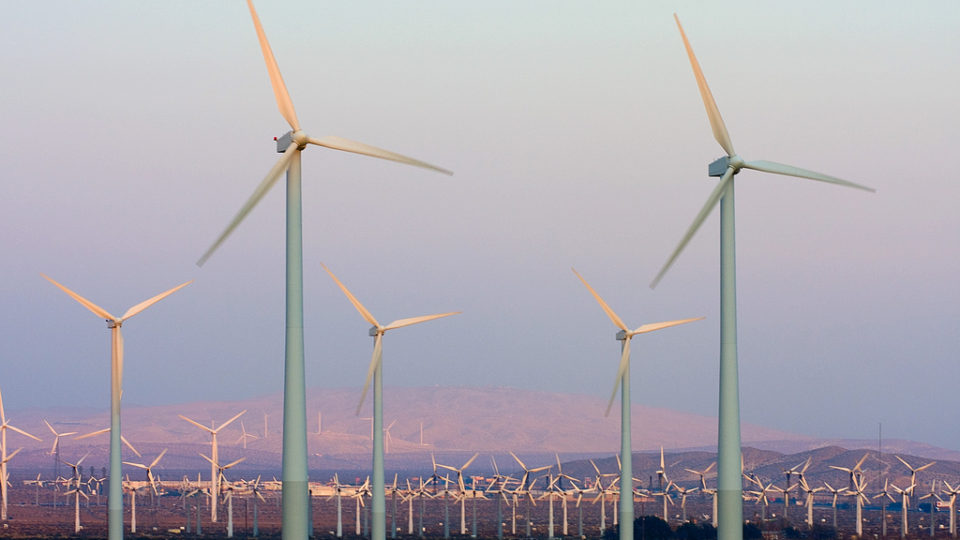
Photo, posted August 15, 2009, courtesy of Ken via Flickr.

Earth Wise is a production of WAMC Northeast Public Radio.
Food Production And Climate Change

January 29, 2019 By EarthWise Leave a Comment

According to a University of Oxford study recently published in the journal Science, food production is a major driver of climate change as it’s responsible for 26% of all greenhouse gas emissions.  But the research team found that the environmental impact of different foods varied greatly. 

Meat and other animal products are responsible for 58% of all food-related greenhouse gas emissions, despite only providing approximately one-fifth of the calories we consume.  The researchers found that beef and lamb in particular have the most damaging effect on the planet, responsible for half of all greenhouse gas emissions from animal agriculture. 

These findings echo recommendations from the Intergovernmental Panel on Climate Change about how individuals can reduce their carbon footprint through diet.  The IPCC suggests we consume less meat and dairy products, consume more locally-sourced seasonal foods, and throw less food in the trash.  

Avoiding meat and dairy products can reduce an individual’s carbon footprint from food by two-thirds.  The effects of doing so include everything from conserving water and preserving biodiversity to reducing pollution and deforestation. 

Interestingly, the same food can have major differences in terms of environmental impacts.  For example, beef raised on deforested land is responsible for 12 times as many greenhouse gas emissions as that raised on natural pastures.  But even the most climate-friendly meat options are still responsible for more greenhouse gas emissions than the highest-impact vegetable proteins, like beans and nuts. 

Big differences can also be made by avoiding chocolate and coffee produced from deforested lands.  

To learn more about the climate impact of your diet, follow the link to the ‘Climate Change Food Calculator’ on our website: Earth-Wise-Radio.org. 

**********

Web Links

Reducing food’s environmental impacts through producers and consumers

Climate change food calculator

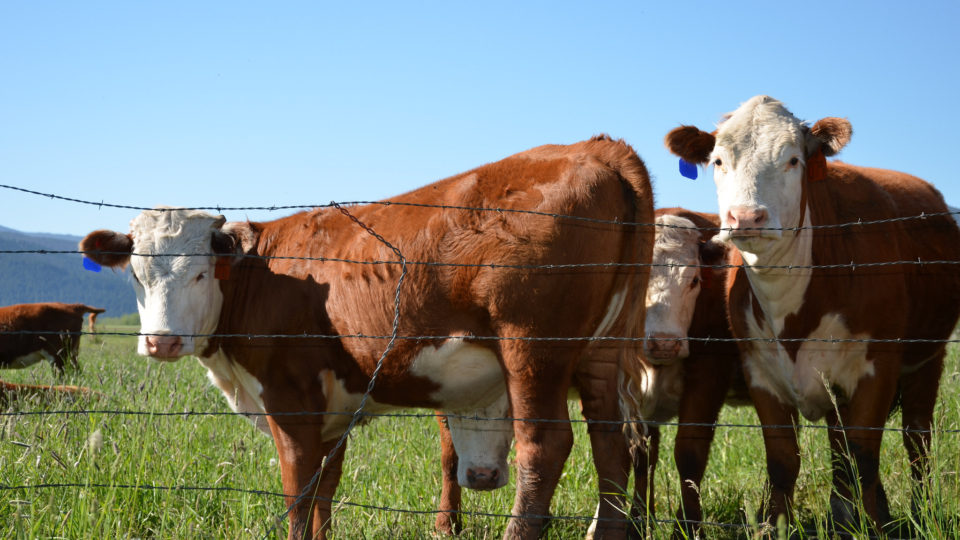
Photo, posted June 21, 2011, courtesy of USDA NRCS Montana via Flickr.

Earth Wise is a production of WAMC Northeast Public Radio.

Legos And Plastics

October 23, 2018 By EarthWise Leave a Comment

https://earthwiseradio.org/wp-content/uploads/2018/10/EW-10-23-18-Legos-and-Plastics.mp3

Globally, consumers are voicing concerns about the impact of plastic waste on the planet. Conscious of these consumer concerns, many companies are trying to switch to recyclable or less-polluting packaging.  Some are even ditching plastics all together. 

[Read more…] about Legos And Plastics

Tourism And Greenhouse Gas Emissions

June 29, 2018 By EarthWise Leave a Comment

https://earthwiseradio.org/wp-content/uploads/2018/05/EW-06-29-18-Tourism-and-Greenhouse-Gas-Emissions.mp3

Tourism is a significant contributor to global gross domestic product.  Furthermore, it is growing at an annual rate of 4%, more than many other economic sectors.  There are many places around the world where it is the largest industry.  But until recently, there really wasn’t very good information about its carbon footprint.

[Read more…] about Tourism And Greenhouse Gas Emissions

Is A Real Christmas Tree Or A Fake One Better for the Planet? 

December 7, 2017 By EarthWise 2 Comments

https://earthwiseradio.org/wp-content/uploads/2017/11/EW-12-07-17-Real-or-Fake-Xmas-Trees.mp3

For many, the Christmas tree is a quintessential part of the holiday season.  According to the American Christmas Tree Association, 81% of Christmas trees Americans decorated in 2016 were artificial.  But are artificial trees really the better option for the environment?

[Read more…] about Is A Real Christmas Tree Or A Fake One Better for the Planet? 

Air Travel And Global Warming

September 25, 2017 By EarthWise Leave a Comment

https://earthwiseradio.org/wp-content/uploads/2017/09/EW-09-25-17-Air-Travel-and-Global-Warming.mp3

Air travel is pretty carbon intensive.  For those of us who take plane trips, it represents a substantial part of our individual carbon footprints. It isn’t that plane travel is inefficient fuel-wise on a miles-per-gallon-per-passenger basis compared with driving, for example.  It is just that we go so much farther on planes.   Currently, aviation accounts for only a few percent of overall carbon emissions, but that is changing for two reasons.

[Read more…] about Air Travel And Global Warming

France And Climate Change

August 15, 2017 By EarthWise

https://earthwiseradio.org/wp-content/uploads/2017/08/EW-08-15-17-France-and-Climate-Change.mp3

On the heels of the Trump Administration’s decision to withdraw from the Paris Climate Accord, France has rolled out ambitious plans to reduce its carbon footprint even further. 

[Read more…] about France And Climate Change

Recycling And Olympic Medals

March 23, 2017 By EarthWise

https://earthwiseradio.org/wp-content/uploads/2017/03/EW-03-23-17-Recycling-and-Olympic-Medals.mp3

Organizers of the Tokyo 2020 Olympic Games announced in February that all the Olympic medals for the games will be made from recycled materials.  The strategic roadmap for the games, laid out in the document “Olympic Agenda 2020”, specifically calls for the inclusion of sustainability in every aspect of the games.

[Read more…] about Recycling And Olympic Medals

Renewables On Campus

December 12, 2016 By EarthWise

https://earthwiseradio.org/wp-content/uploads/2016/11/EW-12-12-16-Renewables-on-Campus.mp3

Colleges and universities across the country are increasingly deploying solar arrays and other types of renewable energy.   Many have set goals to become carbon neutral.

[Read more…] about Renewables On Campus

Food Waste And Behavior

May 27, 2016 By WAMC WEB

https://earthwiseradio.org/wp-content/uploads/2016/05/EW-05-27-16-Food-Waste-and-Behavior.mp3

In a recent article in Science entitled “Waste not, want not, emit less,” Danish researchers looked at the problem of food waste in both developed and developing countries.  Overall, about a third of the world’s food is lost or wasted, but the reasons for this vary in different parts of the world.

[Read more…] about Food Waste And Behavior

Born On Frozen Lakes

December 16, 2015 By WAMC WEB

https://earthwiseradio.org/wp-content/uploads/2015/12/EW-12-16-15-NHL.mp3

The National Hockey League seems like an unlikely environmental ally. But a sport born on frozen lakes stands to lose a lot in a warming world. NHL Commissioner Gary Bettman is committed to keeping “the air clean and the ponds frozen for future generations.”

[Read more…] about Born On Frozen Lakes

  • « Go to Previous Page
  • Page 1
  • Page 2

Primary Sidebar

Recent Episodes

  • An uninsurable future
  • Clean energy and jobs
  • Insect declines in remote regions
  • Fossil fuel producing nations ignoring climate goals
  • Trouble for clownfishes

WAMC Northeast Public Radio

WAMC/Northeast Public Radio is a regional public radio network serving parts of seven northeastern states (more...)

Copyright © 2026 ·