
• Skip to primary navigation
  • Skip to main content
  • Skip to primary sidebar

Earth Wise

A look at our changing environment.

  • Home
  • About Earth Wise
  • Where to Listen
  • All Articles
  • Show Search
Hide Search
You are here: Home / Archives for Earth Wise

Earth Wise

Balloons And Seabirds

March 19, 2019 By EarthWise Leave a Comment

It’s no secret that there is a ton of plastic in the ocean – millions of tons, in fact.  Scientists estimate that there is more 165 million tons of plastics swirling about in our oceans today, with an additional 8.8 million tons flowing in every year.  As the oceans swell with plastic debris, many marine species wind up ingesting the stuff – often with dire consequences.

All this plastic trash winds up affecting more than just aquatic species, too.  According to researchers from the University of Tasmania, a seabird that ingested a single piece of plastic has a 20% chance of mortality.  This statistic jumps to 50% if the seabird consumes nine pieces of plastic. 

The study, which was recently published in the journal Scientific Reports, also found that while hard plastics account for the majority of plastic debris ingested, it’s far less likely to prove fatal than soft plastics, such as balloons. 

In fact, the researchers found that balloons or balloon fragments were the number one marine debris risk of mortality for seabirds, killing almost one in five of the seabirds that ingested them. 

The leading cause of death among the seabirds studied was blockage of the gastrointestinal tract.  While soft plastics only accounted for 5% of the ingested plastics, they were responsible for more than 40% of seabird mortality.  But the researchers make clear that hard plastics were still responsible for more than half of the study’s seabird deaths.  

If we want to reduce the number of marine species dying from plastic ingestion, we need to reduce the volume of plastic going into the ocean and do what we can to remove what’s already there. 

**********

Web Links

Balloons the number 1 marine debris risk of mortality for seabirds

Photo, posted July 24, 2014, courtesy of Flickr.

Earth Wise is a production of WAMC Northeast Public Radio.

Shrinking Arctic Glaciers

March 18, 2019 By EarthWise Leave a Comment

The glaciers on Baffin Island, located in Canada’s northeastern Arctic, have been shrinking as the climate warms.  The melting, receding glaciers have exposed fragments of ancient plants that had frozen in the places where they once grew.  New research has shown that these spots have not seen the light of day for at least 40,000 years.

The entire planet has been warming since humanity started flooding the atmosphere with greenhouse gases at the start of the Industrial Revolution, but the effects are not uniform across the globe.  Some regions – like the Arctic – are seeing temperature rises that are greater and faster than anywhere else in the world.  As a result, glaciers in the Arctic have been melting away at rates never before observed in modern human history.

Researchers at the University of Colorado performed radiocarbon dating experiments in order to find out when the last time was that the Arctic was as warm as today.   There have been natural variations in Arctic temperatures caused by the complicated way the Earth wobbles on its axis.  For example, 10,000 years ago the northern latitudes pointed at the sun more directly during the summer than they do now, providing about 9% more sunshine during the summer.

The results of the study showed that the newly-uncovered plants had died at least 40,000 years earlier, indicating that the glaciers had not melted back to today’s size for at least that long.  Global measurements indicate that the planet as a whole has not been as warm as it is today for about 115,000 years, back then again a result of the orientation of the Earth.

Well, the Earth hasn’t wobbled recently.  The Arctic is melting because we are dumping massive amounts of greenhouse gases into the atmosphere.

**********

Web Links

These Arctic glaciers are smaller than ever before in human history

Photo, posted September 1, 2010, courtesy of Doryce S. via Flickr.

Earth Wise is a production of WAMC Northeast Public Radio.
The Changing Face of Electricity

March 15, 2019 By EarthWise Leave a Comment

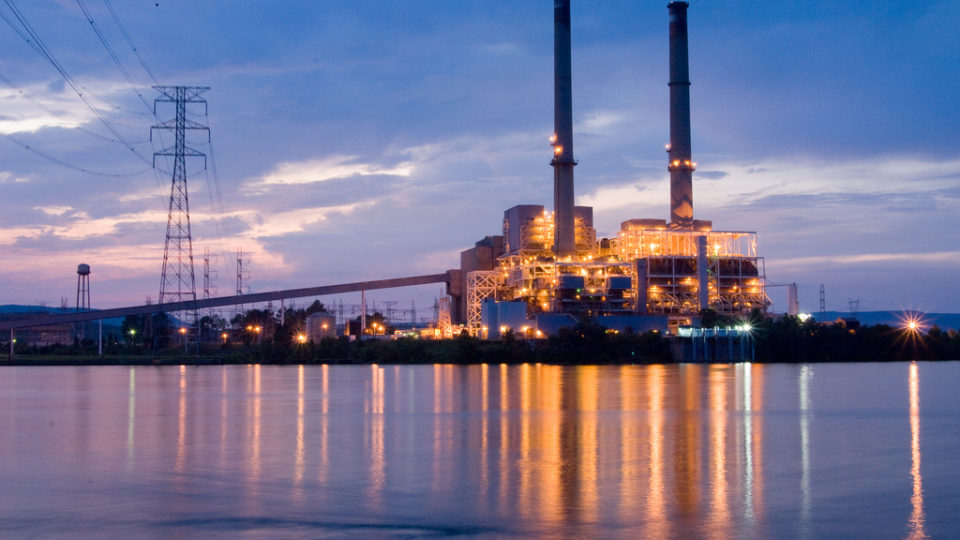
The New York Times recently published an article on how electricity is made in the United States on a state-by-state basis and how it has been changing over the past two decades.  Two conclusions to draw are that the mix of energy sources is wildly different from one state to another and that the mix has been changing rather dramatically in many places.

Overall, the past two decades have seen the dramatic rise in the use of natural gas and a dramatic drop in the use of coal.  Coal plants used to account for over half of the electricity produced in the U.S. at the turn of the 21st century.  Now natural gas has passed coal as the largest energy source at roughly 1/3 of the total generated.

Switching from coal to natural gas is a good thing since modern gas power plants emit only about half the carbon dioxide as modern coal plants.  But industry spin about “clean gas” is just spin.  Gas is not really clean; it is just cleaner than coal.  So, having the electric grid powered by gas is not really going to solve our emissions problems.

That being said, there are still states that make nearly all their electricity with coal.  Indiana, Kentucky, Missouri, Utah, Wyoming, and West Virginia are on that list.  Meanwhile, Delaware, Massachusetts, Mississippi, Nevada, and Rhode Island are powered mostly by gas. Idaho, Oregon, Washington, and Vermont rely heavily on hydropower.

Newer renewables like solar and wind are starting to make major contributions in many states.  Wind contributes only 6% nationwide but is much bigger in places like Iowa, Kansas, Minnesota, the Dakotas, Oklahoma and Texas. 

The face of electricity continues to change.

**********

Web Links

How Does Your State Make Electricity?

Photo, posted March 5, 2010, courtesy of Tennessee Valley Authority via Flickr.

Earth Wise is a production of WAMC Northeast Public Radio.
Renewables Taking Over In Britain

March 14, 2019 By EarthWise Leave a Comment

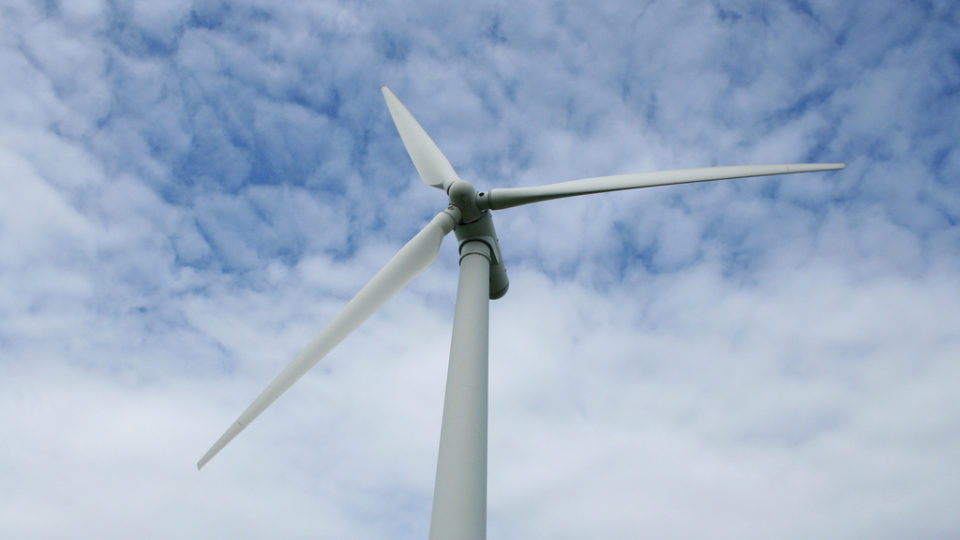
A year-and-a-half ago, we reported on the steep decline in the use of coal in Britain, including the conversion of the giant Drax Power Station from burning coal to running on wood chips.  Since then, Britain has been steadily moving away from fossil fuels and towards renewable energy sources.  The transformation is being driven by a surge in offshore wind farms currently under construction or about to begin operating.  Britain is in the process of adding over 6 GW of offshore wind to its current total of 8 GW.  Renewables generated one-third of the UK’s electricity last year, and half of that came from wind power. 

In 2018, coal- and gas-fired power stations generated about 131 terawatt-hours of electricity in Britain.  Renewable energy plants – including wind, solar, biomass, and hydropower – produced about 96 terawatt-hours.  Based on the new projects coming online, renewable sources could generate 121 TWh by 2020 and fossil fuel plants are likely to fall to 105.6 TWh as more coal plants are retired.  Thus, within the next year or so, renewables in Britain are likely to surpass fossil fuels in electricity generation.

The transformation in Britain has been rapid and dramatic.  In 1974, the country generated 80% of its electricity using coal.  By 2016, that number had dropped to 9%.  Last April, the British power grid went three days in a row without burning any coal.  The UK is expected to shut down its remaining coal plants by 2025, if not sooner. 

At the same time, Britain’s renewable energy capacity has more than quadrupled since 2010, jumping from 21 TWh that year to 96 TWh last year.  Britain’s energy mix is changing fast and getting significantly cleaner every year.

**********

Web Links

Renewables Could Surpass Fossil Fuels in Britain by 2020

Photo, posted August 2, 2008, courtesy of Richard Allaway via Flickr.

Earth Wise is a production of WAMC Northeast Public Radio.
The New Normal Weather

March 13, 2019 By EarthWise Leave a Comment

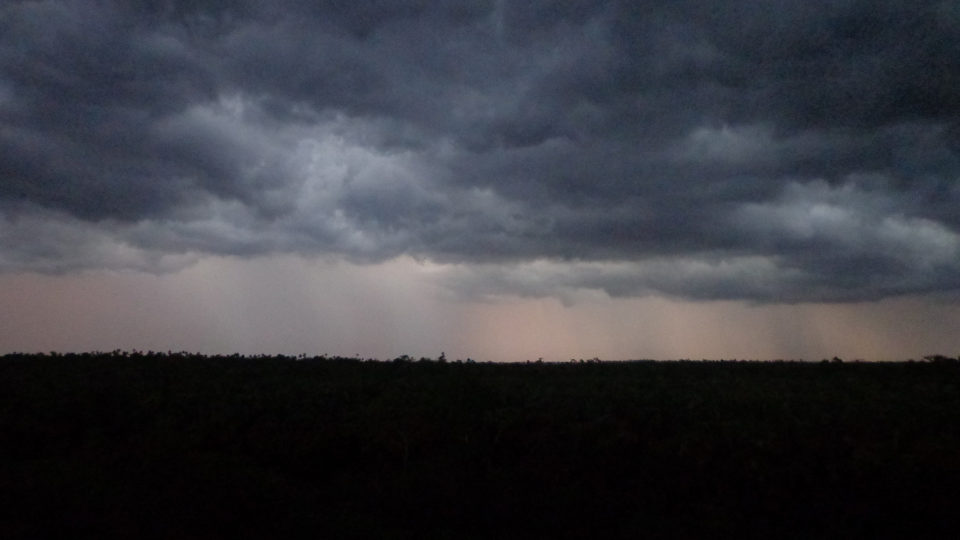
We often hear about how the weather is getting stranger all the time, but do most of us really think so?  What kinds of weather do we really find remarkable and has that been changing?

A study led by the University of California, Davis used some very modern tools to examine the question of what people might consider to be “normal” weather.  To reach their conclusions, they quantified the timeless pastime of talking about the weather by analyzing Twitter posts.  They sampled over 2 billion geolocated tweets to determine what kind of events generated the most posts about the weather.

Unsurprisingly, they found that people most often tweet when temperatures are unusual for a particular place and time of year.  However, if the same weather persisted year after year, it generated less comment on Twitter, indicating that people began to view it as normal in a relatively short amount of time.

The study indicates that people have short memories when it comes to what they consider normal weather.  On average, most people base their idea of normal weather on what has happened in just the past two up to maybe eight years.  This disconnect with the historical climate record may obscure the public’s perception of climate change.

After repeat exposures to historically-extreme temperatures, people talk less about the weather, even though particularly hot or cold weather conditions make them unhappy and grumpy.  Even though we are experiencing conditions that are historically extreme, we might not consider them to be particularly unusual if we tend to forget what happened more than a few years ago.  Things may be getting worse, but they apparently are just the new normal.

**********

Web Links

Tweets tell scientists how quickly we normalize unusual weather

Photo, posted March 11, 2013, courtesy of Adedotun Ajibade via Flickr.

Earth Wise is a production of WAMC Northeast Public Radio.
Ice Melt In Greenland

March 12, 2019 By EarthWise 1 Comment

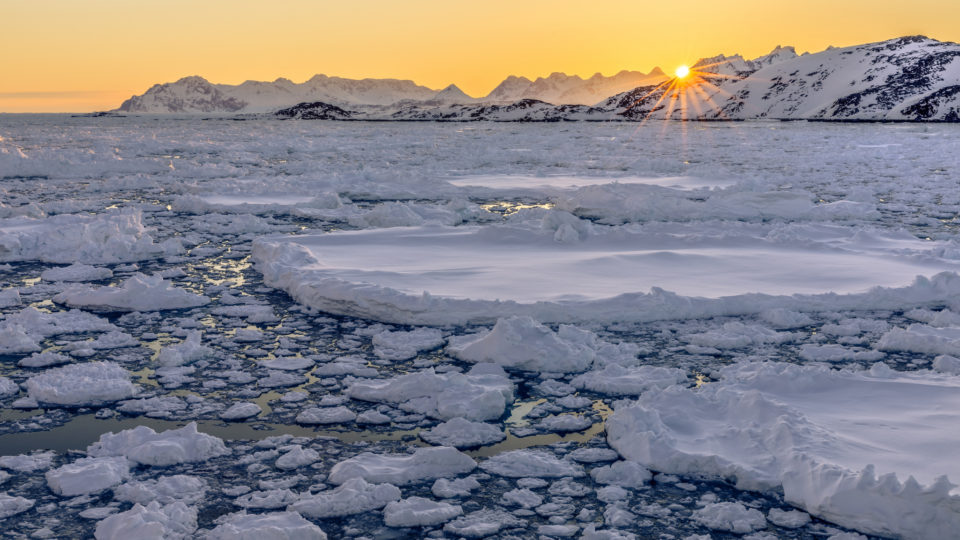
A new study published in the Proceedings of the National Academy of Sciences warns that Greenland’s ice Is melting much faster than previously thought.  The ice loss rapidly accelerated around 2002-2003 and by 2012 the annual loss was nearly four times the rate in 2003.

Most of the new ice melt is in southwest Greenland, a part of the island that wasn’t known to be losing ice that rapidly and is not where most of the large glaciers are in Greenland.  The loss is coming from the land-fast ice sheet itself.

Data from NASA satellites and GPS stations scattered around Greenland’s coast shows that between 2002 and 2016, Greenland lost approximately 280 billion tons of ice per year.  That is enough melt to cover the entire states of Florida and New York hip deep in meltwater, as well as drowning Washington, D.C. and one or two other small states.

Global warming of just 1 degree Celsius is the main driver behind this massive meltdown of ice.  The temperature rise coupled with a negative phase of the North Atlantic Oscillation causes rapid surface melt of the ice sheet during summers.  The Oscillation is a natural, irregular change in atmospheric pressure that brings warm, sunny weather to the western side of Greenland during its negative phase.

The Greenland ice sheet is 2 miles thick in some places and contains enough ice to raise sea levels 23 feet if it all melted.  The melting Greenland ice is already slowing the Gulf Stream, which is wreaking havoc with European weather.  If we don’t get a handle on global temperature rise, things are only going to get worse.

**********

Web Links

Greenland’s ice is melting four times faster than thought—what it means

Photo, posted April 21, 2017, courtesy of Markus Trienke via Flickr.

Earth Wise is a production of WAMC Northeast Public Radio.
Forecasting A Bad Year For Carbon

March 11, 2019 By EarthWise Leave a Comment

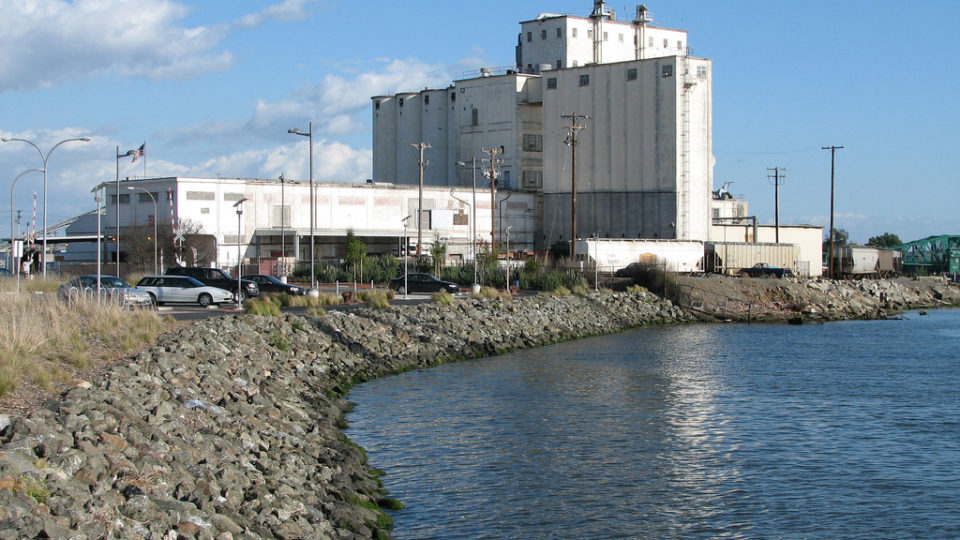
Carbon dioxide levels in the atmosphere are higher than they have been for hundreds of thousands of years, and they continue to grow.  The United Kingdom’s national meteorological service – known as the Met Office – issues annual predictions of global CO2 levels based in part on readings taken at the Mauna Loa observatory in Hawaii.  Their forecast for this year is that there will be one of the largest rises in atmospheric carbon-dioxide concentration in the 62 years of measurements at Mauna Loa.

Since 1958, there has been a 30% increase in the concentration of carbon dioxide in the atmosphere.  This has been caused by emissions from fossil fuels, deforestation and cement production.  The increase would actually have been even larger if it were not for natural carbon sinks in the form of various ecosystems that soak up some of the excess CO2.

Weather patterns linked to year-by-year swings in Pacific Ocean temperatures are known to affect the uptake of carbon dioxide by land ecosystems.  In years with a warmer tropical Pacific – such as El Niño years – many regions become warmer and drier, which limits the ability of plants to grow and to absorb CO2 .  The opposite happens when the Pacific is cool, as was the case last year.

The Met Office predicts that the contribution of natural carbon sinks will be relatively weak, so the impact of human-caused emissions will be larger than last year.  The predicted rise in atmospheric CO2 is 2.75 parts-per-million, which is among the highest rises on record.  The forecast for the average carbon dioxide concentration is 411 ppm, with peak monthly averages reaching almost 415 ppm.  With global emissions not really declining, the numbers just get higher and higher.

**********

Web Links

Faster CO₂ rise expected in 2019

Photo, posted March 18, 2006, courtesy of Darin Marshall via Flickr.

Earth Wise is a production of WAMC Northeast Public Radio.

Climate Change And Infertility

March 8, 2019 By EarthWise Leave a Comment

Many of us are all too familiar with the effects of climate change.  Our changing climate, as a result of our actions, is leading to rising global temperatures, biodiversity loss, ocean acidification, wildfires, more weather extremes like floods and droughts. But a lesser known effect of climate change could lead to frightening consequences: infertility.

According to researchers at the University of Liverpool, rising temperatures could make some species sterile and lead them to succumb to the effects of climate change far earlier than currently thought. Their work was recently published in the journal Trends in Ecology and Evolution, and it was produced in collaboration with scientists from the University of Leeds, University of Melbourne, and Stockholm University.

Biologists and conservationists are trying to predict where species will be lost due to climate change so that suitable reserves can be established in other locations.  But the problem is that most data on when temperature will make an area unlivable for a species is based on its ‘critical thermal limit’ or CTL.  This is the temperature at which a species would collapse, stop moving, or die. 

The authors of the article fear that the impact of climate change on species survival is being underestimated.  Because rather than zeroing in on lethal temperatures, the scientists argue the focus should be on the temperatures at which organisms can no longer breed.  Extensive plant and animal data suggest organisms lose fertility at a lower temperature than their CTL.

The scientists have proposed a new fertility-based metric to gauge how organisms function as temperatures climb: Thermal Fertility Limit or TFL.  Understanding when a species will cease to reproduce will certainly help conservation measures. 

**********

Web Links

Climate change and infertility — a ticking time bomb?

Photo, posted August 11, 2013, courtesy of Mike Lewinski via Flickr.

Earth Wise is a production of WAMC Northeast Public Radio.

Hydrogen From Water And Sun

March 7, 2019 By EarthWise 1 Comment

There are research efforts around the world seeking ways to produce hydrogen starting from water and using clean energy.  Finding an economical and scalable way to do this is a key to the so-called hydrogen economy.

A recent study at Argonne National Laboratory makes use of a chemical reaction pathway central to plant biology to create a process that converts water into hydrogen using energy from the sun.

The process combines two membrane-bound protein complexes to perform the conversion of water molecules into hydrogen and oxygen.

The first protein complex, which the researchers call Photosystem I, is a membrane protein that uses energy from light to feed electrons to an inorganic catalyst that makes hydrogen.  But this represents only half of the overall process.

A second protein complex that they call Photosystem II uses energy from light to split water and take electrons from it.  The electrons are then fed to Photosystem I.

The two protein complexes are embedded in thylakoid membranes, which are like those found inside the oxygen-creating chloroplasts in plants.  This membrane is an essential part of pairing the two photosystems.  It supports both of the photosystems and provides a pathway for transferring electrons between the proteins.

The researchers also make use of a synthetic catalyst made from nickel or cobalt that replaces expensive platinum catalysts used in conventional water-splitting schemes.  Combining the light-triggered transport of electrons with the synthetic catalyst results in what the researchers call the “Z-scheme”, an adaptation of photosynthesis to produce hydrogen.

The next step is to incorporate the scheme into a living system which the researchers hope will lead to a practical system for hydrogen production.

**********

Web Links

Discovery adapts natural membrane to make hydrogen fuel from water

Photo, posted December 25, 2017, courtesy of Flickr.

Earth Wise is a production of WAMC Northeast Public Radio.
Fire-Driven Thunderstorms

March 6, 2019 By EarthWise Leave a Comment

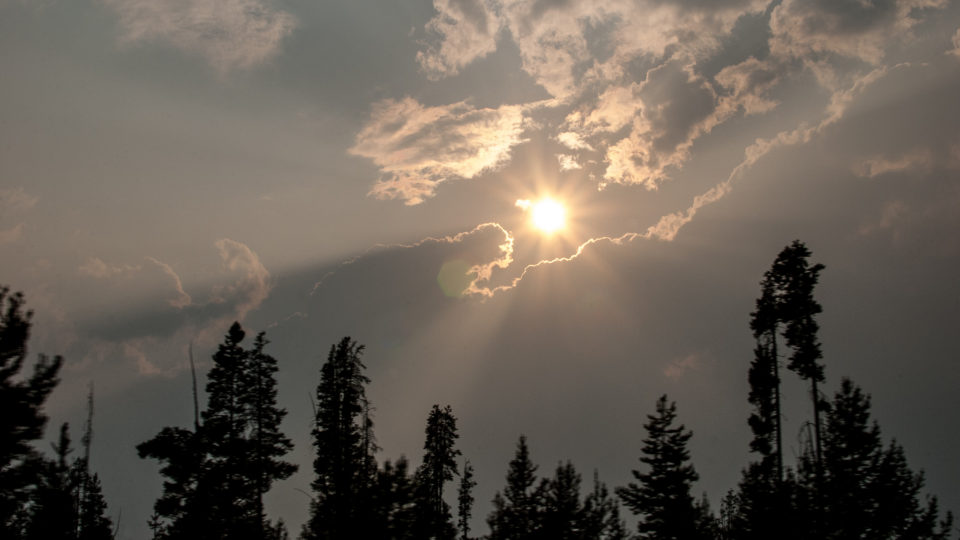
In 2016 and 2017, wildfires in western Canada spawned thunderstorms that ignited additional fires, in some cases tens of miles away from the original fire.  These fire-triggered thunderstorms are technically known as pyrocumulonimbus clouds, or “pyroCb’s”.

The physics of pyroCb’s is complex.  When super-heated updrafts from an intense fire suck smoke, ash, burning materials, and water vapor high into the air, these elements cool and form so-called fire clouds that look and act like the cumulonimbus clouds associated with classic thunderstorms.  What is different is that the heat and particulates in the smoke almost always arrest the ability of the cloud to produce rain.  Instead, what remains is a lightning storm that moves across the landscape, triggering more fires.

These PyroCb events appear to be happening far more often, producing more energy, and erupting in places where they have never been seen before.  As the world warms, wildfires themselves are becoming larger and hotter.  In the past decade, wildfires have been burning more than twice as many acres as they did before the turn of the 21st century.  Along with the growth in wildfire activity, there has been an increase in PyroCb events, and there are now an average of 25 per year in western North America.

Apart from starting new fires, pyroCb’s also have similar effects as moderate-sized volcanic eruptions.  Smoke and aerosols from wildfires can rise high into the stratosphere, where they can linger for months.  Eventually, the particles carried aloft in the atmosphere do come down, dumping dangerous chemicals on far flung regions of the earth.  But unlike volcanic eruptions, which are relatively rare events, pyroCb’s are happening more and more each year.

**********

Web Links

Fire-Induced Storms: A New Danger from the Rise in Wildfires

Photo, posted July 31, 2013, courtesy of Loren Kerns via Flickr.

Earth Wise is a production of WAMC Northeast Public Radio.
A Quiet Clean Energy Revolution

March 5, 2019 By EarthWise Leave a Comment

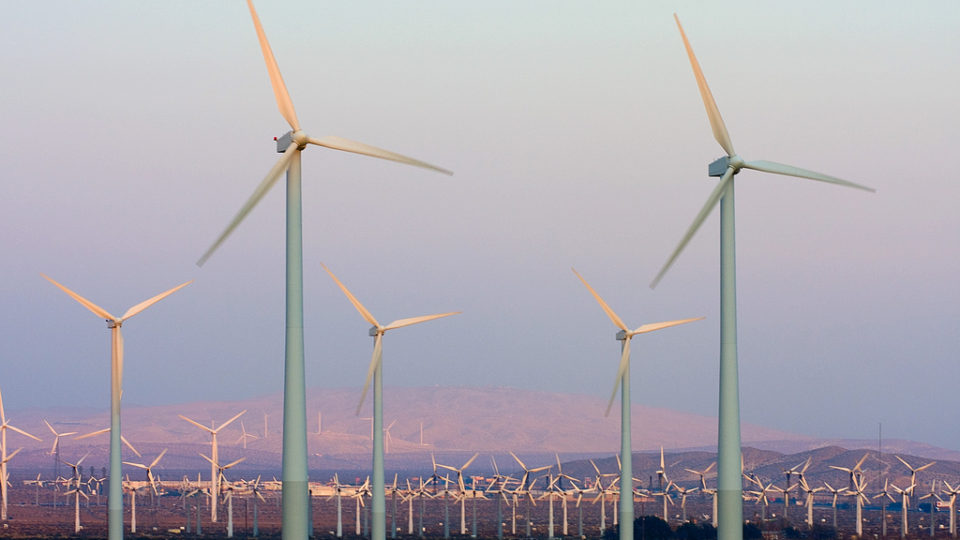
While the Trump administration seeks to prop up and promote use of fossil fuels, the country continues to move in the opposite direction.  Last year was actually a pretty positive year for clean energy in the U.S.

In terms of public opinion, 70% of Americans surveyed believe the country should produce 100% of its electricity from renewable energy sources and more than half of survey respondents think renewables are a good idea even if they raise energy bills.

Companies in the U.S. purchased a record 6.43 gigawatts of renewable power, enough to power 1.5 million homes.  The number of corporations entering into renewable energy deals doubled last year.

More than 300 U.S. cities, towns or counties have made commitments to climate action and, as of November, 99 cities have committed to 100% renewable energy, doubling the total from a year ago.

A number of gubernatorial candidates running on ambitious renewable energy platforms were elected in November including those in Illinois, Colorado, New Mexico, Maine and Nevada.

Utilities are responding to the growing demand for clean energy.  Consumers Energy in Michigan plans to cut carbon emissions by 80% and stop using coal.  Iowa-based MidAmerican Energy will become the first U.S. utility to source 100% of its electricity from renewable sources next year.  Xcel Energy, one of the biggest utilities in the country, has committed to be 80% carbon-free by 2030 and go completely carbon-free by 2050.

The fossil fuel industry with its supporters in high places is still kicking and screaming, but there is no doubt that the U.S. energy system is changing, and the quiet clean energy revolution will only pick up more steam in 2019.

**********

Web Links

The US Underwent a Quiet Clean Energy Revolution Last Year

Photo, posted August 15, 2009, courtesy of Ken via Flickr.

Earth Wise is a production of WAMC Northeast Public Radio.

The Threat From Nurdles

March 4, 2019 By EarthWise Leave a Comment

Just when we thought we knew all about the environmental threats caused by plastics, environmentalists have identified yet another problem.  It is called a nurdle.

Nurdles are tiny pellets of plastic resin no bigger than a pencil eraser that manufacturers transform into packaging, plastic straws, water bottles and all the other things that are wreaking havoc on the environment.

It turns out that nurdles themselves are a problem because billions of them are lost from production and supply chains during handling, shipping and production every year, spilling or washing into waterways.  There is limited information on the extent of this kind of plastic pollution and global researchers are still struggling to make an accurate assessment.  A study last year estimated that 3 million to 36 million pellets escape every year from just one small industrial area in Sweden.

Eunomia, a British environmental consultancy, contends that nurdles are the second-largest source of microplastic pollution and estimated that the U.K. could be unwittingly losing billions of pellets into the environment every year.

New research is revealing the ubiquity of plastic pellets, from the bellies of fish caught in the South Pacific, to the digestive tracks of short-tailed albatross in the north and on the beaches of the Mediterranean.

A shareholder advocacy group called As You Sow has filed resolutions with Chevron, DowDupont, Exxon Mobil, and Phillips 66 asking them to disclose how many nurdles escape their production process each year and how they plan to address the issue.  Several of the companies have responded with statements saying they are working to develop solutions that keep plastic out of our environment.

**********

Web Links

There’s a Tiny Plastic Enemy Threatening the Planet’s Oceans

Photo, posted January 15, 2014, courtesy of Hillary Daniels via Flickr.

Earth Wise is a production of WAMC Northeast Public Radio.

Fast Food And Climate Change

March 1, 2019 By EarthWise 1 Comment

A coalition of global investors is urging some of the largest fast food companies to reduce greenhouse gas emissions. The group, which has approximately $6.5 trillion under management, wants the fast food chains to reduce the carbon footprint of their meat and dairy supply chains. 

The global fast food sector is reportedly worth a whopping $570 billion annually.  The coalition has targeted some of the most notable contributors to that figure, including McDonald’s, KFC, Domino’s, Wendy’s, Burger King, Pizza Hut, and Chipotle.

According to the investors, animal agriculture is one of the world’s highest-emitting sectors without a low-carbon plan.  If left unchecked, emissions from animal agriculture alone would contribute 70% of the total worldwide target for emissions in 2050 that would keep the global rise in temperature below 2C.  Animal agriculture also uses an estimated 10% of annual global water flows.

In their letter to the fast food giants, the investors are calling on the companies to implement clear requirements for suppliers of animal proteins to report and reduce their greenhouse gas and freshwater impacts.  They want fast food companies to publish quantitative, time bound targets for reductions, and commit to publicly disclose the progress on these targets. 

Climate change is increasingly a factor for investors when evaluating market risk.  This investor letter comes just weeks after the EAT-Lancet commission report was published, in which their experts suggest that a sustainable diet for the planet by 2050 will require a 90% reduction in red meat and milk consumption.   

Fast food may need to slow down. 

**********

Web Links

Fast food giants under fire on climate and water usage

The EAT-Lancet Commission on Food, Planet, Health

Photo, posted May 19, 2014, courtesy of Mike Mozart via Flickr.

Earth Wise is a production of WAMC Northeast Public Radio.

Indonesian Deforestation

February 28, 2019 By EarthWise Leave a Comment

Deforestation is defined as the intentional destruction of trees and other vegetation without reforesting or allowing the forest to regenerate itself. 

In Indonesia, industrial agriculture, primarily for the production of palm oil, is a major driver of deforestation.  But, according to researchers at Duke University, its impact has diminished  proportionately in recent years as other natural and human causes have emerged. Their peer-reviewed findings were recently published in the journal Environmental Research Letters.

According to the study’s lead author, large-scale plantations were responsible for more than half of Indonesia’s deforestation in the late 2000s, peaking between 2008-2010 when an average of 1.5 million acres of forest was lost annually.  The expansion of the massive plantations was responsible for 57% of the forest loss. Between 2014-2016, an average of more than 2 million acres of forest was lost annually, but plantation expansion only accounted for 25% of this figure.  While the overall rate of deforestation continued to grow, other factors were responsible for most of it.

Conversions of forests to grasslands rose sharply in 2015 and 2016 when El Nino caused severe droughts and forest fires. Small-scale farming, often overshadowed by industrial agriculture, was also found to play a bigger role, accounting for 25% of all forest loss. 

Indonesia has experienced some of the highest rates of deforestation.  Its forests absorb and store vast amounts of climate-warming carbon dioxide, help prevent erosion and flooding, and provide habitat to thousands of species.  Understanding the varied causes of Indonesian deforestation should help conservationists and policymakers better address the problem.

************

Web Links

Palm oil not the only driver of forest loss in Indonesia

Photo, posted March 26, 2018, courtesy of Achmad Rabin Taim via Flickr.

Earth Wise is a production of WAMC Northeast Public Radio.
More Renewables Without Storage In Texas

February 27, 2019 By EarthWise Leave a Comment

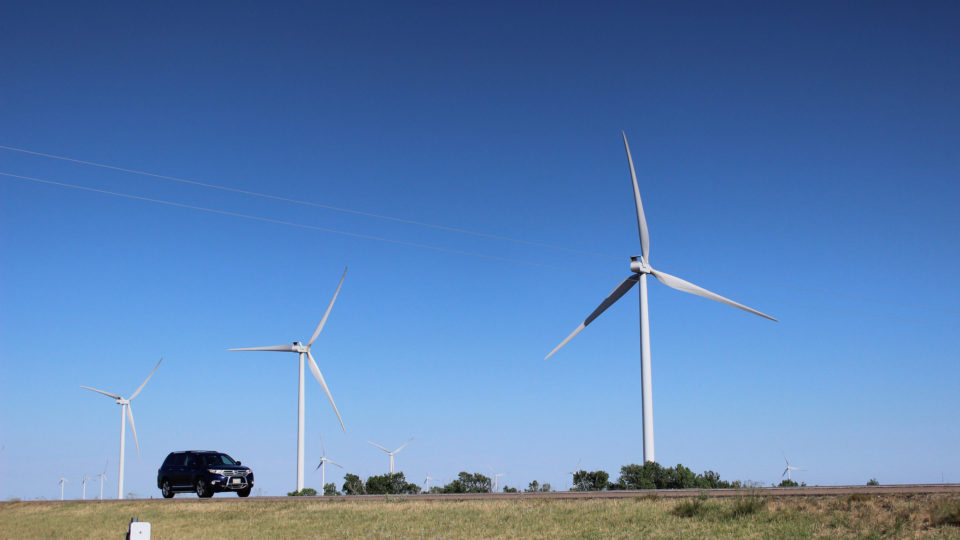
Texas has a Texas-sized appetite for electricity and relies most heavily on natural gas, coal and nuclear power to get it.  But in recent times, wind power has grown tremendously in the Lone Star State and it has already leapfrogged past nuclear power.  Coal could be the next domino to fall.

In the past few years, solar power has become competitive with wind in terms of price.  Texas is a large, coastal state in the sunny southwestern U.S. and has significant solar resources.  As a result, the amount of solar power in Texas is now growing rapidly.

In order for a combination of solar and wind power to address the bulk of electricity demand in Texas, there needs to be a way to provide reliability that these intermittent sources don’t necessarily provide.  Energy storage is a solution that ultimately is likely to be part of most electricity grids, but currently it is still expensive on a utility scale.

A new study from Rice University looked at the complementarity of solar and wind power in Texas.  Complementarity refers to balancing the output of solar and wind systems.  The peak performance of wind and solar occurs at very different times in different regions of the state.  The study suggests that the right mix of solar and wind systems in the right parts of Texas could provide a continuously reliable energy system.  On both a yearly and daily basis, wind and solar power resources in Texas complement each other in terms of peak performance.  It is a matter of locating the solar power and wind farms in the right places.

With the Texas solar industry really starting to boom, there is a real opportunity to integrate far more renewable energy into the Texas grid.

**********

Web Links

More Renewables with Less Energy Storage: Texas Shows How

Photo, posted June 8, 2018, courtesy of Laura Lee Dooley via Flickr.

Earth Wise is a production of WAMC Northeast Public Radio.

New Nutrition Labels

February 26, 2019 By EarthWise 1 Comment

Food and beverage packaging in this country has included a Nutrition Facts panel for nearly 25 years.  Over 700,000 products have the labels which provide consumers with information like serving sizes, calories per serving, ingredients, and nutritional content.

Surveys indicate that 77 percent of all U.S. adults claim to use the labels at least some of the time.  Whether the labels are actually useful is somewhat debatable.  A couple of years ago, the FDA released a proposal to update the labels to make them more useful and to reflect more recent nutritional research.  The new labels are finally going to be implemented and food manufacturers with annual sales exceeding $10 million have until January of 2020 to update their packaging with the new labels.

One of the biggest changes is that the “serving size” section of the label will be changed to more accurately reflect the actual portions consumed by the typical American.  For example, a 20-ounce soft drink will now be labeled as a single serving because most people will drink the whole bottle in one sitting.

The new labels will no long list the amounts of Vitamin A and C, because recent research shows most Americans are not deficient in these nutrients.  Instead, the amount of Vitamin D and potassium will be listed, two nutrients lacking in many diets.  New labels will also show amounts of “added sugars”, defined as caloric sweeteners with no nutritional value. The new labels will also display the calories per serving in much large type making that piece of information far more noticeable.

There is surely more to be done to make food labeling more transparent and useful for consumers, but the new changes at least seem to be in the right direction.

**********

Web Links

Nutrition Labels Get a Makeover: Will It Make a Difference?

Photo, posted September 9, 2014, courtesy of Mike Mozart via Flickr.

Earth Wise is a production of WAMC Northeast Public Radio.

Hacking Photosynthesis

February 25, 2019 By EarthWise Leave a Comment

There is an enzyme known as RuBisCo that is involved in carbon fixation, the process plants use to convert carbon dioxide into sugar molecules.  The RuBisCo molecule is inside the leaves of most plants and is probably the most abundant protein in the world.

RuBisCo picks up carbon dioxide from the air and uses energy from the sun to turn the carbon into sugar molecules.  This process of photosynthesis is pretty much the foundation of life on Earth.

Wonderful as it is, the process is not perfect.  RuBisCo is not very selective in grabbing molecules from the air.  It picks up oxygen as well as CO2 and it produces a toxic compound when it does that.

Plants operate a whole other complicated chemical process to deal with this toxic byproduct and uses up a lot of energy along the way, leaving less energy for making leaves or food that we can eat.

A research program at the University of Illinois called Realizing Increased Photosynthetic Efficiency (or RIPE) has been trying to correct this problem; they have been trying to hack photosynthesis.  And they may well have succeeded.

Using genetic modification on tobacco plants, they have shut down the existing detoxification process and set up a much more efficient new one.  The result is super plants that grow faster and up to 40% bigger.

The next step is to get it to work on plants that people actually rely upon for food, like tomatoes, soybeans and black-eyed peas (which are a staple food crop in sub-Saharan Africa where food is scarce.)

It will be years before we know if the process can really produce more food and be safe, but it may end up leading to a major increase in crop productivity.

**********

Web Links

Scientists Have ‘Hacked Photosynthesis’ In Search Of More Productive Crops

Photo, posted June 10, 2013, courtesy of Boon Hong Seto via Flickr.

Earth Wise is a production of WAMC Northeast Public Radio.

Saving Beaches With Seagrass

February 22, 2019 By EarthWise Leave a Comment

Almost a quarter of the Gross Domestic Product of places around the Caribbean Sea is earned from tourism.  Preserving the beaches in the region is an economic imperative.  With increasing coastal development, the natural flow of water and sand is disrupted, natural ecosystems are damaged, and many tropical beaches simply disappear into the sea.

With such high stakes, expensive coastal engineering efforts such as repeated replenishing of sand and the construction of concrete protective walls are common strategies.  Rising sea levels and increasingly powerful storms only increase the threat to tropical beaches.

Researchers from The Netherlands and Mexico recently published a study in the journal BioScience on the effectiveness of seagrass in holding onto sand and sediment along shorelines.

Seagrasses are so-named because most species have long green, grass-like leaves. They are often confused with seaweeds but are actually more closely related to flowering plants seen on land. Seagrasses have roots, stems and leaves, and produce flowers and seeds. Seagrasses can form dense underwater meadows and are one of the most productive ecosystems in the world. Seagrasses provide shelter and food to an incredibly diverse community of animals, from tiny invertebrates to large fish, crabs, turtles, marine mammals and birds.

The researchers performed measurements of the ability of seagrass along Mexico’s Yucatan Peninsula coastline to keep sand in place and prevent erosion.  They found that the amount of erosion was strongly linked to the amount of vegetation.  Quite often, seagrass beds have been regarded as a nuisance, rather than a valuable asset for preserving valuable coastlines.  The study opens opportunities for developing new tropical beach protection schemes in which ecology is integrated into engineering solutions.

**********

Web Links

Seagrass Saves Beaches and Money

Photo, posted October 13, 2010, courtesy of NOAA via Flickr.

Earth Wise is a production of WAMC Northeast Public Radio.

Liquid Fuel From The Sun

February 21, 2019 By EarthWise Leave a Comment

Most forms of energy we use ultimately come from the sun in one way or another.  Even fossil fuels are the end product of millions of years of plant life that captured solar energy.  The advantage fossil fuels have over direct solar power is that they are, in fact, fuels and therefore can be stored for use when needed.

Scientists in Sweden have now developed a specialized fluid that absorbs some of the sun’s energy, holds it for months or even years, and then releases it when needed.  This solar thermal fuel is like a rechargeable battery for heat rather than electricity.

The special fluid is pumped through transparent tubes where ultraviolet light from the sun excites its molecules into an energized state.  A compound called norbornadiene is converted into quadricyclane. The quadricyclane is a quite stable substance until it is passed over a cobalt-based catalyst, which causes it to turn back into norbornadiene and release copious amounts of heat.

Such a solar thermal fuel could be stored in uninsulated tanks in homes or factories or piped or trucked to where it was needed.  It could then be used for water heaters, dishwashers, or clothes driers.  The room temperature fluid quickly warms to about 183 degrees when passed over the catalyst, plenty warm enough for heating a home or office.  Both the fuel and the catalyst are damaged very little by the reactions, so the process can be recycled many times.

There is much development work needed to optimize shelf life, energy density, good recyclability and other properties before this technology can be commercialized but there are at least 15 groups around the world now studying this intriguing way to get liquid fuel from the sun.

**********

Web Links

Scientists transform sunlight into a liquid fuel that can be stored for 18 years

Photo, posted August 17, 2009, courtesy of Hiromichi Torihara via Flickr.

Earth Wise is a production of WAMC Northeast Public Radio.

Climate Change And The Polar Vortex

February 20, 2019 By EarthWise Leave a Comment

This winter has seen some brutally-cold weather in many places, some of it record-breaking.  Predictably, some climate-change deniers point to this as evidence that the climate is not warming at all.  They are quite wrong.

For starters, it is essential to understand the difference between climate and weather.  Climate is the average weather patterns in a region over extended periods of time.  Weather is the short-term fluctuations in temperature, precipitation, barometric pressure, wind, and so forth.  There can be extremes in weather of many types in a given climate region including very cold weather in a warming climate.

The recent cold weather events in the U.S. stem from the flow of Arctic air into southern regions.  Such flows are impacted dramatically by the behavior of the jet stream.  These high-altitude east-to-west winds are driven by temperature differences between cold arctic air and warm tropical air and play a huge role in our weather. 

The Arctic has seen extremely unusual warming due to the changing climate, weakening and fracturing the polar vortex, which is a persistent low-pressure area near the pole.   The changing air flow from the Arctic causes the jet stream to take wild swings.  When it swings further south, it causes cold air to reach farther south.  These swings tend to hang around for a while, leading to extended periods of cold weather in the winter and, actually, extended periods of warm weather or even droughts in the summer.  Studies have predicted that extreme, deadly weather events could increase by as much as fifty percent by 2100.

As more Arctic air flows into southern regions, North America can expect to see harsher winters.  The warming climate doesn’t always lead to warmer weather.

**********

Web Links

Why cold weather doesn’t mean climate change is fake

Photo, posted January 30, 2019, courtesy of Kyle via Flickr.

Earth Wise is a production of WAMC Northeast Public Radio.

  • « Go to Previous Page
  • Page 1
  • Interim pages omitted …
  • Page 79
  • Page 80
  • Page 81
  • Page 82
  • Page 83
  • Interim pages omitted …
  • Page 99
  • Go to Next Page »

Primary Sidebar

Recent Episodes

  • An uninsurable future
  • Clean energy and jobs
  • Insect declines in remote regions
  • Fossil fuel producing nations ignoring climate goals
  • Trouble for clownfishes

WAMC Northeast Public Radio

WAMC/Northeast Public Radio is a regional public radio network serving parts of seven northeastern states (more...)

Copyright © 2026 ·