• Skip to primary navigation
  • Skip to main content
  • Skip to primary sidebar

Earth Wise

A look at our changing environment.

  • Home
  • About Earth Wise
  • Where to Listen
  • All Articles
  • Show Search
Hide Search
You are here: Home / Archives for wind farm

wind farm

Five amazing renewable energy projects

June 11, 2025 By EarthWise Leave a Comment

Worldwide investment in renewable energy topped $2 trillion in 2024.  For Climate Solutions Week, we wanted to highlight some amazing projects around the world that showcase innovative technology, ambitious scale, and the commitment to a cleaner and sustainable future.

In Morocco, the Noor Solar Power Station is a huge concentrated solar power facility that generates power for more than a million Moroccans.  The facility stores some of the heat generated by the sun in molten salt so it can continue to produce power after sunset.

The Three Gorges Dam in China is the world’s largest power plant by installed capacity.  The 32 turbines generate enough electricity to power millions of homes. 

The Alta Wind Energy Center in California is one of the largest onshore wind farms in the world.  The 600 turbines at the facility provide clean electricity for up to 450,000 homes.

The Yamakura Dam Floating Solar Project in Japan has more than 50,000 solar panels that provide electricity for about 5,000 households.  The plant is located atop the surface of the Yamakura Dam reservoir and is one of the largest floating solar installations in the world.

The Hellisheiði Power Station in Iceland is one of the world’s most technologically advanced geothermal energy plants.  It taps into Iceland’s volcanic geology and draws both high-pressure steam and hot water to provide both electricity and heat to thousands of local homes and businesses.  

These five projects are just a sampling of the renewable energy development going on all over the world.

**********

Web Links

Powering the Future: Innovative Renewable Energy Projects Around the World

Photo, posted December 1, 2019, courtesy of Richard Allaway via Flickr.

Earth Wise is a production of WAMC Northeast Public Radio
Empire Wind moves forward

February 13, 2025 By EarthWise Leave a Comment

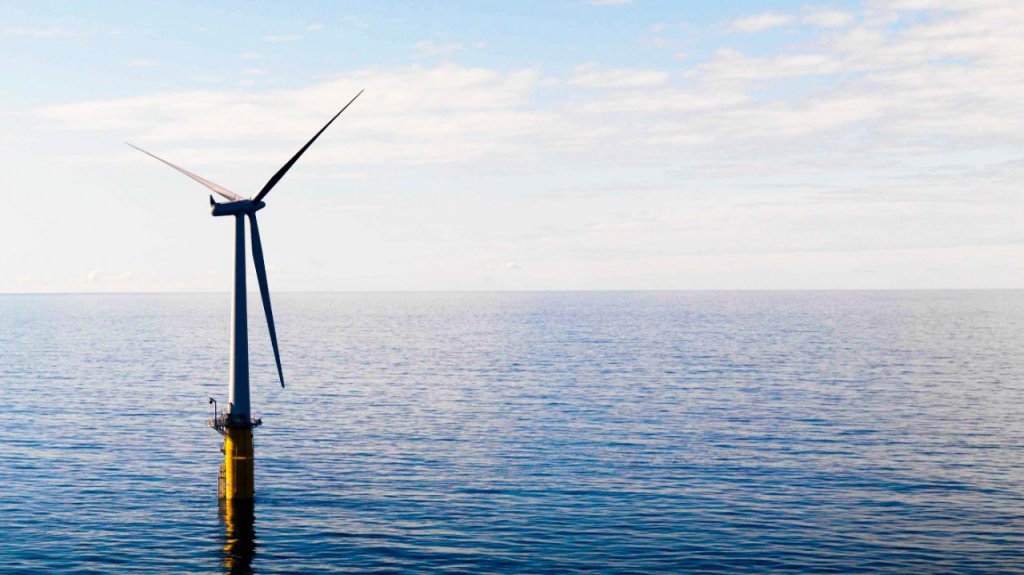
Empire Wind, an offshore wind project, is moving forward

Empire Wind 1, the first offshore wind project that will connect to the New York City grid, has received the financing needed to move forward.  Equinor, the Norwegian state-owned multinational energy company developing the project, closed on a more than $3 billion financing package.

The wind farm will span 80,000 acres in an area 15-30 miles southeast of Long Island.  When completed, it will have a capacity of 810 megawatts.  Equinor has executed a Purchase and Sale Agreement with the New York State Energy Research and Development Authority to purchase power from Empire Wind 1 for 25 years at a strike price of $155/MWh. The operations and maintenance hub for Empire Wind 1 will be at the South Brooklyn Marine Terminal.  Commercial operation is expected by 2027.

The previously-planned Empire Wind 2 project was terminated a year ago because of inflation, interest rates, and supply chain disruptions.  More broadly, the U.S. offshore wind industry has been struggling for the past year. 

With the return of President Donald Trump to the White House, there is much greater uncertainty facing the industry.  As a result of the election, Attentive Energy, a planned 3-gigawatt wind project off the coasts of New York and New Jersey has been put on pause.  Trump’s public disdain for offshore wind energy is likely to create a major slowdown in the growth of the offshore wind pipeline.  On the other hand, the new administration is less likely to have much influence on projects already in progress including 4 gigawatts under active construction and more than 50 gigawatts in other stages of development.

**********

Web Links

Empire Wind 1 secures $3B+ financing package, enters ‘full execution mode’

Photo, posted May 2, 2022, courtesy of California Energy Commission via Flickr.

Earth Wise is a production of WAMC Northeast Public Radio
Revolution Wind installs first turbine

September 27, 2024 By EarthWise Leave a Comment

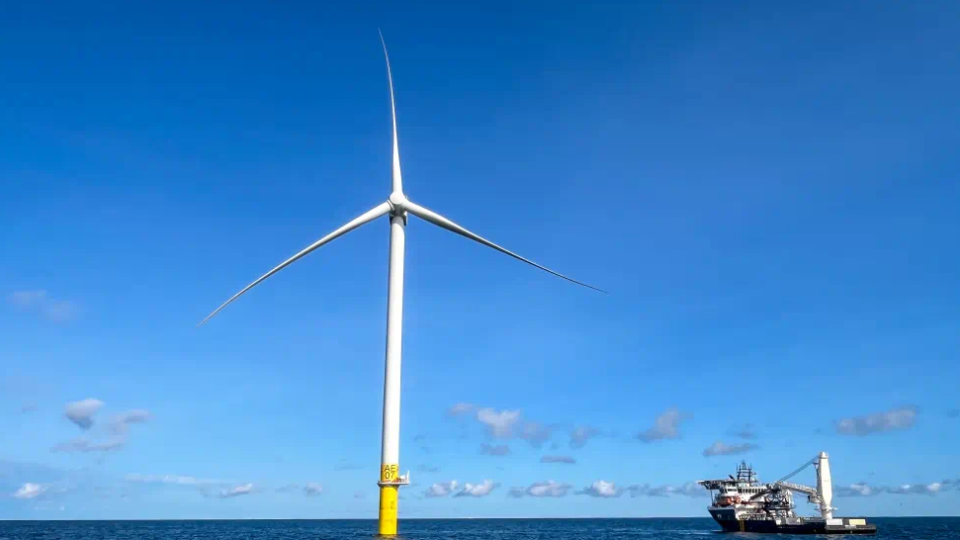
Revolution Wind installs its first wind turbine

Revolution Wind is an offshore wind farm being built by Rhode Island and Connecticut and is the first multi-state offshore wind farm in the United States.  Once completed, it will deliver 400 MW of power to Rhode Island and 304 MW of power to Connecticut.

Revolution Wind is a 50/50 partnership between Ørsted, the Danish multinational energy company, and Eversource, a major New England utility company.  The wind farm is located about 15 miles south of the Rhode Island coast and 32 miles southeast of Connecticut.  It is fairly close to the recently completed South Fork Wind, the first completed utility-scale offshore windfarm in the U.S. and was built by the same partnership.

The first Revolution Wind turbine was installed at the end of August and construction continues with the installation of foundations for the 65 turbines that will comprise the project.  More than three-quarters of the units were in place by the beginning of September.  Ships have also arrived on scene for cable-laying operations for the wind farm.  Onshore construction continues in North Kingstown, Rhode Island, on the project’s transmission system.  The turbines for the project are being assembled by local union labor in New London, Connecticut. 

Commercial operations at Revolution Wind will not begin until 2026.  Construction of the electrical substation necessary to connect the project to the regional electric grid is taking place on the site of a decommissioned naval air station and it is a time-consuming project because of the presence of buried waste and soil contamination.  The construction of the offshore wind farm itself will be completed in 2025.

**********

Web Links

Revolution Wind installs first offshore turbine

Photo courtesy of Kate Ciembronowicz / Orsted via Revolution Wind.

Earth Wise is a production of WAMC Northeast Public Radio
Sunrise Wind construction begins

August 9, 2024 By EarthWise Leave a Comment

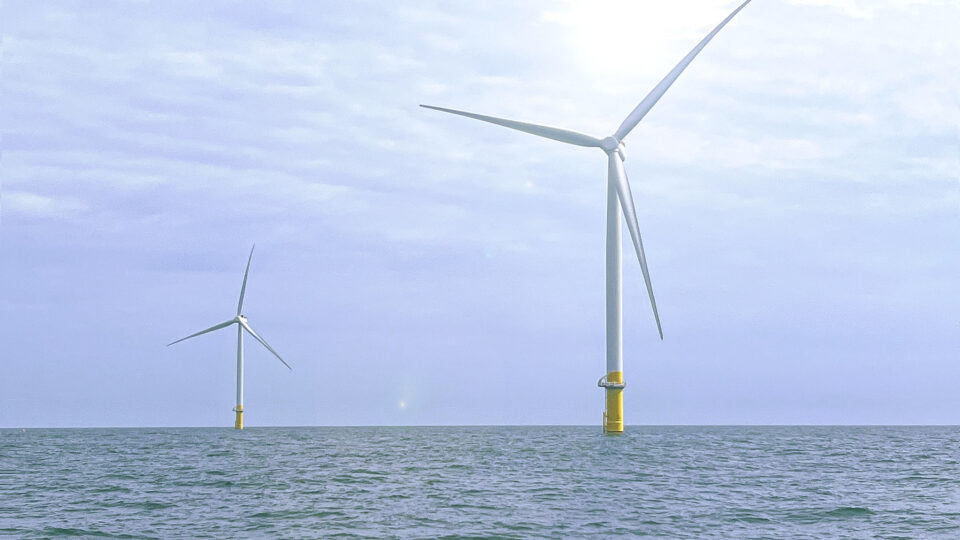
In mid-July, construction started on New York’s largest offshore wind project.  Sunrise Wind is a 924-megawatt offshore wind farm located about 30 miles off the coast of Montauk Point on Long Island.  Sunrise Wind is expected to be operating in 2026 and will provide enough clean energy to power nearly 600,000 homes, making it the largest offshore wind farm in the United States.

The ongoing construction project will support more than 800 direct jobs.  It will be built under project labor agreements ensuring local union labor’s participation in all phases of construction.

Power from the wind farm will flow through an undersea cable coming ashore deep under the beach at Smith Point County Park.  From there, the power will travel primarily under roadways via a transmission line terminating at a power converter station in Holbrook, Suffolk County.

Sunrise Wind is being developed by Oersted, the largest energy company in Denmark and the world’s largest developer of offshore wind power by number of built offshore wind farms.

The second large offshore wind farm in New York, Empire Wind I, is being developed by Equinor.  These large wind farms are the result of New York’s fourth offshore wind solicitation.  The two projects, totaling over 1,700 megawatts, will be the largest power generation projects in New York State in more than 35 years once they enter operation in 2026.

New York has also launched a fifth offshore wind solicitation for which final proposals will be due in September.  Offshore wind is a major component of New York’s effort to expand the use of clean energy, grow its green economy, and combat climate change.

**********

Web Links

Construction begins on Sunrise Wind, New York’s largest offshore wind project

Photo, posted June 14, 2022, courtesy of Stephen Boutwell/BOEM via Flickr.

Earth Wise is a production of WAMC Northeast Public Radio
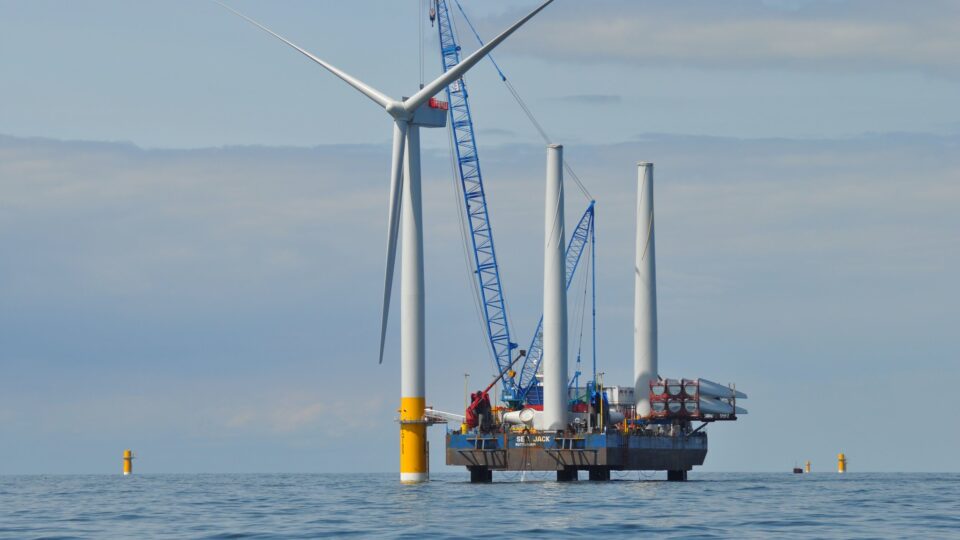
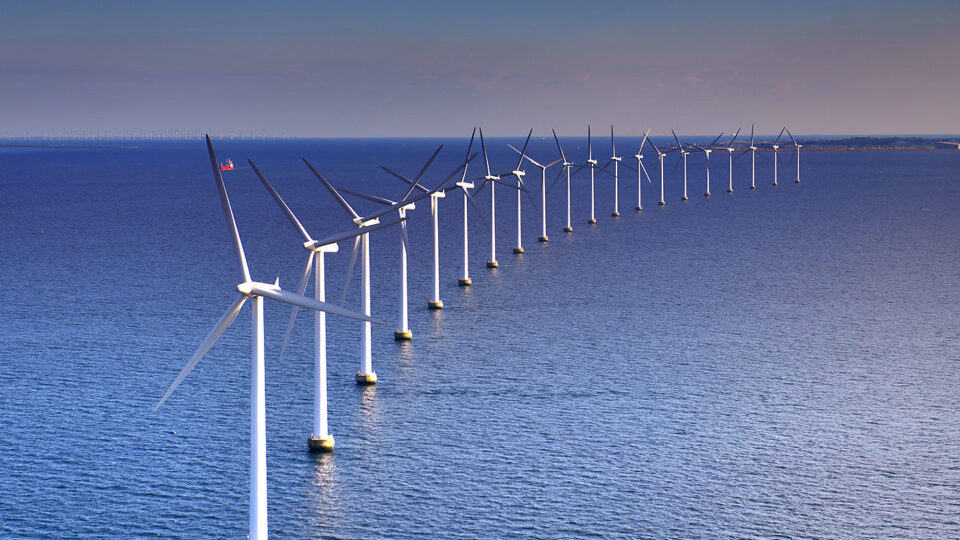
New York’s first offshore wind farm

December 14, 2023 By EarthWise Leave a Comment

New York has set a target of installing 9 GW of offshore wind capacity by 2035.  The first offshore wind farm in the state – South Fork Wind – was approved by the Long Island Power Authority in 2017.  Construction began in 2022.

South Fork Wind Farm is a 132 MW project sited 35 miles offshore from Montauk, New York.  Early this year, the subsea power export cable was installed by Nexans, a cable and optical fiber company.  In June, the project reached its “steel in the water” milestone with the installation of the farm’s first monopile foundation.

In November, the first of South Fork Wind’s 12 Siemens Gamesa wind turbine generators was hoisted into place by the offshore construction team.  The turbines are being installed by a specialized vessel called the Aeolus.  Turbine installation involves using a crane to place the steel turbine tower onto the foundation.  The nacelle and rotor are then installed on top of the tower.  Finally, the blades are bolted one by one to the rotor.

All 12 turbines for the project are expected to be installed by the end of this year or by early 2024.

There have been setbacks for the U.S. offshore wind industry in recent times.  Two projects in New Jersey have been scrapped because of supply chain issues.   Rhode Island Energy pulled out of a project citing higher interest rates, increased expenses, and problems with tax credits.

But despite these setbacks, the industry continues to make headway.  Vineyard Wind in Massachusetts is on the precipice of delivering its first power to the grid and the pipeline of additional projects continues to grow.

**********

Web Links

First turbine installed at South Fork Wind, New York’s first offshore wind farm

Photo, posted August 7, 2013, courtesy of SSE / Department of Energy and Climate Change via Flickr.

Earth Wise is a production of WAMC Northeast Public Radio
Nantucket Residents Still Fighting Offshore Wind | Earth Wise

June 28, 2023 By EarthWise Leave a Comment

Nantucket residents continue to resist offshore wind

Offshore wind in the US has had to fight to exist for a long time.  The Cape Wind project in Nantucket Sound off the coast of Cape Cod was envisioned over 20 years ago as a 1.5-gigawatt wind farm.  Years of legal battles and other controversies saw the project start and stop multiple times with only minimal actual construction.  Primary opposition came from residents who considered the turbines far off on the distant horizon to be an eyesore and threat to their property values.  Eventually, the project was terminated in 2017.

Since then, offshore wind has gained substantial support in the US and multiple projects are either ongoing or in the permitting process.  The 800 MW Vineyard Wind project is on track to be the first commercial-scale offshore wind farm in the US, with plans to eventually generate enough electricity to power 400,000 homes.

Once again, Nantucket residents are fighting against an offshore wind farm.  Once again, they are making arguments that are not really what concerns them, in this case, saying that the wind turbines are a threat to the survival of endangered North Atlantic right whales.

A federal judge has recently rejected a lawsuit brought by the group Nantucket Residents Against Turbines that sought to stop the project.  The judge found that the group failed to show that either the US Bureau of Ocean Energy Management or the National Marine Fisheries Service violated the Endangered Species Act or the National Environmental Policy Act in its 2021 rulings on the impact of the proposed wind farm on the whales.

Undoubtedly there will be additional challenges from the group, possibly based on entirely different complaints.  It’s tough to build offshore wind in Massachusetts.

**********

Web Links

Judge rejects lawsuit by Nantucket residents to block offshore wind farm

Photo, posted November 21, 2016, courtesy of Adrian Scottow via Flickr.

Earth Wise is a production of WAMC Northeast Public Radio
Fuel From Wind And Water | Earth Wise

February 21, 2023 By EarthWise 1 Comment

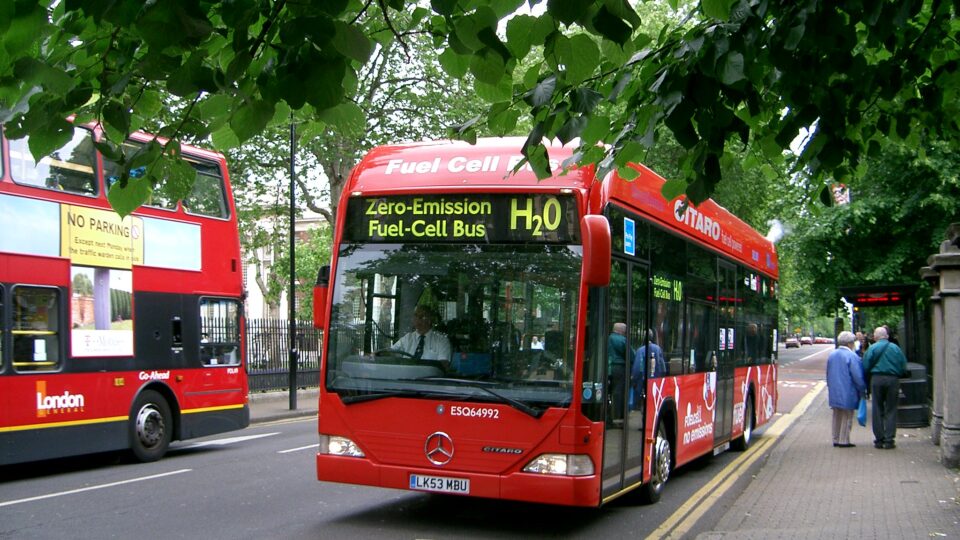
Hydrogen is the most common element in the universe and it can be used as a fuel to run cars, trains, and even airplanes.  Using it produces no harmful emissions.  However, to date, the way it is economically produced is not clean and green.  It is made from natural gas and leaves behind lots of carbon dioxide.

Around the world there are many projects working on so-called green hydrogen.  Producing hydrogen by splitting water into its component elements is called electrolysis and produces only oxygen as a waste product.  The problem with electrolysis is that it takes prodigious amounts of energy and therefore is very expensive.

A new project taking place in north Texas hopes to create the country’s first large-scale producer of green hydrogen.  The project is building a 900-megawatt wind farm along with a 500-megawatt solar farm.  The 1.4 gigawatts of total production capacity is more energy than the city of Austin consumes.  That energy will be used to produce 200,000 kilograms of hydrogen a day.

This project is among the largest proposed green hydrogen projects in the U.S.   There are green hydrogen proposals in Europe, Australia, Africa, and the Middle East that range from 10 GW to 67 GW. 

The Texas project, being developed in partnership by Air Products and AES, has been enabled by government support from the Inflation Reduction Act.    

There are a few thousand hydrogen-powered cars, boats, and trains but without substantial, cost-effective hydrogen infrastructure, the market is very limited.   Subsidizing the development of the necessary infrastructure is essential if there is any real chance to create the long-imagined hydrogen economy.

**********

Web Links

Texas Project Will Use Wind to Make Fuel Out of Water

Photo, posted June 5, 2005, courtesy of City Transport Info via Flickr.

Earth Wise is a production of WAMC Northeast Public Radio
Hybrid Renewable Energy Plants | Earth Wise

November 17, 2022 By EarthWise Leave a Comment

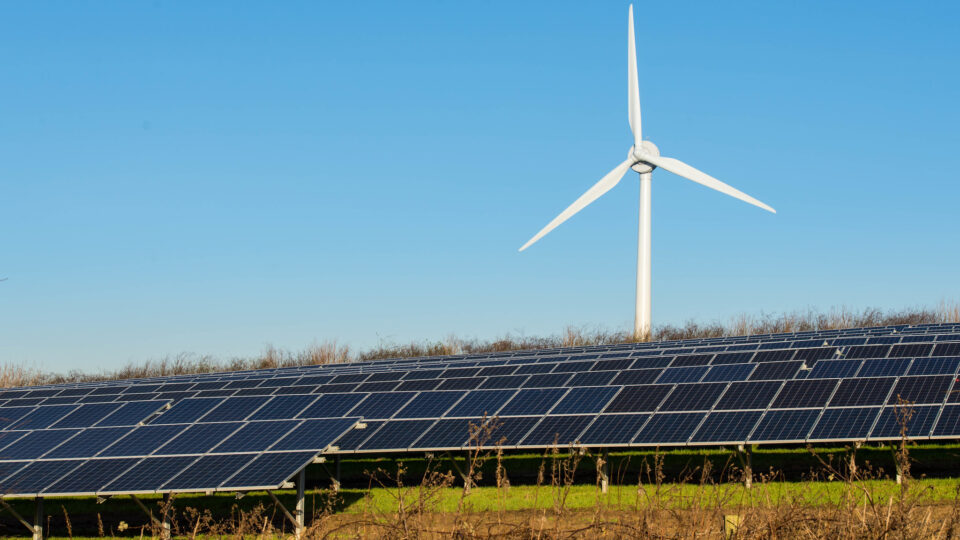
Hybrid renewable energy systems combine multiple renewable energy and/or energy storage technologies into a single plant.  The goal is to reduce costs and increase energy output relative to separate systems taking advantage of common infrastructure and the ability of one renewable energy source having appreciable output while a second one might not at a particular time.

Recently, the largest hybrid renewable power plant in the United States was completed in rural Oregon.  The Wheatridge Renewable Energy Facility combines a wind farm, a solar array, and battery storage.

Plants that include just solar power and energy storage are also called hybrid plants, but the Wheatridge Facility is special because it includes wind power.  The facility comprises a 200-megawatt wind farm, a 50-megawatt solar array, and a 30-megawatt battery system capable of providing power for four hours.  The combined system can provide for the electricity needs of about 100,000 homes.

There are about 140 projects in the United States that combine solar and storage.  There are 14 that combine solar and wind.  There are only four plants – with the completion of Wheatridge – that have wind, solar, and storage.  

Wind and solar energy are generally complementary technologies.  Wind is usually strongest at night while solar, of course, is a daytime source of energy.  Solar and wind plants don’t need to be close together to take advantage of this, but hybrid projects benefit from needing only one grid connection and one lease for land.

**********

Web Links

A Clean Energy Trifecta: Wind, Solar and Storage in the Same Project

Photo, posted December 27, 2015, courtesy of Gerry Machen via Flickr.

Earth Wise is a production of WAMC Northeast Public Radio
Saving Money By Predicting The Wind | Earth Wise

July 1, 2022 By EarthWise Leave a Comment

Managing an electrical grid that utilizes significant amounts of intermittent generation sources – solar and wind power – brings with it some unique challenges.  There are abundant wind resources in this country and more and utilities are taking advantage of these resources.   But there are times when there is more wind, times when there is less wind, and times when there is no wind at all.   Utilities need accurate wind forecasts to determine when they need to generate or purchase energy from alternative sources.

Poor wind forecasts can cost utilities a lot of money.  If there is overprediction – that is, when there is less wind than predicted – utilities have to purchase energy off the spot market at higher prices.  If there is underprediction – more wind than predicted – utilities may needlessly burn fossil fuels and waste money that way. 

The National Oceanic and Atmospheric Administration produces wind forecasts using its High-Resolution Rapid Refresh (HRRR) weather model, which provides hourly updated forecasts for every part of the United States looking forward up to 48 hours.  The model generates predictions of wind speed and direction at multiple levels of the atmosphere, information that utilities can use to predict the output of their wind turbines.

A new study by economists and scientists from Colorado State University and NOAA estimated the financial impact of the HRRR model on wind farm production.  The research team calculated that increasingly accurate weather forecasts over the last decade have saved consumers over $150 million a year.   Estimates are that if the newest model was in use in previous years, the savings would have been over $300 million a year.

**********

Web Links

NOAA wind forecasts result in $150 million in energy savings every year

Photo, posted May 2, 2022, courtesy of California Energy Commission via Flickr.

Earth Wise is a production of WAMC Northeast Public Radio.

A Green Light For Commercial-Scale Offshore Wind | Earth Wise

May 27, 2021 By EarthWise Leave a Comment

Offshore wind era in United States begins

The Biden administration has given final approval to a project it hopes will usher in a new era of wind energy in the United States.  The greenlight was announced by the Department of the Interior on May 11.

The Vineyard Wind project intends to install up to 84 huge wind turbines about 12 nautical miles off the cost of Martha’s Vineyard, Massachusetts.  In total, Vineyard Wind could generate 800 megawatts of electricity, enough to power about 400,000 homes.  The construction project will create about 3,600 jobs.  The $2.8 billion project is a joint venture of the energy firms Avangrid Renewables and Copenhagen Infrastructure Partners.

The idea of a wind farm off the Massachusetts coast was conceived 20 years ago but ran into repeated setbacks, delays, and well-funded opposition from waterfront property owners concerned about what will ultimately be the barely discernable sight of tiny blips on the distant horizon.  The Trump administration moved to cancel the permitting process for Vineyard Wind, but the Biden administration revived the project in March as part of its greater efforts to tackle climate change.

Electricity generated by Vineyard Wind will travel via cables buried six feet below the ocean floor to Cape Cod, where they will connect to a substation and feed into the New England grid.  The project is expected to begin delivering wind-powered electricity in 2023.

The Biden administration says that it intends to fast-track permits for other wind projects off the Atlantic Coast and that it will offer $3 billion in federal loan guarantees for offshore wind projects and invest in upgrades to ports across the United States to support wind turbine construction.

**********

Web Links

Biden Administration Approves Nation’s First Major Offshore Wind Farm

Photo, posted February 8, 2007, courtesy of mmatsuura via Flickr.

Earth Wise is a production of WAMC Northeast Public Radio.

The Largest Turbines In The Largest Offshore Wind Farm | Earth Wise

November 11, 2020 By EarthWise Leave a Comment

wind energy progress

The world’s largest planned offshore wind farm is going to make use of the world’s largest installed offshore wind turbines.  The Dogger Bank Wind Farm in the North Sea off the Yorkshire coast of England will ultimately generate electricity for more than 4.5 million homes in the United Kingdom.

The 3.6 GW project will cost $10 billion and will be developed in three phases, the first two of which will use 13-MW wind turbines built by General Electric.  The turbine’s blades measure 351 feet – longer than a soccer field.  The turbines stand more than 850 feet tall, which is five times the size of the Arc de Triomphe.  GE claims that a single rotation of one of these huge turbines can supply enough electricity to power the average British household for two days.  When the project is completed in 2026, it will generate 5% of the United Kingdom’s electricity.

The previous version of GE’s Haliade-X turbines, rated at 12 MW, were ordered by the energy company Orsted for installation in two forthcoming U.S. windfarm: the Skipjack Farm off the coast of Maryland, and the Ocean Wind farm off the coast of New Jersey.  The new version will be the largest turbines to reach operation in a commercial project.  Meanwhile, Siemens Gamesa has a 14 MW turbine under development.

The order for 190 of the 13 MW giant turbines for the Dogger Bank farm arrived at GE on the same day that the company announced that it will no longer supply power equipment to new coal plants.  Work on the Dogger Bank project started in January in an area of the North Sea that was previously dominated by oil and gas development.

**********

Web Links

World’s Biggest Offshore Wind Farm Will Boast World’s Largest Installed Turbines

Photo, posted February 22, 2014, courtesy of Jonny Longrigg via Flickr.

Earth Wise is a production of WAMC Northeast Public Radio.

A Giant U.S. Offshore Wind Project Begins | Earth Wise

June 22, 2020 By EarthWise Leave a Comment

United States offshore wind project

In recent years, the Bureau of Offshore Energy Management – the agency that oversees energy projects in federal waters – has been granting leases for offshore wind projects in the waters of multiple states on the East Coast.  Up until now, none of these leases have actually resulted in the deployment of any wind turbines because the process of gaining approvals, project plans, surveys, funding and other requirements is a long and tortuous one.

In late May, the first offshore wind turbine in U.S. federal waters was installed 27 miles offshore from Virginia.  The 6-MW Siemens turbine is one of two turbines making up the Coastal Virginia Offshore Wind pilot project.  The pilot project is expected to be operational later this year.  This project is the first to receive go-ahead approval by the BOEM.

The CVOW project is a development by Dominion Energy, a Virginia-based utility that operates in 20 states.  Dominion’s project will eventually be a 2.64 GW mega-farm that could be the largest offshore wind farm in the world.  Construction of the main project is expected to begin in 2024.  It will be sited in the seabed of a 112,800-acre lease area.  The site is currently being surveyed to determine potential impacts to ocean and sea life.

Dominion Energy has made multiple commitments to emissions reduction and the massive offshore wind farm is an important part of its efforts to meet those commitments.  The CVOW pilot project is only the second offshore wind installation in the U.S.  The first, the Block Island Wind Farm in Rhode Island, is in state waters and did not require BOEM approval.

**********

Web Links

A ‘monumental day’ for US offshore wind as first turbine is installed in federal waters

Photo, posted May 13, 2011, courtesy of the Department of Energy and Climate Change via Flickr.

Earth Wise is a production of WAMC Northeast Public Radio.

Recycling Coal Plants | Earth Wise

April 27, 2020 By EarthWise Leave a Comment

Recycling coal plants

Over 300 coal-fired power plants in the US have stopping burning coal over the past decade.  Only about 224 plants still produce power by burning coal.  As a result, a new sort of recycling industry is taking shape:  repurposing of coal plants.

Across the country, utilities are finding ways to redevelop these facilities.  Some are industrial in nature and others a far cry from their original purpose.

In January, Beloit College in Wisconsin opened a student union and recreation center in what used to be an Alliant Energy coal-fired power plant.  On the southern coast of Massachusetts, a shuttered 1,600 MW coal plant is being demolished to make way for a logistical port and support center for a planned wind farm 35 miles off shore.

In Independence, Missouri, the city is considering competing plans to recycle the Blue Valley Power plant.  It may become a 50 MW battery storage facility, or possibly a biofuel plant.

Another popular reuse strategy is data centers.  Data centers use tremendous amounts of power and therefore can make use of the former coal plants’ capacity to handle large amounts of electricity.

Retired coal-fired plants have built-in infrastructure and components that can be repurposed for new industry.  The plants typically have access to rail, ports and waterways, as well as proximity to good highway transportation.  The electrical grids to which they are connected can be reused for solar or wind farms at the site.

Given that coal plants are continuing to close, the potential to redevelop them in various ways continues to grow as well.   There is a surge in interest in coal plant redevelopment because these facilities are assets of value.

**********

Web Links

Coal-fired power plants finding new uses as data centers, clean energy hubs

Photo, posted January 10, 2017, courtesy of Rusty Clark via Flickr.

Earth Wise is a production of WAMC Northeast Public Radio.

Lots Of Wind Power In Denmark | Earth Wise

February 11, 2020 By EarthWise Leave a Comment

renewable energy milestone

Many states and countries have established goals to generate at least half of their electricity from renewable sources by some future date, typically 2030.  A number of countries have already been able to achieve 50% or greater renewable generation for brief periods measured in days.  Australia did it this past November.  Germany has seen it on occasion as well.

Denmark has managed to complete an entire year with half of its energy coming from renewable generation.  Almost all of it – 47% of the country’s power – came from wind turbines.

Denmark has been generating much of its energy from wind power for quite a while and actually produced about 46% of its electricity from renewable sources in 2017.  Denmark was a pioneer in developing commercial wind power during the 1970s, is a major manufacturer of wind turbines, and the small country has installed over 6,000 of them.  The gains this past year mostly came from the Horns Rev 3 offshore wind farm that went online in the fall.  The 407 MW wind farm has the capacity to cover the annual electricity consumption of about 425,000 households, which is about 20% of the country.

The growth of wind power in Denmark is still ramping up.  A 600 MW wind farm in the Baltic Sea will be connected to the Danish and German electricity grid by 2021, and a wind farm of at least 800 MW capacity in the North Sea is scheduled to come online in 2025.

The Danish Parliament has passed an ambitious climate law with the goal of reducing CO2 emissions by 70% in 2030 compared with 1990.  The country’s overall goal of being carbon-neutral by 2050 does not seem like a pipe dream.

**********

Web Links

Denmark Passes Magic 50% In Renewable Electricity Generation Milestone

Photo, posted July 12, 2009, courtesy of Flickr.

Earth Wise is a production of WAMC Northeast Public Radio.

The Largest Offshore Wind Farm

July 30, 2019 By EarthWise 1 Comment

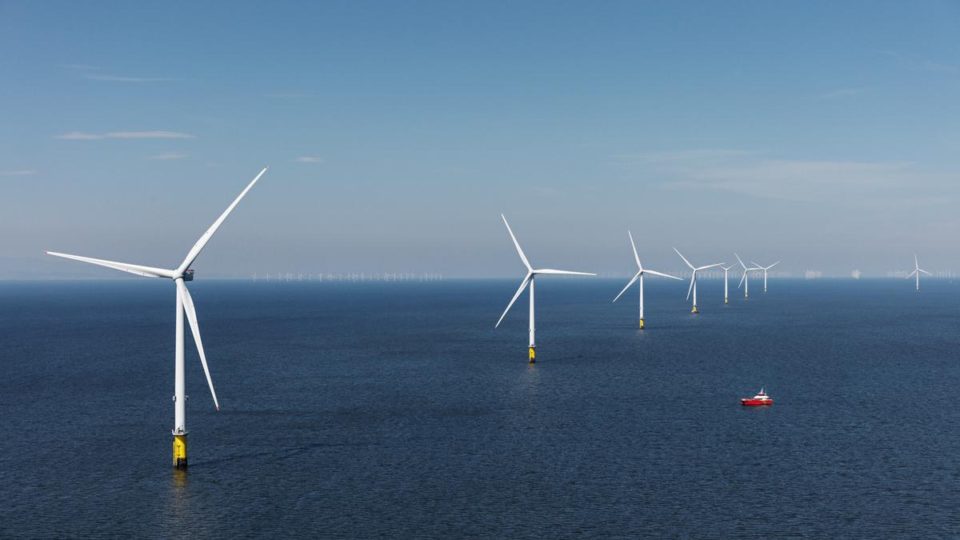
The world’s largest offshore wind farm recently began operations in the North Sea, a notoriously gusty stretch of open water that has become home to multiple large wind farms.  The new Hornsea One wind farm is located 75 miles off the east coast of Yorkshire in the United Kingdom.

The first 50 turbines are now in operation and are generating electricity for up to 287,000 homes.  When the farm is completed sometime next year, it will have 174 turbines with a total capacity of 1.2 gigawatts, enough to power a million homes.  The farm will send electricity to the UK, Netherlands, Belgium, Germany, and Scandinavia.  The Hornsea One farm will have more than twice the capacity of the current largest offshore operation, which is also in the UK.

Because the farm is so far from shore, teams of workers will live at sea for two to four weeks at a time maintaining it.  Such operations are unprecedented and required new ways of operating to overcome the logistical and technical challenges of operating a massive power station far from land.

The UK has the largest offshore wind generating capacity in Europe, now more than 8.2 gigawatts and accounting for 44% of Europe’s offshore wind capacity.  All that capacity is one of the big reasons that the UK has been successfully weaning itself off of coal for increasingly long periods of time.

Meanwhile, the US continues to lag far behind in offshore wind with a grand total of 0.03 gigawatts of installed capacity.  That situation may be changing after the federal government auctioned off 3 major tracts of ocean late last year that potentially could generate over 4 gigawatts of power if fully developed.

**********

Web Links

The World’s Largest Offshore Wind Farm Just Came Online

Photo credit: Hornsea Project One.

Earth Wise is a production of WAMC Northeast Public Radio.

Big Success From A Big Battery

January 1, 2019 By EarthWise Leave a Comment

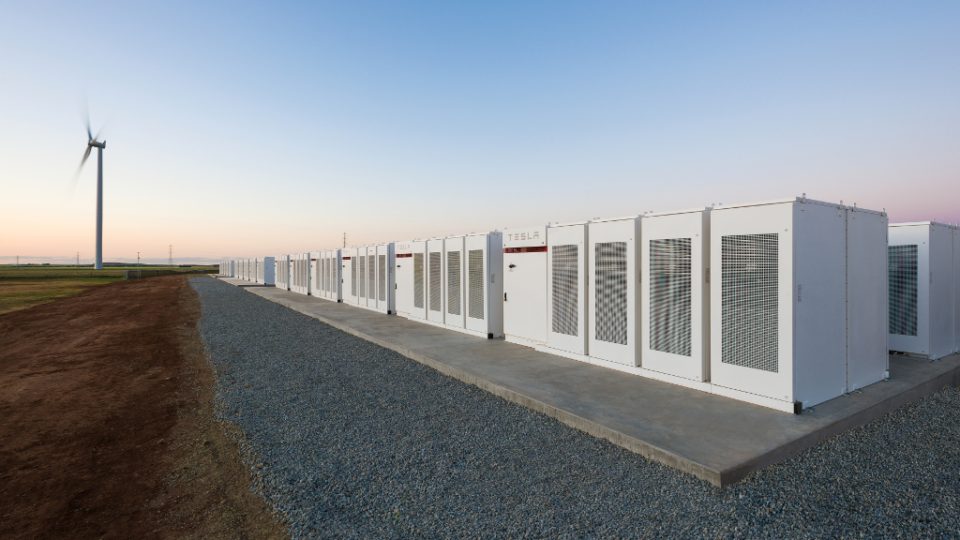
In the fall of 2017, Tesla took on the challenge of installing a 100-megawatt battery storage system in South Australia in under 100 days, promising that the system would be free if it was not built in time.  The project was actually completed in 54 days.

The system is located at the Hornsdale Wind Farm, which consists of 99 wind turbines with a generation capacity of 315 MW.  The Hornsdale Power Reserve installation is the world’s largest lithium-ion battery system and, after a year of operation,has proven to be a smashing success. Estimates are that the project has reduced costs associated with stabilizing the energy grid by about $29 million. The cost of the system was about $87 million, so it is paying for itself quite rapidly. The wind farm and battery systems are owned and operated by a French renewable energy company.

The battery storage system provides a variety of different services to the electric grid.  The primary motivation for it was to achieve system security and reduce the risk of blackouts and load shedding.   Having the battery system in place protects the regional interconnection from tripping,which reduces the risk of separation of South Australia from the National Electricity market.  The system also provides so-called ancillary services such as frequency control and other forms of electricity supply regulation.

The most significant contribution of the Hornsdale Power Reserve is that it has raised the profile of energy storage technology and demonstrated its unique capabilities.  Based on the success of the system, there are now about 2,500 MWh of new storage projects announced by the public and private sectors in Australia.

**********

Web Links

Tesla’s Battery Has Already Saved South Australia a Huge Amount of Money

Photo courtesy of Hornsdale Power Reserve. 

Earth Wise is a production of WAMC Northeast Public Radio.

New Jersey Wind

May 24, 2018 By EarthWise Leave a Comment

https://earthwiseradio.org/wp-content/uploads/2018/05/EW-05-24-18-New-Jersey-Wind.mp3

New Jersey may host the second commercially operating offshore wind farm in the U.S. as soon as 2020.  The company EDF Renewable Energy is moving forward with a plan to bring online a 24-MW farm sited off the coast of Atlantic City.

[Read more…] about New Jersey Wind

A Giant Wind Farm for Oklahoma

April 3, 2018 By EarthWise Leave a Comment

https://earthwiseradio.org/wp-content/uploads/2018/03/EW-04-03-18-A-Giant-Oklahoma-Wind-Farm.mp3

American Electric Power (AEP) is investing $4.5 billion to build the largest wind farm in the United States at a site in the Oklahoma panhandle.  Known as the Wind Catcher Energy Connection, the 2-gigawatt wind project will include 800 2.5-megawatt wind turbines built by General Electric.

[Read more…] about A Giant Wind Farm for Oklahoma

U.S. Offshore Wind Powering Up

February 26, 2018 By EarthWise Leave a Comment

https://earthwiseradio.org/wp-content/uploads/2018/02/EW-02-26-18-U.S.-Offshore-Wind.mp3

After many years of false starts and delays, the offshore wind industry in the U.S. finally seems to be gaining momentum.  According to the Department of Energy, more than 25 offshore wind projects with a generating capacity of 24 gigawatts are now being planned.  Most of these are off of the Northeast and Mid-Atlantic coasts.

[Read more…] about U.S. Offshore Wind Powering Up

A Floating Wind Farm

September 5, 2017 By EarthWise

https://earthwiseradio.org/wp-content/uploads/2017/09/EW-09-05-17-A-Floating-Wind-Farm.mp3

Offshore wind farms are becoming increasingly important around the world.  Europe has thousands of wind turbines off its coasts generating more and more of its power.  The first offshore wind farm in the U.S. opened for business last year and more are on the way.

[Read more…] about A Floating Wind Farm

  • Page 1
  • Page 2
  • Go to Next Page »

Primary Sidebar

Recent Episodes

  • An uninsurable future
  • Clean energy and jobs
  • Insect declines in remote regions
  • Fossil fuel producing nations ignoring climate goals
  • Trouble for clownfishes

WAMC Northeast Public Radio
WAMC/Northeast Public Radio is a regional public radio network serving parts of seven northeastern states (more...)
Copyright © 2026 ·