• Skip to primary navigation
  • Skip to main content
  • Skip to primary sidebar

Earth Wise

A look at our changing environment.

  • Home
  • About Earth Wise
  • Where to Listen
  • All Articles
  • Show Search
Hide Search
You are here: Home / Archives for underwater

underwater

Salt Marshes And Climate Change | Earth Wise

May 5, 2023 By EarthWise Leave a Comment

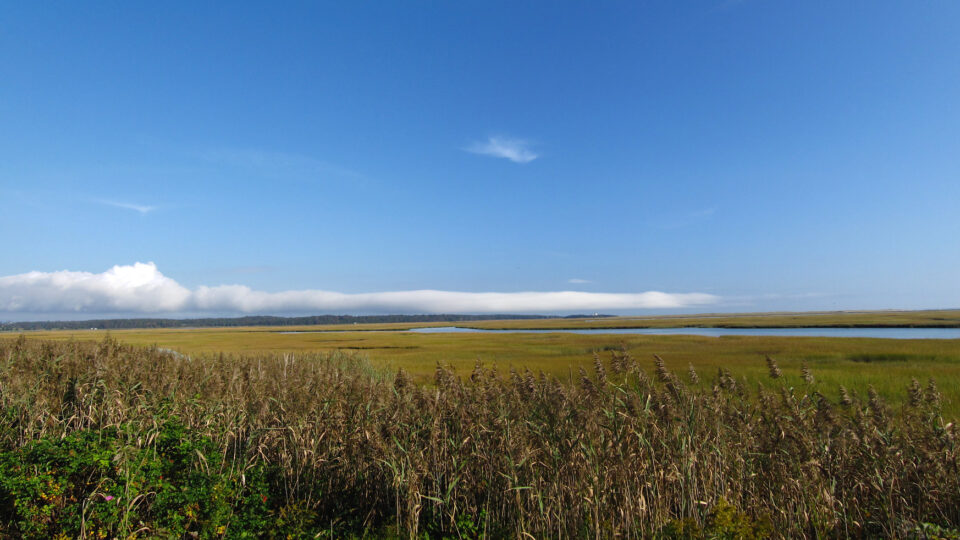
Salt marshes are coastal wetlands that are flooded and drained by salt water brought in and out by the tides. These low-lying wetlands are also sometimes called tidal marshes because they occur in the zone between low and high tides. These wetlands are some of the most biologically productive ecosystems on Earth.

Cape Cod’s beautiful salt marshes are as important as they are iconic.  They act as carbon sinks, protect coastal development from storm surge, play an outsized role in nitrogen cycling, and provide critical habitats for many fish, shellfish, and coastal birds.

According to scientists from the Marine Biological Laboratory in Woods Hole, Massachusetts, more than 90% of salt marshes around the world are likely to be underwater by the end of the century. 

Since 1971, scientists from the Marine Biological Laboratory have mapped vegetative cover in Great Sippewissett Marsh in Falmouth, Massachusetts, to examine whether increased nitrogen in the environment would impact species of marsh grass.  Because of the length of the study, the researchers were also able to investigate the impacts of climate change on the ecosystem, especially those driven by accelerating sea level rise. 

The research team found that increased nitrogen favored higher levels of vegetation and accretion of the marsh surface.  However, the researchers found that salt marshes will not be able to outpace the submergence from global sea level rise – no matter how much nitrogen is applied.

Sea level rise is the biggest threat to salt marshes around the world.  Mitigating some of these projected losses is critical in order for salt marshes to continue to provide their important ecosystem services for people and the planet.  

**********

Web Links

Most of the World’s Salt Marshes Could Succumb to Sea Level Rise by Turn of Century

Photo, posted September 27, 2011, courtesy of Chris M Morris via Flickr.

Earth Wise is a production of WAMC Northeast Public Radio
Cleaning Up Urban Rivers With Nature’s Tools | Earth Wise

October 7, 2022 By EarthWise Leave a Comment

Fifty years after the passage of the Clean Water Act, urban waterways across the United States are continuing their comeback and are showing increasing signs of life.  A strategy that is being adopted in many places is to use natural restoration techniques focused on bolstering plants and wildlife to improve water quality.

A nonprofit called the Upstream Alliance has focused on public access, clean water, and coastal resilience in the Delaware, Hudson, and Chesapeake watersheds.  Working with the Center for Aquatic Sciences and with support from the EPA and the National Fish and Wildlife Foundation, the alliance has been repopulating areas of an estuary of the Delaware River near Camden, New Jersey with wild celery grass, which is a plant vital to freshwater ecosystems.

In many places, scientists, nonprofits, academic institutions, and state agencies are focusing on organisms like bivalves (typically oysters and mussels) along with aquatic plants to help nature restore fragile ecosystems, improve water quality, and increase resilience.

Bivalves and aquatic vegetation improve water clarity by grounding suspended particles, which allows more light to penetrate.  These organisms also cycle nutrients both by absorbing them as food and by making them more available to other organisms.

Underwater restoration projects have been underway in New York Harbor for more than a decade, where the Billion Oyster Project has engaged 10,000 volunteers and 6,000 students. 

The hope is that bringing back bivalves and aquatic plants can create a lasting foundation for entire ecosystems.  It is restoring nature’s ability to keep itself clean.

**********

Web Links

How Using Nature’s Tools Is Helping to Clean Up Urban Rivers

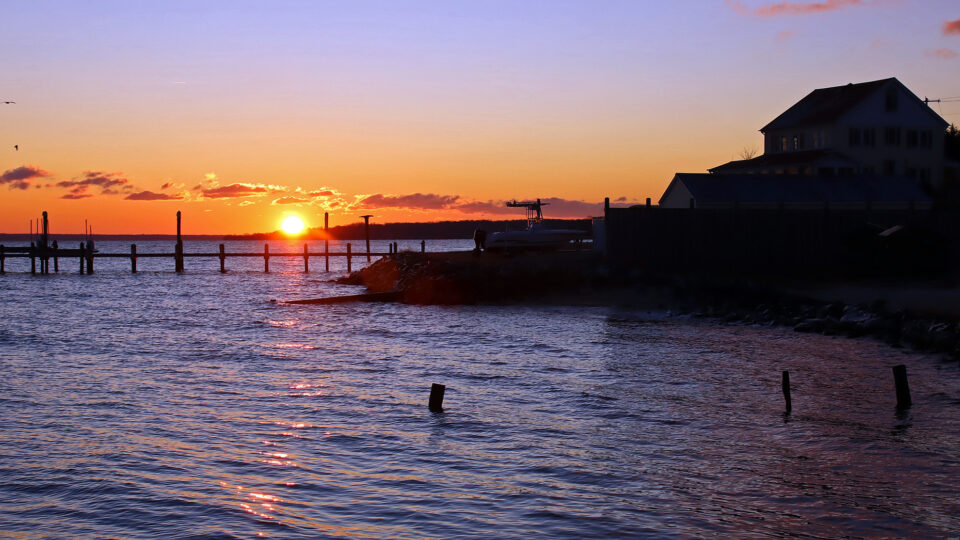
Photo, posted December 19, 2019, courtesy of Scott via Flickr.

Earth Wise is a production of WAMC Northeast Public Radio
The Threat From Thwaites | Earth Wise

January 20, 2022 By EarthWise Leave a Comment

The Thwaites Glacier is melting

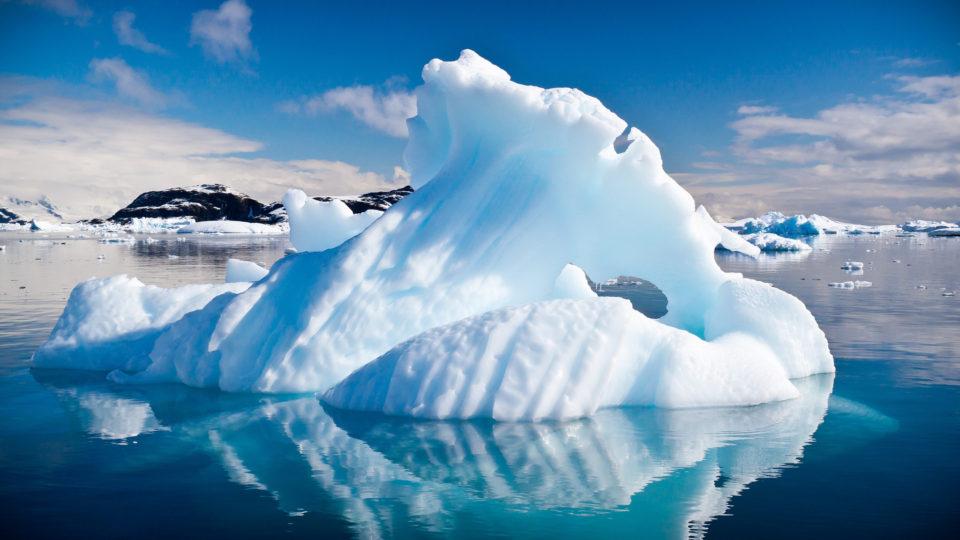
The Thwaites Glacier in Antarctica is the widest glacier in the world. It is about 80 miles across and in places extends to a depth of about 2,600 to 3,900 feet.  The glacier is roughly the size of Florida, and it currently contributes 4% of annual global sea level rise as it continues to retreat from a warming ocean.

The International Thwaites Glacier Collaboration is a team of nearly 100 scientists dedicated to studying the glacier.  According to the scientists, Thwaites has doubled its outflow speed within the last 30 years.  The glacier in its entirety holds enough water to raise global sea levels by over two feet, which would be catastrophic.

A third of the glacier flows more slowly than the rest because it is braced by a floating ice shelf that is held in place by an underwater mountain.  The concern is that the brace of ice slowing the glacier may not last for long.

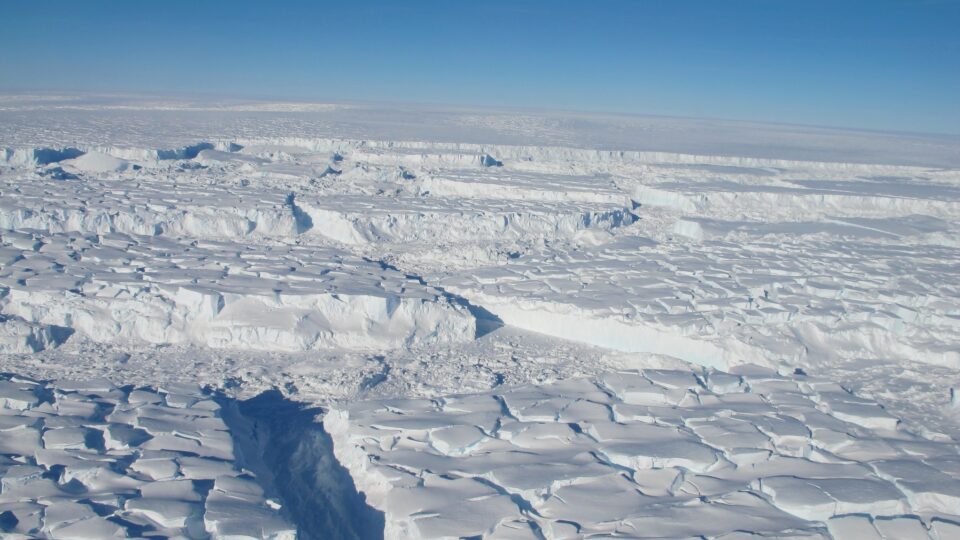
Beneath the surface, warmer ocean water is attacking the glacier from all angles.  The water is melting the ice directly beneath the glacier causing it to lose its grip on the underwater mountain.  Massive fractures have formed and are growing.

Warm water is also a threat for what is called the grounding zone, which is the area where the glacier lifts off the seabed. There are many possible scenarios under which there could be a major ice loss from the glacier.  It is unclear how quickly it could occur.  It might take decades, or it could be centuries.  The threat is large enough and real enough that continued observation and research is essential.

**********

Web Links

The Threat from Thwaites: The Retreat of Antarctica’s Riskiest Glacier

Photo, posted October 16, 2012, courtesy of J. Yungel / NASA Ice via Flickr.

Earth Wise is a production of WAMC Northeast Public Radio.

Vanishing Kelp Forests | Earth Wise

June 25, 2021 By EarthWise Leave a Comment

Bull kelp forests in California are disappearing

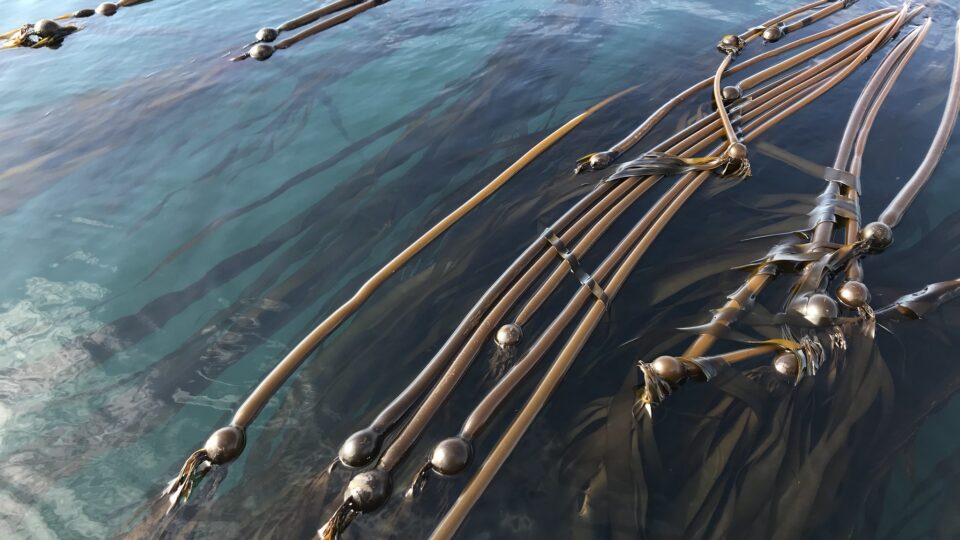
Bull kelp is the dominant species in offshore kelp forests north of Santa Cruz, California along the west coast of North America.  Bull kelp has similar physical structures to terrestrial plants; it anchors to the ocean floor with root-like structures called holdfasts, and has stem-like structures called stipes from which leaf-like blades stretch out through the water, absorbing nutrients and sunshine.

These giant seaweeds form lush underwater forests in northern California’s coastal waters and have long provided critical habitat for many species like salmon, crabs, and jellyfish.  But now, for much of the California coast, only a few patches of bull kelp remain.

A team from University of California Santa Cruz has studied satellite images of about 200 miles of coastline.  They found that starting in 2014, the area covered by kelp has dropped by more than 95%. 

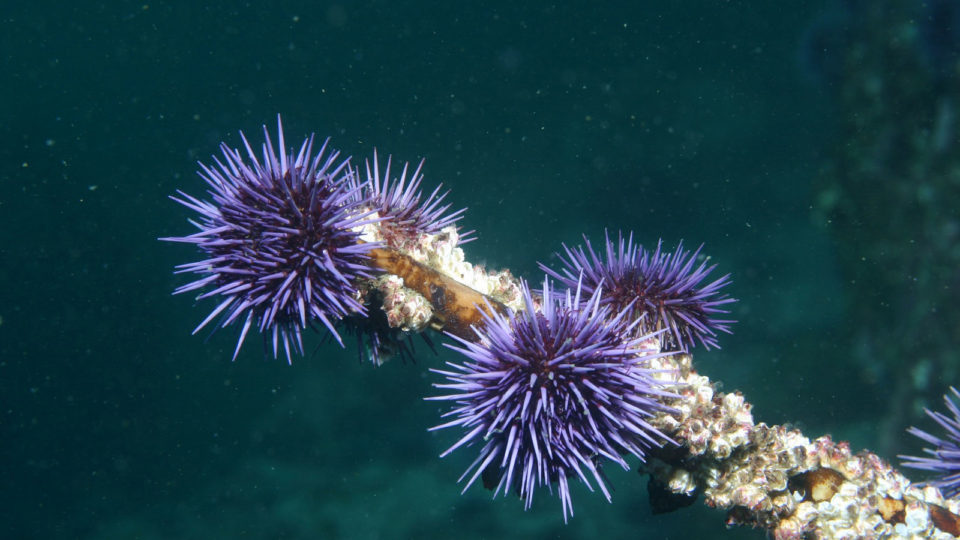
The die-off was driven in part by an underwater heat wave that depleted nutrients in the water and made it harder for the kelp to grow.  Making matters much worse, populations of purple sea urchins, which eat kelp, have exploded in the region because of overfishing and other reductions in urchin predators such as sea otters.  The sea urchins eat kelp holdfasts, creating so-called urchin barrens where their destructive grazing has decimated kelp forests.

Bull kelp is a species at high risk of becoming endangered.  In coming decades, more marine heatwaves are expected.  These events as well as stronger El Niños will become more common and frequent with climate change.  Between these thermal events and the sea urchins, it will be difficult for kelp forests to survive.

**********

Web Links

Ninety-five percent of bull kelp forests have vanished from 200-mile stretch of California coast

Photo, posted October 28, 2015, courtesy of Florian Graner/Green Fire Productions via Flickr.

Earth Wise is a production of WAMC Northeast Public Radio.

Oil Platforms And Biodiversity | Earth Wise

April 8, 2021 By EarthWise Leave a Comment

Decommissioned oil rigs should become artificial marine reefs

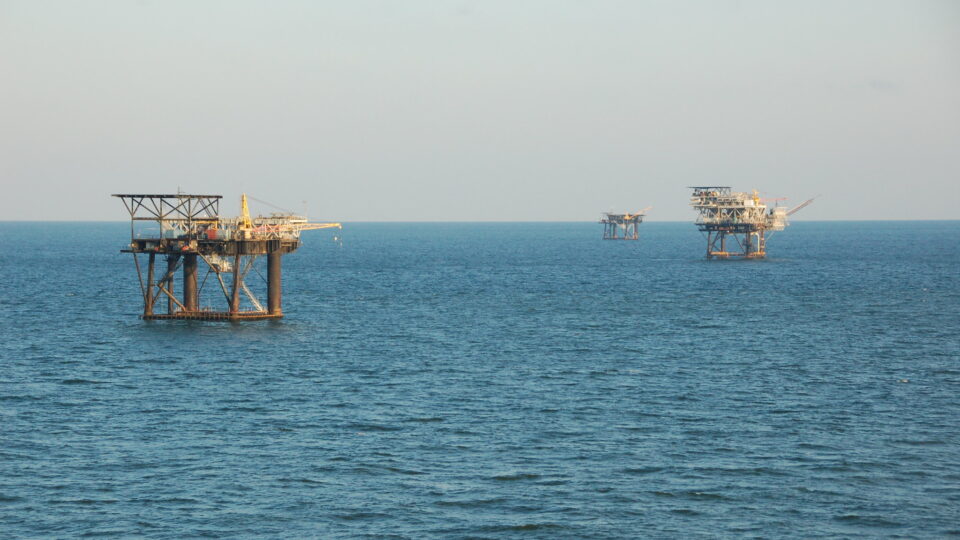
We have previously reported on the important role that offshore oil platforms seem to play for fish.  In short, the support structures of offshore oil platforms that often rise hundreds of feet through the water column create essentially a prefabricated reef for marine life.

According to a new study recently published in the British journal Ecological Solutions and Evidence, the large gatherings of fish around oil and gas platforms attract harbour porpoises searching for food – despite the fact that noise from industrial activities normally scares porpoises away.    

Harbour porpoises are one of the smallest whale species and the only whale species that’s known to breed in Danish waters.  The species has been protected in Danish waters since 1967.  Previous studies have demonstrated that underwater noises from sources like shipping and industry typically scare porpoises away. 

But according to new research from scientists at Aarhus University in Denmark, there are actually more porpoises around the largest Danish oil platform – Dan F – in the North Sea than there are within the three to ten kilometers surrounding the platform.  The research team found that the platform acts as a natural reef where porpoises can find favorable habitat and food. 

Currently, the international OSPAR convention requires that all decommissioned oil and gas platforms be removed from the ocean.  But according to researchers, leaving the old platforms in the ocean to serve as artificial reefs is actually more beneficial to the marine environment. 

In the Gulf of Mexico, the United States program Rigs to Reefs has converted 558 oil and gas platforms into artificial reefs.

**********

Web Links

Harbor porpoises attracted to oil platforms when searching for food

Photo, posted March 26, 2008, courtesy of Dave Herholz via Flickr.

Earth Wise is a production of WAMC Northeast Public Radio.

The Collapse of Northern California Kelp Forests | Earth Wise

March 30, 2021 By EarthWise Leave a Comment

The California kelp forests are collapsing

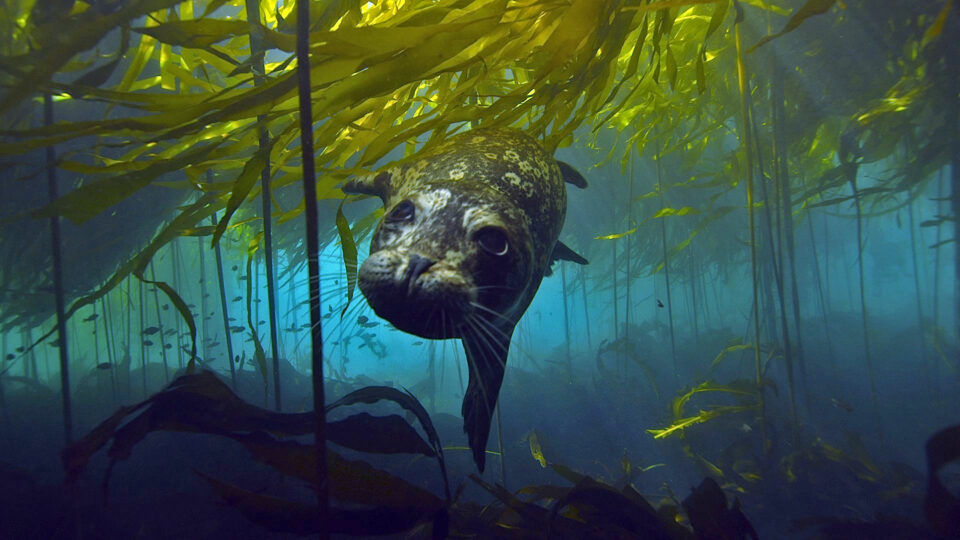
For thousands of years, thick canopies of kelp formed an underwater forest spanning the coast of Northern California.  Kelp is the cornerstone of a rich subtidal community, providing food and habitat for all sorts of marine creatures.  But in recent years, a shocking transformation has occurred.  Satellite imagery reveals that the area covered by kelp forests off the coast of Northern California has declined by more than 95%.  Only a few small, isolated patches remain.  

In a new study, researchers at the University of California Santa Cruz found that the kelp forest decline was an abrupt collapse as opposed to a gradual decline. 

According to the study, which was recently published in the journal Communications Biology, kelp forests north of San Francisco were resilient to warming events in the past, like El Niños and marine heatwaves. But the decline of a key sea urchin predator – the sunflower sea star – from sea star wasting disease caused the kelp forests’ resiliency to plummet.  Sea urchins are voracious consumers of kelp.     

But it was a series of events – not just the sea urchins – that combined to decimate the Northern California kelp forest.   A marine heatwave that became known as “the blob” developed in 2014 and moved down the West Coast in 2015.  Around the same time, a strong El Niño event developed and brought warmer water up the coast from the south.  The warming ocean waters combined with the ravenous sea urchin population resulted in the dramatic decline of kelp. 

According to researchers, the prospects for a Northern California kelp forest recovery remain poor unless sea urchin predators return to the ecosystem. 

********** 

Web Links

The collapse of Northern California kelp forests will be hard to reverse

Photo, posted August 13, 2019, courtesy of Sara Hamilton of OSU College of Science via Flickr.

Earth Wise is a production of WAMC Northeast Public Radio.


The Cockroaches Of The Ocean

December 14, 2018 By EarthWise Leave a Comment

https://earthwiseradio.org/wp-content/uploads/2018/12/EW-12-14-18-The-Cockroaches-of-the-Ocean.mp3

The coast of Northern California is home to underwater forests – huge, sprawling tangles of brown seaweed.  Kelp forests play a similar role in the oceans as the one that ordinary tree forests play on land.  Like trees, kelp absorbs carbon emissions and provides critical habitat and food for a wide range of species.

[Read more…] about The Cockroaches Of The Ocean

Glacial Engineering

October 24, 2018 By EarthWise Leave a Comment

https://earthwiseradio.org/wp-content/uploads/2018/10/EW-10-24-18-Glacial-Engineering.mp3

As the world struggles with trying to limit carbon emissions and slow the pace of global warming, there is increasing analysis of various forms of geoengineering.   Often, these consist of nearly unthinkable efforts to intervene in the climate on a global scale with unpredictable and possibly catastrophic consequences.

[Read more…] about Glacial Engineering

Coral Nurseries

July 9, 2018 By EarthWise Leave a Comment

https://earthwiseradio.org/wp-content/uploads/2018/06/EW-07-09-18-Coral-Nurseries.mp3

In the past, coral conservationists focused their efforts on protecting reefs from direct environmental threats such as land-based pollution and damaging fishing practices.   These efforts continue, but as coral reefs face increasingly dire threats, conservationists are turning toward more proactive approaches.

[Read more…] about Coral Nurseries

DNA Analysis of River Water

April 17, 2017 By EarthWise

https://earthwiseradio.org/wp-content/uploads/2017/04/EW-04-17-17-DNA-Analysis-of-River-Water.mp3

DNA analysis has become commonplace and inexpensive.  Millions of people have their DNA tested to learn about their origins and family connections.  And the technology has spread to biological research in the form of Environmental DNA or eDNA, which is such a powerful tool that it is transforming the field of wildlife biology.

[Read more…] about DNA Analysis of River Water

A Large-Scale Tidal Energy Plant

August 9, 2016 By WAMC WEB

https://earthwiseradio.org/wp-content/uploads/2016/07/EW-08-09-16-Large-Scale-Tidal-Power.mp3

Ocean energy is about to take an important step towards making a real impact in Scotland.  The MeyGen Tidal Array Project is reaching the final construction of its demonstration phase, which will be the first test of multiple underwater turbines sited together in a full-scale array.

[Read more…] about A Large-Scale Tidal Energy Plant

Primary Sidebar

Recent Episodes

  • An uninsurable future
  • Clean energy and jobs
  • Insect declines in remote regions
  • Fossil fuel producing nations ignoring climate goals
  • Trouble for clownfishes

WAMC Northeast Public Radio

WAMC/Northeast Public Radio is a regional public radio network serving parts of seven northeastern states (more...)

Copyright © 2026 ·