• Skip to primary navigation
  • Skip to main content
  • Skip to primary sidebar

Earth Wise

A look at our changing environment.

  • Home
  • About Earth Wise
  • Where to Listen
  • All Articles
  • Show Search
Hide Search
You are here: Home / Archives for sun

sun

The World’s Largest Storage Battery

May 24, 2019 By EarthWise Leave a Comment

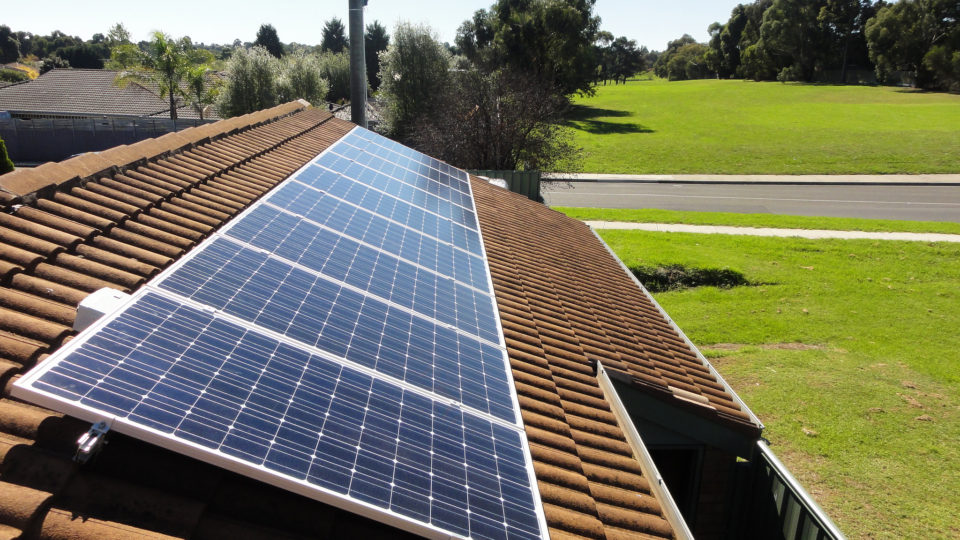
Many homeowners are installing solar energy systems with battery backup.  Energy stored in the battery can be used when the sun isn’t shining.   As battery prices come down, utility-scale solar installations are also turning to battery-based energy storage.

Florida Power & Light has announced plans to build the world’s largest solar-storage combination facility in Manatee County.  The 409-MW Manatee Energy Storage Center will be the largest solar-battery system by a factor of four.  The specifics of the technology and source of the battery system components have yet to be announced.

The system, which is scheduled to be completed in late 2021, will be charged by a nearby FPL solar power plant.  The plan is to discharge batteries during times of higher demand, thereby offsetting the need to run other power plants.  As a result, there will be reduced emissions and customers will save as much as $100 million through avoided fuel costs.

Installing the mega-sized battery system will accelerate the retirements of two nearby 1970’s-era gas-fired generation units.  At peak efficiency, the Manatee energy storage system will be able to power 390,000 homes for up to two hours.

FPL has already been pursuing the use of battery storage technology.  Last year, they added a 10 MW battery storage system to its 74.5 MW Babcock Ranch Solar Energy Center in Charlotte County.

These large battery systems are increasingly practical because of dramatic reductions in lithium-ion battery costs.  The levelized cost of electricity from lithium-ion batteries has declined a remarkable 38% just since the beginning of 2018.  The economics of clean energy continue to get better and better.

**********

Web Links

FP&L Plans World’s Largest Energy Storage Battery To Support Its Renewable Energy Goals

Photo, posted April 21, 2010, courtesy of Frank Starmer via Flickr.

Earth Wise is a production of WAMC Northeast Public Radio.

Trees And The Future Of Cities

April 16, 2019 By EarthWise Leave a Comment

The shade of a single tree is a welcome source of relief on a hot summer day.  But even a relatively small patch of woods can have a profound cooling effect.  A new study at the University of Wisconsin-Madison looks at the role trees play in keeping towns and cities cool.

According to the study, the right amount of tree cover can lower daytime temperatures in the summer by as much as 10 degrees.  The effects are noticeable from neighborhood to neighborhood and even on a block-by-block basis.

Cities are well-known to be hot spots due to the urban heat islanding effect.  Using trees to keep temperatures more comfortable in cities can make a big difference for the people who live and work there.

The man-made structures of cities – roads, sidewalks, and buildings – absorb heat from the sun during the day and slowly release it at night.  Trees, on the other hand, not only shade those structures from the sun, but they also transpire -or release water in the air through their leaves – which helps to cool things down.

According to the study, to get maximum cooling benefits, tree canopies must exceed forty percent, meaning that city blocks need to be nearly halfway covered by tree branches and leaves.  To get the biggest bang for the buck, cities should start planting more trees in areas that are already near the forty percent threshold.  But

trees can’t just be in parks.  They need to be in places where people are active.

If we want the places where we live to be more comfortable and resilient in a warming world, we need to plant more trees.

**********

Web Links

Study suggests trees are crucial to the future of our cities

Photo, posted May 26, 2012, courtesy of Mislav Marohnic via Flickr.

Earth Wise is a production of WAMC Northeast Public Radio.

Thoreau And Climate Change

March 27, 2019 By EarthWise Leave a Comment

Henry David Thoreau was a 19th-century American naturalist, philosopher, poet, essayist, and social reformer.  He is best known for “Civil Disobedience,” an essay advocating for the rebellion against an unjust government, and for “Walden,” a book about his experiences living simply in nature.  Now, Thoreau’s observations from “Walden” are the foundation of a new study exploring the effects of climate change on tree leaf-out and the emergence of spring wildflowers. 

This research, which was recently published in the journal Ecology Letters, relies on Thoreau’s scientific observations gathered during the 1850s when he spent 26 months living in isolation at Walden Pond in Concord, Massachusetts.  These observations from Thoreau were combined with current research to measure tree and wildflower leaf-out dates for 37 different years between 1852 and 2018.  “Leaf out” refers to the time in spring when plants and trees begin producing leaves.  An alteration in this timing can have a domino effect throughout an ecosystem.

Over the past century, temperatures in Concord, Massachusetts have warmed five degrees Fahrenheit.  As a result, leaf-out dates have changed significantly.  According to researchers, wildflowers are leafing out about one week earlier, while trees are leafing out about two weeks earlier than they did 160 years ago. 

Ground-dwelling plants like wildflowers have a narrow window to accomplish growth, photosynthesis, and reproduction, before the canopy trees leaf out and block the sunlight.  Temperature-driven shifts in the timing of tree leaf-out between Thoreau’s time and now are likely already hindering wildflower abundance and flowering. 

As the climate continues to warm, the already small window of time between wildflower emergence and tree leaf-out will likely shorten further. 

**********

Web Links

Using Thoreau, scientists measure the impact of climate change on wildflowers

Photo, posted August 13, 2008, courtesy of Adam Pieniazek via Flickr.

Earth Wise is a production of WAMC Northeast Public Radio.

Shrinking Arctic Glaciers

March 18, 2019 By EarthWise Leave a Comment

The glaciers on Baffin Island, located in Canada’s northeastern Arctic, have been shrinking as the climate warms.  The melting, receding glaciers have exposed fragments of ancient plants that had frozen in the places where they once grew.  New research has shown that these spots have not seen the light of day for at least 40,000 years.

The entire planet has been warming since humanity started flooding the atmosphere with greenhouse gases at the start of the Industrial Revolution, but the effects are not uniform across the globe.  Some regions – like the Arctic – are seeing temperature rises that are greater and faster than anywhere else in the world.  As a result, glaciers in the Arctic have been melting away at rates never before observed in modern human history.

Researchers at the University of Colorado performed radiocarbon dating experiments in order to find out when the last time was that the Arctic was as warm as today.   There have been natural variations in Arctic temperatures caused by the complicated way the Earth wobbles on its axis.  For example, 10,000 years ago the northern latitudes pointed at the sun more directly during the summer than they do now, providing about 9% more sunshine during the summer.

The results of the study showed that the newly-uncovered plants had died at least 40,000 years earlier, indicating that the glaciers had not melted back to today’s size for at least that long.  Global measurements indicate that the planet as a whole has not been as warm as it is today for about 115,000 years, back then again a result of the orientation of the Earth.

Well, the Earth hasn’t wobbled recently.  The Arctic is melting because we are dumping massive amounts of greenhouse gases into the atmosphere.

**********

Web Links

These Arctic glaciers are smaller than ever before in human history

Photo, posted September 1, 2010, courtesy of Doryce S. via Flickr.

Earth Wise is a production of WAMC Northeast Public Radio.
More Renewables Without Storage In Texas

February 27, 2019 By EarthWise Leave a Comment

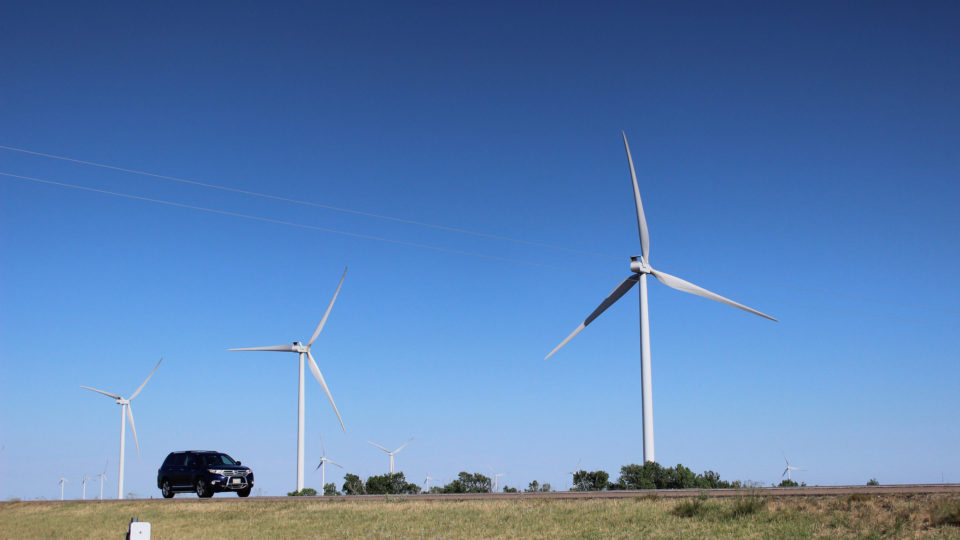
Texas has a Texas-sized appetite for electricity and relies most heavily on natural gas, coal and nuclear power to get it.  But in recent times, wind power has grown tremendously in the Lone Star State and it has already leapfrogged past nuclear power.  Coal could be the next domino to fall.

In the past few years, solar power has become competitive with wind in terms of price.  Texas is a large, coastal state in the sunny southwestern U.S. and has significant solar resources.  As a result, the amount of solar power in Texas is now growing rapidly.

In order for a combination of solar and wind power to address the bulk of electricity demand in Texas, there needs to be a way to provide reliability that these intermittent sources don’t necessarily provide.  Energy storage is a solution that ultimately is likely to be part of most electricity grids, but currently it is still expensive on a utility scale.

A new study from Rice University looked at the complementarity of solar and wind power in Texas.  Complementarity refers to balancing the output of solar and wind systems.  The peak performance of wind and solar occurs at very different times in different regions of the state.  The study suggests that the right mix of solar and wind systems in the right parts of Texas could provide a continuously reliable energy system.  On both a yearly and daily basis, wind and solar power resources in Texas complement each other in terms of peak performance.  It is a matter of locating the solar power and wind farms in the right places.

With the Texas solar industry really starting to boom, there is a real opportunity to integrate far more renewable energy into the Texas grid.

**********

Web Links

More Renewables with Less Energy Storage: Texas Shows How

Photo, posted June 8, 2018, courtesy of Laura Lee Dooley via Flickr.

Earth Wise is a production of WAMC Northeast Public Radio.

Hacking Photosynthesis

February 25, 2019 By EarthWise Leave a Comment

There is an enzyme known as RuBisCo that is involved in carbon fixation, the process plants use to convert carbon dioxide into sugar molecules.  The RuBisCo molecule is inside the leaves of most plants and is probably the most abundant protein in the world.

RuBisCo picks up carbon dioxide from the air and uses energy from the sun to turn the carbon into sugar molecules.  This process of photosynthesis is pretty much the foundation of life on Earth.

Wonderful as it is, the process is not perfect.  RuBisCo is not very selective in grabbing molecules from the air.  It picks up oxygen as well as CO2 and it produces a toxic compound when it does that.

Plants operate a whole other complicated chemical process to deal with this toxic byproduct and uses up a lot of energy along the way, leaving less energy for making leaves or food that we can eat.

A research program at the University of Illinois called Realizing Increased Photosynthetic Efficiency (or RIPE) has been trying to correct this problem; they have been trying to hack photosynthesis.  And they may well have succeeded.

Using genetic modification on tobacco plants, they have shut down the existing detoxification process and set up a much more efficient new one.  The result is super plants that grow faster and up to 40% bigger.

The next step is to get it to work on plants that people actually rely upon for food, like tomatoes, soybeans and black-eyed peas (which are a staple food crop in sub-Saharan Africa where food is scarce.)

It will be years before we know if the process can really produce more food and be safe, but it may end up leading to a major increase in crop productivity.

**********

Web Links

Scientists Have ‘Hacked Photosynthesis’ In Search Of More Productive Crops

Photo, posted June 10, 2013, courtesy of Boon Hong Seto via Flickr.

Earth Wise is a production of WAMC Northeast Public Radio.

Liquid Fuel From The Sun

February 21, 2019 By EarthWise Leave a Comment

Most forms of energy we use ultimately come from the sun in one way or another.  Even fossil fuels are the end product of millions of years of plant life that captured solar energy.  The advantage fossil fuels have over direct solar power is that they are, in fact, fuels and therefore can be stored for use when needed.

Scientists in Sweden have now developed a specialized fluid that absorbs some of the sun’s energy, holds it for months or even years, and then releases it when needed.  This solar thermal fuel is like a rechargeable battery for heat rather than electricity.

The special fluid is pumped through transparent tubes where ultraviolet light from the sun excites its molecules into an energized state.  A compound called norbornadiene is converted into quadricyclane. The quadricyclane is a quite stable substance until it is passed over a cobalt-based catalyst, which causes it to turn back into norbornadiene and release copious amounts of heat.

Such a solar thermal fuel could be stored in uninsulated tanks in homes or factories or piped or trucked to where it was needed.  It could then be used for water heaters, dishwashers, or clothes driers.  The room temperature fluid quickly warms to about 183 degrees when passed over the catalyst, plenty warm enough for heating a home or office.  Both the fuel and the catalyst are damaged very little by the reactions, so the process can be recycled many times.

There is much development work needed to optimize shelf life, energy density, good recyclability and other properties before this technology can be commercialized but there are at least 15 groups around the world now studying this intriguing way to get liquid fuel from the sun.

**********

Web Links

Scientists transform sunlight into a liquid fuel that can be stored for 18 years

Photo, posted August 17, 2009, courtesy of Hiromichi Torihara via Flickr.

Earth Wise is a production of WAMC Northeast Public Radio.
Energy Trends For A New Year

January 15, 2019 By EarthWise Leave a Comment

With a new year upon us, there are several energy trends to watch out for.

The most important one is that the fundamental shift toward slow-carbon technologies is continuing. This shift is taking place despite diminishing government policy support and even active government efforts to thwart it.  There is just too much momentum to stand in the way of low-carbon energy technologies.

Analysts at Bloomberg New Energy Finance estimate that over the next 30 years over 11 trillion dollars will be invested in energy power generation and power storage assets with 85% of it aimed at zero-carbon emission.  Dramatic reductions in green energy costs have resulted in legitimate cost competition between zero carbon sources of energy and fossil fuel generation.

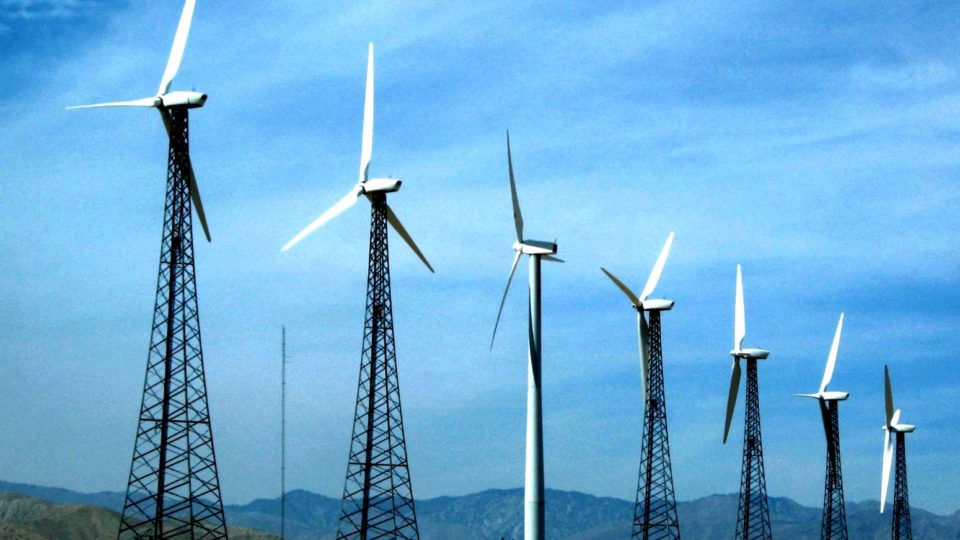
In the coming year, battery technology will continue to play a growing role both as a storage medium for energy generated by sun and wind and for powering vehicles.

Another trend is that the world’s wealthiest economies are learning to grow without growing the demand for electricity.  This is important in the battle to reduce overall emissions.

Another key issue is addressing the energy needs of people who have no meaningful access to it and there are around 1.5 billion people in that category.   Emerging technologies based on solar power, wind energy, microgrids and other innovations mean that traditional power grids that remain out of reach to these people are not necessary.  There is the potential to address those needs without contributing to climate change.

The world is struggling to deal with the growing problem of the changing climate, but there are trends that provide at least some hope that we can move in the right direction.

**********

Web Links

Top 3 clean energy trends to watch out for in 2019

Photo, posted April 5, 2013, courtesy of Flickr. 

Earth Wise is a production of WAMC Northeast Public Radio.

A Water-Based Battery

January 3, 2019 By EarthWise Leave a Comment

https://earthwiseradio.org/wp-content/uploads/2019/01/EW-01-03-19-A-Water-Based-Battery.mp3

The transition from fossil fuel-based power plants to clean, renewable energy sources is accelerating as both wind and solar power get cheaper and increasingly become cost-competitive with traditional power sources.   The biggest stumbling block both energy sources face is that they cannot always supply power on demand but require the sun to shine and the wind to blow.

[Read more…] about A Water-Based Battery

Powering Africa With The Sun

December 3, 2018 By EarthWise Leave a Comment

https://earthwiseradio.org/wp-content/uploads/2018/12/EW-12-03-18-Powering-Africa-With-The-Sun.mp3

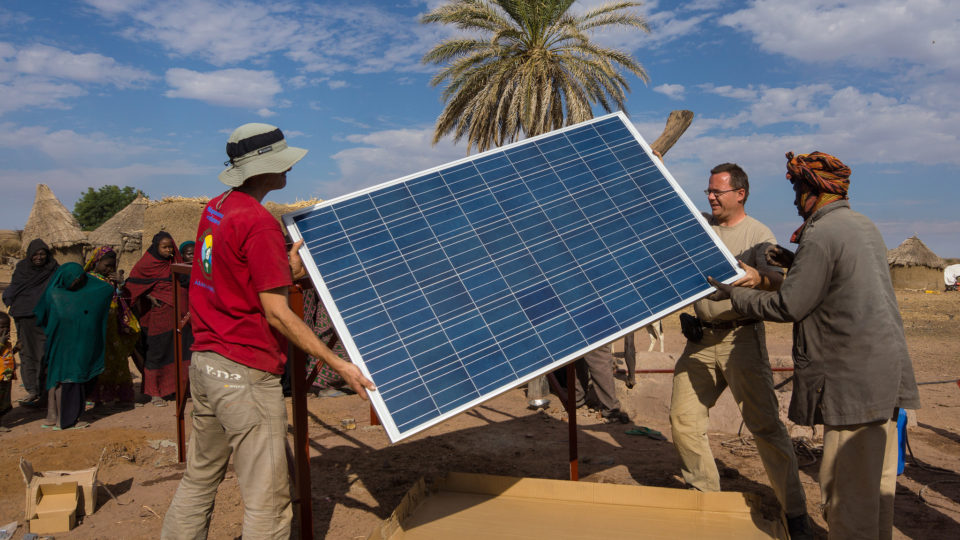
There are roughly 600 million people in sub-Saharan Africa who currently live without electric power.  Putting in the infrastructure to supply power to these people in their various countries has been a major economic and logistical challenge.

[Read more…] about Powering Africa With The Sun

More Power From The Sun’s Heat

November 29, 2018 By EarthWise Leave a Comment

https://earthwiseradio.org/wp-content/uploads/2018/11/EW-11-29-18-More-Power-From-The-Suns-Heat.mp3

When we think of solar power, we usually are talking about the panels that generate electricity using the photovoltaic effect.  These panels are on millions of rooftops around the world and in utility-scale solar farms.   There are also solar water heating systems that use the sun’s heat to provide hot water for homes and businesses.

[Read more…] about More Power From The Sun’s Heat

Solar Plus Storage In The Caribbean

November 22, 2018 By EarthWise Leave a Comment

https://earthwiseradio.org/wp-content/uploads/2018/11/EW-11-22-18-Solar-Plus-Storage-in-Caribbean.mp3

The Caribbean is home to nearly 30 island nations and more than 7,000 individual islands with a combined population of around 40 million.  All of the islands are susceptible to disasters such as hurricanes that can leave residents without electrical power for extended periods of time.

[Read more…] about Solar Plus Storage In The Caribbean

Wildfires And The Water Supply

November 12, 2018 By EarthWise Leave a Comment

https://earthwiseradio.org/wp-content/uploads/2018/10/EW-11-12-18-Wildfires-and-the-Water-Supply.mp3

Hotter and dryer conditions are leading to an increasing number of wildfires in North America and elsewhere around the world.  The damage they cause is well-known.  But one aspect of that damage that tends to be overlooked is the impact on aquatic environments and drinking water supplies.

[Read more…] about Wildfires And The Water Supply

Using The Sun To Remove Ice

October 3, 2018 By EarthWise Leave a Comment

https://earthwiseradio.org/wp-content/uploads/2018/09/EW-10-03-18-Using-the-Sun-to-Remove-Ice.mp3

Ice buildup can cause all sorts of problems ranging from performance issues to catastrophic failures.  For example, ice buildup can negatively impact things like airplanes, power lines, wind turbines, and the like.  Preventing this ice buildup typically requires energy-intensive heating systems or environmentally-harmful chemical sprays.

[Read more…] about Using The Sun To Remove Ice

Mandatory Solar In California

May 30, 2018 By EarthWise Leave a Comment

https://earthwiseradio.org/wp-content/uploads/2018/05/EW-05-30-18-Mandatory-Solar-in-California.mp3

In May, California became the first state in the U.S. to require solar panels on almost all new homes.  Under new standards adopted by the California Energy Commission, most new homes, condos and apartment buildings built after January 1, 2020 will be required to include solar systems.

[Read more…] about Mandatory Solar In California

Water From Desert Air

May 7, 2018 By EarthWise Leave a Comment

https://earthwiseradio.org/wp-content/uploads/2018/05/EW-05-07-18-Water-from-Desert-Air.mp3

Last spring, we talked about a solar-powered water harvester designed to pull water out of even dry desert air.   The prototype device was described in a paper by scientists at UC Berkeley and MIT in the journal Science.

[Read more…] about Water From Desert Air

Sunshine To Fuel

March 15, 2018 By EarthWise Leave a Comment

https://earthwiseradio.org/wp-content/uploads/2018/03/EW-03-15-18-Sunshine-to-Fuel.mp3

Hydrogen is touted to be the fuel of the future, particularly for cars.  But a more acccurate view of it is that hydrogen is an energy storage medium.  And the most promising form of energy to store using hydrogen is solar energy.

[Read more…] about Sunshine To Fuel

Renewables Beat Out Coal In Europe

March 5, 2018 By EarthWise 1 Comment

https://earthwiseradio.org/wp-content/uploads/2018/03/EW-03-05-18-European-Renewables-Beat-Coal.mp3

Last year was the first year in which more electricity in Europe was generated from the combination of wind, sun, and biomass than from coal.  The combination of all clean energy sources (which adds hydropower to the mix) surpassed coal several years ago.

[Read more…] about Renewables Beat Out Coal In Europe

Algae And The Greenland Ice Sheet

February 2, 2018 By EarthWise Leave a Comment

https://earthwiseradio.org/wp-content/uploads/2018/02/EW-02-02-18-Algae-and-the-Greenland-Ice-Sheet.mp3

The Greenland Ice Sheet is the second largest ice body in the world, after the Antarctic ice sheet.  It is about 1,500 miles long, nearly 900 miles across at its widest point, and averages more than a mile in thickness.  It has experienced record melting in recent years and is a source of great concern as the climate continues to warm. The Greenland Ice Sheet is losing an estimated 270 billion tons of ice each year.   If the entire sheet were to melt, global sea levels would rise by 24 feet which, of course, would be a world-wide catastrophe.

[Read more…] about Algae And The Greenland Ice Sheet

Carbon And The Dark Ocean

January 4, 2018 By EarthWise Leave a Comment

https://earthwiseradio.org/wp-content/uploads/2018/01/EW-01-04-18-Carbon-and-the-Dark-Ocean.mp3

Sunlight entering the water can travel as much as 3,000 feet into the ocean depths under the right conditions, but ordinarily there is no significant light that penetrates beyond about 650 feet down.  That upper 650 feet is called the euphotic or “sunlight” zone and is home to most familiar marine life.  The “dark ocean”, everything below that depth, makes up 90% of the ocean and remarkably little is known about it.

[Read more…] about Carbon And The Dark Ocean

  • « Go to Previous Page
  • Page 1
  • Interim pages omitted …
  • Page 3
  • Page 4
  • Page 5
  • Page 6
  • Page 7
  • Go to Next Page »

Primary Sidebar

Recent Episodes

  • An uninsurable future
  • Clean energy and jobs
  • Insect declines in remote regions
  • Fossil fuel producing nations ignoring climate goals
  • Trouble for clownfishes

WAMC Northeast Public Radio

WAMC/Northeast Public Radio is a regional public radio network serving parts of seven northeastern states (more...)

Copyright © 2026 ·