• Skip to primary navigation
  • Skip to main content
  • Skip to primary sidebar

Earth Wise

A look at our changing environment.

  • Home
  • About Earth Wise
  • Where to Listen
  • All Articles
  • Show Search
Hide Search
You are here: Home / Archives for roots

roots

Otters to the rescue

February 23, 2024 By EarthWise Leave a Comment

Otters to the rescue in California

California sea otters were hunted almost to extinction in the 19th century.  Only a small number survived along California’s central coast.  But over time, the otters recovered and increasingly recolonized their former habitats.

Sea otters are playing an important role in safeguarding California’s kelp forests and marshlands against the harmful effects of climate change.

Over much of the 20th century, increasing ocean heat had devastated underwater kelp forests by driving a population explosion of sea urchins that devour kelp.  But sea otters eat urchins and as the sea otter population has grown, kelp has flourished.  According to a new study published in PLOS Climate, the underwater kelp canopy along the central coast increased by 56% since 2016.  Kelp forests have become more extensive and resilient to climate change wherever sea otters have reoccupied the California coastline.

At the same time, sea otters started recolonizing their former habitat in a central California estuary several decades ago and erosion has slowed by as much as 90%.  The main reason is that otters love to eat the marsh crabs that were devouring the plants in this coastal ecosystem.  The marsh plants establish dense root systems that can withstand waves and flooding.  It would cost millions of dollars for humans to rebuild creekbanks and restore these coastal marshes.  Instead, sea otters have been stabilizing them for free in exchange for a crab feast.

Sea otters are playful creatures that people enjoy watching.  It turns out that they are also very valuable ecosystem engineers that are helping to mitigate the effects of the warming climate.

**********

Web Links

How Sea Otters Are Protecting the California Coast Against Climate Change

Photo, posted May 17, 2021, courtesy of Michael L. Baird via Flickr.

Earth Wise is a production of WAMC Northeast Public Radio
Mangrove Forests And Climate Change | Earth Wise

August 3, 2022 By EarthWise Leave a Comment

Climate change is disrupting mangrove forests

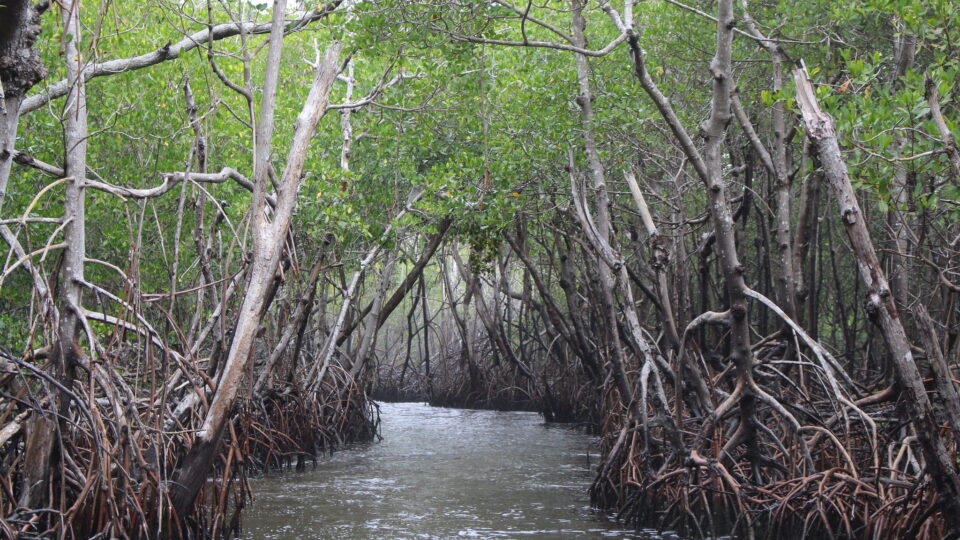
Mangrove forests play a vital role in the health of our planet.  These coastal forests are the second most carbon rich ecosystems in the world.  A patch of mangrove forest the size of a soccer field can store more than 1,000 tons of carbon. It does this by capturing carbon from the air and storing it in leaves, branches, trunks, and roots.

Mangrove forests only grow at tropical and subtropical latitudes near the equator because they cannot withstand freezing temperatures.  These forests can be recognized by their dense tangle of prop roots that make the trees look like they are standing on stilts above the water.  These roots allow the trees to handle the daily rise and fall of tides.  Most mangroves get flooded at least twice a day.  The roots also slow the movement of tidal waters, which allows sediments to settle out of the water and build up on the muddy bottom.  Mangrove forests stabilize coastlines, reducing erosion from storms, currents, waves, and tides.

A new study by the University of Portsmouth in the UK looked at the effects of climate change on how carbon is stored in mangrove forests.  In mangrove ecosystems, a variety of organisms break down fallen wood.  These include fungi, beetle larvae, and termites.  Closer to the ocean, clams known as shipworms degrade organic material.

Climate change is disrupting these processes in at least two ways.  Rising sea levels are changing the way sediments build up and increased ocean acidity is dissolving the shells of marine organisms like shipworms.

Mangrove forests are crucial to mitigating climate change, and changes to the functioning of the carbon cycle of those ecosystems are a threat to their ability to perform that function.

**********

Web Links

Study Reveals How Climate Change Can Significantly Impact Carbon-Rich Ecosystem

Photo, posted March 24, 2014, courtesy of Daniel Hartwig via Flickr.

Earth Wise is a production of WAMC Northeast Public Radio.

Fighting Disease in Cavendish Bananas | Earth Wise

January 31, 2022 By EarthWise Leave a Comment

Cavendish bananas account for about half of global banana production and the vast majority of bananas entering international trade.  The plant is unable to reproduce sexually and instead is propagated via identical clones.  So, the genetic diversity of the Cavendish banana is exceedingly low. 

In 2008, Cavendish cultivars in Sumatra and Malaysia started to be attacked by Panama disease, a wilting disease caused by a fungus.  In 2019, Panama disease was discovered on banana farms in the coastal Caribbean region, its first occurrence in the Americas.  In the 1950s, Panama disease wiped out the Gros Michel banana, the commercial predecessor of the Cavendish.

Scientists at the University of Cambridge have found a novel way to combine two species of grass-like plants – which include bananas, rice, and wheat – using embryonic tissue from their seeds.  The technique allows beneficial characteristics, such as disease resistance, to be added to the plants.

Joining the shoot of one plant to the root of another to grow as one plant is known as grafting.  It was thought to be impossible to do with grass-like plants – called monocotyledonous  grasses – because they lack a certain tissue type in their stems.  But the new research, published in the journal Nature, showed it can be done with the plants in their earliest embryonic stages.

Cavendish bananas are sterile, so disease resistance can’t be bred into future generations.  But the grafting technique may provide a way to produce Cavendish banana plants that are resistant to Panama disease.  It may be possible to save an important food crop before it is too late.

**********

Web Links

New grafting technique could combat the disease threatening Cavendish bananas

Photo, posted July 1, 2015, courtesy of Augustus Binu via Flickr.

Earth Wise is a production of WAMC Northeast Public Radio.

The Great Christmas Tree Debate | Earth Wise

December 15, 2021 By EarthWise Leave a Comment

Along with cookies and carols, the Christmas tree is a quintessential part of the holiday season for many people.  According to the American Christmas Tree Association, approximately 75% of Christmas trees in American homes this year will be artificial.  But are artificial trees really the better option for the planet?

The short answer is no.  But it’s more complicated than that.  Ultimately, the answer depends on a variety of factors.

If you decide to go with an artificial tree, you need to use it for a very long time. Studies suggest artificial trees would need to be reused anywhere from 8 to 20 years in order to be considered the more environmentally-friendly option. You should seek out trees manufactured from polyethylene plastic as it’s not as toxic as polyvinyl chloride plastic.  And since the majority of artificial trees are imported from China, look for a “Made in USA” label to reduce the carbon footprint.

If you decide to go for a live tree, shop local. This keeps the carbon footprint low and helps support the local economy in the process.  While some tree farms do spray, researchers say the use of pesticides in tree production is relatively low.  Live trees can also be composted or recycled afterwards.

It’s important to note that live Christmas trees can also be purchased with roots and planted after the holidays.  Some companies even allow you to rent live trees.  Each rented tree can be re-rented for up to seven years, after which it’ll be too large for in-home use and gets planted in its forever home. 

**********

Web Links

Photo, posted December 17, 2017, courtesy of Alan Sandercock via Flickr.

Earth Wise is a production of WAMC Northeast Public Radio.

Restoring Seagrass In Virginia | Earth Wise

December 10, 2020 By EarthWise Leave a Comment

Restoring seagrass in Virginia

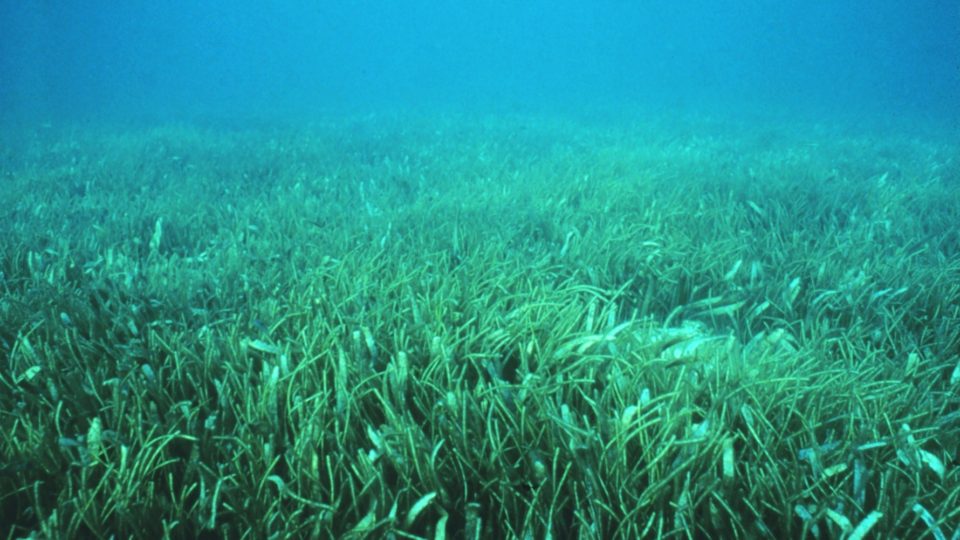
Seagrass is found in shallow waters in many parts of the world.  They are plants with roots, stems, and leaves, and produce flowers and seeds.  They can form dense underwater meadows that constitute some of the most productive ecosystems in the world.  Seagrasses provide shelter and food to a diverse community of animals including tiny invertebrates, fish, crabs, turtles, marine mammals and birds.

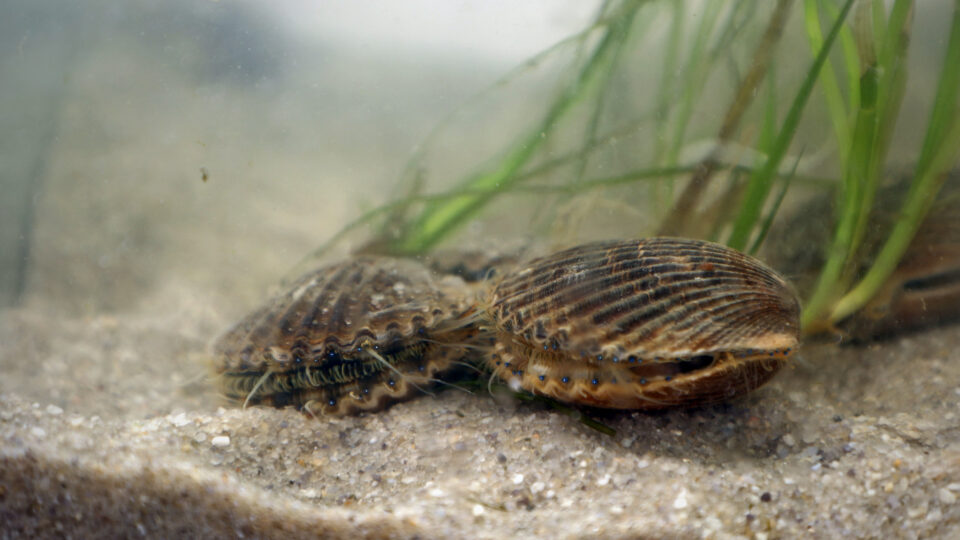
In the late 1920s, a pathogen began killing seagrasses off the coast of Virginia.  In 1933, a hurricane finished them off completely.  For nearly 70 years thereafter, the bay bottoms of the Virginia coast were muddy and barren, essentially devoid of fish, shellfish, mollusks and other creatures that inhabit seagrass meadows.  The local scallop industry was no more.

The largest seagrass restoration project ever attempted has changed all that.  During the past 21 years, scientists and volunteers have spread more than 70 million eelgrass seeds within four previously barren seaside lagoons.  This has spurred a natural propagation of meadows that have so for grown to almost 9,000 acres, the largest eelgrass habitat between North Carolina and Long Island Sound.

The long-term research conducted by the team from the University of Virginia shows that the success of the seagrass restoration project is improving water quality, substantially increasing the abundance of fish and shellfish in the bays, and capturing carbon from the water and atmosphere and storing it in the extensive root systems of the grasses and in the sediment below. 

The study shows that marine restorations are possible on scales that contribute directly to human well-being.

**********

Web Links

Some Good News: Seagrass Restored to Eastern Shore Bays is Flourishing

Photo, posted May 17, 2019, courtesy of Virginia Sea Grant via Flickr. Photo credit: Aileen Devlin | Virginia Sea Grant.

Earth Wise is a production of WAMC Northeast Public Radio.

Eco-Friendly Agriculture

October 21, 2019 By EarthWise Leave a Comment

Modern agriculture has steadily destroyed native grasslands, among other ecosystems.  In fact, farming is one of the most ecologically destructive things that humans do.  But we do have to eat.  In response, there is a growing movement for agrarian reform, from grain farming on the prairie, to agroforestry, to raising livestock more sustainably.  Efforts are accelerating to develop a kinder, gentler agriculture adapted to a changing world.

One such effort has come from the Land Institute, an organization in Kansas that works on natural systems agriculture, which seeks to retain the ecological stability of the prairie with its perennial seed plants along with a grain and seed yield comparable to that from annual crops.

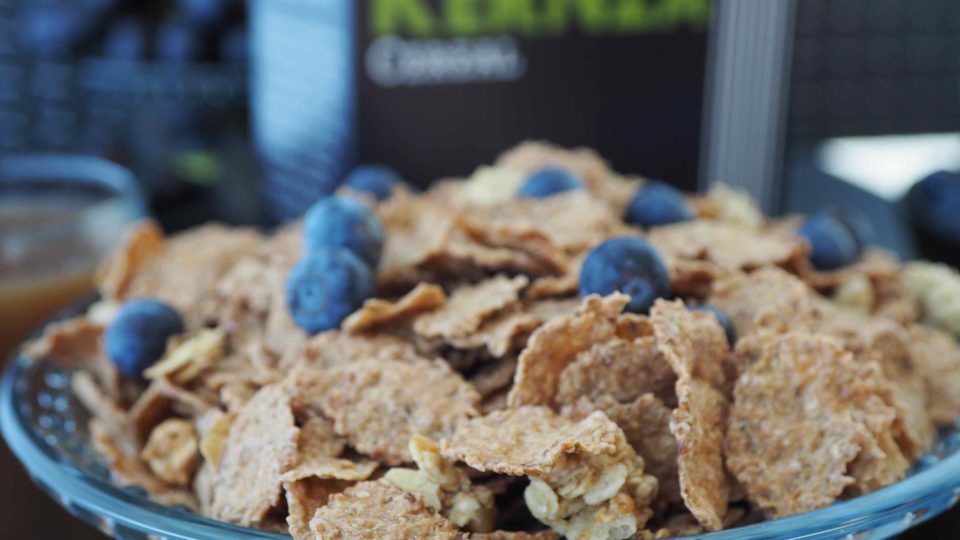
After four decades of effort, the institute has introduced its first commercial grain, a trademarked variety called Kernza.  Kernza is a domesticated perennial wild grass – a so-called intermediate wheatgrass – that has a long, slender head that resembles wheat seeds.  People describe its taste as sweet and nutty.   Kernza is already being made into a cereal called Honey Toasted Kernza by Cascadian Farms.  Patagonia Provisions – a spin-off from the clothing company – is making beer from the new grain.

Although Kernza is already being grown and sold commercially, it is not yet ready for prime time.  Last year, there were only about 1,000 acres in cultivation and the yield is only a third to a tenth of the yield of wheat. 

Developing a sustainable perennial polyculture of edible plants would have major benefits such as not having to plow every year, plants developing large root systems that can reach water far beneath the surface and, without annual plowing, having soil carbon remain in the ground.

**********

Web Links

With New Perennial Grain, a Step Forward for Eco-Friendly Agriculture

Photo courtesy of Cascadian Farms/General Mills.

Earth Wise is a production of WAMC Northeast Public Radio.

Mexico’s Wonder Plant

September 13, 2019 By EarthWise Leave a Comment

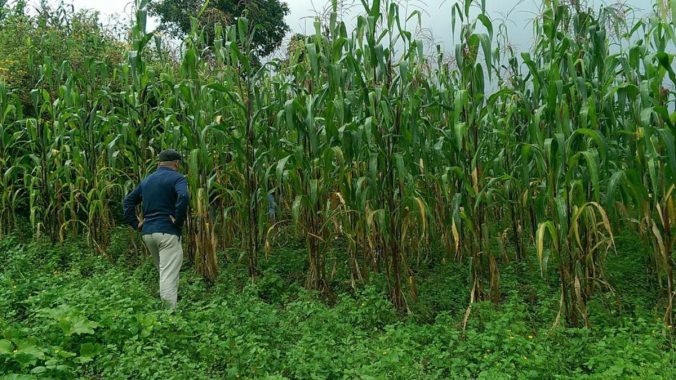
In 1979, an American naturalist named Thomas Hallberg visiting a small town in Oaxaca, Mexico was amazed to find a type of local maize – or corn – that grew nearly 20 feet high in poor-quality soil even though the local farmers did not use any fertilizer.

The unique corn plant had aerial roots that grew a mucous-like gel just before harvest season.  It seemed totally implausible, but the plant seemed to be fixing its own nitrogen:  extracting it from the air and somehow making it useful to the plant.

In 1992, Hallberg returned with a group of Mexican scientists and collected samples to study in his lab.  His research showed that the maize indeed received nitrogen from the air through its aerial roots.  It took over 20 years to figure out what was going on in the plants.  It turns out that bacteria that thrive in the low-oxygen environment of the maize’s mucus pulls nitrogen from the air and feeds it to the plant.

Scientists will probably spend years figuring out if a commercial application of this indigenous maize is viable.  It isn’t guaranteed that the self-fertilizing trait of the plant can be bred into a commercial crop.  But if it can, the payoff would be huge.  Farmers spend more than $3 billion a year on corn fertilizer in the US alone.

A vexing problem is who should reap the financial benefits of the maize.  The isolated village where the plant is grown has already signed an agreement to share in any such benefits.   But there are other Oaxacan villages that also grow the plant. 

Mexico’s wonder plant is likely to be caught up in the growing issue of biopiracy, which is the exploitation of indigenous knowledge and biological resources without permission.

**********

Web Links

Indigenous Maize: Who Owns the Rights to Mexico’s ‘Wonder’ Plant?

Photo credit: ALLEN VAN DEYNZE/UC DAVIS

Earth Wise is a production of WAMC Northeast Public Radio.

Whopping Change

April 10, 2019 By EarthWise Leave a Comment

Burger King, the global hamburger fast food giant, recently made a huge announcement:  Customers will soon have the option to select either a beef patty or a plant-based patty when ordering the iconic Whopper sandwich. 

Burger King’s plant-based patty will be made by Impossible Foods, a California startup founded in 2011 with the explicit goal of decreasing the world’s reliance on animal agriculture.  Impossible Foods signature product, the Impossible burger, has already debuted as a slider in White Castle’s 380 or so stores.  It’s also being added to the menu at all 570 Red Robin locations.  Other plant-based innovators, such as Beyond Meat, have also found some mainstream success.  But the Impossible Whopper and the planned national roll-out at Burger King’s 7,200 locations is the biggest deal to date.

Impossible Foods’ major innovation comes from its use of heme, which is an iron-rich protein that in essence is what makes meat taste like meat.  Impossible Foods cultivates heme directly from plants – soybean plant roots to be exact – and then mass produces it using yeast.  This is then mixed with other plant-based ingredients to achieve the nutty texture of ground beef.

Meat production is one of the biggest single contributors to climate change.  The Impossible burger represents a better choice for the environment.  It requires 87% less water, 96% less land, and produces 89% fewer greenhouse gas emissions when compared with beef burgers.  At Burger King, the Impossible Whopper will have the same amount of protein as the regular Whopper, but 15% less fat and 90% less cholesterol. 

Meatless continues to push into the mainstream.

**********

Web Links

Behold the Beefless ‘Impossible Whopper’

Photo, posted November 27, 2018, courtesy of Sarah Stierch via Flickr.

Earth Wise is a production of WAMC Northeast Public Radio.

Saving Beaches With Seagrass

February 22, 2019 By EarthWise Leave a Comment

Almost a quarter of the Gross Domestic Product of places around the Caribbean Sea is earned from tourism.  Preserving the beaches in the region is an economic imperative.  With increasing coastal development, the natural flow of water and sand is disrupted, natural ecosystems are damaged, and many tropical beaches simply disappear into the sea.

With such high stakes, expensive coastal engineering efforts such as repeated replenishing of sand and the construction of concrete protective walls are common strategies.  Rising sea levels and increasingly powerful storms only increase the threat to tropical beaches.

Researchers from The Netherlands and Mexico recently published a study in the journal BioScience on the effectiveness of seagrass in holding onto sand and sediment along shorelines.

Seagrasses are so-named because most species have long green, grass-like leaves. They are often confused with seaweeds but are actually more closely related to flowering plants seen on land. Seagrasses have roots, stems and leaves, and produce flowers and seeds. Seagrasses can form dense underwater meadows and are one of the most productive ecosystems in the world. Seagrasses provide shelter and food to an incredibly diverse community of animals, from tiny invertebrates to large fish, crabs, turtles, marine mammals and birds.

The researchers performed measurements of the ability of seagrass along Mexico’s Yucatan Peninsula coastline to keep sand in place and prevent erosion.  They found that the amount of erosion was strongly linked to the amount of vegetation.  Quite often, seagrass beds have been regarded as a nuisance, rather than a valuable asset for preserving valuable coastlines.  The study opens opportunities for developing new tropical beach protection schemes in which ecology is integrated into engineering solutions.

**********

Web Links

Seagrass Saves Beaches and Money

Photo, posted October 13, 2010, courtesy of NOAA via Flickr.

Earth Wise is a production of WAMC Northeast Public Radio.

Fighting Hunger With A Shrub

December 20, 2018 By EarthWise Leave a Comment

https://earthwiseradio.org/wp-content/uploads/2018/12/EW-12-20-18-Fighting-Hunger-with-a-Shrub.mp3

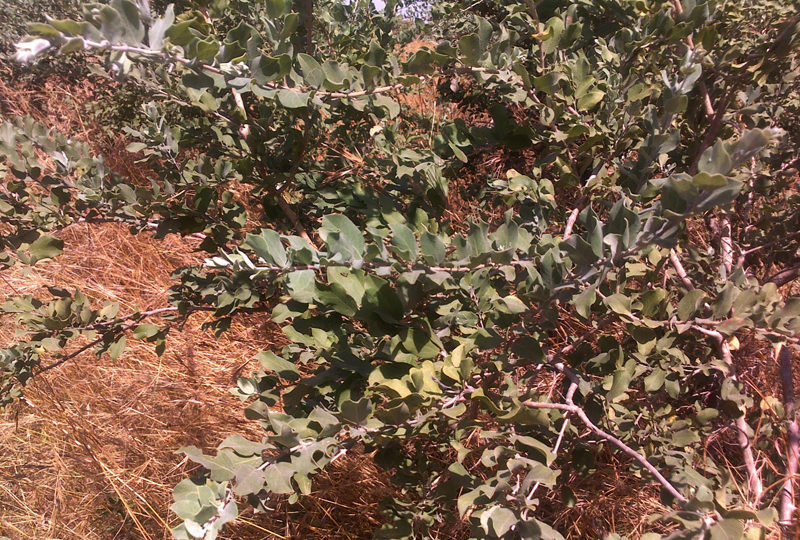
A recent study has revealed that a tough, woody shrub that grows throughout Western Africa can actually share its water with adjacent cultivated plants and boost grain production.

[Read more…] about Fighting Hunger With A Shrub

Is It Time to Ban Neonics?

May 10, 2018 By EarthWise Leave a Comment

https://earthwiseradio.org/wp-content/uploads/2018/05/EW-05-10-18-Time-to-Ban-Neonics.mp3

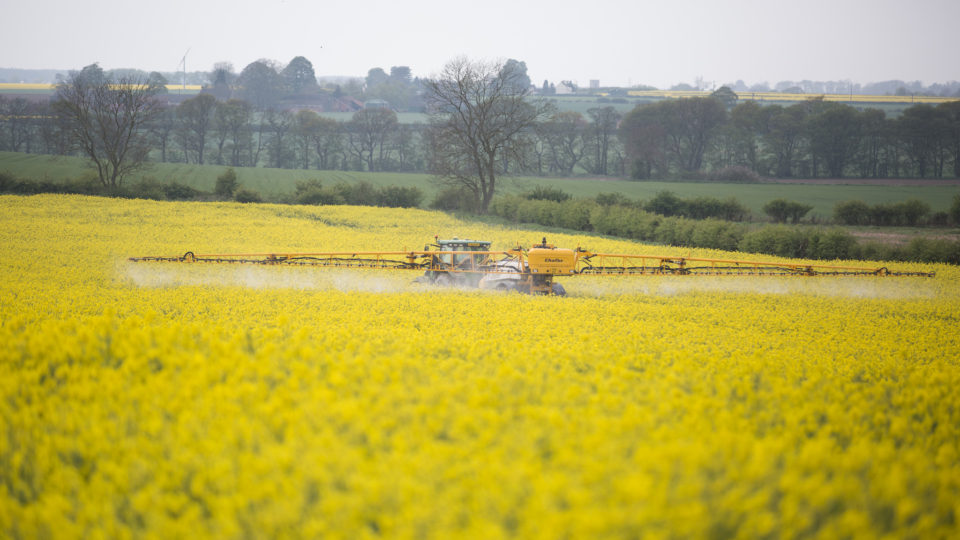
Neonicotinoids (or ‘neonics’ for short) are a class of insecticides chemically related to nicotine.  In fact, the name ‘neonicotinoid’ literally means “new nicotine-like insecticide.”  And like nicotine, neonics act on certain kinds of receptors in the nerve synapse.  Most corn, soy, and wheat seeds planted today are coated with neonics, which is reportedly 5,000 to 10,000 times more toxic than DDT. 

[Read more…] about Is It Time to Ban Neonics?

Earthworms And Sugar Maple Decline

October 19, 2017 By EarthWise 1 Comment

https://earthwiseradio.org/wp-content/uploads/2017/10/EW-10-19-17-Earthworms-and-Sugar-Maple-Decline.mp3

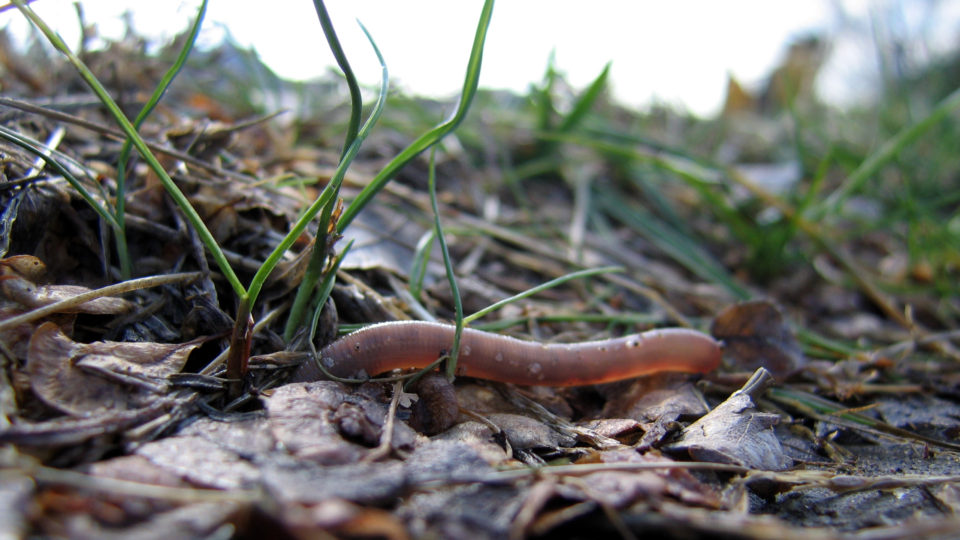
The decline of sugar maple trees has been observed for well over 50 years.   It is not a specific disease or a syndrome but instead is a generalized set of symptoms that have been affecting these valuable trees in many areas for a long time. 

[Read more…] about Earthworms And Sugar Maple Decline

Trees Are Not Enough

July 18, 2017 By EarthWise

https://earthwiseradio.org/wp-content/uploads/2017/06/EW-06-26-17-Trees-Are-Not-Enough.mp3

Trees are nature’s way of removing carbon dioxide from the atmosphere.  Growing plants take up CO2 and store it in the form of their roots, stems and leaves.  And in fact, a significant factor in the growing levels of carbon dioxide in the atmosphere has been the extensive deforestation that has gone on over the past couple of centuries.

[Read more…] about Trees Are Not Enough

Primary Sidebar

Recent Episodes

  • An uninsurable future
  • Clean energy and jobs
  • Insect declines in remote regions
  • Fossil fuel producing nations ignoring climate goals
  • Trouble for clownfishes

WAMC Northeast Public Radio

WAMC/Northeast Public Radio is a regional public radio network serving parts of seven northeastern states (more...)

Copyright © 2026 ·