• Skip to primary navigation
  • Skip to main content
  • Skip to primary sidebar

Earth Wise

A look at our changing environment.

  • Home
  • About Earth Wise
  • Where to Listen
  • All Articles
  • Show Search
Hide Search
You are here: Home / Archives for program

program

Progress towards electric school buses

November 8, 2024 By EarthWise Leave a Comment

Making progress on electrifying school buses

The U.S. has nearly half a million school buses providing daily transportation for about 20 million students.  Most of these buses are powered by diesel engines which not only dump greenhouse gases into the atmosphere but also fill kids’ lungs with harmful fumes.

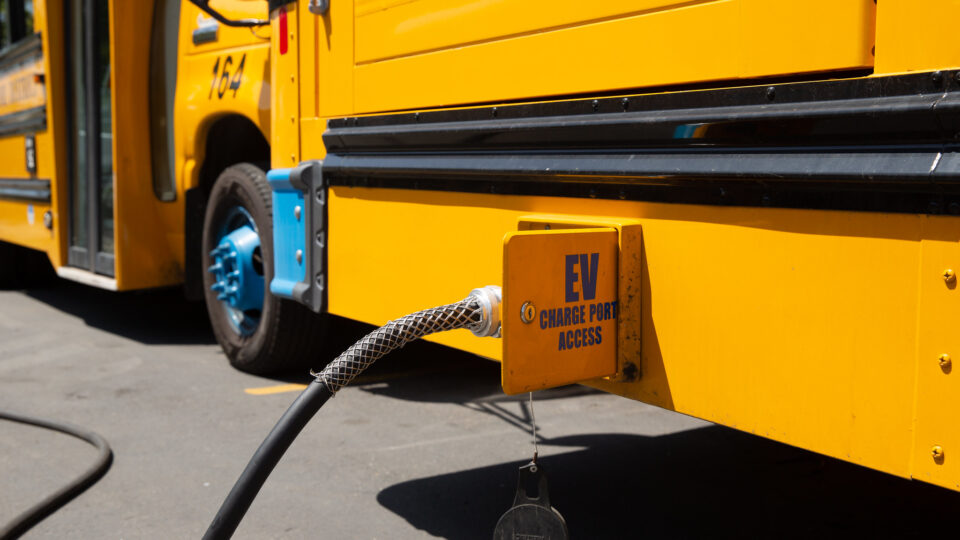
Thanks to various federal and state incentive programs, this situation is starting to change.  School districts all over the country are beginning to swap out old diesel buses for emissions-free electric-powered school buses.

Electric school buses are finding their way into school districts of all sizes and demographics.  The first district in the country to go fully electric was in Martinsville, Texas, which last year converted its 4-bus fleet.  The first large urban district to go all-electric was the 74-bus fleet in Oakland, California this summer.

The EPA’s $5 billion Clean School Bus program and many state initiatives are providing incentives for the transition.  Five years ago, there were less than 1,000 electric school buses in the U.S.  Now there are about 5,000 and more than 7,000 additional buses are in the pipeline.

Apart from the climate implications, there is urgency to replacing diesel school buses from a health perspective.  Diesel exhaust is classified as a carcinogen by the World Health Organization, and it contains fine particles and nitrogen oxides, both of which are well-documented asthma triggers.

Electric buses are more expensive than diesel buses, but they are much cheaper to operate. School districts need to put in place charging infrastructure.  The transition is not so easy to accomplish, but it is an important step, and more and more school districts are taking it.

**********

Web Links

Slowly but Surely, U.S. School Buses Are Starting to Electrify

Photo, posted May 5, 2021, courtesy of California Energy Commission via Flickr.

Earth Wise is a production of WAMC Northeast Public Radio
Solar grazing

September 16, 2024 By EarthWise Leave a Comment

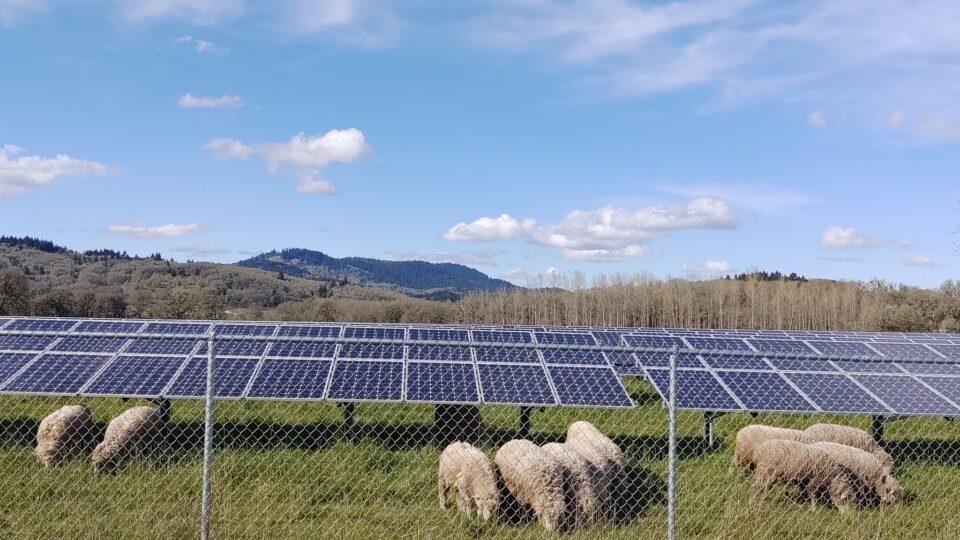
Agrivoltaics is the combination of solar power generation with agriculture.  Generally, this has involved growing crops under and around solar panels harvesting both food and electricity.  More recently, there has been increasing interest in grazing animals to manage lands used for solar power.

Enel North America, a large operator of solar farms and utility-scale battery storage facilities in Texas, has announced a partnership with Texas Solar Sheep Company to deploy more than 6,000 sheep to chow down on the greenery on eight large Texas solar sites.  This is the largest known solar grazing agreement executed in the United States

Texas Solar Sheep’s flocks will graze on more than 10,000 acres of land being used for solar generation, an area roughly ¾ the size of Manhattan.  Most of these sites are situated in areas with high rainfall and long growing seasons. 

The American Solar Grazing Association, an organization with 950 members across 45 states, facilitates research, provides education, and develops best practices in support of a unique population of shepherds and solar developers.  Their recent survey estimates that 100,000 acres of U.S. solar sites are currently being chewed on by sheep.  Texas has the most installed utility-scale solar power in the country.

According to Enel, its existing solar grazing program has demonstrated substantial improvements in soil health by the additional of organic matter to the soil.  Managing vegetation with sheep is also better for pollinators because sheep don’t cut down all plants the way mowing does.

**********

Web Links

No more sheepless nights: Enel inks largest solar grazing contract

Photo, posted April 7, 2020, courtesy of Sean Nealon / Oregon State University via Flickr.

Earth Wise is a production of WAMC Northeast Public Radio
Increasing plastic recycling

August 15, 2024 By EarthWise Leave a Comment

How to increase the rate of plastics recycling

Recycling plastic is a complicated matter.  There are many different types of plastic and knowing which things are made of which type isn’t easy.  There are increasingly widespread recycling systems across the U.S., but the actual rates of recycling have been described as “abysmal”.

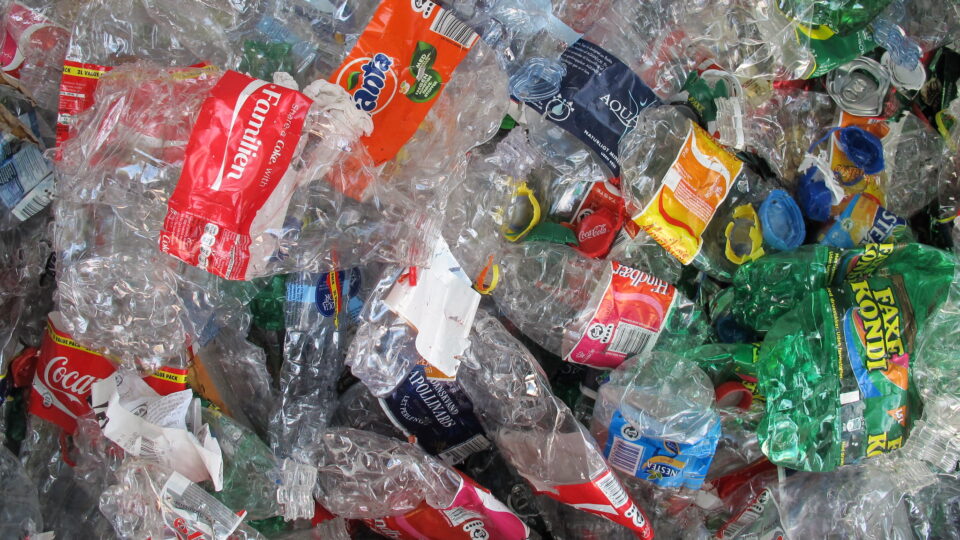
The plastic commonly used in beverage bottles is polyethylene terephthalate, or PET.  The present nationwide rate of recycling PET is about 24% and has been about at that level for a decade.

A new study by MIT has found that with a nationwide bottle deposit program, the rates could increase to 82%.  At that level, nearly two-thirds of all PET bottles could be recycled into new bottles at a net cost of just a penny a bottle.

The study looked at PET bottle collection and recycling rates in different states as well as other nations with and without bottle deposit policies, and with and without curbside recycling programs.  The study is the first to look in detail at the interplay between public policies and the detailed end-to-end aspects of the packaging, production and recycling market.

Recycling of PET is highly successful in terms of quality.  New products made from all-recycled material is virtually indistinguishable from virgin material.  The crucial bottleneck is the collection of sufficient amounts of material to meet the needs of processing plants.  So, the conclusion of the study is that with the right policies in place, significant improvements can be made.  Several European countries manage to collect more than 90% of PET bottles for recycling.  So, it can be done.

**********

Web Links

How to increase the rate of plastics recycling

Photo, posted August 10, 2013, courtesy of Lisa Risager via Flickr.

Earth Wise is a production of WAMC Northeast Public Radio

Low Fares Clean German Air | Earth Wise

September 29, 2022 By EarthWise Leave a Comment

Low fare for public transportation help clean the air in Germany

Germany’s parliament set summer public transport fares at 9 euros a month as a way to slash pollution and reduce imports of Russian oil.   The low price included all buses, trams, subways, and regional trains, effectively lowering prices by more than 90% in some cities.  Berliners saved 98 euros on their monthly travel pass; commuters in Hamburg saved even more.

The program began June 1 and ended August 31.  The bargain rates drove widespread use of public transport and discouraged the use of cars, which already was undesirable due to high gasoline prices.   Over the three-month period, transit authorities sold over 50 million subsidized tickets.  One out of five travelers were using public transport for the first time, according to surveys.

According to an estimate from the Association of German Transport Companies, the program helped to avoid 1.8 million tons of carbon dioxide emissions.  This is roughly equivalent to taking 1.5 million cars off the road for the summer or planting 30 million trees.

The discount transit program had a clearly positive effect on the climate and, obviously, was a source of financial relief for German citizens.  Last year, Germany was the largest buyer of Russian oil in Europe and it wanted to make drastic reductions in its purchases.  The success of the program prompted many to ask for it to be continued.  However, the program cost the government about 2.5 billion euros in reimbursements to transit companies.  The German government has said it would not be extended.

Nonetheless, German policymakers are weighing other proposals for low-cost public transit.  Clearly encouraging people to use public transit pays dividends.

**********

Web Links

Germany’s Cheap Summer Train Fares Prevented 1.8 Million Tons of Carbon Pollution

Photo, posted June 6, 2022, courtesy of 7C0 via Flickr.

Earth Wise is a production of WAMC Northeast Public Radio

Florida’s Starving Manatees | Earth Wise

January 12, 2022 By EarthWise Leave a Comment

Manatees, also called “sea cows”, have been the victims of farm runoff.  They have starved to death by the hundreds along Florida’s east coast because algae blooms fed by nitrogen-rich fertilizer runoff are proliferating on the ocean surface and blocking sunlight from reaching seagrass below.  Seagrass is the primary source of food for manatees in the winter.  As seagrass dies off, so do the manatees.

Over 1,000 manatees have been found dead so far this year.  It is estimated that fewer than 8,000 remain in Florida waters.  Efforts are underway to restore coastal seagrass in the region as well as clams and oysters, which filter pollutants from water.  Unless the water is cleared up, it will be difficult to regrow the seagrass.  But the current situation is that manatees are so short on food that they are eating seagrass roots, killing the plants and thwarting efforts to help seagrass recovery.

Given this dire situation, the federal governmental has approved a program of feeding manatees.  The starving animals will be fed by hand in Florida, which is a rare wildlife intervention.  Conservation agencies tend to favor leaving wild animals to their own foraging and hunting so that they don’t become dependent on human handouts.

During the trial phase of the program, wildlife experts are likely to feed the animals romaine lettuce and cabbage, which is what manatees in captivity eat.  The hope is to give the animals enough additional food for them to get through the winter.  The trial feeding will begin on private property.  It remains illegal for the public to feed manatees.

**********

Web Links

Florida to feed starving manatees in rare conservation move

Photo, posted February 21, 2008, courtesy of Keith Ramos/USFWS via Flickr.

Earth Wise is a production of WAMC Northeast Public Radio.

Clean Energy In Rochester | Earth Wise

October 26, 2021 By EarthWise Leave a Comment

New York’s largest community choice clean energy program has been activated in the City of Rochester.   The program, offered by Rochester Community Power, offers 57,000 residences and small businesses access to clean energy from hydropower and wind sources.  It requires customers to opt out rather than enroll in order to provide clean energy to the greatest number of people.

Rochester Community Power is the city’s local community choice aggregation (CCA) program that leverages the collective buying power of participating residents to purchase renewable electricity and negotiate better terms for energy supply contracts.

The program will supply customers with more than 300 million kWh of renewable energy each year, which will avoid the emission of about 250,000 tons of carbon dioxide.  Rochester plans to add a community solar program next year which will provide additional clean energy opportunities, including offering guaranteed savings to thousands of participants in its Home Energy Assistance Program.

The project will be managed by Joule Assets, which is a provider of energy reduction market analysis, tools, and financing. Joule Assets, as program administrator for the Rochester program, managed the competitive bidding process that secured a fixed rate for electricity for the next two years, shielding participating residences and businesses from volatile market prices.

Community choice aggregation programs are local, not-for-profit public agencies that are an alternative to investor-owned utilities.  They give municipalities the ability to make decisions about the procurement, sourcing, and rates for energy for its residents.

**********

Web Links

New York activates its largest opt-out 100% renewable energy program

Photo, posted June 25, 2011, courtesy of Paulo Valdivieso via Flickr.

Earth Wise is a production of WAMC Northeast Public Radio.

Europe’s Green Deal: Bad For The Planet? | Earth Wise

December 28, 2020 By EarthWise Leave a Comment

Europe's Green Deal might simply be exporting its environmental pollution

In 2019, the European Union announced the “Green Deal,” a comprehensive program aimed at making Europe the first climate-neutral continent, implementing environmentally friendly transport, increasing recycling, and expanding renewable energy.

The Green Deal involves significant changes to European agriculture.  Over the next ten years, under the ambitious environmental program, at least a quarter of all agricultural areas will be farmed organically, the use of fertilizers and pesticides greatly reduced, 3 billion trees planted, 15,000 miles of rivers restored, and the population declines of pollinators reversed.

However, in a recent article published in Nature, scientists at the Karlsruhe Institute of Technology show that this Green Deal might actually be a bad deal for the planet.

The problem is that the EU is likely to basically be outsourcing environmental damage by its high imports of agricultural products.

According to the Karlsruhe study, the EU annually imports millions of tons of agricultural products, as much as 20% of its produce and much of its meat and dairy products.  Quite often, these imports come from countries whose environmental laws are far less stringent than those in Europe.

The EU cannot impose environmental standards on other countries, but it can demand that goods entering the European market meet EU requirements.  The study points out that Europe’s carbon footprint has to be evaluated on a global basis.  If the EU is truly to become a climate-neutral continent, it must include foreign trade goals and requirements in its environmental programs.  Otherwise, Europe will simply be outsourcing its environmental problems and will continue to cause damage to the planet.

**********

Web Links

Green Deal: Good for a Climate-neutral Europe – Bad for the Planet

Photo, posted July 17, 2009, courtesy of Edmund Garman via Flickr.

Earth Wise is a production of WAMC Northeast Public Radio.

Hydrogen-Powered Transport In Britain | Earth Wise

November 27, 2020 By EarthWise Leave a Comment

hydrogen powered train coming to the UK

The first hydrogen-powered train in the UK had its first mainline runs at the end of September.  The train, known as HydroFLEX, was developed under a project headed by the University of Birmingham under the UK government’s Department for Transport. 

Hydrogen-powered trains do not emit harmful gases but rather use hydrogen and oxygen to produce electricity, water, and heat.  The technology in the HydroFLEX train will be available by 2023 to retrofit existing diesel-powered trains and thereby de-carbonize the rail network and make train travel greener and more efficient.

The UK has ambitious plans for the use of hydrogen technology.  The Department of Transport plans to publish a master plan in January that will outline how green hydrogen could power buses, trucks, rail, maritime, and aviation transport across the UK.

The HydroFLEX trial is taking place in Tees Valley in northeastern England and the plan is for that area to become a Hydrogen Transport Hub that will include the world’s largest versatile hydrogen refueling facility.   The plans for Tees Valley involve academia, industry, and government participants.  The next stages of the HydroFLEX project are well underway with the University of Birmingham developing a hydrogen and battery-powered module that can be fitted underneath a train to allow for more space for passengers in train cars.

The UK government’s Hydrogen for Transport Program is also funding a green hydrogen refueling station and 19 hydrogen-powered garbage trucks in Glasgow, Scotland.

The UK plans to switch to a net zero economy and their current program increasingly embraces hydrogen technology to provide more sustainable, greener forms of transportation.

***********

Web Links

UK embraces hydrogen-fueled future as transport hub and train announced

Photo, posted May 15, 2019, courtesy of Jeremy Segrott via Flickr.

Earth Wise is a production of WAMC Northeast Public Radio.

Paying To Combat Climate Change | Earth Wise

November 2, 2020 By EarthWise Leave a Comment

Fighting climate change

The majority of Americans believe that climate change is happening, that human activities are largely responsible, and are actually willing to put up their own money to help fight it.   Unfortunately, these views diverge sharply along party lines and, as in many other areas these days, the will of the overall majority has little influence on policy.

According to Yale University research, 73% of adults think that global warming in happening and 57% think it is mostly caused by human activities.  Furthermore, only 32% believe it is due to natural forces.

A survey conducted in the U.S. in August found that more than two-thirds of Americans – actually 70% – indicated willingness to donate a percentage of their personal income to support the fight against climate change.

Breaking that down further, 28% were willing to provide less than 1% of their income, 33% were willing to contribute 1-5% of their income, 6% said they would give 6-10% of their income, and 3% said they would contribute more than 10% of their income.  On the other hand, roughly 30% indicated that they were unwilling to contribute.

The survey also looked at opinions on how the fight against climate change should be paid for.  The majority (59%) chose government incentives for both businesses and consumers.   Three other options each favored by over 40% of those surveyed were taxes, conservation programs, and business investments. 

Another finding of the survey was that 44% are dissatisfied with the job that the federal and state governments are doing to address climate change, 35% are somewhat satisfied, and only 21% are very or completely satisfied with the government’s role.

**********

Web Links

Yale Climate Opinion Maps 2020

Two-thirds of Americans are willing to donate part of their income to fight climate change

Photo, posted April 29, 2017, courtesy of majunznk via Flickr.

Earth Wise is a production of WAMC Northeast Public Radio.

Recovering Condors | Earth Wise

August 12, 2020 By EarthWise Leave a Comment

The recovery of condors

The California condor is the largest North American land bird.  Its wingspan is nearly 10 feet and its weight of up to 26 pounds nearly equals that of the trumpet swan, the heaviest native North American bird.  California condors can live up to 60 years, making them among the world’s longest-living birds as well.  But California condors became extinct in the wild in 1987.

Lead poisoning is the primary threat to condors.  The birds are scavengers and feeding on the carcasses of dead animals that contain fragments of lead rifle ammunition is responsible for half of all condor deaths.

Condors historically occupied California’s Sierra Nevada mountains and were known to nest in the cavities of giant sequoia trees.  By 1982, the wild population was reduced to just 22 birds, and all of those were eventually trapped and brought into captivity to prevent extinction of the species.

A captive breeding program was undertaken at the Los Angeles Zoo and the San Diego Wild Animal Park.  With the success of that program, in 1992 the U.S. Fish and Wildlife Service began releasing condors back into the wild in the mountains of Los Padres National Forest in Southern California.  That flock has grown to about 100 birds through both wild reproduction and additional release of captive-bred birds.

The Southern California flock continues to expand its range with birds in 8 California counties and even in Arizona, Utah, and Baja California in Mexico.  The total wild population of condors is now estimated to be about 340 birds.  Recently, condors have been spotted in Sequoia National Park, a part of its historic range where the birds have been absent for nearly 50 years.

**********

Web Links

California Condors Spotted in Sequoia National Park, First Time in Nearly Half a Century

Photo, posted May 20, 2005, courtesy of Flickr.

Earth Wise is a production of WAMC Northeast Public Radio.

Working Forest Buffers | Earth Wise

April 15, 2020 By EarthWise Leave a Comment

Forest Buffer Zones on Farms

More than 100,000 miles of U.S. rivers and streams are polluted by nitrogen and phosphorus, mostly from agricultural runoff.  In the past, forests grew naturally alongside these waterways and helped stabilize stream banks and decrease flooding while trapping and filtering pollutants.  But most of these forests have been cut down to make way for towns, cities, livestock, and crops.

Farmers are reluctant to retire valuable farmland with non-productive buffer planting.  But in Pennsylvania, there is an innovative program that encourages farmers to plant cash crops in waterway buffer zones that can help stabilize stream banks and clean up the waterways.  These plantings are called working buffers.

Strips of streamside land are replanted with native floodplain trees and shrubs.  These are known as riparian forest buffers.  Pennsylvania has instituted a grant program under which farmers and landowners plant these buffers and turn a profit.

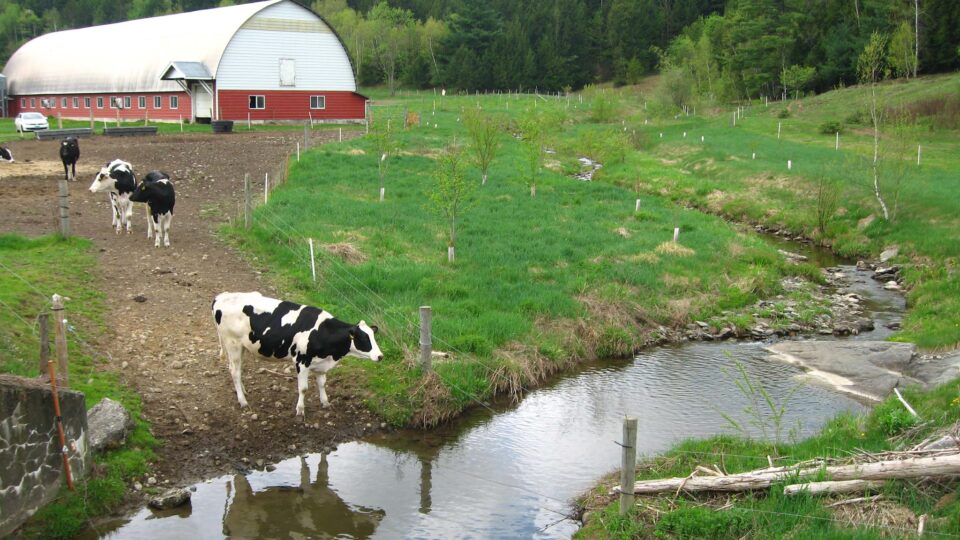
Many of these buffers have three zones.  A conventional forest buffer that can be just 15 feet wide is composed of native woodland and stabilizes the bank with tree roots and enhances wildlife habitat.  A second zone, some 20 feet wide, is planted with trees and shrubs that can tolerate periodic flooding.  Apart from slowing floodwater and taking up nutrients, this zone can provide profits by planting trees like black walnut, hazelnut, persimmon, and elderberry.  Only hand harvesting is allowed.  A third zone, adjacent to conventional crop, can contain blueberries, raspberries, and decorative woody florals.

How many farmers can be enticed to create these riparian buffers remains to be seen, but they do represent a way to help farmers to reduce pollution and turn a profit along the way.

**********

Web Links

A Movement Grows to Help Farmers Reduce Pollution and Turn a Profit

Photo, posted March 19, 2010, courtesy of the USDA via Flickr.

Earth Wise is a production of WAMC Northeast Public Radio.

The Largest Community Solar Program

November 22, 2019 By EarthWise Leave a Comment

Community solar projects allow customers to benefit from the economic and environmental attributes of solar energy when they don’t have the ability to invest in their own system for any number of reasons.

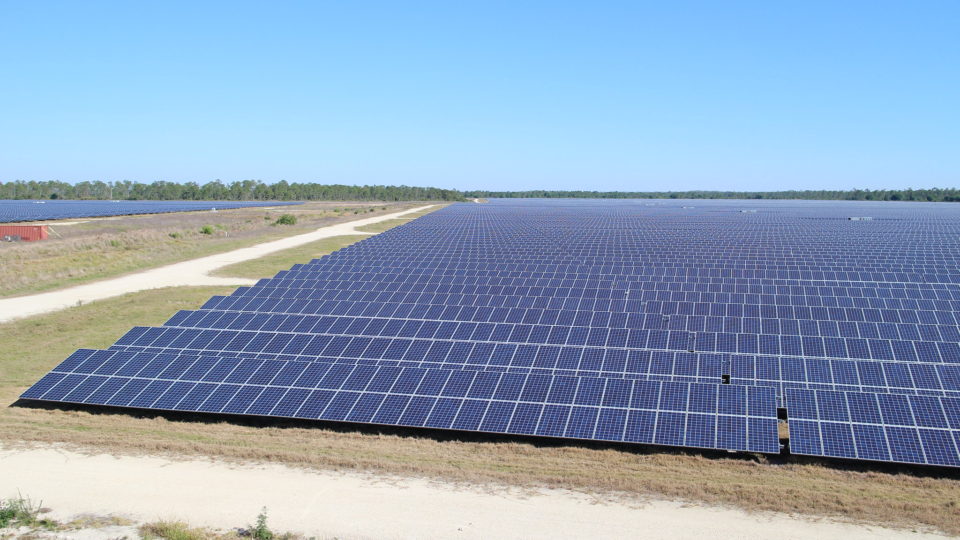
Florida Power & Light company is proposing to build the largest community solar program in the United States, pending regulatory review.  The planned installation of 1,490 MW of new solar capacity at 20 new power plants distributed across FPL’s service territory is expected to generate an estimated $249 million in net savings for all FPL customers over the long term.

In addition to becoming the largest community solar program in the country, the new program would also be the largest voluntary low-income solar offering in the country.  Low-income households are typically unable to benefit from solar energy because of not having the means to invest in the technology.  The new SolarTogether program will have more than 35 megawatts of capacity dedicated to low-income Florida families.  Solar energy is a critical tool for enabling low-income families to tap into energy savings. 

The SolarTogether program would provide direct savings in the form of bill credits, making solar an affordable option for any customer.  The Southern Alliance for Clean Energy and Vote Solar joined with FPL to help design the program to include a low-income component and request Florida Public Service Commission approval. There is broad support for the program from universities, county and city governments, and private companies.  In addition, more than 90,000 residential and small business customers have already signed up to receive more information.  The utility hopes to receive regulatory approval in time to launch during the first quarter of 2020.

**********

Web Links

FPL plans nation’s largest community solar program; includes low-income focus

Photo, posted March 8, 2018, courtesy of Babcock Ranch via Flickr.

Earth Wise is a production of WAMC Northeast Public Radio.

Booming Electric Car Sales

September 12, 2019 By EarthWise Leave a Comment

Electric cars are becoming more and more commonplace over time.  There is no place in the world where this is more evident than in Norway.  This year, about half the new cars sold in Norway have been electric.  This compares to only 25% just last year.  In March alone, nearly 60% of vehicle purchases in Norway were plug-in cars, outselling gas and diesel cars for the first time ever.

Norway has encouraged the switch to electric transportation by making battery-powered cars tax exempt as well as offering various other incentives.  This is all part of the country’s plan to end the sale of fossil fuel cars entirely by 2025.

Although Norway leads the world in electric car sales on a per capita basis, there are many other places seeing rapid growth.  In Maryland, for example, so many electric cars were sold in the past year that the state’s tax credit program, which has a $3 million annual budget, ran out of money seven months before the end of the fiscal year.  Between 2017 and 2018, the number of EVs registered in Maryland doubled to over 18,000.

New York has also seen robust growth in electric vehicles.  There are now more than 40,000 plug-in cars registered in New York State.  About a third of those are Tesla models, with the increasingly popular Tesla Model 3 rapidly becoming the dominant plug-in car in the state.  In fact, this year the Tesla Model 3 has accounted for about 60% of all plug-in car sales in the United States.

Not only are electric car sales going up, so are the options for car buyers.  Within the next year or two, there will be numerous new electric car choices available from multiple manufacturers appealing to the tastes of a growing range of car buyers.

**********

Web Links

EVs Make Up Half of New Car Sales in Norway So Far This Year

Photo, posted May 16, 2019, courtesy of Flickr.

Earth Wise is a production of WAMC Northeast Public Radio.

Energy Justice In California

September 27, 2018 By EarthWise Leave a Comment

https://earthwiseradio.org/wp-content/uploads/2018/09/EW-09-27-18-Energy-Justice-in-California.mp3

California put in place a cap-and-trade program in 2013.  In such a program, companies pay penalties if they exceed a cap in carbon emissions but can buy and sell allowances that permit them to emit a given amount. Trading gives companies a strong incentive to save money by cutting emissions.  Since taking effect, the California program has raised more than $6.5 billion and is the fourth largest in the world.

[Read more…] about Energy Justice In California

Shoes From Garbage

June 24, 2016 By WAMC WEB

https://earthwiseradio.org/wp-content/uploads/2016/06/EW-06-24-16-Shoes-from-Garbage.mp3

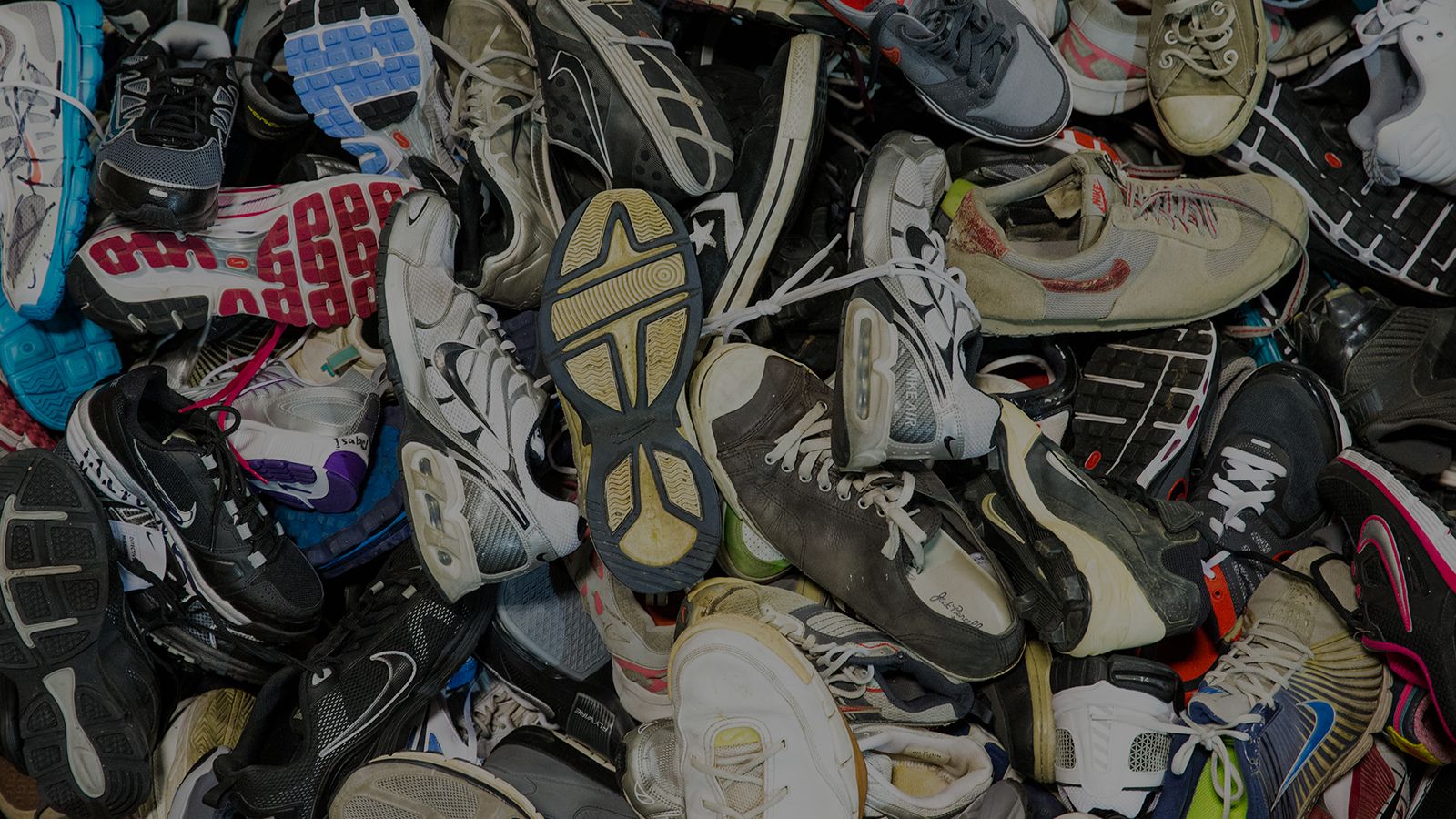
Apparel giant Nike recently announced that 71% of its footwear now contains materials made from waste products from its own manufacturing processes.  They call the waste material “Nike Grind,” and it is made from recycled sneakers, plastic bottles, and manufacturing scraps from Nike’s factories.

[Read more…] about Shoes From Garbage

Primary Sidebar

Recent Episodes

  • An uninsurable future
  • Clean energy and jobs
  • Insect declines in remote regions
  • Fossil fuel producing nations ignoring climate goals
  • Trouble for clownfishes

WAMC Northeast Public Radio

WAMC/Northeast Public Radio is a regional public radio network serving parts of seven northeastern states (more...)

Copyright © 2026 ·