• Skip to primary navigation
  • Skip to main content
  • Skip to primary sidebar

Earth Wise

A look at our changing environment.

  • Home
  • About Earth Wise
  • Where to Listen
  • All Articles
  • Show Search
Hide Search
You are here: Home / Archives for photosynthesis

photosynthesis

Sunscreen For Corals | Earth Wise

August 6, 2021 By EarthWise Leave a Comment

Scientists examine why some corals are better equipped to survive a changing environment

Sunscreen from beachgoers entering ocean waters is one of the greatest threats to coral reefs and there are global efforts to reduce or eliminate the use of many of the most harmful chemicals people use to protect themselves from the sun’s rays.  However, scientists at the Smithsonian Conservation Biology Institute have found that some corals have a natural sunscreen of their own that helps protect them from the effects of climate change.

Hawaiian blue rice corals feature a deep blue pigment that is created by chromoprotein that filters out harmful ultraviolet radiation from the sun.  UV damage has harmful impacts to reproduction in many coral species, but it appears not to have the same effect on blue rice coral.

In a study published in Scientific Reports, Smithsonian researchers studied the devastating effects that bleaching had on brown rice coral in the Hawaiian bleaching events of 2014 and 2015.  During the same events, blue rice coral either recovered quickly or was not affected by the elevated ocean temperature at all.

The blue-pigmented corals had dramatically greater reproductive vigor than the brown-pigmented version.  The key factor appears to be the sun-screening ability of the blue pigment in the particular symbiotic algae that lives inside the coral tissue known as zooxanthellae.  The coral protects the algae and in turn the algae provide the coral with food in the form of sugars produced as a waste product from photosynthesis.  In the case of the blue version, the algae also produce sunscreen for the coral.

By better understanding the role UV-protective pigments play in mitigating the adverse effects of climate change and warming oceans, scientists can learn why some species are better equipped to survive in a changing environment.

**********

Web Links

Smithsonian Conservation Biology Institute Scientists Find Corals’ Natural “Sunscreen” May Help Them Weather Climate Change

Photo, posted September 28, 2009, courtesy of Matt Kieffer via Flickr.

Earth Wise is a production of WAMC Northeast Public Radio.

The Potential Of Artificial Photosynthesis | Earth Wise

August 2, 2021 By EarthWise Leave a Comment

Artificial photosynthesis could dramatically improve our ability to power society cleanly and efficiently.

The sun is the primary source of energy on the earth.  Enough solar energy hits the earth in one hour to meet all of human civilization’s energy needs for an entire year.  The two leading forms of renewable energy – photovoltaic solar power and wind power – are ways of making use of the sun’s energy.  Wind power is indirectly provided by the sun; photovoltaic power uses sunlight to generate electricity.

The most efficient use of solar energy on the planet is one perfected by plants millions of years ago:  photosynthesis.  Photosynthesis is a complex sequence of processes by which plants convert sunlight and water into usable energy in the form of glucose.  Plants utilize a combination of pigments, proteins, enzymes, and metals to perform their magic.  If we can develop artificial photosynthesis, it would be a dramatic improvement of humans’ ability to power society cleanly and efficiently.  Whereas photovoltaics capture about 20% of the sun’s energy, photosynthesis stores 60% of the sun’s energy as chemical energy.

Researchers across the globe are working to develop artificial photosynthesis.  A group at Purdue university has been making progress in trying to mimic the ability of leaves to collect light and split water molecules to generate hydrogen. This is a critical step in photosynthesis that is accomplished by protein and pigment complexes known as “photosystems II”.  The Purdue group is experimenting with these proteins and various synthetic catalysts in order to try to develop artificial leaves based on abundant, nontoxic materials. 

It is likely to take a decade or more for artificial photosynthesis technology to become part of our energy system, but its ultimate potential is enormous.

**********

Web Links

Soaking up the sun: Artificial photosynthesis promises a clean, sustainable source of energy

Photo, posted June 14, 2007, courtesy of Alex Holyoake via Flickr.

Earth Wise is a production of WAMC Northeast Public Radio.
Seagrasses And Ocean Acidification | Earth Wise

May 13, 2021 By EarthWise Leave a Comment

Seagrass can buffer ocean acidification

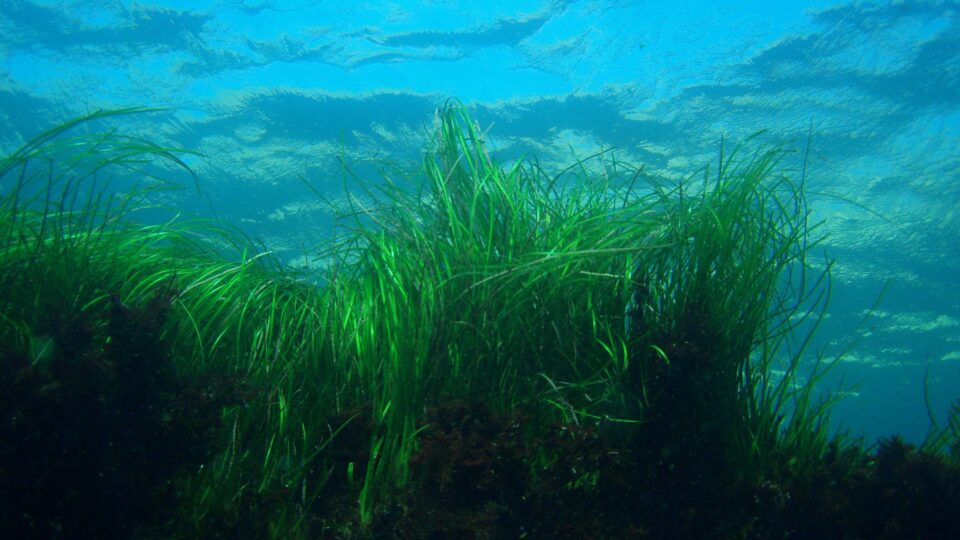
Seagrasses are the basis of important marine ecosystems.   Sea turtles, bat rays, leopard sharks, fish, and harbor seals are just some of the marine creatures that visit seagrass ecosystems for the food and habitat they provide.  They are nursery grounds for many aquatic animals and many birds visit seagrass meadows to dine on what lives within them.  They may seem like slimy grasses that we walk through along some shorelines, but they are important.

These marine forests are valuable for many different reasons including climate mitigation and erosion control.  A third of the carbon dioxide emitted across the globe is absorbed by the ocean and seagrass meadows are an important carbon sink.

A new study, recently published in the journal Global Change Biology, investigated how seagrasses can buffer ocean acidification.  The six-year-long study found that these ecosystems can alleviate low ocean pH – that is, more acidic – conditions for extended periods of time, even at night in the absence of photosynthesis. 

In some places, the pH buffering from the seagrasses brings the local environments back to preindustrial pH conditions, like what the ocean might have experienced around the year 1750.

Seagrasses naturally absorb carbon as they photosynthesize when the sun is out, which drives the buffering ability.  The study found the surprising result that the effects of pH buffering even persisted during the night, when there is no photosynthesis.

The study has implications for aquaculture management as well as climate change mitigation, and conservation and restoration efforts.  Globally, seagrass ecosystems are in decline.  These results show how important it is to help them survive and prosper.

**********

Web Links

Seagrasses Turn Back the Clock on Ocean Acidification

Photo, posted October 13, 2010, courtesy of Claire Fackler, CINMS, NOAA via Flickr.

Earth Wise is a production of WAMC Northeast Public Radio.

Why Do Trees Change Color? | Earth Wise

December 24, 2020 By EarthWise Leave a Comment

Explaining the magnificent spectacle of fall foliage

We had a particularly colorful fall in the Northeast this year.  Almost everywhere you looked, there were brilliant displays of yellow, orange, and red.  The colors of fall are a result of chemistry and environmental events that may have taken place many months in the past.

The color of leaves comes from 4 pigments whose effects are governed by photosynthesis.  The one that is actually used in photosynthesis is chlorophyll and it causes leaves to be green.  But when a tree begins to prepare for dormancy, it stops producing chlorophyll, the green pigmentation fades, and the other pigments that were already in the leaves become visible.

There are xanthoplylls, which are the yellow pigments that are seen the most in fall trees.  They are the same pigments that color egg yolks and sometimes parts of the human eye.  They are only produced by plants and appear in humans and animals only through consumption.

There are carotenes, which are the orange pigments found in fruits and vegetables, such as carrots, oranges, some bell peppers and squashes.

And there is anthocyanin, which is the pigment found in blueberries, blackberries, and red or violet roses.  Its color depends on the pH level of the plant; higher pH leads to darker color.  This is the pigment seen in red maples, black cherry trees, Shumard oaks, and more.  Only 10% of trees in temperate climates produce anthocyanin and its red pigmentation and most of those trees are in New England.

All these pigments serve purposes.  They help trees absorb light energy, prevent sun damage, and even regulate how much energy chlorophyll produces.

There are complicated chemical and environmental factors at play in fall foliage but when they come together like they did this year, it’s a magnificent spectacle.

**********

Web Links

Why Do Trees Change Color?

Photo, posted October 17, 2020, courtesy of John Brighenti via Flickr.

Earth Wise is a production of WAMC Northeast Public Radio.

Hacking Photosynthesis | Earth Wise

September 14, 2020 By EarthWise Leave a Comment

benefits of hacking photosynthesis

A team led by the University of Illinois has been pursuing a project called Realizing Increased Photosynthetic Efficiency or RIPE, which has the aim of improving photosynthesis in order to provide farmers with higher-yielding crops in an increasingly challenging climate.  Photosynthesis is the natural, sunlight-powered process that plants use to convert carbon dioxide into sugars that fuel growth, development, and for us, crop yield.

If we think of photosynthesis as a factory line composed of multiple machines, the growth of plants is limited by the slowest machines in the line.  The RIPE project has identified some steps in photosynthesis that are slower than others and are attempting to enable plants to build more machines to speed up those slower steps.

The researchers modeled a total of 170 steps in the process of photosynthesis to identify how plants could manufacture sugars more efficiently.  In the study, the team increased crop growth by 27% by resolving two constraints:  one in the first part of photosynthesis where plants turn light energy into chemical energy and one in the second part when carbon dioxide is turned into sugars.

The researchers effectively hacked photosynthesis by adding a more efficient transport protein from algae to enhance the energy conversion process. 

In the greenhouse, these changes improved crop productivity by 52%, but in field trials, which are a more important test, these photosynthetic hacks boosted crop production by 27%.

Ultimately, the team hopes to translate these discoveries to a series of staple food crops, such as cassava, cowpea, corn, soybean and rice, which are needed to feed the world’s growing population this century.

**********

Web Links

Photosynthetic hacks can boost crop yield, conserve water

Photo, posted June 14, 2017, courtesy of Alex Holyoake via Flickr.

Earth Wise is a production of WAMC Northeast Public Radio.
Heat-Resistant Coral | Earth Wise

June 23, 2020 By EarthWise Leave a Comment

heat resistant coral

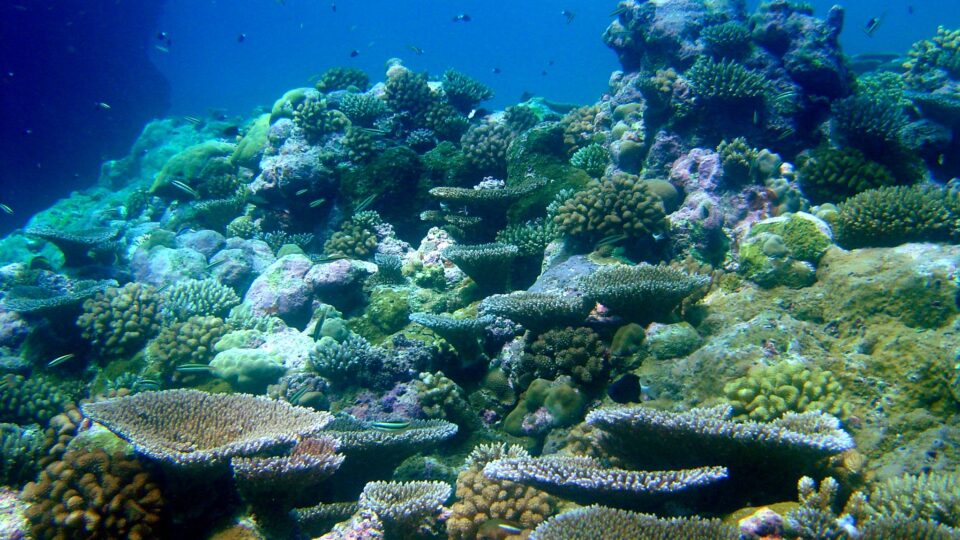
Coral reefs are in decline all over the world.  Corals are under increasing pressure as water temperatures rise and the frequency and severity of coral bleaching events increase.  Nowhere is this more evident than in Australia’s Great Barrier Reef system, where severe bleaching events have happened in three of the past five years. Long-term prospects for the survival of the world’s largest reef system are now considered to be poor.

A team of scientists at Australia’s national science agency – the Commonwealth Scientific and Industrial Research Organization – along with the Australian Institute of Marine Science and the University of Melbourne have successfully produced in a laboratory setting a coral that is more resistant to increased seawater temperatures.

The team made the coral more tolerant to temperature-induced bleaching by bolstering the heat tolerance of the microalgae symbionts that live inside the coral tissue.  They isolated the microalgae from coral and cultured it in the laboratory using a technique called “directed evolution”.  Over the course of four years, they exposed the microalgae to increasingly warmer temperatures.  When the heat-adapted strain of algae was reintroduced into coral larvae, the newly established coral-algal symbiosis was more heat tolerant than the original one.  The heat-tolerant microalgae are better at photosynthesis and improve the heat response of the coral animal.

The next step is to further test the algal strains in adult colonies across a range of coral species.  This groundbreaking research provides a promising and novel tool to increase the heat tolerance of corals and might potentially lead to a way to save the Great Barrier Reef as the world continues to warm.

**********

Web Links

Scientists successfully develop heat resistant coral to fight bleaching

Photo, posted September 22, 2010, courtesy of NOAA via Flickr.

Earth Wise is a production of WAMC Northeast Public Radio.

Figuring Out Photosynthesis | Earth Wise

March 16, 2020 By EarthWise Leave a Comment

unraveling the mystery of photosynthesis

Plants have been harnessing the sun’s energy for hundreds of millions of years. Algae and photosynthetic bacteria have been doing the same for even longer, all with remarkable efficiency and resiliency. 

People have used the energy of the sun in one way or another for millennia, but only recently have we gotten sophisticated about it by using devices like solar panels and sensors.  And we still have a long way to go to get anywhere close to the efficiency of plants. It’s no wonder, then, that scientists have long sought to understand exactly how photosynthesis works.

Scientists from the U.S. Department of Energy’s (DOE) Argonne National Laboratory, and collaborators at Washington University in St. Louis, recently solved a critical part of the age-old mystery of photosynthesis, studying the initial, ultra-fast events through which photosynthetic proteins capture light and use it to initiate a series of electron transfer reactions.  Electrons in plants have two possible pathways to travel but only use one.   

But as a result of their efforts, the scientists are now closer than ever to being able to design electron transfer systems in which they can send an electron down a pathway of their choosing. 

By gaining the ability to harness the flow of energy, it may be possible to incorporate new design principles in non-biological energy systems. This could allow us to greatly improve the efficiency of many solar-powered devices, potentially making them far smaller. Understanding the intricacies of photosynthesis creates a tremendous opportunity to open up completely new disciplines of light-driven biochemical reactions, perhaps even ones that haven’t been envisioned by nature.

**********

Web Links

Scientists unravel mystery of photosynthesis

Photo, posted June 14, 2017, courtesy of Alex Holyoake via Flickr.

Earth Wise is a production of WAMC Northeast Public Radio.

Carbon Capture As Big Business

December 26, 2019 By EarthWise Leave a Comment

Removing greenhouse gasses from the atmosphere is an essential part of the overall effort to achieve zero net carbon emissions and stabilize the climate.  Since we have not been able to reduce emissions fast enough to do the job, it is important to find ways to pull carbon dioxide out of the atmosphere.

There are many ways to do it, but they tend to be rather expensive and, so far, the need to mitigate climate change does not seem to provide sufficient incentive. A new study by researchers at UCLA, the University of Oxford, and five other institutions, analyzed the possibility of creating a large global industry based on capturing carbon dioxide and turning it into commercial products.

The study investigated the potential future scale and cost of 10 different ways to use carbon dioxide, including in fuels and chemicals, plastics, building materials, soil management, and forestry.  The study looked at processes using carbon dioxide captured from waste products that are produced by burning fossil fuels as well as by simply capturing it directly from the atmosphere.  The study also looked at processes that use carbon dioxide captured biologically by photosynthesis.

The conclusions of the study were that on average each of the ten utilization pathways could use about half a billion tons of carbon dioxide that would otherwise escape into the atmosphere.  Thus, theoretically, these various pathways could take more than five billion tons of CO2 out of the atmosphere.   Currently, fossil fuel combustion emits about 40 billion tons of carbon dioxide.

The authors of the study stress that there is no silver bullet in the fight against climate change.  It will require multiple approaches – including CO2 removal for industrial use – to make real progress

**********

Web Links

Carbon dioxide capture and use could become big business

Photo, posted September 18, 2015, courtesy of Tony Webster via Flickr.

Earth Wise is a production of WAMC Northeast Public Radio.

Why Save Endangered Species?

December 9, 2019 By EarthWise Leave a Comment

One often hears the argument that humans need to save the world’s endangered species in order to save ourselves.  Carl Safina, a marine ecologist and award-winning environmental writer, has written a thought-provoking essay that offers the viewpoint that we don’t actually need the wild species of the world but that they need us.

The truth is that human beings have thrived by destroying nature.  We have exploited other species when they were useful to us and simply pushed them aside when they weren’t.  We drove America’s most abundant bird – the passenger pigeon – to extinction.  The most abundant large mammal – the bison – was driven to functional extinction.

In today’s world, people live at high densities in places devoid of wild species and natural beauty.  And while we express concern for elephants, gorillas, sperm whales, tigers, and various other species, how would the lives of most of us be affected at all should they vanish entirely?  The unfortunate truth is that it would make little difference to our lives.

The only species that are really essential to modern living are actually microbes of decay, a few insect pollinators, and the ocean’s photosynthesizing plankton.  Life would go on little changed without most other co-inhabitants of our planet.

Safina argues that our obligation to protect endangered species does not come from our dependence upon them but rather on a moral obligation.  Humans consider ourselves to be the most moral species and, as such, we have moral obligations.  In this case, it is to protect the beauty and wonder of our world, which is not trivial but in fact is the most profound thing on earth.

Safina has much more to say about this and I strongly recommend reading his essay.  You can find the link here.

**********

Web Links

The Real Case for Saving Species: We Don’t Need Them, But They Need Us

Photo, posted December 9, 2014, courtesy of Gerry Zambonini via Flickr.

Earth Wise is a production of WAMC Northeast Public Radio.

A Powerful Case For Protecting Whales

October 24, 2019 By EarthWise Leave a Comment

Efforts to mitigate climate change typically face two major challenges.  One is to find effective ways to reduce the amount of atmospheric carbon dioxide.  The other is how to raise enough money to implement climate mitigation strategies. 

Many proposed solutions to climate change, like carbon capture and storage, are complex, expensive, and in some cases, untested.  What if there was a low-tech solution that was effective and economical?

Well, it turns out there is one, and it comes from a surprisingly simple, “no-tech” strategy to capture CO2: increase global whale populations. 

According to a recent analysis by economists with the International Monetary Fund, whales help fight climate change by sequestering CO2 in the ocean. 

Whales sequester carbon in a few ways.  They hoard it in their fat and protein-rich bodies, stockpiling tons of carbon apiece.  When whales die, they turn into literal carbon sinks on the ocean floor.  While alive, whales dive to feed on tiny marine organisms like krill and plankton before surfacing to breathe and excrete. Those latter activities release an enormous plume of nutrients, including nitrogen, iron, and phosphorous, into the water.  These so-called “poo-namis” stimulate the growth of phytoplankton, microscopic marine algae that pull CO2 out of the air and return oxygen to the air via photosynthesis.  Phytoplankton are responsible for every other breath we take, contributing at least 50% of all oxygen to the atmosphere and capturing approximately 40% of all CO2 produced. 

With other economic benefits like ecotourism factored in, economists estimate that each whale is worth $2 million over its lifetime, making the entire global population possibly a one trillion dollar asset to humanity.

*********

Web Links

How much is a whale worth?

Photo, posted June 12, 2013, courtesy of Gregory Smith via Flickr.

XXXXXXXXXXXXXXXXXX

Wildfires And Carbon

September 17, 2019 By EarthWise Leave a Comment

This summer has been an unprecedented year for fires in the Arctic.  Major fires have burned throughout the Arctic in Russia, Canada, and Greenland.  In total these fires released 50 million tons of carbon dioxide in June alone, which is as much as Sweden emits in an entire year.

In an average year, wildfires around the world burn an area equivalent to the size of India and emit more carbon dioxide to the atmosphere than global road, rail, shipping and air transport combined.

Ordinarily, this is part of a natural cycle.  As vegetation in burned areas regrows, it draws CO2 back out of the atmosphere through photosynthesis.  This is part of the fire-recovery cycle, which can take less than a year in grasslands, but decades in forests.  But in Arctic or tropical peatlands, full recovery may not occur for centuries.

A recent study looked at and quantified the important role that charcoal plays in helping to compensate for carbon emissions from fires.  In wildfires, some of the vegetation is not consumed by burning, but instead is transformed to charcoal – referred to as pyrogenic carbon.   This carbon-rich material can be stored in soils and oceans over very long time periods.

Researchers have combined field studies, satellite data, and modelling to quantify the amount of carbon that is placed in storage in the form of charcoal.  Their results are that the production of pyrogenic carbon amounts to about 12% of the CO2 emissions from fires and can be considered a significant buffer for landscape fire emissions.

Charcoal does not represent a solution to the problem of increasingly intense wildfires, but it is important to take it into account in understanding what is happening.

**********

Web Links

How wildfires trap carbon for centuries to millennia

Photo, posted August 17, 2018, courtesy of the Bureau of Land Management Oregon and Washington via Flickr.

Earth Wise is a production of WAMC Northeast Public Radio.

A Giant Seaweed Bloom

August 19, 2019 By EarthWise Leave a Comment

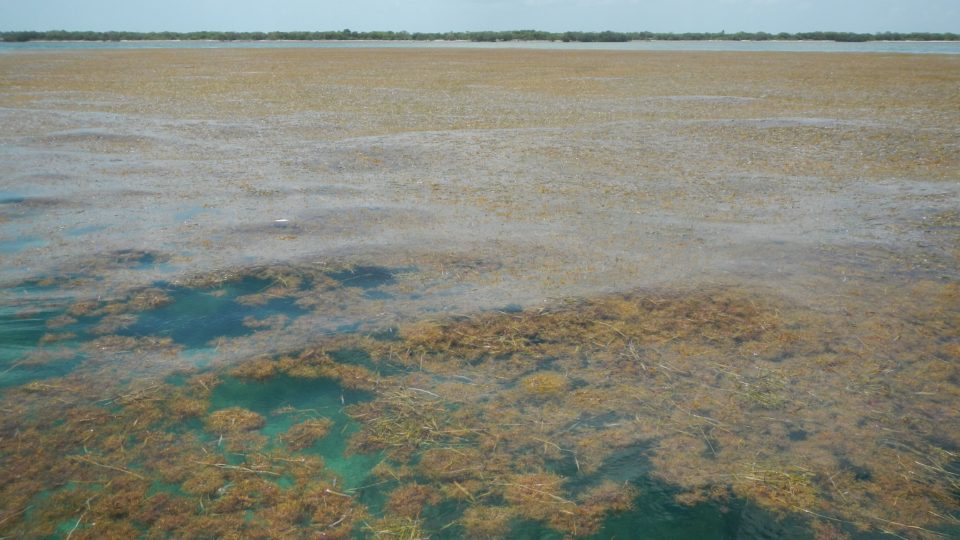
Scientists using data from NASA satellites have discovered and documented the largest bloom of seaweed in the world, stretching all the way from West Africa to the Gulf of Mexico.  The gigantic macroalgae bloom has been dubbed the Great Atlantic Sargassum Belt. 

The brown seaweed floats in surface water and in recent years has become a problem to shorelines lining the tropical Atlantic, Caribbean Sea, Gulf of Mexico, and east coast of Florida.  The stuff carpets popular beach destinations and crowded coastal waters. In 2018, more than 20 million tons of it floated on the ocean surface.

Scientists have been studying the Sargassum algae using satellites since 2006, but the major blooms have only started appearing since 2011.  They have occurred every year between 2011 and 2018 except for 2013.  Before 2011, most of the free-floating Sargassum in the ocean was primarily found in patches around the Gulf of Mexico and the Sargasso Sea located on the western edge of the central Atlantic Ocean.

Sargassum provides habitat for turtles, crabs, fish and birds, and produces oxygen via photosynthesis.  However, too much of it can crowd out many marine species.

According to researchers, the ocean’s chemistry must have changed in order for the bloom to get so out of hand.  The factors involved include a large seed population left over from a previous bloom, nutrient input from West Africa, and nutrient input from the Amazon River.  The increase in nutrients may be a result of deforestation and fertilizer use.

Climate-change effects on precipitation and ocean currents ultimately do play a role in this, but increased ocean temperatures do not.  Unfortunately, these giant seaweed blooms are probably here to stay.

**********

Web Links

NASA Satellites Find Biggest Seaweed Bloom in the World

Photo courtesy of NASA.

Earth Wise is a production of WAMC Northeast Public Radio.
Thoreau And Climate Change

March 27, 2019 By EarthWise Leave a Comment

Henry David Thoreau was a 19th-century American naturalist, philosopher, poet, essayist, and social reformer.  He is best known for “Civil Disobedience,” an essay advocating for the rebellion against an unjust government, and for “Walden,” a book about his experiences living simply in nature.  Now, Thoreau’s observations from “Walden” are the foundation of a new study exploring the effects of climate change on tree leaf-out and the emergence of spring wildflowers. 

This research, which was recently published in the journal Ecology Letters, relies on Thoreau’s scientific observations gathered during the 1850s when he spent 26 months living in isolation at Walden Pond in Concord, Massachusetts.  These observations from Thoreau were combined with current research to measure tree and wildflower leaf-out dates for 37 different years between 1852 and 2018.  “Leaf out” refers to the time in spring when plants and trees begin producing leaves.  An alteration in this timing can have a domino effect throughout an ecosystem.

Over the past century, temperatures in Concord, Massachusetts have warmed five degrees Fahrenheit.  As a result, leaf-out dates have changed significantly.  According to researchers, wildflowers are leafing out about one week earlier, while trees are leafing out about two weeks earlier than they did 160 years ago. 

Ground-dwelling plants like wildflowers have a narrow window to accomplish growth, photosynthesis, and reproduction, before the canopy trees leaf out and block the sunlight.  Temperature-driven shifts in the timing of tree leaf-out between Thoreau’s time and now are likely already hindering wildflower abundance and flowering. 

As the climate continues to warm, the already small window of time between wildflower emergence and tree leaf-out will likely shorten further. 

**********

Web Links

Using Thoreau, scientists measure the impact of climate change on wildflowers

Photo, posted August 13, 2008, courtesy of Adam Pieniazek via Flickr.

Earth Wise is a production of WAMC Northeast Public Radio.

Hacking Photosynthesis

February 25, 2019 By EarthWise Leave a Comment

There is an enzyme known as RuBisCo that is involved in carbon fixation, the process plants use to convert carbon dioxide into sugar molecules.  The RuBisCo molecule is inside the leaves of most plants and is probably the most abundant protein in the world.

RuBisCo picks up carbon dioxide from the air and uses energy from the sun to turn the carbon into sugar molecules.  This process of photosynthesis is pretty much the foundation of life on Earth.

Wonderful as it is, the process is not perfect.  RuBisCo is not very selective in grabbing molecules from the air.  It picks up oxygen as well as CO2 and it produces a toxic compound when it does that.

Plants operate a whole other complicated chemical process to deal with this toxic byproduct and uses up a lot of energy along the way, leaving less energy for making leaves or food that we can eat.

A research program at the University of Illinois called Realizing Increased Photosynthetic Efficiency (or RIPE) has been trying to correct this problem; they have been trying to hack photosynthesis.  And they may well have succeeded.

Using genetic modification on tobacco plants, they have shut down the existing detoxification process and set up a much more efficient new one.  The result is super plants that grow faster and up to 40% bigger.

The next step is to get it to work on plants that people actually rely upon for food, like tomatoes, soybeans and black-eyed peas (which are a staple food crop in sub-Saharan Africa where food is scarce.)

It will be years before we know if the process can really produce more food and be safe, but it may end up leading to a major increase in crop productivity.

**********

Web Links

Scientists Have ‘Hacked Photosynthesis’ In Search Of More Productive Crops

Photo, posted June 10, 2013, courtesy of Boon Hong Seto via Flickr.

Earth Wise is a production of WAMC Northeast Public Radio.

Speed Breeding Of Crops

January 4, 2019 By EarthWise Leave a Comment

A technique pioneered by NASA for the purpose of growing plants extra-terrestrially is now being applied here on earth to fast-track improvements in a range of crops.  The technique, known as speed breeding, has been adapted for use by British and Australian researchers on a scale ranging from vast greenhouses to desktop growth chambers.

Speed breeding uses enhanced LED lighting and day-long regimes of up to 22 hours to optimize photosynthesis and promote rapid growth of crops.  By speeding up the breeding cycle of plants,it is possible, for example, to grow six generations of wheat in a year compared with two generations using traditional breeding methods.

With shortened breeding cycles, genetic improvements such as yield gain, disease resistance and climate resistance can be fast-tracked in crops such as wheat, barley, chickpeas, various Brassica species, oil seed rape and peas.

The ability to do this in compact desktop chambers permits cutting-edge research to be performed inexpensively before being scaled up to large greenhouses.

Crop development is an increasingly important activity and speed breeding is increasingly attractive in light of the opposition in some quarters to modern gene-editing techniques to create GMO crops.  Speed breeding allows crop improvements via anon-GMO route.

The new technique is already being applied in Australia, which is experiencing one of the worst droughts on record.  It is being used to rapidly cycle genetic improvements to make crops more drought resilient.

Generation time in most plant species is a major bottleneck in applied research programs and breeding.  Speed breeding can greatly reduce this bottleneck, allowing scientists to respond more quickly to emerging diseases, the changing climate and increased demand for specific plant traits.

**********

Web Links

JIC joins European scientists to safeguard precision breeding

Photo, posted May 8, 2016, courtesy of Yair Aronshtam via Flickr. 

Earth Wise is a production of WAMC Northeast Public Radio.

Fighting Hunger With A Shrub

December 20, 2018 By EarthWise Leave a Comment

https://earthwiseradio.org/wp-content/uploads/2018/12/EW-12-20-18-Fighting-Hunger-with-a-Shrub.mp3

A recent study has revealed that a tough, woody shrub that grows throughout Western Africa can actually share its water with adjacent cultivated plants and boost grain production.

[Read more…] about Fighting Hunger With A Shrub

Bacteria-Powered Solar Cell

August 29, 2018 By EarthWise 1 Comment

https://earthwiseradio.org/wp-content/uploads/2018/08/EW-08-29-18-Bacteria-Powered-Solar-Cell.mp3

Commercially-available solar panels are composed of solar cells that are most often made from various forms of silicon.  Some panels use thin-film cells made from other semiconductor materials.  Solar cells utilize a property of semiconductors that allows them to convert light energy into electrical energy.

[Read more…] about Bacteria-Powered Solar Cell

Geoengineering And Developing Countries

June 21, 2018 By EarthWise Leave a Comment

https://earthwiseradio.org/wp-content/uploads/2018/06/EW-06-21-18-Geoengineering-and-Developing-Countries.mp3

There are some mind-boggling schemes being discussed to mitigate the global warming caused by greenhouse gases.  These include placing giant mirrors in orbit to reflect sunlight before it reaches Earth and launching millions of tons of sulfur into the stratosphere to simulate the effects of a major volcanic eruption.

[Read more…] about Geoengineering And Developing Countries

Carbon And Heating Soil

November 22, 2017 By EarthWise 1 Comment

https://earthwiseradio.org/wp-content/uploads/2017/11/EW-11-22-17-Carbon-and-Heating-Soil.mp3

Plants are a critical part of the Earth’s carbon cycle.   They take in carbon dioxide during photosynthesis.   Eventually, dead leaves, branches and other materials fall to the ground where bacteria and fungi decompose the materials and release the CO2 back into the atmosphere.  This carbon-soil feedback loop is a complicated one that is critical to the overall carbon balance because soils actually contain two to three times more carbon than the atmosphere.

[Read more…] about Carbon And Heating Soil

Antarctica Is Getting Greener

June 29, 2017 By EarthWise

https://earthwiseradio.org/wp-content/uploads/2017/06/EW-06-29-17-Antarctica-is-Getting-Greener-1.mp3

The frozen landscape of Antarctica is getting greener.  Researchers drilling into layers of moss that have been accumulating in Antarctica over the last 150 years have found that the growth rate of the moss has been speeding up over the past 50 years.

[Read more…] about Antarctica Is Getting Greener

  • « Go to Previous Page
  • Page 1
  • Page 2
  • Page 3
  • Go to Next Page »

Primary Sidebar

Recent Episodes

  • An uninsurable future
  • Clean energy and jobs
  • Insect declines in remote regions
  • Fossil fuel producing nations ignoring climate goals
  • Trouble for clownfishes

WAMC Northeast Public Radio

WAMC/Northeast Public Radio is a regional public radio network serving parts of seven northeastern states (more...)

Copyright © 2025 ·