• Skip to primary navigation
  • Skip to main content
  • Skip to primary sidebar

Earth Wise

A look at our changing environment.

  • Home
  • About Earth Wise
  • Where to Listen
  • All Articles
  • Show Search
Hide Search
You are here: Home / Archives for life

life

Concerns About Dam Safety

August 22, 2019 By EarthWise Leave a Comment

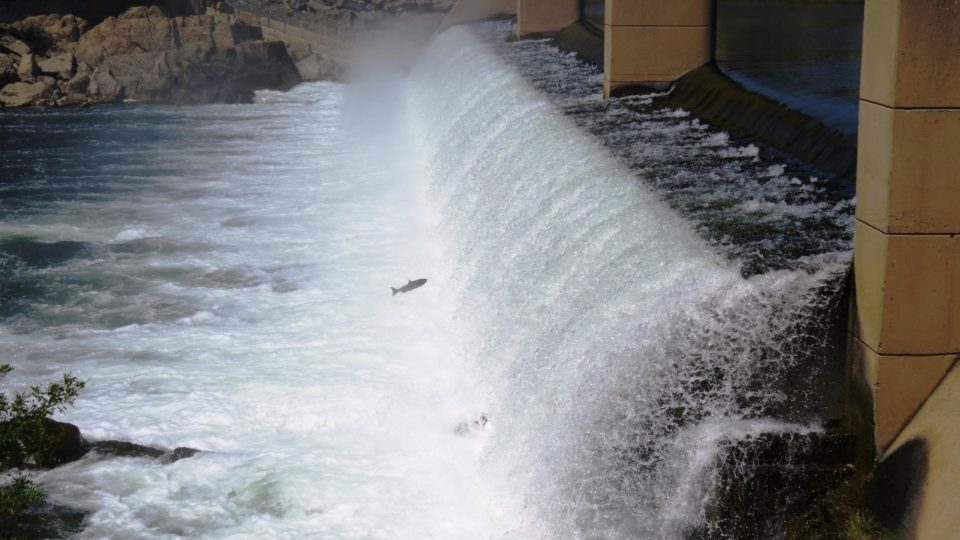
The United States has a total of 91,000 dams of various sizes and types.  Many of them are aging and sorely in need of repairs.  All that maintenance would add up to tens of billions of dollars.  Experts are increasingly worried that as extreme precipitation events become increasingly common, dams are increasingly at risk of failure, threatening lives and posing environmental risks.

In 2017, Oroville Dam in California – the tallest dam in the country – nearly collapsed.  That incident forced the evacuation of 190,000 people and cost the state of California $1.1 billion in repairs.  California is considered one of the nation’s leading states in dam safety management and yet the partial disintegration of Oroville’s two spillways during a heavy rainstorm was not anticipated.

So far, federal and state dam safety officials have not been able to get disinterested state legislatures and the U.S. Congress to fork up the money needed for repairs to the nation’s aging dam infrastructure.

Th American Society of Civil Engineers gave the nation’s dams a D grade on the latest infrastructure report card.  They estimate that the cost of rehabilitating dams whose failure would threaten human life at nearly $45 billion, and the cost of fixing all dams in need of repair at more than $64 billion.

Scientists say the likelihood of dam failures – which not only threaten lives but also release toxic sediments trapped in reservoirs behind many dams – will increase as extreme precipitation events become more frequent in a warming world.  Apart from about 1,500 dams owned by federal agencies, regulating dam safety is primarily the responsibility of the states.  So far, states have not applied remotely sufficient resources to a growing problem.

**********

Web Links

In an Era of Extreme Weather, Concerns Grow Over Dam Safety

Photo, posted August 20, 2014, courtesy of Flickr.

Earth Wise is a production of WAMC Northeast Public Radio.

One Million Extinctions

June 14, 2019 By EarthWise Leave a Comment

A group of 145 expert authors from 50 countries has produced a report based upon a review of 15,000 scientific and government sources that is the first comprehensive look at the state of the planet’s biodiversity in 15 years.  The conclusions are alarming.

Thanks to human pressures, one million species may be pushed to extinction in the next few years, something with serious consequences for human beings as well as the rest of life on earth.

Based upon scientific studies as well as indigenous and local knowledge, the evidence is overwhelming that human activities are the primary cause of nature’s decline.  The report ranked the major drivers of species decline as land conversion, including deforestation; overfishing; bush meat hunting and poaching; climate change; pollution; and invasive alien species.

The tremendous variety of living species on our plant which number at least 8.7 million and perhaps many more – biodiversity – constitutes a life-supporting safety net that provides our food, clean water, air, energy, and more.

In parts of the ocean, little life remains but green slime.  Some remote tropical forests are nearly silent because insects have vanished.  Many grasslands are becoming deserts.  Human activity has severely altered more than 75% of Earth’s land areas and has impacted 66% of the oceans.  The world’s oceans increasingly are characterized by plastics, dead zones, overfishing, and acidification.

The main message of the 1,500-page report is that transformative change is urgently needed.  In order to safeguard a healthy planet, society needs to shift from a sole focus on chasing economic growth.  This won’t be easy, but we must come to the understanding that nature is the foundation for development before it is too late.

**********

Web Links

One million species at risk of extinction, UN report warns

Photo, posted January 1, 2014, courtesy of Eric Kilby via Flickr.

Earth Wise is a production of WAMC Northeast Public Radio.
Hacking Photosynthesis

February 25, 2019 By EarthWise Leave a Comment

There is an enzyme known as RuBisCo that is involved in carbon fixation, the process plants use to convert carbon dioxide into sugar molecules.  The RuBisCo molecule is inside the leaves of most plants and is probably the most abundant protein in the world.

RuBisCo picks up carbon dioxide from the air and uses energy from the sun to turn the carbon into sugar molecules.  This process of photosynthesis is pretty much the foundation of life on Earth.

Wonderful as it is, the process is not perfect.  RuBisCo is not very selective in grabbing molecules from the air.  It picks up oxygen as well as CO2 and it produces a toxic compound when it does that.

Plants operate a whole other complicated chemical process to deal with this toxic byproduct and uses up a lot of energy along the way, leaving less energy for making leaves or food that we can eat.

A research program at the University of Illinois called Realizing Increased Photosynthetic Efficiency (or RIPE) has been trying to correct this problem; they have been trying to hack photosynthesis.  And they may well have succeeded.

Using genetic modification on tobacco plants, they have shut down the existing detoxification process and set up a much more efficient new one.  The result is super plants that grow faster and up to 40% bigger.

The next step is to get it to work on plants that people actually rely upon for food, like tomatoes, soybeans and black-eyed peas (which are a staple food crop in sub-Saharan Africa where food is scarce.)

It will be years before we know if the process can really produce more food and be safe, but it may end up leading to a major increase in crop productivity.

**********

Web Links

Scientists Have ‘Hacked Photosynthesis’ In Search Of More Productive Crops

Photo, posted June 10, 2013, courtesy of Boon Hong Seto via Flickr.

Earth Wise is a production of WAMC Northeast Public Radio.
Liquid Fuel From The Sun

February 21, 2019 By EarthWise Leave a Comment

Most forms of energy we use ultimately come from the sun in one way or another.  Even fossil fuels are the end product of millions of years of plant life that captured solar energy.  The advantage fossil fuels have over direct solar power is that they are, in fact, fuels and therefore can be stored for use when needed.

Scientists in Sweden have now developed a specialized fluid that absorbs some of the sun’s energy, holds it for months or even years, and then releases it when needed.  This solar thermal fuel is like a rechargeable battery for heat rather than electricity.

The special fluid is pumped through transparent tubes where ultraviolet light from the sun excites its molecules into an energized state.  A compound called norbornadiene is converted into quadricyclane. The quadricyclane is a quite stable substance until it is passed over a cobalt-based catalyst, which causes it to turn back into norbornadiene and release copious amounts of heat.

Such a solar thermal fuel could be stored in uninsulated tanks in homes or factories or piped or trucked to where it was needed.  It could then be used for water heaters, dishwashers, or clothes driers.  The room temperature fluid quickly warms to about 183 degrees when passed over the catalyst, plenty warm enough for heating a home or office.  Both the fuel and the catalyst are damaged very little by the reactions, so the process can be recycled many times.

There is much development work needed to optimize shelf life, energy density, good recyclability and other properties before this technology can be commercialized but there are at least 15 groups around the world now studying this intriguing way to get liquid fuel from the sun.

**********

Web Links

Scientists transform sunlight into a liquid fuel that can be stored for 18 years

Photo, posted August 17, 2009, courtesy of Hiromichi Torihara via Flickr.

Earth Wise is a production of WAMC Northeast Public Radio.

Wildfire Pollution

January 24, 2019 By EarthWise Leave a Comment

California’s record-breaking wildfires this past season have been an unmitigated disaster with respect to loss of life, property, impact on human health, and in multiple other ways.  And as if all of that was not bad enough, the impact on carbon emissions into the atmosphere was equally catastrophic.  The wildfires were deadly and cost billions of dollars but were also terrible for the environment and for the public’s health.

According to estimates from the U.S. Department of the Interior, the California wildfires released emissions equivalent to about 68 million tons of carbon dioxide into the atmosphere.  That is equal to the emissions from generating one year’s worth of electricity in the state, or about 15% of the total annual emissions in the state of California.

It is a vicious circle in which the changes to the climate that have lengthened the fire season and shortened the precipitation season are creating additional contributions to the warming of the climate.

Over the past century, California has warmed by about 3 degrees Fahrenheit.  That extra-warmed air sucks water out of plants and soils, resulting in trees, shrubs, and rolling grasslands that are dry and primed to burn. That vegetation-drying effect compounds with every additional degree of warming.  Plants lose their water more efficiently as temperatures get higher.

The result is that wildfires are increasing in size both in California and across the western United States. Fire experts at Columbia University estimate that since the 1980s, the warming climate has contributed to an extra 10 million acres of burning in western forests – an area about the size of Massachusetts and Connecticut combined.

It’s a bad situation that is getting worse.

**********

Web Links

California’s 2018 Wildfires Have Emitted A Year’s Worth of Power Pollution

Photo, posted October 11, 2017, courtesy of Bob Dass via Flickr. 

Earth Wise is a production of WAMC Northeast Public Radio.

Pollinators With Backbones

May 25, 2018 By EarthWise Leave a Comment

https://earthwiseradio.org/wp-content/uploads/2018/05/EW-05-25-18-Pollinators-with-Backbones.mp3

There is a great deal of concern about the status of pollinators like bees and butterflies.  They play a crucial role for many important food crops.  But it turns out that lizards, mice, bats and other vertebrates are important pollinators too.

[Read more…] about Pollinators With Backbones

A Robot Fish

April 30, 2018 By EarthWise Leave a Comment

https://earthwiseradio.org/wp-content/uploads/2018/04/EW-04-30-18-A-Robot-Fish.mp3

Scientists studying marine life have to figure out ways to get cameras into areas that are too dense or dangerous for people to enter.   This often means sending delicate equipment into places where collisions are both likely and damaging and that equipment is generally tethered to ships or other objects.  To really see what is going on in the underwater world, a better approach is needed.

[Read more…] about A Robot Fish

How Safe Is Drinking Water?

March 26, 2018 By EarthWise Leave a Comment

https://earthwiseradio.org/wp-content/uploads/2018/03/EW-03-26-18-How-Safe-Is-Drinking-Water.mp3

Water is life.  It’s a fundamental need for every human being on the planet.  Each person requires more than five gallons of clean and safe water a day for drinking, cooking, and keeping clean.  Dirty water, on the other hand, can be deadly.  An estimated 1.8 million people die every year as a result of diarrheal diseases like cholera.  And tens of millions of people are seriously sickened by water-related maladies. 

[Read more…] about How Safe Is Drinking Water?

New Year’s Resolutions

December 29, 2017 By EarthWise 1 Comment

https://earthwiseradio.org/wp-content/uploads/2017/12/EW-12-29-17-New-Years-Resolutions.mp3

2018 is just around the corner.  Popular resolutions for the New Year always seem to include things like improving health, traveling more, spending less money, and so on.  But one resolution that isn’t as popular but could collectively have a major impact is committing to living a cleaner and greener life. 

[Read more…] about New Year’s Resolutions

The Deadly Cost Of Pollution

December 8, 2017 By EarthWise Leave a Comment

https://earthwiseradio.org/wp-content/uploads/2017/11/EW-12-08-17-Deadly-Cost-of-Pollution.mp3

There is deservedly a great deal of focus on the effects that carbon pollution is having upon the climate and most countries around the world are working to reduce their emissions.   However, even if climate effects were not a serious threat to humanity, pollution is a deadly menace to human health.

[Read more…] about The Deadly Cost Of Pollution

Air Pollution Shortens Lives

October 31, 2017 By EarthWise Leave a Comment

https://earthwiseradio.org/wp-content/uploads/2017/10/EW-10-30-17-Air-Pollution-Shortens-Lives.mp3

Globally, an estimated 4.5 billion people are exposed to particulate air pollution levels that are at least twice that of what the World Health Organization considers safe.  But the impact that sustained exposure to air pollution has on a person’s life expectancy has remained a frustratingly unanswered question.  That is until now.

[Read more…] about Air Pollution Shortens Lives

Earthquake Warning System

October 11, 2017 By EarthWise Leave a Comment

https://earthwiseradio.org/wp-content/uploads/2017/10/EW-10-11-17-Earthquake-Warning-System.mp3

The destructive power of both hurricanes and earthquakes has made headlines in recent times.   The slow development of the hurricanes in the Atlantic was monitored for days before they wreaked havoc on Caribbean islands and Florida cities.  Earthquakes, on the other hand, occur suddenly and without warning.   Except, that isn’t entirely true.

[Read more…] about Earthquake Warning System

Dangerous Diseases From The Past

June 9, 2017 By EarthWise

https://earthwiseradio.org/wp-content/uploads/2017/06/EW-06-09-17-Dangerous-Diseases-from-the-Past.mp3

Climate change is poised to transform life on Earth as we know it.  The higher temperatures, the rising seas, the more frequent floods and droughts, among the countless other consequences associated with climate change, threaten to do irreversible damage to the world in the coming decades.

[Read more…] about Dangerous Diseases From The Past

Melting Ice Adds Life To The Sea

May 19, 2017 By EarthWise

https://earthwiseradio.org/wp-content/uploads/2017/04/EW-05-19-17-Melting-Ice-Adds-Life-to-the-Sea.mp3

The changing climate has many effects upon the world’s ecosystems, some of which are surprising.  One of these relates to the effect of the increasing melting of ice in the Arctic.  The ice melt is leading to more life in the Arctic sea.

[Read more…] about Melting Ice Adds Life To The Sea

Restorative Ocean Farming

November 16, 2016 By WAMC WEB

https://earthwiseradio.org/wp-content/uploads/2016/11/EW-11-16-16-Restorative-Ocean-Farming.mp3

The conventional aquaculture industry has often been associated with many of the same problems that beset land-based agriculture:   creating sterile monocultures, fouling the environment with pesticides, antibiotics and organic pollutants, and spreading diseases.

[Read more…] about Restorative Ocean Farming

Should We Rescue Distressed Animals?

June 27, 2016 By WAMC WEB

https://earthwiseradio.org/wp-content/uploads/2016/06/EW-06-27-16-Rescuing-Distressed-Animals-2.mp3

From time to time, we encounter wild animals in distress.   A baby robin falls out of its nest.  A fawn is orphaned when its mother is hit by a car.  A bald eagle staggers on the ground, unable to fly.

[Read more…] about Should We Rescue Distressed Animals?

Global Water Scarcity

March 23, 2016 By WAMC WEB

https://earthwiseradio.org/wp-content/uploads/2016/03/EW-03-23-16-Global-Water-Scarcity.mp3

Water is a simple chemical compound containing two hydrogen atoms and one oxygen atom connected by covalent bonds.  It covers 71% of Earth’s surface and is vital for all forms of life.  Despite its abundance, water that is safe for drinking is globally in short supply. 

[Read more…] about Global Water Scarcity

Implications of a Thousand

October 30, 2015 By EarthWise

https://earthwiseradio.org/wp-content/uploads/2015/10/EW-10-30-15-Implications-of-a-Thousand.mp3

The first Earth Wise broadcast was on January 2, 2012.  Today marks the 1000th story we have presented to you, which is cause for celebration.

[Read more…] about Implications of a Thousand

  • « Go to Previous Page
  • Page 1
  • Page 2
  • Page 3

Primary Sidebar

Recent Episodes

  • An uninsurable future
  • Clean energy and jobs
  • Insect declines in remote regions
  • Fossil fuel producing nations ignoring climate goals
  • Trouble for clownfishes

WAMC Northeast Public Radio

WAMC/Northeast Public Radio is a regional public radio network serving parts of seven northeastern states (more...)

Copyright © 2026 ·