• Skip to primary navigation
  • Skip to main content
  • Skip to primary sidebar

Earth Wise

A look at our changing environment.

  • Home
  • About Earth Wise
  • Where to Listen
  • All Articles
  • Show Search
Hide Search
You are here: Home / Archives for global temperatures

global temperatures

A record warm January

March 4, 2025 By EarthWise Leave a Comment

January saw record warm temperatures around the world

Americans experienced unusually cold and wintery weather in January.  Places like southern Louisiana and Florida saw appreciable amounts of snow.  For those who experienced January’s Arctic blast, it was a cold January.  But despite that, January was the world’s warmest on record, extending a run of extraordinary heat in which 18 out of the last 19 months saw an average global temperature more than 1.5 degrees Celsius above pre-industrial times.  In fact, the global average temperature in January was 1.75 degrees above the pre-industrial average.

The exceptional warmth was surprising to climate researchers.  It happened despite the emergence of La Niña conditions in the Pacific Ocean, which tend to lower global temperatures, at least for a while.

Researchers are investigating whether there is something beyond the effects of greenhouse gas emissions that is boosting temperatures to an unexpected degree.  It is true that emissions, associated with the burning of coal, gas, and oil, reached record levels in both 2023 and 2024.  But January’s warmth was still something of a surprise.

One prevalent theory is that cutting dangerous pollution is playing a role in causing global warming to accelerate.  As regulators have curbed sulfate pollution to protect people’s lungs, the cooling effect of these particles that help form more and brighter clouds has diminished.

January demonstrates that the global climate system is complex and the weather in any particular region does not necessarily reflect what is happening to the planet as a whole.

**********

Web Links

Global Temperatures Shattered Records in January

Photo, posted December 22, 2013, courtesy of SD Anderson via Flickr.

Earth Wise is a production of WAMC Northeast Public Radio

La Niña has arrived

February 26, 2025 By EarthWise Leave a Comment

After seven months of waiting following the end of the recent El Niño condition, La Niña finally showed up in the eastern Pacific Ocean in early December.

El Niño and La Niña are climate patterns in the Pacific Ocean that can affect weather worldwide.  Normally, trade winds in the Pacific blow west along the equator, taking warm water from South America towards Asia.  To replace the warm water, cold water rises from the depths.  During El Niño, trade winds weaken and warm water is pushed back east, toward the west coast of the Americas.  As a result, areas in the northern U.S. and Canada are dryer and warmer than usual.

During La Niña, trade winds are stronger than usual, pushing more warm water toward Asia.  This results in more upwelling of cooler water from the depths.  This tends to lead to drought in the southern U.S. and heavy rains and flooding in the Pacific Northwest and Canada.  During a La Niña year, winter temperatures are warmer than normal in the South and cooler than normal in the North.

According to the report published in January by NOAA, the La Niña that has arrived is not a particularly strong one.  Sea surface temperatures are only about 1.3 degrees Fahrenheit below average in the tropical Pacific.  The report also suggests that the La Niña condition may not stick around very long.

The El Niño-Southern Oscillation phenomenon adds a natural source of year-to-year variability in global temperatures.  The presence of La Niña for at least part of this year may temporarily keep the lid on rapidly climbing global temperatures.

**********

Web Links

La Niña Is Here

Photo, posted November 23, 2011, courtesy of NASA Goddard Space Flight Center via Flickr.

Earth Wise is a production of WAMC Northeast Public Radio
Record carbon dioxide levels

June 25, 2024 By EarthWise Leave a Comment

Record carbon dioxide levels

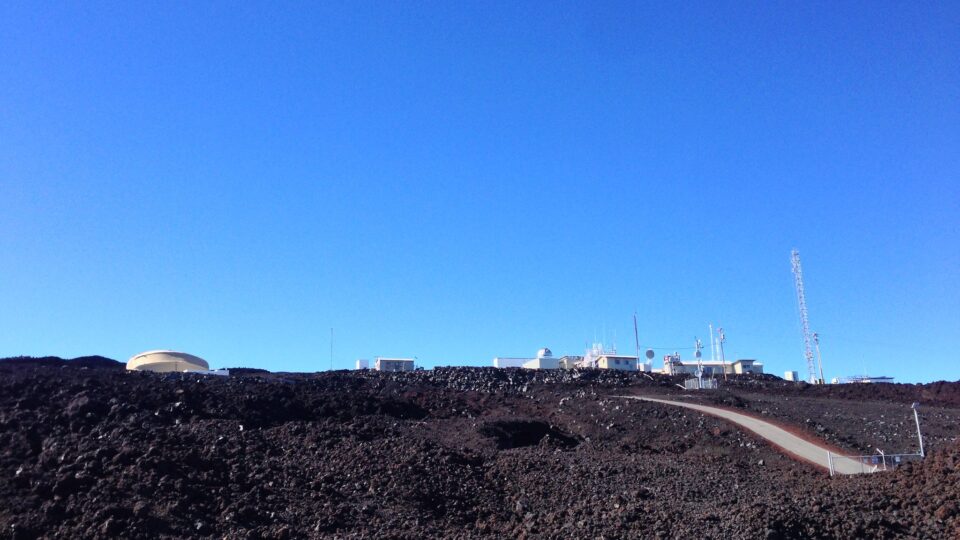
Despite the increasing concern about the warming climate, the period between March of last year and March of this year has set a new record for the largest 12-month gain in atmospheric CO2 concentration ever observed.  The new level, measured at Hawaii’s Mauna Loa Observatory was nearly 5 parts per million higher than last year’s level reaching more than 426 parts per million.

CO2 levels averaged 280 ppm for the past 800,000 years until the Industrial Revolution began and people started burning fossil fuels.  Levels started being measured at Mauna Loa in 1958, when they were 315 ppm.  Between 1958 and 2005, the CO2 level rose to 380 ppm.  Over the past 19 years, the amount of CO2 has continued to rise rapidly and with it, global temperatures.

The record increase in carbon dioxide over this past year is probably associated with the end of an El Niño event.  The previous record increase in 2015-2016 was also associated with El Niño.

But the overall trend is clear and discouraging.  Over the past 66 years, the amount of carbon dioxide in the atmosphere has increased by 35%.  This increase is a result of the burning of coal, oil, and natural gas, as well as the effects of deforestation and livestock agriculture.

Carbon dioxide absorbs heat radiating from the Earth’s surface and re-releases it in all directions, including back toward Earth’s surface.  Without this greenhouse effect, the Earth would actually be frozen.  But people are supercharging the natural greenhouse effect and causing the global temperature to rise.  Global energy demand continues to grow and if we continue to meet that demand mostly with fossil fuels, temperatures will continue to rise.

**********

Web Links

Scripps Institution of Oceanography: CO2 levels have largest 12-month gain

Photo, posted March 3, 2014, courtesy of Jon Roig via Flickr.

Earth Wise is a production of WAMC Northeast Public Radio

Winegrowing regions and climate change

April 29, 2024 By EarthWise Leave a Comment

Climate change will impact winegrowing regions around the world

Grapes grown to make wine are sensitive to climate conditions including temperatures and amount of rainfall.  The warming climate is already having visible effects on yields, grape composition, and the quality of wine.  This has significant consequences on the geography of wine production and is of major concern for the $350 billion global industry.

Winegrowing regions are mostly at the mid-latitudes where temperatures are warm enough to allow grapes to ripen but not excessively hot.  The climates are relatively dry so that fungal diseases are not rampant.

Because of the warming climate, harvesting in most vineyards now begins two or three weeks earlier than it did 40 years ago and this affects the grapes and the resultant wines.  Temperature changes affect acidity, wine alcohol, and aromatic signatures.

If global temperature rise crosses the 2-degree level, 90% of all traditional winegrowing areas throughout Spain, Italy, Greece, and southern California may become unable to produce high-quality wines.  Conversely, areas of northern France, the states of Washington and Oregon, British Columbia, and Tasmania will see improved conditions for producing quality wines. 

As the climate warms, winegrowers face new challenges such as the emergence of new diseases and pests as well as an increasing number of extreme weather events.  Wine producers are using more drought-resistant grape varieties and are adopting management methods that better preserve soil water.

The changing climate poses many threats to the quality of wines produced in traditional vineyards.  In the future, the wine industry may look very different in terms of where and how the best wines are produced. 

**********

Web Links

A global map of how climate change is changing winegrowing regions

Photo, posted November 14, 2008, courtesy of Curtis Foreman via Flickr.

Earth Wise is a production of WAMC Northeast Public Radio

Positive tipping points and climate

January 29, 2024 By EarthWise Leave a Comment

We often hear about tipping points and climate change.  Tipping points are critical thresholds that, when crossed, lead to large, accelerating, and often irreversible changes.  Some of the ones of concern with the climate are thawing permafrost, melting glaciers and ice sheets, and global temperatures reaching certain levels.  These are all tipping points that are essential to avoid.

A study published in the journal One Earth by researchers at the University of Exeter in the UK contends that in order to avoid the severe consequences of climate change, we need to trigger some positive tipping points.

Many climate-friendly changes are happening too slowly.  Triggering positive tipping points is a way to rapidly reach the high levels of decarbonization required to avoid triggering the negative tipping points of great concern.

Reaching a positive tipping point is a way that beneficial changes can rapidly gain momentum.  One example is the adoption of electric vehicles.  It has clearly reached a tipping point across Scandinavia and has happened rapidly.  Norway has managed to transition the market share of electric vehicles from under 10% to nearly 90% in less than 10 years.  At some point, everybody wanted an electric car.  This is evidence that positive tipping points can happen.

Many of the other forms of decarbonization need to move from their current level of adoption to rapid expansion.  A combination of affordability, attractiveness, availability, and political will are needed to trigger tipping points.  Exactly what those tipping point are is not necessarily known, but unless something accelerates the current pace of change, it will be very difficult to prevent negative climate tipping points from changing the world in destructive ways.

**********

Web Links

Positive tipping points must be triggered to solve climate crisis

Photo, posted July 8, 2023, courtesy of Michael Swan via Flickr.

Earth Wise is a production of WAMC Northeast Public Radio

The warmest fall

December 12, 2023 By EarthWise Leave a Comment

The warmest fall on record

The National Oceanic and Atmospheric Administration has global climate records dating back 174 years.  As the planet continues to heat up, both September and October set new records as the warmest of those months in history.

September was the fourth month in a row of record-warm global temperatures.  Not only was it the warmest September on record, but it was also the most atypically warm month of any month of the entire 174 years of record keeping.  In fact, September 2023 was warmer than the average July from 2001-2010.

For the sixth consecutive month, September also set a monthly record for global ocean surface temperature.

Not to be outdone, the planet added a fifth straight month of record-warm temperatures in October.  The average global temperature for October was 1.34 degrees Celsius above the 20th century average.  This was .24 degrees higher than the previous October record set in 2015.  And, for the seventh straight month, global ocean surface temperatures were also at a record high. 

October was the 47th consecutive October and the 536th consecutive month with global temperatures above the 20th century average.  In fact, the past 10 Octobers have been the 10 warmest Octobers in the global climate record.

With only a short time remaining in the year, according to the National Centers for Environmental Information, there is a greater than 99% chance that 2023 will rank as the warmest year on record for the world.  It is no cause for celebration.

**********

Web Links

The planet just had its warmest October on record

Topping the charts: September 2023 was Earth’s warmest September in 174-year record

Photo, posted October 18, 2016, courtesy of Dave Roberts via Flickr.

Earth Wise is a production of WAMC Northeast Public Radio
Too hot for people

November 22, 2023 By EarthWise Leave a Comment

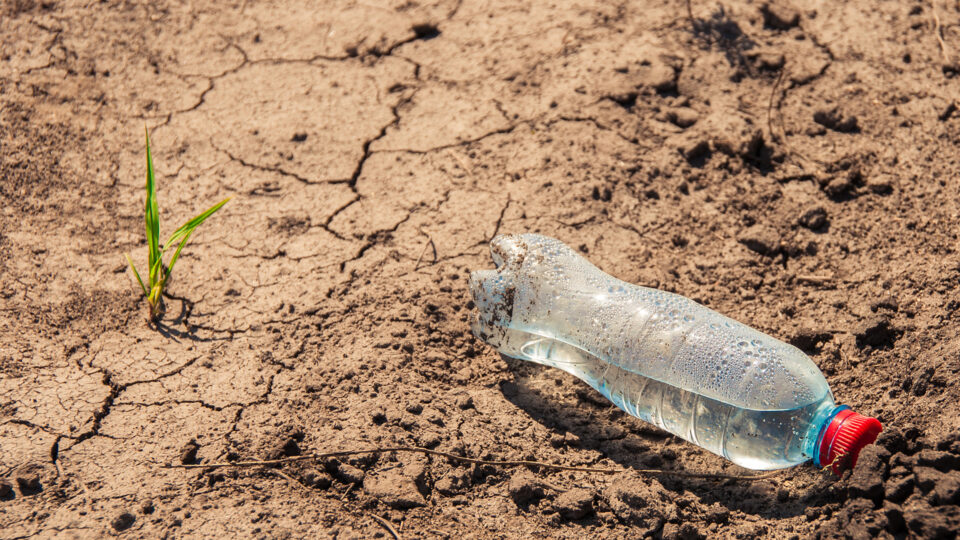
Climate change may make some regions too hot for people

The effort to mitigate the effects of climate change has a goal of keeping the global temperature increase below 1.5 degrees Celsius above preindustrial levels.  To date, the average global temperature has increased by more than 1 degree.  We hear about rising sea levels, powerful storms, and various other alterations in climate and weather patterns.  A new interdisciplinary study by three institutions looked at the impact of surpassing the 1.5-degree level upon people being able to withstand heat and humidity.

Humans can only withstand certain combinations of heat and humidity before their bodies begin to experience heat-related health problems such as heat stroke and heart attacks. 

In human history, temperatures and humidity that exceed human limits have been recorded only a limited number of times and only for a few hours at a time, in the Middle East and Southeast Asia.

According to the new study, if global temperatures increase by 2 degrees Celsius above preindustrial levels, the 2.2 billion residents of Pakistan and India’s Indus River Valley, the one billion people living in eastern China, and the 800 million residents of sub-Saharan Africa will annually experience many hours of heat surpassing human tolerance.

If the warming continues further to 3 degrees, heat and humidity levels that surpass human tolerance would affect the Eastern Seaboard and the middle of the US from Florida to New York and from Houston to Chicago.

The worst heat stress will occur in regions that are not wealthy and that are experiencing rapid population growth.  But even wealthy nations will not escape from the expansion of conditions that are too hot for people.

**********

Web Links

Climate-driven extreme heat may make parts of Earth too hot for humans

Photo, posted June 28, 2018, courtesy of Ivan via Flickr.

Earth Wise is a production of WAMC Northeast Public Radio

Methane Emissions And The Paris Agreement | Earth Wise

August 21, 2023 By EarthWise Leave a Comment

The Paris Agreement is a legally binding international treaty on climate change adopted at the UN Climate Change Conference in 2015.  Its goal is to strengthen the global response to climate change by committing to limit the rise in global average temperature to well below 2°C above pre-industrial levels, and pursue efforts to limit that increase to just 1.5°C. 

Achieving the goals of the Paris Agreement requires reaching net-zero carbon dioxide emissions by or around 2050, as well as deep reductions in methane and other emissions. 

According to a new study by researchers from Simon Fraser University in Canada, reductions in methane emissions are needed urgently  if we are to meet the goals of the Paris Agreement.  The study, which was recently published in the journal Nature’s Communications Earth & Environment, suggests that global warming levels could be kept below 2°C if methane mitigation efforts are initiated globally before 2030.  However, delaying methane mitigation to the year 2040 or beyond would increase the risk of exceeding 2°C, even if net-zero carbon dioxide emissions were achieved.

Methane is a potent greenhouse gas, second only to carbon dioxide in contributing to global temperature increases over the last two centuries.  However, methane is known to warm the planet 86 times more effectively than carbon dioxide over a 20-year period.

During the past 40 years, more than 60% of global methane emissions have been produced as a result of human activities, such as fossil fuel exploitation, livestock production, and waste from landfills.

**********

Web Links

Delaying methane mitigation increases risk of breaching Paris Agreement climate goal, study finds

Photo, posted July 22, 2011, courtesy of Steven W. via Flickr.

Earth Wise is a production of WAMC Northeast Public Radio
2022 Temperature Report | Earth Wise

February 8, 2023 By EarthWise Leave a Comment

Extreme weather is turning into the new normal around the world

The average surface temperature for the Earth in 2022 tied with 2015 as the fifth warmest on record.  The warming trend for the planet continued with global temperatures 1.6 degrees Fahrenheit above the average baseline for 1951-1980 that NASA uses for its studies. Compared with the late 19th century average used in setting climate goals, global temperatures are up about 1.1 degrees Celsius, or 2 degrees Fahrenheit.

Overall, the past nine years have been the warmest since modern recordkeeping began in 1880.   The rising temperatures have moved in concert with rising levels of greenhouse gases entering the atmosphere from human activity.  Many factors can affect the average temperature in any given year including El Nino and La Nina conditions in the Pacific.  But the longer-term trend is quite clear.  Global temperatures continue to rise.

Greenhouse gas emissions have reached all-time high levels despite increasing efforts to reduce them.  There was a real drop in levels in 2020 due to reduced activity during COVID-19 lockdowns, but they rebounded soon thereafter. 

The Arctic region continues to experience the strongest warming trends, as much as four times the global average.  Arctic warming has a major impact on weather at lower latitudes as it changes the behavior of the jet stream as well as affecting ocean currents and water temperatures.

As global temperatures continue to rise, rainfall and tropical storms have become more intense, droughts have become more severe, and ocean storm surges have had increasing impact.  From torrential monsoons in Asia to megadroughts in the U.S. Southwest, extreme weather has become the new normal.

**********

Web Links

NASA Says 2022 Fifth Warmest Year on Record, Warming Trend Continues

Photo, posted June 20, 2020, courtesy of Daxis via Flickr.

Earth Wise is a production of WAMC Northeast Public Radio

Making Cotton More Sustainable | Earth Wise

August 16, 2022 By EarthWise Leave a Comment

Producing cotton more sustainably

In the United States, cotton is a $7 billion annual crop grown in 17 states.  Cotton plants in the largest producing countries in the world – India, China, and the U.S. – are genetically very similar and, like other crops that lack diversity, can be at risk.

Cultivated cotton around the world has been bred to look and act very similar.  It is high yielding and easy to harvest using machines.  But it is also wildly unprepared to fight disease, drought, or insect-borne pathogens.

Researchers are looking beyond breeding for ways to combat the low genetic diversity of cultivated cotton.  There are new approaches that combine breeding with elements of genetic modification.  Most cotton in the U.S. has already been genetically modified to resist caterpillar pests.  But as new problems emerge, new solutions will be needed that may require complicated changes to the cotton genome.  Getting regulatory approval for a genetically modified crop is a long and expensive process.

However, ordinary genetic modification is not the only possibility.  Modern genetic sequencing technology can allow researchers to examine various wild cotton varieties and identify the genetic markers for desirable traits.  Once valuable genes in wild species have been identified, traditional plant breeding techniques could be used to produce cultivated cotton varieties that are more resistant to disease and drought.

Climate change is raising average global temperatures and some important cotton-producing regions such as the U.S. Southwest are becoming drier.  Researchers are hoping to produce cultivated cotton that can tolerate drought at the seedling stage.  The ultimate goal is to create more sustainable and genetically diverse cotton that can thrive in a changing world.

**********

Web Links

Cotton Breeders Are Using Genetic Insights To Make This Global Crop More Sustainable

Photo, posted November 9, 2008, courtesy of BP Takoma via Flickr.

Earth Wise is a production of WAMC Northeast Public Radio.

Spring Is Coming Earlier In Britain | Earth Wise

March 1, 2022 By EarthWise Leave a Comment

Climate change is causing spring to arrive earlier

The United Kingdom has some of the most detailed records of seasonal changes anywhere in the world.  Since the 18th century, observations of seasonal changes have been recorded by scientists, naturalists, amateur and professional gardeners, and organizations such as the Royal Meteorological Society.  Researchers at two British institutions have collected and collated these records into a database they call Nature’s Calendar, which currently has about 3.5 million records going back to 1736.

By analyzing more than 400,000 observations of 406 plant species in Nature’s Calendar, they found that the average first flowering date from 1987 to 2019 is a full month earlier than the average from 1753 to 1986.  The change correlates very well with rising global temperatures.

The ecological risks associated with earlier flowering times are high.  When plants flower too early, a late frost can kill them – a phenomenon most gardeners have experienced at some point or another.  Beyond that, plants, insects, birds, and other wildlife have co-evolved to be synchronized with plants in their development stages.  A certain plant flowers and attracts a certain kind of insect, which then attracts a particular kind of bird, and so on.  If plants get out of sync with the animals in the ecosystem and the animals can’t change their behavior quickly enough, it can lead to species collapse.

If global temperatures continue to increase at their current rate, spring in the UK could eventually start in February, creating serious problems for many of the species that inhabit forests, gardens, and farms.  The dangers of climate change are not just about extreme weather.

**********

Web Links

UK plants flowering a month earlier due to climate change

Photo, posted February 1, 2012, courtesy of Mandy via Flickr.

Earth Wise is a production of WAMC Northeast Public Radio.

A Hot Year With Record GHG Levels | Earth Wise

February 25, 2022 By EarthWise Leave a Comment

Record Greenhouse Gas levels

Last year was a year that saw rising temperatures and rising levels of greenhouse gases.  2021 was the fifth-hottest year on record.  The average global temperature was nearly 1.2 degrees Celsius or 2.1 Fahrenheit degrees higher than the preindustrial average.  The past seven years were the hottest ever by a significant margin.

The concentration of carbon dioxide in the atmosphere reached 414 parts per million, compared with preindustrial levels of 280 parts per million.  Concentrations of methane reached 1876 parts per billion, the highest levels ever recorded. 

Apart from these global measurements, local and regional weather saw the effects of the heating planet.  Extreme temperatures were common with the hottest summer in Europe, heatwaves in the Mediterranean, and unprecedented high temperatures in North America.

The West Coast of the US, northeast Canada, Greenland, and parts of north Africa and the Middle East all experienced the highest above-average temperatures.  However, some places, including Australia, Antarctica, Siberia, and much of the Pacific Ocean often saw below-average temperatures, even though the same places occasionally experienced record high temperatures.

The Covid-19 pandemic and its economic disruptions continued to lead to some reductions in greenhouse gas emissions, but in the US, emissions from energy use and industry nonetheless grew 6.2% in 2021 after falling more than 10% in 2020.

Carbon dioxide and methane concentrations are continuing to increase each year and don’t appear to be slowing down.  As long as this situation persists, global temperatures will continue to rise, and extreme and erratic weather will be more and more commonplace.

**********

Web Links

2021 Rated One of the Hottest Years Ever as CO2 Levels Hit Record High

Photo, posted November 11, 2011, courtesy of NASA Goddard Space Flight Center via Flickr.

Earth Wise is a production of WAMC Northeast Public Radio.

How Quickly Can The Planet Recover? | Earth Wise

December 6, 2021 By EarthWise Leave a Comment

Climate change refers to long-term shifts in temperatures and weather patterns.  Historically, these shifts were natural.  But since the Industrial Revolution, scientists have found that the main driver of climate change has been human activities, primarily by adding significant amounts of greenhouse gases into the atmosphere through the burning of fossil fuels. 

Today, climate change is destabilizing Earth’s temperature equilibrium and is having a widespread impact on humans, animals, and the environment.  Some of the consequences of anthropogenic climate change include warmer air and ocean temperatures, shrinking glaciers, increasing spread of pests and pathogens, declining biodiversity, and more intense and frequent extreme weather events. 

But how quickly can the climate recover from the warming caused by an increase in carbon dioxide in the atmosphere? 

Researchers from Johannes Gutenberg-University Mainz in Germany looked into this question by investigating the significant rise in global temperatures that took place 56 million years ago.  Likely triggered by a volcanic eruption,  the increase of between 5 and 8 degrees Celsius was the fastest natural period of global warming that has impacted the climate. 

Because higher temperatures cause rocks to weather faster, the research team decided to analyze the weathering processes that occurred during the warming event 56 million years ago.  Their findings, which were recently published in the Journal Science Advances, indicate that the climate took between 20,000 and 50,000 years to stabilize following the rise in global temperatures.

Climate change is not some distant problem.  It is happening now and it poses a serious threat to all forms of life.  We need to address the problem with more urgency. 

**********

Web Links

How quickly does the climate recover?

Photo, posted August 27, 2017, courtesy of Lt. Zachary West (100th MPAD) / Texas Military Department via Flickr.

Earth Wise is a production of WAMC Northeast Public Radio.

The Coastal Northeast Is A Hotspot | Earth Wise

November 16, 2021 By EarthWise Leave a Comment

Temperatures rising fast in the Coastal Northeast

Global warming is, obviously, a world-wide phenomenon.  When the concept of a 2 degrees Celsius temperature rise is discussed, it refers to the average global temperature and the effects that would have on such things as sea level rise and weather patterns.  But the effects of the changing climate are not homogeneous.  Very different things can happen and are happening in different places.

One such place is the coastal northeastern United States, which is a global warming hotspot.  The region is heating faster than most regions of North America and, indeed, 2 degrees of summer warming has already happened in the Northeast.

New research led by the University of Massachusetts Amherst has determined that this heating is linked to significant alterations in the ocean and atmospheric conditions over the North Atlantic.

Several studies have found that the Atlantic Meridional Circulation is slowing down.  The AMOC conveys warm, salty water from the tropics north towards Greenland, where it cools and sinks.  The cooled water than flows back south as deep-water currents.  As the warming climate melts glaciers in Greenland, the circulation slows down, less cooled water arrives in the south, and there is more heating of the ocean off the Northeastern coast.

At the same time, the North Atlantic Oscillation, a weather phenomenon that governs the strength and position of the winds that blow from the U.S. over the Atlantic, has tended to settle into a pattern that enhances the influence of ocean air on the eastern seaboard climate.  Warmer ocean air being blown over the region has led to rising temperatures in Boston, New York, and Providence, Rhode Island.

As the average temperature of the world rises, some places will warm more quickly and others more slowly.

**********

Web Links

The Coastal Northeastern U.S. Is A Global Warming Hotspot

Photo, posted August 8, 2010, courtesy of Doug Kerr via Flickr.

Earth Wise is a production of WAMC Northeast Public Radio.

Deadly Urban Heat On The Rise | Earth Wise

November 9, 2021 By EarthWise Leave a Comment

Exposure to deadly urban heat is on the rise

According to a new study by the Columbia Climate School, exposure to deadly urban heat has tripled since the 1980s.  The increase is the combined result of both rising global temperatures and booming urban population growth.

The study looked at more than 13,000 cities worldwide and found that incidents of extreme heat and humidity have increased dramatically.   It defined extreme heat as 30 degrees Celsius on the wet-bulb temperature scale that takes into account the effect of high humidity.  In 1983, there were 40 billion person-days under such conditions.  By 2016, the number was 119 billion.  More specifically, in 2016 1.7 billion people were subjected to such conditions on multiple days.

Sheer urban population growth accounted for two-thirds of the increase, while actual warming contributed a third.  Over recent decades, hundreds of millions of people have moved from rural areas to cities, which now hold more than half the world’s population.  And because of the urban heat island effect, temperatures in cities are generally higher than in the countryside.

In the United States, about 40 sizable cities have seen rapidly growing exposure to extreme heat, mainly clustered in Texas and the Gulf Coast.  Globally, nearly a quarter of the world’s population is affected by the increased incidence of extreme temperatures.

A study last year showed that combinations of heat and humidity literally beyond the limits of outdoor human survival have been popping up around the world.  A wet-bulb temperature reading of 30 – equivalent to 106 degrees Fahrenheit on the “real feel” heat index – is the point at which even most healthy people find it hard to function outside for long, and the unhealthy might become very ill or even die.

**********

Web Links

Exposure to Deadly Urban Heat Worldwide Has Tripled in Recent Decades, Says Study

Photo, posted March 5, 2007, courtesy of Michael Phillips via Flickr.

Earth Wise is a production of WAMC Northeast Public Radio.

Climate Change And Kenya’s Tana River Basin | Earth Wise

September 6, 2021 By EarthWise Leave a Comment

Climate change threatens biodiversity within the Tana River Basin

The Tana River is the longest river and most important waterway in Kenya.  It flows 620 miles from its headwaters in the Abderdare mountain range and Mount Kenya to the Indian Ocean.  The Tana River produces approximately half of the country’s electricity, and supplies Nairobi, the capital of Kenya, with 80% of its water.   

According to the United Nations Environment Programme, eight million people live along the Tana River, where coffee, tea, corn and other crops are grown for export, and fishing and cattle grazing help produce food for large portions of the country’s population. 

But the long-term ability of the river to provide these and other essential services is increasingly under threat due to many factors, including pollution, soil erosion, deforestation, and poor land use practices.   

Climate change is also complicating matters.  According to new research from the University of East Anglia, many species within the Tana River Basin will be unable to survive if global temperatures continue to rise at the current pace.  However, the study, which was recently published in the journal PLOS ONE, also found that many of these species could be saved if the world could meet the climate goals of the Paris Agreement. 

Globally, climate and land use changes are the two biggest threats to biodiversity.  According to researchers, 36% of the Tana River Basin has already been converted to agriculture. 

The research team says stronger commitments on climate change are needed from global leaders.  The climate and biodiversity crises can only be solved with urgent action to reduce global greenhouse gas emissions. 

**********

Web Links

The impact of climate change on Kenya’s Tana river basin

Economics of Ecosystem Services of the Tana River Basin

Photo, posted August 19, 2010, courtesy of Luigi Guarino via Flickr.

Earth Wise is a production of WAMC Northeast Public Radio.

The Pandemic And Global Temperatures | Earth Wise

March 12, 2021 By EarthWise Leave a Comment

The pandemic has done little to slow the rise in global tempertures

The early months of the Covid-19 pandemic last year saw dramatic reductions in travel and many forms of commerce.  With much of human activity greatly curtailed, greenhouse gas emissions were greatly reduced.   And yet, all of that did not slow down global warming: 2020 ended up tied with 2016 as the warmest year on record and atmospheric greenhouse gas levels reached a new high.

In order to understand how this came about, it is necessary to understand the complex climate influences of different types of emissions from power plants, motor vehicles, industrial facilities, and other sources.  The fact is that some types of pollution actually have a cooling effect rather than contributing to global warming.

Tiny industrial pollution particles called aerosols actually make clouds brighter, causing them to reflect away more solar heat from the surface of the planet.   During the drastic shutdown last year, the biggest emissions decline was from the most polluting industries.  The reduction of aerosols had immediate, short-term effects on temperatures.  These types of pollutants are very bad for human health, but when they are present, they do have the effect of reducing temperatures.

It is important to keep in mind that carbon dioxide spreads through the Earth’s atmosphere and stays there for a century or more, trapping heat on a global scale.  Industrial aerosols stay relatively concentrated in the region where they are emitted and are often removed by rain and winds within a few weeks.  So, their cooling effect doesn’t spread very far or last very long.

Overall, the initial pandemic slowdown probably didn’t have any real long-term impact on the climate but over the short term, the effects were not as simple as one might expect.

**********

Web Links

Covid-19 Cut Gases That Warm the Globe But a Drop in Other Pollution Boosted Regional Temperatures

Photo, posted July 7, 2020, courtesy of Joey Zanotti via Flickr.

Earth Wise is a production of WAMC Northeast Public Radio.

More Carbon Dioxide From Thawing Permafrost | Earth Wise

July 30, 2020 By EarthWise Leave a Comment

Climate models underestimate CO2 emissions from thawing permafrost

The Arctic is warming much faster than the rest of the planet.  Stories about the loss of polar ice and hundred-degree temperatures in Siberia have become commonplace.  One of the most troubling aspects of the warming Arctic is the thawing of permafrost.  Permafrost is ground that remains frozen for at least two years; some of it has been frozen for tens or hundreds or even thousands of years.  Found under a layer of soil, permafrost is composed of rock, soil, sediments, and varying amounts of ice.  It stores the carbon-based remains of plants and animals that froze before they could decompose.  Permafrost covers almost a quarter of North America, but it is starting to thaw.

Scientists estimate that there are more than 16,000 billion tons of carbon locked away in Arctic permafrost, which is almost double the amount of carbon that is currently in the atmosphere.  Climate models predict that the warming of the Arctic could lead to 5 to 15% of that carbon to be emitted as carbon dioxide by the year 2,100, which would be enough to raise global temperatures by 0.3 to 0.4 degrees Celsius.

New research has increased this estimate because it includes a key pathway for CO2 to enter the atmosphere that earlier models ignored.   When carbon from thawing permafrost escapes into Arctic lakes and rivers, it is oxidized by ultraviolet and visible light and it then escapes into the atmosphere as CO2.  This process is known as photomineralization and is estimated to raise permafrost-related CO2 emissions by 14%.

Recent studies project that with every 1-degree Celsius increase in temperature, 1.5 million square miles of permafrost could be lost through thawing.

**********

Web Links

Climate Models Underestimate CO2 Emissions from Permafrost by 14 Percent, Study Finds

Photo, posted July 7, 2014, courtesy of NPS Climate Change via Flickr.

Earth Wise is a production of WAMC Northeast Public Radio.

Side Effects Of Geoengineering | Earth Wise

July 20, 2020 By EarthWise Leave a Comment

Reflecting sunlight to cool the planet will cause other global changes

As the world struggles to reduce the greenhouse gas emissions that are warming the global climate, some researchers are exploring proposals to deliberately engineer climate changes to counteract the warming trend.  One of the most widely discussed approaches is to shade the Earth from a portion of the sun’s heat by injecting the stratosphere with reflective aerosol particles.  Proponents of this idea point out that volcanoes do essentially the same thing, although generally for only a limited amount of time.  Particularly large eruptions, such as the Krakatowa eruption of 1883, wreaked havoc with weather around the world for an entire year.

Schemes to launch reflective aerosols – using planes, balloons, and even blimps – appear to be quite feasible from the standpoint of physically accomplishing them. But this says nothing about the political, ethical, and societal issues involved.  The point is that such an approach could indeed lower global temperatures and thereby potentially offset the warming effects of greenhouse gases.

A study by scientists at MIT looked at what other effects such a solar geoengineering project might have on the climate.  Their modeling concluded that it would significantly change storm tracks in the middle and high latitudes.  These tracks give rise to cyclones, hurricanes, and many more ordinary weather phenomena.

According to the study, the northern hemisphere would have weakened storm tracks, leading to less powerful winter storms, but also stagnant conditions in summer and less wind to clear away air pollution.  In the southern hemisphere, there would be more powerful storm tracks.

Aside from turning the world’s weather patterns inside out, solar geoengineering would do nothing to address the serious issue of ocean acidification caused by increasing carbon dioxide levels.

As many have pointed out, playing the geoengineering game would have many unintended consequences.

**********

Web Links

Study: Reflecting sunlight to cool the planet will cause other global changes

Photo courtesy of MIT.

Earth Wise is a production of WAMC Northeast Public Radio.

Living In Extreme Heat | Earth Wise

June 3, 2020 By EarthWise Leave a Comment

extreme heat from climate change

Global climate change has already left observable effects on the planet.  Glaciers have shrunk, trees are flowering sooner, plant and animal ranges have shifted, and so on. Many effects of climate change that scientists had predicted in the past are now occurring.  The loss of sea ice, intensifying heat waves, and accelerating sea level rise are some examples.

According to a new study recently published in the journal Proceedings of the National Academy of Sciences, climate change is going to affect humans earlier, harder, and more widely than previously projected.  The research team found that one billion people will be either displaced or endure insufferable heat for every one degree Celsius rise in global temperatures.  

Under a worst case climate scenario, land that one third of the world’s population currently calls home will be as hot as the hottest parts of the Sahara desert within 50 years.  Even under a more optimistic climate outlook, 1.2 billion people will still be exposed to temperatures outside the climate niche in which humans have thrived for at least 6,000 years.

The majority of the human population has always lived in regions where the average annual temperatures were between 43 degrees Fahrenheit and 82 degrees Fahrenheit.  These are ideal temperatures for human health and for food production.  But this temperature range is shrinking and shifting as a result of climate change. 

The study’s authors predict there will be more change in the next 50 years than there has been in the past 6,000 years.  They hope their findings will convince policymakers to accelerate their plans for emissions reductions and other climate mitigation strategies.   

**********

Web Links

Future of the human climate niche

One billion people will live in insufferable heat within 50 years – study

Photo, posted November 22, 2008, courtesy of Ronnie Finger via Flickr.

Earth Wise is a production of WAMC Northeast Public Radio.

  • Page 1
  • Page 2
  • Go to Next Page »

Primary Sidebar

Recent Episodes

  • An uninsurable future
  • Clean energy and jobs
  • Insect declines in remote regions
  • Fossil fuel producing nations ignoring climate goals
  • Trouble for clownfishes

WAMC Northeast Public Radio

WAMC/Northeast Public Radio is a regional public radio network serving parts of seven northeastern states (more...)
Copyright © 2025 ·