
• Skip to primary navigation
  • Skip to main content
  • Skip to primary sidebar

Earth Wise

A look at our changing environment.

  • Home
  • About Earth Wise
  • Where to Listen
  • All Articles
  • Show Search
Hide Search
You are here: Home / Archives for future

future

Electric Motors For Aviation | Earth Wise

July 25, 2023 By EarthWise Leave a Comment

Aviation contributes about 3% of global greenhouse gas emissions.  Its carbon footprint is one of the more difficult ones to reduce.  Electrifying planes would shrink that footprint considerably, but it represents a significant technical challenge.  To date, only small all-electric planes have gotten off the ground.  The electric motors in those planes generate hundreds of kilowatts of power.  To power large planes, like commercial airliners, megawatt-scale motors are required.

A team of MIT engineers is developing a 1-megawatt motor that could be a key step towards electrifying commercial aircraft.  They have designed and tested major components of the motor and have calculated how the completed design could generate one megawatt of power at a weight and size competitive with existing small aircraft engines.

To be suitable for aircraft use, motors have to be compact and lightweight.  The more power electric motors generate, the bigger they are and the more heat they produce.  Cooling motors requires additional components that take up space and add significant weight.  The MIT motor design and associated power electronics are each about the size of a typical checked suitcase and weigh less than an adult passenger.

Once the MIT team can demonstrate an entire functional motor, the design could be used to power regional aircraft and could be the enabling element of hybrid-electric propulsion systems for jet aircraft.  Possible future configurations could make use of multiple one-megawatt motors powering multiple fans distributed along aircraft wings.

Electrification of aircraft is a slow but steady area of development and technologies such as that being developed at MIT could end up meeting the practical needs of the aircraft of the future.

**********

Web Links

Megawatt electrical motor designed by MIT engineers could help electrify aviation

Photo, posted September 14, 2019, courtesy of Dylan Agbagni via Flickr.

Earth Wise is a production of WAMC Northeast Public Radio

Big Oil And Big Lithium | Earth Wise

July 7, 2023 By EarthWise Leave a Comment

Big Oil entering the lithium market

The world’s big oil companies have worked pretty hard to prolong society’s dependence on petroleum.  When there are trillions of dollars at stake, there is plenty of motivation.  But those companies do see the writing on the wall.

An Exxon Mobil-funded study last year estimated that light-duty vehicle demand for combustion engine fuels could peak in 2025 and that electric vehicles of various types could grow to more than 50% of new car sales by 2050.  This is pretty pessimistic compared with most other surveys, but it is still a big number.  Exxon also projected that the global fleet of EVs could reach 420 million by 2040.

As a result of all this, Exxon is preparing for a future far less dependent on gasoline by drilling for lithium rather than oil.  The company recently purchased mining rights to a sizable chunk of Arkansas land for over $100 million from which it aims to produce lithium for electric car batteries.

Exxon’s consultants estimated that the 120,000 acres in the Smackover formation of southern Arkansas could have as much as 4 million tons of lithium carbonate, enough to power 50 million cars and trucks. 

Exxon plans to spend $17 billion through 2027 on cutting carbon emissions and developing low carbon technologies.  Other large oil producers have also been looking at the lithium business.  At the same time, some large oil companies like BP and Shell are investing in renewable energy.

The prospect of EVs dominating transportation in the coming decades is a strong incentive for oil-and-gas companies to adapt their businesses to the new world.

**********

Web Links

Exxon Joins Hunt for Lithium in Bet on EV Boom

Photo, posted August 16, 2014, courtesy of Mike Mozart via Flickr.

Earth Wise is a production of WAMC Northeast Public Radio

Airplane Turbulence And Climate Change | Earth Wise

July 4, 2023 By EarthWise Leave a Comment

If you’ve ever been on an airplane, chances are pretty good that you’ve experienced turbulence.  As the busy summer travel season kicks off, travelers are being encouraged to brace themselves for a bumpier-than-usual ride. 

There has been a major increase in the number of severe turbulence cases on both domestic and international flights.  According to a new study by researchers from the University of Reading in the U.K., climate change is leading to this increase in turbulence, driving up costs (via wear and tear on aircrafts), and increasing the risks for passengers and flight attendants.  In the United States alone, turbulence costs the airline industry $150-$500 million annually. 

The study, which was recently published in the journal Geophysical Research Letters, found that warmer air, caused by carbon emissions, is creating bumpier flights around the world.  In fact, the study found that severe turbulence in the North Atlantic is up by 55% since 1979. 

The changing climate is affecting air travel in other ways as well.  A faster jet stream across the Atlantic is altering travel times.  Rising temperatures are reducing the weight that aircraft can carry.  Rising seas are threatening low-lying coastal airports around the world. 

But carbon emissions from aviation are also a significant driver of the climate crisis.  Air travel accounts for approximately 3% of global greenhouse gas emissions, and is one of the fastest growing sources of emissions. According to the International Civil Aviation Organization, emissions from international air travel are expected to triple by 2050.

The future is shaping up to be a bumpy ride.

**********

Web Links

Climate crisis leading to more turbulence during flights, says study

Evidence for Large Increases in Clear-Air Turbulence Over the Past Four Decades

Climate Scientist Explains Increase In Airplane Turbulence

Airports and Rising Seas

Photo, posted May 9, 2018, courtesy of Steve Lynes via Flickr.

Earth Wise is a production of WAMC Northeast Public Radio
Ocean Oxygen Levels And The Future Of Fish | Earth Wise

June 23, 2023 By EarthWise Leave a Comment

How oxygen levels in the ocean will impact the future of fish

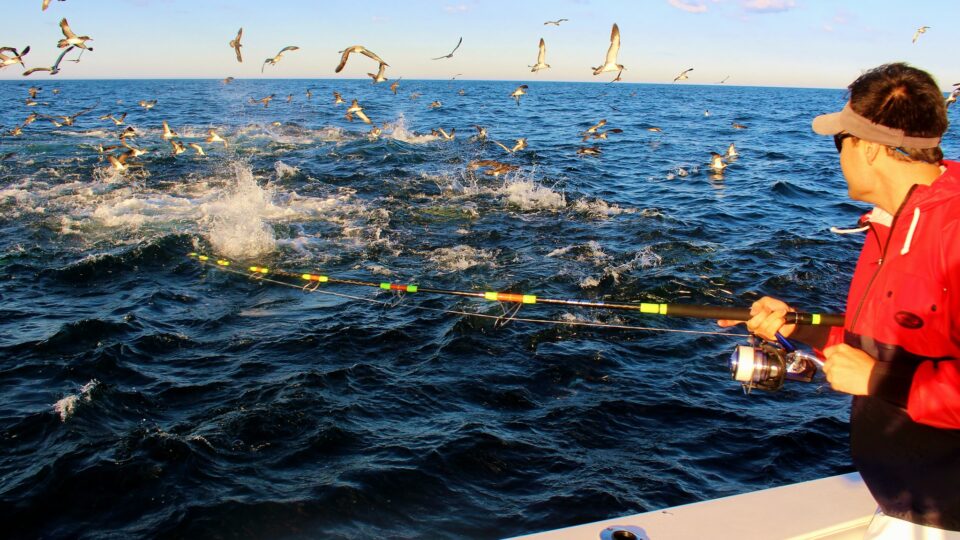
Climate change is creating a cascade of effects in the world’s oceans.  Not only are ocean temperatures on the rise, but oceans are becoming more acidic, and oxygen deprived.  The warming temperatures and acidification have grabbed headlines and prompted academic research. Declining oxygen levels have not garnered as much attention.  But they spell bad news for fish.

Oxygen levels in the world’s oceans have dropped over 2% between 1960 and 2010 and are expected to decline up to 7% over the next century.  There are places in the northeast Pacific that have lost more than 15% of their oxygen.  There are a growing number of “oxygen minimum zones” where big fish cannot survive but jellyfish can.

Oceans are losing oxygen for several reasons.  First, warmer water can hold less dissolved gas than colder water.  (This is why warm soda is flatter than cold soda.)  Deeper in the ocean, oxygen levels are governed by currents that mix oxygen-rich surface water from above.  Melting ice in the warming polar regions add fresh, less-dense water that resists downward mixing in key regions.  Finally, increasing amounts of ocean bacteria in warming waters gobble up oxygen creating dead zones in the ocean.

In many places, fish species that cannot cope with lower oxygen levels are migrating from their usual homes, resulting in a decline in species diversity.  Our future oceans – warmer and oxygen-deprived – will not only hold fewer kinds of fish, but also smaller fish and even more greenhouse-gas producing bacteria.   

Climate change is bad news for fish and for the more than 3 billion people in the world who depend on seafood as a significant source of protein.

**********

Web Links

As Ocean Oxygen Levels Dip, Fish Face an Uncertain Future

Photo, posted January 10, 2022, courtesy of Willy Goldsmith via Flickr.

Earth Wise is a production of WAMC Northeast Public Radio
Record Polar Ice Melting | Earth Wise

May 30, 2023 By EarthWise Leave a Comment

A record amount of polar ice has melted

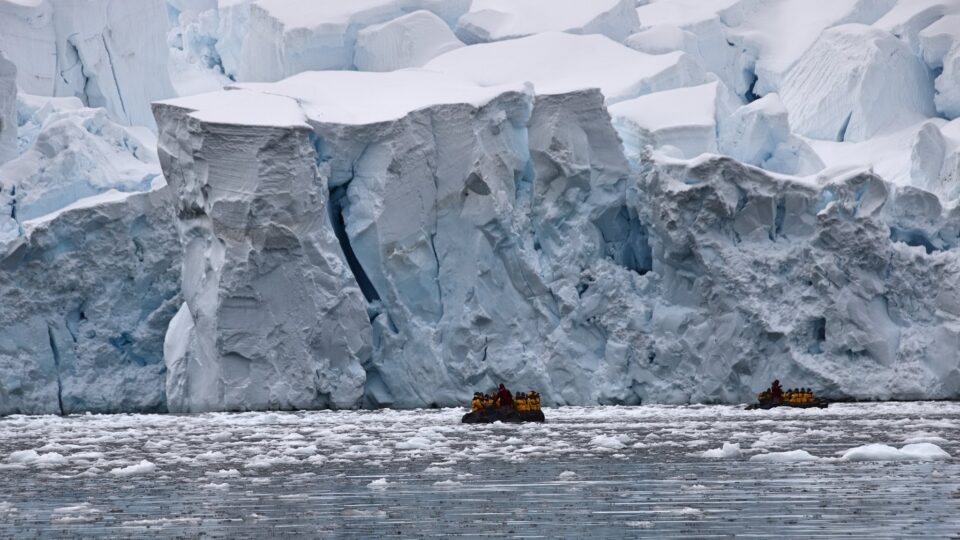
Sea levels are rising and ocean warming is responsible for the bulk of that rise.  As water heats up, it expands, which drives up sea levels.  But on top of that, global warming is melting the polar ice sheets, and that is leading to about a quarter of the world’s sea level rise. So far, polar melting has fueled about an inch of sea level rise, two-thirds from Greenland and one third from Antarctica.   According to scientists, by the end of this century, melting polar ice caps could raise sea levels between 6 and 10 inches.

The seven worst years for polar ice sheet melting have occurred during the past decade.  The worst year on record was 2019.  The loss in 2019 was driven by an Arctic summer heatwave, which resulted in record melting from Greenland, amounting to nearly 500 billion tons melted that year.  Antarctica lost 180 billion tons of ice that year, mostly due to melting glaciers and record melting from the Antarctic Peninsula.

Ice losses from Greenland and Antarctica can now be reliably measured by satellites in space.  A team of researchers led by Northumbria University in the UK has combined 50 satellite surveys taken between 1992 and 2020.

They have found that the Earth’s polar ice sheets have lost over 8,000 billion tons of ice over that time period.  That much ice corresponds to an ice cube roughly 12 miles high.

The satellite technology is now at the stage where the ice sheet status can be continuously updated.  Such monitoring is critical to predict the future behavior of the ice sheets and provide risk warnings of the dangers that coastal communities around the world will face.

**********

Web Links

Polar ice sheet melting records have toppled during the past decade

Photo, posted December 19, 2017, courtesy of Jasmine Nears via Flickr.

Earth Wise is a production of WAMC Northeast Public Radio

Major League Baseball And Climate Change | Earth Wise

May 16, 2023 By EarthWise Leave a Comment

Major League Baseball is one of the most historic professional sports leagues in the United States and represents the highest level of professional baseball.  Throughout its history, MLB has endured many changes to rules, equipment, and strategy.  As a result of these changes, the league has been segmented into several distinct eras, including the dead ball era and the live ball era. 

According to a new study by researchers from Dartmouth College, baseball could be on the cusp of another era where higher temperatures due to global warming are increasingly having an impact on the game.  The report, which was published in the scientific journal Bulletin of the American Meteorological Society, found that more than 500 home runs since 2010 can be attributed to the warmer and thinner air caused by global warming  The research team expects several hundred more home runs per season to come with future climate warming.

While only 1% of recent home runs are attributable to climate change, researchers expect that figure to jump to 10% or more by 2100 if climate change continues unabated. 

The researchers examined each major league ballpark to gauge how the average number of home runs per year could rise with each 1-degree Celsius increase in global average temperature.  They found that Wrigley Field – home of the Chicago Cubs – would have the largest spike with more than 15 home runs per season.  Meanwhile, domed Tropicana Field – home of the Tampa Bay Rays – would remain unaffected by the hotter temperatures outside. 

Perhaps the next era for baseball will be known as “climate-ball.”

**********

Web Links

Spike in Major League Home Runs Tied to Climate Change

Photo, posted September 23, 2021, courtesy of Joe Passe via Flickr.

Earth Wise is a production of WAMC Northeast Public Radio
Powering Future Ships By Wind | Earth Wise

April 25, 2023 By EarthWise Leave a Comment

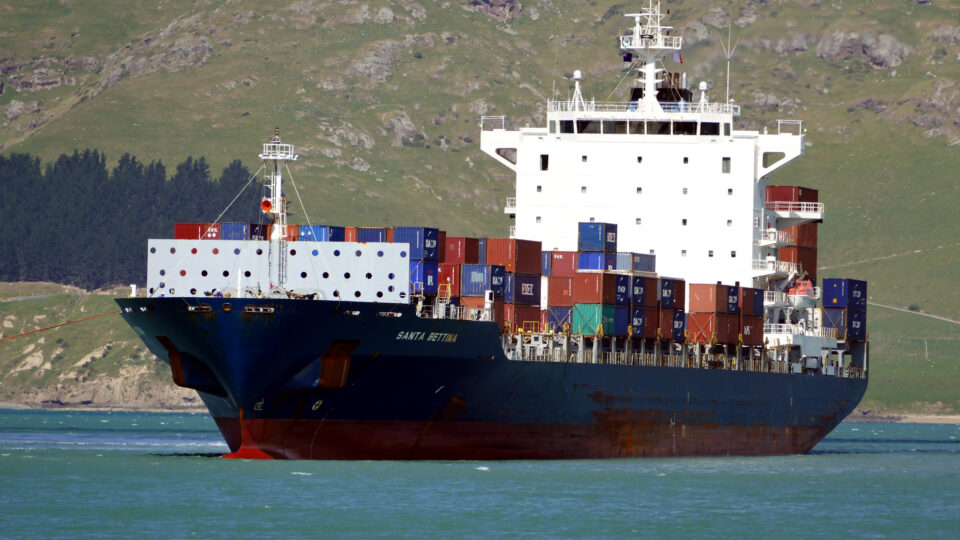
An innovative project out of the UK seeks to reduce carbon emissions at sea by retrofitting large ocean vessels with ultramodern wing-sails to reduce the amount of fuel required to travel the oceans.

Powering ships by wind is certainly nothing new.  However, almost every large ship today is powered entirely by fossil fuels.  A company called Smart Green Shipping has developed retrofit wing-sails called FastRigs that can be installed on existing vessels to reduce fuel consumption. They are also working on additional wind-based technology that can supply all the power required for ships.

FastRig technology is designed to be retrofitted to existing commercial vessels with available deck space – typically bulkers and tankers.  There are about 40,000 such ships that are suitable for conversion to this hybrid power system.  Installing FastRigs is estimated to reduce greenhouse gas emissions by at least 20%.

The company and the UK’s University of Southampton have been funded to investigate the potential of the technology to reduce emissions from existing ships.  The research project will develop software tools to investigate the complex interactions between the wing-sails and ship hydrodynamics to accurately assess the impact on vessel performance.  The software tools will be able to predict the fuel savings delivered by wing-sails.

Smart Green Technologies is developing technology for 100% renewable-powered, new-build ships.  The goal is to create quieter, emission-free ships in the future that do no harm to ocean environments and improve air quality in ports, towns, and cities.  Wind power harnessed using sophisticated digital software and advanced engineering represents a promising way to reduce fuel consumption and related emissions from large ocean vessels.

**********

Web Links

Future ships could be powered by wind to fight climate change

Photo, posted October 27, 2017, courtesy of Bernard Spragg via Flickr.

Earth Wise is a production of WAMC Northeast Public Radio

Hydrogen And The Methane Problem | Earth Wise

April 24, 2023 By EarthWise Leave a Comment

Theoretically, hydrogen could be the fuel of the future.  It is the most common element in the universe and its combustion produces no harmful emissions.  Most industrial hydrogen comes from a process called steam reforming that extracts it from natural gas – basically methane.  Carbon dioxide is a byproduct of the process.   But it is also possible to get hydrogen by breaking down water resulting only in oxygen as a byproduct.   There is a great deal of ongoing development of so-called green hydrogen.

New research from Princeton University and the National Oceanic and Atmospheric Administration has uncovered a potential problem associated with the use of hydrogen as a clean fuel. 

There is a molecule in the atmosphere called the hydroxyl radical.  It is known as “the detergent of the troposphere”.  It plays a critical role in eliminating greenhouse gases such as methane and ozone from the atmosphere.  It turns out that the hydroxyl radical also reacts with any hydrogen gas in the atmosphere and there is only so much hydroxyl to go around.  If large amounts of hydrogen were to enter the atmosphere, much of the hydroxyl radical would be used up reacting with it and there would be much less available to break down methane.  As a result, there would end up being more methane in the atmosphere, and methane is a powerful greenhouse gas.

The bottom line is that there would need to be proactive efforts to limit the amount of hydrogen getting into the atmosphere whether from producing it, transporting it, or anyplace else in the value chain.  Otherwise, the hydrogen economy would cancel out many of the climate benefits of eliminating fossil fuels.

**********

Web Links

Switching to hydrogen fuel could prolong the methane problem

Photo, posted June 12, 2021, courtesy of Clean Air Task Force via Flickr.

Earth Wise is a production of WAMC Northeast Public Radio
Coastal Land Reclamation | Earth Wise

April 3, 2023 By EarthWise Leave a Comment

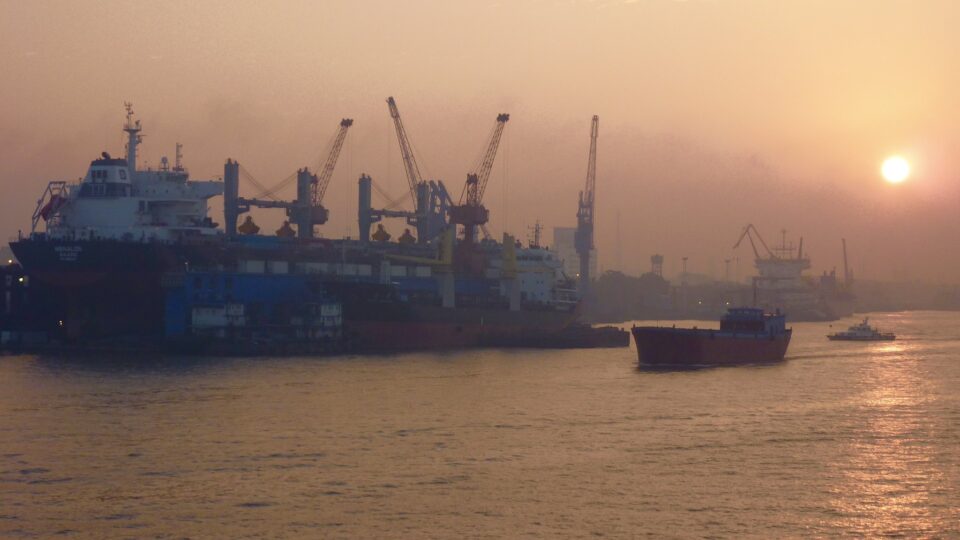
People are artificially expanding the coastlines of cities by extending industrial ports and creating luxury residential waterfronts.  Major cities have added 900 square miles to their coastlines just since 2000. 

A recent study published in the journal Earth’s Future made use of satellite imagery to analyze land changes in 135 cities with populations of at least 1 million.  But population growth is not the only driver of coastal land reclamation.  It is popular in places that are eager to enhance their reputation and promote revenue growth.

At present, coastal land reclamation is most common in the Global South, where many economies are growing. In the past, the Global North dominated the use of coastal land construction.

The largest additions to land area occurred in China, Indonesia, and the United Arab Emirates.  Port extension is the most common reason for development.  Shanghai alone has added 135 square miles of land.

New land is typically created by piling sediments in the ocean, building cement sea walls and structures to contain sediments or cement, or sometimes filling in wetlands and other shallow areas of water near the coast.  The ecological impacts of reclamation are immense and, unfortunately, are not always considered.  Projects affect both the local ecosystems as well as those of the places where fill materials are obtained.

Industrialization and the need for urban space have driven much coastal reclamation.  Some projects, such as the palm-tree-shaped artificial islands of Dubai, are essentially for prestige.  Some cities, including Shanghai, are building new land in consideration of future sea level rise.

**********

Web Links

New Land Creation on Waterfronts Increasing, Study Finds

Photo, posted October 15, 2010, courtesy of Werner Bayer via Flickr.

Earth Wise is a production of WAMC Northeast Public Radio

Insects On The Menu | Earth Wise

March 6, 2023 By EarthWise Leave a Comment

According to the World Food Programme, a record 349 million people across 79 countries are facing acute food insecurity.  This constitutes a staggering rise of 200 million people compared to pre-pandemic levels.  Nearly one million people globally are fighting to survive in famine-like conditions, which is ten times more people than just five years ago.  

As a result, many experts contend that alternative or so-called novel food sources – such as lab-grown meats, seaweed aquaculture, and insects – will be necessary to help fight global hunger and global food insecurity. 

Insects already form a significant part of diets in many cultures around the world.  Insects are great sources of nutrients, including protein, vitamins, and minerals.  But insects have yet to be embraced in any substantial way in western cultures… but that may be changing. 

In fact, the European Union has now certified four types of bugs as food fit for human consumption.  The larvae of lesser mealworms and house crickets recently became the third and fourth insects approved for sale as food in the EU, joining yellow mealworms and grasshoppers. Eight more applications are awaiting approval.

Insects are already a delicacy in many high-end restaurants around the world, and a normal and healthy part of diets in countries like Mexico and Thailand.  Embracing insects as a food of the future will not only help in the fight against global hunger, but will also help to reduce greenhouse gas emissions and to slow species extinction. 

In Western food markets, the so-called “yuck factor” remains the biggest hurdle to cross.  But as the world population grows, the need for sustainable solutions in the food industry grows with it. 

**********

Web Links

Insects on the menu as EU approves two for human consumption

World Hunger Surged in 2020, U.N. Says

A global food crisis

Photo, posted April, 2014, courtesy of Shankar S. via Flickr.

Earth Wise is a production of WAMC Northeast Public Radio
Disappearing Glaciers | Earth Wise

February 20, 2023 By EarthWise Leave a Comment

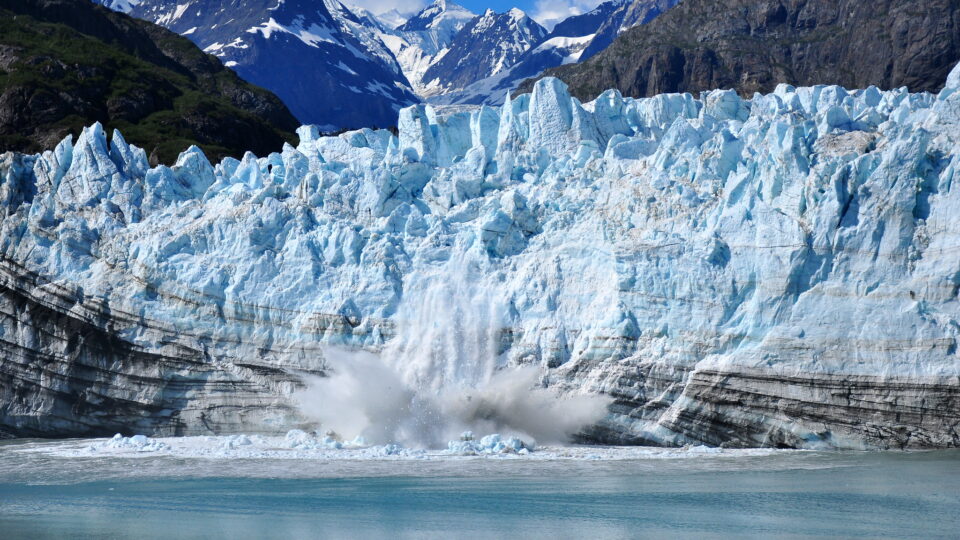
Glaciers are disappearing at a rapid rate

Glaciers are massive bodies of slowly moving ice.  Glaciers form on land, and represent the snows of centuries compressed over time.  They move slowly downward under the influence of their own weight and gravity. 

Most of the glaciers on the planet are found in the polar regions, including Antarctica, the Canadian Arctic, and Greenland.  Glaciers can also be found closer to the equator in mountain ranges, such as the Andes Mountain range in South America.  Glaciers are always changing, accumulating snow in the winter and losing ice to melting in the summer.  But in recent times, the melting has been outpacing the accumulation.

A new international study led by researchers at Carnegie Mellon University’s College of Engineering has produced new projections of glacier loss through the century under different emissions scenarios.  According to the projections, the world could lose as much as 41% of its total glacier mass this century – or as little as 26% – depending on climate change mitigation efforts. 

In a future with continued investments in fossil fuels (sometimes referred to as the “business as usual” scenario), more than 40% of the glacial mass will be gone by 2100, and more than 80% of glaciers by number could disappear.  Even in a best case scenario where the increase in global mean temperature is limited to 1.5° degrees Celsius relative to pre-industrial levels, more than 25% of glacial mass will be gone, and nearly 50% of glaciers by number will disappear.

Glaciers take a long time to respond to changes in climate.  A complete halt to emissions today would take anywhere from 30 to 100 years to be reflected in glacier mass loss rates.

**********

Web Links

Team projects two out of three glaciers could be lost by 2100

Ice, Snow, and Glaciers and the Water Cycle

Photo, posted August 13, 2010, courtesy of Kimberly Vardeman via Flickr.

Earth Wise is a production of WAMC Northeast Public Radio

The Race For EV Batteries | Earth Wise

February 1, 2023 By EarthWise Leave a Comment

The race for electric vehicle batteries is on

Lithium-ion batteries have been the power source for electric vehicles since 2008, when the Tesla Roadster was introduced.  They took over for nickel-metal hydride batteries that powered most hybrid electric cars such as the Prius.  Lithium-ion batteries store much more energy for a battery of a given weight, which leads to greater driving range.

But lithium-ion is not an ideal solution.  The batteries depend on critical materials that are obtained by hacking into mountains, utilizing scarce desert groundwater, and in some cases, making use of child labor. Many materials depend on countries with whom economic ties have complicated geopolitical consequences.

State and federal mandates and incentives are pushing auto companies to prioritize electric vehicles in their future plans.  The Inflation Reduction Act in particular provides credits and other incentives for both consumers and manufacturers to electrify. So, sources for EV batteries are a key issue.

The Department of Energy is funding 20 different companies with $2.8 billion to bolster the production and processing of critical minerals in the U.S.  The goal is to bring the electric vehicle supply chain onshore to the greatest extent possible.  Some of the work involves redesigning lithium-ion batteries to reduce or eliminate problematic materials such as cobalt.  Other efforts seek to find domestic sources of critical materials such as lithium without causing serious environmental problems.

Given all this, it is no surprise that academic and industrial researchers are also exploring a wide variety of alternative battery technologies. 

The future of transportation is electrification and the race for EV batteries is on.

**********

Web Links

For U.S. Companies, the Race for the New EV Battery Is On

Photo, posted August 27, 2021, courtesy of Ron Frazier via Flickr.

Earth Wise is a production of WAMC Northeast Public Radio
El Paso’s Water Future | Earth Wise

November 21, 2022 By EarthWise Leave a Comment

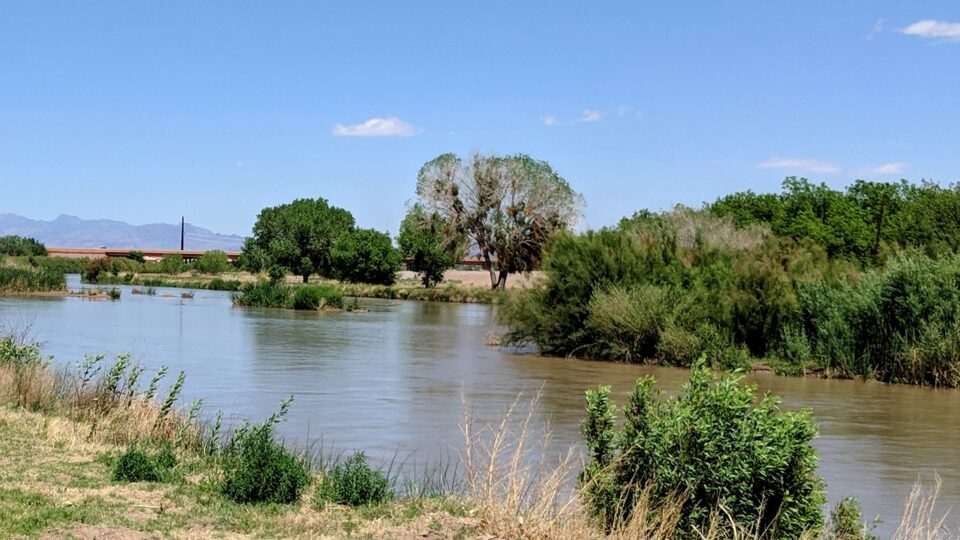
The water future of El Paso uncertain as the Rio Grande river dries up

El Paso, Texas is part of the Paso del Norte region, which includes Ciudad Juarez in Mexico and Las Cruces, New Mexico.  The population on both sides of the border is booming, approaching 3 million people.  The region’s primary water source is the Rio Grande River.  But that river is declining.

Rising temperatures and decreasing rainfall have led to diminishing flow in the river.  Eighty percent of the river’s flow has historically been diverted to agriculture, but the reduced flow of the Rio Grande has forced many farmers to reduce planting or change to less water-hungry crops.  The river is expected to continue to decrease its flow as time goes by.

The city of El Paso gets 40% of its water supply directly from the Rio Grande.  Urban water authorities in the region are scrambling to find ways to provide cities with alternative supplies of water.

El Paso now gets some of its water from a desalination plant, which is the world’s largest inland municipal desalination plant.  The water comes from brackish groundwater rather than from the sea.  The briny waste from the plant is piped to an injection well many miles way and is permanently stored 4,000 feet underground.

El Paso continues to seek new water sources and reduce its water use.  It gets much of its water from wells drilled in nearby aquifers.  It is working to make this use of groundwater more sustainable.  The city recycles used residential water through its so-called purple pipe system, which cleans up waste water and delivers it for non-potable use on golf courses and park lawns. 

Like many places in the increasingly dry west, El Paso’s water future is uncertain. 

**********

Web Links

As Rio Grande Shrinks, El Paso Plans for Uncertain Water Future

Photo, posted April 29, 2018, courtesy of R. Baire via Flickr.

Earth Wise is a production of WAMC Northeast Public Radio

Carbon Storage In Harvested Wood | Earth Wise

September 26, 2022 By EarthWise Leave a Comment

Carbon storage in harvested wood

Trees are an exceedingly important carbon sink on our planet.  For this reason, deforestation is a major contributor to climate change.  But when trees are harvested for wood products like lumber, much of the carbon in that wood continues to be stored.  Even when a wood product is discarded at the end of its useful life, it can keep storing carbon.

Over 90% of new single-family homes in the U.S. are built with wood.  Each year, about 400,000 homes, apartment buildings, and other housing units are lost to floods and other natural disasters.  Others fall apart from decay or are torn down to be replaced with newer structures.  Given how much carbon is stored in houses, it is important to understand what the future trajectory of residential structures will be.

A new study by the USDA Forest Service published in the journal PLOS ONE looks at the future of harvested wood products in residential structures.  According to the study, wood products in these structures will continue to increase the country’s carbon storage for the next 50 years. 

Even after residential structures reach the end of their useful life and much of the materials end up in landfills (which is typical in this country), the wood products do not immediately release their carbon.  It may take decades for that to happen.

The study looked at various scenarios for future home construction.  Although housing starts are projected to decline in the future, residential housing and the need to maintain existing structures are projected to continue to increase carbon storage in wood products for the next several decades.

The role of trees as a carbon sink does not end when they are harvested for their wood.

**********

Web Links

Carbon Storage in Harvested Wood Products

Photo, posted January 27, 2022, courtesy of Luke McKernan via Flickr.

Earth Wise is a production of WAMC Northeast Public Radio

A Food For The Future | Earth Wise

September 19, 2022 By EarthWise Leave a Comment

Breadfruit is a climate resilient food for the future

Researchers predict that climate change will negatively impact most staple food crops, including rice, corn, and soybeans.  Therefore, climate resilient food crops – those that are salt, drought, and heat resilient – will have an important role to play in global food security.  Examples of climate resilient crops include quinoa, kernza, amaranth, millet, and tepary beans.    

According to a new study by researchers from Northwestern University, breadfruit – a starchy tree fruit native to the Pacific Islands – will be relatively unaffected by climate change.  Because breadfruit is climate resilient and well-suited to grow in regions with high levels of food insecurity, the research team suggests breadfruit could be a part of the solution to global hunger.

While it has ”fruit” in its name, breadfruit is more like a potato.  It’s starchy and seedless, and is closely related to jackfruit.  Breadfruit is nutrient-rich, and high in fiber, vitamins, and minerals.  It can be steamed, roasted, fried, fermented, and even turned into flour.  People in tropical regions around the world have been eating breadfruit for thousands of years. 

In the study, which was recently published in the journal PLOS Climate, researchers determined the climate conditions necessary to cultivate breadfruit and then looked at how these conditions are predicted to change in the future.  They examined two future climate scenarios: one that reflects high greenhouse-gas emissions and another in which emissions stabilize.

In both scenarios, the regions suitable for breadfruit cultivation were mostly unaffected.  Additionally, the researchers identified new suitable land where breadfruit cultivation could expand.   

As the climate continues to change, breadfruit might soon be on a table near you.

**********

Web Links

Climate-resilient breadfruit might be the food of the future

Photo, posted August 11, 2007, courtesy of Malcolm Manners via Flickr.

Earth Wise is a production of WAMC Northeast Public Radio

The Atmosphere Is Thirstier | Earth Wise      

May 9, 2022 By EarthWise Leave a Comment

The American West is in the throes of a two-decade-long drought.  The climate there is getting warmer and drier, which has led to increasing demand for water resources from both humans and ecosystems.  According to a new study by the Desert Research Institute and collaborators, the atmosphere across much of the U.S. is also demanding a greater share of water than it used to.

Evaporative demand, which is also called atmospheric thirst, is a measure of the potential loss of water from the earth’s surface up to the atmosphere.  It is a function of temperature, humidity, wind speed, and solar radiation.  The study, published in the Journal of Hydrometeorology, assessed trends in evaporative demand during a 40-year period from 1980-2020.

The study’s findings showed substantial increases in atmospheric thirst across much of the Western U.S. over that period, with the largest increases centered around the Rio Grande and Lower Colorado rivers.  This is important because atmospheric thirst is a persistent force in pushing Western landscapes and water supplies toward drought.

The study found that, on average, increases in temperature were responsible for 57% of the changes observed in atmospheric thirst, humidity 26%, and the other factors playing lesser roles.

For farmers and other water users, increases in atmospheric thirst mean that, in the future, more water will be required to meet existing water needs.  Crops already require more water than they did in the past and can be expected to require more water in the future.  Over time, for every drop of precipitation that falls, less and less water is likely to drain into streams, wetlands, aquifers, or other water bodies.

**********

Web Links

New study shows robust increases in atmospheric thirst across much of U.S. during past 40 years

Photo, posted August 9, 2007, courtesy of William Clifford via Flickr.

Earth Wise is a production of WAMC Northeast Public Radio.

Fires Are Larger And More Frequent | Earth Wise

May 6, 2022 By EarthWise Leave a Comment

Wildfires are becoming more frequent and larger

According to a new study by the University of Colorado Boulder, wildfires have gotten much larger and much more frequent across the United States since the year 2000.  The rise in wildfires in recent years has been attributed to the changing climate and the new research shows that large fires have become more common and have been spreading into new areas that previously did not burn.

The researchers analyzed data from over 28,000 fires that occurred between 1984 and 2018 using satellite imagery along with detailed state and federal fire history records.

The results are that there were more fires across all regions of the contiguous U.S. from 2005 to 2018 compared to the previous 20 years.  In the West and East, fire frequency doubled, and in the Great Plains, fire frequency quadrupled.  The amount of land burned each year at least tripled in those regions.

The team discovered that the size of fire-prone areas increased in all regions of the contiguous U.S. in the 2000s, meaning that the distance between individual fires has been getting smaller than it was in previous decades and the fires have been spreading into areas that did not burn in the past.

This comprehensive study confirms what has been assumed by the media, public, and firefighting officials.  The results also align with increasing risk trends such as the growing development of natural hazard zones. Projected changes in climate, fuel, and ignitions suggest that there will be more and larger fires in the future.  More large fires plus intensifying development mean that the worst fire disasters are still to come.

**********

Web Links

U.S. Fires Four Times Larger, Three Times More Frequent Since 2000

Photo, posted May 3, 2013, courtesy of Daria Devyatkina via Flickr.

Earth Wise is a production of WAMC Northeast Public Radio.

Electric Pickup Trucks | Earth Wise

April 5, 2022 By EarthWise Leave a Comment

There are more and more electric cars on the market as auto manufacturers move toward fleet-wide electrification.  In the United States, pickup trucks are massively popular.  The top three selling vehicles in the country are all trucks, led by the Ford F-Series.  Thus, it is no surprise that automakers are now turning their attention to electric pickup trucks.

Some of the trucks are from established manufacturers like Ford and Chevy and others from new companies like Rivian.  The Ford F-150 Lightning is bound to be a big seller.  There are hundreds of thousands of pre-orders for Tesla’s exotic Cybertruck, now expected to enter the market next year.

A recent study looked at the environmental impact of pickup truck electrification.  The central question is what does the transition to electric trucks mean for the overall decarbonization of the transportation industry?

Researchers from the University of Michigan and the Ford Motor Company conducted a cradle-to-grave assessment of the life cycle of pickup trucks and compared the implications of truck electrification to those of sedans and SUVs.

The study found that replacing an internal combustion-powered vehicle with a battery-powered vehicle results in greater total greenhouse gas emission reductions as the size of the vehicle increases, which is no real surprise considering how much more gas larger vehicles use.

The study also found that manufacturing electric vehicles produces more emissions than gas-powered vehicles, but the impact is offset by savings in their operation.  Breakeven time is little more than a year.

Basically, the results are that replacing gas-powered trucks with electric trucks is even a bigger win for the planet than replacing gas cars with electric cars.  Let’s hope we see plenty of electric trucks on the roads in the near future.

**********

Web Links

Study: Greater greenhouse gas reductions for pickup truck electrification than for other light-duty vehicles

Photo, posted September 22, 2020, courtesy of Steve Jurvetson via Flickr.

Earth Wise is a production of WAMC Northeast Public Radio.

An Arctic Bus | Earth Wise

February 17, 2022 By EarthWise Leave a Comment

Developing a bus capable of navigating in the Arctic

People have built vehicles for all sorts of extreme environments.  There are deep-sea exploration vessels and there have been lunar and Mars rovers.  But one thing that hasn’t existed so far are buses to transport groups of people around in extreme conditions in the Arctic.  Engineers at two Russian Universities are developing a passenger bus for riding in the Far North.   The project is being funded by the Russian Federation Ministry of Science and Higher Education and the URAL Automobile Manufacturing Plant.

The requirements for the vehicle are daunting.  The bus must be operable at extreme temperatures – 60 below zero Fahrenheit and lower – and have no difficulties even in challenging off-road conditions.

Current Arctic crew buses are not capable of getting through snow blockages and the all-terrain tracked vehicles that can get through them do not have sufficient passenger capacity. In addition to being able to go through snowbanks, the bus should be able to float on water for an hour.

Apart from its ability to withstand harsh Arctic conditions, the bus will also have a quarters module.  This means that it will have an autonomous life-support system for passengers in case of emergency.  The quarters module will be designed to sustain up to 20 people for up to 24 hours.  The module might also be used to hold medical equipment, thereby enabling practitioners to reach remote settlements and treat patients. 

The first tests of prototypes for the bus will be conducted in the near future.  The project aims to have the new Arctic Bus design complete and ready for manufacture by the end of 2023 and it will go into production in 2024.

**********

Web Links

“Arctic Bus” Being Readied to Be Tested in the Far North

Photo, posted April 21, 2017, courtesy of Markus Trienke via Flickr.

Earth Wise is a production of WAMC Northeast Public Radio.

Climate Change And The Winter Olympics | Earth Wise

February 8, 2022 By EarthWise Leave a Comment

Climate change is threatening winter sports

According to a new study led by researchers from the University of Waterloo in Canada, climate change will limit where the Winter Olympics can be held as winter changes across the Northern Hemisphere. 

The international research team found that by the end of the century only one of the 21 cities that have previously hosted the Winter Olympics would be able to reliably provide fair and safe conditions for winter sports if global greenhouse gas emissions are not dramatically reduced. 

However, if the emissions targets set forth in the Paris Climate Agreement can be reached, the number of climate-reliable host cities for the Winter Olympics would jump to eight.

In the study, which was recently published in the journal Current Issues in Tourism, the researchers reviewed historical climate data from the 1920s to today, as well as future climate change scenarios for the 2050s and 2080s.  The researchers also surveyed international athletes and coaches, and found that 89% of them felt that changing weather patterns are already affecting competition conditions. 

The average February daytime temperature of host cities has been steadily increasing.  At the winter games held between the 1920s and 1950s, the average temperature was 32.7°F.  It rose to 37.6°F at games between the 1960s and 1990s, and has spiked to 43.3°F in the games held in the twenty-first century.  The planet is projected to warm another 3.6°F to 7.9°F this century depending on our ability to mitigate greenhouse gas emissions.

Reducing global greenhouse gas emissions is critical to ensure that there remain places across the globe to host the Winter Olympics.

**********

Web Links

Climate change threatens future Winter Olympics

Photo, posted February 21, 2010, courtesy of Michael via Flickr.

Earth Wise is a production of WAMC Northeast Public Radio.

  • « Go to Previous Page
  • Page 1
  • Page 2
  • Page 3
  • Page 4
  • Page 5
  • Page 6
  • Go to Next Page »

Primary Sidebar

Recent Episodes

  • An uninsurable future
  • Clean energy and jobs
  • Insect declines in remote regions
  • Fossil fuel producing nations ignoring climate goals
  • Trouble for clownfishes

WAMC Northeast Public Radio

WAMC/Northeast Public Radio is a regional public radio network serving parts of seven northeastern states (more...)

Copyright © 2026 ·