• Skip to primary navigation
  • Skip to main content
  • Skip to primary sidebar

Earth Wise

A look at our changing environment.

  • Home
  • About Earth Wise
  • Where to Listen
  • All Articles
  • Show Search
Hide Search
You are here: Home / Archives for funding

funding

Forest-based agroforestry

July 30, 2025 By EarthWise Leave a Comment

Exploring forest-based agroforestry as a natural climate solution

Tree plantings have become a go-to climate solution for governments and conservation groups due to the carbon-storing potential of trees.  While planting new trees on open farmland would help capture additional carbon, a new study led by scientists from Yale School of the Environment suggests a powerful alternative: forest-based agroforestry.

Instead of clearing land for crops or starting fresh with new trees, forest-based agroforestry (or FAF) brings agriculture into existing forests.  Think fruits, nuts, and medicinal plants, for example, grown sustainably under a forest canopy – all while maintaining biodiversity and storing carbon.

According to the researchers, human activity in forests is often seen as harmful. But for thousands of years, Indigenous and local communities have managed forests in ways that actually strengthen them.

The study, which was recently published in the journal Nature Climate Change, found that FAF not only rivals tree planting in terms of climate benefits, but it can also generate income and support cultural practices tied to the land.

Despite these benefits, forest-based agroforestry receives far less funding and policy support due to two key misconceptions. It’s frequently confused with industrial systems focused on global commodity crops, and results from tropical regions are wrongly assumed to apply to temperate and boreal forests.

The researchers recommend including FAF in agroforestry policies, clearly distinguishing it from harmful industrial practices, and expanding research on FAF in temperate and boreal regions to guide better land management.

Forest-based agroforestry appears to be a natural climate solution hiding in plain sight.

**********

Web Links

Agriculture in Forests Can Provide Climate and Economic Dividends

Photo, posted May 8, 2023, courtesy of Preston Keres / USDA Forest Service via Flickr.

Earth Wise is a production of WAMC Northeast Public Radio

Americans breathe unhealthy air

June 2, 2025 By EarthWise Leave a Comment

According to the American Lung Association’s annual State of the Air report, at least 156 million Americans – 46% of the population – live with unsafe levels of ozone, particulate pollution, or both.

The report analyzed ozone and particulate pollution levels between 2021 and 2023, during which the worst wildfire season on record took place in Canada.  The report ranked pollution levels in counties and cities across the country on a grading scale from A to F.  At least 156 million people live with air that got the poorest grade of F for at least one of three pollutants.   At least 42 million people live in counties that failed all three pollutant standards measured.

While the report attempts to provide a complete picture of air quality around the country, about two-thirds of counties lack air quality monitoring for ozone or particulate pollution. 

The wildfires in Canada are responsible for much of the increase in air pollution in the past several years.  However, climate projections suggest that the conditions that fueled those fires are likely to become increasingly common.

Air quality standards in the United States have generally been improving since the Clean Air Act was enacted by Congress in 1970.  Since that time, levels of key pollutants have dropped by nearly 80%.  But millions of Americans are still breathing polluted air, leading to both acute and chronic health conditions.

Plans by the Trump administration to loosen environmental regulations and cut funding for air quality research are likely to only make matters worse.

**********

Web Links

Almost Half of Americans Breathe Unhealthy Air, Report Finds

Photo, posted June 8, 2023, courtesy of Anthony Quintano via Flickr.

Earth Wise is a production of WAMC Northeast Public Radio

Tearing down small dams to restore rivers

March 11, 2025 By EarthWise Leave a Comment

There are more than 31,000 dams in the northeastern United States.  More than 4,000 of them are in the Hudson River watershed.  Most of these dams are quite small and were built in the 19th century to form ponds and to power grist, textile, paper, saw, and other kinds of mills as the region developed its industrial infrastructure.  The nonprofit organization American Rivers estimates that 85% of U.S. dams are unnecessary at best and pose risks to public safety at worst. 

Dam removals have been occurring for over 100 years, but the vast majority have taken place since the mid-2010s and have increased dramatically since the 2021 Bipartisan Infrastructure Law, which provided funding for such projects.

So far, 806 Northeastern dams have come down and hundreds more are in the pipeline.

Dam removals improve aquatic fish passage, water quality, watershed resilience, and habitat for all the organisms in river ecosystem food chains, ranging from insects to fish to otters to eagles.  Small dams have degraded habitat and altered downstream hydrology and sediment flows.  They have created warm, stagnant, low-oxygen pools that trigger algal blooms and favor invasive species.

But removing even small dams is not an easy matter.  Projects range in cost from $100,000 to $3 million and qualifying for funding – whether federal or state – requires projects to meet a variety of requirements including community support.  Not all dams can be removed, but many more should.

**********

Web Links

How Tearing Down Small Dams Is Helping Restore Northeast Rivers

Photo, posted September 20, 2010, courtesy of Doug Kerr via Flickr.

Earth Wise is a production of WAMC Northeast Public Radio

Is de-extinction possible?

January 28, 2025 By EarthWise Leave a Comment

Advances in genomics have created the possibility of bringing back extinct species from the past by making use of recovered DNA from preserved specimens.  Companies attempting to “de-extinct” iconic species have received hundreds of millions of dollars from venture capitalists.

These companies are trying to bring back iconic species that include ivory-billed woodpeckers, Tasmanian tigers, dodos, passenger pigeons, and woolly mammoths. 

Efforts to recreate extinct species are controversial.  The arguments in favor include the positive effects on ecosystems when keystone species are restored, and the excitement generated about conservation in general.  The opposing view is that concentrating all this effort on these restorations diverts attention and funding from more urgent conservation work.

A more nuanced viewpoint that has emerged is that actually de-extincting species is not possible.  The genome of these vanished species cannot be reconstructed perfectly.  Specimens are not cryopreserved from when the animal died.  What can be retrieved is at best significant fragments of the genome.  These are combined with DNA from related contemporary animals to produce the new species.   

As a result, what emerges are proxies.  They are animals that are similar to extinct animals – in some cases convincingly so – but they are not the same species that existed in the past.   They may be able to fill the same ecological niches and they may have similar behavior.  But they are not de-extincted specimens of the past species.  Is it worth doing?  Quite possibly but it’s not actually bringing back what is gone.

**********

Web Links

Despite Biotech Efforts to Revive Species, Extinction Is Still Forever

Photo courtesy of Grazelands Rewilding.

Earth Wise is a production of WAMC Northeast Public Radio

Investing in carbon capture

January 22, 2025 By EarthWise Leave a Comment

The interests of billionaires seldom seem to coincide with our own.  In fact, they often seem to be quite the opposite.  But there are a number of billionaires who are trying to help the world combat climate change.  Yes, they want to make money doing it, but doing it is nevertheless in everyone’s interest.

A group headed by Bill Gates that included some of the wealthiest people from around the world met last summer in London to evaluate companies working to mitigate the effects of climate change.  These included companies developing carbon dioxide removal technologies.  Stripping carbon dioxide out of the atmosphere is an obvious way to deal with the fact that we continue to dump too much of it into the atmosphere –   obvious, but extremely difficult to do at any scale that makes a difference.

Companies working on carbon capture have raised more than $5 billion since 2018.  There are hundreds of companies working on it and investors include billionaires, venture capitalists, private equity firms, and major corporations.  Companies like Microsoft, Google, and United Airlines have committed billions of dollars to purchase removal credits:  payments to companies for removing carbon dioxide.

There are only a few dozen carbon removal facilities operational today and together they only capture a tiny fraction of the carbon dioxide humans release into the atmosphere.  The hope is that such facilities will scale up in size and number so that they will make a real dent in the problem.  But it will take many years at best, and the planet doesn’t have that much time.  To make a difference, carbon emissions must be reduced as quickly as possible.

**********

Web Links

The New Climate Gold Rush: Scrubbing Carbon From the Sky

Photo, posted April 19, 2020, courtesy of Greg Rubenstein via Flickr.

Earth Wise is a production of WAMC Northeast Public Radio
Fusion energy

February 29, 2024 By EarthWise Leave a Comment

Nuclear fusion is the process that powers the sun.  Two atoms of hydrogen unite to form one helium atom and release energy in the process.  Hydrogen bombs work in this way and since their development in the 1950s, scientists have sought a way to use fusion to generate electricity.  Many scientists believe that the key to a fully decarbonized future is a combination of solar, wind, and fusion power.

Nuclear fusion does not involve radioactivity and thus does not have the dangers associated with the nuclear fission used in existing power plants.  Over the decades, billions of dollars have gone into fusion research, but the challenges faced in peacefully triggering a fusion reaction have made success always seem to be extremely far off in the future.

The world’s largest fusion project – the International Thermonuclear Experimental Reactor or ITER – was initiated in 1985.  The project involves 35 countries, and the reactor, still under construction in France, has yet to deliver any tangible results.

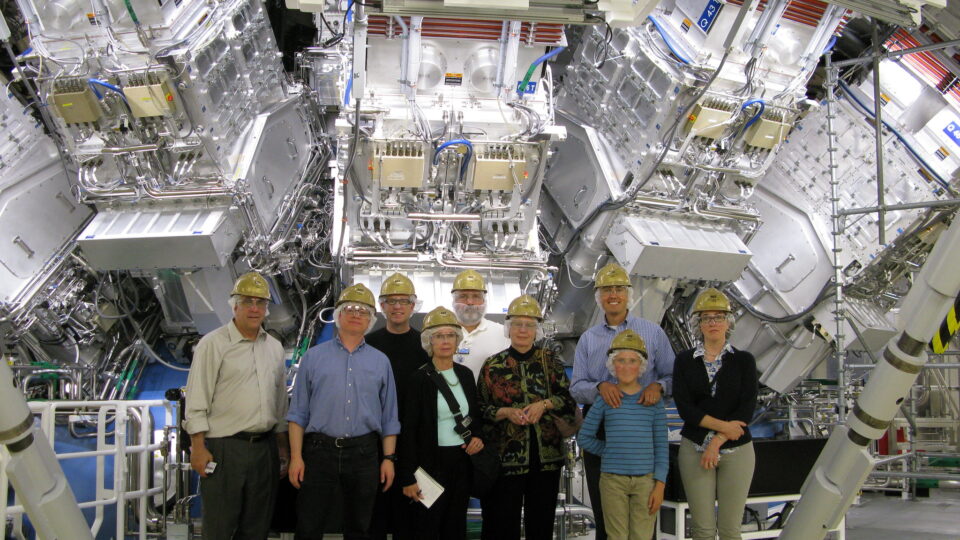
In the past couple of years, there have been important demonstrations of new and different ways to create nuclear fusion.  A system using laser fusion achieved fusion ignition, in which a reaction briefly became self-sustaining.  A system using magnetic confinement fusion produced a plasma that generated 11 megawatts of power for a world-record five seconds.

There are more than 30 companies competing in the race to deliver fusion energy.  Governments and private investors are funding efforts around the world.  Whether any of them will succeed remains to be seen.  The challenges are immense but so are the potential rewards.

**********

Web Links

Will Tech Breakthroughs Bring Fusion Energy Closer to Reality?

Photo, posted July 31, 2010, courtesy of Steve Jurvetson via Flickr.

Earth Wise is a production of WAMC Northeast Public Radio

Bio-based products on the rise

January 30, 2024 By EarthWise Leave a Comment

There is a growing global movement working towards replacing conventional synthetic products – ones that are toxic to make or use, difficult to recycle, and have large carbon footprints – with products made from plants, trees, or fungi that can be safely returned to the earth at the end of their useful life.  This so-called bioeconomy is in its infant stages, but there is increasing interest in turning successful research into manufactured products.

One example is nylon.  Nylon was created in the 1930s by DuPont.  It has been used and continues to be used in a wide range of products.  The problem with it is that it is made from petroleum, it doesn’t biodegrade, and producing it generates nitrous oxide, which is a problematic greenhouse gas.

A San Diego-based company called Genomatica has developed a plant-based nylon using biosynthesis, a process in which a genetically engineered microorganism ferments plant sugars to create a chemical intermediate that can be turned into the nylon-6 polymer, and then into textiles. 

The impetus for developing bio-based products includes the growing public disgust at the mounting environmental toll of plastic, not the least of which is that people and animals are increasingly ingesting it.  Coupled with this, there is a rapidly-growing torrent of funding, especially in the US and Europe, aimed at accelerating the transition away from products that are non-biodegradable, toxic, and that produce carbon emissions.   Last September saw the launch of the National Biotechnology and Biomanufacturing Initiative which will support research and development on such topics as the use of sustainable biomass and waste resources to make non-toxic, bio-based fuels, chemicals, and fertilizers.

**********

Web Links

From Lab to Market: Bio-Based Products Are Gaining Momentum

Photo, posted May 27, 2010, courtesy of André C via Flickr.

Earth Wise is a production of WAMC Northeast Public Radio
A Huge American Lithium Discovery | Earth Wise

October 12, 2023 By EarthWise Leave a Comment

A huge discovery of lithium in the United States

Human history has often been described in terms of a succession of metal ages:  the copper age, the bronze age, and the iron age.  In many ways, we have now entered the lithium age.  The light metal goes into the batteries that power smartphones, electric vehicles, and massive storage banks for the power grid.  Lithium has become a critical strategic resource.

As it stands now, the U.S. gets most of its lithium from imports from Australia and South America.  Major lithium sources are not commonplace; in 2022 there were only 45 lithium mines in the world.  Many of the known deposits are not in North America but in Chile, Bolivia, Argentina, China, and Australia.  The current largest known lithium deposits lie beneath the salt flats of Bolivia.

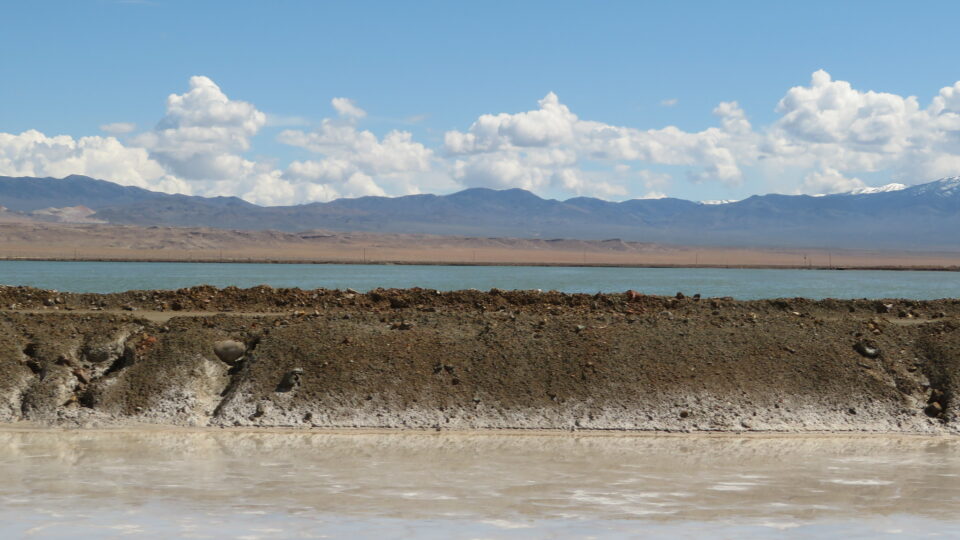
Lithium Americas Corporation, a company dedicated to advancing lithium projects to the stage of production, funded research over the past decade that has identified vast deposits of lithium-rich clay in a dormant volcanic crater along the Nevada-Oregon border.  The McDermitt Caldera is estimated to hold between 20 and 40 million tons of lithium, which would make it the largest deposit in the world.

There are many questions still to answer.  It is not clear how easy it will be to extract lithium from the clay, in particular how expensive or carbon-intensive it will be.  There are also political complexities since the area where the lithium deposit was found is considered to be unceded ancestral land for both the Paiute and Shoshone tribes.

Apart from a dearth of domestic sources of lithium, the US also lags well behind China in lithium processing capabilities.  The country has catching up to do in the new lithium age.

**********

Web Links

America Just Hit the Lithium Jackpot

Photo, posted April 19, 2020, courtesy of Ken Lund via Flickr.

Earth Wise is a production of WAMC Northeast Public Radio
Billion-Dollar Disasters | Earth Wise

October 5, 2023 By EarthWise Leave a Comment

As the climate changes, billion-dollar disasters are increasing

By the end of August, the United States had already broken the one-year record for the number of weather and climate disasters that caused more than $1 billion in damage.

According to the National Oceanic and Atmospheric Administration, through August there had already been 23 billion-dollar disasters.  The previous record of 22 had been set in 2020.  The 23 this year racked up $58 billion in damages.

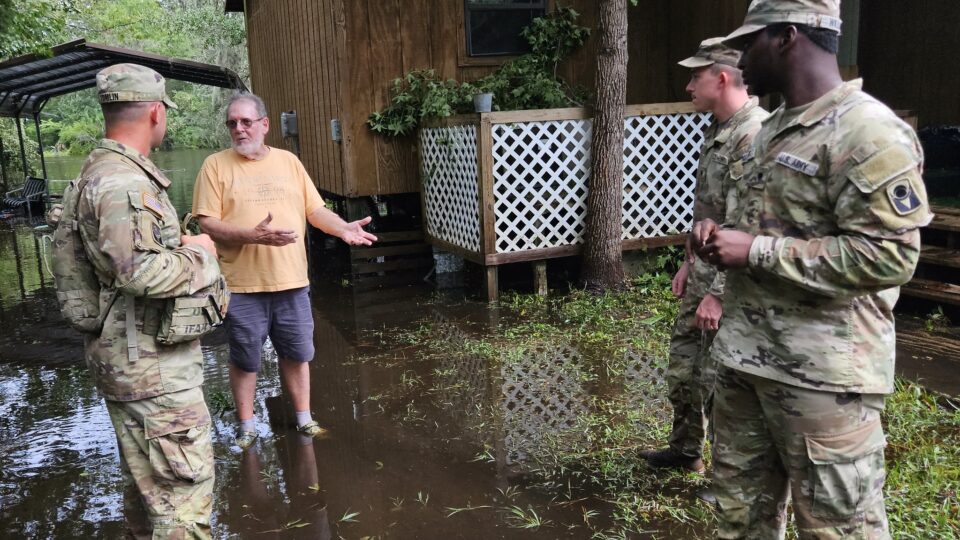
The unfortunate litany of events included two in August:  Hurricane Idalia, which struck Florida’s Big Bend region and the Lahaina fire storm on Maui.  Earlier in the year, winter storms in the Northeast, floods in California and Vermont, and 18 other severe storm events contributed to the record.

With a very active Atlantic hurricane season underway and the prospects for more wildfires in the west, it is likely that the record for billion-dollar disasters will climb even higher before the year ends.

The massive financial losses incurred this year highlight the need for more funding and attention to be directed toward climate resistance and adaptation.  The NOAA report urges policymakers to invest much more in getting out ahead of disasters before they strike rather than only looking for ways to help communities to pick up the pieces after disaster has struck.

Congress is currently considering $16 billion in additional funding for FEMA to keep the agency functioning in this very trying year.

As climate change continues to contribute to more intense storms and larger and more frequent wildfires, the price of adaptation and recovery efforts is likely to continue to grow.

**********

Web Links

2023 has already broken the US record for billion-dollar climate disasters

Photo, posted August 31, 2023, courtesy of Spc. Christian Wilson / The National Guard via Flickr.

Earth Wise is a production of WAMC Northeast Public Radio

Rainforest Promises | Earth Wise

December 23, 2022 By EarthWise Leave a Comment

Rainforest promises in Brazil

The recent UN climate summit in Sharm el Sheikh, Egypt brought with it lots of pledges for action.   Among them was a promise from the three countries that are home to more than half of the world’s tropical rainforests to try to do something to protect them.

The ministers of Brazil, Indonesia, and the Democratic Republic of Congo signed an agreement pledging cooperation on sustainable management and conservation, restoration of critical ecosystems, and creation of economies that would ensure the health of both their people and their forests.

The plan has no financial backing of its own.  The countries are pledging to work together to establish a funding mechanism that could help to preserve the tropical forests that both help regulate the Earth’s climate and sustain a wide range of animals, plants, birds, and insects.

That such an agreement has come about at all is a result of the election of Luiz Lula da Silva as Brazilian president, replacing Jair Bolsonaro, who was famously an opponent of any and all environmental conservation or protections.  President Lula addressed the attendees of the climate summit promising that “Brazil is back.”   He described his country as having been in a cocoon for the past four years under his predecessor.  He declared that going forward, Brazil will be a force to combat climate change.  Given the importance of the Amazon rainforest, that is critical for the success of the world’s efforts.

Like all other issues on the table at the climate summit, the real challenge is not to come up with meaningful pledges on climate action, it is to be able to follow through on those pledges.  If past summits are any indication, that is not an easy task.

**********

Web Links

Brazil, Indonesia and Congo Sign Rainforest Protection Pact

Photo, posted September 15, 2013, courtesy of Moises Silva Lima via Flickr.

Earth Wise is a production of WAMC Northeast Public Radio
California Climate Legislation | Earth Wise

October 6, 2022 By EarthWise Leave a Comment

California passes massive climate change legislation

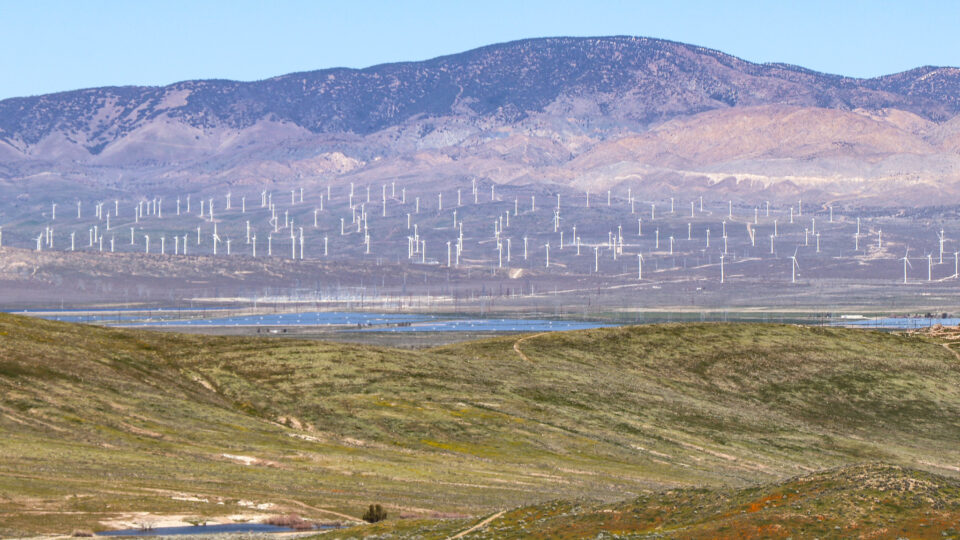
At the end of its summer session, California’s state legislature passed five climate-related bills including ones that it had been unable to pass in previous sessions.  Taking all of these actions puts California in the position of blazing a trail for the country and the rest of world in taking aggressive action on climate issues.

One bill confirmed California’s goal of reaching net-zero emissions by 2045.  Another bill added interim-term targets to go along with the state’s goal of 100% renewable electricity by 2045.  It sets a target of 90% by 2030 and 95% by 2040.  That bill mandates that California state agencies use 100% clean energy by 2035, which is a decade earlier than the previous requirement.

A third bill requires the California Air Resources Board to determine steps and regulations for carbon-capture and storage projects at pollution hotspots like oil refineries.

A fourth bill requires the state to set goals for removing carbon dioxide from the atmosphere through natural means such as tree planting.

The California state budget includes a record-breaking $54 billion to be spent on climate programs over the next five years, including $6.1 billion toward electric vehicles, $14.8 billion towards public transit projects, more than $8 billion for electric grid stabilization, $2.7 billion towards preventing wildfires, and $2.8 billion towards managing drought.

California has been dealing with ongoing drought and numerous wildfires and is highly motivated to take decisive action in dealing with the climate crisis.  California’s environmental initiatives often result in comparable actions taken by other states.

**********

Web Links

California Passes Massive Climate Legislation Package

Photo, posted March 16, 2019, courtesy of Raymond Shobe via Flickr.

Earth Wise is a production of WAMC Northeast Public Radio

A Law To Tackle Climate Change | Earth Wise

September 8, 2022 By EarthWise Leave a Comment

The Inflation Reduction Act signed into law in mid-August is the most comprehensive U.S. legislation addressing climate change ever enacted.   It contains $369 billion in funding for clean energy and electric vehicle tax breaks, domestic manufacturing of batteries and solar panels, and pollution reduction.

The legislation for the most part makes use of carrots rather than sticks to coax American consumers and industry away from reliance on fossil fuels.  Rather than establishing more carbon taxes, mandates, and penalties, the law largely makes use of tax credits to provide incentives for the use of clean energy.

The law provides a large mix of tax breaks intended to bring down the costs of solar, wind, batteries, electric cars, heat pumps, and other clean technology.  For example, consumers will get a $7,500 credit for purchasing many new electric car models and about $4,000 for buying a used vehicle.

On the stick side of the ledger, oil and gas companies that emit methane above certain threshold levels will incur fees that escalate over time.  The law also increases the cost to the oil industry for extracting fossil fuels from public lands.

The act provides $60 billion for overall environmental justice priorities, including $15 billion targeted specifically for low-income and disadvantaged communities. There are many other provisions in the law addressing multiple climate-related issues.

According to three separate analyses by economic modelers, the investments from the Inflation Reduction Act are likely to cut pollution by about 40% below 2005 levels by the year 2030.

**********

Web Links

The US finally has a law to tackle climate change

Photo, posted December 15, 2021, courtesy of Mario Duran-Ortiz via Flickr.

Earth Wise is a production of WAMC Northeast Public Radio.

A Geoengineering Research Plan | Earth Wise

July 22, 2022 By EarthWise Leave a Comment

The 2022 federal appropriations act, signed into law in March, directed the Office of Science and Technology Policy to develop a cross-agency group to coordinate research on climate interventions, in partnership with NASA, the National Oceanic and Atmospheric Administration, and the Department of Energy.

The group is tasked with creating a research framework to “provide guidance on transparency, engagement, and risk management for publicly funded work on solar geoengineering research.”  The group is supposed to develop a five-year plan that will define research goals for the field, assess the potential hazards of climate interventions, and evaluate the level of federal funding required to carry out the work.

This marks the first federally coordinated effort of this kind and is especially significant because it contributes to the perception that geoengineering is an appropriate and important area of research as the climate continues to warm.

It is an understatement to say that such research is controversial.  Geoengineering has often been a taboo topic among scientists. There are significant questions about potential environmental side effects and concerns that the impact of any such efforts would be felt unevenly in different parts of the world.  There are challenging questions about global governance , including who should be able to make decisions about any potential deployment of climate interventions and what the goals of such interventions should be.

These are momentous issues to grapple with, but as the threat of climate change grows and nations continue to fail to make rapid progress on emissions, researchers, universities, and nations are increasingly motivated to seriously explore the potential effects of geoengineering approaches.  We can’t hide from the fact that these issues are going to be explored.

**********

Web Links

The US government is developing a solar geoengineering research plan

Photo, posted June 28, 2013, courtesy of Fernando Aramburu via Flickr.

Earth Wise is a production of WAMC Northeast Public Radio.

Should We Block The Sun? | Earth Wise

May 10, 2021 By EarthWise Leave a Comment

The risks of geoengineering need to be better understood

There is growing concern that greenhouse gas emissions are not falling quickly enough to avoid dangerous levels of global warming.  As a result, there is the impetus to examine other options.  Among these are geoengineering, which is one of the most contentious issues in climate policy.  Geoengineering embodies many risks that make even seriously considering it seem risky in itself.

Despite this, the National Academies of Science, Engineering, and Medicine has issued a report saying that governments urgently need to know whether solar geoengineering could work and what its side effects might be.

Solar geoengineering is also called solar radiation modification, which entails reflecting more of the sun’s energy back into space.  This would likely be accomplished by injecting aerosols into the atmosphere, much like what happens after large volcanic eruptions.

Schemes for solar geoengineering raise numerous issues.  Although solar geoengineering might cool the earth’s surface to a global temperature target, the cooling may not be evenly distributed, affecting many ecosystem functions and biodiversity.   It would likely upset regional weather patterns in potentially devastating ways, for example by changing the behavior of the monsoon in South Asia.  It might dangerously relax public commitments to reduce greenhouse emissions. 

Despite these concerns, or perhaps because of them, the committee that produced the report believes that technology to reflect sunlight deserves substantial funding and should be researched as rapidly and effectively as possible.  Once any geoengineering projects get into the hands of policymakers, they may gather momentum that bypasses the advice of scientists.  So, it important to make progress on the science while geoengineering is still only theoretical.

**********

Web Links

Should We Block the Sun? Scientists Say the Time Has Come to Study It.

To intervene or not to intervene? That is the future climate question

Photo, posted August 3, 2018, courtesy of Tomasz Baranowski via Flickr.

Earth Wise is a production of WAMC Northeast Public Radio.

The First Earth Fund Awards | Earth Wise

December 25, 2020 By EarthWise Leave a Comment

Environmental organizations receiving large grants

Last February, Amazon CEO Jeff Bezos announced that he was launching the Bezos Earth Fund that would grant money to scientists, activists, NGOs and others making an effort to help preserve and protect the natural world.  The fund would start out with $10 billion and would begin issuing grants later in the year.

In November, the first Earth Fund award recipients were announced.  In total, 16 organizations will be receiving nearly $800 million in funding.

The largest awards include the following:  the Environmental Defense Fund received $100 million to build and launch MethaneSAT, a satellite that will locate and measure sources of methane pollution around the world and provide public access to data that assures accountability.

The Natural Resources Defense Council was awarded $100 million to advance climate solutions and legislation at the state level, promote policies and programs focused on reducing oil and gas production, protect and restore ecosystems that store carbon, and accelerate sustainable and regenerative agriculture practices.

The Nature Conservancy also received $100 million and plans to use the money to help protect the Emerald Edge forest.  (That is the largest intact coastal rainforest on Earth, spanning 100 million acres through Washington, British Columbia and Alaska).

The World Resources Institute will receive $100 million, doled out over five years, to be used to develop a satellite-based monitoring system to advance natural climate solutions around the world.

An additional $100 million award went to the World Wildlife Fund to help protect and restore mangroves, develop new markets for seaweed as an alternative to fossil fuel-based products, and to protect forests and other ecosystems around the world.

**********

Web Links

The organizations that will benefit from Bezos’ $791M and what will they do with the money

Photo, posted March 4, 2015, courtesy of Kevin Gill via Flickr.

Earth Wise is a production of WAMC Northeast Public Radio.

Community Solar With Storage In New York | Earth Wise

November 16, 2020 By EarthWise Leave a Comment

Community solar

Community solar allows members of a community to share the benefits of solar power even if they cannot or prefer not to install solar panels on their own property.  There are several models for how community solar works, but all of them allow members to benefit from solar power being generated by an offsite solar array by effectively allocating a portion of its output to them.  In any event, community solar can save money on electric bills and allow people to make use of renewable energy for their needs.

A next step in the evolution of a decentralized energy system is incorporating energy storage into community solar projects.  The first one of these in New York State has now been completed in Yorktown Heights in Westchester County.  The project consists of 557kW of rooftop solar in the form of nearly 1,500 solar panels paired with 490kW of four-hour Tesla Powerpack battery energy storage.  The system is expected to provide 150 participants with approximately 10% savings on their monthly electric bills over 25 years, as well as providing power to 12 Tesla electric vehicle charging stations.

The project was funded by NYSERDA, under its Retail Energy Storage Incentive program, which currently includes 50 community solar-storage paired projects across New York State that are expected to be installed in the next two to three years.

New York has been actively promoting community projects in support of goals announced by Governor Andrew Cuomo to install 6,000MW of solar in the state by 2025 and 3,000MW of energy storage by 2030.

**********

Web Links

First community solar-storage project completed in New York

Photo, posted June 21, 2017, courtesy of Franck Michel via Flickr.

Earth Wise is a production of WAMC Northeast Public Radio.

A Giant U.S. Offshore Wind Project Begins | Earth Wise

June 22, 2020 By EarthWise Leave a Comment

United States offshore wind project

In recent years, the Bureau of Offshore Energy Management – the agency that oversees energy projects in federal waters – has been granting leases for offshore wind projects in the waters of multiple states on the East Coast.  Up until now, none of these leases have actually resulted in the deployment of any wind turbines because the process of gaining approvals, project plans, surveys, funding and other requirements is a long and tortuous one.

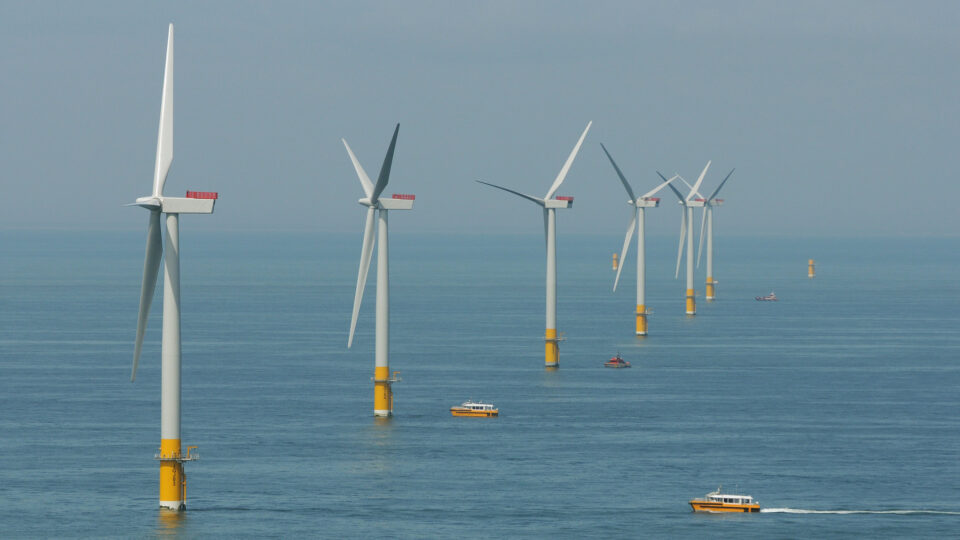
In late May, the first offshore wind turbine in U.S. federal waters was installed 27 miles offshore from Virginia.  The 6-MW Siemens turbine is one of two turbines making up the Coastal Virginia Offshore Wind pilot project.  The pilot project is expected to be operational later this year.  This project is the first to receive go-ahead approval by the BOEM.

The CVOW project is a development by Dominion Energy, a Virginia-based utility that operates in 20 states.  Dominion’s project will eventually be a 2.64 GW mega-farm that could be the largest offshore wind farm in the world.  Construction of the main project is expected to begin in 2024.  It will be sited in the seabed of a 112,800-acre lease area.  The site is currently being surveyed to determine potential impacts to ocean and sea life.

Dominion Energy has made multiple commitments to emissions reduction and the massive offshore wind farm is an important part of its efforts to meet those commitments.  The CVOW pilot project is only the second offshore wind installation in the U.S.  The first, the Block Island Wind Farm in Rhode Island, is in state waters and did not require BOEM approval.

**********

Web Links

A ‘monumental day’ for US offshore wind as first turbine is installed in federal waters

Photo, posted May 13, 2011, courtesy of the Department of Energy and Climate Change via Flickr.

Earth Wise is a production of WAMC Northeast Public Radio.

More Extreme Wildfire Seasons | Earth Wise

April 29, 2020 By EarthWise Leave a Comment

extreme wildfire seasons

According to a new study led by researchers at Stanford University, autumn in California feels more like summer now as a result of climate change, and this hotter and drier weather increases the risk of longer and more dangerous wildfire seasons.

The research team, whose work was recently published in the journal Environmental Research Letters, found that the frequency of extreme fire weather conditions in the fall in California has doubled since the early 1980s.  Average temperatures during the season have increased by more than 2 degrees Fahrenheit, and rainfall has fallen by approximately 30%.  The most pronounced warming has occurred in the late summer and early fall.  That finding means that tinder-dry conditions coincide with the strong “Diablo” and “Santa Ana” winds that are typical in California at this time of year.     

In recent years, these conditions have fed large and fast-moving wildfires across California.  The state’s two largest wildfires, two most destructive wildfires, and the most deadly wildfire all occurred during 2017 and 2018, resulting in more than 150 deaths and $50 billion in damage.

Because summertime has typically been peak fire season, the recent spate of autumn fires is putting a strain on firefighting resources and funding.  The ongoing COVID-19 pandemic could further strain emergency resources.  Since fire-prone regions have historically shared  wildfire-fighting resources throughout the year, the consequences of California’s extended wildfire season could have a global impact.  (For example, California’s recent autumn wildfires have coincided with the beginning of wildfires in Australia). 

The researchers highlight some opportunities to manage the intensifying wildfire risk in California, including limiting the trajectory of global warming in keeping with the targets identified in the United Nations’ Paris agreement.

**********

Web Links

Researchers forecast longer, more extreme wildfire seasons

Photo, posted September 12, 2019, courtesy of the California National Guard via Flickr.

Earth Wise is a production of WAMC Northeast Public Radio.

Compressed Air Energy Storage

October 23, 2019 By EarthWise Leave a Comment

The increasing use of solar and wind power has created a growing need for technology to store up the energy they generate for use when it is most needed.

Historically, pumped hydropower has provided the largest amount of storage capacity, but it is limited to only certain geographic locations.   Battery energy storage has been growing rapidly, with the technology becoming better and cheaper over time.  But there are various other ways to store energy that have potential and may well find their place in the changing energy infrastructure.

One of these is compressed air energy storage, which has been around for more than a century.  It has been used as a backup method for restarting power plants.  But to date, the economic viability of using it at a large scale has been lacking.

A Canadian startup company called Hydrostor is developing compressed air energy storage technology that it believes can be used on a utility scale.

The way it works is excess renewable energy is used to run compressors that compress air.  Compressing the air heats it up and the heat is captured and stored in insulated hot water tanks.  The compressed gas is then injected into underground caverns.  When energy is needed, the compressed air is released, the stored heat is added, and the warmed gas is run through turbines to generate electricity.  Additional features improve the system’s efficiency.

Hydrostore has built a 1 MW pilot project in Ontario, Canada and is now commissioning a 2MW system as well.  It is funded to build a 5 MW system in Australia next year and it is bidding for 300 MW and 500 MW systems in North America.  The company has received equity funding from Baker Hughes, a large oil-and-gas services and equipment company.

**********

Web Links

Storing energy in compressed air could finally become cheap enough for the big time

Photo courtesy of Hydrostor.

Earth Wise is a production of WAMC Northeast Public Radio.

Big Bucks For Meatless Meat

June 12, 2018 By EarthWise Leave a Comment

https://earthwiseradio.org/wp-content/uploads/2018/06/EW-06-12-18-Big-Bucks-for-Meatless-Meat.mp3

In recent years, alternative protein startup companies have been all the rage among investors.  Last year, these companies attracted a least a quarter of a billion dollars in funding and the interest is not slowing down. 

[Read more…] about Big Bucks For Meatless Meat

  • Page 1
  • Page 2
  • Go to Next Page »

Primary Sidebar

Recent Episodes

  • An uninsurable future
  • Clean energy and jobs
  • Insect declines in remote regions
  • Fossil fuel producing nations ignoring climate goals
  • Trouble for clownfishes

WAMC Northeast Public Radio

WAMC/Northeast Public Radio is a regional public radio network serving parts of seven northeastern states (more...)
Copyright © 2026 ·