• Skip to primary navigation
  • Skip to main content
  • Skip to primary sidebar

Earth Wise

A look at our changing environment.

  • Home
  • About Earth Wise
  • Where to Listen
  • All Articles
  • Show Search
Hide Search
You are here: Home / Archives for electricity

electricity

Five States Stepping Up On Clean Energy | Earth Wise

February 7, 2022 By EarthWise Leave a Comment

Five states step up climate action

While Congress continues to face partisan gridlock on climate issues, many states have moved forward with climate action.

In 2021, five states – Illinois, Massachusetts, Oregon, North Carolina, and Rhode Island – passed laws requiring a shift to 100% carbon-free electricity or net-zero emissions.  Washington State passed a law that helps to implement its strong 2019 and 2020 climate and clean energy laws.  Washington’s new legislation establishes a carbon trading program that will help the state to meet its goals of economy-wide emission cuts and 100% carbon-free electricity.

Several other states made progress on climate and clean energy by taking targeted actions not quite as aggressive as 100% laws, but significant, nonetheless.

The five states that entered the so-called 100% club joined with the six states that had earlier passed such legislation.  Those are California, Hawaii, New Mexico, New York, Virginia, and Washington.  Both Puerto Rico and Washington D.C. are also members of the club.

The past year may well be the biggest year yet for significant clean energy legislation.  Some of the states that finally passed laws had been gearing up for it for years.  This is particularly true of Massachusetts and Illinois.

Actions by individual states are not an antidote to inaction by the federal government, but they help.  At this point, about one-third of the country’s population lives in states that have laws requiring a transition to 100% carbon-free electricity, 100% renewable electricity, or net-zero emissions. 

All of this activity began in 2015, when Hawaii passed its renewable energy law.

**********

Web Links

Inside Clean Energy: Here Are 5 States that Took Leaps on Clean Energy Policy in 2021

Photo, posted August 12, 2021, courtesy of Glacier NPS via Flickr.

Earth Wise is a production of WAMC Northeast Public Radio.
Avoiding Blackouts With Renewable Energy | Earth Wise

February 4, 2022 By EarthWise Leave a Comment

How to avoid blackouts while using renewables

There are some people who worry that an electric grid heavily dependent upon intermittent sources like solar and wind power may be more susceptible to blackouts.  According to a new study by Stanford University, these fears are misplaced.

The study, published in the journal Renewable Energy, found that an energy system running on wind, water, and solar, when combined with energy storage, avoids blackouts, and lowers energy requirements and consumer costs.  In addition, implementing such a system would create millions of jobs, improve people’s health, and reduce land requirements.

The study focused on the stability in all U.S. grid regions as well as individual states based on the requirement that all electricity is provided by clean and renewable sources. No fossil fuel use, bioenergy, blue hydrogen, or even nuclear power were included in the modeling.  Critics of such a shift in the energy system point to grid blackouts during extreme weather events in California in 2020 and Texas in 2021 as evidence that renewable sources can’t be trusted.  But in both cases, renewable energy was not found to be any more vulnerable than other sources.

The study looked at the costs of the transition – which would be substantial – but found that it would pay for itself fairly quickly based on energy cost savings alone.

A significant finding of the study was that long-duration batteries were neither necessary nor helpful for grid stability.  That stability could be obtained by linking together currently available short-duration batteries.  Interconnecting larger and larger geographic regions would make the power system smoother and more reliable.  Overall, intelligent management of the electric grid can result in a reliable and clean power system.

**********

Web Links

Stanford researchers point the way to avoiding blackouts with clean, renewable energy

Photo, posted October 17, 2016, courtesy of B Sarangi via Flickr.

Earth Wise is a production of WAMC Northeast Public Radio.
A Big Year For European Solar Power | Earth Wise

February 2, 2022 By EarthWise Leave a Comment

The installed solar capacity in the European Union grew by 34% in 2021.  This means that Europe is on pace to quadruple its solar energy generation by 2030.

During 2021, the 27 countries of the European Union installed 25.9 gigawatts of new solar capacity, compared with 19.3 gigawatts in 2020.  This was the biggest year yet for solar growth, beating out the previous record of 21.4 gigawatts set in 2011.  A gigawatt of solar electricity is enough to power about 300,000 homes, so the 2021 installations can produce enough electricity for about 8 million households.  The European Union is home to about 450 million people.

SolarPower Europe, an industry trade organization, projects that solar energy capacity in the EU will increase from the current 165 gigawatts to 328 gigawatts in 2025 and as much as 672 gigawatts by 2030.

The EU has the goal of generating 45% of its electricity from renewable sources by 2030, which is an important milestone in achieving climate neutrality by 2050. 

Challenges still facing the EU include obstacles to permitting, electricity grid bottlenecks, and assurance of solar panel supplies.  Much of Europe’s supply of solar panels comes from China.  The EU wants to boost its own production of solar panels to 20 gigawatts per year by 2025.

The US currently has about 113 GW of installed solar capacity and is projected to install about 300 gigawatts of new capacity over the next 10 years.

**********

Web Links

For the European Union, 2021 Was a Banner Year for Solar Power

Photo, posted May 3, 2007, courtesy of Bernd Sieker via Flickr.

Earth Wise is a production of WAMC Northeast Public Radio.

Floating Homes In The Netherlands | Earth Wise

January 24, 2022 By EarthWise Leave a Comment

The Netherlands is a country that is largely built on reclaimed land and a third of it remains below sea level.  The Dutch have long experience with dealing with rising waters.  The city of Amsterdam has almost 3,000 houseboats in its canals.

As sea levels continue to rise across the globe, it is no surprise that the Dutch have taken the lead in creating communities composed of floating houses and buildings.

A floating house is a structure fixed to the shore, often resting on steel poles, and usually connected to the local sewer system and power grid.  They are much like ordinary houses except that instead of a basement, they have a concrete hull that acts as a counterweight, allowing them to remain stable in the water.

The ones in the Netherlands are often prefabricated, square-shaped, three-story townhouses.  Rotterdam, which is 90% below sea level, is home to the world’s largest floating office building as well as a floating farm.

Floating buildings have their challenges, not the least of which are the effects of severe wind and rainstorms, or even the passing of large ships which can make the buildings rock.  Infrastructure like electricity and sewer service is not that simple to implement for the buildings.  But the benefits of floating buildings may outweigh the costs.

For cities facing worsening floods and a shortage of buildable land, floating homes are a potential solution for expanding urban housing in the age of climate change.  Dutch engineers are spearheading floating building projects in Britain, France, and Norway, as well as in threatened island locations like French Polynesia and the Maldives.

**********

Web Links

Embracing a Wetter Future, the Dutch Turn to Floating Homes

Photo, posted May 23, 2007, courtesy of Jeff Hutchison via Flickr.

Earth Wise is a production of WAMC Northeast Public Radio.

A Smart Roof | Earth Wise

January 21, 2022 By EarthWise Leave a Comment

Scientists are working on smart roof technology

Scientists at the Lawrence Berkeley Laboratory have developed an all-season smart roof coating that can keep homes warm during the winter and cool during the summer, and the coating does not consume any gas or electricity.

Existing cool roof systems consist of reflective coatings, membranes, shingles, or tile that lower house temperatures by reflecting sunlight as well as emitting some of the absorbed solar heat away from the roof as infrared radiation.  The problem with such systems is that they continue to radiate heat during the winter, which actually drives up heating costs.

The new material is called a temperature-adaptive radiative coating or TARC.  It enables energy savings by automatically turning off the radiative cooling in the winter.  TARC reflects about 75% of sunlight year-round, but its thermal emittance is high when the temperature is warm – promoting heat loss to the sky – but decreases in cooler weather, helping to retain the heat in a building.

The researchers produced thin-film TARC material that looks like Scotch tape that could be affixed to a surface like a rooftop.  They applied the material to a balcony alongside a sample of commercial dark roof material and a sample of commercial white roof material.

In experiments simulating 15 different climate zones across the US, they found that the TARC material outperforms existing roof coatings for energy savings in 12 out of the 15 zones, particularly in regions with wide temperature variations between day and night, such as in the San Francisco Bay Area, or between winter and summer, such as New York City.

The researchers believe that installing TARC coatings on roofs would save the average U.S. household about 10% in utility costs.

**********

Web Links

New Smart-Roof Coating Enables Year-Round Energy Savings

Photo, posted May 18, 2017, courtesy of Damian Gadal via Flickr.

Earth Wise is a production of WAMC Northeast Public Radio.
Cheaper Electric Cars | Earth Wise

January 18, 2022 By EarthWise 1 Comment

Electric vehicles will soon be less expensive than gasoline cars

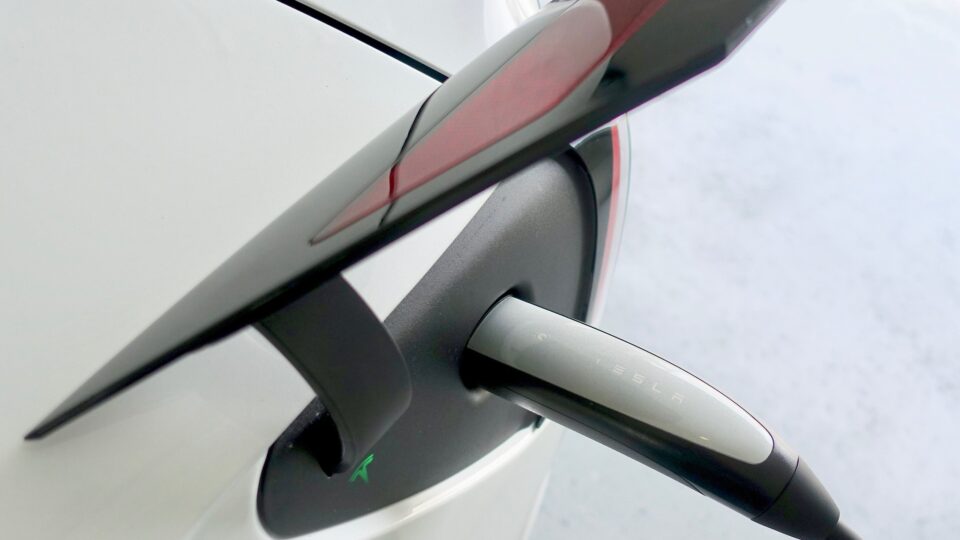
The price of the batteries that power electric cars has fallen by about 90% since 2010.  This continuing trend will eventually make EVs less expensive than gas cars.

For many years, researchers have estimated that when battery packs reach the price of $100 per kilowatt-hour of energy storage, electric cars will cost about the same as gasoline-powered vehicles.  In 2021, the average price of lithium-ion battery packs fell to $132 per kilowatt-hour, down 6% from the previous year.  According to analysts, batteries should hit the average of $100 as soon as 2024.

It is not the case that as soon as the $100 level is reached, EVs will abruptly reach cost parity.  Across different manufacturers and vehicle types, the price shift will occur at different rates.  However, by the time batteries reach $60 a kilowatt-hour, EVs will be cheaper than equivalent gasoline models across every vehicle segment.

It is not known exactly when EVs will cost less than gasoline models, but there is little doubt that this point is coming.  We have only been talking about the purchase price of a new vehicle.  When one looks at the total cost of ownership of a vehicle, including fuel, insurance, maintenance, and depreciation, it is a different story.

Because of savings on fuel and maintenance, EVs are already in many if not most cases cheaper to own than gas-powered cars.  The Department of Energy provides an online calculator to help consumers estimate the cost differences between gasoline and electricity.

In any case, the number of electric cars on the market is increasing and the number of gas-powered cars will be shrinking.  Sooner or later, we will all drive electric.

**********

Web Links

Inside Clean Energy: Batteries Got Cheaper in 2021. So How Close Are We to EVs That Cost Less than Gasoline Vehicles?

Photo, posted July 29, 2017, courtesy of Steve Jurvetson via Flickr.

Earth Wise is a production of WAMC Northeast Public Radio.
Solid State Batteries For Cars | Earth Wise

January 7, 2022 By EarthWise Leave a Comment

Nissan at the forefront of developing solid state batteries for cars

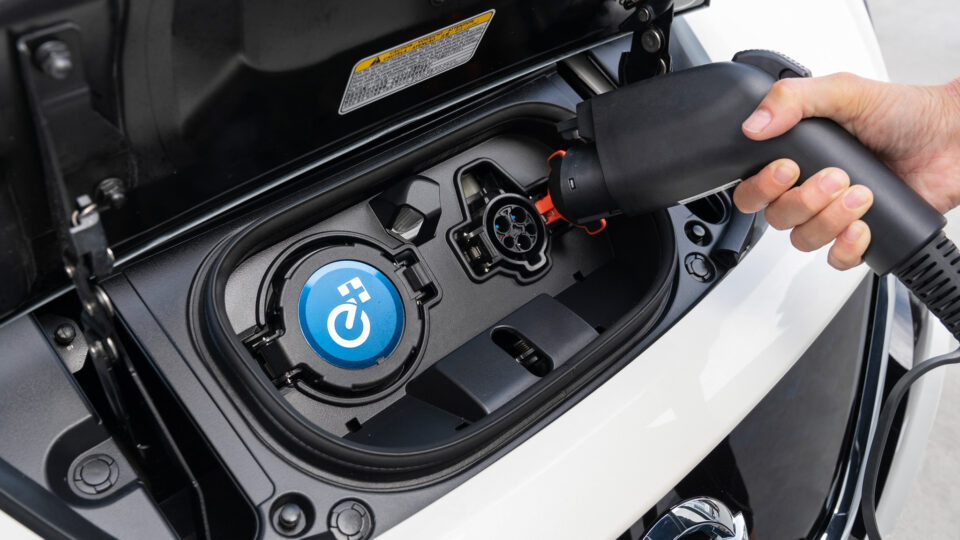
Today’s electric cars run on lithium-ion batteries, the same sort that power our phones, computers, and many other consumer electronic devices.  These batteries are far superior to the batteries of the past, offering long-life, high-energy density, and recyclable components.

Lithium-ion batteries do have their drawbacks.  They may be lighter than older battery technologies, but because the electrolytes in the batteries are liquid, they are still fairly heavy.  The huge number of them in an electric car adds up to a considerable amount of weight.  In addition, the flammability of the electrolytes can lead to explosions or fires if the batteries are damaged or exposed to extreme temperatures.

Solid-state batteries are an alternative technology that contain a solid electrolyte.  Such batteries are lighter, have higher energy density, offer more range, and recharge much more quickly than lithium-ion batteries. They have been used for years in some small devices like cardiac pacemakers, RFIDs, and some wearable devices.

For all these benefits, scaling up production to the level needed to be used in cars is an expensive and challenging endeavor.  The hope is that with sufficient effort, the result will be smaller, lighter battery packs for cars that can be charged in minutes and provide extended range.

Nissan Motor Company has recently announced that it is investing $17.6 billion over the next five years towards developing solid-state batteries for cars.  No doubt other companies will also be working on the technology.

Lithium-ion batteries have proven to be quite practical for powering vehicles.  But if solid-state batteries can meet the challenges of scaled up production, the lithium-ion era might end up being a relatively brief one.

**********

Web Links

Nissan to Spend $18 Billion Developing a Cheaper, More Powerful EV Battery

Photo, posted November 13, 2018, courtesy of FirstEnergy Corp via Flickr.

Earth Wise is a production of WAMC Northeast Public Radio.
Solar Canopies | Earth Wise

December 31, 2021 By EarthWise Leave a Comment

There are plenty of solar panels on residential rooftops but there are also increasing numbers of arrays of them on croplands, arid lands, and grasslands. Large solar arrays are mostly built in open spaces like these rather than in developed areas.  The reason is that it is cheaper to build on undeveloped land than on rooftops or construct covered parking lots.

However, building on undeveloped land is not necessarily the smartest idea.   Undeveloped land is a dwindling resource that is needed for many different things:  growing food, sheltering wildlife, storing and purifying water, preventing erosion, and sequestering carbon. 

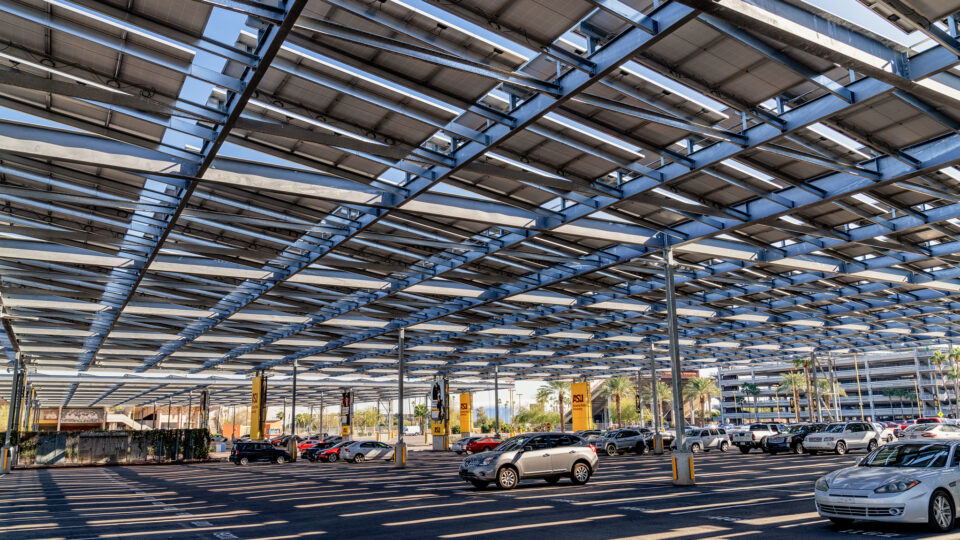
Putting solar panels on parking lots has the appeal that they are abundant, close to electricity customers, and are on land that already has been stripped of much of its biological value.

Putting a solar canopy over a parking lot can produce large amounts of electricity and has the added benefit that it would provide shade for cars.  For example, a typical Walmart supercenter might have a five-acre parking lot, which is enough to support a 3-megawatt solar array.  If Walmart put solar canopies on all of its 3,500+ super centers, it would provide 11 gigawatts of solar power – as much as a dozen large coal-fired power plants.

Solar canopies are still pretty uncommon, but some examples are ones at four DC Metro rail stations, one at JFK Airport, and a large one at the Rutgers University Piscataway campus.

Building parking lot solar canopies is much more expensive than putting solar arrays on open space, but they do eventually pay for themselves. Despite active opposition by utility and fossil fuel interests, solar canopies may eventually be a common sight.

**********

Web Links

Why Putting Solar Canopies on Parking Lots Is a Smart Green Move

Photo, posted January 10, 2020, courtesy of Tony Webster via Flickr.

Earth Wise is a production of WAMC Northeast Public Radio.
Batteries On Wheels | Earth Wise

December 24, 2021 By EarthWise Leave a Comment

electric vehicles as a battery resource

Transportation accounts for nearly a quarter of the direct carbon dioxide emissions coming from burning fuel.  As a result, electrification of transport is one of the major ways we can reduce emissions.  Increasing the number of electric vehicles over time is essential for meeting emissions targets.

But electric vehicles have the potential to do more than deliver emissions reduction; they can also provide other energy services.

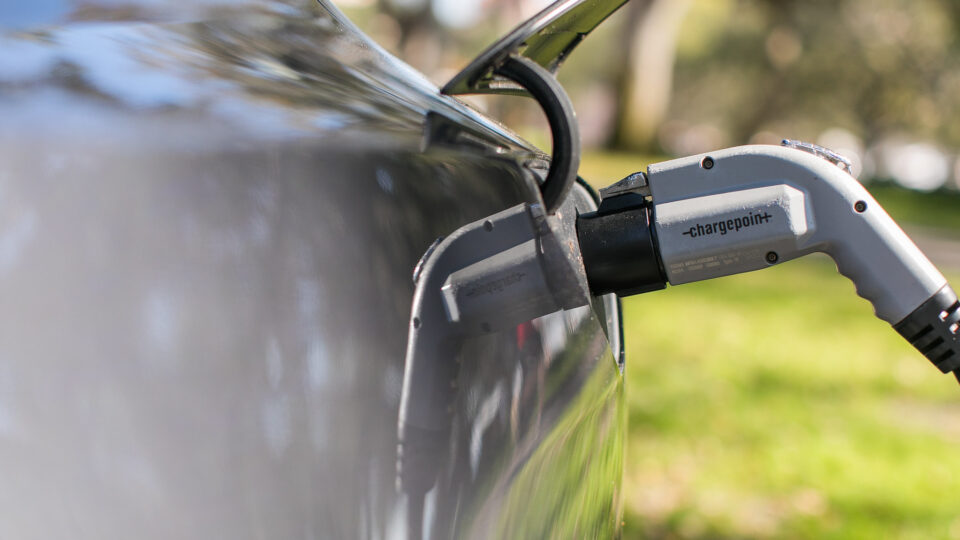
More and more electric cars provide over 200 miles of driving range, but most cars are actually driven no more than 30 miles a day.  As a result, the fleet of electric cars represents a huge bank of energy stored in battery packs and mostly sitting around unused.  This presents an opportunity to leverage this resource.

Car battery packs could be used to absorb excess renewable energy generated in the middle of the day (for example from solar installations) or at night (from wind farms) and potentially then to export stored energy to power homes and support the grid.  This energy system is known as V2G, or vehicle-to-grid technology.

The University of Queensland in Australia has launched a unique international trial to see if the spare battery capacity in vehicles could be used for these purposes.  The university has partnered with Teslascope, which is an online analytics platform used by Tesla owners to track the performance of their cars.  Tesla owners wishing to be part of the study authorize the collection of their data and, in turn, receive a free 12-month subscription to the Teslascope service.  The study will collect data from Tesla owners in Australia, the US, Canada, Norway, Sweden, Germany, and the UK.

**********

Web Links

Can EV spare battery capacity support the grid?

Photo, posted February 8, 2009, courtesy of City of St Pete via Flickr.

Earth Wise is a production of WAMC Northeast Public Radio.
Efficiency Of Offshore Wind | Earth Wise

December 10, 2021 By EarthWise Leave a Comment

Exploring the efficiency of offshore wind turbines

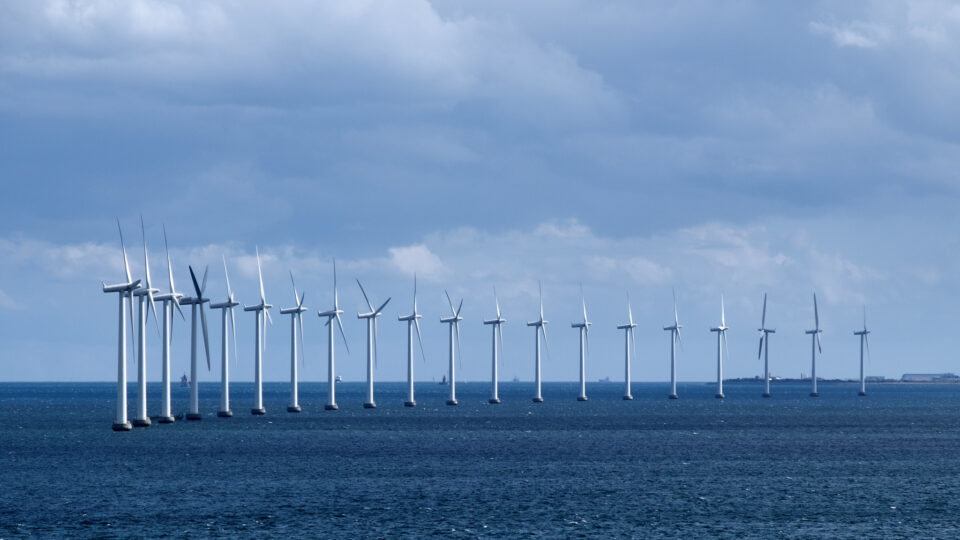
After many years of debates, delays, and controversies, offshore wind is about to expand in a big way in the United States.  The White House has announced the goal to deploy 30 gigawatts of offshore wind – enough to power 90 million homes – along the East Coast seaboard by 2030.

In New York State, there are now five offshore wind projects in active development.  The state goal is to have nearly a gigawatt of offshore wind by 2035, enough to power over 4 million homes.

These projects involve the use of thousands of physically large, high-capacity wind turbines deployed over large areas at an unprecedented scale.  Such mammoth installations bring with them unique problems.

Low-turbulence conditions over water lead to the fact that individual wind farms will experience each other’s wake (the disturbance of their airflow) even when turbine arrays are 15 to 50 miles apart.  As a result, turbines may fatigue earlier, and groups of turbines may experience up to 30% lower power production due to wake effects.

Industry trends are causing an increased probability of large wake-induced energy losses within individual wind farms and an increasing probability of wake interactions.

These issues have been studied in new research published by researchers at Cornell University.  The research presents simulations that may be helpful to optimize turbine spacing in the ongoing deployments and assist plans for future ones.  Improved understanding of wind turbine and wind-farm wake is essential in ensuring that the financial investments in offshore wind result in electricity-generation goals met at the lowest possible cost.

According to Department of Energy studies, offshore wind resources around the United States could potentially generate more electricity than the entire country currently uses.

**********

Web Links

Scientists bring efficiency to expanding offshore wind energy

Photo, posted August 9, 2016, courtesy of Lars Plougmann via Flickr.

Earth Wise is a production of WAMC Northeast Public Radio.

A Smart Heat-Blocking Window | Earth Wise

December 9, 2021 By EarthWise Leave a Comment

An international research team led by Nanyang Technological University in Singapore has invented a ‘smart’ window material that controls the transmission of heat without blocking the view through the window.  The technology could help reduce the amount of energy needed to cool and heat buildings.

The new material can be the basis of an electrochromic window that can block or pass infrared radiation at the flick of a switch.  Current electrochromic windows can be darkened when switched on and are found in many ‘green’ buildings as well as in many car mirrors.  But these windows are only effective in blocking visible light so infrared radiation – meaning heat – still passes through them.

The new coating material blocks up to 70% of infrared radiation when switched on but still allows up to 90% of visible light to pass through.  The material is a specifically designed composite nanostructure and utilizes advanced materials including titanium dioxide, tungsten trioxide, neodymium, niobium, and tin oxide.  It is intended to be coated onto glass window panels and be activated by electricity when needed.  The material was put through rigorous on-off cycles to assess its stability and durability and it appears to offer superior performance in that regard compared with current electrochromic technology.

The researchers also created a switchable system that helps control conducted heat, which is the heat from the external environment.

The combination of the two technologies could result in smart windows that control two types of heat transmission:  infrared radiation and conduction heat.  Such technology could help conserve energy used for the heating and cooling of buildings and could contribute to the future design of sustainable green buildings.

**********

Web Links

Scientists invent ‘smart’ window material that blocks rays without blocking views

Photo, posted March 11, 2016, courtesy of Open Grid Scheduler via Flickr.

Earth Wise is a production of WAMC Northeast Public Radio.

SuperHot Rock Geothermal Energy | Earth Wise

December 3, 2021 By EarthWise Leave a Comment

Growing interest in enhanced geothermal systems

The United States in a world leader in geothermal energy.  There are geothermal power plants in 7 states which produce about half a percent of the country’s electricity.  Conventional geothermal energy plants take advantage of natural underground sources of heat such as geysers, superheated underground reservoirs, and such.  Steam from these sources activates generators that produce electricity.  However, there are not many places where these systems can be built.

More recently, there has been growing interest in so-called enhanced geothermal systems (or EGS systems) which generate geothermal electricity without the need for natural convective hydrothermal sources.  There are many places where underground heat is available but no existing water taps into it.  The idea is to tap into the earth’s deep geothermal resources by fracturing rock and pumping water into it to be heated. 

AltaRock Energy, a Seattle-based company that develops EGS technology, has recently announced the results of a comprehensive technical and economic feasibility study demonstrating the potential benefits of an EGS system that could use high-temperature impermeable rock deep below the Newberry Volcano near Bend, Oregon.  The so-called SuperHot rock there is in excess of 750 degrees Fahrenheit.

Based on measurements at the site and modeling, the study determined that an EGS system at the site could cut the levelized cost of electricity in half when compared with a conventional EGS resources at 400-500 degrees. 

The company expects that the study will pave the way for the development of the first SuperHot Rock geothermal resource in the United States.

**********

Web Links

AltaRock clears hurdle in quest for ‘next generation’ geothermal resource

Photo, posted June 26, 2018, courtesy of David Fulmer via Flickr.

Earth Wise is a production of WAMC Northeast Public Radio.
Large Solar Projects In The U.S. | Earth Wise

December 1, 2021 By EarthWise Leave a Comment

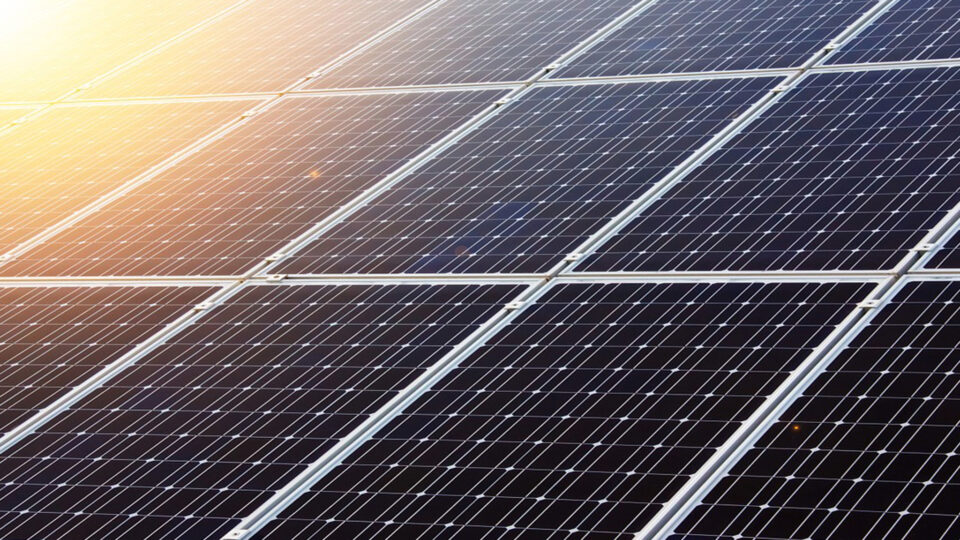
The United States now has over 108 gigawatts of total solar generating capacity, which is enough to power about 19 million homes.  There are more than 3 million solar installations across the country, the majority of which are residential systems.

The growth in solar power has been enormous over the past 13 years.  In 2008, the total solar capacity in the U.S. was 0.34 gigawatts.

In recent times, utility-scale solar installations have been on the rise.  At least 10 systems in excess of 100 megawatts have come online just in 2021.  These systems have been built in Georgia, Ohio, California, Texas, and Nevada.  Other large installations have come online in Virginia, Utah, Indiana, and Florida.  Overall, Texas has had the most new installations, followed by California and Florida.

The largest utility-scale solar project completed this year is the Eunice Solar Project in Andrew, Texas.  The 420-megawatt project is part of the Permian Energy Center which also features 40 megawatts of battery energy storage.

The pipeline for new utility-scale solar projects under construction includes more than 17 gigawatts, so there is strong continuing growth in the industry.

The Biden administration has proposed a blueprint for the nation to produce 45% of its electricity from solar power by 2050.  Currently, solar energy contributes about 4% of the country’s power.  Being able to produce almost half the country’s electricity from the sun by 2050 would require a vast transformation in technology and the energy industry.  Whether there is the political will and the wherewithal to achieve this remains to be seen.

**********

Web Links

U.S. Solar Market Insight

Photo, posted March 7, 2019, courtesy of Hedgerow Inc via Flickr.

Earth Wise is a production of WAMC Northeast Public Radio.

Drought And U.S. Hydropower | Earth Wise

November 29, 2021 By EarthWise Leave a Comment

Ongoing drought in the western U.S. is affecting hydropower

The ongoing severe drought in the western U.S. has led to low water levels in the rivers and reservoirs that feed hydroelectric power systems.  The Energy Information Administration is projecting a 13.9% decrease in hydroelectric generation this year compared to 2020.

Water levels in Lake Powell have fallen so low that it may not be possible to operate the power plant at Glen Canyon Dam starting as soon as 2022.  California officials took the Edward Hyatt hydroelectric plant offline in August because of low water levels on Lake Oroville.   Washington, the state with the most hydroelectric power generation, has seen an 11% drop in electricity generated to date this year as compared to last year.  That state is actually doing better than others in the West, such as California, where hydro generation is down 38%.

Hydropower accounts for over 7% of the electricity generated in the United States.  Five states – Washington, Idaho, Vermont, Oregon, and South Dakota – generate at least half of their electricity from hydroelectric dams.

The current decrease in hydropower is alarming, but it is not unprecedented.  The more significant question is whether the drop in generation this year is a sign that this power source is declining and becoming less reliable.   According to some scientists, the West is in a “megadrought” that could last for decades.

The greater concern is whether the bad years are likely to become more common because of climate change.  Climate projections agree that temperatures will continue to rise, but what will happen to precipitation levels in specific places is much less certain.  That is what will determine what the future holds for hydroelectric power.

**********

Web Links

Inside Clean Energy: Drought is Causing U.S. Hydropower to Have a Rough Year. Is This a Sign of a Long-Term Shift?

Photo, posted May 7, 2014, courtesy of Tyler Bell via Flickr.

Earth Wise is a production of WAMC Northeast Public Radio.

Iron Flow Batteries | Earth Wise

November 15, 2021 By EarthWise Leave a Comment

Lithium-ion batteries power computers, cell phones, and increasingly, automobiles.  They started out being rather expensive but have become dramatically cheaper over the last decade, with prices dropping about 90%.  Batteries are needed to store clean power from wind and solar generation and lithium-ion batteries are increasingly being used for that purpose as well.

Utility-scale energy storage requires substantial battery installations and battery cost is still very much an inhibiting factor in the widespread adoption of the technology.  Lithium-ion battery costs continue to drop but because they require expensive materials like lithium and cobalt, there are limits to how low their prices are likely to get.

As a result, researchers have continued to seek ways to produce batteries made out of cheaper materials.  Among the more promising technologies are flow batteries, which are rechargeable batteries in which electrolyte flows through electrochemical cells from tanks. 

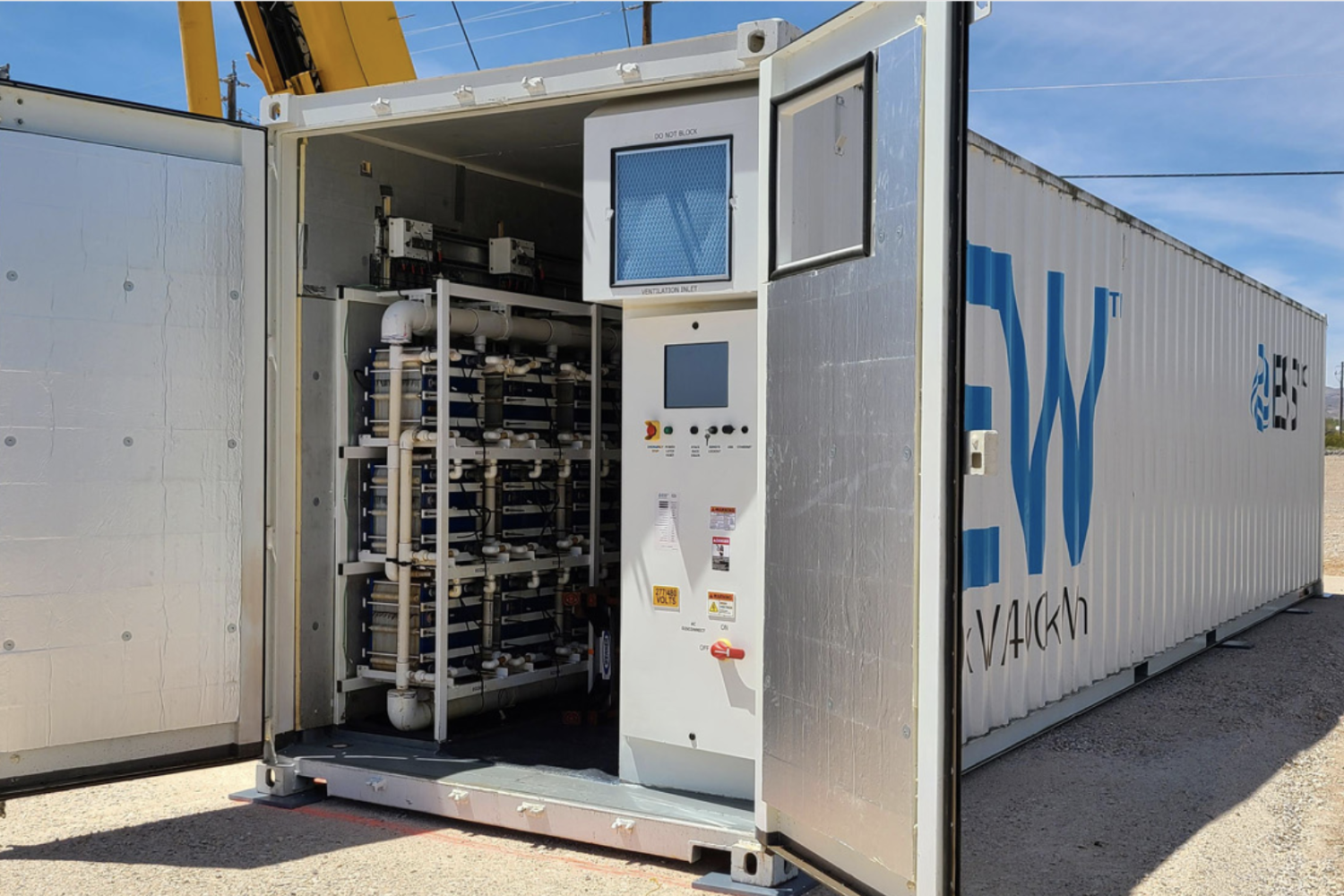
Flow batteries are much larger than lithium-ion batteries and include physical pumps to move electrolytes.  They typically are sold inside shipping containers.  Clearly, such batteries are not suitable for use in vehicles, much less in consumer electronics.  Nevertheless, they represent a practical option for grid storage.

A company called ESS has developed an iron flow battery suitable for utility energy storage.  Clean energy firm CSB Energy plans to install iron flow batteries at several solar projects across the U.S. that will store enough energy to provide power 50,000 homes for a day.  According to ESS, the iron-based batteries should sell for about half the price of lithium-ion batteries by 2025 and be able to store energy for longer periods.

**********

Web Links

New Iron-Based Batteries Offer an Alternative to Lithium

Photo, posted March 21, 2021, courtesy of Nenad Stojkovic via Flickr.

Earth Wise is a production of WAMC Northeast Public Radio.
Wireless EV Charging | Earth Wise

November 10, 2021 By EarthWise Leave a Comment

Michigan is developing wireless EV charging

Michigan, historically the focus of the American auto industry, has announced a new initiative to develop the nation’s first wireless charging infrastructure on a public road.  The Inductive Vehicle Charging Pilot is a partnership between the Michigan Department of Transportation and the Office of Future Mobility and Electrification.

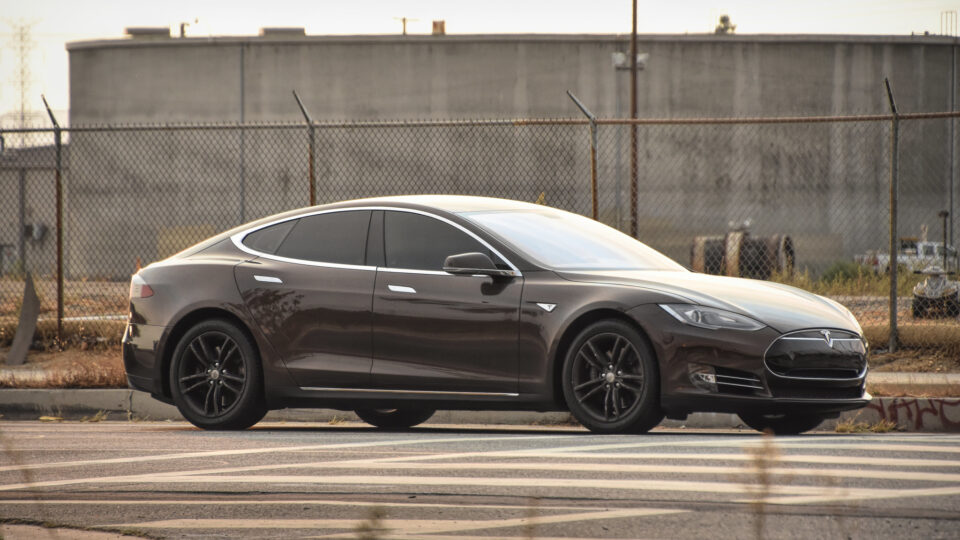
The idea is to deploy an electrified roadway system that allows electric buses, shuttles, and vehicles to charge while driving, allowing them to operate continuously without stopping to charge.  In principle, such electrified roadways have the potential to accelerate the adoption of electric vehicles and turn public streets into safe and sustainable shared energy platforms.  This is especially valuable for drivers who might not have easy access to conventional charging facilities.

The pilot program is seeking proposals to design, fund, evaluate, iterate, test, and implement an inductive charging system along a one-mile stretch of state-operated roadway in Michigan.

The basic concept is to embed coils in a road that will convey electricity to cars outfitted with coils of their own.  It is much like the wireless charging pads used to power up smartphones.  Indiana is pursuing a similar project in the next couple of years.

Clearly driving through a one mile stretch of roadway for minute or two is not going to provide a whole lot of energy by whatever coupling mechanism is used. Scaling up the technology represents a significant challenge at the very least.  How practical such a scheme is from both a technology and an economic perspective remains to be seen.  In any case, it is interesting to see that states are looking at various alternatives for providing access to charging infrastructure to the growing population of electrified vehicles.

**********

Web Links

Governor Whitmer Announces Initiative for Nation-Leading Wireless EV Charging Infrastructure in Michigan

Photo, posted September 6, 2020, courtesy of Chris Yarzab via Flickr.

Earth Wise is a production of WAMC Northeast Public Radio.
Vineyard Wind Prepares For Construction | Earth Wise

November 5, 2021 By EarthWise Leave a Comment

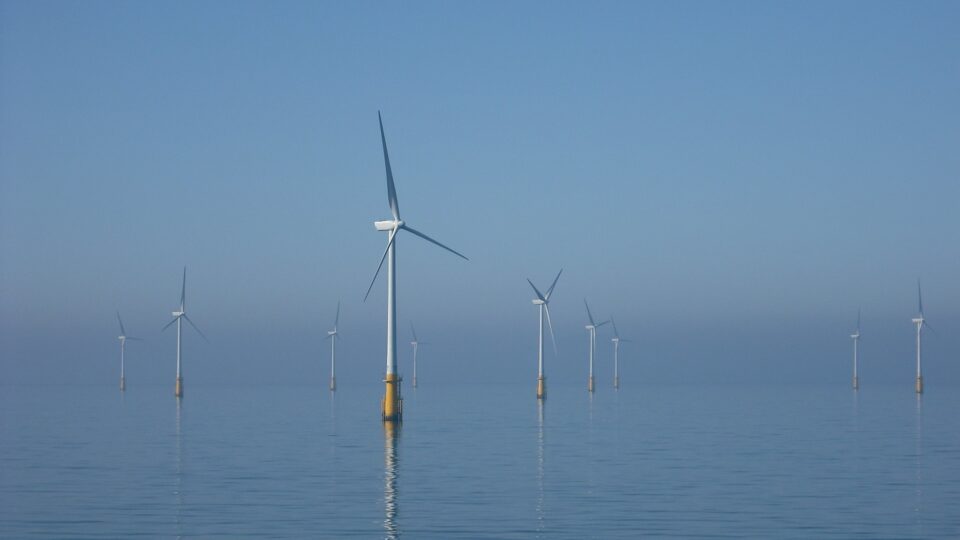
Vineyard Wind 1 will be the first utility-scale offshore wind energy project in the United States.  It will be located 15 miles off the coast of Massachusetts and will consist of an array of 62 wind turbines, spaced one nautical mile apart.  It will generate 800 megawatts of electricity, enough to power over 400,000 homes.

The project has recently closed on $2.3 billion of senior debt financing, which sets the stage for construction to begin.  The joint venture between Avangrid Renewables and Copenhagen Infrastructure partners is one of the single largest investments in a renewable energy project in the U.S.  The financial close is basically the final milestone for launching the project following years of clearing regulatory and other hurdles.

With the financial closing, Vineyard Wind will be instructing its contractors to begin work.  Onshore work will start this fall and offshore work will begin in 2022.

The project will use Haliade-X wind turbine generators made by GE.  These are some of the largest and most powerful wind turbines currently available, each one capable of generating 13 megawatts of electricity.  The electricity generated by the turbines will be collected by an offshore substation and then transmitted to shore.  Two submarine cables will bring the electricity from the substation to a landing point in Barnstable.  The cables will be buried six feet below the seafloor.  Underground cables will then route the power to an onshore substation in the village of Hyannis where it will be connected to the New England Grid.

Vineyard Wind is the first of many offshore wind farms in the works for the Northeastern United States.

**********

Web Links

U.S.’s first commercial-scale offshore wind project prepares for construction

Photo, posted March 24, 2016, courtesy of Andy Dingley via Flickr.

Earth Wise is a production of WAMC Northeast Public Radio.

A New Low For Lake Powell | Earth Wise

November 2, 2021 By EarthWise Leave a Comment

Water levels in Lake Powell have reached new lows

Lake Powell is the second largest reservoir by capacity in the United States.  It straddles the border of southeastern Utah and northeastern Arizona and was created by the Glen Canyon Dam, completed in 1963.  The reservoir serves as a bank account of water that is drawn upon in times of drought and has made it possible to weather extended droughts by sustaining the needs of cities, industries, and agriculture in western states.  Hydroelectric power by the dam’s eight generators provides electricity to seven states.

As a result of the protracted drought in the west, the water levels in Lake Powell have reached the lowest point since 1969.  As of September 20, the lake held only 30% of its capacity and federal managers started releasing water from upstream reservoirs to help keep Lake Powell from dropping below the so-called minimum power threshold which is the water elevation that must be maintained to keep the dam’s hydropower turbines working properly.

With the entire Lower Colorado River water system below 40% of capacity, Bureau of Reclamation recently announced that water allocations in the U.S. Southwest would be cut over the next year.  The Colorado River basin is managed to provide water to millions of people including those in San Diego, Las Vegas, Phoenix, and Los Angeles. 

Successive dry winter seasons over the past two years along with a failed 2020 summer southwestern monsoon, have led to the lowest precipitation levels on record in the Southwest going at least as far back as 1895.  With warm temperatures, reduced snowpack, and increased evaporation of soil moisture, most of the American West suffers from persistent and widespread drought.

**********

Web Links

Lake Powell Reaches New Low

Photo, posted June 28, 2021, courtesy of the USFWS – Mountain Prairie via Flickr.

Earth Wise is a production of WAMC Northeast Public Radio.
Clean Energy In Rochester | Earth Wise

October 26, 2021 By EarthWise Leave a Comment

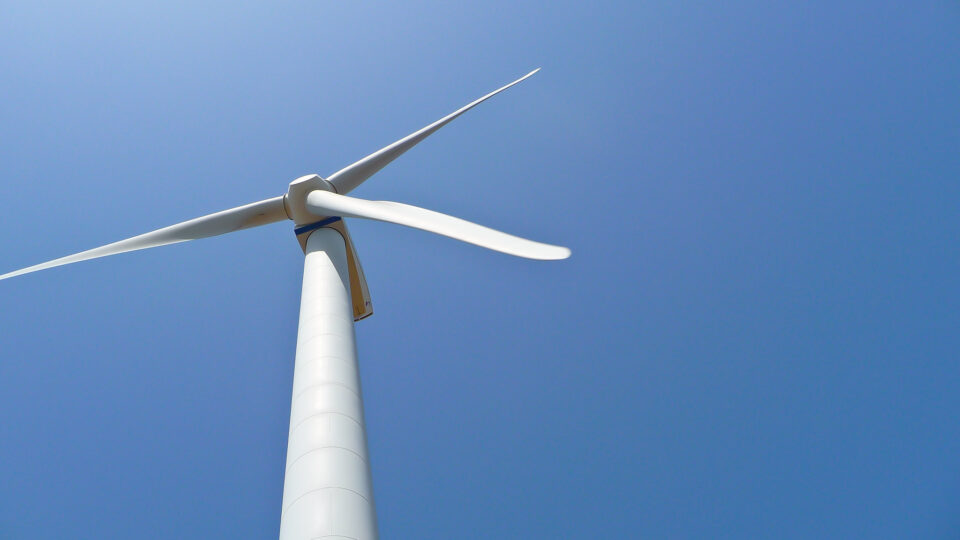
New York’s largest community choice clean energy program has been activated in the City of Rochester.   The program, offered by Rochester Community Power, offers 57,000 residences and small businesses access to clean energy from hydropower and wind sources.  It requires customers to opt out rather than enroll in order to provide clean energy to the greatest number of people.

Rochester Community Power is the city’s local community choice aggregation (CCA) program that leverages the collective buying power of participating residents to purchase renewable electricity and negotiate better terms for energy supply contracts.

The program will supply customers with more than 300 million kWh of renewable energy each year, which will avoid the emission of about 250,000 tons of carbon dioxide.  Rochester plans to add a community solar program next year which will provide additional clean energy opportunities, including offering guaranteed savings to thousands of participants in its Home Energy Assistance Program.

The project will be managed by Joule Assets, which is a provider of energy reduction market analysis, tools, and financing. Joule Assets, as program administrator for the Rochester program, managed the competitive bidding process that secured a fixed rate for electricity for the next two years, shielding participating residences and businesses from volatile market prices.

Community choice aggregation programs are local, not-for-profit public agencies that are an alternative to investor-owned utilities.  They give municipalities the ability to make decisions about the procurement, sourcing, and rates for energy for its residents.

**********

Web Links

New York activates its largest opt-out 100% renewable energy program

Photo, posted June 25, 2011, courtesy of Paulo Valdivieso via Flickr.

Earth Wise is a production of WAMC Northeast Public Radio.
Major Funding For Novel Energy Storage | Earth Wise

October 21, 2021 By EarthWise Leave a Comment

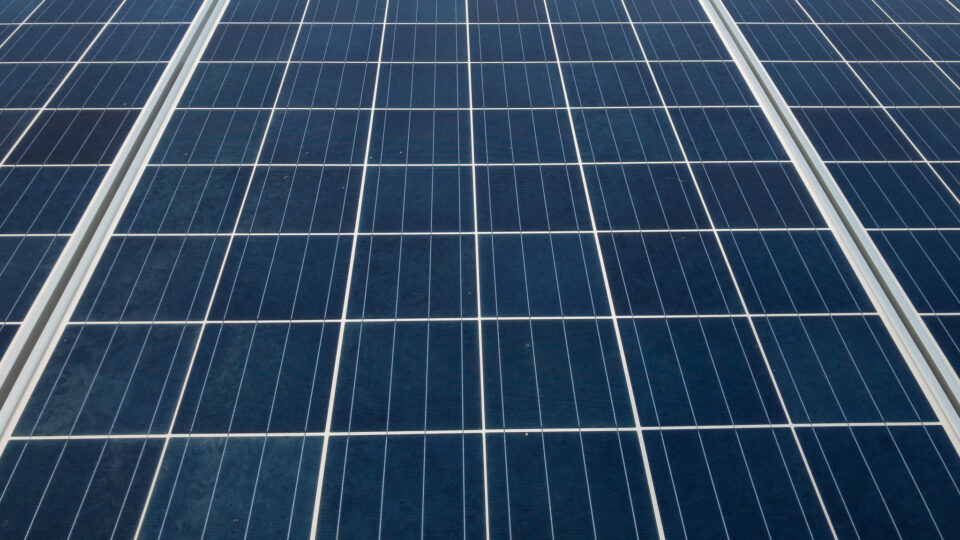
The accelerating adoption of wind and solar energy is driving a growing interest in energy storage technologies.  An electric grid dominated by intermittent power sources will need large-scale energy storage.  Grid-scale energy storage is expected to increase at least 10 times over the next decade and this will require nearly $300 billion in investments over that time period.

Much of the effort in energy storage has focused on battery storage.  But there are other storage technologies that are attracting attention and investment.

Energy Vault is a Swiss-based company specializing in gravity and kinetic energy-based energy storage.  Their technology uses a multi-headed crane to store energy generated by renewable sources by stacking heavy blocks made of composite material into a tower, capturing potential energy from the elevation gain of the blocks.  To produce electricity, the crane lowers the blocks to the ground, driving generators in the process.  The company has just raised $100 million in funding from investors. 

Malta, Inc. is an energy storage company based in Cambridge, Massachusetts that is developing an electro-thermal energy storage system.  Energy generated from renewable (or other) sources drives a heat pump to create thermal energy producing both hot and cold reservoirs.  The heat is then stored in molten salt while the cold is stored in a chilled liquid.  To generate electricity, the temperature difference between the two reservoirs is used to drive a heat engine.  Malta has recently raised $60 million in new funding including significant support from Chevron Energy Ventures.

**********

Web Links

Energy Vault Raises $100 Million In Series C Funding

Chevron backs long-duration thermal energy storage developer Malta

Photo, posted October 16, 2019, courtesy of Jonathan Cutrer via Flickr.

Earth Wise is a production of WAMC Northeast Public Radio.
  • « Go to Previous Page
  • Page 1
  • Interim pages omitted …
  • Page 13
  • Page 14
  • Page 15
  • Page 16
  • Page 17
  • Interim pages omitted …
  • Page 29
  • Go to Next Page »

Primary Sidebar

Recent Episodes

  • An uninsurable future
  • Clean energy and jobs
  • Insect declines in remote regions
  • Fossil fuel producing nations ignoring climate goals
  • Trouble for clownfishes

WAMC Northeast Public Radio

WAMC/Northeast Public Radio is a regional public radio network serving parts of seven northeastern states (more...)

Copyright © 2026 ·