• Skip to primary navigation
  • Skip to main content
  • Skip to primary sidebar

Earth Wise

A look at our changing environment.

  • Home
  • About Earth Wise
  • Where to Listen
  • All Articles
  • Show Search
Hide Search
You are here: Home / Archives for Climate Change

Climate Change

Examining Sea Level Rise

January 17, 2019 By EarthWise Leave a Comment

It’s no secret that sea levels along the East Coast of the United States are rising.  But what’s less known is that the water isn’t rising at the same rate everywhere.  As the climate continues to change, some cities may remain dry while others struggle to keep water out. 

During the 20th century, sea levels rose about 18 inches near Cape Hatteras in North Carolina and along the Chesapeake Bay in Virginia.  During that same time period, New York City and Miami experienced a 12 inch sea level rise, while the waters near Portland, Maine only rose 6 inches.  According to a study recently published in the journal Nature, there’s an explanation for this. 

The variation is a result of a phenomenon called “post-glacial rebound.”  During the last ice age, huge sheets of ice once covered land areas in the Northern Hemisphere, including parts of the Northeast U.S.  The weight of the ice weighted down the land like a boulder on a trampoline.  At the same time, peripheral lands such as the U.S. mid-Atlantic coast rose up.  As the ice melted, the previously weighted-down regions rebounded while the peripheral lands began to sink.  While these ice sheets disappeared some 7,000 years ago, this see-sawing of post-glacial rebound continues to this day. 

Researchers combined data from GPS satellites, tide gauges, and fossils in sediment with complex geophysical models to produce this comprehensive view of sea level change since 1900.  While post-glacial rebound accounts for most of the sea level variation along the East Coast, researchers noted that when that factor is stripped away, “sea level trends increased steadily from Maine all the way down to Florida.”

**********

Web Links

Why is sea level rising faster in some places along the US East Coast than others?

Photo, posted August 24, 2014, courtesy of Bill Dickinson via Flickr.

Earth Wise is a production of WAMC Northeast Public Radio.
Is There Hope For Coral Reefs?

January 16, 2019 By EarthWise Leave a Comment

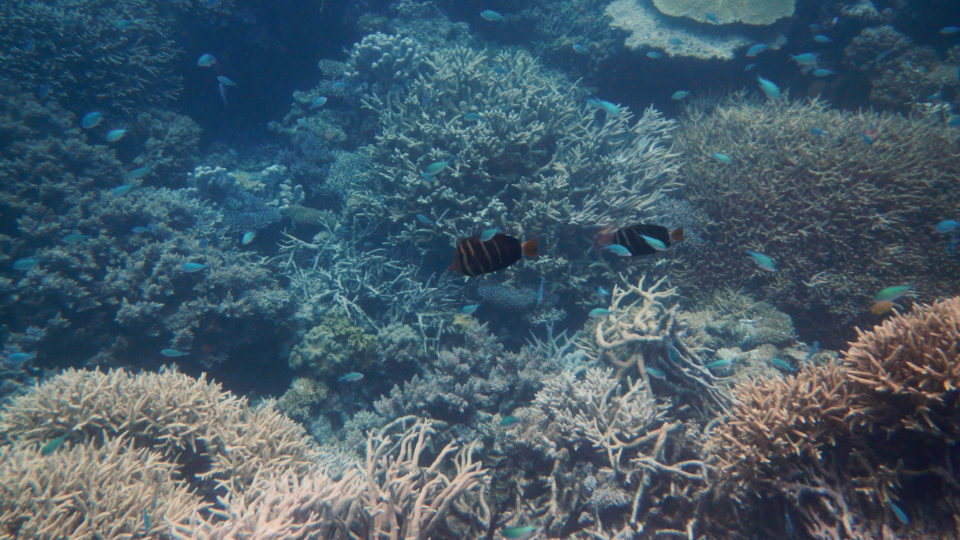
News about the world’s coral reefs has been relentlessly bad for a number of years.  Warming, acidifying oceans have wreaked havoc with coral reefs leading to enormous losses.  Nowhere have things been more dire than in Australia’s Great Barrier Reef.  Coral bleaching events have been increasingly common and severe over the past two decades.  In fact, only 7% of the Great Barrier Reef has escaped bleaching entirely since 1998.

While the future of the world’s coral reefs is very much uncertain as global heating continues, there is a recent bit of hopeful news.   According to a study published in Nature Climate Change, the response of the Great Barrier Reef to the extreme temperatures in 2017 was quite different from that of the previous year in the aftermath of back-to-back bouts of coral bleaching.

Surprisingly, corals that bleached in 2016 but managed to survive were more resistant to the recurrence of hot conditions in 2017.

Many corals don’t survive bleaching events at all and, of course,those corals don’t bleach for a second time. But the surviving corals from the 2016 bleaching event were tougher species.   As a result of bleaching, the mix of coral species on the reef is changing very rapidly.  The net result was that there was less bleaching in 2017 even though the temperatures that year were even more extreme than in 2016.

There have now been four mass bleaching events on the Great Barrier Reef over the past 20 years and it is only a matter of time before another one occurs triggered by the next marine heatwave. Almost half of the corals on the northern two-thirds of the reef have been killed.  But at least some of the reef is showing impressive survival skills.

**********

Web Links

A glimmer of hope for the world’s coral reefs

Photo, posted November 29, 2012, courtesy of Robert Linsdell via Flickr. 

Earth Wise is a production of WAMC Northeast Public Radio.
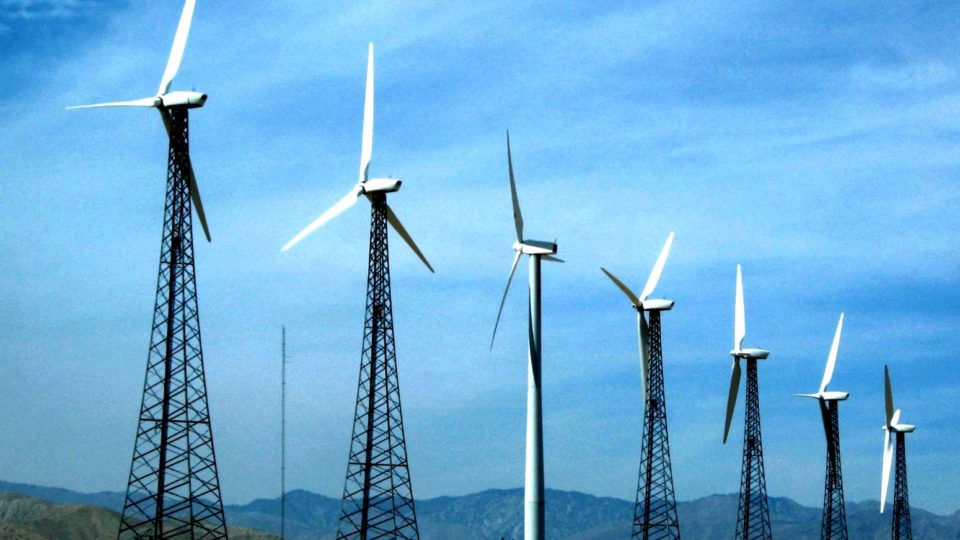
Energy Trends For A New Year

January 15, 2019 By EarthWise Leave a Comment

With a new year upon us, there are several energy trends to watch out for.

The most important one is that the fundamental shift toward slow-carbon technologies is continuing. This shift is taking place despite diminishing government policy support and even active government efforts to thwart it.  There is just too much momentum to stand in the way of low-carbon energy technologies.

Analysts at Bloomberg New Energy Finance estimate that over the next 30 years over 11 trillion dollars will be invested in energy power generation and power storage assets with 85% of it aimed at zero-carbon emission.  Dramatic reductions in green energy costs have resulted in legitimate cost competition between zero carbon sources of energy and fossil fuel generation.

In the coming year, battery technology will continue to play a growing role both as a storage medium for energy generated by sun and wind and for powering vehicles.

Another trend is that the world’s wealthiest economies are learning to grow without growing the demand for electricity.  This is important in the battle to reduce overall emissions.

Another key issue is addressing the energy needs of people who have no meaningful access to it and there are around 1.5 billion people in that category.   Emerging technologies based on solar power, wind energy, microgrids and other innovations mean that traditional power grids that remain out of reach to these people are not necessary.  There is the potential to address those needs without contributing to climate change.

The world is struggling to deal with the growing problem of the changing climate, but there are trends that provide at least some hope that we can move in the right direction.

**********

Web Links

Top 3 clean energy trends to watch out for in 2019

Photo, posted April 5, 2013, courtesy of Flickr. 

Earth Wise is a production of WAMC Northeast Public Radio.
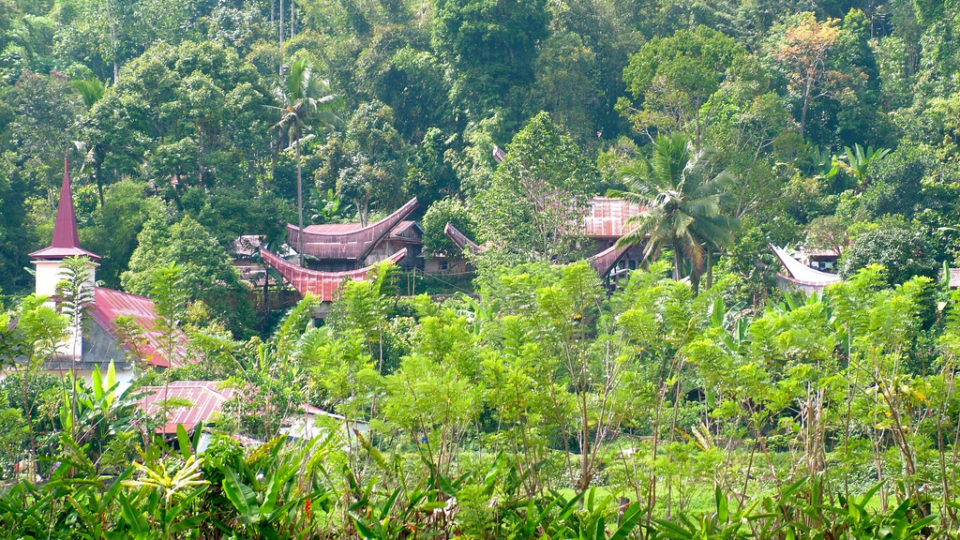
Endangered Language Species

January 14, 2019 By EarthWise Leave a Comment

There are approximately 7,000 languages spoken in the world today but only about half of them are expected to survive this century.  There are many factors contributing to the decline in languages.  Perhaps the most significant is globalization, which pushes countries and individuals to shift to national or international languages for economic reasons.   Other factors include the lack of support for regional languages in educational systems and mass media, persecution of minority linguistic groups by governments, and disruption of communities during war and emigration.

Predicting which languages will survive and which won’t is difficult.  A potential tipping point for languages is the same one affecting the survival of species:  climate change.  Many small linguistic communities are located on islands and coastlines that are vulnerable to hurricanes and rising sea levels.  Other communities live in places where increases in temperatures and erratic rainfall threaten traditional farming and fishing economies.

These climate-related changes will force communities to relocate,creating climate change refugees. Dispersing these people will lead to the splintering of linguistic communities and the need for the use of other languages.  Such changes will place additional pressures on languages that are already struggling to survive.

There are endangered languages in many places around the world.  Some are exotic such as the island of Sulawesi in Indonesia, which is home to dozens of distinct languages spoken by no more than a few thousand people. Others are much closer to home, such as in indigenous communities in Canada.

The rich tapestry of human language is just another of many things threatened by the changing climate.

**********

Web Links

The Conversation: The impact of climate change on language loss

Photo, posted May 19, 2009, courtesy of Flickr. 

Earth Wise is a production of WAMC Northeast Public Radio.

Can We Remove Enough CO2 From The Air?

January 9, 2019 By EarthWise Leave a Comment

As atmospheric carbon dioxide levels continue to set new records and the effects of climate change grow stronger, humanity has continued to procrastinate on reducing emissions.  As a result, it is increasingly clear that any strategy to avoid runaway climate change will have to involve the use of “negative emissions”- techniques or technologies that actually remove CO2 from the air.

There are both low-tech and high-tech methods for removing carbon dioxide from the atmosphere and both are likely to be needed. 

On the low-tech side, afforestation (planting trees where there were none before), reforestation, changes in forest management, rebuilding the carbon backbone in agricultural soils, and the use of energy from waste biomass are all ways to take carbon out of the atmosphere.

On the high-tech side, direct air capture technologies that take CO2 out of the air and store it in the ground are making rapid progress.   Right now, they are still very expensive,but that is changing.  There is an analogy to wind and solar technology. Not very long ago, both of those technologies were quite expensive but now their costs have plummeted to the point where they are often the cheapest way to make electricity.  With sufficient development effort and deployment, direct air capture technology could become quite affordable.

Some people advocate geoengineering as a solution for climate change.  While removing carbon dioxide amounts to tackling the root cause of the warming climate,geoengineering would address the problem by changing the climate again in some other way.  It is at best an extremely dangerous approach.

Removing CO2 using a combination of natural and man-made techniques is an important part of mitigating the effects of climate change.

**********

Web Links

Climate Solutions: Is It Feasible to Remove Enough CO2 from the Air?

Photo courtesy of Climeworks. 

Earth Wise is a production of WAMC Northeast Public Radio.

Speed Breeding Of Crops

January 4, 2019 By EarthWise Leave a Comment

A technique pioneered by NASA for the purpose of growing plants extra-terrestrially is now being applied here on earth to fast-track improvements in a range of crops.  The technique, known as speed breeding, has been adapted for use by British and Australian researchers on a scale ranging from vast greenhouses to desktop growth chambers.

Speed breeding uses enhanced LED lighting and day-long regimes of up to 22 hours to optimize photosynthesis and promote rapid growth of crops.  By speeding up the breeding cycle of plants,it is possible, for example, to grow six generations of wheat in a year compared with two generations using traditional breeding methods.

With shortened breeding cycles, genetic improvements such as yield gain, disease resistance and climate resistance can be fast-tracked in crops such as wheat, barley, chickpeas, various Brassica species, oil seed rape and peas.

The ability to do this in compact desktop chambers permits cutting-edge research to be performed inexpensively before being scaled up to large greenhouses.

Crop development is an increasingly important activity and speed breeding is increasingly attractive in light of the opposition in some quarters to modern gene-editing techniques to create GMO crops.  Speed breeding allows crop improvements via anon-GMO route.

The new technique is already being applied in Australia, which is experiencing one of the worst droughts on record.  It is being used to rapidly cycle genetic improvements to make crops more drought resilient.

Generation time in most plant species is a major bottleneck in applied research programs and breeding.  Speed breeding can greatly reduce this bottleneck, allowing scientists to respond more quickly to emerging diseases, the changing climate and increased demand for specific plant traits.

**********

Web Links

JIC joins European scientists to safeguard precision breeding

Photo, posted May 8, 2016, courtesy of Yair Aronshtam via Flickr. 

Earth Wise is a production of WAMC Northeast Public Radio.

A Water-Based Battery

January 3, 2019 By EarthWise Leave a Comment

https://earthwiseradio.org/wp-content/uploads/2019/01/EW-01-03-19-A-Water-Based-Battery.mp3

The transition from fossil fuel-based power plants to clean, renewable energy sources is accelerating as both wind and solar power get cheaper and increasingly become cost-competitive with traditional power sources.   The biggest stumbling block both energy sources face is that they cannot always supply power on demand but require the sun to shine and the wind to blow.

[Read more…] about A Water-Based Battery

The Problem Of Urban Growth

January 2, 2019 By EarthWise Leave a Comment

https://earthwiseradio.org/wp-content/uploads/2018/12/EW-01-02-19-The-Problem-of-Urban-Growth.mp3

The rapid expansion of cities around the world has accelerated in recent decades.  If current trends continue, the equivalent of a city the size of London could be created every seven weeks by the year 2050, according to a study at Texas A&M University.

[Read more…] about The Problem Of Urban Growth

Big Success From A Big Battery

January 1, 2019 By EarthWise Leave a Comment

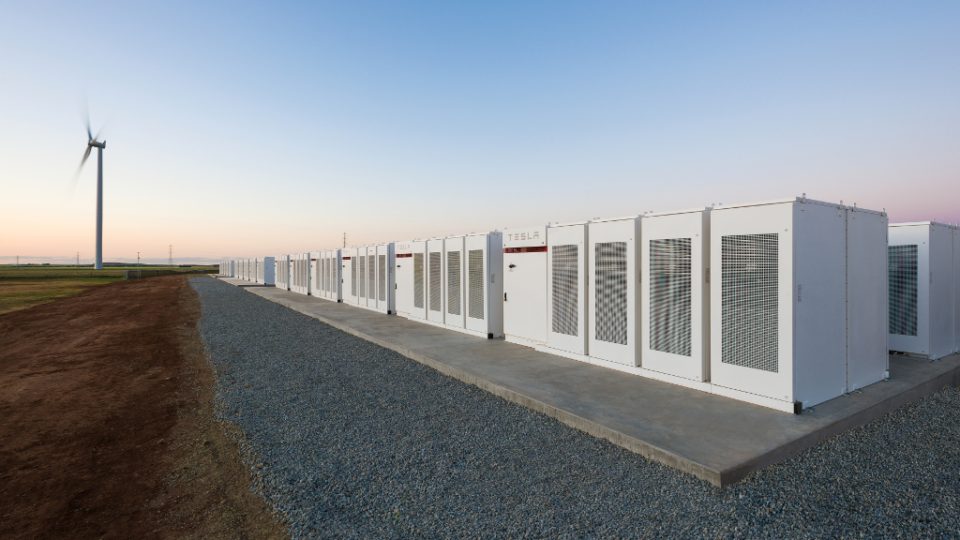
In the fall of 2017, Tesla took on the challenge of installing a 100-megawatt battery storage system in South Australia in under 100 days, promising that the system would be free if it was not built in time.  The project was actually completed in 54 days.

The system is located at the Hornsdale Wind Farm, which consists of 99 wind turbines with a generation capacity of 315 MW.  The Hornsdale Power Reserve installation is the world’s largest lithium-ion battery system and, after a year of operation,has proven to be a smashing success. Estimates are that the project has reduced costs associated with stabilizing the energy grid by about $29 million. The cost of the system was about $87 million, so it is paying for itself quite rapidly. The wind farm and battery systems are owned and operated by a French renewable energy company.

The battery storage system provides a variety of different services to the electric grid.  The primary motivation for it was to achieve system security and reduce the risk of blackouts and load shedding.   Having the battery system in place protects the regional interconnection from tripping,which reduces the risk of separation of South Australia from the National Electricity market.  The system also provides so-called ancillary services such as frequency control and other forms of electricity supply regulation.

The most significant contribution of the Hornsdale Power Reserve is that it has raised the profile of energy storage technology and demonstrated its unique capabilities.  Based on the success of the system, there are now about 2,500 MWh of new storage projects announced by the public and private sectors in Australia.

**********

Web Links

Tesla’s Battery Has Already Saved South Australia a Huge Amount of Money

Photo courtesy of Hornsdale Power Reserve. 

Earth Wise is a production of WAMC Northeast Public Radio.

Australian Plastic Bag Ban

December 31, 2018 By EarthWise Leave a Comment

Last summer, the two largest supermarket chains in Australia – Coles and Woolworth’s – decided to stop offering single-use disposable plastic bags to customers.  The initial public reaction was decidedly negative.   However, within just three months after the radical change, the country’s National Retail Association reported an 80% drop in the consumption of plastic bags nationwide.

In that three-month period, it is estimated that 1.5 billion bags have been prevented from use.   Some retailers are reporting reduction rates as high as 90% in the use of the bags.  The move by the big supermarkets has paved the way for smaller businesses to follow suit. The smaller businesses typically can’t afford to risk the wrath of their customers with a major change like this. Customers have to learn to bring their own bags or buy reusable bags at the store.

In much of Australia, the phase-out of plastic bags has been legislated, but the state of New South Wales, home to Sydney, the country’s largest city, has not enacted such legislation. So, supermarkets themselves are doing the work of getting rid of the bags.

The change has not been without hiccups.  For the first couple of months after the plastic bag ban was put in place, Woolworth’s saw poor sales in its stores.  However, customers eventually got used to the new way of doing things and sales levels returned.

Disposable plastic bags often find their way into the oceans where they break down into microparticles. Studies have shown that these plastic bits are ingested by a wide variety of marine life.  For example, a UK study found that 100% of sea turtles in the Pacific and Atlantic oceans as well as the Mediterranean Sea had plastic in their digestive systems.

**********

Web Links

Australia-wide ban leads to ’80 per cent drop’ in plastic bag consumption

Photo, posted September 18, 2018, courtesy of Matthew Paul Argall via Flickr.  

Earth Wise is a production of WAMC Northeast Public Radio.
Electricity From A Bionic Mushroom

December 28, 2018 By EarthWise Leave a Comment

https://earthwiseradio.org/wp-content/uploads/2018/12/EW-12-28-18-Electricity-from-a-Bionic-Mushroom.mp3

In an engineering feat straight out of a weird science-fiction story, researchers at Stevens Institute of Technology in New Jersey have taken an ordinary white button mushroom and used 3D printing technology to coat it with graphene microribbons and cyanobacteria to produce a device that generates electricity.

[Read more…] about Electricity From A Bionic Mushroom

Agroforestry

December 27, 2018 By EarthWise 2 Comments

https://earthwiseradio.org/wp-content/uploads/2018/12/EW-12-27-18-Agroforestry.mp3

It has become increasingly evident that reducing carbon dioxide emissions is not happening quickly enough to prevent runaway climate change and that negative emission techniques will need to be utilized as well.  Negative emissions means removing carbon dioxide that is already in the atmosphere.

[Read more…] about Agroforestry

A Breakthrough In Animal Identification

December 25, 2018 By EarthWise Leave a Comment

Researchers from the University of Wyoming have developed a computer model that can identify wild animals in camera-trap photographs with remarkable accuracy and efficiency.

This breakthrough in artificial intelligence (AI), detailed in a paper recently published in the scientific journal Methods in Ecology and Evolution, represents a significant advancement in the study and conservation of wildlife. According to the paper’s authors, “the ability to rapidly identify millions of images from camera traps can fundamentally change the way ecologists design and implement wildlife studies.”

This study builds on previous research from the university in which a computer model analyzed 3.2 million images captured by camera traps in Africa.  The A-I technique called deep learning categorized animal images at a 96.6% accuracy rate.  This was the same accuracy rate as teams of human volunteers achieved, but the computer model worked at a much more rapid pace. 

In the latest study, UW researchers trained a deep neural network on a powerful computer cluster to classify wildlife species using 3.37 million camera-trap images of 27 different animal species.  The model was tested on nearly 375,000 images at a rate of about 2,000 images per minute. It achieved a 97.6% accuracy rate, which is likely the highest accuracy to date in using machine learning for wildlife image classification. 

Artificial intelligence has been used in environmental science in other ways as well. For example, AI has been used to increase agricultural yields in farm fields and to help predict extreme weather. 

Maybe artificial intelligence can prove to be a game changer for the environment.   


**********

Web Links

Researchers Successfully Train Computers to Identify Animals in Photos

Photo, posted January 8, 2012, courtesy of the U.S. Fish and Wildlife Service via Flickr. 

Earth Wise is a production of WAMC Northeast Public Radio.

Falling Behind On Climate Goals

December 24, 2018 By EarthWise Leave a Comment

https://earthwiseradio.org/wp-content/uploads/2018/12/EW-12-24-18-Falling-Behind-on-Climate-Goals.mp3

A series of reports from both the US Government and from the United Nations has underlined the dangers presented by the increasing effects of climate change.  To date, national commitments to reduce emissions have come up short.

[Read more…] about Falling Behind On Climate Goals

Fighting Hunger With A Shrub

December 20, 2018 By EarthWise Leave a Comment

https://earthwiseradio.org/wp-content/uploads/2018/12/EW-12-20-18-Fighting-Hunger-with-a-Shrub.mp3

A recent study has revealed that a tough, woody shrub that grows throughout Western Africa can actually share its water with adjacent cultivated plants and boost grain production.

[Read more…] about Fighting Hunger With A Shrub

The Cockroaches Of The Ocean

December 14, 2018 By EarthWise Leave a Comment

https://earthwiseradio.org/wp-content/uploads/2018/12/EW-12-14-18-The-Cockroaches-of-the-Ocean.mp3

The coast of Northern California is home to underwater forests – huge, sprawling tangles of brown seaweed.  Kelp forests play a similar role in the oceans as the one that ordinary tree forests play on land.  Like trees, kelp absorbs carbon emissions and provides critical habitat and food for a wide range of species.

[Read more…] about The Cockroaches Of The Ocean

A Supermaterial From Plastic Waste

December 13, 2018 By EarthWise Leave a Comment

https://earthwiseradio.org/wp-content/uploads/2018/12/EW-12-13-18-A-Supermaterial-From-Plastic-Waste.mp3

Researchers at the National University of Singapore have created a way to convert plastic bottle waste into an ultralight aerogel material that has multiple potential applications.

[Read more…] about A Supermaterial From Plastic Waste

What’s In The Air?

December 12, 2018 By EarthWise Leave a Comment

https://earthwiseradio.org/wp-content/uploads/2018/11/EW-12-12-18-Whats-in-the-Air.mp3

Researchers at Yale are using some advanced technology to analyze air samples in order to obtain a detailed look at the molecular makeup of organic aerosols, which have a significant presence in the atmosphere.

[Read more…] about What’s In The Air?

A Plane With No Moving Parts

December 11, 2018 By EarthWise 1 Comment

https://earthwiseradio.org/wp-content/uploads/2018/12/EW-12-11-18-A-Plane-With-No-Moving-Parts.mp3

Airplanes have been with us for more than a century and they fly with the help of propellers, turbine blades or fans that noisily move them through the air.  Recently, MIT engineers have built and flown a plane with no moving parts.

[Read more…] about A Plane With No Moving Parts

Growing Use Of Wind And Solar Power

December 10, 2018 By EarthWise Leave a Comment

https://earthwiseradio.org/wp-content/uploads/2018/12/EW-12-10-18-Growing-Use-of-Wind-and-Solar.mp3

According to a new report from the U.S. Energy Information Administration, solar and wind energy now generate more than 20% of the electricity used in 10 states.  Topping the list is Iowa, which got 37% of its electricity from wind and solar in 2017.  The next three states were Kansas, Oklahoma, and South Dakota, all getting more than 30% of their power from the renewables.  The top five states, which adds North Dakota to the list, actually get nearly all of their renewable energy from wind.  In fact, during some months in 2017, Iowa and Kansas both got more than half of their electricity from wind.

[Read more…] about Growing Use Of Wind And Solar Power

  • « Go to Previous Page
  • Page 1
  • Interim pages omitted …
  • Page 80
  • Page 81
  • Page 82
  • Page 83
  • Page 84
  • Interim pages omitted …
  • Page 101
  • Go to Next Page »

Primary Sidebar

Recent Episodes

  • An uninsurable future
  • Clean energy and jobs
  • Insect declines in remote regions
  • Fossil fuel producing nations ignoring climate goals
  • Trouble for clownfishes

WAMC Northeast Public Radio

WAMC/Northeast Public Radio is a regional public radio network serving parts of seven northeastern states (more...)

Copyright © 2026 ·