• Skip to primary navigation
  • Skip to main content
  • Skip to primary sidebar

Earth Wise

A look at our changing environment.

  • Home
  • About Earth Wise
  • Where to Listen
  • All Articles
  • Show Search
Hide Search
You are here: Home / Archives for carbon monoxide

carbon monoxide

Wildfires And Air Quality | Earth Wise

October 26, 2023 By EarthWise Leave a Comment

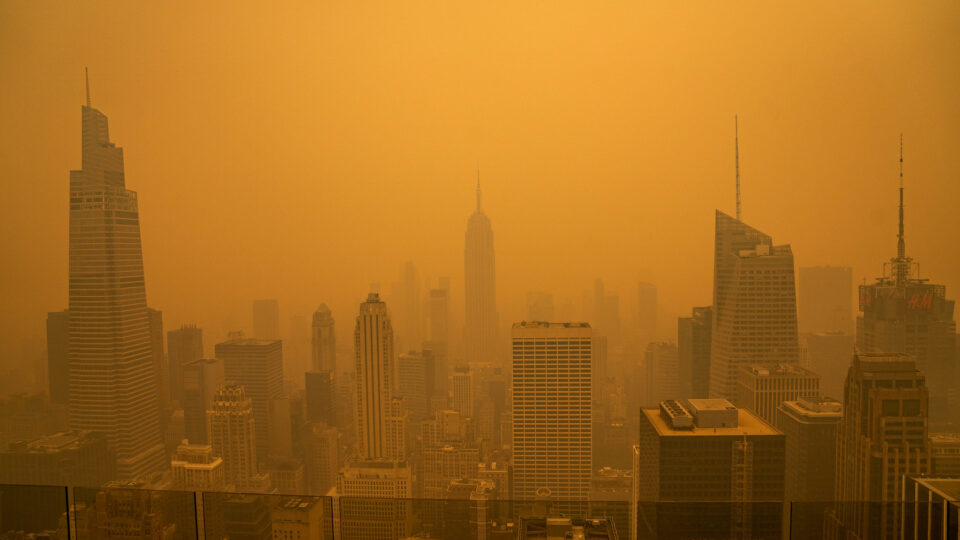
People in the Northeast have been dealing with unhealthy air quality in recent times because of smoke from hundreds of wildfires in Canada.  Canada has experienced a much higher than average incidence of blazes this year with nearly 500 fires burning uncontrolled at times.

It turns out that states far away from Canada aren’t necessarily free from the impact of the fires.  Early in October, smoke from a wildfire burning in Quebec made its way south all the way down to Florida and created unhealthy air quality and reduced visibility across much of the state.  Smoke from the same fire had created hazy air in Boston, New York City, and parts of Connecticut before heading south.

It took a rather unusual set of atmospheric conditions to make this happen.  The smoke drifted from Canada into the western Atlantic.  From there, it got trapped behind a cold front and was then pushed south along the east coast until it finally moved inland across Florida. 

Wildfires produce a variety of particles and gases from the burning of vegetation such as organic carbon, black carbon, nitrogen oxides, carbon monoxide and hazardous air pollutants.  The mixture of particles and gases in wildfire smoke is associated with respiratory symptoms like shortness of breath and reduced lung function, as well as dangerous cardiovascular effects.

Smoke from increasingly frequent and increasingly large fires has started to undo decades of gains in air quality brought about by air pollution policies.  According to researchers, wildfires in the United States in recent years have undone about 25% of past progress in cleaning up air pollution in states from coast to coast.

**********

Web Links

Wildfire Smoke From Canada Creates Unhealthy Air Quality in Florida

Photo, posted June 8, 2023, courtesy of Anthony Quintano via Flickr.

Earth Wise is a production of WAMC Northeast Public Radio
Turning Pollution Into Cash | Earth Wise     

April 22, 2022 By EarthWise Leave a Comment

Developing ways to turn pollution into cash

Power plants and other industrial facilities are a major source of carbon emissions.  There are a variety of techniques under development to prevent those emissions by capturing them rather than releasing them into the atmosphere.  All of them add costs to the functioning of the facility.  A good way to offset those costs is to convert the emissions into useful products, ideally making it profitable to capture emissions.

Engineers at the University of Cincinnati have developed an electrochemical system that converts carbon dioxide into ethylene, which is a chemical used in a wide range of manufacturing.  Ethylene has sometimes been called “the world’s most important chemical”.  It is used in many kinds of plastics, textiles, and the rubber found in tires and insulation. It is also used in heavy industry such as steel and cement plants as well as in the oil and gas industry.

The Cincinnati process is a two-stage cascade reaction that converts carbon dioxide to carbon monoxide and then into ethylene.  It is based on the underlying principle of the plug-flow reactor that is used for variety of production applications.  The study, published in the journal Nature Catalysis, demonstrates that the process has high ethylene selectivity – meaning that it effectively isolates the desired compound – as well as high productivity – meaning that it makes a lot of it.  The system will take more time to become truly economical, but the researchers are continuing to make progress on that front with improved catalysts.

The researchers believe that this technique can reduce carbon emissions and make a profit doing it.  Power plants and other facilities emit a lot of carbon dioxide.  With this process, it may be possible to capture it and produce a valuable chemical.

**********

Web Links

Conversion process turns pollution into cash

Photo, posted February 27, 2018, courtesy of Cyprien Hauser via Flickr.

Earth Wise is a production of WAMC Northeast Public Radio.

New York And Green Hydrogen | Earth Wise

August 23, 2021 By EarthWise Leave a Comment

Green hydrogen to be a part of New York's decarbonization strategy

In July, outgoing New York Governor Andrew Cuomo announced plans for the state to explore the potential role of green hydrogen as part of New York’s decarbonization strategy.

Green hydrogen is hydrogen produced using renewable energy, such as wind, solar, and hydro power.  While hydrogen itself is a carbon-free fuel, most of the hydrogen produced today is made with a process called natural gas reforming which has byproducts of carbon monoxide and carbon dioxide.  As a result, the environmental benefits of using hydrogen are largely lost.  Hydrogen is the most plentiful element in the universe but extracting it for use as a fuel is not easy.

Green hydrogen is obtained by splitting water molecules into their constituent hydrogen and oxygen parts.  In principle, oxygen is the only byproduct of the process.  The main drawback of electrolysis, as this process is called, is that it is energy intensive as well as being expensive.  But if that energy comes from renewable sources, then it is a clean process.

New York’s announcement is that the state will collaborate with the National Renewable Energy Laboratory and join two hydrogen-focused organizations to inform state decision-making, as well as make $12.5 million in funding available for long duration energy storage techniques and demonstration projects that may include green hydrogen.

Green hydrogen has the potential to decarbonize many of the more challenging sectors of the economy.  Hydrogen is a storable, transportable fuel that can replace fossil fuels in many applications.  Many experts believe that the so-called hydrogen economy could be the future of the world’s energy systems.  For that to happen, green hydrogen will need to be plentiful, sustainable, and inexpensive.

**********

Web Links

New York announces initiatives to explore green hydrogen for decarbonization

Photo, posted October 26, 2019, courtesy of Pierre Blache via Flickr.

Earth Wise is a production of WAMC Northeast Public Radio.

Dangerous Smoke From Australia’s Wildfires | Earth Wise

January 13, 2020 By EarthWise Leave a Comment

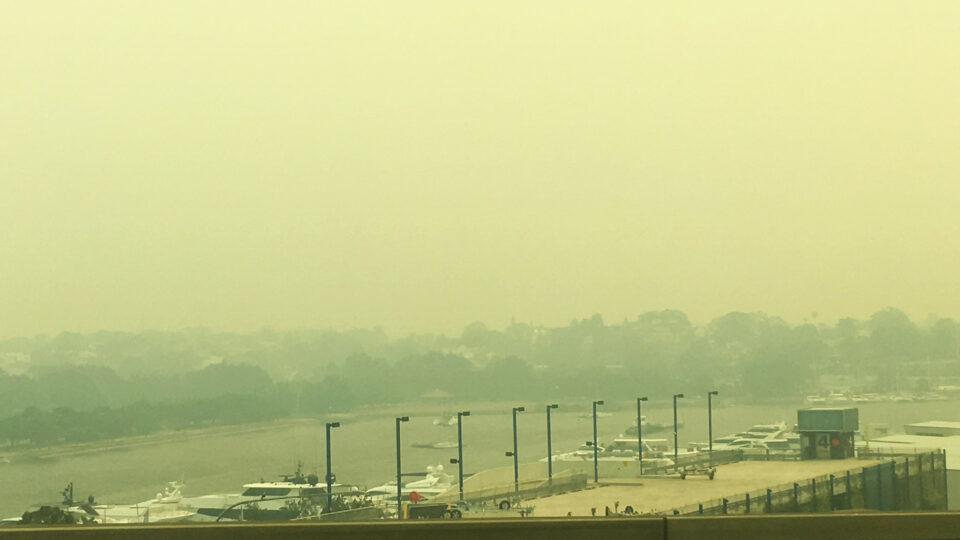
wildfire smoke in Sydney, Australia

Wildfires raging across Australia have devastated large swathes of land and prompted one of the largest evacuations in the country’s history.  The fires, which have scorched approximately 20 million acres, have also killed 27 people and affected an estimated one billion animals at the time of this recording. The fire season, though still young, already ranks as among the worst in Australia’s recorded history. 

Away from the flames, millions more in Australia are breathing unhealthy air as a result of the smoke from these wildfires. Wildfires release all sorts of dangerous air pollutants, like carbon monoxide and nitrous oxide.  But wildfires also release fine particulate matter (more commonly referred to as PM2.5), which can be transported long distances.  Breathing in these microscopic particles can lead to respiratory and cardiovascular problems.  High levels of PM2.5 are particularly harmful to older people, young children, and those with weakened immune systems.  

The Australian capital city of Canberra has been covered in a thick haze of smoke from nearby wildfires.  Canberra recorded its worst air quality day on January 2nd, when levels of PM2.5 spiked to more than 200 micrograms per cubic meter during the worst hour.

Smoke has also been fouling Sydney’s air off and on for months, with PM2.5 readings hitting nearly 400 micrograms per cubic meter last month during the highest hour of pollution. 

The U.S. EPA has in place an annual PM2.5 standard of 12 micrograms per cubic meter and a daily (or 24 hour) standard of 35. 

According to the IPCC, southern Australia is expected to see increased risk of fire as the planet continues to warm.  Regrettably, this could be the new normal. 

********** 

Web Links

Millions of Australians Are Choking on Smoke From Wildfires

Photo, posted December 5, 2019, courtesy of Flickr.

Earth Wise is a production of WAMC Northeast Public Radio.

Clean Gas From An Artificial Leaf

November 27, 2019 By EarthWise Leave a Comment

Photosynthesis is the process used by plants, algae and certain bacteria to harness energy from sunlight and turn it into chemical energy.  It is often described as the green engine of life on earth.

For quite some time, there have been extensive research efforts around the world in the area of artificial photosynthesis.  The goal is to somehow mimic the behavior of plants in order to generate clean-burning fuels using nothing more than sunlight and the carbon dioxide in the air.

Researchers at the University of Cambridge have recently demonstrated a so-called artificial leaf that can directly produce syngas using sunlight.   Syngas is a fuel gas mixture consisting primarily of hydrogen and carbon monoxide.  Most people haven’t heard of syngas, but many products are created using it.  Being able to produce it sustainably would be a critical step to a far greener chemical and fuel industry.

The artificial leaf contains two light absorbers, similar to the molecules in plants that harvest sunlight, which are combined with a catalyst made from the naturally abundant element cobalt.  When the device is immersed in water, one light absorber uses the catalyst to produce oxygen.  The other carries out the chemical reaction that reduces carbon dioxide and water into carbon monoxide and hydrogen.  The result is the syngas mixture.

It turns out that even a rainy or overcast day provides enough light to drive the process.

Previous artificial leaf devices have mostly just produced hydrogen.  The Cambridge device produces syngas thanks to the novel combination of materials and catalysts it uses.

The researchers are now focused on finding ways to use the technology to produce a sustainable gasoline substitute.

**********

Web Links

‘Artificial leaf’ successfully produces clean gas

Photo, posted August 15, 2014, courtesy of Mike Mozart via Flickr.

Earth Wise is a production of WAMC Northeast Public Radio.

Safer Places For Bus Riders

December 22, 2017 By EarthWise Leave a Comment

https://earthwiseradio.org/wp-content/uploads/2017/12/EW-12-22-17-Safer-Places-for-Bus-Riders.mp3

Taking the bus in crowded cities is a good way to reduce overall traffic, save money on gas, and do a good turn for the environment.   Unfortunately, bus riders often are exposed to large amounts of pollution in the process.

[Read more…] about Safer Places For Bus Riders

Lawnmower Pollution

October 25, 2017 By EarthWise Leave a Comment

https://earthwiseradio.org/wp-content/uploads/2017/10/EW-10-25-17-Lawnmower-Pollution.mp3

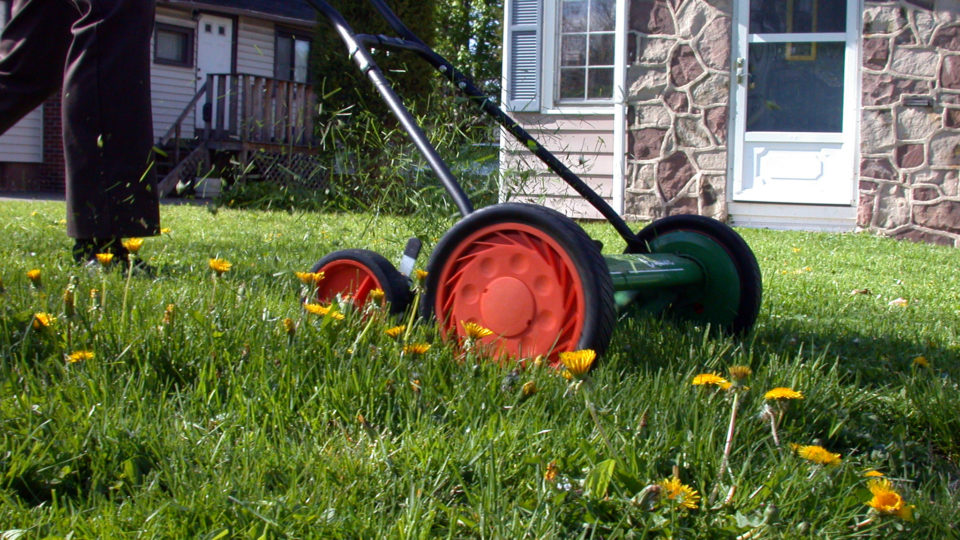
Over 50 million Americans mow their lawns each week, which uses 800 million gallons of gas per year and produces tons of air pollutants.  Garden equipment engines were completely unregulated with respect to emissions until the late 1990s and still emit high levels of carbon monoxide, volatile organic compounds, and nitrogen oxides.  In fact, gas mowers and their relatives like leaf blowers and edgers produce 5% of the air pollution in this country.

[Read more…] about Lawnmower Pollution

The Methanol Economy

June 8, 2017 By EarthWise

https://earthwiseradio.org/wp-content/uploads/2017/05/EW-06-08-17-The-Methanol-Economy.mp3

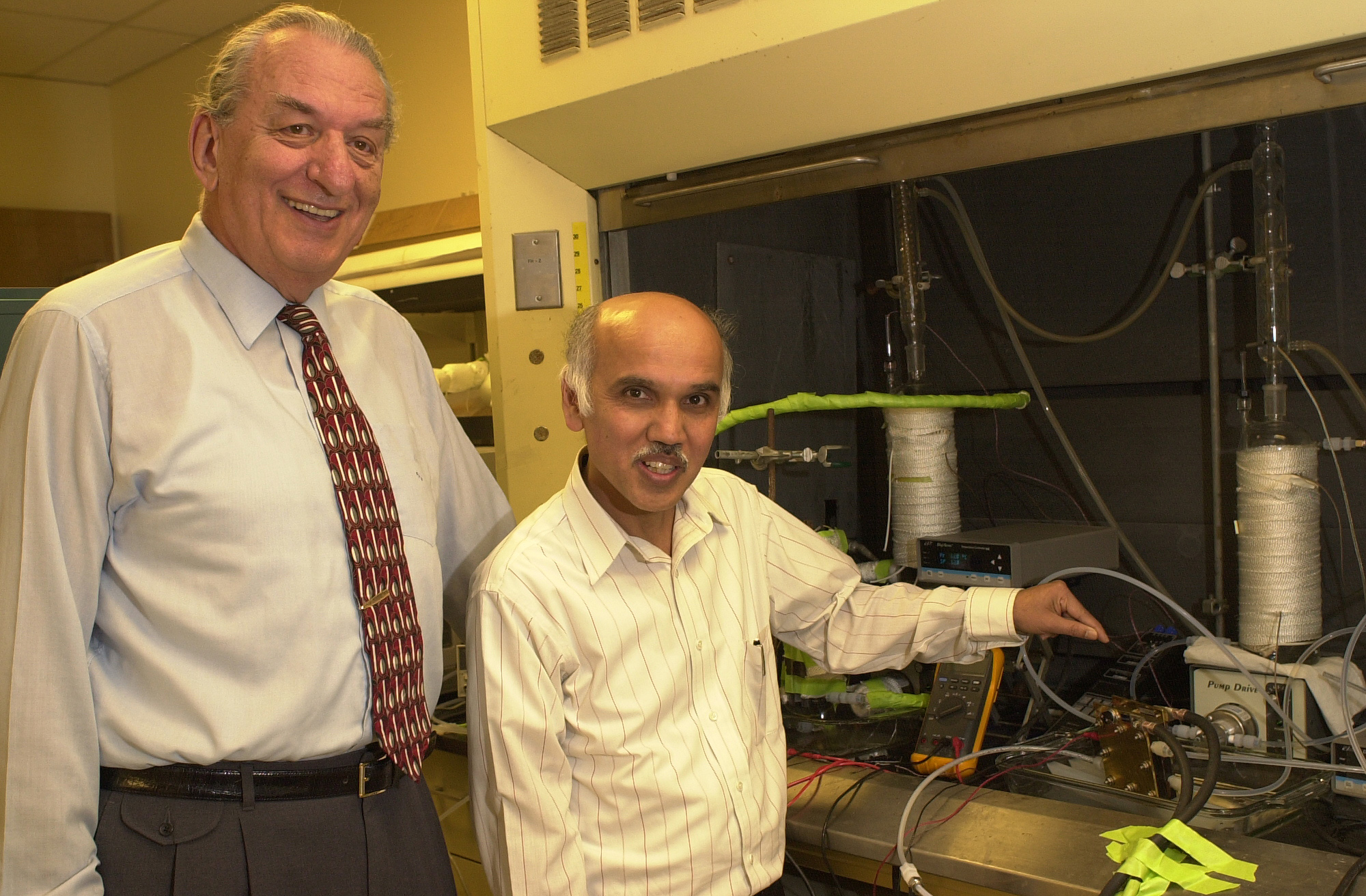
The methanol economy is an idea that was promoted by the late Nobel-prize-winning chemist George Olah since the 1990s.  The idea is to replace fossil fuels with methanol for energy storage, ground transportation fuel, and raw material for hydrocarbon-based products.   Methanol is the simplest alcohol and can be produced from a wide variety of sources ranging from fossil fuels to agricultural products to just carbon dioxide.  Methanol can be used directly as a fuel or it can be reformed into hydrogen, which can then itself be used as a fuel.

[Read more…] about The Methanol Economy

A Soy-Based Air Filter

February 16, 2017 By EarthWise

https://earthwiseradio.org/wp-content/uploads/2017/02/EW-02-16-17-Soy-Based-Air-Filter.mp3

Particulate matter and toxic chemical pollutants are a pervasive problem in the air people breathe in many places.  Poor air quality causes health problems worldwide and is a factor in diseases such as asthma, heart disease and lung disease.

[Read more…] about A Soy-Based Air Filter

Jet Fuel From Steel Plants

October 11, 2016 By WAMC WEB

https://earthwiseradio.org/wp-content/uploads/2016/10/EW-10-11-16-Jet-Fuel-from-Steel-Plants.mp3

Industries around the world are working to reduce their carbon emissions.  One very carbon-intensive industry is the airline industry and it is struggling to find ways to reduce its emissions even while air travel continues to be on the rise worldwide.

[Read more…] about Jet Fuel From Steel Plants

Primary Sidebar

Recent Episodes

  • An uninsurable future
  • Clean energy and jobs
  • Insect declines in remote regions
  • Fossil fuel producing nations ignoring climate goals
  • Trouble for clownfishes

WAMC Northeast Public Radio

WAMC/Northeast Public Radio is a regional public radio network serving parts of seven northeastern states (more...)

Copyright © 2026 ·