• Skip to primary navigation
  • Skip to main content
  • Skip to primary sidebar

Earth Wise

A look at our changing environment.

  • Home
  • About Earth Wise
  • Where to Listen
  • All Articles
  • Show Search
Hide Search
You are here: Home / Archives for strategies

strategies

Supermarket bargains and food waste

September 3, 2025 By EarthWise Leave a Comment

Food waste is a major global problem.  The UN estimates that one third of all food goes to waste.  Apart from the fact that this is happening in a world where many people don’t have enough to eat, food waste is both an economic and a climate problem.

Researchers from the University of Copenhagen and Southern Methodist University investigated how different types of grocery sales strategies affect people’s shopping and food waste.  The result was that bulk offers increase food sales by nearly 20%, but they also lead to increased food waste in people’s homes.

The study analyzed over 43,000 purchases of fresh vegetables in eight Swedish supermarkets.  When customers were offered “two-fer” offers, they bought significantly more than when only single items were available.  The attraction of a special offer can be strong.  But, according to a follow-up survey, food from bulk offers ended up in the trash more often.  People thought they were saving money, but often ended up buying more than they can eat.

The researchers tested two strategies for reducing overbuying.  One was to make the actual savings explicit by displaying the regular price next to the offer.  The second was to put a friendly reminder on the offer sign along the lines of “I’d love to come home with you if you eat me.”  Both of these approaches resulted in reduced sales of 9-11% compared to the original volume offer despite the sale price remaining the same. 

Clearly, small changes in marketing can make a big difference.  Supermarkets play a big role in the occurrence of food waste and they have the ability to help nudge consumers into better behavior.

**********

Web Links

Good deals – bad for the climate: Supermarket volume discounts lead to food waste

Photo, posted November 13, 2006, courtesy of Josh Hallett via Flickr.

Earth Wise is a production of WAMC Northeast Public Radio

Saving birds from buildings

July 1, 2025 By EarthWise Leave a Comment

A creative solution to save birds from buildings in Chicago

Researchers estimate that hundreds of millions of birds die hitting buildings every year in the United States.  Striking buildings is believed to be one of the major factors behind the nearly 30% decline in North American bird populations since 1970.

Chicago is one of the most dangerous cities for migrating birds based on its location and its numerous tall, glassy buildings.  Migrating birds that make their homes in forests and grasslands don’t perceive glass as solid and are confused by reflections.

While many Chicago skyscrapers are dangerous for birds, the Lakeside Center at McCormick Place is infamous for the fact that it claimed the lives of nearly a thousand birds on a single day in October 2023.

There are various strategies for reducing bird strikes.  Over decades, McCormick Place management has tried erecting strips of netting, broadcasting calls of birds of prey, and putting up silhouettes of them.  They commissioned a nine-acre park of native prairie and woodlands on the roof of a parking deck.  None of these things made a major difference.

Last summer, the building installed a pattern of dots over the surface of the building’s windows.  The dots are only a couple of inches apart, so even tiny hummingbirds don’t try to dart through.  The window treatment cost $1.2 million paid for by the state of Illinois.  People in the building scarcely notice the dots.  Their views of the city and lake are unimpaired.

The results are nothing short of remarkable.  During last fall’s migration, bird deaths were down by about 95% compared with the two previous autumns.  This spring’s migration has been with implications for glassy structures far beyond Chicago.

**********

Web Links

An Illinois Building Was a Bird Killer. A Simple Change Made a World of Difference.

Photo, posted May 19, 2023, courtesy of Warren LeMay via Flickr.

Earth Wise is a production of WAMC Northeast Public Radio

The problem of mountain lions

May 5, 2025 By EarthWise Leave a Comment

The presence of mountain lions poses a challenge for people

Mountain lions – also known as pumas, cougars, and even sometimes panthers – are the most widely distributed wild land mammal in the world.  They are found from Canada to South America.  There are an estimated 30,000 mountain lions in the United States, mostly in the West, but there are also mountain lions from the Midwest to the East Coast. 

Unlike wolves or grizzly bears, mountain lions are not managed by the federal government; they are managed by states and state regulations vary greatly.  In some places, hunting mountain lions is banned completely; in other places, it is always open season.

As more people encroach on wild land – building homes and small farms, as well as hiking and biking – the numbers of encounters between people and mountain lions are increasing.  And when mountain lions lose their fear of people, there is trouble.

Since 1890, there have been at least 32 fatal mountain lion attacks on humans and more than 170 non-fatal attacks.  California has seen the most attacks in the last 40 years with 22 people injured and four killed.  Despite this, Californians passed a ballot initiative in 1990 that bans all hunting of mountain lions.

There are strategies to reduce habituation and instill fear of humans in mountain lions.  One is called “tree-and-free” that uses dogs to chase mountain lions up trees.  But there are opponents of this and other measures employed. 

The fact is that there are simply too many mountain lions living in close proximity to humans and peaceful coexistence is very difficult to achieve.  Places where hunting lions is permitted have few problems with them, but that is not a solution that is acceptable in many places.  It’s a difficult problem.

**********

Web Links

Deadly Encounter: Mountain Lion Attacks Spark Controversy

Photo, posted March 26, 2013, courtesy of the USFWS via Flickr.

Earth Wise is a production of WAMC Northeast Public Radio
The green grab for land

March 27, 2025 By EarthWise Leave a Comment

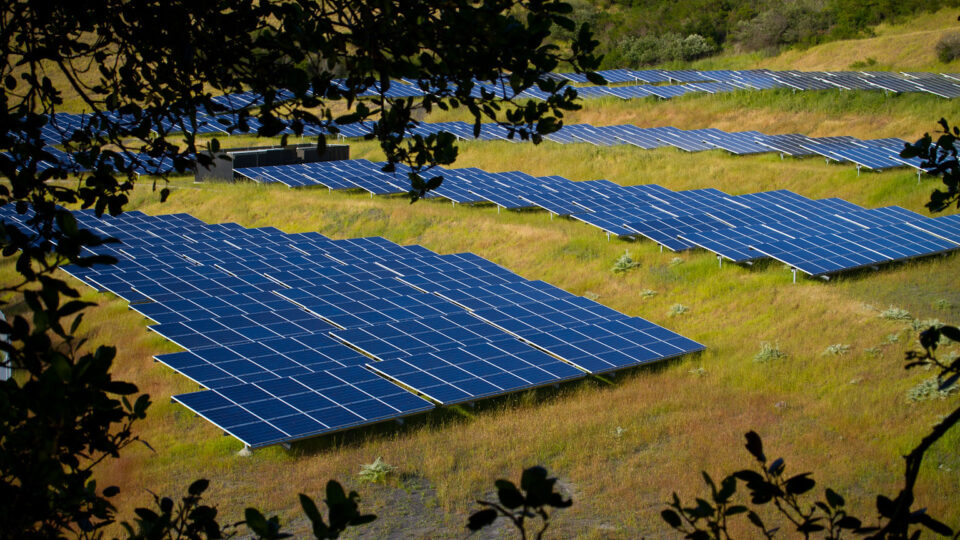
Solar and wind farms are spreading rapidly around the world.  Many economists believe that solar power has crossed the threshold where it is generally cheaper than other ways to make electricity and will become the dominant energy source in the next couple of decades.  As a result, both solar and wind farms are gobbling up more and more land around the world.  Estimates are that they will take up around 30,000 square miles by mid-century.

One concern is whether we are entering an era of trading food for energy.  Land conflicts seem inevitable since solar power operates best in unshaded areas with gentle winds and moderate temperatures, which are the same conditions favored by many crops.

China is installing more solar farms than the rest of the world combined.  Many of these are in the Gobi Desert, where there is no competing need for the land.  But some are in eastern China, in densely populated grain-growing areas.

There are a number of strategies that reduce the impact of solar farms on land use.  One approach is to put them on old industrial or brownfield sites that are otherwise unusable.  Another is floatovoltaics:  putting solar panels on the surface of lakes and reservoirs.  And then there is agrivoltaics, where solar panels are installed above crop fields or where livestock graze between or even beneath solar arrays.  China has more than 500 agrivoltaic projects that incorporate crops, livestock, aquafarming, greenhouses, and even tea plantations.

Green energy has both environmental and economic benefits to offer, but it must conserve nature and not excessively grab land needed for people, wildlife, and ecosystems.

***********

Web Links

‘Green Grab’: Solar and Wind Boom Sparks Conflicts on Land Use

Photo, posted May 25, 2011, courtesy of Michael Mees via Flickr.

Earth Wise is a production of WAMC Northeast Public Radio

Curbing food waste

February 3, 2025 By EarthWise Leave a Comment

Efforts to curb food waste are failing

According to the U.S. Department of Agriculture, as much as 40% of the food supply in the United States is wasted.  In fact, Americans generate more food waste than all but two countries.

To address this problem, the federal government announced a goal nearly a decade ago to cut food waste in half by 2030 compared to 2016 levels.  Doing so would bring food waste down to approximately 164 pounds per person annually.

However, according to a new study led by researchers from the University of California – Davis, since 2016, per capita food waste has actually increased instead of decreasing. 

The study, which was recently published in the journal Nature Food, looked at how state policies align with federal targets.  The research team found that state policies focus more on recycling methods, such as composting and anaerobic digestion, rather than on prevention and rescue strategies, like food donations or repurposing food for animal feed.

In 2021, the EPA revised its definition of food waste to no longer include recycling methods.  But when food is wasted, the resources used to grow the food, including energy, water, and fertilizer, are also wasted. 

In the study, the researchers analyzed state-level food waste reduction efforts across four areas: prevention, rescue, repurposing, and recycling.  They found that recycling policies offered the most potential for diversion. Despite this, most states still fell short of the federal goal of 164 pounds per person annually. 

According to the research team, more comprehensive policies to address food waste must be implemented as soon as possible.

**********

Web Links

States Struggle to Curb Food Waste Despite Policies

Photo, posted June 28, 2021, courtesy of Ivan Radic via Flickr.

Earth Wise is a production of WAMC Northeast Public Radio

Wrong trees in the wrong places

January 20, 2025 By EarthWise Leave a Comment

Temperatures in cities are rising around the world and urban heat stress is already a major problem.  Extensive surfaces of man-made materials absorb the sun’s energy, and lead to temperatures well above those in the surrounding countryside.  This is known as the urban heat island effect, and it can lead to greater energy use, higher air pollution levels, and a greater risk of heat-related illnesses, as well as death. 

Some cities have already started implementing mitigation strategies, with tree planting prominent among them.  Planting trees can cool the climate by absorbing carbon dioxide, providing shade, and releasing water vapor, which lowers air and surface temperatures. 

However, while trees can cool cities significantly during the day, new research from the University of Cambridge in the U.K. shows that tree canopies can also trap heat and raise temperatures at night. 

According to the study, which was recently published in the journal Communications Earth & Environment, planting the wrong species or the wrong combination of trees in suboptimal locations or arrangements can limit their benefits.

The researchers found that in temperate climates, trees can cool cities by up to 6°C during the day but can increase nighttime temperatures by 1.5°C.  Cities with open layouts in temperate and tropical climates benefit from a mix of evergreen and deciduous trees, enhancing cooling by 0.5°C more than in cities with only deciduous or evergreen trees. 

The researchers hope their findings will help urban planners choose the best combinations of trees and planting locations to combat urban heat stress.

**********

Web Links

Wrong trees in the wrong place can make cities hotter at night, study reveals

Photo, posted October 29, 2017, courtesy of Lars Plougmann via Flickr.

Earth Wise is a production of WAMC Northeast Public Radio
Rainfall and sea turtles

October 4, 2024 By EarthWise Leave a Comment

Rainfall has a major impact on sea turtles

There are seven species of sea turtles that inhabit the world’s oceans. Six of the seven sea turtle species – all of them except the flatback – are present in U.S. waters, and are listed as threatened or endangered under the Endangered Species Act. 

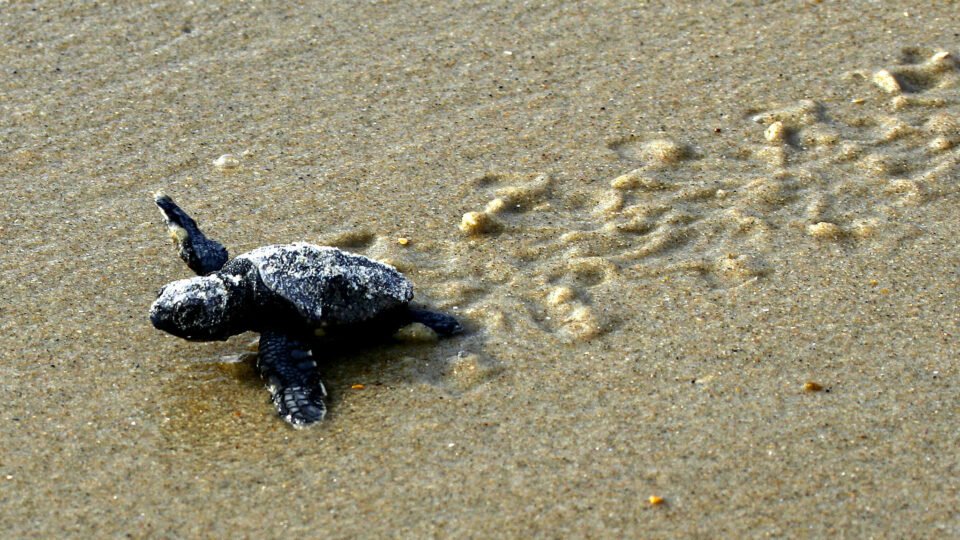
Sea turtles, which have been around for more than 100 million years, spend the majority of their lives in the ocean, but they do periodically come ashore to nest.  Female sea turtles lay their eggs in the sand and then return to the ocean.  Survival odds for sea turtle hatchlings are quite bleak.  In fact, only one out of every 1,000 makes it to adulthood. 

Research shows that both air and sand temperatures are critical for sea turtle hatchling development.  Cooler temperatures produce larger, heavier hatchlings with more males.  Hatchling size matters because larger hatchlings, which can move faster, are more likely to survive because they spend less time on risky beaches.  But rising temperatures might shorten incubation periods, and erratic rainfall can disrupt growth, potentially affecting survival.

A new international study by researchers from Florida Atlantic University and the University of Tübingen in Germany found that fluctuating rainfall patterns have a greater impact than changes in air temperature on sea turtle hatchling development. 

The results, which were recently published in the journal BMC Ecology and Evolution, reveal that the impact of rainfall varies between species.  As climate change shifts rainfall patterns, the impact on sea turtle nesting sites suggests that global conservation strategies for some species – like loggerhead and green sea turtles – likely need to be updated.

**********

Web Links

Rain or Shine? How Rainfall Impacts Size of Sea Turtle Hatchlings

Sea Turtle

Photo, posted August 27, 2015, courtesy of USFWS/Orsulak via Flickr.

Earth Wise is a production of WAMC Northeast Public Radio

Good owls and bad owls

May 29, 2024 By EarthWise Leave a Comment

In the forests of the Pacific Northwest, spotted owls have been the subject of environmental concern for more than 30 years.  Over the past 20 years, northern spotted owl populations have declined by up to 80% as the birds have faced marginalized territories and increasing numbers of wildfires.  Only about 3,000 of them remain on federal lands.  Spotted owls are picky eaters and are not very adaptable.

The barred owl, a larger and more ornery species, has been moving in on spotted owl turf for 50 years, competing for food and space, and out-reproducing them and chasing them out of their nesting spots.

A last-ditch effort to rescue the northern spotted owl from possible extinction has been proposed by the U.S. Fish and Wildlife Service.  The plan would be to eradicate up to half a million barred owls over the next 30 years in Washington, Oregon, and Northern California.  The owls would be dispatched using cheap and efficient methods, such as shotguns.

The concept of killing off vast numbers of barred owls is awful, and nobody likes the idea.  However, other strategies have failed, and time is running out.  The only way to preserve the northern spotted owl is to protect and increase its habitat and have fewer barred owls.

To say that the proposed plan is controversial is a massive understatement.  A coalition of 75 wildlife and animal welfare organizations described it as a “colossally reckless action.”

A central issue in the debate is whether humans are responsible for this situation and should try to rectify it or, despite our desire to protect the spotted owl, we should just let nature take its course.

**********

Web Links

They Shoot Owls in California, Don’t They?

Photo, posted April 4, 2022, courtesy of Kyle Sullivan / BLM via Flickr.

Earth Wise is a production of WAMC Northeast Public Radio
Hydrogen hubs

November 2, 2023 By EarthWise Leave a Comment

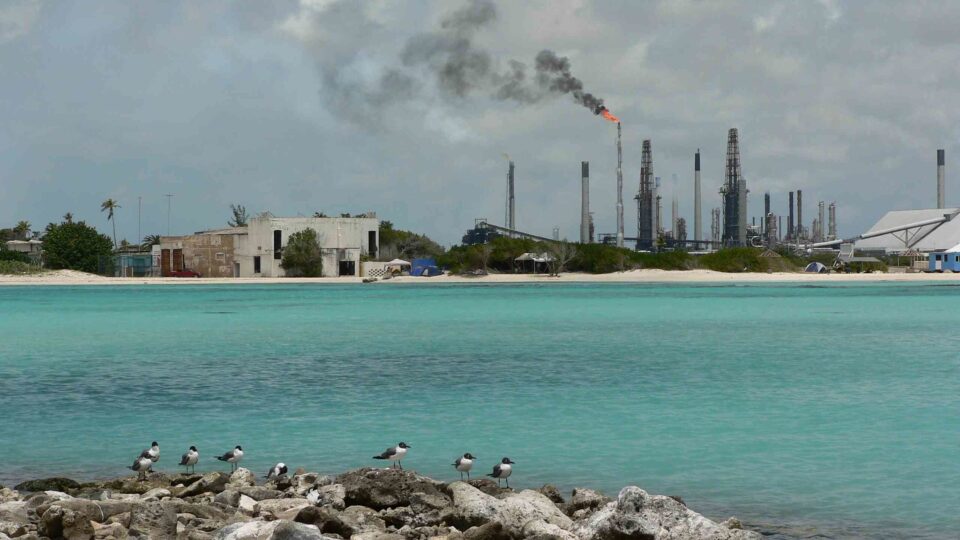
The Infrastructure Investment and Jobs Act of 2021 earmarked $7 billion in federal funding aimed at accelerating the commercial-scale deployment of hydrogen as well as driving down its cost.  Clean hydrogen is considered to be a key technology for cleaning up hard-to-decarbonize industrial sectors like refining, chemicals, and heavy-duty transport. 

On October 13th, the Department of Energy named seven regional clean hydrogen hubs which will provide clean hydrogen production, storage, delivery, and end-use components.  The so-called H2Hubs are expected to collectively produce three million metric tons of hydrogen annually. 

One selected project is the Appalachian Hydrogen Hub that includes West Virginia, Ohio, Kentucky, and Pennsylvania.  Another is the California Hydrogen Hub, that will produce hydrogen exclusively from renewable energy and biomass.  Then there is the Gulf Coast Hydrogen Hub, centered in the Houston, Texas region.  A fourth hub is the Heartland Hydrogen Hub, which includes Minnesota, North Dakota, and South Dakota.  A fifth hub is the Mid-Atlantic Hydrogen Hub, that includes Pennsylvania, Delaware, and New Jersey.  The sixth is the Midwest Hydrogen Hub that includes Illinois, Indiana, and Michigan.  Finally, there is the Pacific Northwest Hydrogen Hub that includes Washington, Oregon, and Montana.

Each of these hubs involve multiple partner organizations in their regions and each has specific goals and strategies. The seven centers are located all around the country and are intended to jumpstart a national network of clean hydrogen producers, consumers, and connective infrastructure.

**********

Web Links

Hydrogen hubs have arrived. Here are the big winners of the $7 billion sweepstakes

Photo, posted August 17, 2010, courtesy of David Stanley via Flickr.

Earth Wise is a production of WAMC Northeast Public Radio
An Accelerating Rate Of Mountain Forest Loss | Earth Wise

April 27, 2023 By EarthWise Leave a Comment

Recent study demonstrates how mountain forest loss is accelerating

Mountains contribute disproportionately to the Earth’s diversity of life.  While mountains account for about 25% of the land area on Earth, they are home to more than 85% of the mammal, bird, and amphibian species.  But alarmingly, forested mountain habitats in which these species live are disappearing, and they appear to be disappearing at an accelerating rate.

According to a new study recently published in the journal One Earth, more than 300,000 square miles of mountain forest has been lost globally since 2000, which is an area larger than the state of Texas. 

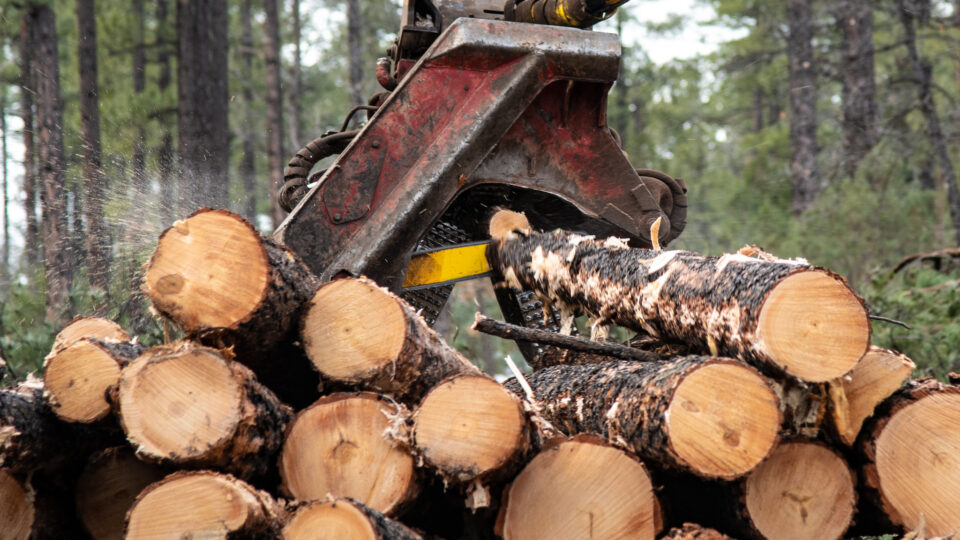
A research team led by scientists from Leeds University in the United Kingdom and the Southern University of Science and Technology in China tracked changes in mountain forests on an annual basis from 2001 to 2018.  The researchers found logging to be the biggest driver of mountain forest loss, responsible for 42% of the overall decline.  This is followed by wildfires at 29%, so-called “slash-and-burn” cultivation at 15%, and permanent or semi-permanent agriculture at 10%.  Significant losses occurred in Asia, Africa, Europe, Australia, and South America, but not in Oceania or North America.

The research team also found that the rate of mountain forest loss seems to be accelerating: in fact, the annual rate of loss increased 50% from 2010-2018 when compared with 2001-2009.

While developing additional forest protection strategies and interventions is critical, the researchers emphasize the importance of also considering food production, livelihoods, and human wellbeing in any new measures.

**********

Web Links

Mountain forests are being lost at an accelerating rate, putting biodiversity at risk

Photo, posted December 6, 2018, courtesy of Lance Cheung / USDA via Flickr.

Earth Wise is a production of WAMC Northeast Public Radio

Strategies To Cool Off Cities | Earth Wise

July 2, 2021 By EarthWise Leave a Comment

Effective strategies to naturally cool cities

Heatwaves in cities are becoming increasingly common and increasingly intense.  The warming climate is a big factor, but it is the nature of our cities that really drives up temperatures.  Solar radiation stored throughout the day on asphalt and buildings is released slowly during the night, which generates significant heat stress.

A study carried out by a major Barcelona university and published in the journal Urban Climate looked at the effectiveness of various ways to mitigate the heating effects in cities.  In particular, the study examined the effects of the use of white roofs on buildings and the expansion of urban green areas with daily irrigation in the Barcelona metropolitan area.  It simulated various scenarios incorporating combinations of these two mitigation strategies.

The strategy with the greatest impact was a combination of the use of both white roofs and the addition of six urban parks, which is a target set by the Barcelona Urban Master Plan.  This scenario resulted in an average temperature reduction of 2.25 degrees Fahrenheit.  The maximum reduction occurs during the mid-afternoon with a reduction of 7 degrees and the combination still provides more than 3 degrees of reduction at 9 pm.  Reducing temperatures this way also results in a reduction in energy consumption, with 26% less spending on air conditioning.

The 2-pronged strategy combines the benefits of reducing the temperature at night due to more urban green areas with the reduction of daytime heat due to both the increased reflectivity of white roofs as well as the irrigation of the green areas.

The study demonstrates how modeling efforts can help urban planners to counteract the impacts of heatwaves, which are likely to increase with climate change and intensification of urbanization.

**********

Web Links

White roofs and more green areas would mitigate the effects of heat waves in cities

Photo, posted January 16, 2011, courtesy of Sean MacEntee via Flickr.

Earth Wise is a production of WAMC Northeast Public Radio.

Recycling Solar Panels | Earth Wise

October 1, 2020 By EarthWise Leave a Comment

Solar panels need to be recycled

It is inevitable that the things we make and use eventually outlive their useful lives and become waste that we have to deal with.  Solar panels, despite their impressively long lifetime, can’t escape this general principle.   As pioneering solar panels near the end of their 30-year electronic lives, they could well become the world’s next big wave of e-waste.

According to the International Renewable Energy Agency, nearly 90 million tons of solar panels will have reached their end of life by the year 2050, resulting in about 7 million tons of new solar e-waste per year.

Solar photovoltaic deployment has grown at unprecedented rates in recent years.  The total global installed capacity is about 600 GW today; projections are that there will be 1,600 GW by 2030 and 4,500 GW by 2050.

Solar panels contain valuable materials, including silver and high-purity silicon.  But current recycling procedures are not cost-effective.   Only about 10% of panels are currently recycled in the U.S.   The rest go to landfills or are shipped overseas to become another country’s problem.

Before solar waste becomes a major problem, the industry needs to better address the issue.  Strategies include improving the design of panels to align with recycling capabilities as well as developing new recycling methods that can more efficiently extract and purify the valuable materials in the panels.  Industry researchers are also looking into ways to repair and resell panels that are still in good condition and to repurpose old panels for less demanding functions like e-bike charging stations and housing complexes.

Like most things, solar panels do fail over time and with a rapidly growing number of them in the world, we need to figure out how to avoid them adding to the world’s problems.

**********

Web Links

Solar Panels Are Starting to Die. Will We be Able to Recycle the E-Waste?

Photo, posted January 6, 2006, courtesy of Flickr.

Earth Wise is a production of WAMC Northeast Public Radio.

Living In Extreme Heat | Earth Wise

June 3, 2020 By EarthWise Leave a Comment

extreme heat from climate change

Global climate change has already left observable effects on the planet.  Glaciers have shrunk, trees are flowering sooner, plant and animal ranges have shifted, and so on. Many effects of climate change that scientists had predicted in the past are now occurring.  The loss of sea ice, intensifying heat waves, and accelerating sea level rise are some examples.

According to a new study recently published in the journal Proceedings of the National Academy of Sciences, climate change is going to affect humans earlier, harder, and more widely than previously projected.  The research team found that one billion people will be either displaced or endure insufferable heat for every one degree Celsius rise in global temperatures.  

Under a worst case climate scenario, land that one third of the world’s population currently calls home will be as hot as the hottest parts of the Sahara desert within 50 years.  Even under a more optimistic climate outlook, 1.2 billion people will still be exposed to temperatures outside the climate niche in which humans have thrived for at least 6,000 years.

The majority of the human population has always lived in regions where the average annual temperatures were between 43 degrees Fahrenheit and 82 degrees Fahrenheit.  These are ideal temperatures for human health and for food production.  But this temperature range is shrinking and shifting as a result of climate change. 

The study’s authors predict there will be more change in the next 50 years than there has been in the past 6,000 years.  They hope their findings will convince policymakers to accelerate their plans for emissions reductions and other climate mitigation strategies.   

**********

Web Links

Future of the human climate niche

One billion people will live in insufferable heat within 50 years – study

Photo, posted November 22, 2008, courtesy of Ronnie Finger via Flickr.

Earth Wise is a production of WAMC Northeast Public Radio.

A Powerful Case For Protecting Whales

October 24, 2019 By EarthWise Leave a Comment

Efforts to mitigate climate change typically face two major challenges.  One is to find effective ways to reduce the amount of atmospheric carbon dioxide.  The other is how to raise enough money to implement climate mitigation strategies. 

Many proposed solutions to climate change, like carbon capture and storage, are complex, expensive, and in some cases, untested.  What if there was a low-tech solution that was effective and economical?

Well, it turns out there is one, and it comes from a surprisingly simple, “no-tech” strategy to capture CO2: increase global whale populations. 

According to a recent analysis by economists with the International Monetary Fund, whales help fight climate change by sequestering CO2 in the ocean. 

Whales sequester carbon in a few ways.  They hoard it in their fat and protein-rich bodies, stockpiling tons of carbon apiece.  When whales die, they turn into literal carbon sinks on the ocean floor.  While alive, whales dive to feed on tiny marine organisms like krill and plankton before surfacing to breathe and excrete. Those latter activities release an enormous plume of nutrients, including nitrogen, iron, and phosphorous, into the water.  These so-called “poo-namis” stimulate the growth of phytoplankton, microscopic marine algae that pull CO2 out of the air and return oxygen to the air via photosynthesis.  Phytoplankton are responsible for every other breath we take, contributing at least 50% of all oxygen to the atmosphere and capturing approximately 40% of all CO2 produced. 

With other economic benefits like ecotourism factored in, economists estimate that each whale is worth $2 million over its lifetime, making the entire global population possibly a one trillion dollar asset to humanity.

*********

Web Links

How much is a whale worth?

Photo, posted June 12, 2013, courtesy of Gregory Smith via Flickr.

XXXXXXXXXXXXXXXXXX

Hundred-Year Floods Becoming One-Year Floods

September 26, 2019 By EarthWise Leave a Comment

By definition, 100-year floods are intense flooding events that historically tend to happen once every 100 years.  Put another way, a 100-year flood has a 1 percent chance of happening in any given year.

According to new research published in the journal Nature Communications, rising global temperatures may turn 100-year floods into annual occurrences in parts of the United States.  The increase in severe coastal flooding events by the end of this century will be a result of rising sea levels and stronger, more frequent tropical storms and hurricanes.

The study, led by researchers at Princeton University and MIT, examined flood risk for 171 counties along the US East Coast and the Gulf of Mexico.  Their analysis concluded that 100-year floods will become annual events in New England.  In the US Southeast and Gulf of Mexico, counties could experience such floods as often as every year up to as seldom as every 30 years.

Previously, most analysis of coastal flooding has looked only at the impact of sea level rise on flood risk.  This new research combined the risk of rising seas with projected changes in coastal storms over the course of this century.  Data from the Gulf of Mexico revealed that the effect of stronger storms is comparable with or even more significant than the effect of sea level change for 40% of the counties studied.  So, neglecting the effects of storm climatology change is likely to significantly underestimate the impact of climate change in many places.

The hope is that more comprehensive flood risk data can be used to create more effective climate resiliency strategies all the way down to the county level.

**********

Web Links

100-Year Floods Could Soon Happen Annually in Parts of U.S., Study Finds

Photo, posted August 31, 2017, courtesy of the U.S. Department of Agriculture via Flickr.

Earth Wise is a production of WAMC Northeast Public Radio.

Deepwater Impacts Lingering

May 10, 2019 By EarthWise Leave a Comment

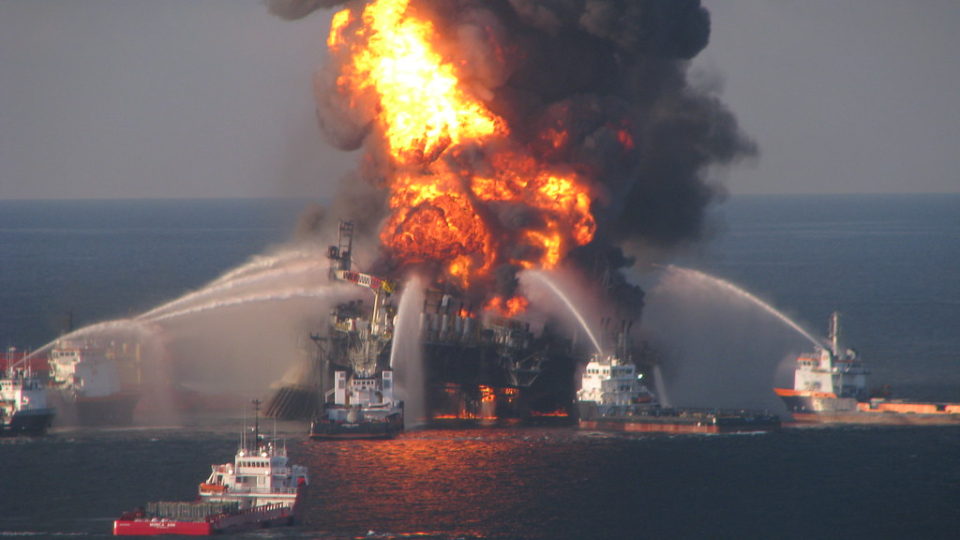
On April 20, 2010, an explosion on the BP-owned Deepwater Horizon drilling rig released an estimated 210 million of gallons of oil into the Gulf of Mexico.  Some of the oil was recovered, burned, or dispersed at sea, while some washed up onto coastal shorelines. 

Now, more than nine years later, a long-term study suggests the oil is still affecting the salt marshes of the Gulf Coast.  A multi-institutional research team began sampling in the region once the spill was contained and continue their work to this day.

The researchers found that heavily-oiled marsh areas remained less healthy than less polluted sites more than six years after the spill.  They fear that complete recovery of these oil-soaked regions will likely take more than a decade. 

But the researchers also discovered that salt marsh grasses play a key role in coastal wetland recovery.  Two plants dominate healthy salt marshes in the Gulf: smooth cordgrass and black needlerush.  Single-celled, plant-like organisms known as benthic microalgae also abound in healthy salt marshes, as do many small invertebrates. 

In heavily-oiled areas, the researchers found that nearly all the plants died, and benthic microalgae and small invertebrate populations declined significantly.  Importantly, however, they also found that it was only after smooth cordgrass started its comeback in these areas that invertebrate populations began to recover.  They noted that these salt marsh grasses provide habitat, bind soil, slow water, facilitate colonization, and fuel the food web. 

Plants are the foundation of and play a crucial role in salt marshes.  The researchers hope these findings will help shape the mitigation strategies of any future oil spills. 

**********

Web Links

Continuing impacts of Deepwater Horizon oil spill

Photo, posted April 21, 2010, courtesy of Deepwater Horizon Response via Flickr.

Earth Wise is a production of WAMC Northeast Public Radio.

Disease On Coral Reefs

February 19, 2019 By EarthWise Leave a Comment

The warming oceans have led to bleaching events in coral reefs around the world, but bleaching is not the only problem corals face.  Disease outbreaks are also becoming more frequent, severe, and widespread.

Many factors are contributing to the problem, including pollution and nitrogen runoff from fertilizers and coastal sewer and septic systems.  However, the key culprit is likely the steadily increasing ocean temperatures, which are the cause of coral bleaching.  Elevated water temperatures can cause coral polyps to expel the algae that sustains them and gives them color. 

According to scientists, bleaching makes corals more susceptible to illness.  In the Caribbean, a coral disease hotspot, about 80% of coral cover has disappeared, largely from outbreaks of “white band disease”, so called because of a white band of dead tissue that forms in affected corals.  Two crucial reef-building species, elkhorn and staghorn coral, are now nearing extinction in the regions.  The reef extending along the Florida coastline is the third largest reef ecosystem in the world and nearly 35% of it has been lost to disease.

Estimates are that disease outbreaks have wiped out at least 6% of the corals on the Great Barrier Reef in Australia.  In that region, diseases are more prevalent in areas where corals were damaged by fishing and other human activity because wounded coral provides an entry point for pathogens and bacteria.

In the face of climate change and mounting disease outbreaks, scientists are scrambling for solutions to stave off catastrophe.  Assisting the migration of hardier coral species and breeding so-called “super corals” are among the strategies being pursued.  It is unknown whether these and other forms of intervention can be used on a wide enough scale to really make a difference.

**********

Web Links

As Disease Ravages Coral Reefs, Scientists Scramble for Solutions

Photo, posted November 29, 2012, courtesy of Robert Linsdell via Flickr.

Earth Wise is a production of WAMC Northeast Public Radio.

Can We Remove Enough CO2 From The Air?

January 9, 2019 By EarthWise Leave a Comment

As atmospheric carbon dioxide levels continue to set new records and the effects of climate change grow stronger, humanity has continued to procrastinate on reducing emissions.  As a result, it is increasingly clear that any strategy to avoid runaway climate change will have to involve the use of “negative emissions”- techniques or technologies that actually remove CO2 from the air.

There are both low-tech and high-tech methods for removing carbon dioxide from the atmosphere and both are likely to be needed. 

On the low-tech side, afforestation (planting trees where there were none before), reforestation, changes in forest management, rebuilding the carbon backbone in agricultural soils, and the use of energy from waste biomass are all ways to take carbon out of the atmosphere.

On the high-tech side, direct air capture technologies that take CO2 out of the air and store it in the ground are making rapid progress.   Right now, they are still very expensive,but that is changing.  There is an analogy to wind and solar technology. Not very long ago, both of those technologies were quite expensive but now their costs have plummeted to the point where they are often the cheapest way to make electricity.  With sufficient development effort and deployment, direct air capture technology could become quite affordable.

Some people advocate geoengineering as a solution for climate change.  While removing carbon dioxide amounts to tackling the root cause of the warming climate,geoengineering would address the problem by changing the climate again in some other way.  It is at best an extremely dangerous approach.

Removing CO2 using a combination of natural and man-made techniques is an important part of mitigating the effects of climate change.

**********

Web Links

Climate Solutions: Is It Feasible to Remove Enough CO2 from the Air?

Photo courtesy of Climeworks. 

Earth Wise is a production of WAMC Northeast Public Radio.

Strategies For Limiting Global Warming

July 30, 2018 By EarthWise Leave a Comment

https://earthwiseradio.org/wp-content/uploads/2018/06/EW-07-30-18-Strategies-for-Limiting-Global-Warming.mp3

A new study published in Nature Energy shows that the goal of limiting global temperature rise to 1.5 degrees Celsius could be achieved by a combination of dramatic improvements in the energy efficiency of everyday activities.

[Read more…] about Strategies For Limiting Global Warming

NASA And Chimpanzees

March 9, 2017 By EarthWise

https://earthwiseradio.org/wp-content/uploads/2017/03/EW-03-09-17-NASA-and-Chimpanzees.mp3

Increasingly, conservation organizations are increasingly relying on satellite imagery to help save wildlife.  The Jane Goodall Institute, a nonprofit focused on chimpanzee conservation, uses NASA’s and the U.S. Geological Survey’s Landsat satellite images to guide their chimpanzee conservation strategies. 

[Read more…] about NASA And Chimpanzees

  • Page 1
  • Page 2
  • Go to Next Page »

Primary Sidebar

Recent Episodes

  • An uninsurable future
  • Clean energy and jobs
  • Insect declines in remote regions
  • Fossil fuel producing nations ignoring climate goals
  • Trouble for clownfishes

WAMC Northeast Public Radio

WAMC/Northeast Public Radio is a regional public radio network serving parts of seven northeastern states (more...)

Copyright © 2025 ·