
• Skip to primary navigation
  • Skip to main content
  • Skip to primary sidebar

Earth Wise

A look at our changing environment.

  • Home
  • About Earth Wise
  • Where to Listen
  • All Articles
  • Show Search
Hide Search
You are here: Home / Archives for storage

storage

Stretchable Batteries | Earth Wise

February 28, 2020 By EarthWise Leave a Comment

a new stretchable battery for wearable electronics

Wearable technology is an ever-increasing part of our world.  Fitness trackers have become commonplace for people of all ages.  Smart watches perform a growing range of functions.   There are wearable health monitoring systems of many types for assisted living, elderly patients, and people with specific health problems.  Virtual reality headsets are increasingly popular and there is now even smart technology footwear that is integrated with smartphones and mapping software.

The adoption of wearable electronics has so far been limited by their need to derive power from relatively bulky, rigid batteries that reduce comfort and even may present safety hazards related to chemical leakage or combustion.  To date, there has not been a power source that can stretch and bend the way our bodies do, which would enable electronic designs that people can comfortably wear.

Researchers at Stanford have recently announced the development of a soft and stretchable battery that relies on a special type of plastic to store power more safely than the flammable formulations used in conventional batteries today.

The lithium ion batteries in our phones, computers, cameras and electric cars already make use of plastic electrolytes.  These polymer electrolytes are in the form of flowable gels.  The Stanford researchers developed a new polymer that is solid and stretchable rather than gooey and potentially leaky.  But it still carries an electric charge and maintains a constant power output even when squeezed, folded or stretched to nearly twice its original length.

The prototype battery is thumbnail-sized and stores only about half as much energy for its size as a conventional battery.  But the researchers are working to increase both the size and the energy density of the battery. 

**********

Web Links

A new stretchable battery can power wearable electronics

Photo, posted November 28, 2016, courtesy of Timo Newton-Syms via Flickr.

Earth Wise is a production of WAMC Northeast Public Radio.
Storing CO2 Underground | Earth Wise

February 19, 2020 By EarthWise Leave a Comment

carbon dioxide and storage

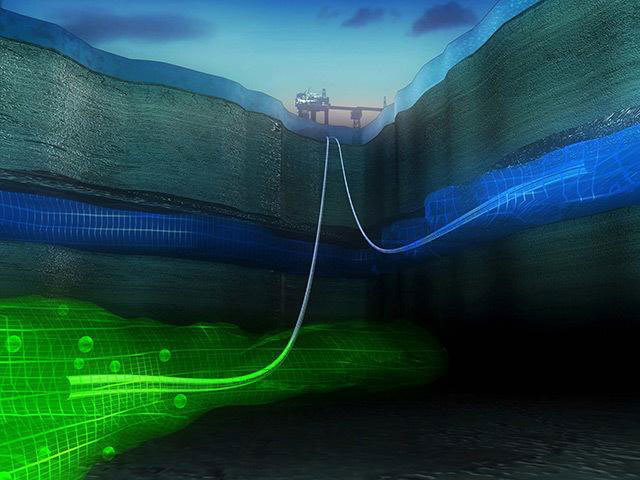
Capturing the carbon dioxide emitted from power plants and factories and safely storing it so it can’t enter the atmosphere has long been an attractive and desirable goal.  Even though the use of renewable energy sources has been expanding rapidly, it will still be a long time before fossil fuel plants go away entirely.

The most widely considered method of carbon capture and storage is underground storage.  The idea is to send the carbon dioxide through a pipeline to a place where underground rock formations can store it safely and permanently.  Typically, it would be pumped deep underground – often more than half a mile down – and the site would be monitored to make sure the CO2 doesn’t leak back up to the atmosphere or into the water table.

A new study looked at how much carbon dioxide the suitable geological formations on Earth can store.  The conclusion of the study is that drilling about 12,000 carbon storage wells globally could provide enough capacity to store 6 to 7 billion tons of CO2 a year by 2050.  That is about 13% of global emissions.

Drilling 12,000 wells is equivalent to the amount of oil and gas drilling that has taken place just in the Gulf of Mexico over the last 70 years.  The study identified locations worldwide that could handle the pressures associated with storing injected carbon dioxide.

So far, less than two dozen projects exist that capture and store carbon dioxide from fossil fuel plants.  In total, these plants can capture about 36 million tons a year, which is far less than what is needed.  But the new study at least shows that finding places to put captured carbon is not a problem.

**********

Web Links

Ample Geological Capacity Exists to Store Large Quantities of Captured CO2

Photo courtesy of Equinor.

Earth Wise is a production of WAMC Northeast Public Radio.
A Possible Storage Breakthrough: Solar Energy | Earth Wise

January 10, 2020 By EarthWise 2 Comments

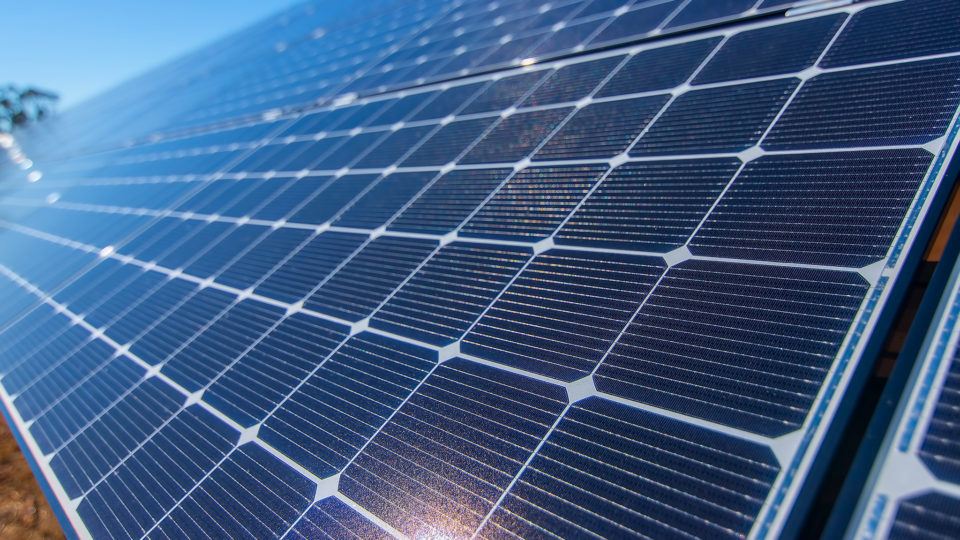
Solar energy is a nearly unlimited resource, but it is only available to us when the sun is shining.  For solar power to provide for the majority of our energy needs, there needs to be a way to capture the energy from the sun, store it, and release it when we need it.  There are many approaches to storing solar energy, but so far none have provided an ideal solution.

Scientists at the Chalmers Institute of Technology in Sweden have developed a way to harness solar energy and keep it in reserve so it can be released on demand in the form of heat—even decades after it was captured. Their solution combines several innovations, including an energy-trapping molecule, a storage system, and an energy-storing laminate for windows and textiles.

The energy-trapping molecule is made up of carbon, hydrogen, and nitrogen.  When hit by sunlight, the molecule captures the sun’s energy and holds on to it until it is released as heat by a catalyst.  The specialized storage unit is claimed to be able to store energy for decades.  The transparent coating that the team developed also collects solar energy and releases heat.  Using it would reduce the amount of electricity required for heating buildings.

So far, the team has concentrated on producing heat from stored solar energy.  It is unclear whether the technology can be adapted to produce electricity, which would be even more valuable.  In any event, the team does not yet have precise cost estimates for its technology, but there are no rare or expensive elements required, so the economics seem promising.  There is much more work to be done, but this could be a very important technology for the world’s energy systems.

**********

Web Links

An Energy Breakthrough Could Store Solar Power for Decades

Photo courtesy of Flickr.

Earth Wise is a production of WAMC Northeast Public Radio.

Turning CO2 Into Rock

January 6, 2020 By EarthWise Leave a Comment

CO2 rock reduce carbon emissions

As the world continues to struggle to find ways to reduce carbon emissions, there is increasing attention being paid to so-called negative emission technologies (NET), which remove and permanently sequester carbon dioxide from the atmosphere.

The University of Victoria in British Columbia has brought together an international team of experts to explore the possibilities of permanently and safely sequestering CO2 as rock beneath the ocean floor.  The Solid Carbon Project seeks to extract carbon dioxide directly from the air and then, using deep-ocean technology powered by offshore solar and wind energy, inject it into sub-seafloor basalt, where it would mineralize into solid carbonate rock.

When CO2 is injected into porous basalt, a type of volcanic rock, it reacts relatively quickly with minerals to form solid carbonate, thereby permanently removing it from the atmosphere.  Because 90% of the planet’s basalt is located beneath the ocean floor, the deep ocean is the place to do this kind of carbon sequestration.

The team includes experts in ocean science, carbon mineralization, renewable energy, engineering design, and oil-and-gas drilling/injection operations. Other experts are focusing on the social and legal implications of the NET technology.

Over the next four years, the Solid Carbon Project will assess the integration of multiple existing technologies that will be needed to successfully develop this kind of carbon storage.  One of these is the direct air capture technology itself, which will need to be adapted to a renewable energy-powered offshore platform.  The best outcome technologies explored by the project will be selected for a real-world demonstration at Ocean Networks Canada’s observatory site, 9,000 feet underwater in the Cascadia Basin, off the coast of British Columbia.

**********

Web Links

A rock-solid solution for CO2

Photo courtesy of the University of Victoria.

Earth Wise is a production of WAMC Northeast Public Radio.

Hydrogen From The Ocean

November 15, 2019 By EarthWise Leave a Comment

https://earthwiseradio.org/wp-content/uploads/2016/08/EW-08-30-16-Hydrogen-from-the-Ocean.mp3

Hydrogen is the most abundant element in the universe.  Estimates are that it comprises 75% of all matter.  There is plenty of it here on earth too, but almost none of it is in its elemental form.  It is mostly bound up in compounds like water.

[Read more…] about Hydrogen From The Ocean

Compressed Air Energy Storage

October 23, 2019 By EarthWise Leave a Comment

The increasing use of solar and wind power has created a growing need for technology to store up the energy they generate for use when it is most needed.

Historically, pumped hydropower has provided the largest amount of storage capacity, but it is limited to only certain geographic locations.   Battery energy storage has been growing rapidly, with the technology becoming better and cheaper over time.  But there are various other ways to store energy that have potential and may well find their place in the changing energy infrastructure.

One of these is compressed air energy storage, which has been around for more than a century.  It has been used as a backup method for restarting power plants.  But to date, the economic viability of using it at a large scale has been lacking.

A Canadian startup company called Hydrostor is developing compressed air energy storage technology that it believes can be used on a utility scale.

The way it works is excess renewable energy is used to run compressors that compress air.  Compressing the air heats it up and the heat is captured and stored in insulated hot water tanks.  The compressed gas is then injected into underground caverns.  When energy is needed, the compressed air is released, the stored heat is added, and the warmed gas is run through turbines to generate electricity.  Additional features improve the system’s efficiency.

Hydrostore has built a 1 MW pilot project in Ontario, Canada and is now commissioning a 2MW system as well.  It is funded to build a 5 MW system in Australia next year and it is bidding for 300 MW and 500 MW systems in North America.  The company has received equity funding from Baker Hughes, a large oil-and-gas services and equipment company.

**********

Web Links

Storing energy in compressed air could finally become cheap enough for the big time

Photo courtesy of Hydrostor.

Earth Wise is a production of WAMC Northeast Public Radio.
Wildfires And Carbon

September 17, 2019 By EarthWise Leave a Comment

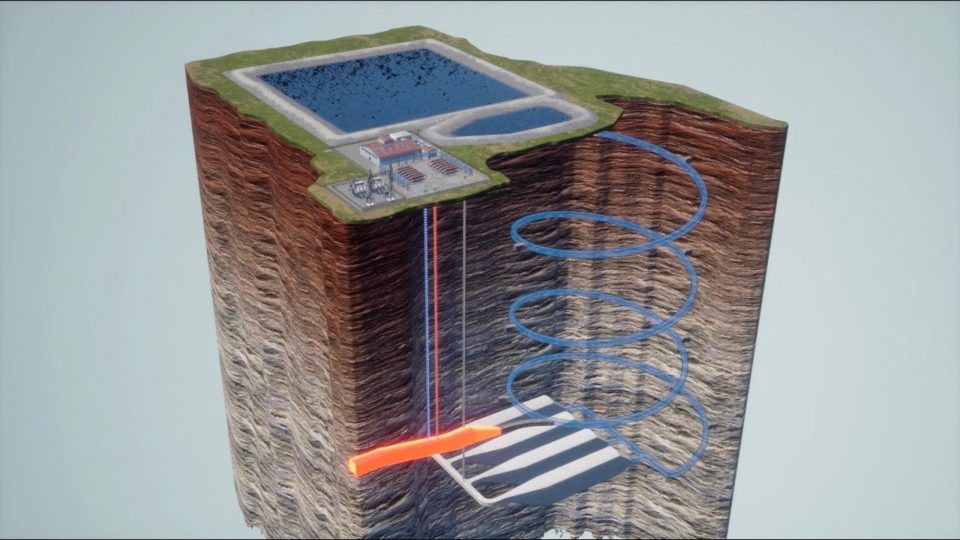
This summer has been an unprecedented year for fires in the Arctic.  Major fires have burned throughout the Arctic in Russia, Canada, and Greenland.  In total these fires released 50 million tons of carbon dioxide in June alone, which is as much as Sweden emits in an entire year.

In an average year, wildfires around the world burn an area equivalent to the size of India and emit more carbon dioxide to the atmosphere than global road, rail, shipping and air transport combined.

Ordinarily, this is part of a natural cycle.  As vegetation in burned areas regrows, it draws CO2 back out of the atmosphere through photosynthesis.  This is part of the fire-recovery cycle, which can take less than a year in grasslands, but decades in forests.  But in Arctic or tropical peatlands, full recovery may not occur for centuries.

A recent study looked at and quantified the important role that charcoal plays in helping to compensate for carbon emissions from fires.  In wildfires, some of the vegetation is not consumed by burning, but instead is transformed to charcoal – referred to as pyrogenic carbon.   This carbon-rich material can be stored in soils and oceans over very long time periods.

Researchers have combined field studies, satellite data, and modelling to quantify the amount of carbon that is placed in storage in the form of charcoal.  Their results are that the production of pyrogenic carbon amounts to about 12% of the CO2 emissions from fires and can be considered a significant buffer for landscape fire emissions.

Charcoal does not represent a solution to the problem of increasingly intense wildfires, but it is important to take it into account in understanding what is happening.

**********

Web Links

How wildfires trap carbon for centuries to millennia

Photo, posted August 17, 2018, courtesy of the Bureau of Land Management Oregon and Washington via Flickr.

Earth Wise is a production of WAMC Northeast Public Radio.

Fighting Climate Change With Trees

August 20, 2019 By EarthWise Leave a Comment

We cut down forests all around the world for a myriad of reasons, including livestock grazing, agricultural production, timber, and urban development.  But what if we stopped cutting down forests for these things and additionally grew new forests on vacant lots and any other available parcels of land on earth?  What impact could this have on our survival? 

For the first time, scientists have quantified what impact this plan could have.  According to a new study by researchers at ETH Zurich – a university that specializes in science, technology, and engineering – the planet could support nearly 2.5 billion additional acres of forest without shrinking current cities and farms.  When all those acres of forest mature, the trees could store an extra 200 gigatons of carbon.  This reforestation could stave off the most devastating impacts of global climate change. 

Russia could restore the most acres of forest – 373 million acres to be precise – followed by the United States with 255 million acres and Canada with 193 million acres.  Australia, Brazil, and China also have large areas well-suited for forest restoration. 

The average global temperature has risen by 1.8 degrees Fahrenheit since the start of the industrial age with its surge in greenhouse gas emissions.  Temperatures are projected to rise even more in the coming years as the planet continues to warm.   

Trees absorb CO2 from the atmosphere and store it in their roots and branches.  The absorbed carbon becomes part of the soil when trees die and decompose, and it can linger there for millennia depending on things like temperature and soil management.  Trees are critical in the fight against climate change. 

**********

Web Links

How trees could save the climate

Photo, posted June 18, 2011, courtesy of K.W. Barrett via Flickr.

Earth Wise is a production of WAMC Northeast Public Radio.

Trees And Methane

August 14, 2019 By EarthWise Leave a Comment

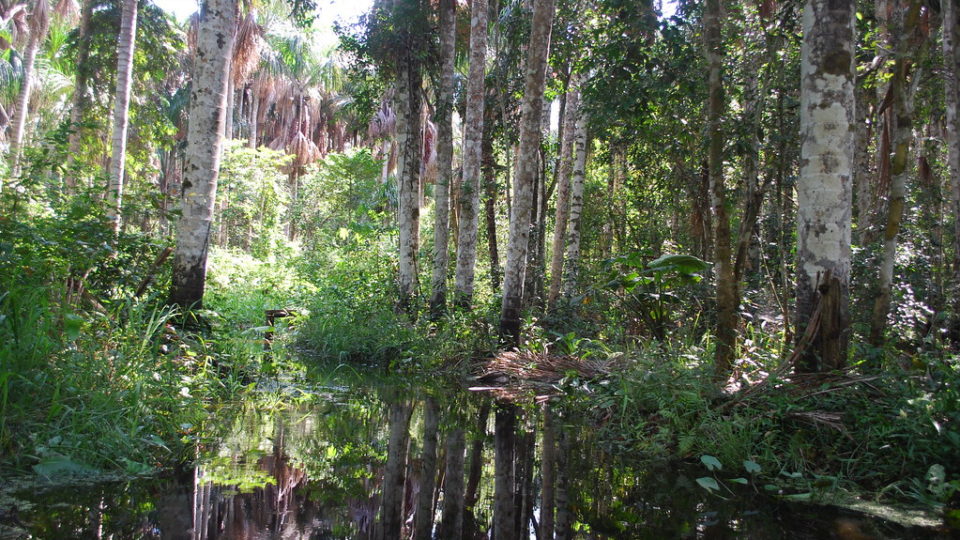
The Amazon is a source of many mysteries.  One that was as troubling as it was mysterious was the large amounts of methane emissions coming from the rainforest that were observed by satellites but that nobody could find on the ground.  In total, there were 20 million tons of methane whose origin was unknown.

An expedition by a British postdoctoral researcher who spent two months strapping gas-measuring equipment to thousands of trees has solved the mystery.  It turns out that trees, especially in the extensive flooded forests, were stimulating methane production in the waterlogged soils and pumping it into the atmosphere.

This research has uncovered a previously-ignored major source of the second most important greenhouse gas in the world.  Apparently, most of the world’s estimated 3 trillion trees emit methane at least some of the time.

This in no way implies that trees are bad for the climate and therefore should be cut down.  The reality is that the carbon storage capability of trees far outweighs their methane emissions.  But since corporations these days are planting trees to offset their carbon emissions, it is essential to know if their numbers add up.  Carbon accounting has to include the complex chemistry of trees and methane.

Wetland tree trunks can act as passive conduits for methane generated by micro-organisms in waterlogged soils.  The solid-looking trunks contain spaces and channels through which gases travel up and down.  But in wetland systems, trees also create the conditions, and provide the raw materials, for methane generation by micro-organisms.  Trees are essentially bioreactors.  Some trees even actively generate methane from photochemical reactions in their foliage.

Understanding the interactions of ecosystems and the atmosphere is a complicated business.

**********

Web Links

Scientists Zero in on Trees as a Surprisingly Large Source of Methane

Photo, posted December 13, 2008, courtesy of Ivan Mlinaric via Flickr.

Earth Wise is a production of WAMC Northeast Public Radio.
The New York Climate Plan

July 24, 2019 By EarthWise Leave a Comment

New York lawmakers have passed a sweeping climate plan that requires the state to eliminate almost all of its greenhouse gas emissions by 2050.  The plan calls for the phase-out of gasoline cars and oil- and gas-burning furnaces and requires all of the state’s electricity to come from carbon-free sources.

The Climate Leadership and Community Protection Act requires the state to slash its carbon emissions to 85% below 1990 levels by 2050 and to offset the remaining 15% by other means such as removing carbon dioxide from the atmosphere.  The bill requires New York to get 70% of its electricity from renewable sources by 2030.

The challenges of reaching the program’s goals are daunting.   New York has so far only reduced its emissions by 8% since 1990.  The state currently does get 60% of its electricity from carbon-free sources – mostly hydroelectric dams and nuclear power plants – but it will require offshore windfarms, ramped-up solar installations, and battery storage systems to push the numbers dramatically higher.

Transportation, which is responsible for a third of New York’s emissions, will be particularly tough to tackle.  The Trump administration is rolling back federal vehicle efficiency rules and is trying to prevent states from setting stricter standards.  Currently, electric car ownership is primarily attractive for single-family homeowners who can plug in their cars at home.  Far more pervasive charging stations – for example, all over the streets of New York City – would be needed to make electric cars practical for everyone.

The plan aims for industries to bear most of the financial burden, but supporters say that the costs of not acting on climate will be vastly greater for businesses.  The plan’s deadlines for major emissions reductions are a decade away but there will be much to do quite soon.

**********

Web Links

New York to Approve One of the World’s Most Ambitious Climate Plans

Photo, posted September 17, 2009, courtesy of Flickr.

Earth Wise is a production of WAMC Northeast Public Radio.
The Energy Vault

May 28, 2019 By EarthWise Leave a Comment

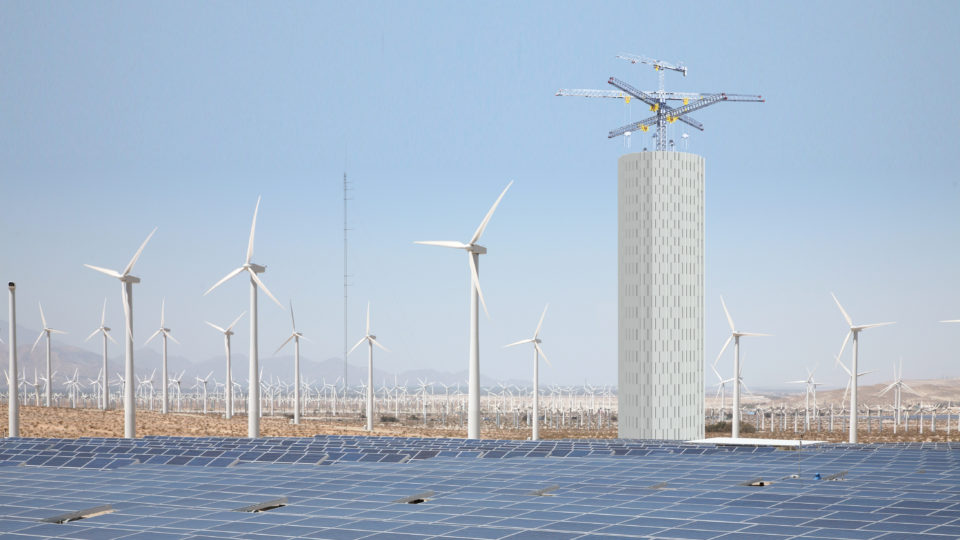
A potentially transformative utility-scale energy storage technology has won a 2019 “World Changing Idea” award from Fast Company magazine.  Known as the Energy Vault, the technology seeks to be the successor to the granddaddy of grid energy storage:  pumped hydro.

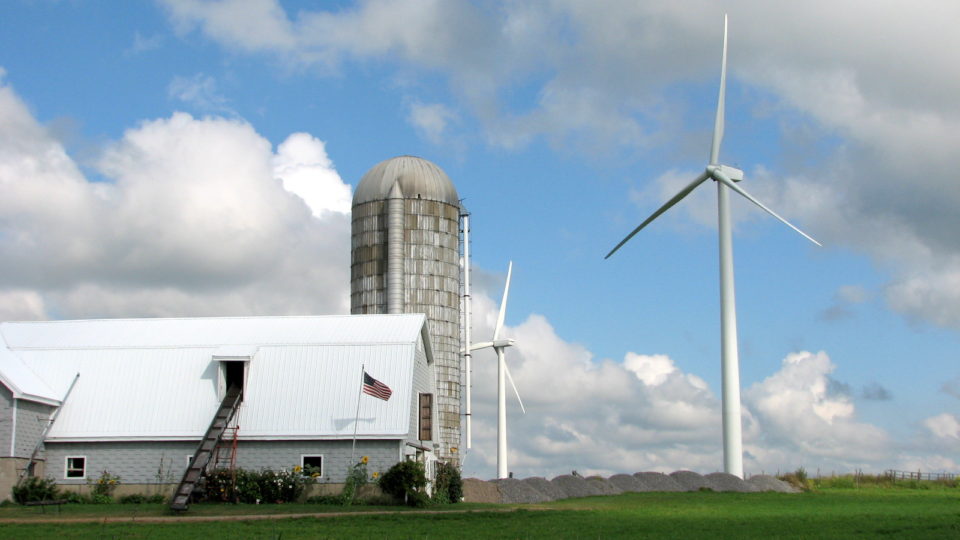
Shifting water between higher and lower reservoirs is still basis of the vast majority of global grid storage capacity.  But it is limited both by its unique location needs and by environmental regulations.

A start-up company also called Energy Vault and based in both Switzerland and Southern California has come up with an extremely creative grid storage concept.  The technology consists of a six-armed crane that stacks huge concrete blocks using a currently available source of cheap and abundant grid electricity, and then drops them down to generate electricity when needed.

The system is said to operate at about 90% efficiency and can deliver long-duration storage at half the prevailing price on the market today.

A full-scale Energy Vault plant, called an Evie, would look like a 35-story crane with six arms, surrounded by thousands of manmade concrete blocks, weighing nearly 40 tons each.  When charging, the plant will stack the blocks around itself higher and higher in a Babel-like tower.  To discharge, the cranes drop the blocks down, generating power from the speedy descent.  This configuration can deliver 4 megawatts of power and store about 35 megawatt-hours of energy.

There isn’t even a factory needed.  The company would deliver a crane from a manufacturer.  The crane will then assemble the blocks onsite using recycled concrete.  Operation is then fully automated.  The system is expected to run for 30 or 40 years.

So far there is only a one-seventh scale demo unit in Switzerland.  But this is a very intriguing idea.

**********

Web Links

Energy Vault Wins World Changing Idea Award 2019 from Fast Company for Transformative Utility-Scale Energy Storage Technology

Photo courtesy of Energy Vault.

Earth Wise is a production of WAMC Northeast Public Radio.
The World’s Largest Storage Battery

May 24, 2019 By EarthWise Leave a Comment

Many homeowners are installing solar energy systems with battery backup.  Energy stored in the battery can be used when the sun isn’t shining.   As battery prices come down, utility-scale solar installations are also turning to battery-based energy storage.

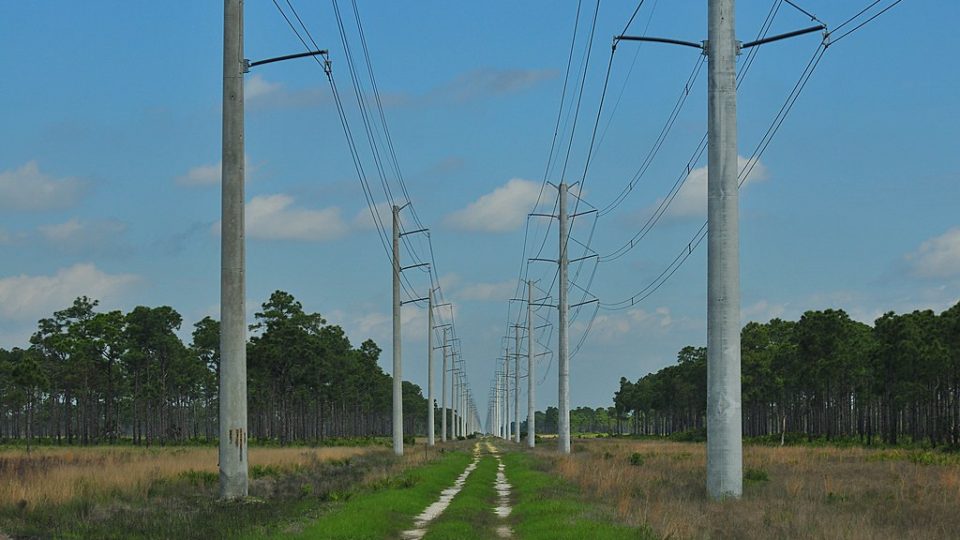
Florida Power & Light has announced plans to build the world’s largest solar-storage combination facility in Manatee County.  The 409-MW Manatee Energy Storage Center will be the largest solar-battery system by a factor of four.  The specifics of the technology and source of the battery system components have yet to be announced.

The system, which is scheduled to be completed in late 2021, will be charged by a nearby FPL solar power plant.  The plan is to discharge batteries during times of higher demand, thereby offsetting the need to run other power plants.  As a result, there will be reduced emissions and customers will save as much as $100 million through avoided fuel costs.

Installing the mega-sized battery system will accelerate the retirements of two nearby 1970’s-era gas-fired generation units.  At peak efficiency, the Manatee energy storage system will be able to power 390,000 homes for up to two hours.

FPL has already been pursuing the use of battery storage technology.  Last year, they added a 10 MW battery storage system to its 74.5 MW Babcock Ranch Solar Energy Center in Charlotte County.

These large battery systems are increasingly practical because of dramatic reductions in lithium-ion battery costs.  The levelized cost of electricity from lithium-ion batteries has declined a remarkable 38% just since the beginning of 2018.  The economics of clean energy continue to get better and better.

**********

Web Links

FP&L Plans World’s Largest Energy Storage Battery To Support Its Renewable Energy Goals

Photo, posted April 21, 2010, courtesy of Frank Starmer via Flickr.

Earth Wise is a production of WAMC Northeast Public Radio.
Rare Earths From Mining Waste

May 3, 2019 By EarthWise Leave a Comment

The 17 rare earth elements have become important parts of much of modern technology.  Despite their name, most of these elements are relatively plentiful in the earth’s crust, but because of their geochemical properties they are typically dispersed and not often found concentrated in minerals.  As a result, economically exploitable ore deposits are uncommon.  There are no significant sources in the U.S.

Rare earths play important roles in high-performance magnets, electric motors in vehicles, wind turbines, microphones and speakers, and in portable electronics like cell phones.  As these applications become ever larger, the need for additional sources of rare earths increases.

Researchers at Idaho National Laboratory and Rutgers University have studied a method for extracting rare-earth elements from mining waste that could greatly increase the world’s supply of these valuable materials.

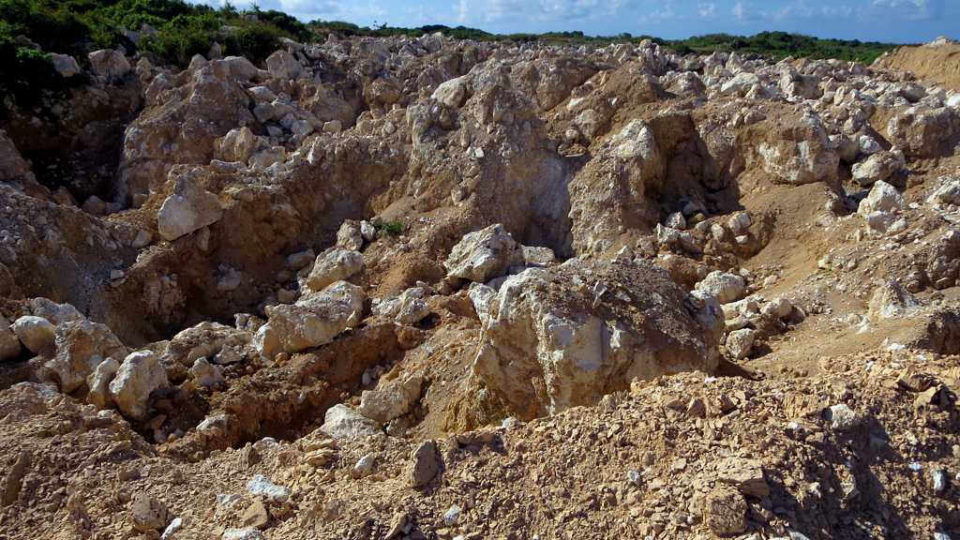
It turns out that large amounts of rare earths exist in phosphogypsum, a waste product from producing phosphoric acid from phosphate rock.  The U.S. alone mined 28 million tons of phosphate rock in 2017.  (Phosphoric acid is used in the production of fertilizers and other products).

The researchers estimate that more than a billion tons of phosphogypsum waste sits in piles at storage sites across the U.S. alone.   World-wide, about 100,000 tons of rare earth elements per year end up in phosphogypsum waste.  This compares to the total current world-wide production of rare earth oxides of 126,000 tons.

The researchers studied methods for extracting the elements from the waste. A method utilizing a common environmental bacterium showed great promise.

There are concerns about residual radioactivity and other environmental issues in dealing with the waste material, but the world’s supply of rare earth elements might become much greater based on this research.

**********

Web Links

Critical Materials: Researchers Eye Huge Supply of Rare-Earth Elements from Mining Waste

Photo, posted June 19, 2015, courtesy of David Stanley via Flickr.

Earth Wise is a production of WAMC Northeast Public Radio.
Growing Rocks To Store Carbon

April 24, 2019 By EarthWise Leave a Comment

The US Geological Survey recently published a comprehensive review of geological carbon storage in sedimentary rocks through carbon mineralization.   That is the process by which carbon dioxide becomes a solid mineral, such as a form of carbonate.  Certain rocks undergo a chemical reaction when exposed to carbon dioxide and turn into different minerals as a result.

The idea is to use carbon mineralization as a way to permanently store carbon dioxide that has been captured from power plant emissions, other industrial activities, or even directly from the atmosphere.

Two basic approaches are injecting the CO2 deep underground or exposing it to crushed rocks at the surface.  The two types of rock best suited for mineralization through injection are basalt and various ultramafic rocks.  Pilot studies have shown that injection into basalt can lead to mineralization in under two years.

Exposing carbon dioxide to crushed rock at the surface generally makes use of crushed mining waste.  Mineralization can be much faster in this case because there is more surface area on the crushed rock where mineralization occurs.  (However, the quantities of rock available at the surface are much less than what exists deep underground).

Like all carbon capture and storage approaches, the key consideration is cost.  The USGS study estimates that underground injection would cost around $30 per metric ton of CO2.  The crushed rock approach might only cost $8 per metric ton, but that assumes the crushed rock is already available.  If it must be newly mined, the costs would obviously go up significantly.  To put this into perspective, a typical car produces around 4 metric tons of CO22 per year.  So, it would cost somewhere between $30 and $120 a year to eliminate the emissions from one car.  Perhaps that is a price we need to pay until we ditch gasoline cars.

**********

Web Links

How Growing Rocks Can Help Reduce Carbon Emissions

Photo, posted October 17, 2011, courtesy of Glen Bledsoe via Flickr.

Earth Wise is a production of WAMC Northeast Public Radio.

Making Coal To Fight Climate Change

April 19, 2019 By EarthWise Leave a Comment

Coal is the most harmful fossil fuel for the environment and, furthermore, for human health.  Its use has stubbornly persisted because it is so plentiful and, therefore, cheap.  As a result, a big part of efforts to fight climate change is finding a way to remove the carbon dioxide dumped into the atmosphere by the combustion of coal.

Researchers at the Royal Melbourne Institute of Technology in Australia have developed a remarkable technology that in effect reverses the process that has led to soaring CO2 levels in the atmosphere.  They have found a way to pull carbon dioxide from the atmosphere and turn it into coal, after which it can be stored cheaply and safely underground.

Most previous carbon capture and storage technologies have focused on compressing carbon dioxide gas into a liquid form and then pumping it into rock formations.  Such techniques are rather expensive, require lots of energy, and pose risks that the liquid CO2 could escape from its underground storage sites.  More recently, research on solid metal catalysts has led to the possibility of turning CO2 into solid carbon, but most of these reactions require very high temperatures and use a lot of energy.

The new technique developed at RMIT uses a new class of catalysts based on metal alloys.  With a small jolt of electricity applied at room temperature, CO2 can be converted into solid carbon – basically, coal.

If this technique can be industrialized economically, it would be like turning back the clock by taking carbon dioxide that entered the atmosphere by the combustion of coal and turning it back into coal and putting it back underground.  It seems like excellent environmental justice.

**********

Web Links

Scientists Turn Atmospheric CO2 Into Coal

Photo, posted March 16, 2015, courtesy of Will Fisher via Flickr.

Earth Wise is a production of WAMC Northeast Public Radio.
More Renewables Without Storage In Texas

February 27, 2019 By EarthWise Leave a Comment

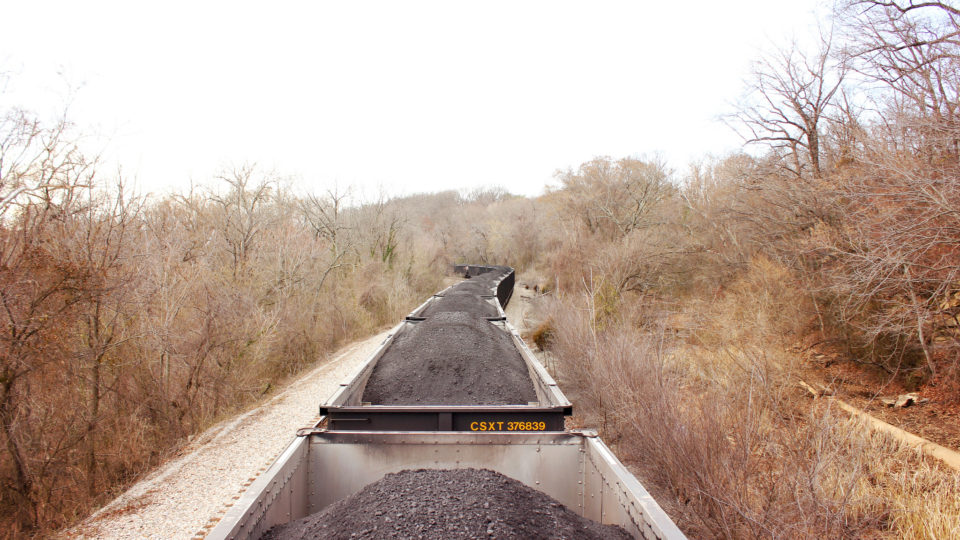
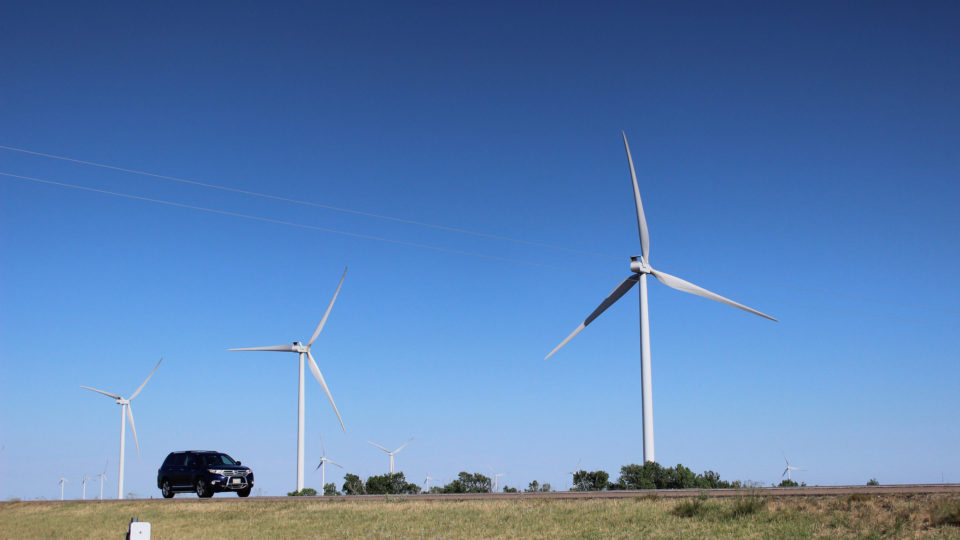
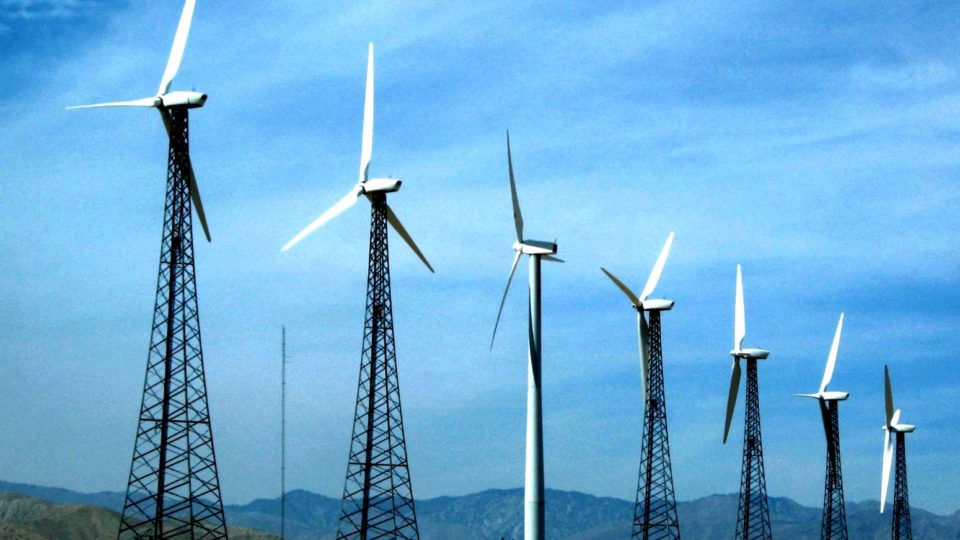
Texas has a Texas-sized appetite for electricity and relies most heavily on natural gas, coal and nuclear power to get it.  But in recent times, wind power has grown tremendously in the Lone Star State and it has already leapfrogged past nuclear power.  Coal could be the next domino to fall.

In the past few years, solar power has become competitive with wind in terms of price.  Texas is a large, coastal state in the sunny southwestern U.S. and has significant solar resources.  As a result, the amount of solar power in Texas is now growing rapidly.

In order for a combination of solar and wind power to address the bulk of electricity demand in Texas, there needs to be a way to provide reliability that these intermittent sources don’t necessarily provide.  Energy storage is a solution that ultimately is likely to be part of most electricity grids, but currently it is still expensive on a utility scale.

A new study from Rice University looked at the complementarity of solar and wind power in Texas.  Complementarity refers to balancing the output of solar and wind systems.  The peak performance of wind and solar occurs at very different times in different regions of the state.  The study suggests that the right mix of solar and wind systems in the right parts of Texas could provide a continuously reliable energy system.  On both a yearly and daily basis, wind and solar power resources in Texas complement each other in terms of peak performance.  It is a matter of locating the solar power and wind farms in the right places.

With the Texas solar industry really starting to boom, there is a real opportunity to integrate far more renewable energy into the Texas grid.

**********

Web Links

More Renewables with Less Energy Storage: Texas Shows How

Photo, posted June 8, 2018, courtesy of Laura Lee Dooley via Flickr.

Earth Wise is a production of WAMC Northeast Public Radio.
Liquid Fuel From The Sun

February 21, 2019 By EarthWise Leave a Comment

Most forms of energy we use ultimately come from the sun in one way or another.  Even fossil fuels are the end product of millions of years of plant life that captured solar energy.  The advantage fossil fuels have over direct solar power is that they are, in fact, fuels and therefore can be stored for use when needed.

Scientists in Sweden have now developed a specialized fluid that absorbs some of the sun’s energy, holds it for months or even years, and then releases it when needed.  This solar thermal fuel is like a rechargeable battery for heat rather than electricity.

The special fluid is pumped through transparent tubes where ultraviolet light from the sun excites its molecules into an energized state.  A compound called norbornadiene is converted into quadricyclane. The quadricyclane is a quite stable substance until it is passed over a cobalt-based catalyst, which causes it to turn back into norbornadiene and release copious amounts of heat.

Such a solar thermal fuel could be stored in uninsulated tanks in homes or factories or piped or trucked to where it was needed.  It could then be used for water heaters, dishwashers, or clothes driers.  The room temperature fluid quickly warms to about 183 degrees when passed over the catalyst, plenty warm enough for heating a home or office.  Both the fuel and the catalyst are damaged very little by the reactions, so the process can be recycled many times.

There is much development work needed to optimize shelf life, energy density, good recyclability and other properties before this technology can be commercialized but there are at least 15 groups around the world now studying this intriguing way to get liquid fuel from the sun.

**********

Web Links

Scientists transform sunlight into a liquid fuel that can be stored for 18 years

Photo, posted August 17, 2009, courtesy of Hiromichi Torihara via Flickr.

Earth Wise is a production of WAMC Northeast Public Radio.

Saved By The Trees

February 1, 2019 By EarthWise Leave a Comment

The island of Kokota, part of the Zanzibar Archipelago off the coast of Tanzania, is tiny – only one square kilometer and home to just 500 people.  For centuries, its residents subsisted by harvesting the islet’s natural resources, including its trees.

By the early 21st century, the deforestation had become unsustainable and the islanders faced a crisis.  Fisheries were depleted, and rivers ran dry.  The changing climate brought rising sea levels, more erratic rainfall, and coral bleaching in the surrounding waters.  The situation looked hopeless.

But in recent years, the island has come back from the brink of ruin.  Reforestation efforts began in 2008 on the larger island of Pemba and on Kokota itself, led by a Pemba local and a Canadian tree planter who formed the non-profit Community Forests International.  Since then, nearly 2 million trees have been planted on the two islands.  Enthusiastic volunteers on Kokota usually help plant trees during the rainy season, when water is plentiful.

Community Forests International, along with spearheading the tree planting effort, also built Kokota’s first school, and installed rainwater storage tanks for the community.

The conservation group is now devising ways for Kokota to make more money by diversifying its agriculture with crops that grow well in its climate including spices like cloves, cinnamon, and nutmeg.  They are also helping locals to grow more and different vegetables in their gardens.

Small, poor communities are often the most vulnerable to the effects of climate change, such as drought, powerful storms, and depleted fisheries.  Tiny Kokota provides an example of an environmental comeback.  Fighting climate change requires economic solutions along with environmental solutions.  For this one tiny island, it  appears to have been saved by the trees.

**********

Web Links

This island was on the brink of disaster. Then, they planted thousands of trees.

Photo, posted July 18, 2015, courtesy of Marco Zanferrari via Flickr.

Earth Wise is a production of WAMC Northeast Public Radio.

A New Way to Make Hydrogen

January 31, 2019 By EarthWise Leave a Comment

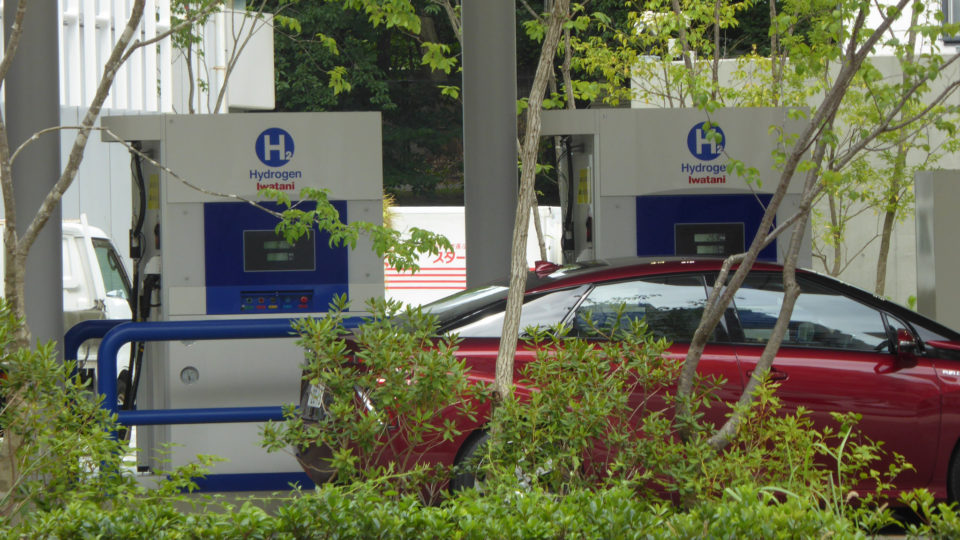
Many people consider hydrogen to be the fuel of the future, both for powering vehicles and for storing energy generated by renewable sources.   Hydrogen itself is a clean and green fuel.  Generating energy from it using fuel cells results in only water as a byproduct.

The biggest problem with hydrogen is that the most economical way to produce it and therefore the way most hydrogen is produced today, is by reforming natural gas, which is a process that generates carbon emissions.

The desirable way to make hydrogen is to produce it by breaking apart water into its hydrogen and oxygen components, a process known as electrolysis.   There are many ways to do it, but none of them to date measures up in terms of efficiency, cost, and longevity.

Researchers at the University of Toronto have recently developed a new catalyst that uses abundant, low-cost elements to split water molecules into hydrogen and oxygen.  The catalyst is made from copper, nickel, and chromium, all of which are more abundant and less costly than platinum, which is the usual electrolysis catalyst.

The new catalyst performs well under pH-neutral conditions, which means it could even work on seawater without incurring the expense of desalination.  The Toronto researchers also believe their catalyst could be used as part of a process to make hydrocarbon fuels from hydrogen and CO22.  Their group is among the five finalists in the Carbon XPrize competition, which has a grand prize of $7.5 million for finding a way to convert waste CO2 into fuel.

Finding a low-cost, energy-efficient, and reliable way to make hydrogen out of water will be a big deal if it can be done on an industrial scale.

**********

Web Links

U of T researchers discover low-cost way to produce hydrogen from water

Photo, posted July 23, 2015, courtesy of Magnus Johansson via Flickr.

Earth Wise is a production of WAMC Northeast Public Radio.
Energy Trends For A New Year

January 15, 2019 By EarthWise Leave a Comment

With a new year upon us, there are several energy trends to watch out for.

The most important one is that the fundamental shift toward slow-carbon technologies is continuing. This shift is taking place despite diminishing government policy support and even active government efforts to thwart it.  There is just too much momentum to stand in the way of low-carbon energy technologies.

Analysts at Bloomberg New Energy Finance estimate that over the next 30 years over 11 trillion dollars will be invested in energy power generation and power storage assets with 85% of it aimed at zero-carbon emission.  Dramatic reductions in green energy costs have resulted in legitimate cost competition between zero carbon sources of energy and fossil fuel generation.

In the coming year, battery technology will continue to play a growing role both as a storage medium for energy generated by sun and wind and for powering vehicles.

Another trend is that the world’s wealthiest economies are learning to grow without growing the demand for electricity.  This is important in the battle to reduce overall emissions.

Another key issue is addressing the energy needs of people who have no meaningful access to it and there are around 1.5 billion people in that category.   Emerging technologies based on solar power, wind energy, microgrids and other innovations mean that traditional power grids that remain out of reach to these people are not necessary.  There is the potential to address those needs without contributing to climate change.

The world is struggling to deal with the growing problem of the changing climate, but there are trends that provide at least some hope that we can move in the right direction.

**********

Web Links

Top 3 clean energy trends to watch out for in 2019

Photo, posted April 5, 2013, courtesy of Flickr. 

Earth Wise is a production of WAMC Northeast Public Radio.
  • « Go to Previous Page
  • Page 1
  • Interim pages omitted …
  • Page 3
  • Page 4
  • Page 5
  • Page 6
  • Page 7
  • Go to Next Page »

Primary Sidebar

Recent Episodes

  • An uninsurable future
  • Clean energy and jobs
  • Insect declines in remote regions
  • Fossil fuel producing nations ignoring climate goals
  • Trouble for clownfishes

WAMC Northeast Public Radio

WAMC/Northeast Public Radio is a regional public radio network serving parts of seven northeastern states (more...)

Copyright © 2026 ·