• Skip to primary navigation
  • Skip to main content
  • Skip to primary sidebar

Earth Wise

A look at our changing environment.

  • Home
  • About Earth Wise
  • Where to Listen
  • All Articles
  • Show Search
Hide Search
You are here: Home / Archives for stable

stable

Reliability of renewable energy

February 25, 2025 By EarthWise Leave a Comment

Renewable energy is reliable

Naysayers about renewable energy often claim that it is unreliable.  It is true that the sun sets every night and sometimes the wind doesn’t blow.  But with the growing use of battery banks to store excess power generated by renewables, the lack of reliability of renewable energy is turning out to be a myth.

A new study published in the journal Renewable Energy looked at the deployment of renewable energy in California last year.  From late winter to early summer, renewable sources supplied 100% of the state’s electricity demands for up to 10 hours on 98 out of 116 days.  There were no blackouts during that time thanks in part to the presence of battery backup power.  During peak generation periods, the renewables provided as much as 162% of the grid’s needs. 

The main finding of the study is that the electricity grid can be kept stable even as it adds more and more renewables.  Beyond that, every major renewable energy source – geothermal, hydroelectric, wind, and especially solar – is on average lower in cost than fossil fuels.

Despite the low cost of renewable energy, Californians pay the second highest rates for electricity in the country.  Part of the reason is that electrical equipment from utilities has set off wildfires, notably the 2018 Camp Fire that devastated the town of Paradise and killed 85 people.  California’s utilities are now passing the costs that come from lawsuits and from burying transmission lines to their customers.  Overhead power lines are especially prone to falling in high winds and igniting fires.

**********

Web Links

California just debunked a big myth about renewable energy

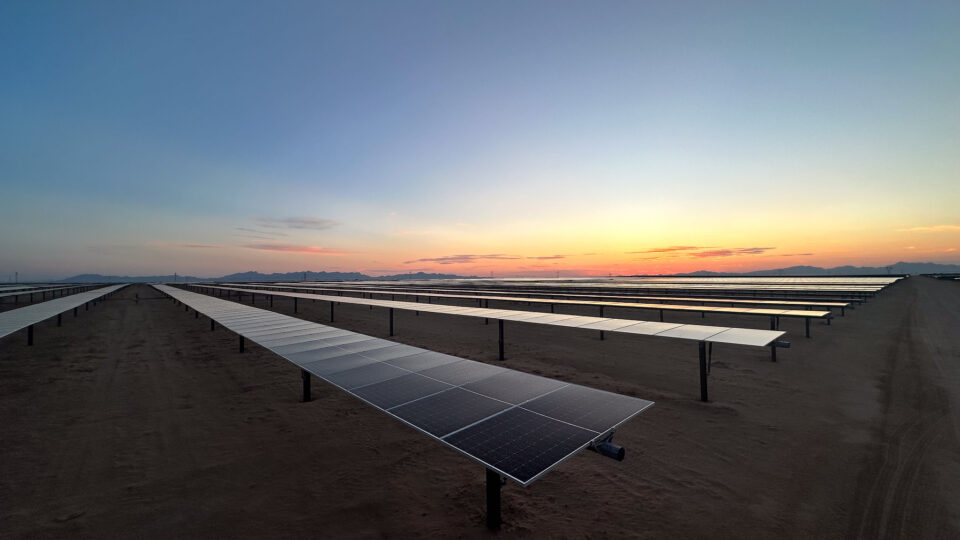
Photo, posted December 16, 2024, courtesy of EDF Renewables / Bureau of Land Management California via Flickr.

Earth Wise is a production of WAMC Northeast Public Radio

A green battery from industrial waste

February 11, 2025 By EarthWise Leave a Comment

Flow batteries are rechargeable batteries in which liquid electrolytes flow through one or more chemical cells from one or more tanks.  The electrolytes are redox pairs, that is, chemical compounds that can reversibly undergo reduction and oxidation reactions.  The most common redox electrolytes include elements like vanadium, chromium, iron, zinc, and bromine.  Flow batteries can provide large amounts of both electrical power and stored energy based on the size of the electrolyte tanks.  As a result, they can be scaled up far more readily than other battery technologies. 

Flow batteries are safe, stable, long-lasting, and their electrolytes can easily be refilled.  They have significant potential for use in utility-scale storage for renewable energy systems.

Researchers at Northwestern University have developed a redox flow battery based on an organic industrial-scale waste product.  The material – triphenylphosphine oxide or TPPO – is produced in the thousands of tons each year.  It is byproduct of producing a variety of substances including some vitamins, pharmaceuticals, agrochemicals, and other bulk chemicals.  For the most part, TPPO is of little use and must be carefully discarded.

The current market for redox flow batteries is very small but is expected to grow over time as the need for utility-scale energy storage continues to expand.  A battery technology based on a waste material that is already produced in high volume and that must otherwise be disposed of with caution would have significant advantages.

**********

Web Links

Green battery discovery turns trash into treasure

Photo, posted January 12, 2015, courtesy of California Energy Commission via Flickr.

Earth Wise is a production of WAMC Northeast Public Radio

Ocean geoengineering

October 24, 2024 By EarthWise Leave a Comment

A start-up company is exploring ocean geoengineering

As greenhouse gas emissions continue to be dangerously large and the perils of climate change are increasingly apparent, the world is increasingly exploring ways to deliberately intervene in climate systems.  A number of these ideas involve introducing substances into the atmosphere, but there are also ways to tinker with the oceans.

The oceans naturally absorb about a third of the carbon dioxide that humans pump into the atmosphere, mostly by burning coal, gas, and oil.  People are exploring ways to get the ocean to take up even more of the carbon dioxide.  One approach that is gaining traction is known as alkalinity enhancement.  By adding limestone, magnesium oxide, or other alkaline substances to rivers and oceans, it changes their chemistry and makes them soak up more carbon dioxide.

This approach has been around for a while as a way to mitigate acid rain in rivers and has been very successful.  A start-up company in Canada called CarbonRun is building a machine that grinds up limestone and will release the powder it produces into a local river in Nova Scotia.  The limestone in the river will be naturally converted into a stable molecule that will eventually be washed into the seas, where it should remain for thousands of years.

Expanding this approach to oceans faces many challenges including the costs and complexities of obtaining, processing, and transporting vast amounts of limestone to where it is to be released.  There are also potential environmental issues to grapple with.  But CarbonRun and others are moving forward with testing the approach.

In any event, the biggest barrier to ocean alkalinity enhancement is proving that it works.  That effort is underway.

**********

Web Links

They’ve Got a Plan to Fight Global Warming. It Could Alter the Oceans.

Photo, posted May 27, 2007, courtesy of John Loo via Flickr.

Earth Wise is a production of WAMC Northeast Public Radio
Biochar and carbon

April 25, 2024 By EarthWise Leave a Comment

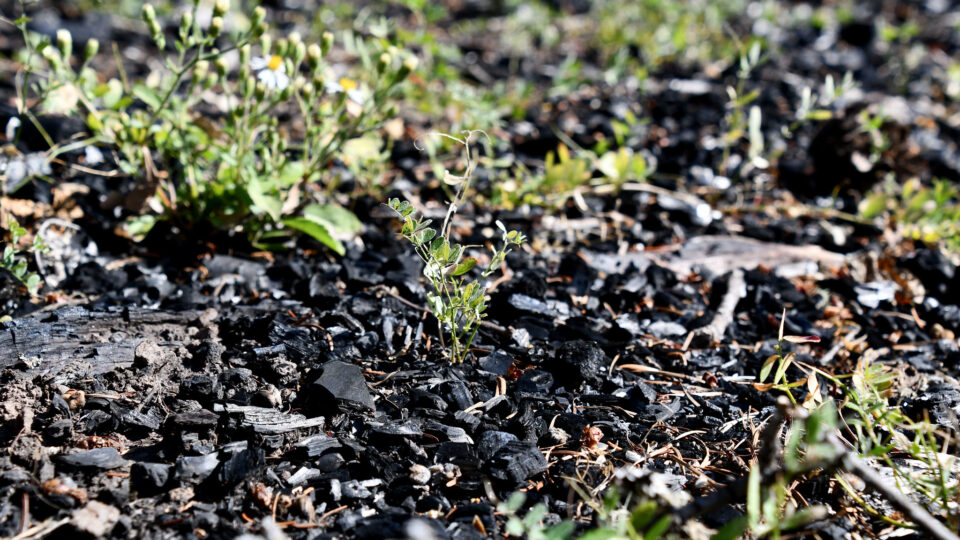
Biochar is a charcoal-like substance that is made by burning organic materials like crop and forestry wastes in a controlled process called pyrolysis, which is burning in an oxygen-deprived environment.  Pyrolysis produces little or no contaminating fumes and results in a stable form of carbon that can’t easily escape into the atmosphere.  Biochar is a very efficient way to convert carbon into a stable form.

Adding charred biomass to improve soil quality has been done for thousands of years.  Indigenous people in the Amazon added charcoal, food residue, and other waste to their soil.  When mixed with soil, biochar creates favorable conditions for root growth and microbial activities, which reduces greenhouse gas emissions. 

Last year, 125,000 tons of carbon dioxide were removed worldwide in the durable carbon market, which is a carbon credit marketplace for carbon removal.  About 93% of that was in the form of biochar. 

Biochar represents a value-added way to deal with agricultural waste and also to make use of dead trees in forests that should be removed to lower the risk of wildfires caused by the presence of all that dry tinder material. 

A bill to fund biochar research is pending before the Senate Agricultural Committee.  It is a rare example of bipartisan legislation.

Biochar is currently expensive to make in the US because large amounts of biomass must be shipped to one of the fewer than 50 small-scale production facilities in the country.   But with appropriate infrastructure, biochar could play an important role in efforts to sequester carbon and combat climate change.

**********

Web Links

Biochar Is ‘Low-Hanging Fruit’ for Sequestering Carbon and Combating Climate Change

Photo, posted September 3, 2019, courtesy of Tracy Robillard / NRCS via Flickr.

Earth Wise is a production of WAMC Northeast Public Radio

Satellites discovering penguins

February 20, 2024 By EarthWise Leave a Comment

Satellites have discovered new colonies of emperor penguins

The loss of sea ice in Antarctica has forced emperor penguins to seek out new breeding grounds.  Some colonies have traveled more than 20 miles in search of stable ice.  Emperor females lay a single egg on a stretch of sea ice at the start of winter and males keep the eggs warm while the females go hunting for up to two months to bring back food for their hatchlings.

Emperor penguins are the tallest and heaviest of all living penguin species.  The loss of sea ice has led to unprecedented breeding failure in some emperor penguin colonies.  Emperor penguins are not threatened by hunting, habitat loss, or other human-caused problems, but the changing climate could be their undoing.

Emperor colonies are easy to spot from above.  The penguins are up to four feet tall and the droppings from large colonies stand out vividly against white snow.  A careful study of satellite imagery has revealed four previously unknown colonies of emperor penguins along the edges of Antarctica.  This is the first bit of good news about the penguins in quite a while.  The new discoveries, reported in the journal Antarctic Science, brings the total number of known colonies to 66.

The new discoveries are encouraging, but emperor penguins remain at risk from the warming climate.  Three of the four new colonies are small, with fewer than 1,000 birds.  So, the discovery does not have a big impact on the overall emperor penguin population.  The addition of the new colonies is overshadowed by the recently reported colony breeding failures resulting from early and rapid ice losses.

**********

Web Links

Thousands of Emperor Penguins Discovered by Satellite

Photo, posted January 19, 2014, courtesy of Christopher Michel via Flickr.

Earth Wise is a production of WAMC Northeast Public Radio

Aluminum In Batteries | Earth Wise

September 1, 2023 By EarthWise 1 Comment

Researchers working on a new battery

Batteries are playing a bigger and bigger role in our lives.  Apart from their use in ubiquitous smartphones, laptops, and other devices, millions of electric vehicles are hitting the roads, and utilities are installing giant banks of batteries to store energy generated by wind and solar farms.

The necessary characteristics of batteries are high energy density and stability.  The latter is needed so that batteries can be safely and reliably recharged thousands of times.  For decades, lithium-ion batteries have been the go-to for all these modern battery applications.  And they have gradually gotten better and cheaper all the time.  But the improvements are getting smaller, and the price reductions have limits.

For these reasons, researchers are always looking for batteries with higher energy density – so that, for example, electric cars can drive farther on a charge – and that can be made more cheaply, are not flammable, and are very stable.

Since the 1970s, researchers have investigated the use of aluminum for the anode of batteries because its properties would allow more energy to be stored.  However, when used in lithium-ion batteries, aluminum developed fractures and failed after a few cycles.

Researchers at Georgia Tech University have developed a type of aluminum foil with small amounts of other materials that create specific microstructures.  Used in battery anodes, this material does not degrade and appears to be a path to a better battery.  When incorporated into a solid-state battery that does not contain the flammable liquid found in standard lithium-ion batteries, the result is a battery that checks most of the boxes in the search for a better battery.

Much more work is needed to assess the potential for the aluminum-based battery, but it looks very promising.

**********

Web Links

Aluminum Materials Show Promising Performance for Safer, Cheaper, More Powerful Batteries

Photo, posted August 27, 2019, courtesy of Marco Verch via Flickr.

Earth Wise is a production of WAMC Northeast Public Radio

Missing Antarctic Sea Ice | Earth Wise

August 30, 2023 By EarthWise Leave a Comment

It is summer here in the United States, but it is winter in Antarctica.  Antarctic sea ice is water that forms and melts entirely in the ocean and it has a pattern of growth and reduction that has been monitored by satellites for the past 44 years.  The area of sea ice that surrounds the continent of Antarctica is known as the sea ice ‘extent’ and it had been quite stable for much of those years.

In 2016, the sea ice extent began to decline.  Since then, there have been several record summer lows with both the summers of 2021/22 and 2022/23 setting new minimum records.

This August, the deviation from all previous records intensified.  This winter’s sea ice extent is over 900,000 square miles below the long-term average, an area about the size of Greenland or, for example, Texas and Alaska combined.

Climate models have long predicted that Antarctic sea ice would reduce as a result of global warming but the current change to sea-ice extent is so dramatic that it is difficult to explain.  Sea ice extent is affected by multiple factors including the El Niño Southern Oscillation, the strength of the southern hemisphere jet stream, and regional low-pressure systems.  The warming climate is certainly the overall force that is changing Antarctic sea ice extent over time.

Antarctic sea ice extent is important because it covers a vast area of the dark Southern Sea with a bright white surface that reflects the sun’s energy back into space, helping to reduce temperatures at the pole and protecting glaciers and polar ice sheets. 

**********

Web Links

The mystery of the missing Antarctic sea ice

Photo, posted November 7, 2016, courtesy of Rob Oo via Flickr.

Earth Wise is a production of WAMC Northeast Public Radio
A Better Way To Recycle Plastics | Earth Wise

November 10, 2022 By EarthWise Leave a Comment

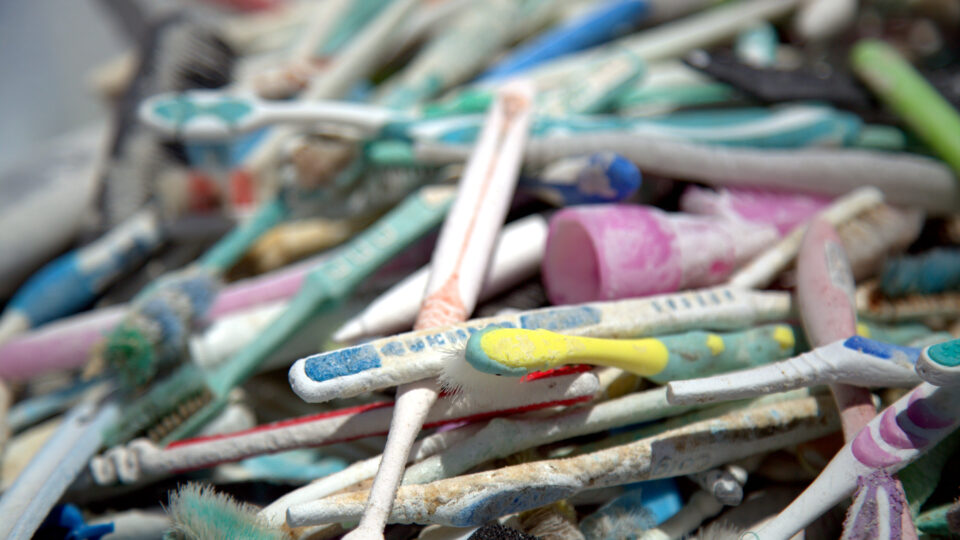
The global accumulation of plastic waste is an ever-growing problem.  At least five billion tons of the stuff has accumulated on land and sea and is even showing up in the bodies of animals and humans.  Recycling plastic instead of making even more of it seems like an essential thing to do but it has proven to be extremely challenging.

The main problem is that plastics come in many different varieties and the ways of breaking them down into a form that can be reused are very specific to each type of plastic.  Sorting plastic waste by plastic type is extremely impractical at large scale.  Certainly, most consumers can’t do it themselves.  As a result, most plastic gathered in recycling programs ends up in landfills.

New research at MIT has developed a chemical process using a catalyst based on cobalt that is very effective at breaking down a variety of plastics, including polyethylene and polypropylene, which are the two most widely produced plastics.   The MIT process breaks plastics down into propane.  Propane can be used as a fuel or as a feedstock for making many different products, including new plastics.

Plastics are hard to recycle because their long-chain molecules are very stable and difficult to break apart.  Most chemical methods for breaking their chemical bonds produce a random mix of different molecules which would somehow have to be sorted out in order to be useful for anything.

The new process uses a catalyst called a zeolite that contains cobalt nanoparticles.  The catalyst selectively breaks down various plastic polymer molecules and turns more than 80% of them into propane.

The researchers are still studying the economics and logistics of the method, but it looks quite promising.

**********

Web Links

New process could enable more efficient plastics recycling

Photo, posted April 25, 2016, courtesy of NOAA Coral Reef Ecosystem Program via Flickr.

Earth Wise is a production of WAMC Northeast Public Radio
Lithium-Sulfur Batteries | Earth Wise

July 19, 2022 By EarthWise Leave a Comment

Existuje také spousta přípravků ve formě vitaminových a minerálních komplexů, které nasycují tělo všemi užitečnými zdroji pro správné fungování celého těla a sexuálního systému. Nejoblíbenější jsou dnes syntetické stimulanty, protože poskytují silný apothekeein.com a stabilní účinek, doplňky stravy a homeopatické léky se častěji používají pro prevenci problémů tohoto druhu.

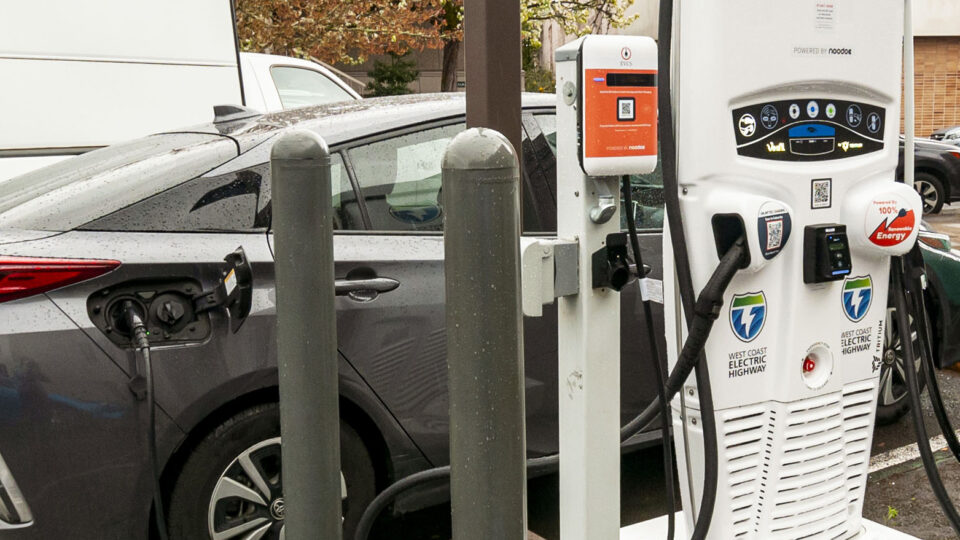
The growing use of electric vehicles as well as energy storage systems has created a major focus on the batteries for these applications.  Lithium-ion batteries dominate these applications and the demand for the materials needed to manufacture them continues to grow.

The raw materials for these batteries include not only lithium, but also can include nickel, manganese, and cobalt. 

Sulfur has been a desirable alternative for use in lithium-based batteries for quite a while because it is an abundant element and can be extracted in ways that are safe and environmentally friendly.  However, previous attempts to create lithium batteries that combine sulfur cathodes and the standard carbonate electrolytes used in lithium-ion batteries have not been successful because of irreversible chemical reactions between intermediate sulfur products and the electrolytes.

A group of chemical engineers at Drexel University has now found a way to introduce sulfur into lithium-ion batteries that solves the stability problem and also has major performance advantages.  The new batteries have three times the capacity of conventional lithium-ion batteries, and last more than 4,000 recharges, which is also a substantial improvement.

The new battery technology involves creating a stable form of sulfur called monoclinic gamma sulfur by depositing the sulfur on carbon nanofibers.   Previously, this sulfur phase was only observed at high temperatures and was only stable for 20 or 30 minutes.  This chemical phase of sulfur does not react with carbonate electrolytes and therefore produces a battery that is chemically stable over time.

 Incorporating this sulfur into battery cathodes results in a better battery that doesn’t need any cobalt, nickel, or manganese.  It could be the next big thing in electric vehicle batteries.

**********

Web Links

Breakthrough in Cathode Chemistry Clears Path for Lithium-Sulfur Batteries’ Commercial Viability

Photo, posted April 5, 2022, courtesy of Oregon Department of Transportation via Flickr.

Earth Wise is a production of WAMC Northeast Public Radio.

Declining Bird Populations | Earth Wise

June 16, 2022 By EarthWise Leave a Comment

A study by scientists from multiple institutions around the world including Cornell University has found that significant declines in bird populations are taking place across the planet.  Loss and degradation of natural habitats, direct overexploitation of many species, and climate change are driving the bird population declines.

According to the study, approximately 48% of existing bird species worldwide are known or suspected to be undergoing population declines.  The populations of 39% of bird species appear to be stable.  Only 6% of birds have increasing populations.

A study in 2019 determined that nearly 3 billion breeding birds have been lost in the U.S. and Canada over the past 50 years.  The new study shows that the same patterns of population decline and extinction are happening globally.  According to the study, there are now the first signs of a new wave of extinctions of continentally distributed bird species.

The ultimate fate of bird populations is strongly dependent on stopping the loss and degradation of habitats.   Habitat loss is generally driven by human demand for resources.  Reducing the human footprint on the natural world is what is needed.  Birds are a highly visible indicator of environmental health, and their declining populations signal a much wide loss of biodiversity and threats to human health and wellbeing.

There is a global network of bird conservation organizations trying to prevent further loss of bird species and bird abundance.  Keeping track of the situation is essential and there is growing participation by the public in bird monitoring.  But ultimately, it depends on governments and society in general to support sustainable resource use and learn how to share the planet with nature.

**********

Web Links

Global Bird Populations Steadily Declining

Photo, posted January 9, 2022, courtesy of Martien Brand via Flickr.

Earth Wise is a production of WAMC Northeast Public Radio.

Weaning Off Fossil Fuels | Earth Wise            

June 2, 2022 By EarthWise Leave a Comment

How to break free of our dependence on fossil fuel

We recently talked about California producing 97% of its electricity from renewables on one sunny afternoon in April.  On May 8th, the state produced enough renewable electricity to meet 103% of consumer demand.  These sorts of records are likely to be increasingly commonplace in the spring when the weather is still fairly mild.

But even while renewables were producing more electricity than California needed, natural gas power plants in the state were still running.

Turning off the gas power plants is not possible.  The reason is that as the sun sets and solar farms stop producing power, California has to quickly replace the power with electricity from other sources.  Natural gas plants are massive industrial facilities that cannot be turned on and off rapidly.  Some take as many as 4 to 8 hours to switch on.  Operators back them down as far as they can go, but even when there is plenty of solar power during the day, natural gas plants are still running.

The state is rapidly building huge battery storage projects as an alternative to gas plants, but so far, they are still only a small fraction of what is needed.   Wind power is another part of the solution along with hydropower.  California imports some power from other states as well and, in fact, also exports power when there is excess.  But keeping the energy system balanced and stable is an ongoing challenge.

California is building huge amounts of solar, huge amounts of wind, and huge amounts of energy storage, which should get the state to at least 90% of the way to a clean grid.  It’s the last 5-10% that is much harder to accomplish before natural gas is no longer part of the energy system.

**********

Web Links

California just ran on 100% renewable energy, but fossil fuels aren’t fading away yet

Photo, posted January 10, 2014, courtesy of F.G. via Flickr.

Earth Wise is a production of WAMC Northeast Public Radio.

Computing With Honey | Earth Wise           

April 28, 2022 By EarthWise Leave a Comment

Using honey in computing devices

Researchers are always working to develop faster and more powerful computers.  Some of them believe that the future of computing lies with neuromorphic computers, which are systems designed to mimic the neurons and synapses found in the human brain.

The human brain has more than 100 billion neurons with more than 1 quadrillion synapses or connections among them.  These numbers far exceed anything people have built.  There have been some neuromorphic computer chips made that have the equivalent of more than 100 million neurons per chip, but this is still far less than the number in the brain.  Despite all its complexity, the brain uses vastly less power than a powerful computer.  Some supercomputers use tens of millions of watts to operate; the brain uses around 10 to 20 watts.

Many researchers are searching for biodegradable and renewable ways to make neuromorphic computing components.  Researchers at Washington State University have demonstrated a way to make them using, of all things, honey.  The honey is used to form a memristor, which is a component similar to a transistor that can both process and store data in memory.  The device uses honey processed into a solid form and sandwiched between two metal electrodes.  The organic device is very stable and reliable over a long time.

So far, these devices are on a micro scale – about the size of a human hair.  The researchers want to develop them on a nanoscale, which is about 1/1000 the width of a human hair, and then bundle many millions or even billions together to make a neuromorphic computing system.  Such a honey-based system would be renewable and biodegradable – which, pardon the pun, would be really sweet.

**********

Web Links

Honey holds potential for making brain-like computer chips

Photo, posted January 28, 2008, courtesy of Dino Giordano via Flickr.

Earth Wise is a production of WAMC Northeast Public Radio.

Living Walls | Earth Wise

December 28, 2021 By EarthWise 1 Comment

Green roofs are popular in many European countries.  A green roof is a layer of vegetation planted over a waterproofing system installed on a flat or slightly sloped roof.  Such roofs provide shade, remove heat from the air, and reduce temperatures of the roof surface, reducing energy use in the building and diminishing the urban heat-island effect.

A recent study by the University of Plymouth in the UK looked at the effectiveness of living walls – essentially the equivalent of a green roof located on the wall of a building.

The study looked at the effect of retrofitting an existing masonry wall with an exterior living wall façade consisting of a flexible felt fabric sheet system with pockets holding soil in which plants could grow.

Five weeks of measurements demonstrated that the amount of heat lost through the retrofitted wall was 31.4% lower than that of the original structure.  They also found that daytime temperatures within the newly covered section remained more stable than the area with exposed masonry, so that less energy was required to heat that area.

The concept of living walls is fairly new but could be valuable in temperate climates such as Great Britain.  Buildings in the UK account for 17% of greenhouse gas emissions and space heating accounts for 60% of all the energy used in buildings.  So, improving the thermal performance of buildings would have a significant effect on reducing energy use and therefore emissions.

So-called green infrastructure, including green roofs and living walls, provides a nature-based solution that can help tackle climate change, air pollution, and other modern urban problems.

**********

Web Links

Living walls can reduce heat lost from buildings by over 30%, study shows

Photo, posted June 19, 2011, courtesy of Linda Hartley via Flickr.

Earth Wise is a production of WAMC Northeast Public Radio.

Wind Farms Slowing Each Other Down | Earth Wise

July 13, 2021 By EarthWise Leave a Comment

Wind farms placed too closely together slow one another down

Offshore wind is booming in Europe.  The expansion of wind energy in the German Bight and Baltic Sea has been especially dramatic.  At this point, there are about 8 gigawatts of wind turbines in German waters, the equivalent of about 8 nuclear power plants.  But space in this region is limited so that wind farms are sometimes built very close to one another.

A team of researchers from the Helmholtz Center Hereon, a major German research institute, has found that wind speeds downstream from large windfarms are significantly slowed down.  In a study published in the journal Nature Scientific Reports, they found that this braking effect can result in astonishingly large-scale lowering of wind speeds.

On average, the regions of lowered wind can extend 20-30 miles and, under certain weather conditions, can even extend up to 60 miles.  As a result, the output of a neighboring wind farm located within this distance can be reduced by 20 to 25 percent.

These wake effects are weather dependent.  During stable weather conditions, which are typically the case in the spring in German waters, the effects can be especially large.  During stormy times, such as in November and December, the atmosphere is so mixed that the wind farm wake effects are relatively small.

Based on their modeling, it is clear that if wind farms are planned to be located close together, these wake effects need to be taken into account.  The researchers next want to investigate the effects that reduced wind speeds have on life in the sea.  Ocean winds affect salt and oxygen content, temperatures, and nutrients in the water.  It is important to find out how reduced winds might affect marine ecosystems.

**********

Web Links

Are wind farms slowing each other down?

Photo, posted November 23, 2011, courtesy of David J Laporte via Flickr.

Earth Wise is a production of WAMC Northeast Public Radio.

Replacing Plastic Tableware | Earth Wise

December 30, 2020 By EarthWise Leave a Comment

Replacing plastics

Plastics have been described as the “ubiquitous workhorse material of the modern economy.”  But their versatility, pliability, and durability comes at a heavy price to the environment.  Plastic pollution is quite literally everywhere.  Plastic debris and microplastic particles can be found in every corner of the globe, including the Arctic and Antarctic. 

The scourge of plastic pollution is driving scientists to create ecologically-friendly alternatives.  According to a paper recently published in the journal Matter, scientists have developed “green” tableware made from sugarcane and bamboo that doesn’t sacrifice on convenience or functionality.  This eco-friendly tableware could serve as a permanent replacement for plastic cups and other disposable plastic containers. 

Traditional plastic polymers, a product of petroleum, can take as long as 1,000 years to decompose in landfills.  The new material only takes 60 days to break down.

To create this material, scientists used bamboo and bagasse, also known as sugarcane pulp.  Bagasse is one of the largest food-industry waste products.  The researchers wound the fibers together to form a mechanically stable and biodegradable material.  They added an alkyl ketene dimer, an eco-friendly chemical, to increase the oil and water resistance of the material.  The green material is durable enough to hold liquids like hot coffee and hot greasy foods like pizza.   

There’s another advantage: the green material’s manufacturing process emits 97% less CO2 than the process to make commercial plastic containers.  The next step is to lower the manufacturing cost.  While the cost of cups made from the green material is $2,333 per ton, traditional cups made from plastic are still slightly cheaper at $2,177 per ton.

**********

Web Links

This tableware made from sugarcane and bamboo breaks down in 60 days

Photo, posted May 19, 2013, courtesy of Henry Burrows via Flickr.

Earth Wise is a production of WAMC Northeast Public Radio.

Using Manganese To Transform CO2

August 23, 2017 By EarthWise

https://earthwiseradio.org/wp-content/uploads/2017/08/EW-08-23-17-Using-Manganese-to-Transform-CO2.mp3

Carbon dioxide is not a very popular substance.  As a greenhouse gas, it is the chief culprit in climate change and, as such, the world continues to seek solutions for preventing its release in the environment.

[Read more…] about Using Manganese To Transform CO2

Primary Sidebar

Recent Episodes

  • An uninsurable future
  • Clean energy and jobs
  • Insect declines in remote regions
  • Fossil fuel producing nations ignoring climate goals
  • Trouble for clownfishes

WAMC Northeast Public Radio

WAMC/Northeast Public Radio is a regional public radio network serving parts of seven northeastern states (more...)

Copyright © 2025 ·