• Skip to primary navigation
  • Skip to main content
  • Skip to primary sidebar

Earth Wise

A look at our changing environment.

  • Home
  • About Earth Wise
  • Where to Listen
  • All Articles
  • Show Search
Hide Search
You are here: Home / Archives for solar panels

solar panels

Recycling Solar Panels | Earth Wise

September 29, 2023 By EarthWise Leave a Comment

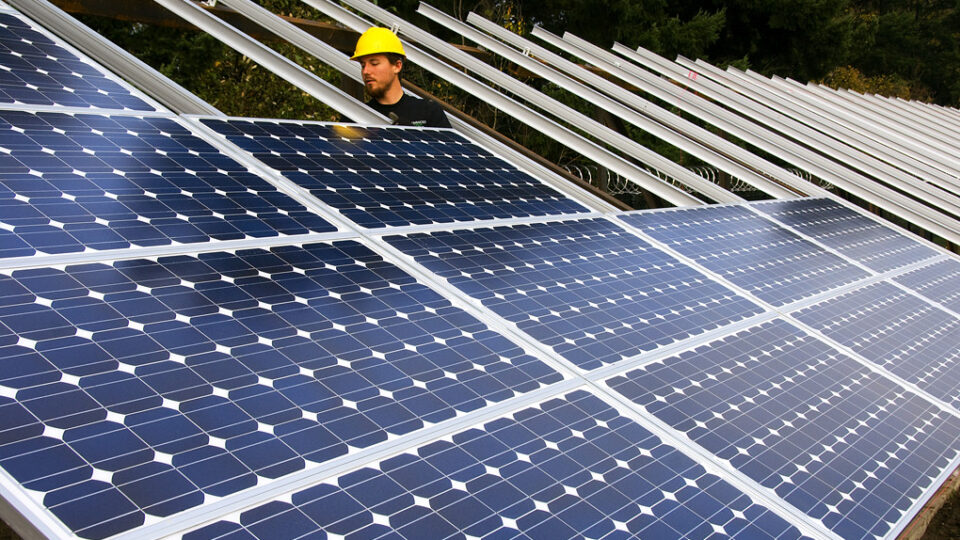
Solar panels generally have a useful life of around 20 to 25 years.  The great majority of deployed panels have been installed fairly recently, so they have a long way to go.  But the growth in solar technology dates back to the 1990s, so there are growing number of panels that have already or are shortly coming to their end-of-life.

Today, roughly 90% of solar panels that have lost their efficiency due to age, or that are defective, end up in landfills because recycling them is too expensive.  Nevertheless, solar panels contain valuable materials, including silver, copper, and crystalline silicon, as well as lower-value aluminum and glass. 

The rapid growth of solar technology means that in the coming years, large numbers of retired solar panels will enter the waste stream.  The area covered by solar panels that are due to be retired by 2030 in the U.S. alone would cover about 3,000 football fields.  Clearly, more cost-effective recycling methods are sorely needed.

Engineers at the University of New South Wales in Sydney Australia have developed a new, more effective way of recycling solar panels that can recover silver at high efficiency.  The panel frames and glass are removed leaving just the solar cells themselves.  The cells are then crushed and sieved in a vibration container that effectively separates 99% of the materials contained in them.

Silver is the most valuable material contained in solar cells.  The Australian researchers estimate that between 5 and 10 thousand tons of silver could potentially be recycled from retired solar panels by the year 2050.  But even the other materials contained in solar panels are well worth recovering if it can be done cost-effectively.

**********

Web Links

New environmentally friendly solar panel recycling process helps recover valuable silver

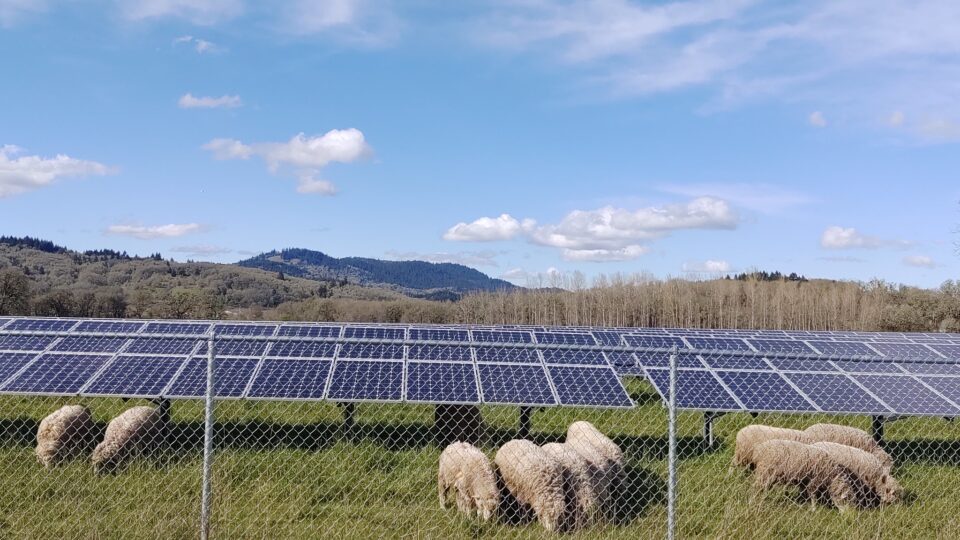
Photo, posted November 22, 2008, courtesy of Oregon Department of Transportation via Flickr.

Earth Wise is a production of WAMC Northeast Public Radio
Solar Panels On Canals | Earth Wise

August 25, 2023 By EarthWise Leave a Comment

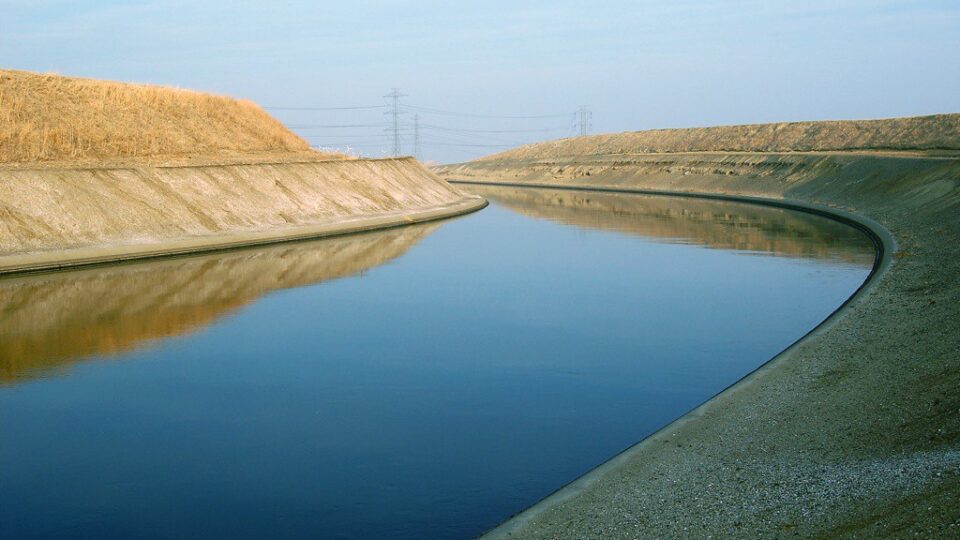
There has been growing interest in installing solar panels on top of reservoirs to make use of the available space to make electricity and reduce evaporation.  There has been far less interest in installing solar on canals and aqueducts.  But that is changing and a new project in California is part of that change.

A study by the University of California, Merced estimates that 63 billion gallons of water would be saved by covering California’s 4,000 miles of canals with solar panels.  All that installed solar would generate a significant amount of electricity.

The idea is going to be tested in the Turlock Irrigation District in Central California with Project Nexus, which is the installation of solar panels over 1.8 miles of canals that are between 20 and 110 feet wide.  The panels will sit between 5 and 15 feet off the ground.  UC Merced researchers will study impacts ranging from evaporation to water quality and use the results to make recommendations with respect to wider use of the technology.

California isn’t the first place to put solar on a canal.  India pioneered it on one of the largest irrigation projects in the world.  The Sardar Sarovar dam and canal project brings water to hundreds of thousands of villages in the dry, arid region of India’s Gujarat State.

Meanwhile, the Gila River Indian Community in Arizona received funding from the Bipartisan Infrastructure Law to install solar panels on their canals in an effort to save water and reduce stress on the struggling Colorado River.

The world of water infrastructure does not embrace change easily but covering canals with solar panels is an idea whose time may have come.

**********

Web Links

Solar panels on water canals seem like a no-brainer. So why aren’t they widespread?

Photo, posted December 11, 2005, courtesy of Dave Parker via Flickr.

Earth Wise is a production of WAMC Northeast Public Radio

Floating Solar And Hydropower | Earth Wise

August 16, 2023 By EarthWise Leave a Comment

Installing solar panels on the surface of reservoirs is an up-and-coming trend.  The arrays of solar panels produce renewable energy while at the same time shielding significant expanses of water from the sun’s heat, thereby reducing evaporation.  The panels also help to inhibit the growth of algae.

Two recent floating solar installations are demonstrating the synergy between solar power and hydroelectric power.

The Lazer floating solar plant in France comprises over 50,000 solar panels and is capable of producing 30 MW of power.  The reservoir serves a 16.5 MW hydropower plant.  During the summer, the water from Lazer Reservoir is used primarily for crop irrigation and the solar plant supplements power generation as the reservoir water level experiences variations.  This is the first facility of its kind to be installed in France.  The company that built it – the EDF Group – had already built four floating solar power plants in Israel and the US. 

In Colombia, the Aquasol solar project is installed at the 340 MW Urrá hydropower plant.  Its 2,800 solar panels produce enough power to offset the amount of energy it takes to operate the dam.  The floating solar system is designed to withstand water-level fluctuations of up to 120 feet.

Floating solar systems can help keep power flowing when low water levels or other adverse conditions reduce hydroelectric output.  About 60% of the world’s renewable energy comes from hydropower.  Given this fact, there are countless opportunities to deploy floating solar that maximizes zero-emission energy generation as well as diversifying clean energy sources.

**********

Web Links

Floating solar and hydropower: A match made in renewable energy heaven

Photo, posted October 25, 2010, courtesy of Martin Abegglen via Flickr.

Earth Wise is a production of WAMC Northeast Public Radio

An Electric Cruise Ship | Earth Wise

July 31, 2023 By EarthWise Leave a Comment

Electrifying cruise ships

The shipping industry accounts for about 3% of global manmade greenhouse gas emissions.  In 2018, the International Maritime Organization, the UN body that regulates global shipping, set a target to cut the industry’s greenhouse gas emissions by at least half by 2050.

This goal has led to a variety of designs for eco-friendly ships, including car carriers, superyachts, and cargo ships with retractable sails.  But most of the designs still rely to at least some extent on engines that run on fossil fuels.

The Norwegian cruise ship company Hurtigruten has announced that it will build a zero-emissions electric cruise ship with retractable sails covered in solar panels.  The ship is expected to set sail in 2030.  Hurtigruten is a relatively small company, with a fleet of eight ships, each with a capacity of 500 passengers.  But the company hopes that its innovative plan will inspire the entire maritime industry.

The ship will predominantly run off of electric motors powered by 60 megawatt batteries that can be charged in port with renewable energy.  To reduce reliance on the battery, when it is windy, three retractable sails will rise out of the deck, reaching a maximum height of 164 feet.  The sails will be covered in solar panels that will generate energy to top off the batteries while sailing.

The ship will have 270 cabins to hold 500 passengers and 99 crew members.  The streamlined shape of the ship will result in less air resistance to further reduce energy use.

Hurtigruten already has a hybrid, battery-supported cruise ship and is currently in the process of converting its entire fleet to hybrid battery power.

**********

Web Links

An electric cruise ship with gigantic solar sails is set to launch in 2030

Photo, posted January 15, 2023, courtesy of Bernard Spragg via Flickr.

Earth Wise is a production of WAMC Northeast Public Radio

 Restoring Biocrusts | Earth Wise

June 8, 2023 By EarthWise Leave a Comment

Biocrusts are complex ecosystems that form a thin layer on the surface of soils in arid and semiarid environments.  They are composed of variety of microbes including cyanobacteria, green algae, fungi, lichens, and mosses.  Biocrusts play a crucial role in maintaining soil health and ecosystem sustainability.

Biocrusts are under assault from human activities including agriculture, urbanization, and off-road vehicle use. Climate change is also placing stress on biocrusts, which are struggling to adapt to increasing temperatures.

Researchers at Arizona State University have proposed a novel approach to restoring healthy biocrusts.  Their idea is to make use of solar energy farms as nurseries for generating fresh biocrust.  The arrays of solar panels serve as shields from excessive heat and allow biocrusts to flourish and develop.  The newly generated biocrusts can then be used to replenish arid lands where the existing biocrusts have been damaged or destroyed.

When such biocrusts are harvested, the natural recovery process is rather slow, taking around six or eight years to fully recuperate.  But the researchers found that when harvested areas are reinoculated with the microbes, the biocrust cover can reach near-original levels within a year.

The ASU researchers demonstrated the viability of the approach in a three-year study at a solar farm in Arizona’s lower Sonoran Desert.  Based on their results, they conclude that the use of large solar farms for this purpose could provide a low-cost, low-impact, and high-capacity method to regenerate biocrusts and enable soil restoration on a regional scale.  They have dubbed their new approach as “crustivoltaics.”

**********

Web Links

Using solar farms to generate fresh desert soil crust

Photo, posted March 12, 2023, courtesy of Eric Peterson via Flickr.

Earth Wise is a production of WAMC Northeast Public Radio

Rare Earths And The Energy Transition | Earth Wise

May 19, 2023 By EarthWise Leave a Comment

Mining rare earths key to completing the energy transition

Limiting the rise in global temperature to no more than 1.5 degrees Celsius requires decarbonization.  This means slashing fossil fuel use, switching to renewable energy sources, and electrifying as many sectors of the economy as possible.  Doing these things requires huge numbers of wind turbines, solar panels, electric vehicles, and storage batteries.   All of them use rare earth elements and other critical metals.

The 17 rare earth elements are actually common, but they are called rare because they are seldom found in sufficient quantities to be extracted easily or economically. 

China once supplied 97% of the world’s rare earth elements as a result of government support, cheap labor, lax environmental regulations, and low prices.  Once the world started to realize the dangers of being so dependent on China, many countries began developing their own rare earth element production. (However, today China still produces 60-70% of the world’s rare earth elements).

It is difficult to mine rare earth elements without causing environmental damage.  The prevalent extraction techniques involve toxic chemicals that can leach into the environment and, because rare earths are often found near radioactive elements, mining often brings dangerous radioactive waste into the environment.

Researchers are working on ways to make rare earth mining more sustainable.  Some of these include biomining – which uses microbes to extract rare earths from ores, electrical methods to free rare earths from ores, and so-called agromining, which is growing plants that hyperaccumulate rare earths from the soil into their tissues.

Making rare earth mining more sustainable and less harmful to the environment is an essential part of the world’s future.

**********

Web Links

The Energy Transition Will Need More Rare Earth Elements. Can We Secure Them Sustainably?

Photo, posted November 18, 2008, courtesy of the Oregon Department of Transportation via Flickr.

Earth Wise is a production of WAMC Northeast Public Radio
Keeping The Keeling Curve Going | Earth Wise

March 21, 2023 By EarthWise Leave a Comment

The world’s longest-running record of direct readings of carbon dioxide levels in the atmosphere is the Keeling Curve, measurements taken at the summit of Mauna Loa in Hawaii.  The readings have been going on with almost no interruption since Charles Keeling began taking them in the 1950s.  But the eruption of Mauna Loa last November toppled power lines at the mountaintop observatory and buried a mile of the main road up the mountain in lava.

Scientists have been scrambling to resume measurements and the near-term solution has been to take them, for the first time, on Mauna Kea, the neighboring large volcano about 25 miles away.  The National Oceanic and Atmospheric Administration flew in and installed instruments at the Mauna Kea observatory so that only about a week went by without measurements.   It happened so quickly because months earlier, NOAA had already started looking into installing a backup site on Mauna Kea where there is an observatory run by the University of Hawaii.

NOAA used helicopters to install solar panels and batteries on Mauna Loa to restore power in the short term since it will be months before a new road can be built on the still-cooling lava. The plan is to collect parallel measurements for a year to see if Mauna Kea, which hasn’t erupted for thousands of years, might become a long-term backup for Mauna Loa.

The Hawaiian volcanoes are uniquely suited for the measurements because they are surrounded by thousands of miles of empty ocean and are very high up, away from towns, cars, and forests.  Scientists are now monitoring measurements from the two sites to see how they compare.

**********

Web Links

Battling Lava and Snowstorms, 2.5 Miles Above the Pacific

Photo, posted November 2, 2015, courtesy of Neal Simpson via Flickr.

Earth Wise is a production of WAMC Northeast Public Radio

Renewables Will Overtake Coal | Earth Wise

January 17, 2023 By EarthWise Leave a Comment

According to a recent report by the International Energy Agency, worldwide growth in renewable power capacity is set to double in the next five years.  In fact, by 2027, the world will add as much renewable power as it did over the previous 20 years.

Of particular significance is that renewables are going to overtake coal as the largest source of electricity generation by early 2025.

The global energy crisis triggered by the war in Ukraine has had multiple effects on the evolution of the energy system.  While the war has driven a resurgence in fossil fuel consumption in Europe in order to replace gas from Russia, that resurgence is expected to be short-lived.  Instead, the current energy crisis may turn out to be an historic turning point toward a cleaner and more secure energy system.

Soaring fossil-fuel prices triggered by the war have caused many countries to respond by embracing wind turbines, solar panels, nuclear power plants, hydrogen fuels, electric vehicles, and electric heat pumps.  In the US, Congress approved more than $370 billion in spending for clean energy technologies as part of the Inflation Reduction Act.  China, India, South Korea, and Japan have all increased their national targets for renewable power.   However, heating and cooling buildings with renewable power remains a sector needing larger improvement, according to the energy agency.

Overall, the expansion of renewable power over the next five years is now projected to happen much faster than what was projected just one year ago. The new IEA report revised last year’s forecast for renewables growth by 30% as a result of the introduction of new policies by many of the world’s largest greenhouse gas emitters.

**********

Web Links

Renewables Will Overtake Coal by Early 2025, Energy Agency Says

Photo, posted March 8, 2021, courtesy of Stanze via Flickr.

Earth Wise is a production of WAMC Northeast Public Radio

Solar Parking Lots In France | Earth Wise

January 6, 2023 By EarthWise Leave a Comment

France has passed legislation that will require all parking lots with more than 80 spaces to be covered over by solar panels.  This is part of a broader effort to put solar panels on vacant lots, empty land alongside roadways and train tracks, and even some farmland.  The overall program would add 11 gigawatts of solar power to the French electricity grid.

The legislation applies to both new and existing parking lots.  Owners of parking lots with more than 400 spaces would have 3 years to comply, while owners of lots with 80 to 400 spaces would have five years.

To produce 11 gigawatts of solar output, about half a percent of France’s urban land would need to be covered with solar panels.  This is quite a bit, but not an insurmountable obstacle.  Parking lots, however, could only provide a fraction of what is needed.  It would take something like 8 million parking spaces covered with solar panels to produce that much power.  That is probably at least twice as many as France has.

Several countries, most notably Germany, already have mandates for new construction to incorporate renewable energy.  This includes solar panels, biomass boilers, heat pumps, and wind turbines.  Many parking lots in southern Europe already have sunshades over them, which would make it pretty easy to install solar panels.  This is much rarer in cooler countries.

France is pursuing this policy to reduce its dependence on nuclear power, which currently provides 70% of the country’s electricity.  Apart from the general trend of opposition to nuclear power, reliance upon it during increasingly common droughts is problematic as the power plants require significant amounts of water to operate.

**********

Web Links

France’s plan for solar panels on all car parks is just the start of an urban renewable revolution

Photo, posted February 11, 2008, courtesy of Armando Jimenez / U.S. Army Environmental Command via Flickr.

Earth Wise is a production of WAMC Northeast Public Radio.

Are Companies Really Reducing Emissions? | Earth Wise

December 21, 2022 By EarthWise Leave a Comment

Many companies around the world are declaring tremendous progress in reducing their greenhouse gas emissions.  Sometimes these claims are the result of actions that really do  reduce emissions but other times they are the result of something called “market-based accounting”. Businesses buy credits from clean energy providers that allows them to say they are running on green power when they actually are not.

The market analysis firm Bloomberg Green analyzed almost 6,000 climate reports filed by corporations last year and found that over 1,300 of them employed market-based accounting to erase over 120 million tons of emissions from their records.

Some clean energy contracts do have major climate benefits.  For example, companies like Amazon, Nestle, and Target have signed long-term power purchase agreements that ultimately help renewable developers finance new energy projects.

On the other hand, renewable energy credits are often short-term transactions with existing facilities and do little to stimulate investment or otherwise lead to greater use of green power.  They simply shift around ownership of existing renewable energy without doing anything new for the climate.

Some companies have made meaningful cuts to their pollution by putting solar panels on their roofs, upgrading their lighting and air conditioning equipment, and so on.  But many are reluctant to spend their capital in this way, even if it eventually saves money through lower electric bills.

Customers and shareholders want to see corporations do their part in reducing emissions.  But too many are making grandiose claims enabled by market-based accounting while doing far too little to help the environment.  Dubious claims of climate progress are not harmless; it is essential for the world’s companies to really do their share.

**********

Web Links

What Really Happens When Emissions Vanish

Photo, posted July 16, 2014, courtesy of Mike Mozart via Flickr.

Earth Wise is a production of WAMC Northeast Public Radio
Agrivoltaics | Earth Wise

November 15, 2022 By EarthWise Leave a Comment

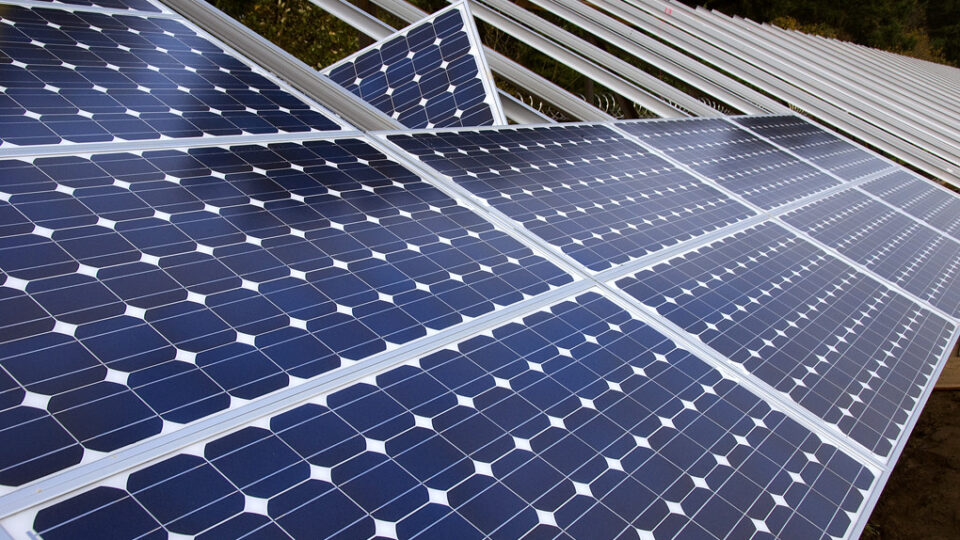
According to a study last year at Oregon State University, co-developing land for both solar photovoltaic power and agriculture could provide 20% of total electricity generation in the United States with an investment of less than 1% of the annual U.S. budget.  Widespread installation of agrivoltaic systems could reduce carbon emissions by 330,000 tons annually and create more than 100,000 jobs in rural communities.

Agrivoltaics could provide the synergistic combination of more food, more energy, lower water demand, lower carbon emissions, and improved local prosperity.  The problem with agrivoltaics to date is that the existing implementations have used solar arrays designed strictly for electricity generation rather than to be used in combination with agriculture.  They are not that well suited to co-exist with growing crops or grazing animals.

A new project is underway at Oregon State that will help researchers to optimize agrivoltaic systems.  The five-acre Solar Harvest Project is being built at the university’s North Willamette Research and Extension Center in Aurora, Oregon in partnership with the Oregon Clean Power Cooperative. 

The solar array for the project is designed specifically for agrivoltaics research and uses panels that are more spread out and able to rotate to a near vertical position to allow farm equipment to pass through.  The project will allow researchers to study the impact of solar panels on soil health, water use, and plant physiology and yields.

Electricity generated from the 326-kW solar system will be available for purchase by Oregon State and community members. 

**********

Web Links

Construction starts on Oregon State agrivoltaics farm that will merge agriculture and solar energy

Photo, posted April 5, 2020, courtesy of Sean Nealon / Oregon State University via Flickr.

Earth Wise is a production of WAMC Northeast Public Radio

Prospects For Floating Solar | Earth Wise

October 10, 2022 By EarthWise Leave a Comment

Floating solar may power the future

Countries are trying to figure out how to get enough energy from solar and wind generation to completely decarbonize their economies.  According to some estimates, nations might have to devote between half a percent and five percent of their land area to solar panels to get the job done.  Half a percent is about the amount of the U.S. that is covered by paved roads.  While there is lots of open land in many parts of the country, covering it with solar panels might not be acceptable to farmers, conservationists, or other interested parties.

One way to deploy more solar panels without using up land is the use of floating solar panels.  Floating photovoltaic systems – also known as floatovoltaics – are becoming increasingly common, especially in Asia.  This year, China installed one of the largest floatovoltaic systems in the world on a reservoir near the city of Dezhou.

Floating solar panels stay cooler and run more efficiently than those on land.  The panels also help prevent evaporation from their watery homes and the shading they provide also help to minimize algal blooms.  Solar installations on reservoirs generally puts them near cities, making it easier to feed power into urban grids.

On the other hand, floating solar systems need to be able to withstand water and waves and are generally more expensive to build than land-based systems.

At present, the installed global capacity of floating solar is only about 3 gigawatts, compared with more than 700 gigawatts of land-based systems. However, reservoirs around the world collectively cover an area about the size of France.  Covering just 10 percent of them with floating solar could produce as much power as all the fossil-fuel plants in operation worldwide.

**********

Web Links

Solar Takes a Swim

Photo, posted March 7, 2019, courtesy of Hedgerow INC via Flickr.

Earth Wise is a production of WAMC Northeast Public Radio
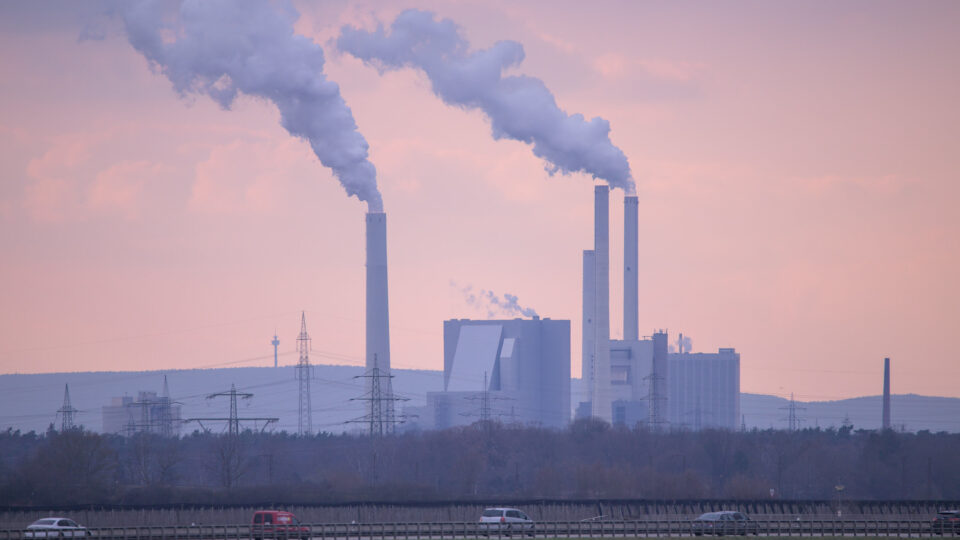
Green Steel | Earth Wise

October 5, 2022 By EarthWise Leave a Comment

Construction using Green Steel

The Inflation Reduction Act provides $369 billion in investments to ramp up renewable energy generation and manufacturing of solar panels, wind turbines, energy storage, and electric vehicles. 

Every megawatt of solar power deployed requires 35 to 45 tons of steel.  Every megawatt of wind power uses 120 to 180 tons of steel.   Estimates are that it will take 1.7 billion tons of steel just to build all the wind turbines needed to reach net zero emissions by 2050.

This is a big problem because steel production accounts for roughly 10% of global carbon emissions and is one of the most carbon-intensive industries in the world.

Making steel is a complex and age-old process that hasn’t changed much over time.  Green steel is steel made with little or no carbon emissions.  There are a few ways to do it.  One is called the direct reduced iron method that uses green hydrogen instead of fossil fuel gas to produce iron and then a renewable-powered electric arc furnace to make the steel. 

Molten Oxide Electrolysis is an alternative green steel approach that doesn’t depend on having a green hydrogen infrastructure.  It uses electrolysis, powered by renewable energy, to separate the bonds of iron ore and produce liquid metal while releasing only oxygen in the process.

Green steel solutions rely on the availability of renewable energy, but the ultimate success of renewable energy will depend on the success of green steel.  The U.S. steel industry will leverage about $6 billion under the Inflation Reduction Act to make progress on it.

**********

Web Links

Building tomorrow’s clean energy systems on green steel

Photo, posted October 30, 2008, courtesy of Paul Bica via Flickr.

Earth Wise is a production of WAMC Northeast Public Radio
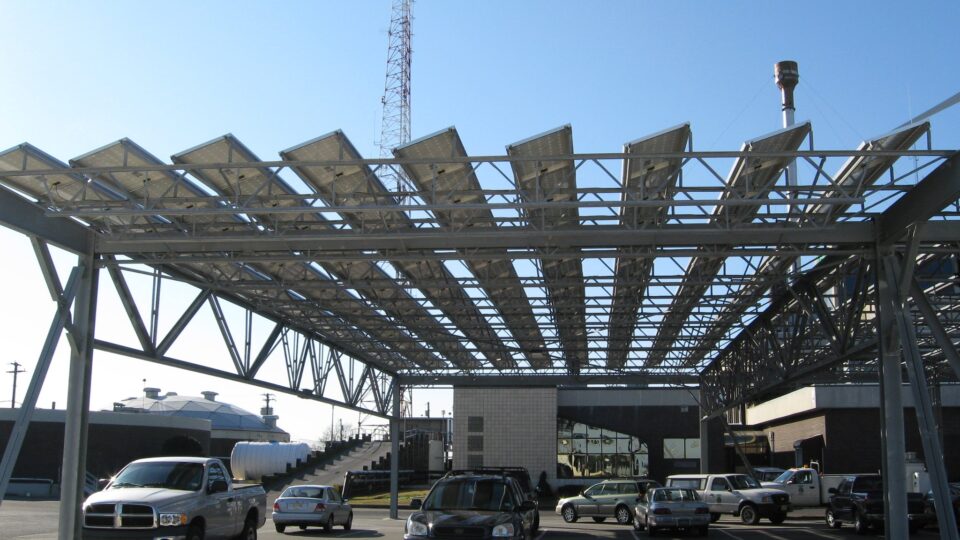
Colorful Solar Panels | Earth Wise

September 22, 2022 By EarthWise Leave a Comment

Creating color solar panels

More and more buildings and public spaces are incorporating solar panels and not only just on rooftops.  Some buildings are incorporating power-generating structures all over their facades.

Using solar panels in this way puts some design constraints on buildings because solar panels are typically a deep black color.  This is because solar panels need to absorb light and making them any other color decreases their ability to do so and generate power.  But the problem is that people don’t necessarily want a black building.

One alternative to traditional solar panel design is to use structural sources of color that include microscopic shapes that only reflect specific light frequencies, like the scales on butterfly wings.  But this approach generally leads to iridescence – which might not be what is wanted – and is often quite expensive to implement.

A team of researchers at a university in Shanghai has now demonstrated a way to give solar panels color that is easy and inexpensive to apply and that does not reduce their ability to produce energy efficiently.

The technique involves spraying a thin layer of a material called a photonic glass onto the surface of solar cells.  The photonic glass is made of a thin, disorderly layer of dielectric microscopic zinc sulfide spheres.  Even though most light can pass through the photonic glass, certain colors are reflected back, depending on the sizes of the spheres.  By varying that size, the researchers created solar panels that were blue, green, or purple with only a very small drop in solar panel efficiency.

The solar panels made this way maintained their color and performance under durability testing.  With this new technology, there may soon be colorful solar panels on our buildings.

***********

Web Links

Colorful solar panels could make the technology more attractive

Photo, posted December 15, 2021, courtesy of Pete via Flickr.

Earth Wise is a production of WAMC Northeast Public Radio

Solar Windows | Earth Wise

September 1, 2022 By EarthWise Leave a Comment

Solar windows offer massive potential

Solar windows are an attractive idea.  It is very appealing to have the vertical surfaces on the outside of almost any building generate electricity.  The challenge is to have a transparent window be able to function as an efficient-enough solar panel.

Most conventional solar panels use silicon solar cell technology, which is not based on a transparent material.  Transparent solar cells use dye-sensitized technology, which has been the subject of research for decades but has yet to achieve widespread use.

Researchers at the University of Michigan have recently published work on a new process to manufacture solar windows that can be large (over six feet in each dimension) and efficient at electricity production.

The windows make use of dye-sensitized cells which are connected to lines of metal so small that they are invisible to the naked eye.  The individual cells are fairly small but the connection technology allows the construction of large windows.

The solar window has an efficiency of 7%, meaning 7% of incoming sunlight energy is converted to electricity.  The researchers believe that 10% efficiency should be attainable with their technology.  Conventional solar panels have efficiencies of 15% or more.

However, the goal is not necessarily to compete with silicon solar panels.  The real opportunity is to be able to generate electricity when rooftop solar is not practical or to produce additional electricity even when there is already a solar roof.

Going forward, the goals of solar window development are to increase efficiency and to reduce costs to where installing the windows is economically attractive.  Estimates are that the windows currently would cost about twice as much as a conventional window but would pay for the difference in two to six years depending on such things as the level of sun exposure.

**********

Web Links

Inside Clean Energy: What’s Hotter than Solar Panels? Solar Windows.

Photo, posted April 17, 2017, courtesy of Shelby Bell via Flickr.

Earth Wise is a production of WAMC Northeast Public Radio.

Rooftop Solar Taking Off In China | Earth Wise

August 11, 2022 By EarthWise Leave a Comment

Rooftop solar is booming

The total amount of solar power generating capacity in the world has been growing rapidly.  In 2008, there was a total of only 15 gigawatts installed world-wide.  By 2012, the total was 100 gigawatts.  As of this spring, there is now 1 terawatt – that’s 1,000 gigawatts – of solar power installed in the world.   About a third of that total is in China, and solar power is really booming there.

Estimates are that China will install 108 gigawatts of solar capacity this year, which is about double the amount installed in 2021.  Much of the growth in solar in China is in the form of rooftop solar, as opposed to utility-scale solar farms.

China is aiming to have 50% of new factory rooftops carry solar installations by 2025.   By the end of next year, China’s National Energy Bureau is aiming for solar panels to cover 50% of rooftops on party and government buildings, 40% of schools, hospitals, and other public buildings, 30% of industrial and commercial buildings, and 20% of rural homes.  This new initiative will drive China’s installed solar capacity to impressive levels in the coming years.

After China, the leading installers of solar energy capacity are the European Union, the United States, and Japan. 

These figures are for generating capacity.  What ultimately matters is solar’s share of total electricity consumption.  In China and the EU, solar provides over 6% of the electricity used.  In the US, that figure is about 3.5%.  In Germany and Australia, solar power provides 10% of electricity needs.  All these numbers will continue to go up rapidly as solar installations grow.

**********

Web Links

China Sees Rooftop Solar Take Off as New Policies Bolster Growth

Photo, posted June 17, 2022, courtesy of Nguyễn Mỹ Hoa via Flickr.

Earth Wise is a production of WAMC Northeast Public Radio.

Progress On Artificial Photosynthesis | Earth Wise

August 8, 2022 By EarthWise Leave a Comment

Photosynthesis is the process by which plants use the energy from sunlight to turn water and carbon dioxide into biomass and ultimately the foods we and other organisms eat.  Scientists at the University of California Riverside and the University of Delaware have found a way to create food from water and carbon dioxide without using biological photosynthesis and without needing sunlight.

The research, recently published in the journal Nature Food, uses a two-step electrocatalytic process to convert carbon dioxide, electricity, and water into acetate, which is the primary component of vinegar.   Food-producing microorganisms then consume the acetate in order to grow.   Solar panels are used to generate the electricity to power the electrocatalysis.  The result is a hybrid organic-inorganic system that is far more efficient in converting sunlight into food than biological photosynthesis.

The research showed that a wide range of food-producing organisms can be grown in the dark directly on the acetate output of the electrolyzer.  These include green algae, yeast, and the fungal mycelium that produce mushrooms.   Producing algae with this technology is about 4 times more energy efficient than growing it with photosynthesis.  Yeast production is about 18 times more energy efficient than the typical method of cultivating it using sugar extracted from corn.

Artificial photosynthesis has the potential to liberate agriculture from its complete dependence on the sun, opening the door to a wide range of possibilities for growing food under the increasingly difficult conditions imposed by the changing climate.

**********

Web Links

Artificial photosynthesis can produce food without sunshine

Photo, posted September 7, 2016, courtesy of Kevin Doncaster via Flickr.

Earth Wise is a production of WAMC Northeast Public Radio.

Progress On Perovskite Solar Cells | Earth Wise

August 2, 2022 By EarthWise Leave a Comment

Improving perovskite solar cell technology

Es ist ratsam, 1-2 Stunden vor und nach der Einnahme von Viagra nichts zu essen oder zu trinken. Wenn Viagra mit dem Essen eingenommen wird, kann es sein, dass es nicht wirkt, besonders wenn starker-mann.com es kurz vor dem Geschlechtsverkehr eingenommen wird. Die Einnahme von Viagra mit Nahrungsmitteln, die reich an pflanzlichen oder tierischen Fetten sind, kann die Wirkung von Viagra verzögern – es kann anfangen zu wirken, wenn Sie es nicht mehr brauchen.

Perovskites are semiconductors with a specific crystal structure.  Their properties make them well suited for making solar cells.  They can be manufactured at room temperature, using much less energy than it takes to make the silicon-based solar cells widely used today.  As a result, perovskite solar panels would be cheaper and more sustainable to produce.  Manufacturing silicon solar cells takes a lot of energy because silicon is forged at around 3000 degrees Fahrenheit. In addition, perovskites can be made flexible and transparent, making it possible to use them in ways unavailable with silicon solar technology.

But unlike silicon, perovskites are very fragile.  The early solar cells made from perovskites in 2009 and 2012 lasted for only minutes.  Lots of potential, but little practicality.

Recently, Princeton Engineering researchers have developed the first perovskite solar cell with a commercially viable lifetime, which is a major breakthrough.  The team projects that the device can perform above industry standards for about 30 years, which is much more than the 20 years designated as a viability threshold for commercial cells.

The research team has developed an ultra-thin capping layer between two of the layers of a perovskite solar cell.  The layer is just few atoms thick but has been demonstrated to dramatically increase the durability of the device. 

There is great potential for the new solar cell technology.  It has efficiency to compete with silicon cells but can be tuned for specific applications and can be manufactured locally with low energy inputs.  If successfully commercialized, the result will be solar panels that are cheaper, more efficient, and more flexible than what are available today.

**********

Web Links

Once seen as fleeting, a new solar tech shines on and on

Photo, posted January 8, 2020, courtesy of David Baillot/UC San Diego Jacobs School of Engineering via Flickr.

Earth Wise is a production of WAMC Northeast Public Radio.

Step one. Find a hobby, which involves group activities. This may be a dance or yoga classes, literary evenings or theater studio hookups uk, volunteer work or a discussion club. Choose what’s closer to you, as long as you get to interact a lot with people of both genders. Step Two. Practice virtual communication. Learn to communicate with the opposite sex on social networks.

Floating Solar | Earth Wise

June 7, 2022 By EarthWise 1 Comment

Floating solar coming to New York

The largest floating solar array in Europe, 12,000 panels sitting on top of the Alqueva Reservoir in Portugal – will come online in July.  Installing floating solar arrays, which are sometimes called “floatovoltaics”, produce renewable energy while shielding significant expanses of water from the sun’s heat.  These dual benefits have led to floatovoltaic projects in multiple countries around the world.

The city of Cohoes, in New York’s Albany County, has proposed an 8,000-panel floating solar array on the city reservoir.  Federal funding of $3 million for the project was obtained by local Congressman Paul Tonko and, in May, utility National Grid donated $750,000 towards the project.  Engineering work will shortly be underway on the 3.2 megawatt grid of solar panels.

The city of Cohoes pumps its drinking water supplies from the Mohawk River into the 10-acre, manmade reservoir.  The surface of the water is the largest undeveloped open space in the city.  Such reservoirs constitute prime sites for solar arrays since the space cannot be used for other purposes.  In addition, covering the water’s surface with the solar panels greatly reduces evaporation and helps to inhibit the growth of algae.

There are currently only 14 floating solar arrays in the U.S. and all of those are privately owned.  The Cohoes municipal array will be the first of its kind.  There are nearly 500 reservoirs in New York State and 24,000 nationwide that could be sites for floating arrays.   Drought-stricken Western reservoirs like Lake Mead and Lake Powell could be ideal locations of solar arrays.  Those reservoirs lose huge amounts of water to evaporation.  There are estimates that floating arrays could provide as much as 10% of the nation’s electrical needs.

**********

Web Links

National Grid gives Cohoes $750,000 for floating solar array project

Photo, posted August 25, 2010, courtesy of Martin Abegglen via Flickr.

Earth Wise is a production of WAMC Northeast Public Radio.

Recycling Shingles | Earth Wise

May 27, 2022 By EarthWise Leave a Comment

A process to recycle asphalt shingles

Every year in the US, about 13 million tons of asphalt material is removed from old roofs to be replaced with new shingles.  Only about 10% of that is recycled for use in paving and various roadway projects.  The other 12 million tons of asphalt ends up in landfills where it takes a very long time to break down.

GAF, the largest roofing manufacturer in North America, has developed a shingle recycling process for which it has received three patents.  The process involves grinding torn-off shingles into a refined material which can then be introduced into the shingle manufacturing process.  The material – referred to as RAS for recycled asphalt shingles – has the potential to significantly reduce the amount of virgin asphalt needed to make new shingles.

Tests by GAF reclaimed upwards of 90% of the waste shingle material and produced new shingles containing up to 15% recycled content.  Underwriters Laboratories certified the shingles containing RAS material with regard to their safety and effectiveness.  The GAF process opens to door to creating a circular, sustainable economy for asphalt used for roofing shingles.

Roofs play an important role in the transition to a green economy.  Apart from recycling asphalt shingles, there are increasing options for solar shingles, which take the place of both traditional asphalt shingles and ordinary solar panels by integrating them into a single roofing product.  There are also so-called green roofs, which replace conventional roofing materials with a contained green space atop a building. Such roofs provide stormwater management, cooling, and an interesting aesthetic.

All aspects of buildings play important roles in our environment – even their roofs.

**********

Web Links

5 Ways Roofers Can Celebrate Earth Day, Everyday

Photo, posted April 15, 2012, courtesy of Robert Taylor via Flickr.

Earth Wise is a production of WAMC Northeast Public Radio.

  • « Go to Previous Page
  • Page 1
  • Page 2
  • Page 3
  • Page 4
  • Page 5
  • Go to Next Page »

Primary Sidebar

Recent Episodes

  • An uninsurable future
  • Clean energy and jobs
  • Insect declines in remote regions
  • Fossil fuel producing nations ignoring climate goals
  • Trouble for clownfishes

WAMC Northeast Public Radio

WAMC/Northeast Public Radio is a regional public radio network serving parts of seven northeastern states (more...)
Copyright © 2026 ·