• Skip to primary navigation
  • Skip to main content
  • Skip to primary sidebar

Earth Wise

A look at our changing environment.

  • Home
  • About Earth Wise
  • Where to Listen
  • All Articles
  • Show Search
Hide Search
You are here: Home / Archives for solar cells

solar cells

Recycling Solar Panels | Earth Wise

September 29, 2023 By EarthWise Leave a Comment

Solar panels generally have a useful life of around 20 to 25 years.  The great majority of deployed panels have been installed fairly recently, so they have a long way to go.  But the growth in solar technology dates back to the 1990s, so there are growing number of panels that have already or are shortly coming to their end-of-life.

Today, roughly 90% of solar panels that have lost their efficiency due to age, or that are defective, end up in landfills because recycling them is too expensive.  Nevertheless, solar panels contain valuable materials, including silver, copper, and crystalline silicon, as well as lower-value aluminum and glass. 

The rapid growth of solar technology means that in the coming years, large numbers of retired solar panels will enter the waste stream.  The area covered by solar panels that are due to be retired by 2030 in the U.S. alone would cover about 3,000 football fields.  Clearly, more cost-effective recycling methods are sorely needed.

Engineers at the University of New South Wales in Sydney Australia have developed a new, more effective way of recycling solar panels that can recover silver at high efficiency.  The panel frames and glass are removed leaving just the solar cells themselves.  The cells are then crushed and sieved in a vibration container that effectively separates 99% of the materials contained in them.

Silver is the most valuable material contained in solar cells.  The Australian researchers estimate that between 5 and 10 thousand tons of silver could potentially be recycled from retired solar panels by the year 2050.  But even the other materials contained in solar panels are well worth recovering if it can be done cost-effectively.

**********

Web Links

New environmentally friendly solar panel recycling process helps recover valuable silver

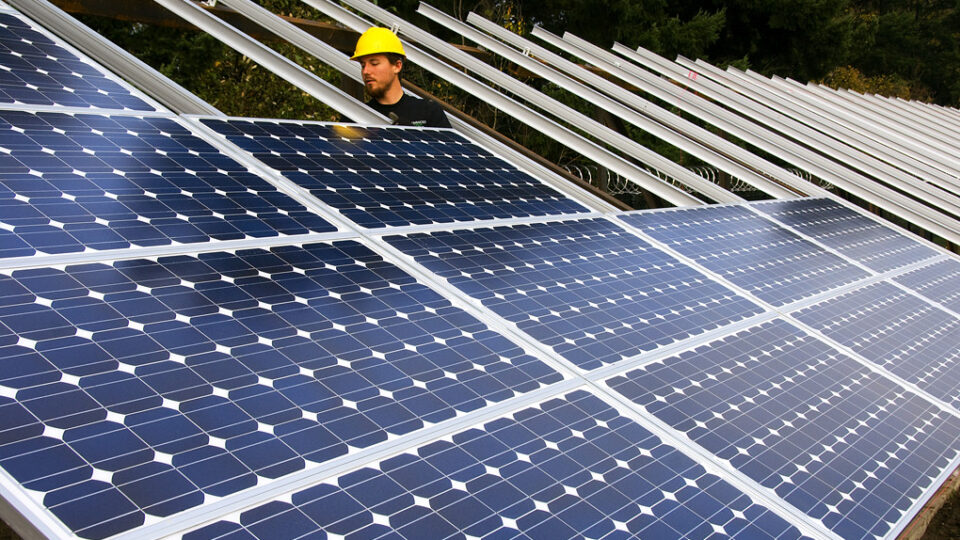
Photo, posted November 22, 2008, courtesy of Oregon Department of Transportation via Flickr.

Earth Wise is a production of WAMC Northeast Public Radio

Solar Windows | Earth Wise

September 1, 2022 By EarthWise Leave a Comment

Solar windows offer massive potential

Solar windows are an attractive idea.  It is very appealing to have the vertical surfaces on the outside of almost any building generate electricity.  The challenge is to have a transparent window be able to function as an efficient-enough solar panel.

Most conventional solar panels use silicon solar cell technology, which is not based on a transparent material.  Transparent solar cells use dye-sensitized technology, which has been the subject of research for decades but has yet to achieve widespread use.

Researchers at the University of Michigan have recently published work on a new process to manufacture solar windows that can be large (over six feet in each dimension) and efficient at electricity production.

The windows make use of dye-sensitized cells which are connected to lines of metal so small that they are invisible to the naked eye.  The individual cells are fairly small but the connection technology allows the construction of large windows.

The solar window has an efficiency of 7%, meaning 7% of incoming sunlight energy is converted to electricity.  The researchers believe that 10% efficiency should be attainable with their technology.  Conventional solar panels have efficiencies of 15% or more.

However, the goal is not necessarily to compete with silicon solar panels.  The real opportunity is to be able to generate electricity when rooftop solar is not practical or to produce additional electricity even when there is already a solar roof.

Going forward, the goals of solar window development are to increase efficiency and to reduce costs to where installing the windows is economically attractive.  Estimates are that the windows currently would cost about twice as much as a conventional window but would pay for the difference in two to six years depending on such things as the level of sun exposure.

**********

Web Links

Inside Clean Energy: What’s Hotter than Solar Panels? Solar Windows.

Photo, posted April 17, 2017, courtesy of Shelby Bell via Flickr.

Earth Wise is a production of WAMC Northeast Public Radio.

Progress On Perovskite Solar Cells | Earth Wise

August 2, 2022 By EarthWise Leave a Comment

Improving perovskite solar cell technology

Es ist ratsam, 1-2 Stunden vor und nach der Einnahme von Viagra nichts zu essen oder zu trinken. Wenn Viagra mit dem Essen eingenommen wird, kann es sein, dass es nicht wirkt, besonders wenn starker-mann.com es kurz vor dem Geschlechtsverkehr eingenommen wird. Die Einnahme von Viagra mit Nahrungsmitteln, die reich an pflanzlichen oder tierischen Fetten sind, kann die Wirkung von Viagra verzögern – es kann anfangen zu wirken, wenn Sie es nicht mehr brauchen.

Perovskites are semiconductors with a specific crystal structure.  Their properties make them well suited for making solar cells.  They can be manufactured at room temperature, using much less energy than it takes to make the silicon-based solar cells widely used today.  As a result, perovskite solar panels would be cheaper and more sustainable to produce.  Manufacturing silicon solar cells takes a lot of energy because silicon is forged at around 3000 degrees Fahrenheit. In addition, perovskites can be made flexible and transparent, making it possible to use them in ways unavailable with silicon solar technology.

But unlike silicon, perovskites are very fragile.  The early solar cells made from perovskites in 2009 and 2012 lasted for only minutes.  Lots of potential, but little practicality.

Recently, Princeton Engineering researchers have developed the first perovskite solar cell with a commercially viable lifetime, which is a major breakthrough.  The team projects that the device can perform above industry standards for about 30 years, which is much more than the 20 years designated as a viability threshold for commercial cells.

The research team has developed an ultra-thin capping layer between two of the layers of a perovskite solar cell.  The layer is just few atoms thick but has been demonstrated to dramatically increase the durability of the device. 

There is great potential for the new solar cell technology.  It has efficiency to compete with silicon cells but can be tuned for specific applications and can be manufactured locally with low energy inputs.  If successfully commercialized, the result will be solar panels that are cheaper, more efficient, and more flexible than what are available today.

**********

Web Links

Once seen as fleeting, a new solar tech shines on and on

Photo, posted January 8, 2020, courtesy of David Baillot/UC San Diego Jacobs School of Engineering via Flickr.

Earth Wise is a production of WAMC Northeast Public Radio.

Step one. Find a hobby, which involves group activities. This may be a dance or yoga classes, literary evenings or theater studio hookups uk, volunteer work or a discussion club. Choose what’s closer to you, as long as you get to interact a lot with people of both genders. Step Two. Practice virtual communication. Learn to communicate with the opposite sex on social networks.

Solar Cell Greenhouses | Earth Wise

April 21, 2021 By EarthWise Leave a Comment

Using solar panel technology for greenhouses

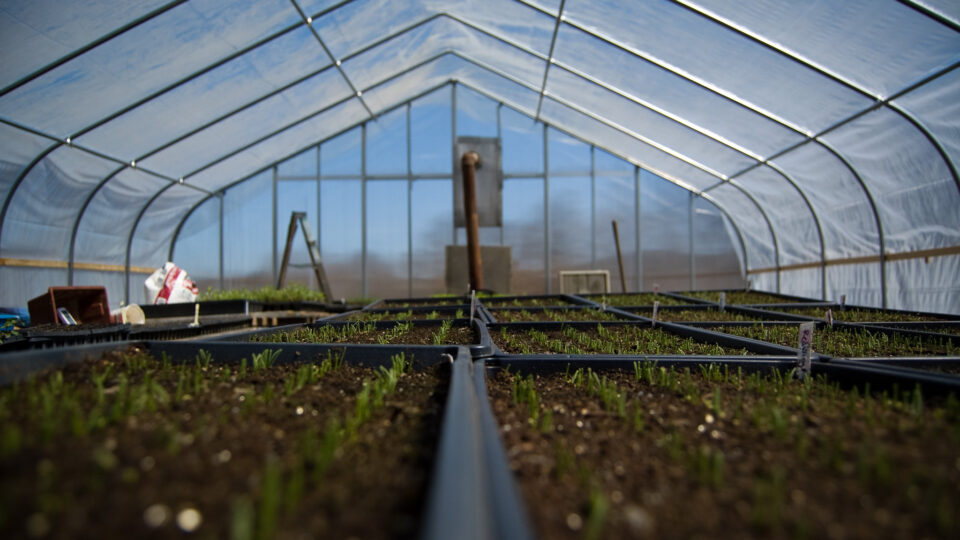
A recent study at North Carolina State University has shown that it can be feasible to use see-through solar panels in greenhouses to generate electricity.  The idea is to use semi-transparent solar panels on greenhouses that allow some of the light to get in for the plants to grow while making the greenhouses energy neutral or even allowing them to generate more power than they use.

The question is how the semi-transparent solar panels might affect greenhouse crops.  To investigate this issue, researchers grew crops of red leaf lettuce from seed to full maturity under a standard set of growing conditions – temperature, water, fertilizer, and CO2 concentration – but varied the light they get. 

A control group was exposed to the full spectrum of white light while three experimental groups were exposed to light through different types of filters that absorbed the particular wavelengths of light that would be absorbed by different types of semitransparent solar cells.

The researchers paid close attention to characteristics of the lettuce that are important to growers, grocers, and consumers:  general appearance, leaf number, leaf size, and weight.  The results were that the lettuce produced using all three kinds of filtered light was essentially identical to that produced in the control group.    Further research is underway looking at how harvesting various wavelengths of light affects biological processes for lettuces, tomatoes, and other crops.

Getting growers to use solar-powered greenhouses would be very difficult if doing so would result in a loss of productivity.  But given these experimental results, it appears as though the decision will boil down to a simple economic argument about whether the investment in new greenhouse technology would be offset by energy production and its resultant savings.

**********

Web Links

Study Finds Plants Would Grow Well in Solar Cell Greenhouses

Photo, posted April 8, 2008, courtesy of Brian Boucheron via Flickr.

Earth Wise is a production of WAMC Northeast Public Radio.

A High-Tech Fire Alarm | Earth Wise

July 23, 2020 By EarthWise Leave a Comment

In recent years, wildfires have been a global problem, notably in California, Brazil, and Australia.  It has become increasingly important to be able to respond to new fires as soon and as quickly as possible.  Such response can make the task of extinguishing them easier, thereby reducing the amount of damage and the loss of property and life.

Traditional methods for detecting forest fires include satellite monitoring, ground patrols, and watch towers, all of which have high labor and financial costs but suffer from low efficiency.  Remote sensing technologies are becoming increasingly common but rely on batteries for power, requiring servicing in remote locations to replace depleted batteries.  Solar cells represent an alternative to batteries, but it is challenging to use them in forests because of shading and foliage coverage.

A team of researchers at Michigan State University has developed a remote forest fire detection and alarm system powered by nothing more than the movement of tree limbs in the wind.  The device is known as an MC-TENG, which is an acronym for multilayered cylindrical triboelectric nanogenerator.  The triboelectric effect is a phenomenon where certain materials become electrically charged when they separate from a second material with which they were previously in contact.  In the new device, two cylindrical sleeves fit within one another – one anchored and the other free to slide.  The device is tied to a tree branch and when the branch sporadically moves in the wind, electricity is generated and stored in a carbon-nanotube-based micro supercapacitor.  This powers a sensing system that can continuously monitor environmental conditions without requiring any maintenance.

A combination of carbon monoxide and temperature sensors provides a high-tech fire alarm that can operate continuously in the most remote forest.

**********

Web Links

Self-Powered Alarm Fights Forest Fires, Monitors Environment

Photo, posted August 3, 2012, courtesy of Lukas Schlagenhauf via Flickr.

Earth Wise is a production of WAMC Northeast Public Radio.

Another Way To Make Solar Cells

March 21, 2019 By EarthWise Leave a Comment

Millions of rooftops now contain solar panels and the majority of the solar cells that make up those panels today are made from silicon.  Silicon solar cells require expensive, multi-step processing conducted at very high temperatures in special clean room facilities.  Despite these complications, the price of solar panels has continued to drop dramatically over the years.

But even as the price of solar cells gets lower and lower, there are still widespread efforts to find even better ways to make them.   One of those ways is with perovskite solar cells.  Perovskites are materials with a characteristic crystal structure and are quite common in nature.  Perovskites can be formed with a wide range of elements and can exhibit a variety of properties.

They were first used to make solar cells about 10 years ago and those first cells were unimpressive in most respects.  However, there has been steady progress since that time.  The potential advantages of perovskite solar cells are that they can be made from low-cost materials and can be manufactured using liquid chemistry, a far cheaper process than what is used to make silicon cells.

Researchers at MIT and several other institutions have recently published the results of research on how to tailor the composition of perovskite solar cells to optimize their properties.   What used to be a trial-and-error process can now become much more engineered and should lead to perovskite solar cells with performance that could exceed that of silicon cells.

Silicon solar panels are a huge, worldwide industry and displacing them in favor of an alternative technology is a tall order.  But if perovskite cells can be optimized for large-scale manufacturability, efficiency and durability, they could definitely give silicon a run for its money.

**********

Web Links

Unleashing perovskites’ potential for solar cells

Photo courtesy of Ken Richardson/MIT.

Earth Wise is a production of WAMC Northeast Public Radio.

Bacteria-Powered Solar Cell

August 29, 2018 By EarthWise 1 Comment

https://earthwiseradio.org/wp-content/uploads/2018/08/EW-08-29-18-Bacteria-Powered-Solar-Cell.mp3

Commercially-available solar panels are composed of solar cells that are most often made from various forms of silicon.  Some panels use thin-film cells made from other semiconductor materials.  Solar cells utilize a property of semiconductors that allows them to convert light energy into electrical energy.

[Read more…] about Bacteria-Powered Solar Cell

New Places For Solar Cells

October 5, 2017 By EarthWise Leave a Comment

https://earthwiseradio.org/wp-content/uploads/2017/10/EW-10-05-17-New-Places-for-Solar-Cells.mp3

Solar panels are on more than a million rooftops in the United States, so they are getting to be a pretty common sight.   We also see them along our highways powering lights and signs and emergency call boxes.  As it gets cheaper and more common, solar technology is starting to show up in more unusual ways.

[Read more…] about New Places For Solar Cells

Air Pollution And Solar Power

July 28, 2017 By EarthWise

https://earthwiseradio.org/wp-content/uploads/2017/07/EW-07-28-17-Air-Pollution-and-Solar-Power.mp3

We are well-aware of the negative effects of air pollution on human health and on the environment, but a recent study at Duke University has revealed that global solar energy production is taking a major hit due to air pollution and dust.

[Read more…] about Air Pollution And Solar Power

Spray-On Solar Cells

May 15, 2017 By EarthWise

https://earthwiseradio.org/wp-content/uploads/2017/04/EW-05-15-17-Spray-On-Solar-Cells.mp3

One of the most exciting possibilities for future solar energy technology is that of solar cells that can be sprayed or printed on to surfaces like the windows of skyscrapers, the roofs of sports utility vehicles, or the walls of houses.  And the expectation is that such technology would be far cheaper than today’s silicon-based solar panels.

[Read more…] about Spray-On Solar Cells

Primary Sidebar

Recent Episodes

  • An uninsurable future
  • Clean energy and jobs
  • Insect declines in remote regions
  • Fossil fuel producing nations ignoring climate goals
  • Trouble for clownfishes

WAMC Northeast Public Radio

WAMC/Northeast Public Radio is a regional public radio network serving parts of seven northeastern states (more...)

Copyright © 2026 ·