• Skip to primary navigation
  • Skip to main content
  • Skip to primary sidebar

Earth Wise

A look at our changing environment.

  • Home
  • About Earth Wise
  • Where to Listen
  • All Articles
  • Show Search
Hide Search
You are here: Home / Archives for sand

sand

The Blue Acceleration | Earth Wise

February 24, 2020 By EarthWise Leave a Comment

Human pressures on world's oceans show no sign of slowing

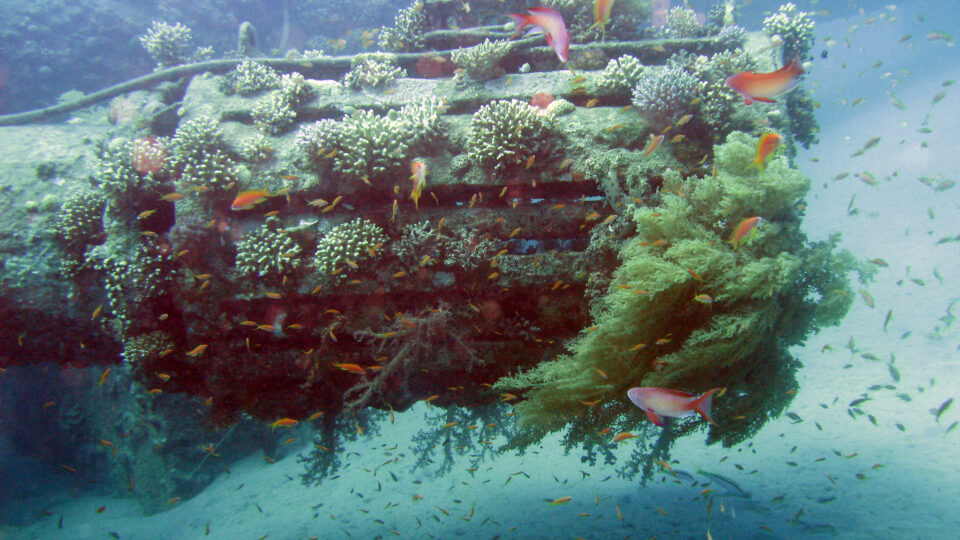
The oil and gas sector is the largest ocean industry.  It’s responsible for about one third of the value of the ocean economy.  Sand and gravel, destined for the construction industry, are the most mined minerals in the ocean.  And during the past 50 years, approximately 16,000 desalination plants have popped up around the world to help supply people with an increasingly scarce commodity: freshwater. 

As a result of these and other human pressures, the world’s oceans have suffered a lot over time.  But according to a comprehensive new analysis on the state of the ocean, human pressure on the world’s oceans, driven by a combination of technological progress and declining land-based resources, sharply accelerated at the start of the 21st century.  Scientists have dubbed this dramatic increase, which shows no signs of slowing down, the “Blue Acceleration.”

A  research team from Stockholm University analyzed 50 years of data from aquaculture, bioprospecting, shipping, drilling, deep-sea mining, and more.  Their findings were recently published in the journal One Earth.

While claiming ocean resources and space is not new, lead author Jean-Baptiste Jouffray from the Stockholm Resilience Centre says “the extent, intensity, and diversity of today’s aspirations are unprecedented.”

The researchers also highlight how not all human impacts on the ocean are negative.  For example, offshore wind farm technology has reached commercial viability allowing the world to reduce reliance on fossil fuels.

But how can the Blue Acceleration be slowed?  Since only a handful of multinational companies dominate sectors like the seafood industry, oil and gas exploitation, and bioprospecting, one idea is to have banks and other investors adopt more stringent sustainability criteria for making ocean investments. 

**********

Web Links

Human pressure on world’s ocean shows no sign of slowing

Photo, posted October 29, 2008, courtesy of Silke Baron via Flickr.

Earth Wise is a production of WAMC Northeast Public Radio.
Conspicuous Consumption

February 6, 2020 By EarthWise 2 Comments

human consumption and the circular economy

Human civilization consumes vast amounts of material.   The Circle Economy think tank actually puts some numbers on it.  According to their latest report, the amount of material consumed by humanity has passed 100 billion tons every year.  So, on average, every person on Earth uses more than 13 tons of materials per year.

That number has quadrupled since 1970, which is far faster than the population, which has only doubled during that time.  In the past two years alone, consumption has jumped by more than 8%.  While this has been going on, the proportion being recycled has been falling.

Of the 100 billion tons of materials, half of the total is sand, clay, gravel, and cement used for building, along with other minerals used for fertilizer.  Coal, oil and gas make up 15% and metal ores 10%. The final quarter are plants and trees used for food and fuel.  About 40% of all materials are turned into housing.  A third of the annual materials consumed remain in use, such as in buildings or vehicles.  But 15% is emitted into the atmosphere as greenhouse gases and a third is treated as waste.

The global emergencies of climate change and disappearing wildlife have been driven by the unsustainable extraction of fossil fuels, metals, building materials, and trees.  The authors of the report warn that if we continue to treat the world’s resources as limitless, we are heading for a global disaster.

The Circle Economy think tank promotes the idea of a circular economy in which renewable energy supports systems where waste and pollution are reduced to zero.  Some nations are taking steps towards circular economies, while others are not.  This is a problem we can’t allow to be unaddressed.

**********

Web Links

World Consumes 100 Billion Tons of Materials Every Year, Report Finds

Photo, posted March 13, 2015, courtesy of Joyce Cory via Flickr.

XXXXXXXXXXX

Sand Mining And The Environment

April 2, 2019 By EarthWise Leave a Comment

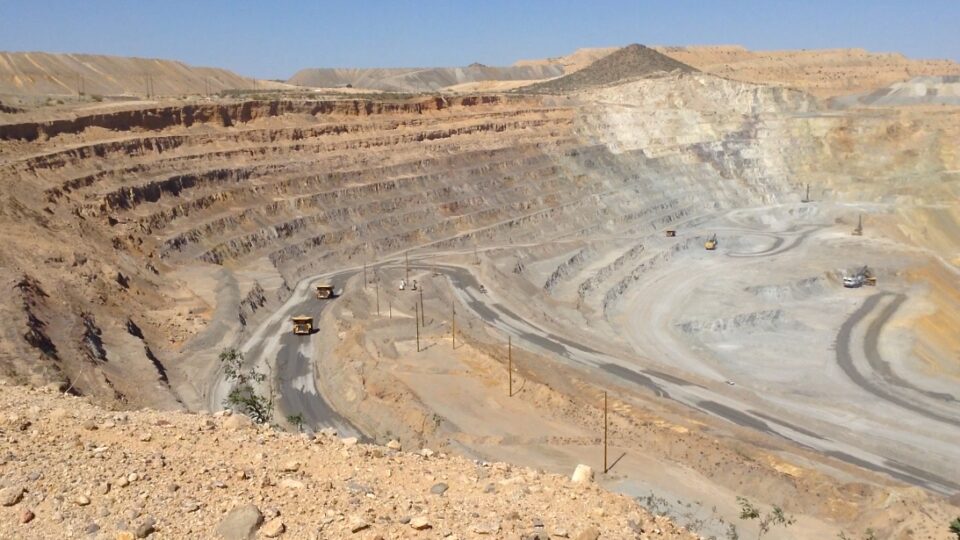
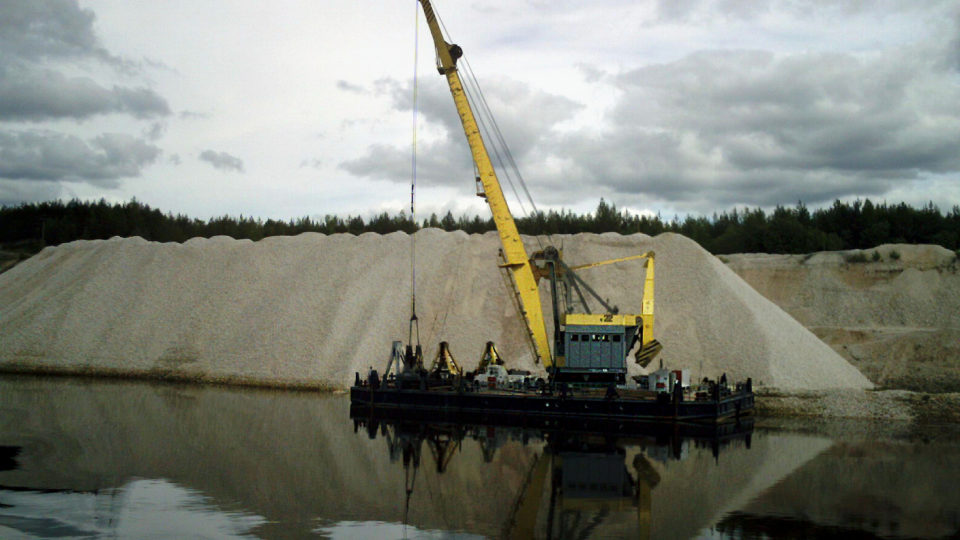
In discussions of the environment, we don’t hear much about sand mining.  But sand mining is the world’s largest mining endeavor, responsible for 85% of all mineral extraction.  Sand and gravel are mined on a huge scale around the world.  The UN estimates that the total exceeds 40 billion tons a year.  Most of this activity is unregulated and unmeasured, and much of it is corrupt and environmentally destructive.

Concrete is the predominant use for sand.  Every ton of cement requires six to seven tons of sand and gravel in order to make concrete.  But sand also makes up 90% of asphalt on roads and it is used for land reclamation in places like Singapore.  Sand is also widely used in industries such as glass manufacturing and fracking.

There are different sorts of sand.  Desert sand is mostly useless for making concrete because its grains are too rounded by erosion and don’t bind well in the concrete.   Marine sand is not great for concrete either because it has to be washed clean of corrosive salts.

As a result, salt miners mostly get sand from pits on land and dredged up from lakes and riverbeds.  Dredging massive quantities of sand from rivers and lakes drastically alters river flow, erodes riverbanks, dries up tributaries, lowers water tables, and trashes wetlands and fisheries.  In many countries, this even goes on in national parks where officials turn a blind eye to the activity.  India is the world’s second-largest sand mining country (after China) and widespread illegal extraction occurs throughout the country run by highly organized and even violent “sand mafias.”

Sand mining is a huge problem and, to date, is one that is pretty much off of most people’s radar.

**********

Web Links

The Hidden Environmental Toll of Mining the World’s Sand

Photo, posted June 3, 2017, courtesy of Andrey Talalov via Flickr.

Earth Wise is a production of WAMC Northeast Public Radio.
Saving Beaches With Seagrass

February 22, 2019 By EarthWise Leave a Comment

Almost a quarter of the Gross Domestic Product of places around the Caribbean Sea is earned from tourism.  Preserving the beaches in the region is an economic imperative.  With increasing coastal development, the natural flow of water and sand is disrupted, natural ecosystems are damaged, and many tropical beaches simply disappear into the sea.

With such high stakes, expensive coastal engineering efforts such as repeated replenishing of sand and the construction of concrete protective walls are common strategies.  Rising sea levels and increasingly powerful storms only increase the threat to tropical beaches.

Researchers from The Netherlands and Mexico recently published a study in the journal BioScience on the effectiveness of seagrass in holding onto sand and sediment along shorelines.

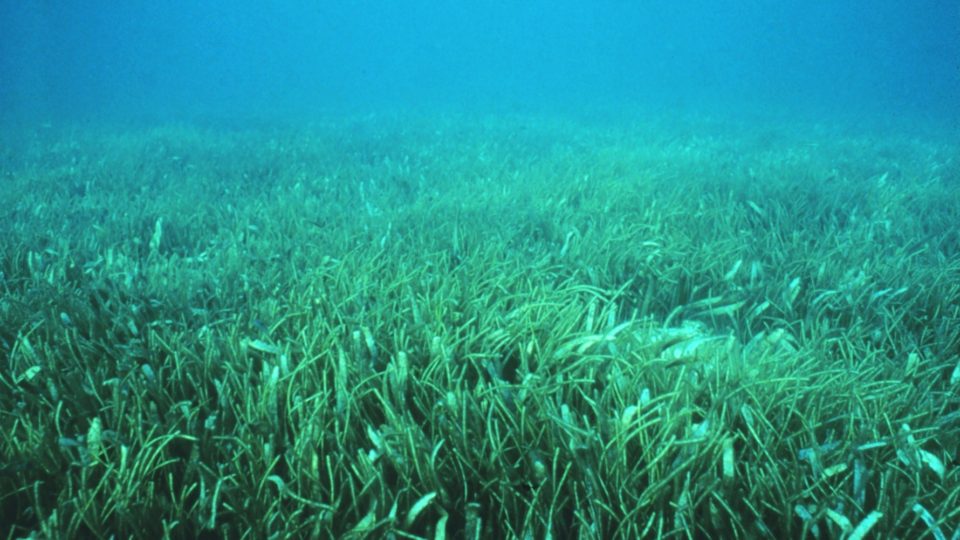
Seagrasses are so-named because most species have long green, grass-like leaves. They are often confused with seaweeds but are actually more closely related to flowering plants seen on land. Seagrasses have roots, stems and leaves, and produce flowers and seeds. Seagrasses can form dense underwater meadows and are one of the most productive ecosystems in the world. Seagrasses provide shelter and food to an incredibly diverse community of animals, from tiny invertebrates to large fish, crabs, turtles, marine mammals and birds.

The researchers performed measurements of the ability of seagrass along Mexico’s Yucatan Peninsula coastline to keep sand in place and prevent erosion.  They found that the amount of erosion was strongly linked to the amount of vegetation.  Quite often, seagrass beds have been regarded as a nuisance, rather than a valuable asset for preserving valuable coastlines.  The study opens opportunities for developing new tropical beach protection schemes in which ecology is integrated into engineering solutions.

**********

Web Links

Seagrass Saves Beaches and Money

Photo, posted October 13, 2010, courtesy of NOAA via Flickr.

Earth Wise is a production of WAMC Northeast Public Radio.
The Problem Of Microplastics

February 15, 2019 By EarthWise Leave a Comment

In recent years, there have been multiple reports of microplastic contamination seemingly everywhere:  in the ocean, in lakes and rivers, in beverages and foods, and in the bodies of birds, fish, and even people.  As the world tries to come to grips with this growing problem, there are many things that we simply don’t know.

Microplastics are usually formed by the breakdown of larger pieces of plastic.  Shopping bags and cups degrade into microplastics.  Microfiber clothing generates microplastics in washing machines.  And some manufacturers still intentionally add microplastics to personal care products like toothpaste and facial scrubs.

Technically, a microplastic is any piece of plastic measuring five millimeters in size down to one micron – which is one thousandth of a millimeter.  But there can be even smaller plastic particles classified as sub-microplastics and even nanoplastics.

A real concern is that it is not actually clear how dangerous microplastics are for living organisms.  We know that aquatic and terrestrial species – including humans – can and do absorb microplastic particles, but whether there is actual toxicity and the nature of any detrimental effects is not yet well understood.

Another real problem is that it is actually not easy to distinguish microplastics from other particles in a given sample.   When you are looking at a particle that is smaller than a millimeter in size, it is not easy to tell whether it is a grain of sand, a bit of cellulose from a plant, or a microplastic.  There are reliable and definitive ways to analyze samples for microplastics, but they are not as simple and commonplace as just looking through a microscope.

Microplastics are a rapidly growing problem and we don’t even really know how big and how bad the problem is.

**********

Web Links

How dangerous is microplastic?

Photo, posted January 10, 2015, courtesy of Daria Nepriakhina via Flickr.

Earth Wise is a production of WAMC Northeast Public Radio.
Cleaning Up Storm Water

October 4, 2018 By EarthWise Leave a Comment

https://earthwiseradio.org/wp-content/uploads/2018/09/EW-10-04-18-Cleaning-Up-Storm-Water.mp3

Storm water reclamation is an important activity for cities with limited water resources, such as those in Southern California.   Many places have small-scale reclamation efforts using rain gardens and bioswales.  Collecting storm water on a large scale faces a number of problems.

[Read more…] about Cleaning Up Storm Water

Corals Like Plastic

November 15, 2017 By EarthWise Leave a Comment

https://earthwiseradio.org/wp-content/uploads/2017/10/EW-11-15-17-Corals-Like-Plastic.mp3

Microplastics, which are tiny pieces of weathered plastic less than 5 millimeters in diameter, have been accumulating in the oceans for the past 40 years and are now ubiquitous in the marine environment.  They are a major threat to many kinds of marine life, including numerous species of birds, turtles, fish, marine mammals and invertebrates who ingest the stuff causing a variety of problems.

[Read more…] about Corals Like Plastic

Restoring Sediment To Save Wetlands

August 25, 2017 By EarthWise

https://earthwiseradio.org/wp-content/uploads/2017/08/EW-08-25-17-Restoring-Sediment-to-Save-Wetlands.mp3

The world’s rivers carry billions of cubic yards of sediment – sand, silt and other material – and transport it to wetlands and coastal areas.  Until fairly recently, this was viewed as a negative thing.  But that has changed.

[Read more…] about Restoring Sediment To Save Wetlands

Save The Turtles

June 26, 2017 By EarthWise

https://earthwiseradio.org/wp-content/uploads/2017/06/EW-06-26-17-Save-the-Turtles.mp3

New York is home to 11 native species of land turtles.  Many of the species can’t breed until age 10 and then they lay just one small clutch of eggs each year by digging in a suitable patch of sandy soil.  As a result, breeding females are at a premium for the welfare of the species.  Overall, turtles are on decline in the Empire State.

[Read more…] about Save The Turtles

Fracking And Earthquakes

January 5, 2017 By EarthWise

https://earthwiseradio.org/wp-content/uploads/2017/01/EW-01-05-17-Fracking-and-Earthquakes.mp3

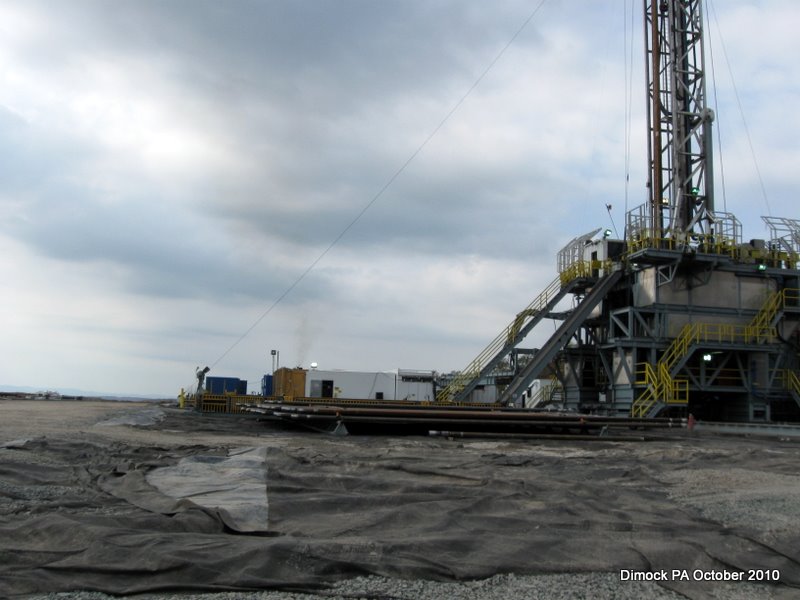
Hydraulic fracturing, or fracking, is the process in which water, chemicals and sand are injected at high pressure to split apart rock thousands of feet below Earth’s surface and release oil or natural gas.  And it’s a controversial practice. 

[Read more…] about Fracking And Earthquakes

Road Salt

January 19, 2016 By WAMC WEB

https://earthwiseradio.org/wp-content/uploads/2016/01/EW-01-19-16-Road-Salt.mp3

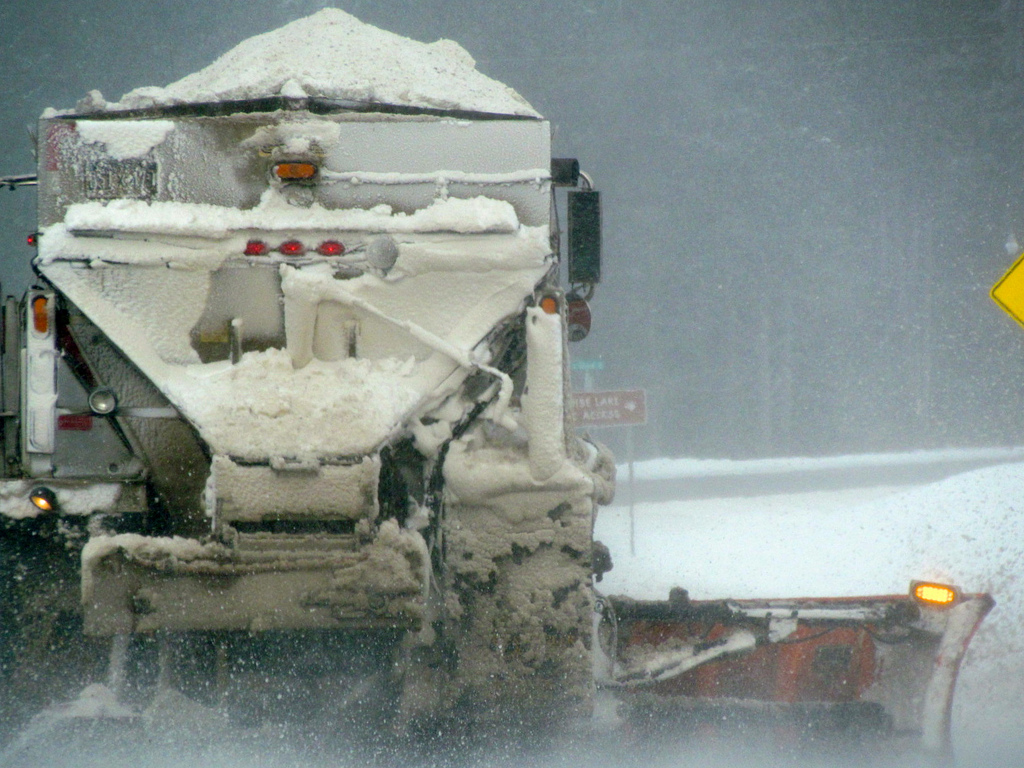
Snow season is here.  The chances are good you’ll find yourself behind a truck spreading salt on the roads in an attempt to deice them. You may even try a little salt on your own front porch. Annually we spread about 20 million tons of road salt in the U.S., and we’ve been doing it since the late 1930s.

[Read more…] about Road Salt

  • « Go to Previous Page
  • Page 1
  • Page 2

Primary Sidebar

Recent Episodes

  • An uninsurable future
  • Clean energy and jobs
  • Insect declines in remote regions
  • Fossil fuel producing nations ignoring climate goals
  • Trouble for clownfishes

WAMC Northeast Public Radio

WAMC/Northeast Public Radio is a regional public radio network serving parts of seven northeastern states (more...)

Copyright © 2026 ·