• Skip to primary navigation
  • Skip to main content
  • Skip to primary sidebar

Earth Wise

A look at our changing environment.

  • Home
  • About Earth Wise
  • Where to Listen
  • All Articles
  • Show Search
Hide Search
You are here: Home / Archives for packaging

packaging

Edible Six-Pack Rings

June 4, 2019 By EarthWise Leave a Comment

There has much talk about plastic straws and their harmful effects on the environment.  But much like the straws, plastic six-pack rings are also enemies of the ocean.  While straws and six-pack rings account for only a tiny fraction of all the plastic trash in the ocean, images of marine animals tangled up in the rings have sparked public backlash against these common items.  The soft but tough plastic rings are transparent which means that in the water animals don’t even see them.  They end up tangled in the loops, which can cut into their skin and constrict parts of their bodies, leading to serious injury or death.  Birds, turtles, and otters are among the frequent victims of six-pack rings.

Plastic straws have readily available alternatives such as paper straws and reusable straws.  But the plastic rings that have been available for more than 40 years are not as easy to replace.  By law, six-pack rings are photo-degradable, so they do gradually disintegrate when exposed to direct sunlight.  But even then, they remain quite dangerous at least for a while.

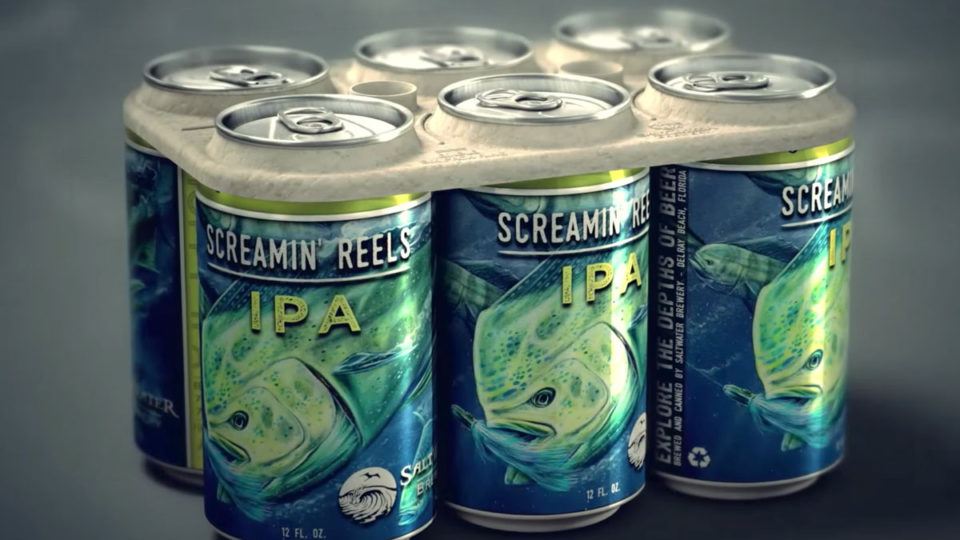
The Saltwater Brewery in Delray Beach, Florida, recently has released edible six-pack rings, representing a brand-new approach to sustainable beer packaging.  The rings are 100% biodegradable and edible.  They are actually made from barley and wheat ribbons from the brewing process.  This packaging can be safely eaten by animals that may come into contact with them in the wild.

Producing the edible rings represents a big investment for a small brewery but the company hopes to influence larger brewers and inspire them to get on board with the safer packaging.

**********

Web Links

Saltwater Brewery Creates Edible Six-Pack Rings

Photo courtesy of Saltwater Brewery.

Earth Wise is a production of WAMC Northeast Public Radio.
Supermarkets And Zero-Waste

May 6, 2019 By EarthWise Leave a Comment

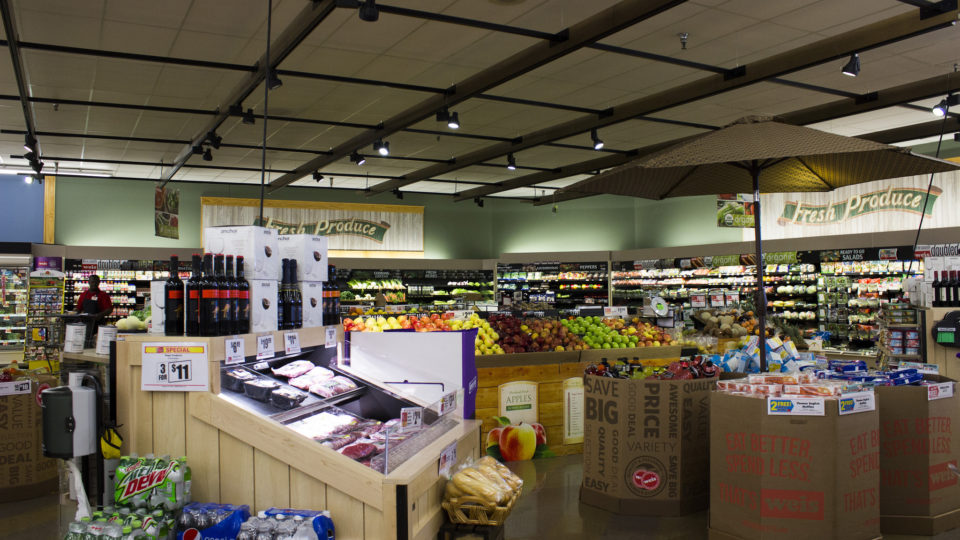
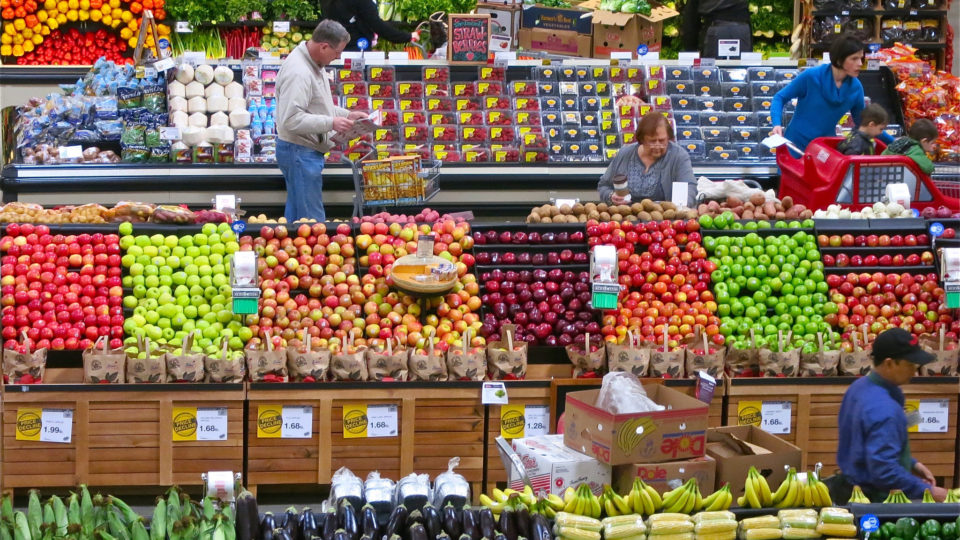
There are about 38,000 supermarkets in the United States alone and they are responsible for vast quantities of waste in the form of single-use plastic bags, plastic containers that store food products, and food waste as well.  Globally, over 80% of poll respondents feel strongly that companies should help improve the environment.  Responding to this message, markets are starting to make changes.

In a number of places, there are now markets that are package-free.  The Nada grocery store in Vancouver and Precycle in Brooklyn are examples of zero waste grocery stores.  Websites like Litterless provide online help for customers trying to find packaging-free grocery stores.

Markets are not only changing their packaging, they are using artificial intelligence to develop more sustainable production processes and seeking other ways to reduce waste.

On average, Americans throw away over 300 plastic bags a year, but an increasing number of grocery retailers are making commitments to more sustainable, plastic-free options.  It isn’t just small stores either.  Grocery giant Kroger plans to eliminate plastic bags in its stores by 2025.  When that happens, it means that 6 billion plastic bags will no longer be distributed.  Big Y stores will fully transition to reusable bags by next year.  More and more cities and states are banning or imposing fees on plastic bags. 

An interesting statistic shows that the age group of Americans that is leading the adoption of reusable grocery bags is not millennials but in fact is people over 50.  With multiple generations now indicating that they want shopping to be more sustainable, it is likely that supermarkets will strive to help make that happen.

**********

Web Links

Why More Supermarkets Are Committing to Zero-Waste

Photo, posted March 4, 2013, courtesy of Dean Hochman via Flickr.

Earth Wise is a production of WAMC Northeast Public Radio.
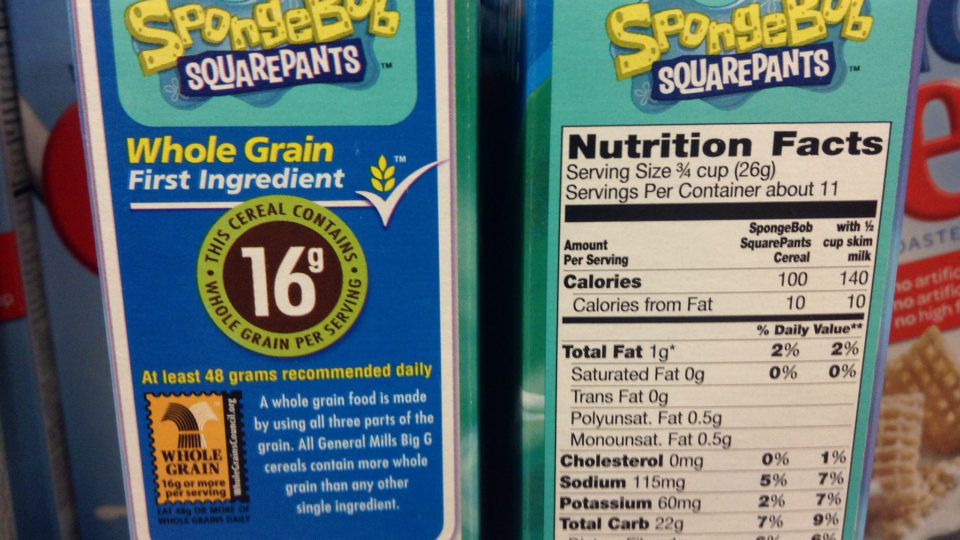
New Nutrition Labels

February 26, 2019 By EarthWise 1 Comment

Food and beverage packaging in this country has included a Nutrition Facts panel for nearly 25 years.  Over 700,000 products have the labels which provide consumers with information like serving sizes, calories per serving, ingredients, and nutritional content.

Surveys indicate that 77 percent of all U.S. adults claim to use the labels at least some of the time.  Whether the labels are actually useful is somewhat debatable.  A couple of years ago, the FDA released a proposal to update the labels to make them more useful and to reflect more recent nutritional research.  The new labels are finally going to be implemented and food manufacturers with annual sales exceeding $10 million have until January of 2020 to update their packaging with the new labels.

One of the biggest changes is that the “serving size” section of the label will be changed to more accurately reflect the actual portions consumed by the typical American.  For example, a 20-ounce soft drink will now be labeled as a single serving because most people will drink the whole bottle in one sitting.

The new labels will no long list the amounts of Vitamin A and C, because recent research shows most Americans are not deficient in these nutrients.  Instead, the amount of Vitamin D and potassium will be listed, two nutrients lacking in many diets.  New labels will also show amounts of “added sugars”, defined as caloric sweeteners with no nutritional value. The new labels will also display the calories per serving in much large type making that piece of information far more noticeable.

There is surely more to be done to make food labeling more transparent and useful for consumers, but the new changes at least seem to be in the right direction.

**********

Web Links

Nutrition Labels Get a Makeover: Will It Make a Difference?

Photo, posted September 9, 2014, courtesy of Mike Mozart via Flickr.

Earth Wise is a production of WAMC Northeast Public Radio.
The Labeling Of GMO Foods

February 12, 2019 By EarthWise Leave a Comment

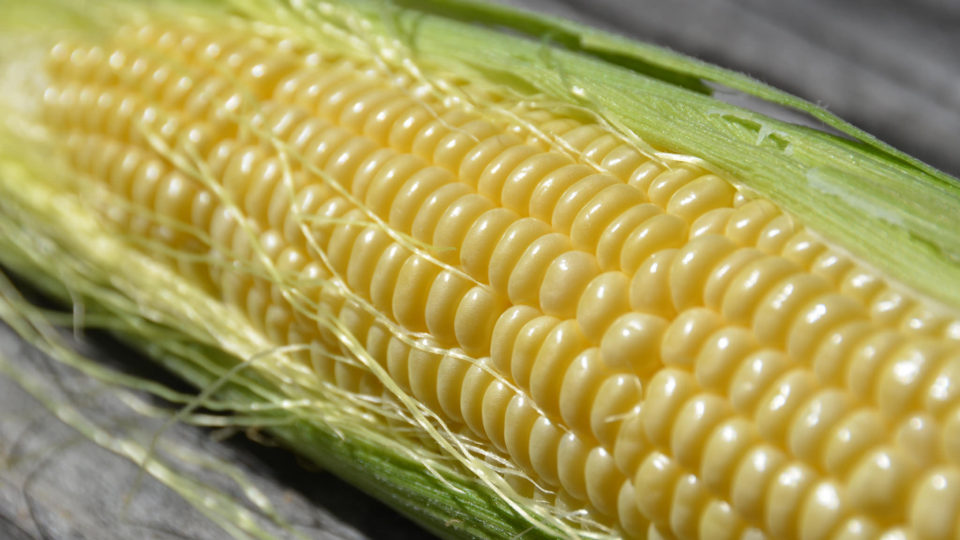
American consumers will soon be able to discern whether or not foods contain genetically-modified ingredients.  The USDA’s so-called ‘National Bioengineered Food Disclosure Standard’ will be required for foods that have been altered in a way that doesn’t occur naturally. The mandatory compliance date is January 1st, 2022. 

While this does sound like great news, there are some major drawbacks.  The new guidelines use the uncommon term “bioengineered” instead of “genetically-modified” or “GMO.” The guidelines also allow the disclosure of bioengineered (or B.E.) ingredients in several formats: as text, a symbol, a phone number (that consumers can call for more info), or a digital link printed on the packaging.  Companies are allowed to use a QR code that asks consumers to “scan here for more food information.”  Scanning the QR code will bring consumers to a website where the GMO disclosure can be found. 

Advocates of the various labeling options say it’ll make it easier and faster for companies to comply with the new guidelines.  But critics worry consumers will find it confusing and restrict access for those without smartphones.  They say that companies who elect to use a QR code or phone number should be required to include the word “bioengineered” on their packaging.

Another drawback is that products won’t have to be labeled as ‘bioengineered’ if they’ve been processed to the point where their bioengineered DNA can’t be detected.  Examples include refined beet sugar, soybean oil, and high fructose corn syrup.  

The fight over the labeling of GMO foods has raged for many years.  But this labeling mandate falls short of consumer expectations by hiding the information about GMOs instead of disclosing it. We should expect better. 

**********

Web Links

Government lays out the rules for labeling for genetically modified foods

Photo, posted August 24, 2015, courtesy of Rob Bertholf via Flickr.

Earth Wise is a production of WAMC Northeast Public Radio.

Legos And Plastics

October 23, 2018 By EarthWise Leave a Comment

https://earthwiseradio.org/wp-content/uploads/2018/10/EW-10-23-18-Legos-and-Plastics.mp3

Globally, consumers are voicing concerns about the impact of plastic waste on the planet. Conscious of these consumer concerns, many companies are trying to switch to recyclable or less-polluting packaging.  Some are even ditching plastics all together. 

[Read more…] about Legos And Plastics

Better Sell-By Dates For Milk

October 2, 2018 By EarthWise Leave a Comment

https://earthwiseradio.org/wp-content/uploads/2018/10/EW-10-02-18-Better-Sell-By-Dates.mp3

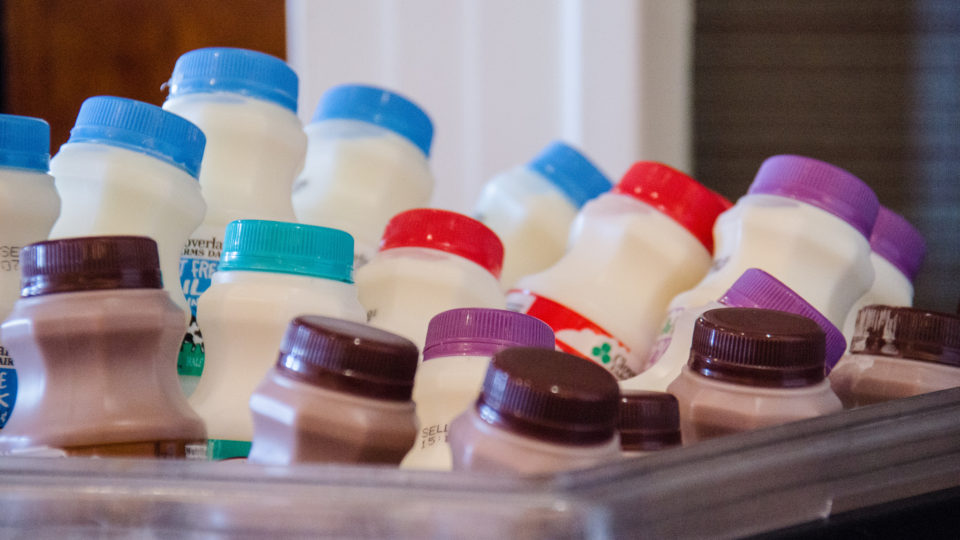
The sell-by and best-by dates on milk cartons are ones we tend to pay close attention to.  Many of us automatically discard milk if it is past one of those dates.  However, those dates are not really scientifically established but rather are guesses based on experience.

[Read more…] about Better Sell-By Dates For Milk

A Bad Food Patch

May 14, 2018 By EarthWise Leave a Comment

https://earthwiseradio.org/wp-content/uploads/2018/04/EW-05-14-18-A-Bad-Food-Patch.mp3

A group of scientists and engineers at McMaster University in Hamilton, Ontario, has developed a new technology that could replace traditional “best before” dates on food and beverages with a definitive indication of the safety of the product.

[Read more…] about A Bad Food Patch

The Dirty Laundry On Dirty Laundry

September 1, 2017 By EarthWise

https://earthwiseradio.org/wp-content/uploads/2017/09/EW-09-01-17-Dirty-Laundry.mp3

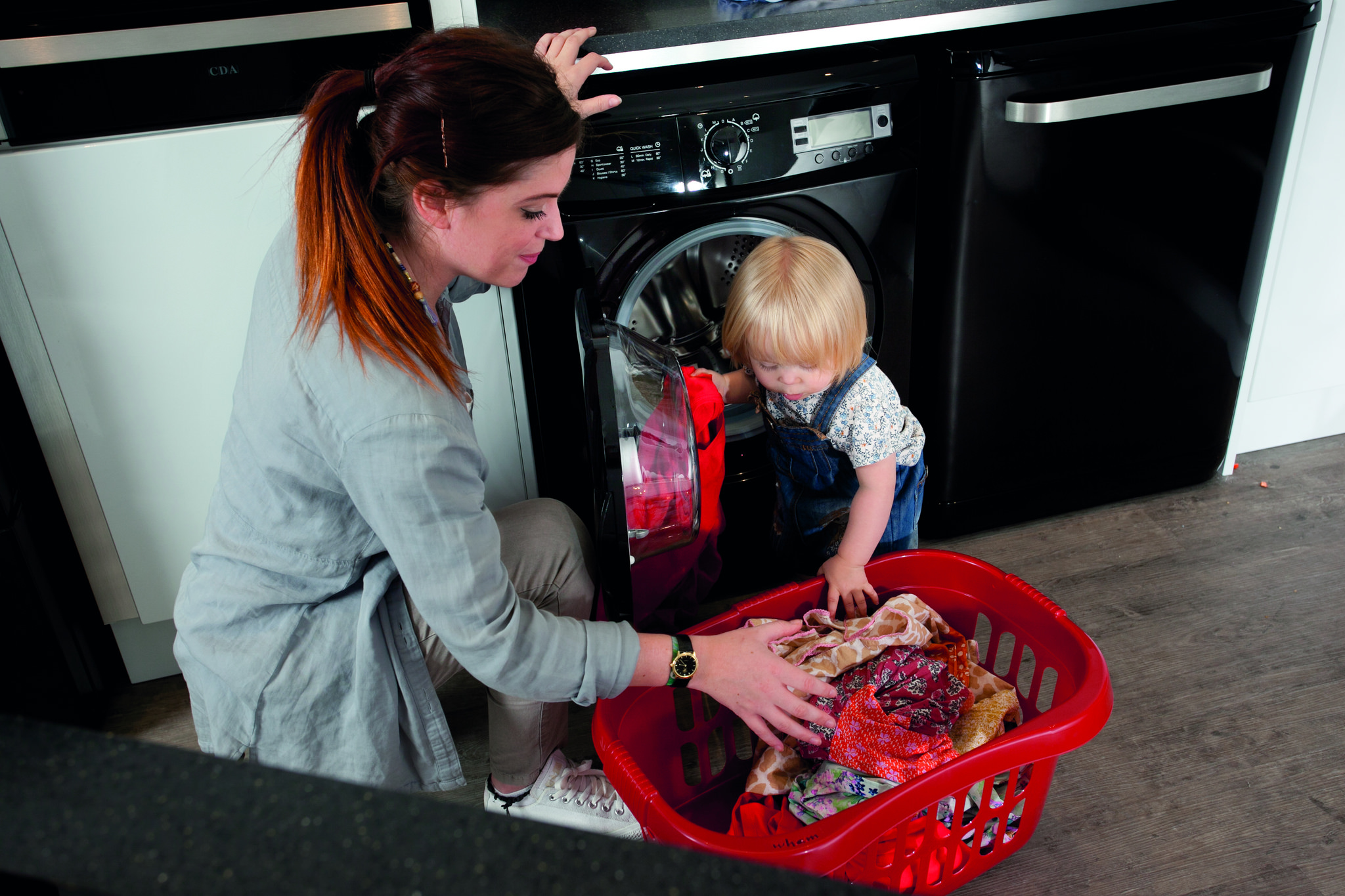
We’ve discussed the problem of microplastics polluting our oceans at great lengths on this program before.  Much of the small plastic particles result from the breakdown of plastic litter, such as plastic bags, packaging, and other materials.  Another source is microbeads, which are often found in health products such as face scrubs and even some toothpastes.  But there is a another source of microplastic pollution that is quite troubling: dirty laundry.

[Read more…] about The Dirty Laundry On Dirty Laundry

Fast Food Packaging

April 6, 2017 By EarthWise

https://earthwiseradio.org/wp-content/uploads/2017/03/EW-04-06-17-Dangers-of-Fast-Food-Packaging.mp3

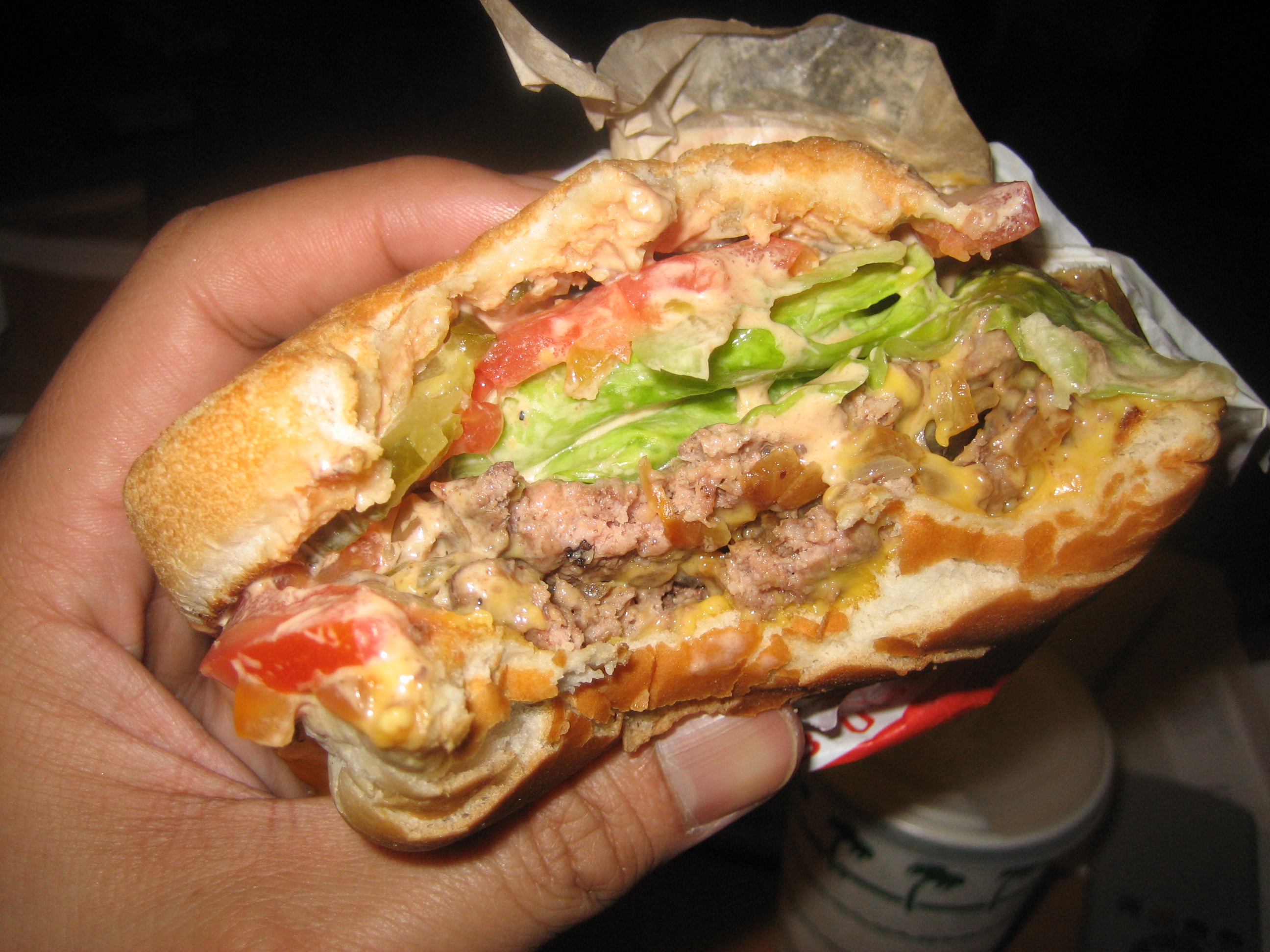
Much has been made of the dangers of eating fast food.  Certainly, its high fat, sodium, and calorie content calls for moderating its role in our diets.  But a recent study has found that even the packaging that the food comes in might present health hazards.

[Read more…] about Fast Food Packaging

Use-By Labels And Food Waste

December 20, 2016 By EarthWise

https://earthwiseradio.org/wp-content/uploads/2016/12/EW-12-20-16-Use-by-Labels.mp3

By some estimates, Americans waste as much as 40% of food that is produced.   None of the reasons are anything to be proud of, but one of the most frustrating is the confusing array of food date labels that are supposed to tell us whether the food we purchased should be eaten.

[Read more…] about Use-By Labels And Food Waste

Plastic From Milk

September 26, 2016 By WAMC WEB

https://earthwiseradio.org/wp-content/uploads/2016/09/EW-09-26-16-Plastic-from-Milk.mp3

These days, many of the foods we buy, such as meat, bread, cheese and snacks –  come wrapped in plastic.  We end up with lots of non-recyclable, non-biodegradable waste.  And thin plastic films are not even that great at preserving food because oxygen still gets through them.

[Read more…] about Plastic From Milk

Packaging From The Sea

August 19, 2016 By WAMC WEB

https://earthwiseradio.org/wp-content/uploads/2016/07/EW-08-19-16-Packaging-from-the-Sea.mp3

Waste due to excess packaging of the products we buy is a real problem.  It is one that most of us are conscious of and more and more businesses are making efforts toward eco-friendly packaging.  There is increased use of cardboard, which is recyclable.  Most of us try to reduce our waste through recycling.  But as we buy more things online and have a growing variety of things delivered to our homes, it is a struggle to receive the things we order in good condition and not end up with piles of packaging materials.

[Read more…] about Packaging From The Sea

Cradle-to-Cradle

August 15, 2016 By WAMC WEB

https://earthwiseradio.org/wp-content/uploads/2016/07/EW-08-15-16-Thinking-Cradle-to-Cradle.mp3

The circular economy refers to the concept of an economic system in which there is no waste.  Materials are recycled, repurposed and reinvented to create new raw materials thereby reducing the need to extract new resources and thus saving money, energy and water resources.

[Read more…] about Cradle-to-Cradle

Toward Safer Produce

January 1, 2016 By WAMC WEB

https://earthwiseradio.org/wp-content/uploads/2015/12/EW-01-01-16-Safer-Produce.mp3

Government and private organizations have long been encouraging us to eat healthier diets.   We have seen food pyramid charts for decades and the “5 a day” campaign has boosted our consumption of fresh fruits and vegetables.

[Read more…] about Toward Safer Produce

  • « Go to Previous Page
  • Page 1
  • Page 2

Primary Sidebar

Recent Episodes

  • An uninsurable future
  • Clean energy and jobs
  • Insect declines in remote regions
  • Fossil fuel producing nations ignoring climate goals
  • Trouble for clownfishes

WAMC Northeast Public Radio

WAMC/Northeast Public Radio is a regional public radio network serving parts of seven northeastern states (more...)

Copyright © 2026 ·