• Skip to primary navigation
  • Skip to main content
  • Skip to primary sidebar

Earth Wise

A look at our changing environment.

  • Home
  • About Earth Wise
  • Where to Listen
  • All Articles
  • Show Search
Hide Search
You are here: Home / Archives for nature climate change

nature climate change

The warmer, greener Arctic and greenhouse gas

April 16, 2025 By EarthWise Leave a Comment

Blue lakes in Greenland turning brown as the Arctic warms

About 15% of the Northern Hemisphere is covered by permafrost.  Permafrost is soil and sediment that has remained frozen for long periods of time, in some cases as much as 700,000 years.  It contains large amounts of dead biomass that has accumulated over millennia and hasn’t fully decomposed.  Therefore, permafrost is an immense carbon sink.

The Arctic is warming four times faster than the rest of the planet and, as a result, thawing permafrost is becoming a carbon source.  As warming continues, ice is melting, and vegetation is spreading.    A new study, published in Nature Climate Change, looked at the state of the Arctic and boreal north from the period 1990 until 2020.  The study found that although half of the Arctic region has been growing greener, only 12% of those green areas are actually taking up more carbon.  For one thing, the growth of forests means that there is more fuel for wildfires which are increasingly common.

A study of lakes in West Greenland found that thousands of crystal blue lakes have turned brown during record heat spells.  Runoff from melting permafrost made the lakes opaque killing off plankton that absorb carbon dioxide.  Meanwhile, plankton that release carbon dioxide multiplied.  So, these lakes went from being carbon sinks to being carbon sources.

As the northern latitudes warm, ice and permafrost are melting, vegetation is spreading, and the region is becoming a source of heat-trapping gas after having been a place where carbon has been locked away for thousands of years.  According to the Nature Climate Change study, roughly 40% of the Arctic is now a source of carbon dioxide.

**********

Web Links

Warmer, Greener Arctic Becoming a Source of Heat-Trapping Gas

Photo, posted October 14, 2024, courtesy of Christoph Strässler via Flickr.

Earth Wise is a production of WAMC Northeast Public Radio

Rivers And Climate Change | Earth Wise

October 11, 2023 By EarthWise Leave a Comment

Our planet is heating up.  Scientists have concluded that the changing climate is primarily the result of increased greenhouse gas emissions from human activities.  Some of the effects of global climate change include thawing permafrost, rising seas, intensifying storms and wildfires, and warming oceans.   

According to a new study led by researchers from Penn State University, rivers are warming and losing oxygen even faster than oceans.  The study, which was recently published in the journal Nature Climate Change, found that warming occurred in 87% and oxygen loss occurred in 70% of the nearly 800 rivers studied.

The research team projects that within the next 70 years some river systems, especially those in the American South, will experience such low oxygen levels that the rivers could “induce acute death” for some fish species and threaten the aquatic diversity of river ecosystems. 

The research team used artificial intelligence and deep learning to analyze water quality data from nearly 800 rivers across the U.S. and central Europe.  The researchers found that rivers are warming up and deoxygenating faster than oceans, which could have serious implications for both aquatic life and humans.

While climate change has led to warming and oxygen loss in oceans and lakes around the world, the researchers did not expect to find warming and deoxygenation in shallower, flowing rivers.  Since life in water depends on temperature and dissolved oxygen, the researchers hope this study serves as a wake up call.  Warming and deoxygenating rivers have significant implications for water quality and the health of aquatic ecosystems worldwide.

**********

Web Links

Rivers are rapidly warming, losing oxygen; aquatic life at risk

Photo, posted June 2, 2017, courtesy of Francisco Anzola via Flickr.

Earth Wise is a production of WAMC Northeast Public Radio
Climate Change And Farming Productivity | Earth Wise

May 3, 2021 By EarthWise Leave a Comment

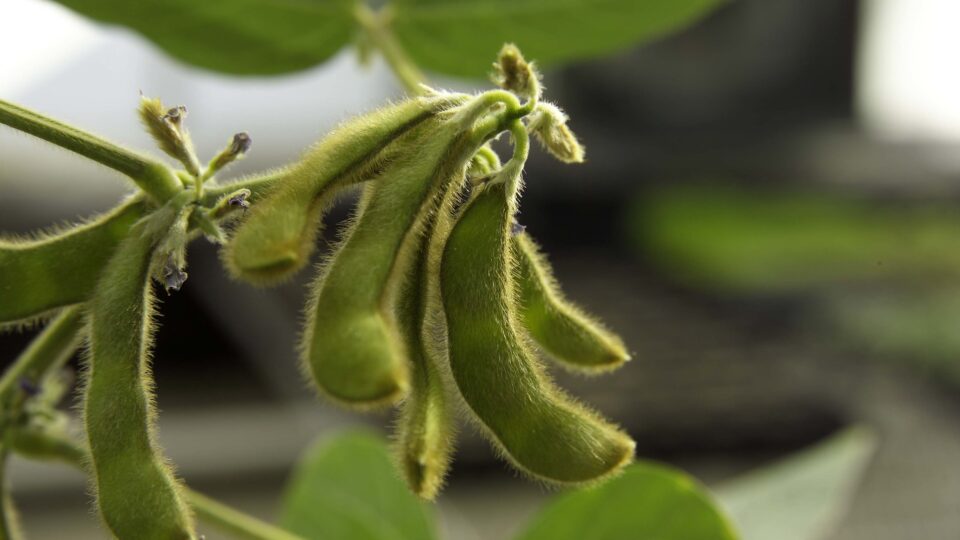
Climate change is already hindering farm productivity

The future potential impacts of anthropogenic climate change on global agricultural systems has been well studied, but how human-caused climate change has already affected the agricultural sector is not as well understood.  But a new study led by researchers at Cornell University and supported by the USDA National Institute of Food and Agriculture and the National Science Foundation examined this issue. 

Despite important agricultural breakthroughs in technology, fertilizer use and global trade during the past 60 years, it turns out that the climate crisis is already eroding farm productivity.  According to the study, which was recently published in the journal Nature Climate Change, global farming productivity is 21% lower than it could have been without climate change.  This is the equivalent of losing approximately seven years of farm productivity increases since the 1960s. 

The researchers developed a model linking annual changes in weather and productivity with output from the latest climate models over six decades to quantify the effect of anthropogenic climate change on what economists call “total factor productivity.” This measure captures the overall productivity of the agricultural sector. 

The research team reviewed 200 variations of the model, but the results remained largely consistent:  anthropogenic climate change is already slowing down global food production.  The researchers say the historical impacts of climate change have been larger in naturally warmer climates, like in parts of Africa, Asia, and Latin America.   

Climate change is not some distant problem to solve in the future.  It is already having an impact on the planet and it needs to be addressed now.

**********

Web Links

Climate change cut global farming productivity 21% since 1960s

Photo, posted October 2, 2013, courtesy of the United Soybean Board via Flickr.

Earth Wise is a production of WAMC Northeast Public Radio.

Global Warming Could Stabilize | Earth Wise

February 19, 2021 By EarthWise Leave a Comment

Reducing emissions could stabilize global temperatures

The world has been heading toward climate disaster with the effects of greenhouse gas-induced warming looming larger and larger.  But recent analysis published in Nature Climate Change offers hope that rapidly eliminating emissions could stabilize global temperatures just within a couple of decades.

For quite some time, it has been assumed that further global warming would be locked in for generations regardless of the extent of emissions reductions going forward.  This conclusion was based on having a certain carbon dioxide concentration in the atmosphere which would linger for hundreds of years even if emissions were reduced.

Recent analysis takes into account the dynamism of the Earth’s natural systems which could actually reduce atmospheric CO2 content because of the huge carbon absorption capacity of oceans, wetlands, and forests.  The key requirement is to drastically reduce emissions so that these natural systems can take over.

More than 100 countries have pledged to get to net zero emissions by 2050.  That means they will emit no more carbon dioxide than is removed from the atmosphere by such actions as restoring forests.   The UK, Japan, and the European Union are among the countries that have set this zero target, and the United States is joining the club.

Climate models show that a global temperature rise of 2 degrees Celsius over that of the pre-industrial period would lead to global calamities that include punishing heatwaves, flooding, and mass displacement of people.  The world has already heated up by 1.1 degrees and governments have committed to restrain the rise to less than 1.5 degrees under the Paris Climate Agreement.

**********

Web Links

Global Warming Could Stabilize Faster than Originally Thought If Nations Achieve Net Zero

Photo, posted September 10, 2017, courtesy of Ron Cogswell via Flickr.

Earth Wise is a production of WAMC Northeast Public Radio.

The Dangers Of Negative Emissions Technologies | Earth Wise

September 28, 2020 By EarthWise Leave a Comment

The dangers of negative emissions technologies

Reducing carbon emissions is not easy and there are plenty of people who don’t even want to try for various reasons, generally related to their perceived economic interests and convenience.  As a result, there is a great deal of interest in so-called negative emissions technologies or NETs.   These are methods for removing carbon dioxide from the atmosphere.  Even the UN Intergovernmental Panel on Climate Change assumes that NETs will play a role in mitigating the effects of climate change and meeting international goals.

The most widely studied approaches to negative emissions technology are bioenergy with carbon capture and storage – which entails growing crops for fuel, and then capturing and burying the CO2 produced from burning the fuel; planting more forests; and direct air capture, which involves actually pulling CO2 out of the air and storing it – probably underground. 

A new study published in Nature Climate Change points out that none of these technologies has even been tried at the demonstration scale, much less at the massive levels required to make a dent in current CO2 emissions. 

Their analysis of the biofuel and reforestation strategies show that each would take up vast land and water resources already needed for agriculture and nature.  Air capture uses less water than the other two approaches, but still uses quite a bit and even more energy, which if supplied by fossil fuels, would offset the benefits of carbon capture.

Negative emissions technologies may well play an important role in combating climate change, but it is essential that we understand what the consequences will be from implementing them.  We need to know the pitfalls that could arise.  It would be a major mistake to simply count on NETs to be some kind of silver bullet.

**********

Web Links

Remove CO2 from the air? Don’t bet on it before examining costs, researchers say

Photo, posted January 11, 2008, courtesy of Al Pavangkanan via Flickr.

Earth Wise is a production of WAMC Northeast Public Radio.

Climate Change And The South Pole | Earth Wise

August 10, 2020 By EarthWise Leave a Comment

Extreme warming at the South Pole

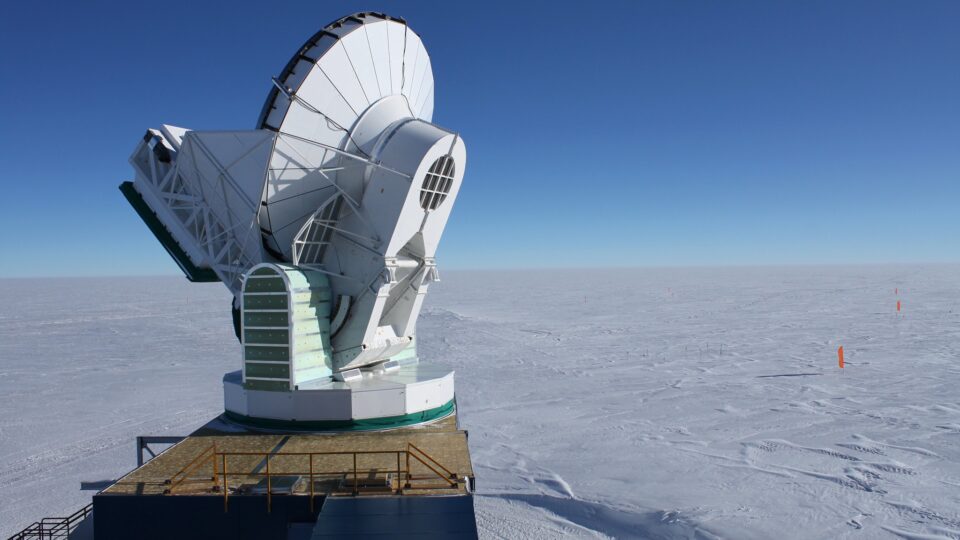
According to a study led by researchers at Ohio University, the South Pole has warmed more than three times the global average over the past 30 years.  While the warming was driven by natural tropic climate variability, the researchers argue that rising greenhouse gas emissions likely intensified the warming. 

The climate in the antarctic has some of the largest ranges in temperature during the year.  Some regions, like most of West Antarctica and the Antarctic Peninsula, experienced warming during the late 20th century.  But the South Pole, which is located in the remote and high-altitude interior of the continent, actually cooled until the 1980s.  The South Pole, as the study highlights, has warmed substantially ever since. 

For the study, which was recently published in the journal Nature Climate Change, the researchers analyzed climate models and weather station data at the South Pole.  They found that, between 1989 and 2018, the South Pole had warmed by 1.8 degrees Celsius.  This warming trend of 0.6 degrees Celsius per decade is three times the global average. 

According to the study, the robust warming of the Antarctic interior has been mainly driven by the tropics.  Warm ocean temperatures in the western tropical Pacific Ocean have altered the winds in the South Atlantic, increasing the delivery of warm air to the South Pole.  These atmospheric changes are an important part of what’s driving the climate anomalies in the region.

But the researchers argue that the warming trends are unlikely a result of natural climate change alone.  The effects of anthropogenic – or human-caused – climate change in addition to the natural changes have combined to make this one of the strongest warming trends globally.    

**********

Web Links

Extreme warming of the South Pole

Photo, posted February 7, 2011, courtesy of Eli Duke via Flickr.

Earth Wise is a production of WAMC Northeast Public Radio.

Global Emissions And The Coronavirus Shutdown | Earth Wise

June 10, 2020 By EarthWise Leave a Comment

With so much of industry and personal activity curtailed by coronavirus shutdowns across the globe, it is no surprise that greenhouse gas emissions have declined.  According to new research published in the journal Nature Climate Change, average daily global greenhouse gas emissions declined 17% by early April compared to 2019 levels.

If the reopenings around the world continue and the world actually reaches pre-crisis levels by the middle of June, total CO2 emissions for the year would likely end up lower by about 4%.   If various restrictions continue until the end of the year, total global emissions could decline by 7%.

The study analyzed emissions estimates for three levels of coronavirus shutdowns and across six sectors of the economy.  It looked at trends in 69 countries, all 50 U.S. states, and 30 Chinese provinces, representing in total 86% of the world’s population and 97% of global CO2 emissions.

For the first 4 months of the year, emissions from industry declined 19%, the power sector 7%, and public buildings and commerce 21%, compared to last year.  Unsurprisingly, home energy use actually went up by about 3%.

The findings of this study only represent the effects of a short-lived decline in emissions.  As economies open back up, there is no doubt that greenhouse gas emissions will rise back to pre-Covid-19 levels.

The study also reveals that making real changes in emissions will require more than just behavior changes.  Despite billions of people staying home, companies shut down, planes grounded, and cars off the road, we still managed to pump more than 80% of the usual amount of greenhouse gases into the air for the first quarter of the year.

**********

Web Links

Global Emissions Fell 17 Percent Due to Coronavirus Shutdowns

Photo, posted May 7, 2020, courtesy of the MTA via Flickr.

Earth Wise is a production of WAMC Northeast Public Radio.

The Danger Of Relying On Future Technology | Earth Wise

May 22, 2020 By EarthWise Leave a Comment

technology and climate change

The need to mitigate the effects of climate change has been a global focus for about 40 years and has seen ever-changing views on what actions are needed.  The historical record has been defined by over-reliance on promises of new technology to solve climate change.  Looking to future technology to save the environment has been an excuse to postpone necessary action and avoid inconvenient changes in how we do things.

A study at Lancaster University in the UK published in Nature Climate Change exposes how such promises have raised expectations of more effective policy options becoming available in the future and have enabled the continued politics of inadequate action and skirting around the truth.

Even after four decades, rather than acting forcefully to reduce emissions, we are hoping that nuclear fusion power, giant carbon sucking machines, ice-restoration using vast numbers of wind-powered pumps, and spraying particulates into the atmosphere can address the climate crisis rather than dramatic changes in fossil fuel use.

The researchers mapped the history of climate targets in five phases.  Early on, the focus was on improved energy efficiency, large-scale enhancement of carbon sinks, and nuclear power.  Next, the focus was on cutting emissions with efficiency, fuel switching, and carbon capture and storage.  After that, bioenergy was the major focus.  Then, global carbon budgeting and potential negative emission technologies.  Currently, the focus is on temperature outcomes rather than emission targets.

Each novel promise competes with existing ideas and downplays any sense of urgency.   The researchers conclude that putting our hopes on yet more new technologies is unwise.  The time to act is now.

**********

Web Links

Why relying on new technology won’t save the planet

Photo, posted February 13, 2019, courtesy of Jonathan Cutrer via Flickr.

Earth Wise is a production of WAMC Northeast Public Radio.

Shifting Ecosystems

August 29, 2019 By EarthWise Leave a Comment

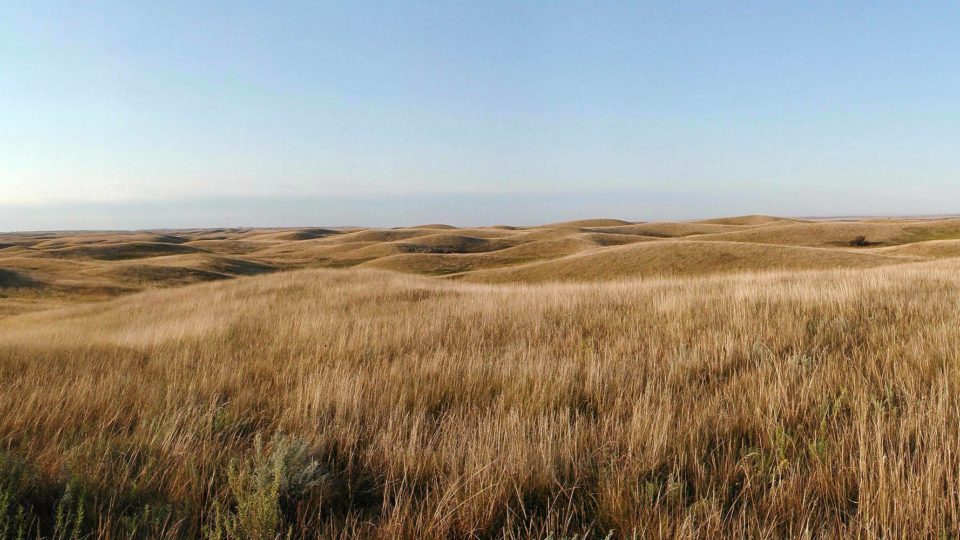
The Great Plains ecosystem has been shifting northward over the past fifty years, driven by climate change, wildfire suppression, energy development, land use changes, and urbanization.  The ecosystem is an area historically rich with grasslands and shrub steppe and is prime habitat for grassland birds.

According to a recent study published in the journal Nature Climate Change, the northernmost ecosystem boundary of the Great Plains has moved more than 365 miles north since 1970, amounting to about 8 miles a year.  The region’s southernmost ecosystem boundary has shifted 160 miles north, or about 4 miles a year.

The study used bird distribution data as an indicator of shifting ecosystem boundaries.  The researchers analyzed 46 years of data for 400 bird species across a 250-mile-wide strip stretching from Texas to North Dakota.  They tracked how the birds’ distributions changed as a measure of how these ecosystems were shifting.

While climate change has been a major driver of these ecosystem shifts since the 1970s, several other factors such as wildfire trends, land use changes, and invasion of tree species into grassland habitat have also played a role.  Like most things in ecological systems, the changes are likely to have multiple causes.  One cannot really separate causes like tree invasions, warming climate, and wildfires, as they are all interrelated.

Using bird distribution patterns for tracking ecosystem shifts could be a useful tool for scientists and land managers in the coming decades to give them an early warning of how habitats are changing in response to rising global temperatures and therefore allow them to take action to protect vulnerable species.

**********

Web Links

Great Plains’ Ecosystems Have Shifted 365 Miles Northward Since 1970

Photo, posted March 24, 2017, courtesy of Rick Bohn / USFWS via Flickr.

Earth Wise is a production of WAMC Northeast Public Radio.

Is There Hope For Coral Reefs?

January 16, 2019 By EarthWise Leave a Comment

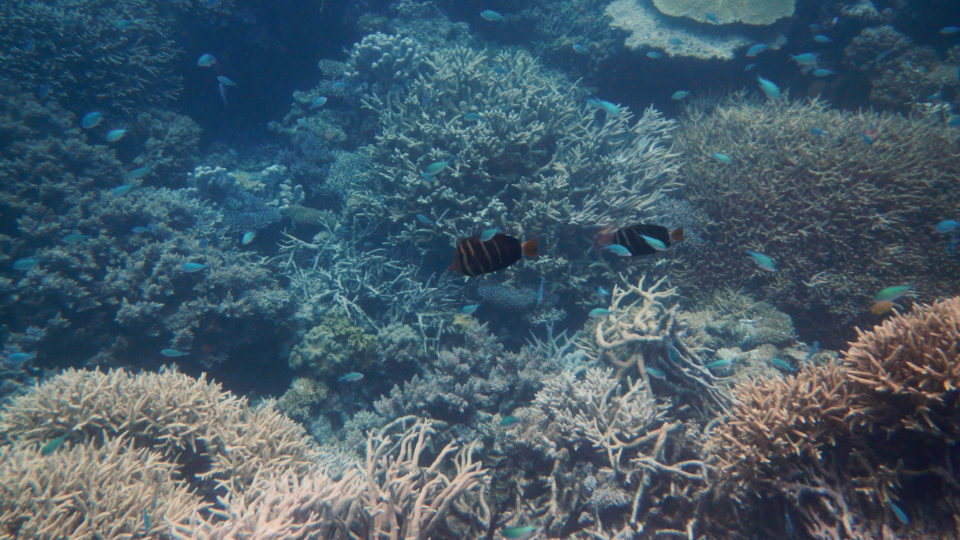
News about the world’s coral reefs has been relentlessly bad for a number of years.  Warming, acidifying oceans have wreaked havoc with coral reefs leading to enormous losses.  Nowhere have things been more dire than in Australia’s Great Barrier Reef.  Coral bleaching events have been increasingly common and severe over the past two decades.  In fact, only 7% of the Great Barrier Reef has escaped bleaching entirely since 1998.

While the future of the world’s coral reefs is very much uncertain as global heating continues, there is a recent bit of hopeful news.   According to a study published in Nature Climate Change, the response of the Great Barrier Reef to the extreme temperatures in 2017 was quite different from that of the previous year in the aftermath of back-to-back bouts of coral bleaching.

Surprisingly, corals that bleached in 2016 but managed to survive were more resistant to the recurrence of hot conditions in 2017.

Many corals don’t survive bleaching events at all and, of course,those corals don’t bleach for a second time. But the surviving corals from the 2016 bleaching event were tougher species.   As a result of bleaching, the mix of coral species on the reef is changing very rapidly.  The net result was that there was less bleaching in 2017 even though the temperatures that year were even more extreme than in 2016.

There have now been four mass bleaching events on the Great Barrier Reef over the past 20 years and it is only a matter of time before another one occurs triggered by the next marine heatwave. Almost half of the corals on the northern two-thirds of the reef have been killed.  But at least some of the reef is showing impressive survival skills.

**********

Web Links

A glimmer of hope for the world’s coral reefs

Photo, posted November 29, 2012, courtesy of Robert Linsdell via Flickr. 

Earth Wise is a production of WAMC Northeast Public Radio.

Bursting The Carbon Bubble

July 25, 2018 By EarthWise Leave a Comment

https://earthwiseradio.org/wp-content/uploads/2018/06/EW-07-25-18-Bursting-the-Carbon-Bubble.mp3

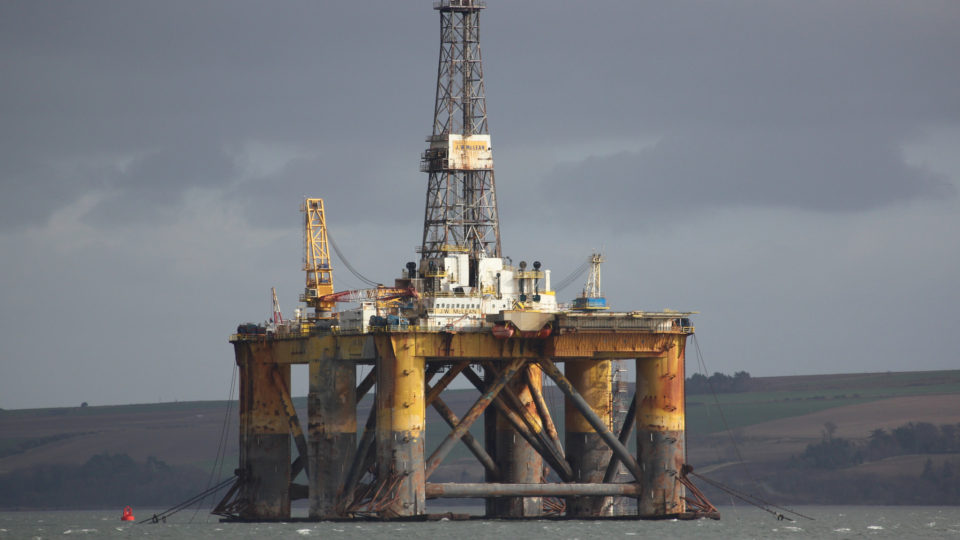
One way or another, the fossil fuel industry seems to be destined to shrink away.  A combination of technological advances and climate policies are going to drastically reduce the global demand for fossil fuels over the course of time.   New research shows that the demise of the fossil fuel industry will have profound consequences.

[Read more…] about Bursting The Carbon Bubble

Primary Sidebar

Recent Episodes

  • An uninsurable future
  • Clean energy and jobs
  • Insect declines in remote regions
  • Fossil fuel producing nations ignoring climate goals
  • Trouble for clownfishes

WAMC Northeast Public Radio

WAMC/Northeast Public Radio is a regional public radio network serving parts of seven northeastern states (more...)

Copyright © 2026 ·