• Skip to primary navigation
  • Skip to main content
  • Skip to primary sidebar

Earth Wise

A look at our changing environment.

  • Home
  • About Earth Wise
  • Where to Listen
  • All Articles
  • Show Search
Hide Search
You are here: Home / Archives for giant

giant

A giant plane for giant wind turbines

May 22, 2025 By EarthWise Leave a Comment

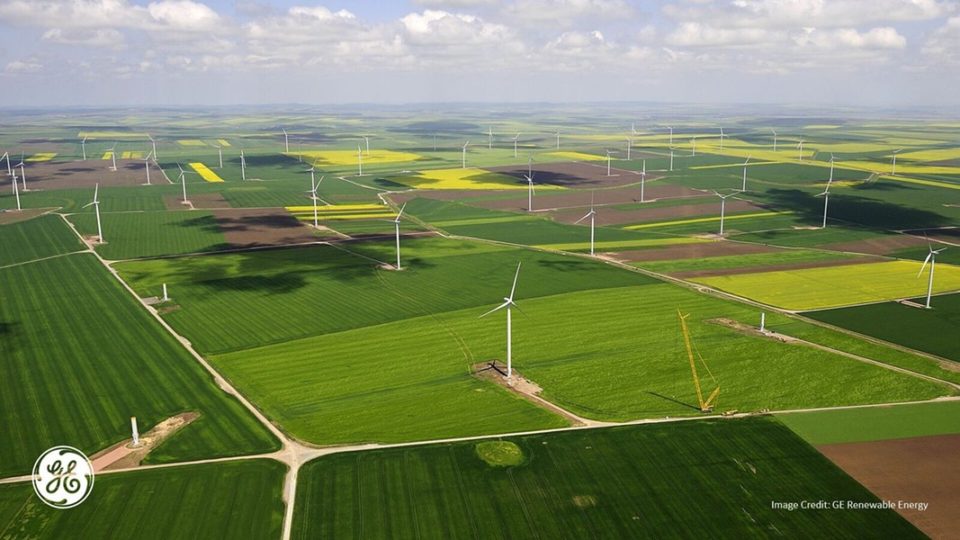
Wind turbines have been getting bigger all the time.  Larger turbines have real advantages.  They can operate at lower speeds so they can be deployed in more places.  They capture more wind, so they make more power.  Large wind turbines can have blades more than 200 feet long and even larger ones are on the way.  An offshore wind farm in China has turbines with 400-foot blades.

Giant wind turbines face a thorny problem:  getting the blades to where they are to be installed.  The enormous blades can’t be easily shipped across aging roads and bridges.   Tunnels are too narrow, bridges are too low, and roads can be too tight to allow turns when transporting these massive turbine parts.  Some developers have actually had to build special roads for wind projects.

For nearly a decade, a Boulder Colorado company called Radia has been working on what would be the world’s largest plane.  The WindRunner aircraft would have a dozen times the cargo volume of a Boeing 747.  The WindRunner will be 356 feet long and 79 feet tall.  While its primary purpose would be transporting wind turbine blades, the plane could also be used to aid the military or businesses that are thinking really big.  Product developers often don’t even try to invent really big things because there is no way to transport them.  Radia expects the WindRunner to be rolled out before the end of the decade.

The wind industry is currently facing strong opposition from the Trump administration, but wind energy is not going away and bigger and better wind turbines will ultimately be built and will have to be transported.

**********

Web Links

Building the World’s Biggest Plane to Help Catch the Wind

Photo, October 10, 2013, courtesy of Allan Der via Flickr.

Earth Wise is a production of WAMC Northeast Public Radio

A giant solar project for Google

November 21, 2024 By EarthWise Leave a Comment

Google is investing heavily in solar power

One of the largest solar projects in the US has recently come online in Texas.  Three solar farms built side-by-side in Buckholts, Texas by SB Energy can provide 875 megawatts of electricity, nearly the size of a typical nuclear power plant.  The project will supply the largest solar energy purchase ever made by Google and the electricity generated will be used to power its new operations in the area.  Google will use about 85% of the project’s solar power for data centers in Ellis County and for cloud computing in the Dallas Region.

In total, Google has contracted with clean energy developers to bring more than 2,800 megawatts of new wind and solar projects to Texas.  Google expects to spend $16 billion through 2040 to purchase clean energy for its global operations.

According to the International Energy Agency, data centers’ total electricity consumption could reach more than 1,000 terawatt-hours in 2026, which is more than double the amount used in 2022.  One terawatt-hour is enough energy to power 70,000 homes for a year.  So, it is not surprising that large technology companies are investing heavily in energy technologies.

Google, Amazon, and Microsoft have all recently announced investments in nuclear energy to power data centers.  These companies all have made commitments to seek sources of carbon-free electricity to power their data centers and their increasing efforts in artificial intelligence.  Because of the rise of artificial intelligence, the large companies are not meeting their commitments to reduce their carbon emissions and are needing to greatly increase their efforts to obtain clean power.

**********

Web Links

One of the largest solar projects in the US opens in Texas, backed by Google

Photo, posted March 27, 2016, courtesy of Ben Nuttall via Flickr.

Earth Wise is a production of WAMC Northeast Public Radio
A giant solar plus storage facility

August 23, 2024 By EarthWise Leave a Comment

A massive solar and battery storage project is now operational

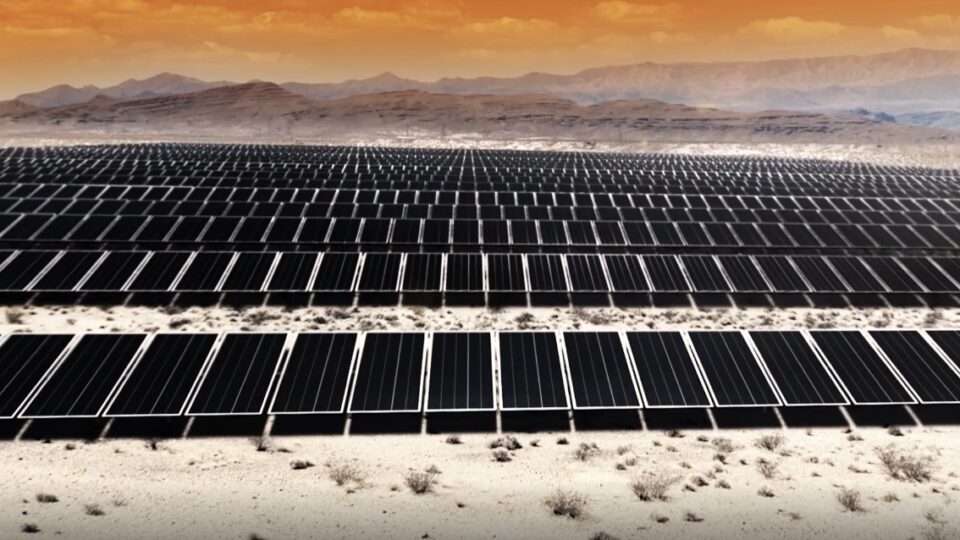
One of the country’s largest co-located solar and battery energy storage projects is now fully operational.  The Gemini Solar+Storage project is located in Clark County, Nevada, about 30 minutes outside of Las Vegas.

The project’s 1.8 million solar panels can generate up to 690 megawatts of electricity, which is enough to supply about 10% of Nevada’s peak demand.  The facility is co-located with 380 megawatts of 4-hour battery storage, which is enough to supply Nevadans with 1,400 MWh of power after sundown.

The project makes use of a unique storage configuration that allows the storage system to be charged directly from the solar panels, resulting in increased efficiency and maximizing the capture and storage of solar energy.

The project has minimized the environmental impacts to the nearly 5,000-acre site.  Primergy, the project developer, took measures to leave vegetation in place, installed solar panels to follow the ground’s natural contours, and reduced the overall footprint by more than 20% through careful design.  The project created 1,300 union and prevailing wage jobs and contributed $483 million to Nevada’s economy.

Solar facilities are increasingly co-located with battery storage plants.  There is a huge project in Kern County California that includes 1.9 million solar panels capable of generating 875 megawatts of solar power and storing 3,287 megawatt-hours of energy.  The deserts of the southwest are prime locations for such facilities.

**********

Web Links

The house always wins: Massive Gemini solar + storage outside of Las Vegas reaches commercial operations

Photo courtesy of Quinbrook Infrastructure Partners.

Earth Wise is a production of WAMC Northeast Public Radio
Giant batteries and the grid

May 31, 2024 By EarthWise Leave a Comment

Giant batteries are transforming how electricity is used

All across the country, electric utility companies are starting to use giant batteries to counteract the biggest weakness of renewable energy; namely, that the sun doesn’t always shine, and the wind doesn’t always blow.  Solar panels and wind turbines can keep generating energy when people don’t need it and batteries can store up that energy for when they do.

Over the past three years, battery storage capacity on US grids has grown by a factor of ten adding up to 16 gigawatts.  This year, it is expected to double again, led by massive growth in Texas, California, and Arizona.

California generates more electricity from solar power than any other state.  But it has a timing problem:  solar power is plentiful during the day, but it disappears in the evening when people get home from work and start using lots of electricity.  The previous solution was to burn lots of fossil fuel to produce it.

This has been changing thanks to battery storage.  Since 2020, California has installed more giant batteries than anywhere else in the world other than China.  Batteries are gradually replacing fossil fuels for California’s evening power needs.  On the evening of April 30th, for example, batteries supplied more than 20% of California’s electricity.  This is equivalent to the output of seven large nuclear reactors.

Batteries have multiple uses in the grid.  They handle big swings in generation from renewable sources, they reduce congestion on transmission lines, and they help to prevent blackouts during heat waves.  Batteries are starting to eat into the market for fossil fuels and will play an ever-growing role in the electricity grid.  As the role of renewables grows, so will the role of batteries.

**********

Web Links

Giant Batteries Are Transforming the Way the U.S. Uses Electricity

Photo, posted December 5, 2022, courtesy of Jonathan Cutrer via Flickr.

Earth Wise is a production of WAMC Northeast Public Radio
A giant underground battery

February 5, 2024 By EarthWise Leave a Comment

Building a giant underground battery

Two up-and-coming energy technologies are coming together near a tiny town in central Utah.  Outside of the town of Delta, population 3,600, two caverns, each as deep as the Empire State Building, are being created from an underground salt formation to be used to store hydrogen gas.  The gas will be used as a fuel in a new electricity generation plant.

The plant will replace an aging local coal-fired power plant.  The new plant will burn a mixture of natural gas and hydrogen – green hydrogen produced without emitting greenhouse gases. To produce the hydrogen, the facility will operate 40 giant electrolyzers that will use excess solar and wind power generated at times of low demand to split water molecules into hydrogen and oxygen.

The caverns were created by a process called solution mining in which high-pressure water is pumped down into salt deposits that are dissolved. The resulting caverns are 200 feet in diameter and 1,200 deep and lie 3,000 to 4,000 feet below the surface.  Hydrogen cannot escape through the thick salt layers.

The amount of energy that can be stored in the form of hydrogen fuel in these caverns is massive – far more than all the battery storage installed in the U.S. to date.  Chevron has a majority stake in one of the projects and will supply the natural gas.  The facility is expected to go online in 2025.

While this will produce far fewer emissions than existing coal plants, it is not carbon-free.  Currently, turbine technology cannot operate with pure hydrogen fuel.  The Delta plant will run on only 30% hydrogen.  The hope is that turbine technology will improve in the future and permit operation on pure hydrogen.

**********

Web Links

A Huge Underground Battery Is Coming to a Tiny Utah Town

Photo, posted September 9, 2013, courtesy of Scott via Flickr.

Earth Wise is a production of WAMC Northeast Public Radio
Attack of the giant goldfish

January 15, 2024 By EarthWise Leave a Comment

Giant goldfish are an invasive species

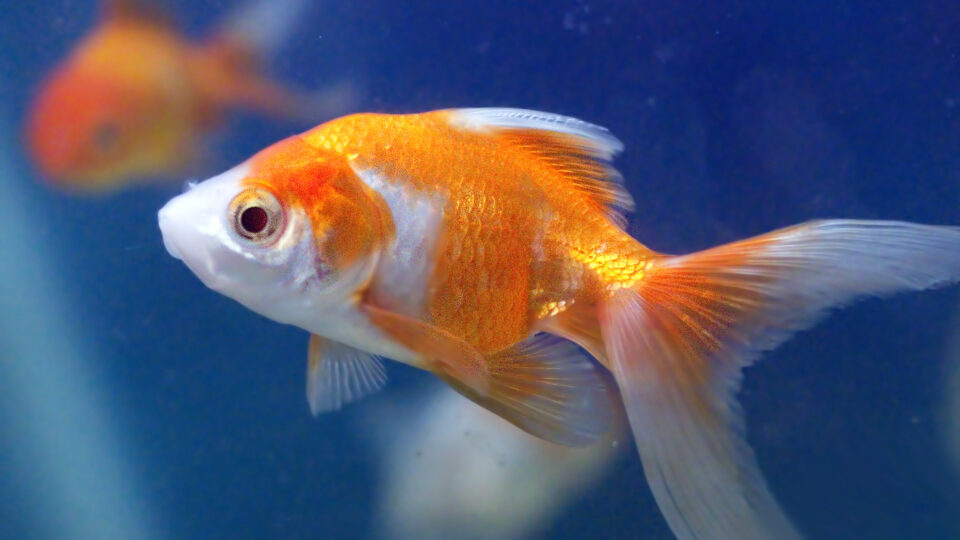
Goldfish are just about the easiest pets to keep.  A species of carp native to East Asia, they have been bred to look pretty and are generally little more than home décor.  We keep them in little glass bowls and feed them mysterious flakes out of a container.  With these confined quarters and meager meals, they remain small, harmless creatures.  But released into the wild, it is a very different story.

People dump pet goldfish into lakes and ponds with some frequency.  Once they are in the wild, these humble creatures can grow to monstrous proportions.  They can eat nearly anything, including algae, aquatic plants, eggs, and invertebrates.  They can kill off native marine wildlife and damage or even destroy fragile and economically valuable ecosystems.

For a few years, Canadian researchers have been tracking invasive goldfish in Hamilton Harbour, at the western tip of Lake Ontario, about 35 miles southwest of Toronto.  That part of the lake has been decimated by industrial and urban development as well as by invasive species.

Goldfish were first spotted in the harbor in the 1960s, mostly died off in the 70s because of industrial contamination, but then recovered in the 2000s.  Goldfish can tolerate a wide range of water temperatures, reach sexual maturity quickly, and can reproduce several times in one season.  In resource-rich places, they can grow up to 16 inches long, making them too large a meal for many predators.

There are literally millions of goldfish in the Great Lakes and not only there.  Feral goldfish are a problem in Australia and in the United Kingdom.  Invasive species are a big problem, even if they start out small and cute.

**********

Web Links

Once They Were Pets. Now Giant Goldfish Are Menacing the Great Lakes.

Photo, posted September 20, 2015, courtesy of Watts via Flickr.

Earth Wise is a production of WAMC Northeast Public Radio

Giant Farming Robots | Earth Wise

April 20, 2023 By EarthWise Leave a Comment

Farmers are perpetually engaged in a battle against weeds, which can strangle crops and destroy their yields.  There are basically two ways to fight weeds:  spraying herbicides that are bad for the environment and human health or using human labor to pull the weeds by hand. 

Both choices are increasingly undesirable.  Herbicide resistance is a growing problem facing farms around the world and widespread labor shortages in the agricultural sector are making it increasingly difficult to use human resources to combat weeds.

A startup company called FarmWise founded by an MIT engineering alumnus is providing a third option for farmers.  The company has developed giant autonomous weeding robots that use artificial intelligence to cut out weeds without damaging crops.

The company’s first product is called the Titan.  It looks like a large tractor without a driver’s seat.  It uses machine vision to distinguish weeds from crop plants like leafy greens, cauliflower, artichokes, and tomatoes.  It snips off the weeds with sub-inch precision.

Fifteen titan robots have been roaming the fields of 30 large farms in California and Arizona for several years.  A newer robot, called the Vulcan, is more lightweight and is pulled by a tractor.  FarmWise continues to add new crops to its database so that the robots can be used to fight weeds in more and more kinds of farms.

Weed problems are especially acute for farmers of specialty crops, which grow on smaller farms than corn and soybeans, and have unique growing practices, which limit the effectiveness of chemical and technical solutions. 

The overall goal of FarmWise is to turn artificial intelligence into a tool that is as reliable and dependable as GPS is now in the farming industry.

**********

Web Links

Titanic robots make farming more sustainable

Photo, posted August 23, 2021, courtesy of Carol VanHook via Flickr.

Earth Wise is a production of WAMC Northeast Public Radio
Saving The Giant Sequoia | Earth Wise

April 22, 2021 By EarthWise Leave a Comment

Forest managers working to save the sequoias

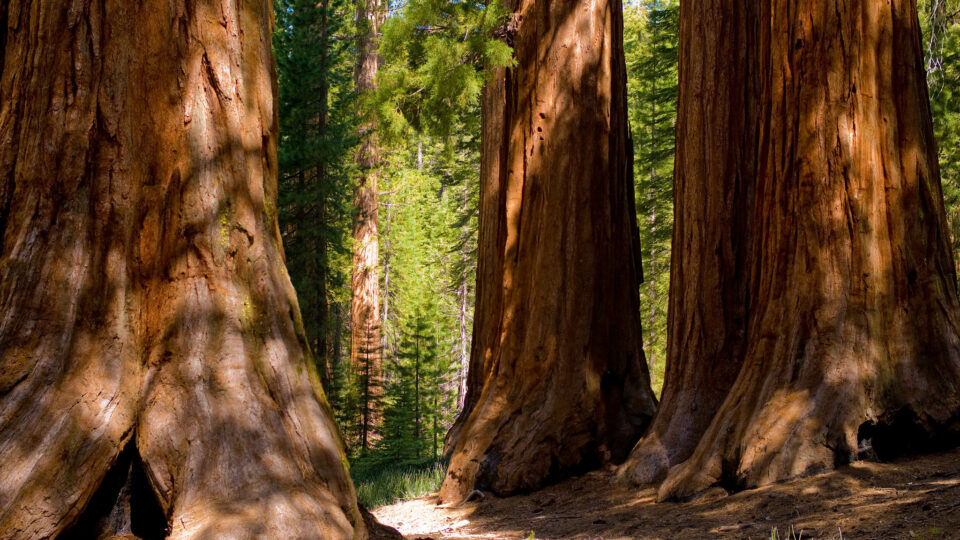
Giant sequoia trees are some of the most remarkable living things on earth.  They can live up to 3,000 years.  The tallest specimens tower over 300 feet, but it is their girth that really sets them apart.  They are usually 20 feet in diameter, and some are up to 35 feet across at the widest.  The largest tree in the world by volume is the General Sherman tree, which has a volume of 52,508 cubic feet. At 2,100 years old, it weighs 2.7 million pounds and is not only the largest living tree, but also the largest living organism by volume on the planet.

Giant sequoias are incredibly hardy.  To have survived thousands of years, the oldest of these trees have endured hungry animals, diseases, fires, snowstorms, El Niño events, years-long droughts, and the efforts of loggers during the 19th and 20th centuries.

In February, unusually high winds knocked down 15 giant sequoias in Yosemite National Park.  While sequoias are amazingly adapted to their narrow range in California’s Western Sierras, it appears as though climate change is altering their habitat faster than the species can migrate or adapt.  Shorter cold seasons have meant more rain instead of snow, leading to floods and mudslides in the winter.  Fires are more likely with less snowpack.  Hotter, drier summers put sequoias under greater stress.

Forest managers work to preserve existing groves through fire mitigation, supplementary water, and careful stewardship of young trees in existing groves.  If these efforts are successful through the ensuing decades, climate change may be just one more thing the sequoias outlasted.  But at least some conservationists are now considering planting a new generation of sequoias in colder, nearby habitats. 

**********

Web Links

To Save Giant Sequoia Trees, Maybe It’s Time to Plant Backups

Photo, posted June 8, 2008, courtesy of Joi Ito via Flickr.

Earth Wise is a production of WAMC Northeast Public Radio.

A Giant Breakaway Iceberg | Earth Wise

April 7, 2021 By EarthWise Leave a Comment

A giant iceberg has broken free

Scientists have been closely monitoring multiple cracks and chasms that have formed in the 500-foot-thick Brunt Ice Shelf in Antarctica over the past few years.  In late 2019, a new crack was spotted in a portion of the shelf north of an area known as the McDonald Ice Rumples.  The rift was monitored by satellite imaging and was seen by February as moving about 15 feet a day.

In the early hours of February 26th, the crack widened rapidly before finally breaking free from the rest of the floating ice shelf.  News reports around the world have described the massive 500-square-mile iceberg by comparing it to the size of well-known cities:  1.5 times the size of greater Paris, 10 times the size of San Francisco, twice the size of Chicago, nearly the size of Greater London, and so on.

Antarctica is known for churning out some enormous bergs.  The new iceberg, which has been named A-74, is huge, but doesn’t compare to the iceberg A-68 that calved from the Larson C Ice Shelf in 2017.  That one was almost five times larger.

The calving of A-74 does not pose a threat to the presently unmanned British Antarctic Survey’s Halley VI Research Station, which was repositioned in 2017 to a more secure location after the ice shelf was deemed to be unsafe.  The section where the station now sits is still holding on, but when it eventually breaks, it will likely create a berg nearly 700 square miles in size.

It remains to be seen what will become of the new iceberg.  Most likely, it will eventually get caught up in the Weddell Gyre, a clockwise-rotating ocean flow in the Southern Ocean that covers an area more than half the size of the US.

**********

Web Links

Breakup at Brunt

Photo, posted October 27, 2016, courtesy of NASA/Nathan Kurtz via Flickr.

Earth Wise is a production of WAMC Northeast Public Radio.

A Giant Marine Preserve | Earth Wise

May 4, 2020 By EarthWise Leave a Comment

Creating A Giant Marine Preserve

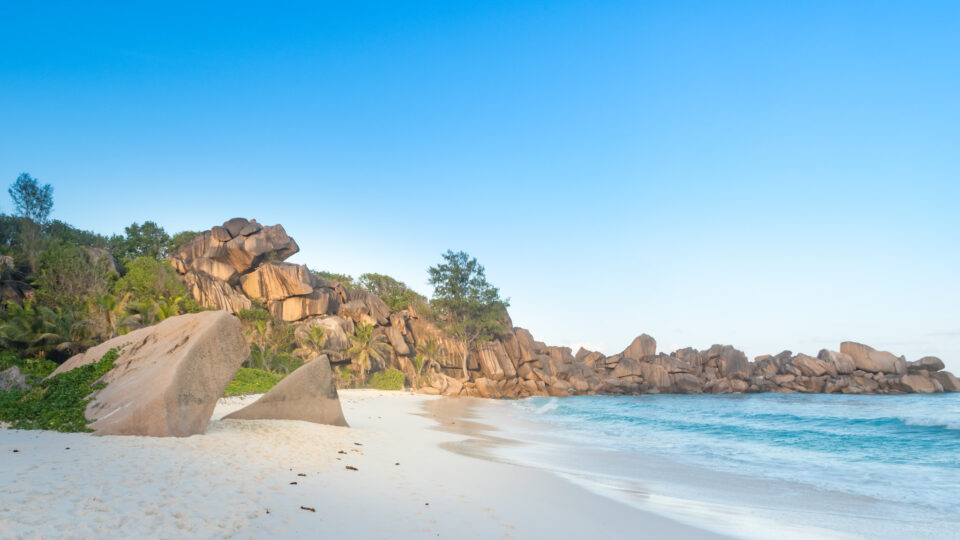
The Seychelles islands are located east of Kenya, near the equator.  Its beautiful beaches, virgin jungles, thriving coral reefs, and UNESCO-listed nature reserves are among the many attractions of the archipelago’s 115 islands.  The larger inner islands are quite developed for tourists, studded with many luxurious five-star resorts.  The natural wonders of the Seychelles are clearly its prime asset.

Given this, the Seychelles have now established 154,000 square miles of marine protected areas, fulfilling a pledge to protect nearly a third of its vast territorial waters.  This is an area twice the size of Great Britain.

About half of the newly protected areas will be “no-take zones” in which economic activity such as fishing and mining will be prohibited.  Only limited economic activities will be permitted in the other half of the protected areas.

The President of the Seychelles signed the decree establishing the marine reserve in mid-March.  The reserve will help protect the nation’s fisheries resources and safeguard a host of species including endangered sea turtles, sharks, and the Indian Ocean’s last remaining population of dugongs, which are marine mammals similar to manatees.

The funding for managing and protecting the new marine reserves will come from what is termed a debt-for-nature deal.  It is an agreement that was worked out with the help of The Nature Conservancy that allows the country to restructure nearly $22 million in foreign debt in exchange for protecting marine resources and enacting climate adaptation measures.

This major expansion of the Seychelles’ marine protected area is a major step in the conservation of the archipelago’s biodiversity.  The success of that conservation will ultimately depend upon enforcement, public-private partnerships, and innovative management.

**********

Web Links

Seychelles Creates a Marine Reserve Twice the Size of Great Britain

Photo, posted October 22, 2017, courtesy of Falco Ermet via Flickr.

Earth Wise is a production of WAMC Northeast Public Radio.

A Giant Seaweed Bloom

August 19, 2019 By EarthWise Leave a Comment

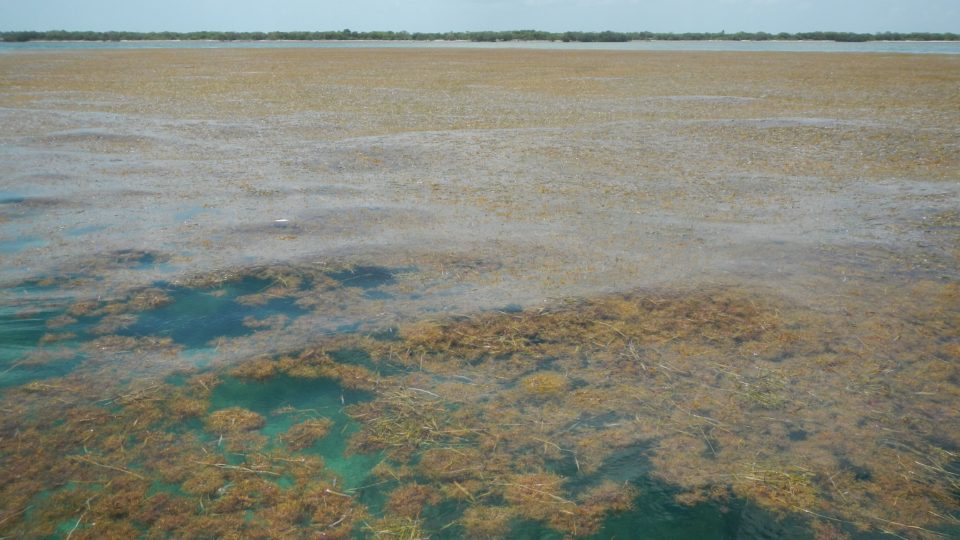
Scientists using data from NASA satellites have discovered and documented the largest bloom of seaweed in the world, stretching all the way from West Africa to the Gulf of Mexico.  The gigantic macroalgae bloom has been dubbed the Great Atlantic Sargassum Belt. 

The brown seaweed floats in surface water and in recent years has become a problem to shorelines lining the tropical Atlantic, Caribbean Sea, Gulf of Mexico, and east coast of Florida.  The stuff carpets popular beach destinations and crowded coastal waters. In 2018, more than 20 million tons of it floated on the ocean surface.

Scientists have been studying the Sargassum algae using satellites since 2006, but the major blooms have only started appearing since 2011.  They have occurred every year between 2011 and 2018 except for 2013.  Before 2011, most of the free-floating Sargassum in the ocean was primarily found in patches around the Gulf of Mexico and the Sargasso Sea located on the western edge of the central Atlantic Ocean.

Sargassum provides habitat for turtles, crabs, fish and birds, and produces oxygen via photosynthesis.  However, too much of it can crowd out many marine species.

According to researchers, the ocean’s chemistry must have changed in order for the bloom to get so out of hand.  The factors involved include a large seed population left over from a previous bloom, nutrient input from West Africa, and nutrient input from the Amazon River.  The increase in nutrients may be a result of deforestation and fertilizer use.

Climate-change effects on precipitation and ocean currents ultimately do play a role in this, but increased ocean temperatures do not.  Unfortunately, these giant seaweed blooms are probably here to stay.

**********

Web Links

NASA Satellites Find Biggest Seaweed Bloom in the World

Photo courtesy of NASA.

Earth Wise is a production of WAMC Northeast Public Radio.

A Giant Solar Farm In Dubai

June 26, 2019 By EarthWise Leave a Comment

Like many places in the Middle East, Dubai made its fortune from oil.  But the Emirate’s oil resources are limited, and its economy has evolved in other directions.  Today, oil provides less than 5% of Dubai’s revenues; its economy relies on revenues from trade, tourism, aviation, real estate, and financial services.

Dubai is also away from fossil fuels to meet its energy needs. A monumental construction project is underway deep within Dubai’s desert interior which will be the largest solar energy facility in the world.

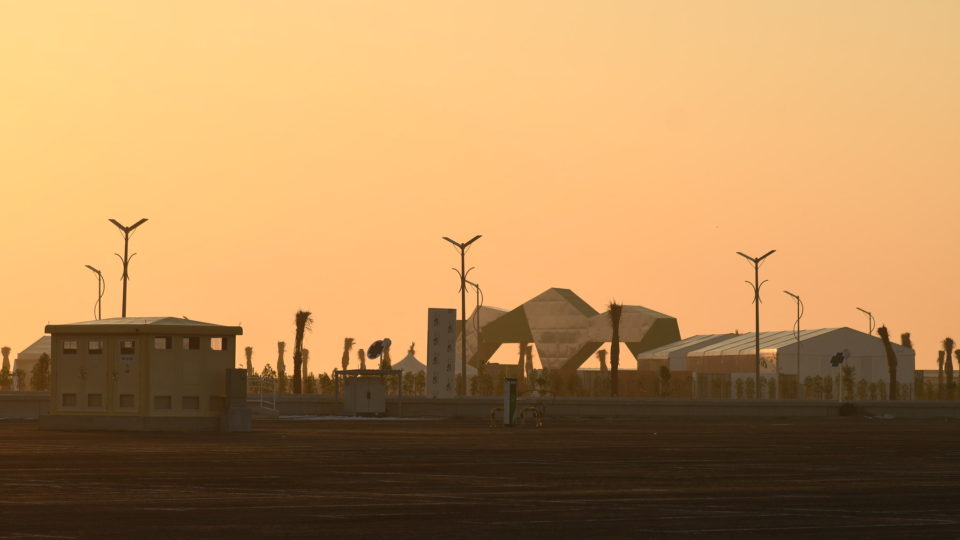
The Mohammed Bin Rashid Al Maktoum Solar Park – named after Dubai’s ruler – has been under development for 7 years.  Total investment in the project will be nearly $14 billion when it is completed in 2030.  It will have a total capacity of 5,000 megawatts, enough to power 1.3 million homes.  Only some large hydroelectric power plants, the largest nuclear power plants, and a couple of Asian coal plants have more generating capacity.

Phases one and two of the project are already complete and feature more than 2 million solar panels.  Phase three – well along the way in construction – will add another 3 million solar panels and should be completed next year.

Phase four will not involve solar panels but instead will make use of the world’s tallest concentrated solar power tower.  It will use mirrors to focus sunlight at the top of the tower to heat up molten salt that will power steam turbines to generate electricity and will be able to operate long after the sun goes down.

Currently, the Tengger Desert Solar Park in China is the largest photovoltaic park in the world, but a colossal farm in India will take its place in a few years.  Big solar is getting bigger all the time.

**********

Web Links

$13.6B record-breaking solar park rises from Dubai desert

Photo, posted December 15, 2018, courtesy of Anoop S. via Flickr.

Earth Wise is a production of WAMC Northeast Public Radio.

Hoover Dam As A Giant Battery

September 7, 2018 By EarthWise Leave a Comment

https://earthwiseradio.org/wp-content/uploads/2018/09/EW-09-07-18-Hoover-Dam-As-A-Giant-Battery.mp3

Back in the 1930s, building Hoover Dam was a public works project likened to the pyramids.  Hoover Dam helped transform the American West, harnessing the force of the Colorado River to power millions of homes and businesses.

[Read more…] about Hoover Dam As A Giant Battery

A Giant Wind Farm for Oklahoma

April 3, 2018 By EarthWise Leave a Comment

https://earthwiseradio.org/wp-content/uploads/2018/03/EW-04-03-18-A-Giant-Oklahoma-Wind-Farm.mp3

American Electric Power (AEP) is investing $4.5 billion to build the largest wind farm in the United States at a site in the Oklahoma panhandle.  Known as the Wind Catcher Energy Connection, the 2-gigawatt wind project will include 800 2.5-megawatt wind turbines built by General Electric.

[Read more…] about A Giant Wind Farm for Oklahoma

The 100-Day Giant Battery

January 11, 2018 By EarthWise Leave a Comment

https://earthwiseradio.org/wp-content/uploads/2018/01/EW-01-11-18-The-100-Day-Giant-Battery.mp3

The Australian state of South Australia suffered crippling electricity outages in September 2016, which coincided with gale-force winds and flooding rains.  The outages were triggered by storm damage to major transmission lines followed by wind farms disconnecting from the power grid.

[Read more…] about The 100-Day Giant Battery

Giant Wind Turbines

January 6, 2017 By EarthWise

https://earthwiseradio.org/wp-content/uploads/2016/12/EW-01-06-17-Giant-Wind-Turbines.mp3

Wind turbines have been getting bigger and bigger over the years.   The reason is that bigger blades produce more power and give much more bang for the buck.  A big part of the plummeting price of wind power is the increasing amount of power produced by each turbine.

[Read more…] about Giant Wind Turbines

Primary Sidebar

Recent Episodes

  • An uninsurable future
  • Clean energy and jobs
  • Insect declines in remote regions
  • Fossil fuel producing nations ignoring climate goals
  • Trouble for clownfishes

WAMC Northeast Public Radio
WAMC/Northeast Public Radio is a regional public radio network serving parts of seven northeastern states (more...)

Copyright © 2025 ·