• Skip to primary navigation
  • Skip to main content
  • Skip to primary sidebar

Earth Wise

A look at our changing environment.

  • Home
  • About Earth Wise
  • Where to Listen
  • All Articles
  • Show Search
Hide Search
You are here: Home / Archives for countries

countries

Floating Turbines For Offshore Wind | Earth Wise

June 18, 2020 By EarthWise Leave a Comment

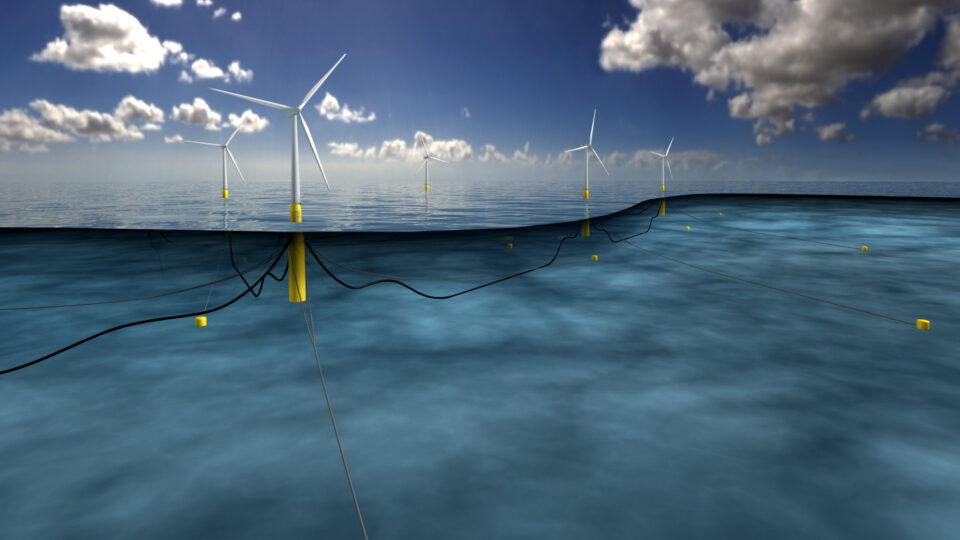
floating wind turbines

Offshore wind is big in Europe.  There are more than 5,000 offshore wind turbines across 12 European countries with a total capacity of more than 22 gigawatts.  Almost every one of those turbines sits on a long tower sunk into the seabed and bolted into place in places where the water is 60 to 160 feet deep.

But off the coast of northern Scotland, there is the Hywind Wind Park which has five 574-foot-tall turbines located 15 miles offshore where the water is 300 feet deep.  The giant masts and turbines sit on buoyant concrete-and-steel keels that allow them to stand upright and float on the water like a giant buoy.  The giant cylindrical bases are held in place with mooring cables attached to anchors that sit on the seafloor.

A key advantage of floating turbines is that they can access outlying ocean waters up to half a mile deep, which is where the world’s strongest and most consistent winds blow.  Another advantage is that such turbines can be installed over the horizon, out of sight of coastal residents who might not like to have wind turbines visible in their scenic ocean views.

Floating wind power has enormous potential for contributing to the expansion of renewable energy.  Offshore wind is still quite a bit more expensive than land-based turbines, and the cost of electricity from distant floating turbines is more than that from near-shore wind turbines.   But all of these costs are likely to come down with improving technology and increased production volume.

There are real challenges to the expanded used of floating wind farms, but the promise of harnessing so much of the open seas for electricity generation is an attractive proposition.

**********

Web Links

Will Floating Turbines Usher in a New Wave of Offshore Wind?

Photo, posted July 17, 2017, courtesy of Crown Estate Scotland via Flickr.

Earth Wise is a production of WAMC Northeast Public Radio.

Benefits Of A Zero-Emissions Boston | Earth Wise

May 25, 2020 By EarthWise Leave a Comment

climate goals

Many countries, states, and cities around the world have set goals to become carbon neutral, typically by the year 2050.  These goals are based on the desire to mitigate the effects of climate change that are steadily increasing as a result of the buildup of carbon dioxide in the atmosphere.  But reducing emissions is not just a way to combat climate change, it can also be a major contributor to improved public health.

The City of Boston has set a goal to become carbon neutral by 2050.  A new study by the School of Public Health at Boston University published in the journal Environmental Research Letters looked at the consequences of eliminating fossil fuel emissions in the greater Boston area.

According to their modeling, eliminating emissions would save 288 lives a year by reducing fatal and non-fatal cardiovascular and respiratory illnesses.   The resulting decrease in medical costs and lost and reduced work could save $1.7 billion a year in Suffolk County and $2.4 billion a year for the entire 75-square-mile zone modeled in the study.

The study looked at the amounts of two air pollutants known to harm human health:  PM2.5 (particulates with a diameter of less than 2.5 microns) and ozone.  They compared the current levels of these pollutants to what would be present when contributions from motor vehicles, generators, rail, industry, oil- and gas-burning, shipping and boating, and residential wood fires were eliminated.

The study focused on the City of Boston’s climate action plan, but actions taken by Boston will not take place in a vacuum.  Many cities across the region are taking similar actions.  The overall results will come from the collective actions across New England.

**********

Web Links

A Zero-Emissions Boston Could Save 288 Lives and $2.4 Billion Annually

Photo, posted August 31, 2019, courtesy of Eric Kilby via Flickr.

Earth Wise is a production of WAMC Northeast Public Radio.
Lots Of Wind Power In Denmark | Earth Wise

February 11, 2020 By EarthWise Leave a Comment

renewable energy milestone

Many states and countries have established goals to generate at least half of their electricity from renewable sources by some future date, typically 2030.  A number of countries have already been able to achieve 50% or greater renewable generation for brief periods measured in days.  Australia did it this past November.  Germany has seen it on occasion as well.

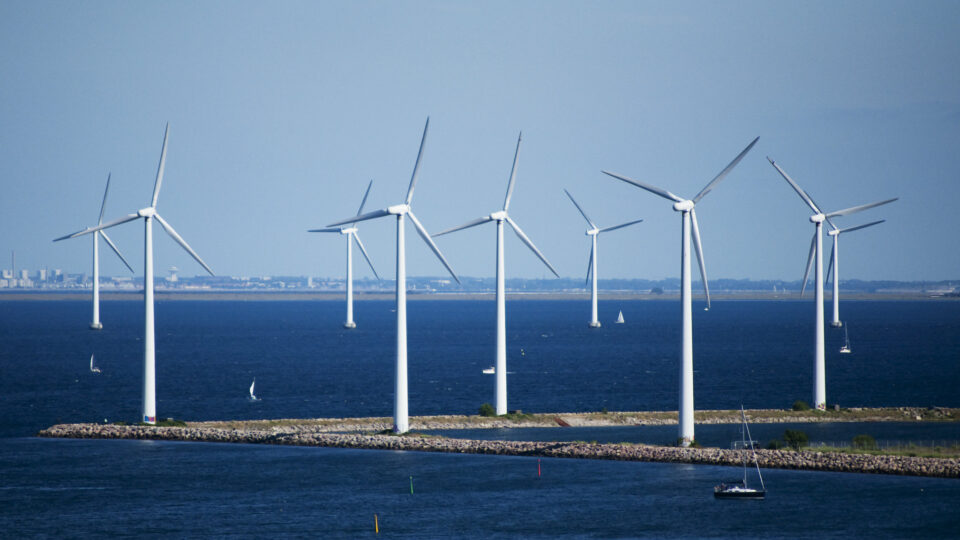
Denmark has managed to complete an entire year with half of its energy coming from renewable generation.  Almost all of it – 47% of the country’s power – came from wind turbines.

Denmark has been generating much of its energy from wind power for quite a while and actually produced about 46% of its electricity from renewable sources in 2017.  Denmark was a pioneer in developing commercial wind power during the 1970s, is a major manufacturer of wind turbines, and the small country has installed over 6,000 of them.  The gains this past year mostly came from the Horns Rev 3 offshore wind farm that went online in the fall.  The 407 MW wind farm has the capacity to cover the annual electricity consumption of about 425,000 households, which is about 20% of the country.

The growth of wind power in Denmark is still ramping up.  A 600 MW wind farm in the Baltic Sea will be connected to the Danish and German electricity grid by 2021, and a wind farm of at least 800 MW capacity in the North Sea is scheduled to come online in 2025.

The Danish Parliament has passed an ambitious climate law with the goal of reducing CO2 emissions by 70% in 2030 compared with 1990.  The country’s overall goal of being carbon-neutral by 2050 does not seem like a pipe dream.

**********

Web Links

Denmark Passes Magic 50% In Renewable Electricity Generation Milestone

Photo, posted July 12, 2009, courtesy of Flickr.

Earth Wise is a production of WAMC Northeast Public Radio.

An Upside Of Climate Change

October 15, 2019 By EarthWise Leave a Comment

In contrast with most countries in the world, the main political factions in the United States have very different views of climate change.  Somehow, one side of the aisle remains skeptical about the changing climate even as temperature records are broken, arctic ice disappears, and powerful storms become increasingly common.

But putting aside the increasingly inexplicable political schism about climate change, there are instances where the consequences of the warming climate are not all dire.  In fact, there are places where climate change is having a positive effect.

One such place is West Virginia, where research studies are finding a real upside to the changing climate.

A recent study of the climate in West Virginia over the period from 1900 to 2016 found the maximum temperatures trended downward, average minimum temperatures ascended, and annual precipitation increased.  On average, West Virginians are now seeing cooler summers, warmer winters and wetter weather.

Given these changes, there have been big changes in agriculture.  Yields of important crops like hay, corn, winter wheat, and soybeans have all increased.  The winter season has shrunk by as much as 20 days and the growing season itself has increased by approximately 13 days.  A number of crops that historically did not fare well in West Virginia may now become viable.  It may even be possible to pursue double cropping, meaning that the longer growing season may allow farmers to raise one crop, harvest it, and then raise and harvest a second crop within the same year.

In the big picture, climate change is shaping up as a global calamity, but for a few people in certain places – such as West Virginia – it may have some real upside.

**********

Web Links

The positive implications of…climate change? WVU researcher sees agricultural, food availability and economic possibilities

Photo, posted November 12, 2014, courtesy of Mike via Flickr.

Earth Wise is a production of WAMC Northeast Public Radio.

The U.S. Military And Climate Change

July 9, 2019 By EarthWise Leave a Comment

According to new research by scientists from Durham University and Lancaster University, the United States military is one of the largest climate polluters.  The U.S. military consumes more liquid fuels and emits more greenhouse gases than most countries.  

The study, published in Transactions of the Institute of British Geographers, finds that if the U.S. military were a country, it would be the 47th largest emitter of greenhouse gases in the world, falling between Peru and Portugal.  And this only takes into account the emissions from its liquid fuel consumption.  For this study, the U.S. military’s 2015 consumption was compared with the 2014 World Bank country liquid fuel consumption. 

In 2017, the U.S. military purchased more than 269,000 barrels of oil a day, emitting more than 25,000 kt- CO2e by burning those fuels.  The Air Force accounted for $4.9 billion worth of this fuel, followed by the Navy at $2.8 billion, the Army at $947 million, and the Marines at $36 million. 

The Air Force and the Navy are not only the U.S. military’s largest purchasers of fuel, they also use the most polluting types of fuel.  The Air Force is the largest emitter of greenhouse gases at more than 13,000 kt CO2e, nearly double that of the Navy’s 7,800 kt CO2e. 

Despite this study’s findings and a general uptick in awareness, it’s unlikely that the U.S. military’s dependence on fossil fuels will change.  That’s because the military continues to pursue open-ended operations around the globe, and the lifecycle of its existing military equipment insures dependence on hydrocarbons for many years to come. 

***********

Web Links

U.S. military consumes more hydrocarbons than most countries — massive hidden impact on climate

Photo, posted July 8, 2016, courtesy of Alan Wilson via Flickr.

Earth Wise is a production of WAMC Northeast Public Radio.
Electric Cars In Norway

February 18, 2019 By EarthWise Leave a Comment

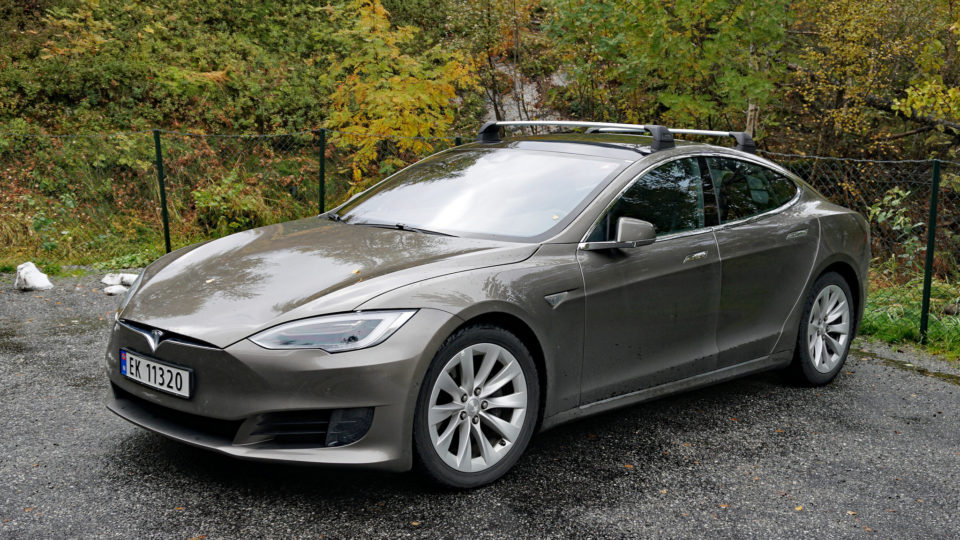
Norway has long been a world leader in sales of electric vehicles.  The country only has 5.3 million people, so the absolute numbers cannot compete with those of large countries.  Despite that, it wasn’t until the first quarter of last year that Germany became the leader in number of electric cars sold in Europe and Germany has 15 times the population of Norway.

In percentage terms, almost one-third of all new cars sold in Norway last year ran on batteries.  The country offers generous subsidies for buyers who opt to go electric.  The government has set a goal of having all new cars be emission-free by 2025.  Last year, three of the top five most popular new car models were electric:  the Nissan Leaf, the BMW i3, and the Tesla Model X.

Tesla’s Model 3, which has shattered all records for electric car sales in the United States, has yet to go on sale in Norway.  When the car becomes available there in the next few months, it is expected to generate very high sales figures.

The 31% market share for electric cars in Norway far exceeds that of most other countries.  In the United States, for example, plug-in cars account for only about 2% of new car sales.  Only Hong Kong and Iceland are also currently above 5% electric.

Norway’s role in all of this is rather convoluted.  The country has copious hydroelectric power resources that provide virtually all of its electricity.  Thus, electric cars in Norway are truly clean, green vehicles.  On the other hand, Norway is the 15th largest producer of oil in the world and gets about 17% of its GDP from oil exports.  Tackling climate change must ultimately deal with the emissions Norway continues to export.

**********

Web Links

Photo, posted October 3, 2018, courtesy of Flickr.

Earth Wise is a production of WAMC Northeast Public Radio.
Powering Africa With The Sun

December 3, 2018 By EarthWise Leave a Comment

https://earthwiseradio.org/wp-content/uploads/2018/12/EW-12-03-18-Powering-Africa-With-The-Sun.mp3

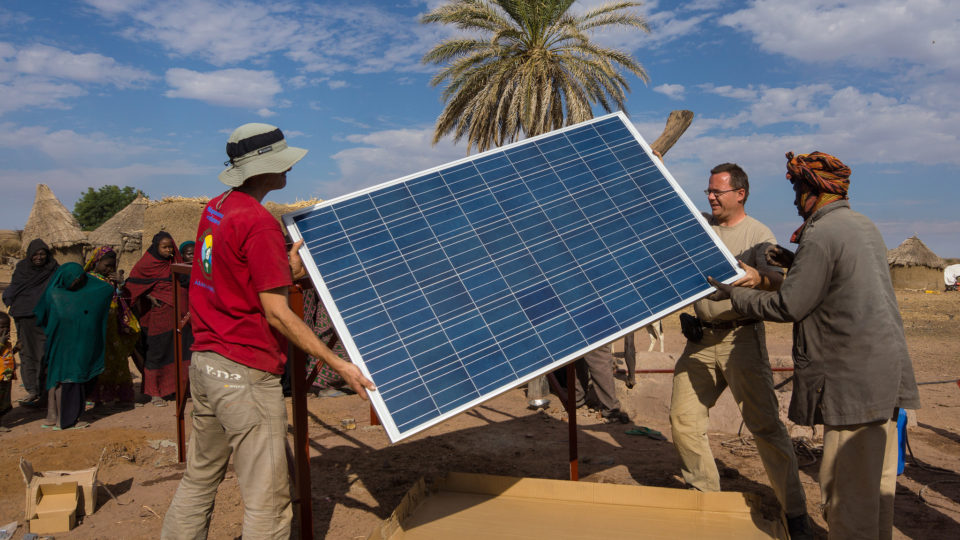
There are roughly 600 million people in sub-Saharan Africa who currently live without electric power.  Putting in the infrastructure to supply power to these people in their various countries has been a major economic and logistical challenge.

[Read more…] about Powering Africa With The Sun

How To Measure Carbon Emissions

November 5, 2018 By EarthWise Leave a Comment

https://earthwiseradio.org/wp-content/uploads/2018/11/EW-11-05-18-How-To-Measure-Carbon-Emissions.mp3

The Paris climate accord by nearly 200 countries seeks to reduce global carbon emissions.  But how can the actions of these countries be monitored, reported, and verified?  It is not an easy task.

[Read more…] about How To Measure Carbon Emissions

Greenhouse Gas Emissions Rising Again

May 8, 2018 By EarthWise Leave a Comment

https://earthwiseradio.org/wp-content/uploads/2018/04/EW-05-08-18-Greenhouse-Gas-Emissions-Rising-Again.mp3

If we want to avoid drastic global warming this century, we need to sharply reduce greenhouse gas emissions over time.   For the previous three years, emissions had been holding steady, but last year, global emissions from the use of coal, oil and natural gas increased by 1.4%.  According to the International Energy Agency, this unfortunate new data should serve as a strong warning that we need to increase our efforts to combat climate change.

[Read more…] about Greenhouse Gas Emissions Rising Again

The Deadly Cost Of Pollution

December 8, 2017 By EarthWise Leave a Comment

https://earthwiseradio.org/wp-content/uploads/2017/11/EW-12-08-17-Deadly-Cost-of-Pollution.mp3

There is deservedly a great deal of focus on the effects that carbon pollution is having upon the climate and most countries around the world are working to reduce their emissions.   However, even if climate effects were not a serious threat to humanity, pollution is a deadly menace to human health.

[Read more…] about The Deadly Cost Of Pollution

Exporting Emissions

July 26, 2017 By EarthWise

https://earthwiseradio.org/wp-content/uploads/2017/07/EW-07-26-17-Exporting-Emissions.mp3

The Paris Climate Agreement seeks to reduce global carbon emissions.  The nearly 200 countries who signed it have pledged to reduce their own emissions within their borders.  And therein lies the rub:  the agreement says nothing about the impact their products have across the world.   For some countries, the problem is not so much the emissions they produce; it is those they export.

[Read more…] about Exporting Emissions

Carbon Counters

April 7, 2016 By WAMC WEB

https://earthwiseradio.org/wp-content/uploads/2016/03/EW-04-07-16-Carbon-Counters.mp3

The Paris climate agreement last December resulted in commitments by 195 countries to reduce their carbon emissions.  The countries around the world made specific pledges to reduce emissions in the form of “intended nationally determined contributions” or INDCs.

[Read more…] about Carbon Counters

  • « Go to Previous Page
  • Page 1
  • Page 2
  • Page 3

Primary Sidebar

Recent Episodes

  • An uninsurable future
  • Clean energy and jobs
  • Insect declines in remote regions
  • Fossil fuel producing nations ignoring climate goals
  • Trouble for clownfishes

WAMC Northeast Public Radio

WAMC/Northeast Public Radio is a regional public radio network serving parts of seven northeastern states (more...)

Copyright © 2026 ·