• Skip to primary navigation
  • Skip to main content
  • Skip to primary sidebar

Earth Wise

A look at our changing environment.

  • Home
  • About Earth Wise
  • Where to Listen
  • All Articles
  • Show Search
Hide Search
You are here: Home / Archives for climate models

climate models

Extreme heat and dairy production

May 6, 2025 By EarthWise Leave a Comment

Climate change is causing more frequent and intense heat waves in the United States. Studies show that not only are heat waves now occurring more often, but that the average heat wave season is nearly 50 days longer now than it was in the 1960s.  The overall rise in temperatures, linked to climate change, has led to increased health risks and fatalities from extreme heat. 

As humans face increasing health risks from this extreme heat, livestock are also suffering from the effects of rising temperatures.  Extreme heat negatively impacts dairy production by causing heat stress in cows, which can reduce milk yield, quality, and the cows’ overall health.

A new study by researchers from the University of Illinois Urbana-Champaign analyzed milk production data from 18,000 dairy farms across nine Midwest states between 2012 and 2016.  The researchers found that high heat and humidity have led to a 1% decline in annual milk yield. While this might not sound like a lot, it amounts to about 1.4 billion pounds of milk over five years from the 18,000 herds included in the study – equivalent to about $245 million in lost revenue.

The study, which was recently published in the journal Food Policy, found that small farms are hit harder than large farms.  Larger farms may be able to mitigate some of the effects through management strategies, such as open barn sides, fans, and sprinklers.

Using projections from 22 different climate models, the research team estimates that more frequent extreme heat will increase milk yield losses by about 30% by 2050. 

**********

Web Links

Illinois study: Extreme heat impacts dairy production, small farms most vulnerable

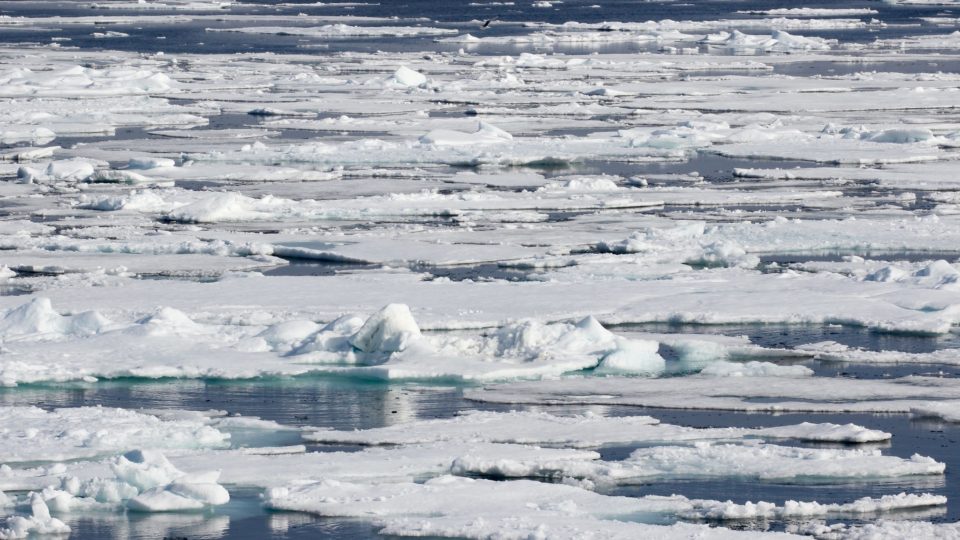
Photo, posted March 13, 2018, courtesy of Gosdin via Flickr.

Earth Wise is a production of WAMC Northeast Public Radio
Weather extremes for most people

October 7, 2024 By EarthWise Leave a Comment

Weather extremes are becoming common for many people

Scientists from the CICERO Center for International Climate Research in Norway along with researchers at the University of Reading in the UK have analyzed how global warming can combine with normal variations in the weather to produce decades-long periods of very rapid changes involving both extreme temperatures and extreme amounts of rainfall.

Many parts of the world have already been experiencing record temperatures and extreme rainfall events.  Previously, most analyses of the changing climate have focused on the global mean and not on the impact of extreme weather on specific countries.

The study made use of large climate model simulations to show that if global emissions continue on the path they have been on, large parts of the tropics and subtropics – which are home to 70% of the world’s population – are expected to experience strong rates of change in temperature and precipitation extremes over the next 20 years.  But even if there is strong emissions mitigation – meaning that emissions are reduced enough to reach the goals of the Paris Climate Agreement – the expectation is that 20% of the world’s population will face extreme weather risks. 

These extreme events currently account for a disproportionate share of the realized impacts of climate change.  Heatwaves cause heat stress and excess mortality of both people and livestock.  Extreme precipitation leads to flooding, damage to settlements, infrastructure, crops, and ecosystems, as well as to reduced water quality. 

Society will be increasingly vulnerable to these extreme events, especially when multiple hazards occur at the same time.

**********

Web Links

Extreme weather to strengthen rapidly over next two decades

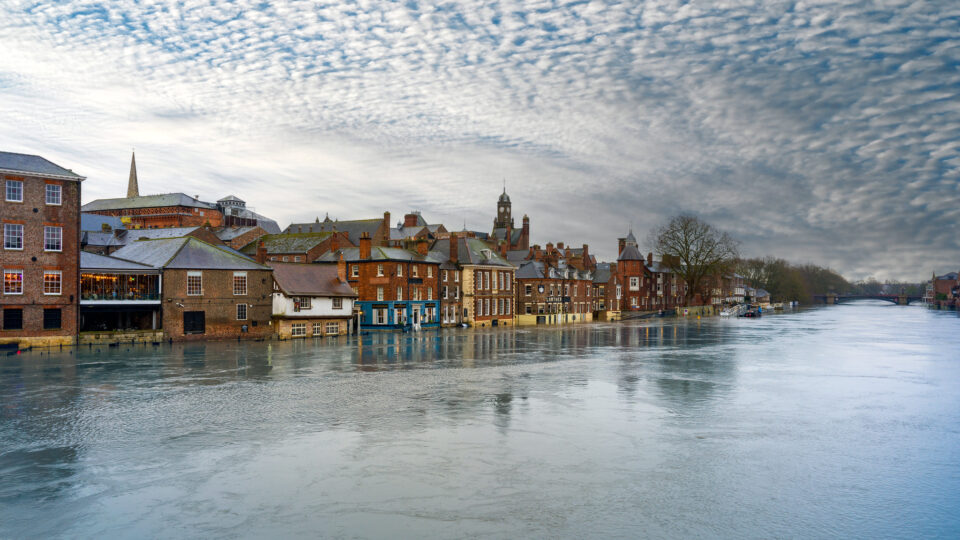
Photo, posted May 20, 2024, courtesy of Dale Cruse via Flickr.

Earth Wise is a production of WAMC Northeast Public Radio

AI’s Environmental Footprint

March 13, 2024 By EarthWise Leave a Comment

AI is leaving a massive environmental footprint

Artificial intelligence is everywhere these days.  Some say it is the biggest development since the discovery of fire.  There is a lot of hype regarding AI, and it will be a while before the hype is sorted out from the reality.  But one thing that is certain is that AI is resource-intensive and has a large environmental footprint.

AI use directly produces carbon emissions from its consumption of non-renewable electricity and is also responsible for the consumption of billions of gallons of fresh water.

Various forms of AI run on many types of devices, but the kind of AI we hear about the most – such as ChatGPT – requires specialized computer equipment that runs in large cloud data centers.  There are roughly 10,000 such centers worldwide and more are under construction.  Estimates are that electricity consumption from data centers will double between 2022 and 2026 to a total of 1,000 terawatts, roughly as much electricity as all of Japan uses.

These estimates include all data center activities, not just AI.  Most operators of data centers don’t reveal what percentage of their energy use comes from AI.  One exception is Google, which says machine learning accounts for about 15% of its data center energy use.

Data centers also consume a great deal of water to cool delicate electronics.  In 2022, Google’s data centers consumed about 5 billion gallons of fresh water.

AI has the potential to improve the efficiency of systems, improve climate models, and perhaps help develop new ways to help reduce humanity’s environmental footprint.  But at the moment, it represents an increasing burden on the environment that cannot just be ignored.

**********

Web Links

As Use of A.I. Soars, So Does the Energy and Water It Requires

Photo, posted January 23, 2023, courtesy of Aileen Devlin / Jefferson Lab via Flickr.

Earth Wise is a production of WAMC Northeast Public Radio
What did the record warmth of 2023 mean?

January 16, 2024 By EarthWise Leave a Comment

2023 was the warmest year in the 174 years of global temperature record-keeping.  According to some analyses, it may have been the warmest year in the past 125,000 years.

There were incredible heatwaves in Arizona and Argentina.  There were relentless wildfires across Canada.  The wintertime ice coverage in the seas surrounding Antarctica was at unprecedented lows

The global temperatures in 2023 did not just beat prior records; they smashed them.  Every month from June through November set all-time monthly temperature records. The US Northeast saw springlike temperatures at the end of the year.  The high temperature in Buffalo, New York on Christmas Day was 58 degrees.

Climate scientists have been predicting the warming trend that has been ongoing over the past several decades.  Indeed, computational models for 2023 called for a warm year.  Various models had a variety of projected temperatures and 2023’s heat was still broadly within the range of what was projected, although certainly at the high end.

The question is whether last year was an indicator that the planet’s warming is accelerating faster than we expect or that it just was a particularly warm year because of cyclical factors such as the El Niño that appeared last spring.

One theory that is being explored is that various types of industrial pollution have previously actually served to cool the atmosphere over time and as those sources are reduced for public health reasons, the warming effects of greenhouse gases have accelerated.

Currently, there is no consensus about why it seems to be getting warmer even faster than many climate models predict.  What there is no doubt about is that it is not a good thing.

**********

Web Links

Earth Was Due for Another Year of Record Warmth. But This Warm?

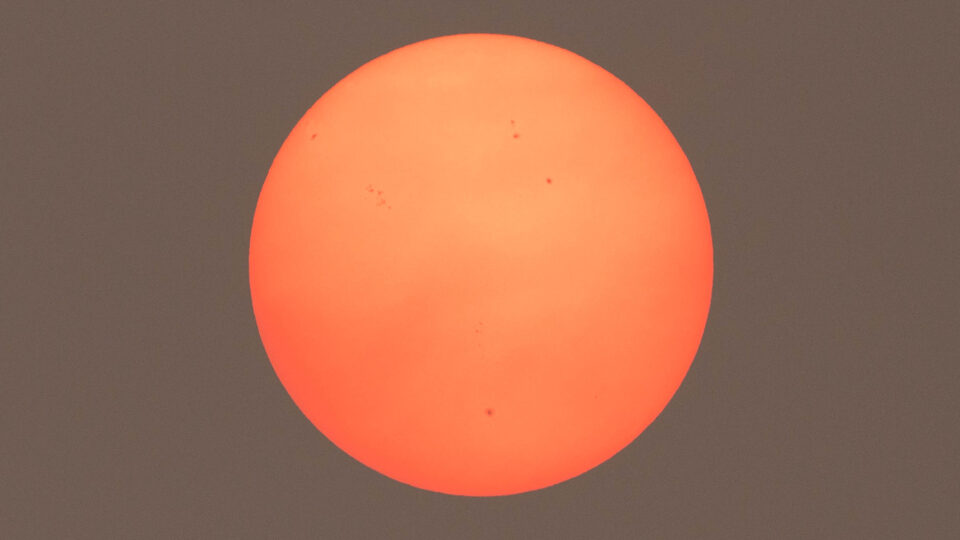
Photo, posted June 8, 2023, courtesy of Anthony Quintano via Flickr.

Earth Wise is a production of WAMC Northeast Public Radio

Climate Change And The World’s Fisheries | Earth Wise

March 10, 2022 By EarthWise Leave a Comment

Climate change is affecting the world's fishing

According to a new study, approximately 70% of the world’s oceans could be suffocating from a lack of oxygen by 2080 as a consequence of climate change.  This has the potential to impact marine ecosystems all around the world.  

The study, which was recently published in the journal Geophysical Research Letters, is the first to use climate models to predict how and when deoxygenation will occur throughout the world’s oceans outside of its natural variability. 

According to the findings, significant and potentially irreversible deoxygenation of the ocean’s middle depths began occurring last year.  The models predict that deoxygenation will begin affecting all zones of the ocean by 2080.

According to the study’s models, mid-ocean depths are already losing oxygen at unnatural rates. Globally, the ocean’s middle depth – known as the mesopelagic zone – is home to many of the world’s commercially fished species.  This makes these new findings a potential harbinger of economic hardship, seafood shortages, and environmental disruption. 

Just like land animals, aquatic animals need oxygen to breathe.  As climate change warms the oceans, the water holds less oxygen and is more buoyant than cooler water.  This leads to less mixing of oxygenated water near the surface with deeper waters, which naturally contain less oxygen.  Warmer water also raises oxygen demand among living organisms, resulting in less availability for marine life. 

The researchers also found that oceans closer to both the North Pole and the South Pole are particularly vulnerable to deoxygenation.  While they are not yet sure why, accelerated climate warming could be the culprit. 

These findings should add new urgency to climate change mitigation efforts. 

**********

Web Links

Climate change has likely begun to suffocate the world’s fisheries

Photo, posted January 28, 2019, courtesy of Joseph Gage via Flickr.

Earth Wise is a production of WAMC Northeast Public Radio.

Global Warming Could Stabilize | Earth Wise

February 19, 2021 By EarthWise Leave a Comment

Reducing emissions could stabilize global temperatures

The world has been heading toward climate disaster with the effects of greenhouse gas-induced warming looming larger and larger.  But recent analysis published in Nature Climate Change offers hope that rapidly eliminating emissions could stabilize global temperatures just within a couple of decades.

For quite some time, it has been assumed that further global warming would be locked in for generations regardless of the extent of emissions reductions going forward.  This conclusion was based on having a certain carbon dioxide concentration in the atmosphere which would linger for hundreds of years even if emissions were reduced.

Recent analysis takes into account the dynamism of the Earth’s natural systems which could actually reduce atmospheric CO2 content because of the huge carbon absorption capacity of oceans, wetlands, and forests.  The key requirement is to drastically reduce emissions so that these natural systems can take over.

More than 100 countries have pledged to get to net zero emissions by 2050.  That means they will emit no more carbon dioxide than is removed from the atmosphere by such actions as restoring forests.   The UK, Japan, and the European Union are among the countries that have set this zero target, and the United States is joining the club.

Climate models show that a global temperature rise of 2 degrees Celsius over that of the pre-industrial period would lead to global calamities that include punishing heatwaves, flooding, and mass displacement of people.  The world has already heated up by 1.1 degrees and governments have committed to restrain the rise to less than 1.5 degrees under the Paris Climate Agreement.

**********

Web Links

Global Warming Could Stabilize Faster than Originally Thought If Nations Achieve Net Zero

Photo, posted September 10, 2017, courtesy of Ron Cogswell via Flickr.

Earth Wise is a production of WAMC Northeast Public Radio.

More Carbon Dioxide From Thawing Permafrost | Earth Wise

July 30, 2020 By EarthWise Leave a Comment

Climate models underestimate CO2 emissions from thawing permafrost

The Arctic is warming much faster than the rest of the planet.  Stories about the loss of polar ice and hundred-degree temperatures in Siberia have become commonplace.  One of the most troubling aspects of the warming Arctic is the thawing of permafrost.  Permafrost is ground that remains frozen for at least two years; some of it has been frozen for tens or hundreds or even thousands of years.  Found under a layer of soil, permafrost is composed of rock, soil, sediments, and varying amounts of ice.  It stores the carbon-based remains of plants and animals that froze before they could decompose.  Permafrost covers almost a quarter of North America, but it is starting to thaw.

Scientists estimate that there are more than 16,000 billion tons of carbon locked away in Arctic permafrost, which is almost double the amount of carbon that is currently in the atmosphere.  Climate models predict that the warming of the Arctic could lead to 5 to 15% of that carbon to be emitted as carbon dioxide by the year 2,100, which would be enough to raise global temperatures by 0.3 to 0.4 degrees Celsius.

New research has increased this estimate because it includes a key pathway for CO2 to enter the atmosphere that earlier models ignored.   When carbon from thawing permafrost escapes into Arctic lakes and rivers, it is oxidized by ultraviolet and visible light and it then escapes into the atmosphere as CO2.  This process is known as photomineralization and is estimated to raise permafrost-related CO2 emissions by 14%.

Recent studies project that with every 1-degree Celsius increase in temperature, 1.5 million square miles of permafrost could be lost through thawing.

**********

Web Links

Climate Models Underestimate CO2 Emissions from Permafrost by 14 Percent, Study Finds

Photo, posted July 7, 2014, courtesy of NPS Climate Change via Flickr.

Earth Wise is a production of WAMC Northeast Public Radio.

Moving Up And Away | Earth Wise

May 21, 2020 By EarthWise Leave a Comment

Climate change and habitat

A new study by the Wildlife Conservation Society, the US Forest Service, and UC Berkeley has shown that mountain-dwelling species trying to escape warming temperatures may also be finding refuge from human pressure.

The study shows that nearly 60% of the world’s mountainous areas are under intense human pressure.  Most of that pressure occurs at lower elevations and mountain bases, where more people live, grow food, and build roads.  The researchers used climate models to predict how various species would move as the climate changes.   Based upon these predictions, they found that species tend to move to higher elevations, where temperatures are lower.  But those elevations also have more intact land for species because there is less human activity.

Mountains are home to over 85% of the world’s amphibians, birds, and mammals and these species are at risk from human activities such as agriculture, livestock grazing, and development.  These things reduce their habitats, but meanwhile the warming climate pushes them upslope as they struggle to find tolerable temperatures.

The researchers point to their study as new guidance for conservation efforts.  They warn that many conservation efforts don’t take into account the effects of human pressure.   Factoring in human pressure reveals the true extent of mountainous areas for species that are restricted to intact landscapes.  These are often the species that are of greatest concern to conservationists.  This true shape refers to how much land area is potentially available as habitat for a species as it moves up in elevation.  

The results offer a glimmer of hope for mountain-based species under climate change as they move away from the most intense human activity.

**********

Web Links

Climate change may push some species to higher elevations — and out of harm’s way

Photo, posted November 22, 2007, courtesy of Flickr.

Earth Wise is a production of WAMC Northeast Public Radio.

Methane-Eating Bacteria And Greenhouse Gas Emissions | Earth Wise

May 20, 2020 By EarthWise Leave a Comment

greenhouse gas emissions

One of the great concerns about the warming Arctic temperatures is that thawing permafrost will release alarming amounts of methane into the atmosphere.  Organic material in the permafrost begins to decompose when temperatures rise, and methane is released in the process.

Methane is a far more potent greenhouse gas than carbon dioxide.  Methane’s lifetime in the atmosphere is much shorter than carbon dioxide, but it is more efficient at trapping radiation.  Pound for pound, the comparative impact of methane is more than 25 times greater than carbon dioxide.

A new study, published by scientists at Purdue University, has discovered a type of methane-oxidizing bacteria living in upland Arctic soils that could potentially be reducing the amount of methane emitted by decomposing permafrost.

The findings of the research indicate that the net greenhouse gas emissions from the Arctic may be much smaller than previously modeled because of the increased productivity of a type of bacteria known as high affinity methanotrophs, or HAMs.  This group of bacteria uses atmospheric methane as an energy source.  The emissions from wetlands will potentially be very large, but the contribution from the uplands will be mitigated by the bacteria.

Organic-rich soils, including permafrost, comprise only 13% of the Arctic land area and are the major source of methane emissions.  The other 87% of the region is dominated by mineral-rich soils that support HAMs.  Because of this, overall methane emissions continue to be less than climate models have predicted.

While this is good news, the researchers warn that Arctic emissions overall will continue to increase as shown in other studies.

**********

Web Links

Methane-Eating Bacteria Could Help Decrease Greenhouse Gas Emissions From Thawing Arctic Tundra

Photo, posted July 12, 2016, courtesy of Flickr.

Earth Wise is a production of WAMC Northeast Public Radio.

Tropical Forests As Carbon Sinks | Earth Wise

April 21, 2020 By EarthWise Leave a Comment

tropical forests absorb carbon

Tropical forests are an important part of the global carbon cycle because they take up and store large amounts of carbon dioxide.  Because of this, deforestation in the Amazon and other tropical forests is a major contributor to the growing CO2 levels in the atmosphere.

Therefore, climate models need to accurately take into account the ability of tropical forests to sequester carbon.  It turns out that this is not such a simple matter.  A new study by the International Institute for Applied Systems Analysis sought to determine how much detail about tropical forests is needed in order to make valid assumptions about the strength of forest carbon sinks.

They looked at the role of both biotic factors – differences between plant species that are responsible for capturing more or less carbon from the atmosphere – and abiotic factors – local environmental factors like soil properties that also influence carbon sink strength.

It is generally assumed that more diverse forest communities capture available resources more efficiently as a result of complementary characteristics and preferences of certain species to specific conditions.  Factors like soil texture and chemistry are also important.  In general, the results show that abiotic and biotic factors interact with one another to determine how much carbon can be stored by the ecosystem.

Traditional projections of the role of tropical forests in storing carbon mostly rely on remote sensing techniques that integrate over large spatial areas.  The new study shows that there can be large differences in the carbon storing ability of tropical forests and that more detailed models are needed to produce more accurate projections.

**********

Web Links

Shedding light on how much carbon tropical forests can absorb

Photo, posted July 17, 2014, courtesy of Flickr.

Earth Wise is a production of WAMC Northeast Public Radio.

Clouds And Global Warming | Earth Wise

March 9, 2020 By EarthWise Leave a Comment

clouds global warming

Recent climate models from multiple organizations project that the amount of warming that doubling atmospheric carbon dioxide would cause would be much more than previously estimated.  And one of the significant changes to the models relates to the role of clouds.

Clouds have long been a major uncertainty in climate calculations.  Clouds can shade the earth and thereby provide cooling.  But clouds can also trap heat.  Which effect dominates depends on how reflective the clouds are, how high up they are, and whether it is day or night.  The dynamics of clouds are complicated.

If you fly across the ocean, you will see blankets of low clouds extending for hundreds of miles.  These marine stratus and stratocumulus clouds predominantly cool the Earth.  In fact, they shade roughly a fifth of the oceans and reflect 30-60% of the solar radiation that hits them back into space.

Recent studies indicate that as global temperatures rise, these clouds are likely to become thinner or burn off entirely, leaving more clear skies through which the sun may add another degree Celsius or more to global warming.

The concerns about clouds are part of the larger issue about feedbacks in warming the world.  It has long been clear that the greenhouse effect of doubling CO2 levels in the atmosphere would raise global temperature.  But there are amplifying feedback effects.  Melting large areas of snow and ice reduces reflectivity and allows the land and oceans to absorb more heat.  More water vapor entering the atmosphere traps more heat.  And now clouds are another concern.

Overall, these effects are leading to climate models predicting much larger global temperature increases, which is a scary prospect for the world.

**********

Web Links

Why Clouds Are the Key to New Troubling Projections on Warming

Photo, posted September 10, 2006, courtesy of Nicholas A. Tonelli via Flickr.

Earth Wise is a production of WAMC Northeast Public Radio.

The Arctic As A Carbon Source

December 16, 2019 By EarthWise Leave a Comment

According to a new NASA-funded study, the Arctic may now be a source for carbon in the atmosphere rather than being the sink for it that is has been for tens of thousands of years.

The study, published in Nature Climate Change, warns that carbon dioxide loss from the world’s permafrost regions could increase by more than 40% over the next century if human-caused greenhouse gas emissions continue at their current pace.  Worse yet, carbon emitted from thawing permafrost has not even been included in most climate models.

Permafrost is the carbon-rich frozen soil and organic matter that covers nearly a quarter of Northern Hemisphere land area, mostly in Alaska, Canada, Siberia, and Greenland.  Permafrost holds more carbon than has ever been released by humans from fossil fuel burning, but it has been safely locked away by ice for tens of thousands of years.

As global temperatures rise, the permafrost is starting to thaw and release greenhouse gases into the atmosphere.

The recent findings indicate that the loss of carbon dioxide during the winter in the Arctic may already be offsetting carbon uptake during the growing season.  The researchers compiled on-the-ground observations of carbon dioxide emissions across many sites and combined these with remote sensing data and modeling.  They estimate that the permafrost region is now losing 1.7 billion metric tons of carbon during the winter season but taking up only 1 billion during the growing season.

The major concern is that as the Arctic continues to warm, more carbon will be released into the atmosphere from the permafrost region, which will further the warming.  Climate modeling teams across the globe are trying to incorporate these findings into their projections.

**********

Web Links

Arctic Shifts to a Carbon Source due to Winter Soil Emissions

Photo, posted July 27, 2015, courtesy of Gary Bembridge via Flickr.

Earth Wise is a production of WAMC Northeast Public Radio.

Europe Is Warming Faster Than Predicted

October 9, 2019 By EarthWise Leave a Comment

A new study has found that Europe is warming faster than even climate models projected.  The number of summer days with extreme heat in Europe has tripled since the 1950s, while the number of days with extreme cold has decreased by factors of two or three depending on the region.

According to climate scientists at the Swiss Federal Institute of Technology in Zurich, the climate trends are much larger than what would come from natural variability and are a clear signal of climate change.  Extremely hot days in Europe have become hotter by an average of more than 4 degrees Fahrenheit while extremely cold days have warmed by more than 5 degrees.  The research examined data from weather stations across Europe from 1950 to 2018.  Over 90% of the stations recorded increasing temperatures over time, a percentage much too high to be purely from natural climate variability.  The results also showed that the region was warming even faster than climate models projected.

The research results come after an extremely hot summer in Europe.  Southern France hit 114.8 degrees, a new record, in June.  Germany, the Netherlands, and Belgium all recorded all-time national temperature highs.  The National Oceanic and Atmospheric Administration recently announced that July was the hottest month ever recorded.

European summers and winters will only grow hotter in the coming years as climate change accelerates.  The rapidly increasing temperatures will impact cities and people that are unprepared for them and pose real risks for residents in the coming decades.  Extreme heat is dangerous because it stresses the human body, potentially leading to heat exhaustion or heat stroke.

**********

Web Links

Europe warming faster than expected due to climate change

Photo, posted July 30, 2011, courtesy of Marcel de Jong via Flickr.

Earth Wise is a production of WAMC Northeast Public Radio.

Primary Sidebar

Recent Episodes

  • An uninsurable future
  • Clean energy and jobs
  • Insect declines in remote regions
  • Fossil fuel producing nations ignoring climate goals
  • Trouble for clownfishes

WAMC Northeast Public Radio

WAMC/Northeast Public Radio is a regional public radio network serving parts of seven northeastern states (more...)

Copyright © 2026 ·