• Skip to primary navigation
  • Skip to main content
  • Skip to primary sidebar

Earth Wise

A look at our changing environment.

  • Home
  • About Earth Wise
  • Where to Listen
  • All Articles
  • Show Search
Hide Search
You are here: Home / Archives for cement

cement

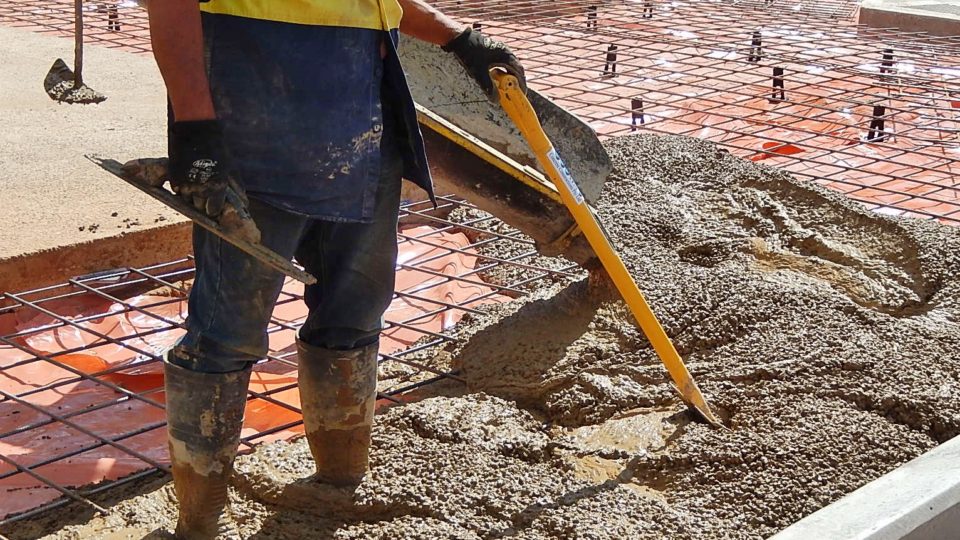
Conspicuous Consumption

February 6, 2020 By EarthWise 2 Comments

human consumption and the circular economy

Human civilization consumes vast amounts of material.   The Circle Economy think tank actually puts some numbers on it.  According to their latest report, the amount of material consumed by humanity has passed 100 billion tons every year.  So, on average, every person on Earth uses more than 13 tons of materials per year.

That number has quadrupled since 1970, which is far faster than the population, which has only doubled during that time.  In the past two years alone, consumption has jumped by more than 8%.  While this has been going on, the proportion being recycled has been falling.

Of the 100 billion tons of materials, half of the total is sand, clay, gravel, and cement used for building, along with other minerals used for fertilizer.  Coal, oil and gas make up 15% and metal ores 10%. The final quarter are plants and trees used for food and fuel.  About 40% of all materials are turned into housing.  A third of the annual materials consumed remain in use, such as in buildings or vehicles.  But 15% is emitted into the atmosphere as greenhouse gases and a third is treated as waste.

The global emergencies of climate change and disappearing wildlife have been driven by the unsustainable extraction of fossil fuels, metals, building materials, and trees.  The authors of the report warn that if we continue to treat the world’s resources as limitless, we are heading for a global disaster.

The Circle Economy think tank promotes the idea of a circular economy in which renewable energy supports systems where waste and pollution are reduced to zero.  Some nations are taking steps towards circular economies, while others are not.  This is a problem we can’t allow to be unaddressed.

**********

Web Links

World Consumes 100 Billion Tons of Materials Every Year, Report Finds

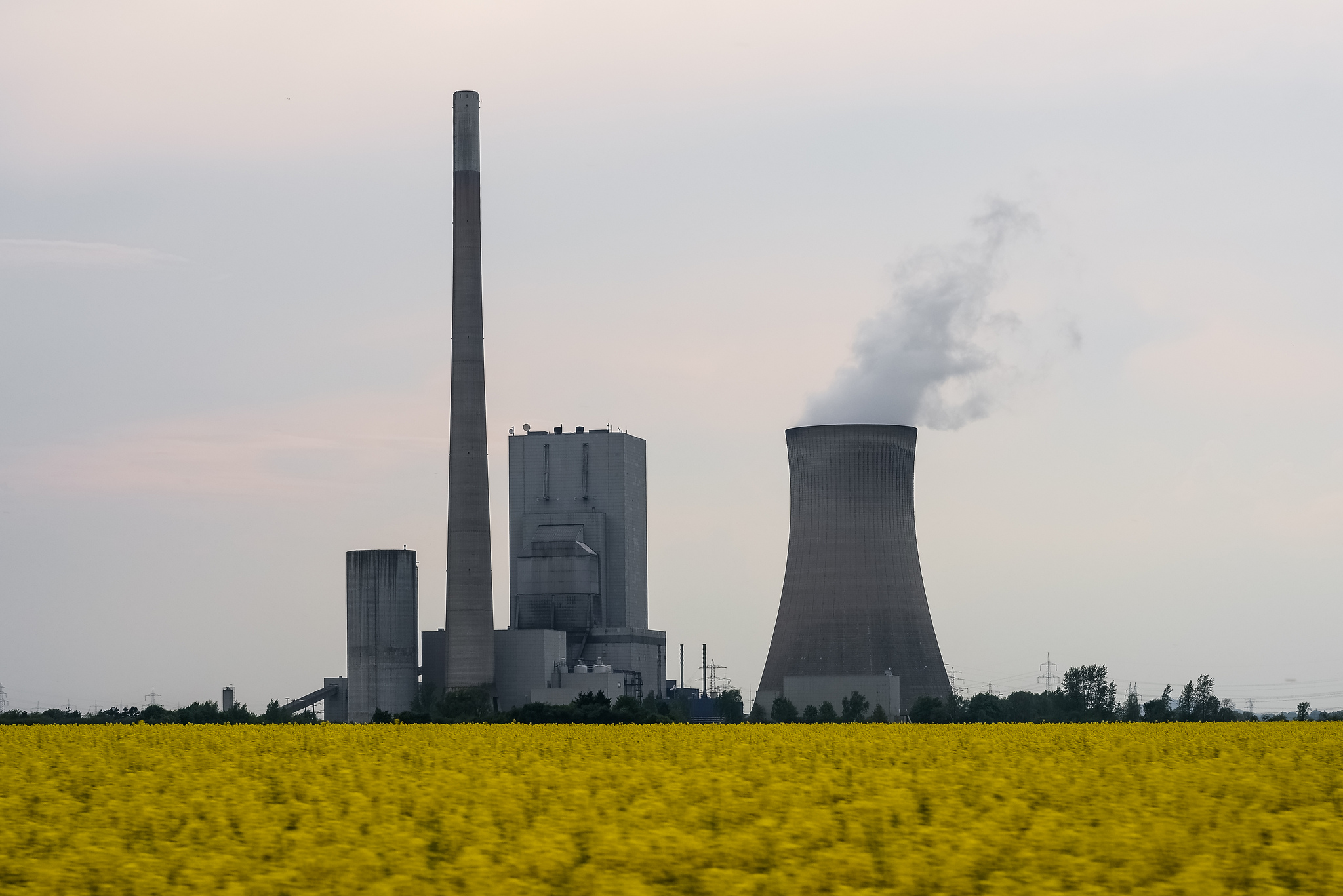
Photo, posted March 13, 2015, courtesy of Joyce Cory via Flickr.

XXXXXXXXXXX
Extreme Heat From Solar Power | Earth Wise

January 23, 2020 By EarthWise Leave a Comment

Renewable sources are playing a growing role in meeting our energy needs, but one place where they have continued to fall short is in industrial processes that require extreme heat.  These include the cement, steel, and glass industries, among others.  These industries account for a significant amount of CO2 emissions because the most effective way to reach the necessary temperatures continues to be combustion of fossil fuels.  The cement industry alone accounts for 7% of global emissions and the need for cement continues to grow.

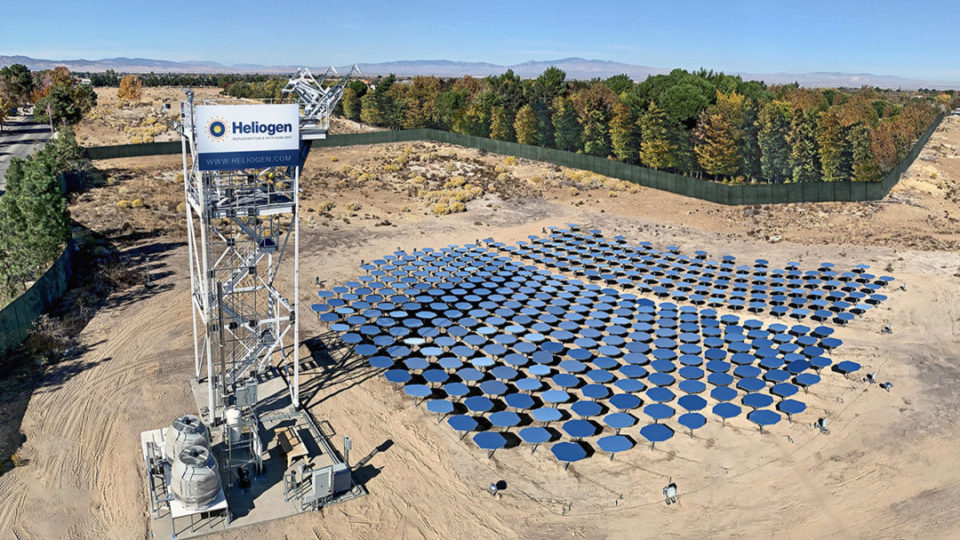
A previously stealthy startup company backed by Bill Gates and fellow billionaire Soon-Shiong has made a breakthrough in the area of using solar energy to achieve high temperatures.  The company, called Heliogen, has created a solar oven that is capable of generating heat above 1800 degrees Fahrenheit, which is enough for high-temperature industrial processes.

The Heliogen technology uses concentrated solar power to generate heat.  Concentrated solar power uses arrays of mirrors to reflect sunlight and focus it to a single point.  That technology is not new;  there are systems that use it to produce electricity and, to some extent, heat for industry.  But it could not achieve high enough temperatures for producing cement or steel.

The new system uses computer vision software, automatic edge detection and other sophisticated technologies to focus the sun’s rays far more finely than ever before and thereby generate far higher temperatures at the focal point.

Heliogen is now focused on demonstrating how the technology can be used in a large-scale application, such as cement-making.  The selling points to industry are that not only will there be no emissions generated, but that the fuel needed to obtain their extreme heat will be free.

**********

Web Links

Secretive energy startup backed by Bill Gates achieves solar breakthrough

Photo courtesy of Heliogen.

Earth Wise is a production of WAMC Northeast Public Radio.

Emissions-Free Cement

October 29, 2019 By EarthWise Leave a Comment

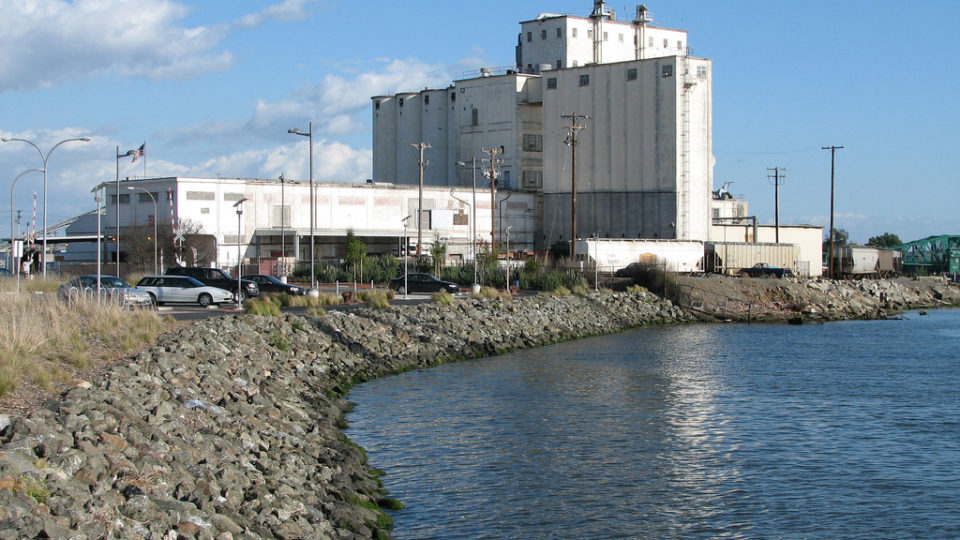
The production of cement – which is the world’s leading construction material – is a major source of greenhouse gas emissions, accounting for about 8% of global man-made emissions. 

Cement production produces carbon dioxide in two ways:  from a key chemical process and from burning fuel to produce the cement.  The process of making “clinker” – the key constituent of cement – emits the largest amount of CO2.  Raw materials, mainly limestone and clay – are fed into huge kilns and heated to over 2,500 degrees Fahrenheit, requiring lots of fossil fuel.  This calcination process splits the material into calcium oxide and CO2.  The so-called clinker is then mixed with gypsum and limestone to produce cement.

A team of researchers at MIT has come up with a new way of manufacturing cement that greatly reduces the carbon emissions.  The new process makes use of an electrolyzer, where a battery is hooked up to two electrodes in water producing oxygen at one electrode and hydrogen at the other.  The oxygen-evolving electrode produces acid and the hydrogen-evolving electrode produces a base.  In the new process, pulverized limestone is dissolved in the acid at one electrode and calcium hydroxide precipitates out as a solid at the other.

High-purity carbon dioxide is released at the acid electrode, but it can be easily captured for further use such as the production of liquid fuels or even in carbonated beverages and dry ice.  The new approach could eliminate the use of fossil fuels in the heating process, substituting electricity generated from renewable sources. 

The process looks to be scalable and represents a possible approach to greatly reducing one of the perhaps lesser known but nevertheless very significant sources of greenhouse gas emissions.

**********

Web Links

New approach suggests path to emissions-free cement

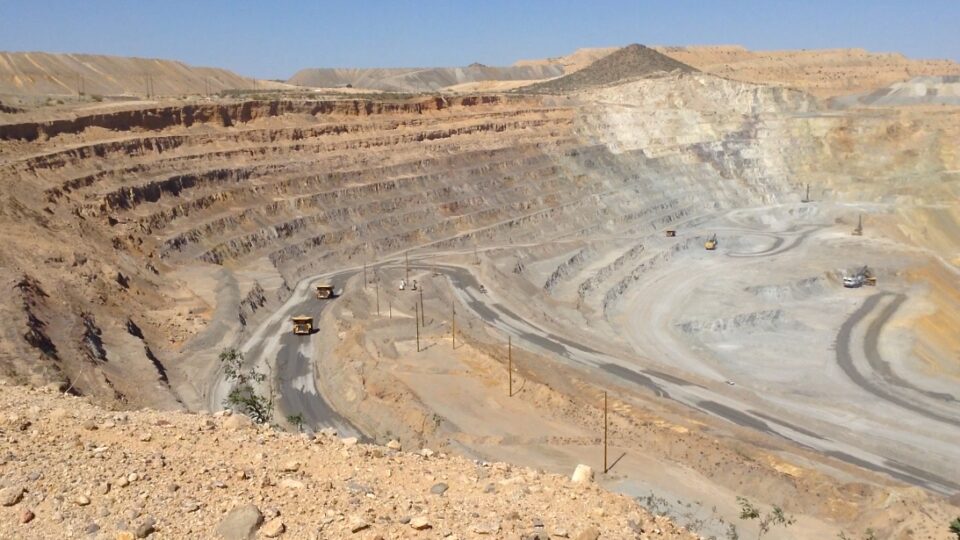
Photo, posted March 26, 2014, courtesy of Michael Coghlan via Flickr.

Earth Wise is a production of WAMC Northeast Public Radio.

Forecasting A Bad Year For Carbon

March 11, 2019 By EarthWise Leave a Comment

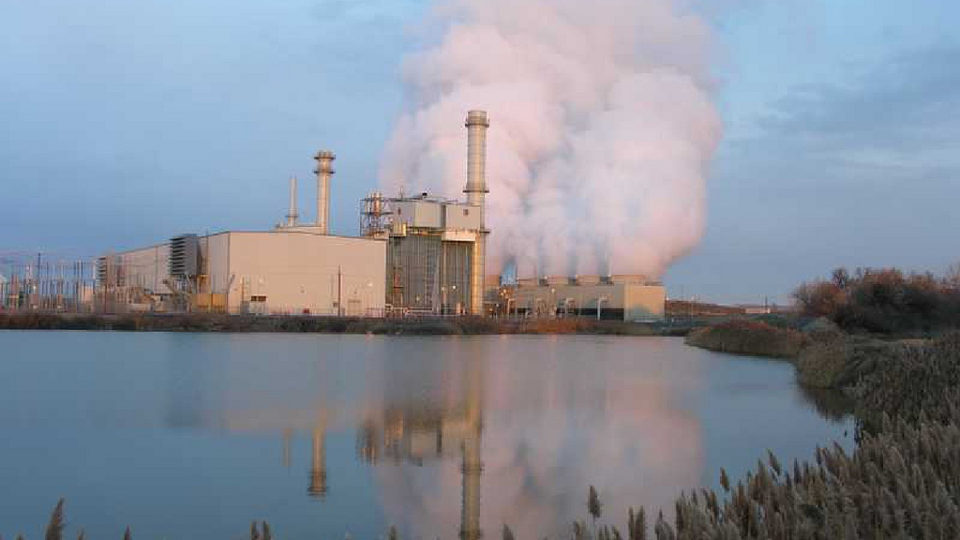
Carbon dioxide levels in the atmosphere are higher than they have been for hundreds of thousands of years, and they continue to grow.  The United Kingdom’s national meteorological service – known as the Met Office – issues annual predictions of global CO2 levels based in part on readings taken at the Mauna Loa observatory in Hawaii.  Their forecast for this year is that there will be one of the largest rises in atmospheric carbon-dioxide concentration in the 62 years of measurements at Mauna Loa.

Since 1958, there has been a 30% increase in the concentration of carbon dioxide in the atmosphere.  This has been caused by emissions from fossil fuels, deforestation and cement production.  The increase would actually have been even larger if it were not for natural carbon sinks in the form of various ecosystems that soak up some of the excess CO2.

Weather patterns linked to year-by-year swings in Pacific Ocean temperatures are known to affect the uptake of carbon dioxide by land ecosystems.  In years with a warmer tropical Pacific – such as El Niño years – many regions become warmer and drier, which limits the ability of plants to grow and to absorb CO2 .  The opposite happens when the Pacific is cool, as was the case last year.

The Met Office predicts that the contribution of natural carbon sinks will be relatively weak, so the impact of human-caused emissions will be larger than last year.  The predicted rise in atmospheric CO2 is 2.75 parts-per-million, which is among the highest rises on record.  The forecast for the average carbon dioxide concentration is 411 ppm, with peak monthly averages reaching almost 415 ppm.  With global emissions not really declining, the numbers just get higher and higher.

**********

Web Links

Faster CO₂ rise expected in 2019

Photo, posted March 18, 2006, courtesy of Darin Marshall via Flickr.

Earth Wise is a production of WAMC Northeast Public Radio.

Greener Concrete

August 23, 2018 By EarthWise 1 Comment

https://earthwiseradio.org/wp-content/uploads/2018/07/EW-08-23-18-Greener-Concrete.mp3

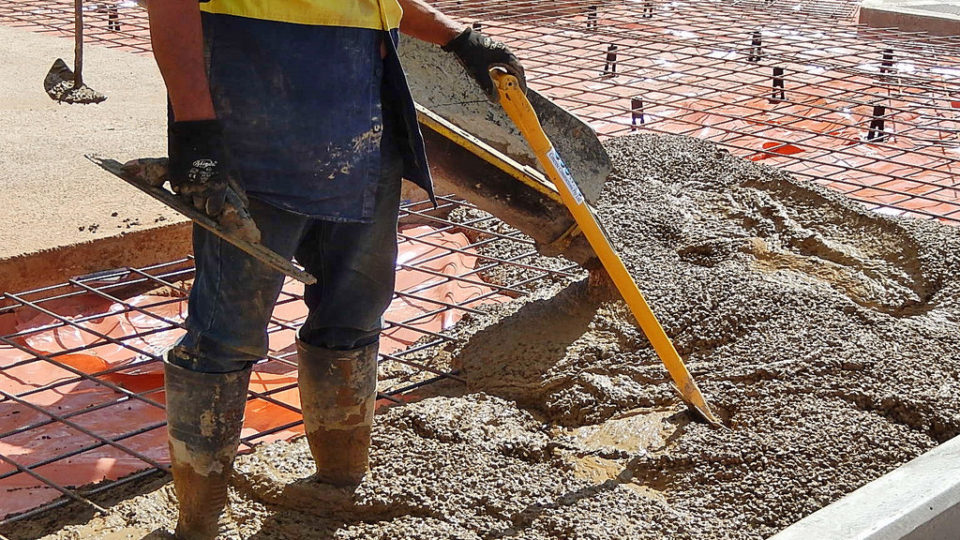
The battle to reduce carbon emissions is heavily focused on electricity generation, transportation, buildings, and agriculture, which collectively account for more than 75% of the total.  However, there are other sources of carbon emissions that cannot be ignored.  Among industrial activities, the production of cement is responsible for 7% of industrial energy use and is the second largest industrial emitter of carbon dioxide.  Making cement accounts for about 7% of global emissions.

[Read more…] about Greener Concrete

Clean Power Is Not Enough

August 17, 2018 By EarthWise Leave a Comment

https://earthwiseradio.org/wp-content/uploads/2018/07/EW-08-17-18-Clean-Power-is-Not-Enough.mp3

A recent study published in Nature Climate Change looked at what emission reductions are needed to meet the climate targets of the Paris Accords.  The results are sobering.

[Read more…] about Clean Power Is Not Enough

Lots Of Credit For Carbon Capture

March 23, 2018 By EarthWise Leave a Comment

https://earthwiseradio.org/wp-content/uploads/2018/03/EW-03-23-18-Lots-of-Credit-for-Carbon-Capture.mp3

These days, the federal government has mostly turned its back on efforts to mitigate climate change or, for that matter, to even recognize its existence.  However,the budget bill passed in February contained a major increase in the tax credit known as 45Q, which provides incentives to businesses to develop and utilize carbon capture, utilization and storage technologies.

[Read more…] about Lots Of Credit For Carbon Capture

Carbon Dioxide Marches On

June 21, 2017 By EarthWise

https://earthwiseradio.org/wp-content/uploads/2017/06/EW-06-21-17-Carbon-Dioxide-Marches-On.mp3

The end of 2013 marked the first occasional observations of carbon dioxide levels in the atmosphere of 400 parts per million.  There is nothing magical about that value, but we do tend to focus on round numbers.

[Read more…] about Carbon Dioxide Marches On

The Carbon XPrize

September 16, 2016 By WAMC WEB

https://earthwiseradio.org/wp-content/uploads/2016/08/EW-09-16-16-The-Carbon-XPrize.mp3

The Carbon XPrize is a five-year, $20 million competition to identify ways to convert carbon emissions into successful, profitable and useful products.  Forty-seven organizations from seven countries are competing for the prizes and include large companies, startups and university researchers.

[Read more…] about The Carbon XPrize

  • « Go to Previous Page
  • Page 1
  • Page 2

Primary Sidebar

Recent Episodes

  • An uninsurable future
  • Clean energy and jobs
  • Insect declines in remote regions
  • Fossil fuel producing nations ignoring climate goals
  • Trouble for clownfishes

WAMC Northeast Public Radio

WAMC/Northeast Public Radio is a regional public radio network serving parts of seven northeastern states (more...)

Copyright © 2026 ·