• Skip to primary navigation
  • Skip to main content
  • Skip to primary sidebar

Earth Wise

A look at our changing environment.

  • Home
  • About Earth Wise
  • Where to Listen
  • All Articles
  • Show Search
Hide Search
You are here: Home / Archives for biofuels

biofuels

Fuel from Corn Waste

June 27, 2025 By EarthWise Leave a Comment

Making fuel from corn waste

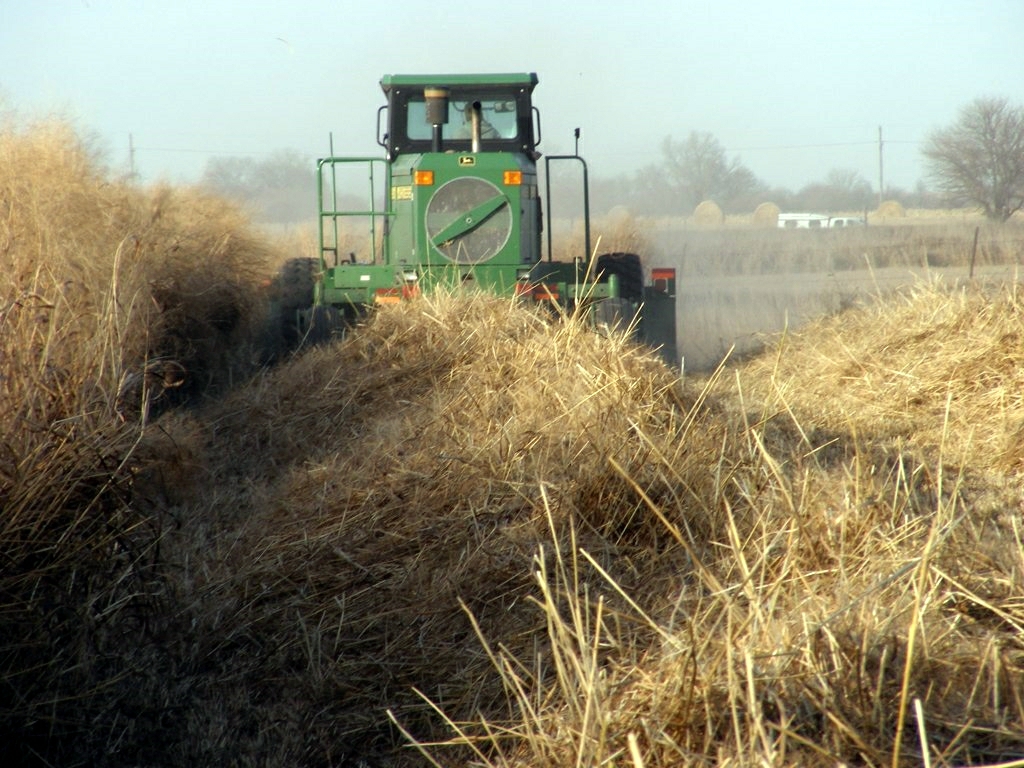
A substantial amount of corn is grown in this country for the purpose of producing ethanol.  The value of doing so is debatable for many reasons.  Nevertheless, the majority of the corn crop is grown for food.  But along with all that corn, there is corn stover.  Stover is the dried stalks, leaves, and other plant parts that remain in the field after the corn itself has been harvested.  Corn stover is the largest quantity of biomass residue in the United States.  Around 250 million tons of it is produced annually and the majority of it is left unused.  Some is used for animal feed and other purposes and has monetary value, but much of it goes to waste.

Scientists at Washington State University have developed a way to produce low-cost sugar from stover that can be used to make biofuels and other bioproducts.

Corn stover is an abundant and cheap source of biomass, which holds great potential as a source of energy and valuable chemicals.  The challenge is to overcome the high cost of processing stover whose complex structural molecules like cellulose and lignin need to be broken down.

The new process uses potassium hydroxide and ammonium sulfite to convert stover into a sugar.  It is a mild-temperature process that allows enzymes to break down the cellulosic polymers in stover into sugar, which can then be fermented into biofuels.  The resulting sugar from the process would be cost-competitive with low-cost imported sugars. The researchers estimate that their patent-pending process could produce sugar that could be sold for as low as 28 cents per pound.

**********

Web Links

Scientists discover a new way to convert corn waste into low-cost sugar for biofuel

Photo, posted August 30, 2012, courtesy of Idaho National Laboratory Bioenergy Program via Flickr.

Earth Wise is a production of WAMC Northeast Public Radio

Scrubbers to clean up shipping

May 1, 2025 By EarthWise Leave a Comment

Cargo ships are significant sources of global air pollution because of their fuel oil.  Most ships burn heavy fuel oil that is loaded with sulfur, so when it is burned it produces noxious gases and fine particles that can harm human health and the environment.  The International Maritime Organization enacted a mandatory cap of 0.5% for the sulfur content of marine fuels in 2020.  Heavy fuel oil has a sulfur content of 2 to 3 percent.

Shipping companies can comply by burning low-sulfur fossil fuels or biofuels, but these are much more expensive.  The most feasible and cost-effective option is to install exhaust gas cleaning systems, known as scrubbers. 

A scrubber is a huge metal tank installed in a ship’s exhaust stack.  Seawater is sprayed from nozzles to wash the hot exhaust.  The seawater reacts with sulfur dioxide and converts it to sulfates, which are environmentally benign natural components in seawater.

A study by the National Technical University of Athens in Greece has performed a lifecycle assessment of the use of scrubbers and has found that burning heavy fuel oil with the use of scrubbers can match or even surpass the benefits of using low-sulfur fuels.

Producing low-sulfur fuel causes additional greenhouse gas and particulate matter emissions in refineries. On the other hand, scrubbers reduce sulfur dioxide emissions by 97% and dramatically reduce other pollutants as well.

The study shows the importance of incorporating lifecycle assessments into evaluation of environmental impact reduction policies.

**********

Web Links

Study: Burning heavy fuel oil with scrubbers is the best available option for bulk maritime shipping

Photo, posted August 3, 2015, courtesy of Lotsemann via Flickr.

Earth Wise is a production of WAMC Northeast Public Radio

How To Meet Protected Land Targets | Earth Wise

March 30, 2023 By EarthWise Leave a Comment

How to meet protected land targets

More than half of the world’s countries have set a target of setting aside 30% of land and sea areas across the globe for conservation by 2030, in order to preserve and protect nature and essential services to people.  This pledge creates some difficult questions to answer.

What sorts of land should be protected and where should it be located?  What effects of these new land protections will there be on carbon emissions and the climate and on land usage for food production and energy generation?  Policymakers have to grapple with such questions in order to move forward on these ambitious biodiversity protection goals.

A recent study by the Lawrence Berkeley National Laboratory attempts to answer many of these questions.  The study found that meeting the 30% goal could lead to substantial regional shifts in land use and, in some cases, still fail to protect some of the most important biodiversity hotspots.

Protecting land entails tradeoffs with other land uses and can have negative impacts on the agricultural sector as well as land use for bioenergy crops and forest land use for timber.

In particular, the study found that the amount of land used for crops for conversion into biofuels could be significantly impacted by doubling current protected areas while still preserving the amount of land used for food crops.  This is particularly true for land in Russia and Canada.

The study also found that while it may be possible to meet the 30% target by only protecting agriculturally unsuitable land, it may not end up protecting many of the world’s 36 identified biodiversity hotspots.  The uneven distribution of species has a significant bearing on how to manage the conservation of biodiversity.

**********

Web Links

Doubling Protected Lands for Biodiversity Could Require Tradeoffs With Other Land Uses, Study Finds

Photo, posted September 19, 2020, courtesy of John Brighenti via Flickr.

Earth Wise is a production of WAMC Northeast Public Radio

Primary Ways To Mitigate Climate Change | Earth Wise

May 30, 2022 By EarthWise Leave a Comment

How to mitigate climate change

The most recent report issued by the Intergovernmental Panel on Climate Change states that the world must halt the increase in greenhouse gases within three years, reduce emissions by 43% in the next seven years, and eliminate them entirely by 2050.  Otherwise, there will likely be catastrophic and irreversible impacts on the climate.

With respect to achieving these reductions, the report emphasizes decarbonizing the energy sector through electrification by replacing fossil fuels anywhere and everywhere possible.  Where that isn’t yet practical – such as in shipping and aviation – the use of biofuels and hydrogen can provide a stopgap until battery technology becomes a viable alternative.

The economics of this approach continue to improve.  Since 2010, the cost of wind, solar, and batteries has declined by as much as 85%.  In many cases, costs have fallen below those of fossil fuels.  Nonetheless, the report stresses that continuing to provide national, state, and local incentives for using renewable energy is a key factor in achieving the necessary reductions.

However, reducing emissions will no longer be enough.  This is the first major IPCC report that states that man-made carbon dioxide removal strategies will be necessary to meet the goals of the Paris Climate Agreement.  So-called natural carbon storage options, like planting trees and using farming methods that sequester carbon in soil, are also important parts of the strategy.

It is up to governments, policymakers, and investors to implement the necessary changes to mitigate climate change.  There is lots of talk about it, but it will take concerted action to avoid increasingly dire consequences.

**********

Web Links

Report highlights affordable, available ways to mitigate climate change now

Photo, posted September 8, 2007, courtesy of Kevin Dooley via Flickr.

Earth Wise is a production of WAMC Northeast Public Radio.

Making Use Of Invasive Seaweed | Earth Wise

June 26, 2020 By EarthWise Leave a Comment

In recent years, millions of tons of brown Sargassum seaweed have formed gigantic blooms stretching all the way across the Atlantic Ocean from West Africa to the Gulf of Mexico.  The seaweed has become a problem for shorelines in the Caribbean, the Gulf of Mexico, and the east coast of Florida.  The massive increase in seaweed populations is related to changes in ocean chemistry resulting from nutrients from fertilizer use entering the water as well as from changes to the climate affecting ocean currents and temperatures.  The seaweed is harming the tourism industry as well as fisheries and ocean ecosystems.

Cleaning up the seaweed that washes ashore is labor-intensive and therefore expensive.  A research team led by two British universities has developed a cheap and simple way to pre-process seaweed to facilitate making it into bulk chemicals and biofuels.  With the new process, cleaning up the seaweed can be both economically and environmentally viable.

Previous techniques for processing seaweed generally required removing it from the saltwater, washing it in fresh water, and drying it – all of which add significant costs.  The new technique makes use of catalysts to release sugars from untreated seaweed that feed a yeast to produce a palm oil substitute.  At the same time, the process creates heat and pressure, turning the residual materials into a bio-oil that can be processed further into fuels, and a high-quality, low-cost fertilizer.

Apart from getting economic value out of the seaweed that is collected, any plastic collected alongside the seaweed can be converted to useful materials as well. 

It appears that the seaweed scourge is here to stay, so finding an economically viable way to deal with it is a welcome development.

**********

Web Links

Solve invasive seaweed problem by turning it into biofuels and fertilisers

Photo, posted August 10, 2015, courtesy of Flickr.

Earth Wise is a production of WAMC Northeast Public Radio.

Plants Paying For Biofuels | Earth Wise

May 7, 2020 By EarthWise Leave a Comment

Plants can make biofuels cheaper

Biofuels are an important element in broader strategies to replace petroleum in transportation fuels like gasoline, diesel, and jet fuel.  The idea is that biofuels recycle carbon by getting it from growing plants rather than from fossil sources.  The biggest problem with biofuels is that they cost more than conventional petroleum fuels, so there is economic incentive to keep burning the fossil fuels.

One strategy to make biofuels cost competitive is to have the plants provide additional economic benefits beyond being a feedstock for fuel.  This in principle can be done by engineering plants to produce valuable chemical compounds, or bioproducts, as they grow.  Bioproducts include such things as flavoring agents and fragrances as well as biodegradable plastic.  These bioproducts can be extracted from the plants and then the remaining plant material can be converted to fuel. 

Researchers at Lawrence Berkeley National Laboratory recently published a study to determine what quantities of bioproducts plants need to produce to result in cost-effective biofuel production.

The study looked at a compound called limonene, which is used for flavoring and fragrance.  They calculated that if this compound was accumulated at 0.6% of the biomass dry weight, it would offer net economic benefits to biorefineries.  This corresponds to recovering 130 pounds of limonene from 10 tons of sorghum on an acre of land.

Such quantities are completely practical but, on the other hand, none of these substances are needed in huge quantities. Just six refineries could supply the world with limonene.  So, fuel crops would need to be engineered to produce a broad range of bioproducts to enable a viable cost-effective biofuel industry.

**********

Web Links

Making Biofuels Cheaper by Putting Plants to Work

Photo, posted September 28, 2019, courtesy of Michele Dorsey Walfred via Flickr.

Earth Wise is a production of WAMC Northeast Public Radio.

Plant-Based Jet Fuels

May 9, 2019 By EarthWise Leave a Comment

The global aviation industry uses a whole lot of fuel:  more than 5 million barrels a day.  It is an incredibly energy-intensive industry and almost all of its energy comes from petroleum-based fuels.

While other large energy sectors such as electric power, ground transportation and commercial buildings have well-defined pathways to adopting renewable energy sources, the aviation industry does not have such a straightforward way to make a transition to sustainability.  Electrifying planes using batteries or fuel cells is very challenging for a number of reasons, notably the weight restrictions on aircraft.  So liquid biofuels as replacements for petroleum-based fuels remain the most promising approach.

A new study at the Lawrence Berkeley National Laboratory concludes that sustainable plant-based biofuels could provide a competitive alternative to conventional petroleum fuels if current development and scale-up initiatives are successful.

Multidisciplinary teams based at the Department of Energy’s Joint BioEnergy Institute are focused on optimizing each stage of the bio-jet fuel production process.  This includes bioengineering ideal source plants and developing methods for efficiently isolating the carbohydrates in non-food biomass that bacteria can digest and bioconvert into fuel molecules.

The critical issue is cost.  The theoretical cost of bio-jet fuel has come down dramatically in recent years but is still around $16 a gallon.  The cost of standard jet fuel is about $2.50 a gallon.  So, the real challenge is bridging that gap.

Reducing the cost of the fuel could come both from the material and process improvements that are underway as well as by finding ways to turn the leftover lignin residuals from the bioconversion process into valuable chemicals. 

**********

Web Links

Bright Skies for Plant-Based Jet Fuels

Photo, posted March 28, 2009, courtesy of Yasuhiro Chatani via Flickr.

Earth Wise is a production of WAMC Northeast Public Radio.

Fighting Methane With Bacteria

June 14, 2018 By EarthWise Leave a Comment

https://earthwiseradio.org/wp-content/uploads/2018/06/EW-06-14-18-Fighting-Methane-with-Bacteria.mp3

Bacteria may have an important role to play in the effort to reduce greenhouse gas emissions.  A group of researchers at the University of Alberta are genetically engineering non-hazardous bacteria that consume methane and turn it into fuel.

[Read more…] about Fighting Methane With Bacteria

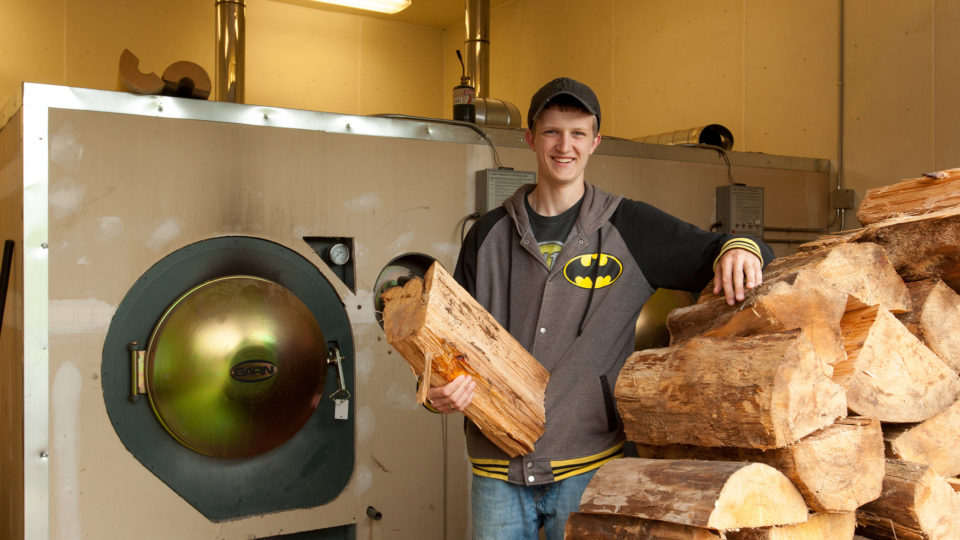
Renewable Energy From Wood

April 5, 2018 By EarthWise Leave a Comment

https://earthwiseradio.org/wp-content/uploads/2018/04/EW-04-05-18-Renewable-Energy-from-Wood.mp3

Biofuels are fuels produced through contemporary biological processes rather than geological processes such as those involved in the formation of fossil fuels.

[Read more…] about Renewable Energy From Wood

Making Biofuel Cost Effective

June 14, 2017 By EarthWise

https://earthwiseradio.org/wp-content/uploads/2017/06/EW-06-14-17-Making-Biofuel-Cost-Effective.mp3

Biofuels are considered to be a sustainable alternative to fossil fuels.  However, they are generally more expensive than competing fossil fuels.   Government subsidies, such as we have for ethanol in this country, have been necessary to make biofuels competitive in the marketplace.

[Read more…] about Making Biofuel Cost Effective

A Better Way To Farm Algae

March 7, 2017 By EarthWise

https://earthwiseradio.org/wp-content/uploads/2017/03/EW-03-07-17-A-Better-Way-to-Farm-Algae.mp3

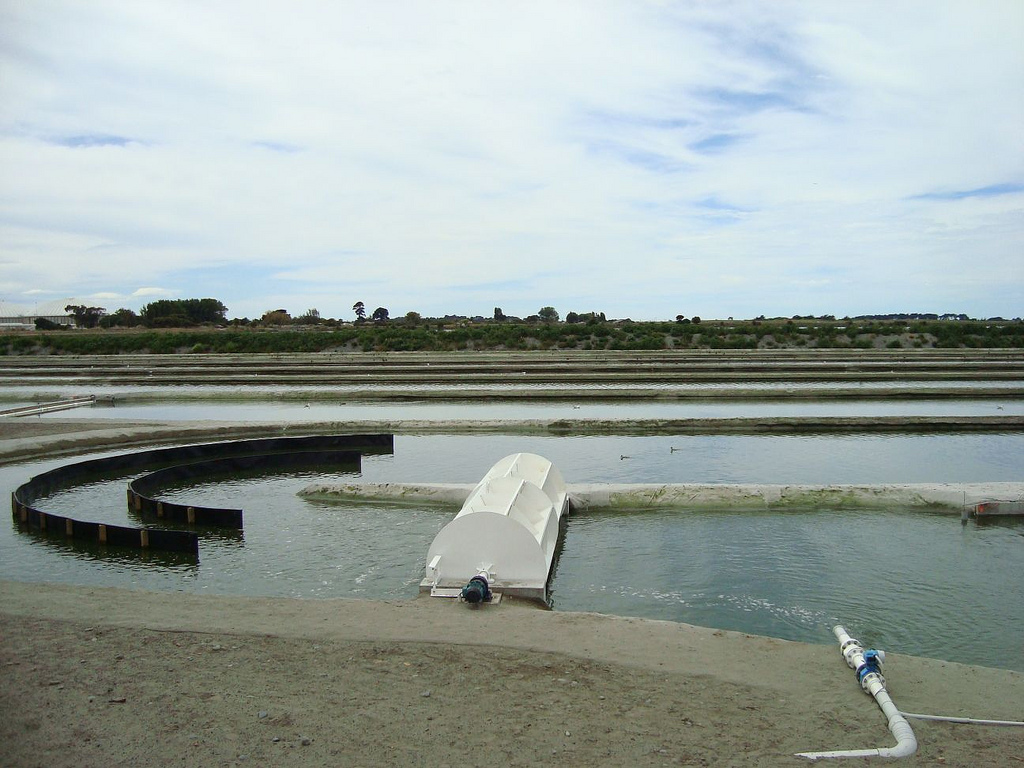
Microalgae biofuels may provide a viable alternative to fossil fuels.  Algae efficiently use CO2 and can produce biomass very quickly.  Some species can double their mass in as little as 6 hours.   Such single-celled organisms are amenable to high-throughput techniques to evolve new strains, unlike terrestrial biomass sources like corn which can take years to modify.

[Read more…] about A Better Way To Farm Algae

Reducing Emissions From Ships And Planes

June 28, 2016 By WAMC WEB

https://earthwiseradio.org/wp-content/uploads/2016/06/EW-06-28-16-Reducing-Emissions-Ships-and-Planes.mp3

The global efforts to reduce carbon emissions are marked by a conspicuous omission:  the aviation and shipping industries.  These two industries contribute 6% of all man-made CO2 emissions, but have so far managed to avoid international control.   And not only are they major sources of carbon emissions, their contributions are growing three times faster than overall global CO2 emissions.

[Read more…] about Reducing Emissions From Ships And Planes

Cheap Oil From Algae

November 13, 2015 By WAMC WEB

https://earthwiseradio.org/wp-content/uploads/2015/11/EW-11-13-15-Cheap-Oil-from-Algae.mp3

We have had all too many scary stories about algae and the threats it is posing to health and safety.  This time, for once, we have some good news about algae.

[Read more…] about Cheap Oil From Algae

Primary Sidebar

Recent Episodes

  • An uninsurable future
  • Clean energy and jobs
  • Insect declines in remote regions
  • Fossil fuel producing nations ignoring climate goals
  • Trouble for clownfishes

WAMC Northeast Public Radio
WAMC/Northeast Public Radio is a regional public radio network serving parts of seven northeastern states (more...)

Copyright © 2026 ·