• Skip to primary navigation
  • Skip to main content
  • Skip to primary sidebar

Earth Wise

A look at our changing environment.

  • Home
  • About Earth Wise
  • Where to Listen
  • All Articles
  • Show Search
Hide Search
You are here: Home / Archives for atlantic

atlantic

Global coral bleaching

May 22, 2024 By EarthWise Leave a Comment

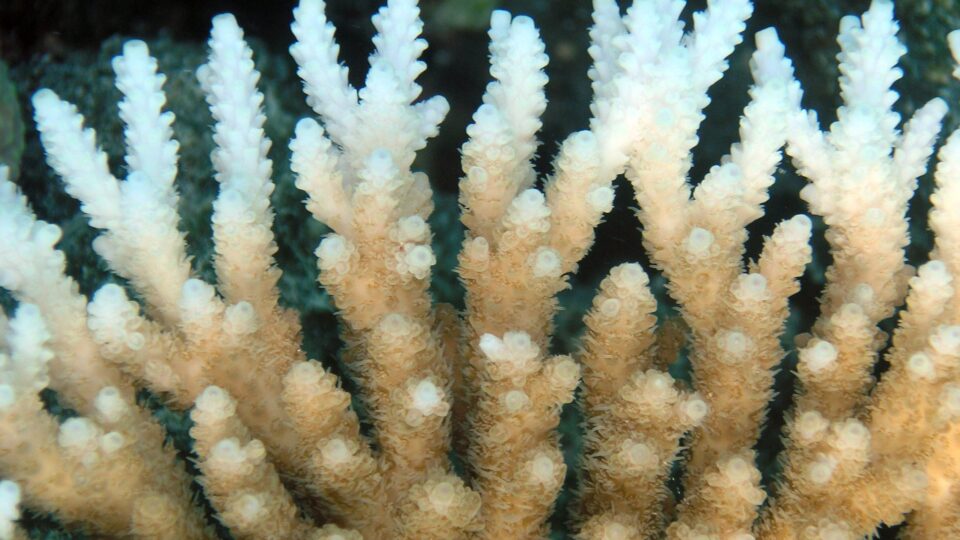
The world’s coral reefs are in the midst of a global bleaching event being driven by extraordinarily high ocean temperatures.  This is the fourth such global event on record and is predicted to be the largest one ever.  Coral bleaching occurs when corals are stressed by heat and eject the symbiotic algae within them that they need to survive.  Bleached corals can recover if water temperatures cool soon enough.  Otherwise, they die.

Each of the three previous coral bleaching events has been worse than the last.  The first, in 1998, affected 20% of the world’s reefs.  The second, in 2010, affected 35%.  The third, from 2014 to 2017, affected 56% of reefs.

The current bleaching event was confirmed by satellite observations early in April and was already seen to be affecting more than half of the world’s coral areas across the Pacific, Indian, and Atlantic Oceans.  The ongoing event is expected to be the worst bleaching ever experienced by Australia’s Great Barrier Reef.  A small saving grace is that the current bleaching event is not expected to be of extremely long duration because the El Niño in the Pacific has abated.

Coral bleaching events are becoming more severe and frequent due to increased marine heat waves driven by climate change.  Last year was particularly difficult for corals as global sea temperatures reached record high levels for several months.

Widespread coral bleaching impacts economies, livelihoods, food security, and more.  Coral reefs provide ecosystem services essential to marine life and human populations as well.  Global action will be needed for coral interventions and restorations.

**********

Web Links

Satellites watch as 4th global coral bleaching event unfolds

Photo, posted March 23, 2012, courtesy of Oregon State University via Flickr.

Earth Wise is a production of WAMC Northeast Public Radio
An active hurricane season

May 13, 2024 By EarthWise Leave a Comment

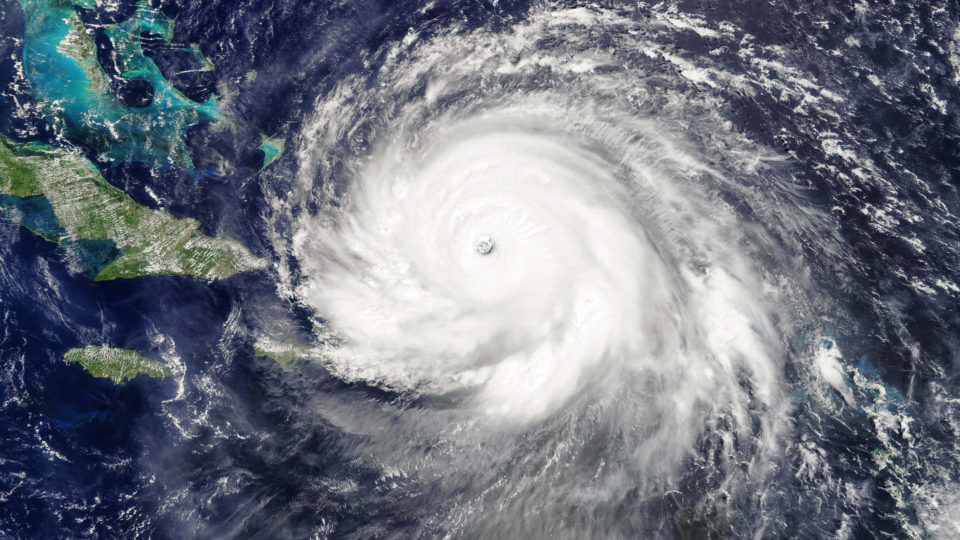
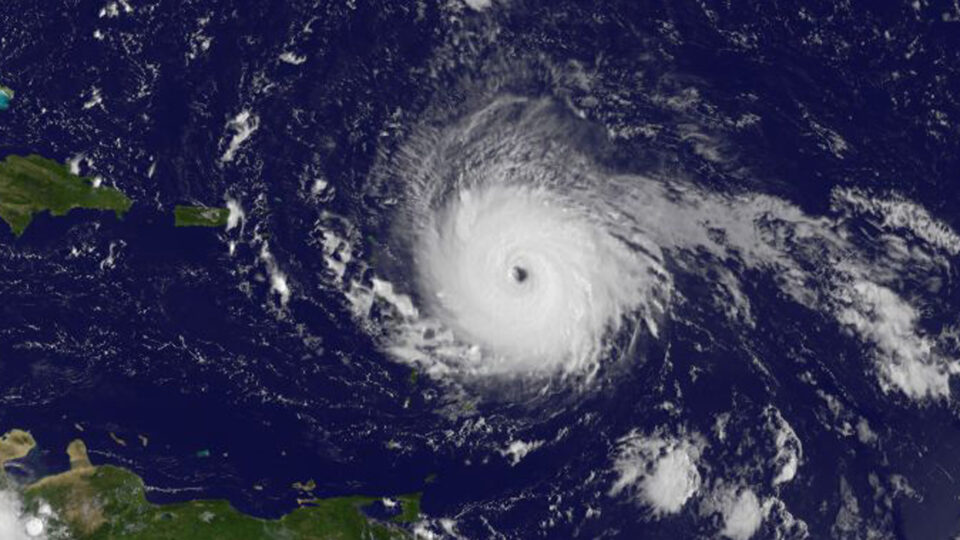
The Atlantic hurricane season officially runs from June 1st until November 30th.  Forecasters at Colorado State University have issued forecasts of Atlantic basin hurricane activity since 1984 based on the pioneering work of Professor William Gray.  This year’s forecast, issued in April, predicts a higher-than-average number of Atlantic storms.  In fact, it may be one of the most active seasons on record.

On average, there are 14 named storms each season.  This year, the prediction is for 23 of them.  On average, there are 7 hurricanes each season.  This year, the prediction is for 11. The prediction is for 5 major hurricanes among them.  These predictions are among the highest on record, although in 2020 they predicted 12 hurricanes.  In fact, that year there were 14 that actually took place.

Among the factors at play are that the El Niño that was occurring last year has dissipated and there is a good chance of a La Niña forming, which suppresses upper-level winds thereby making conditions ideal for hurricane formation and intensification.  But the overarching factor is global warming which is driving ocean temperature rise.  The water in the Atlantic, especially in the eastern Atlantic where most hurricanes form, has seen record-breaking warmth.  More warm water means more chances for storms.

Other research groups echo the predictions from Colorado State and, in some cases, see ever greater chances for an extremely active hurricane season.  The University of Pennsylvania forecast calls for 33 named storms.

The overall forecast is for a well above-average probability for major hurricanes making landfall along the continental United States coastline and the Caribbean. 

**********

Web Links

Weather tracker: US experts predict one of most active hurricane seasons on record

Photo, posted September 5, 2017, courtesy of NASA/NOAA GOES Project via Flickr.

Earth Wise is a production of WAMC Northeast Public Radio
Billion-Dollar Disasters | Earth Wise

October 5, 2023 By EarthWise Leave a Comment

As the climate changes, billion-dollar disasters are increasing

By the end of August, the United States had already broken the one-year record for the number of weather and climate disasters that caused more than $1 billion in damage.

According to the National Oceanic and Atmospheric Administration, through August there had already been 23 billion-dollar disasters.  The previous record of 22 had been set in 2020.  The 23 this year racked up $58 billion in damages.

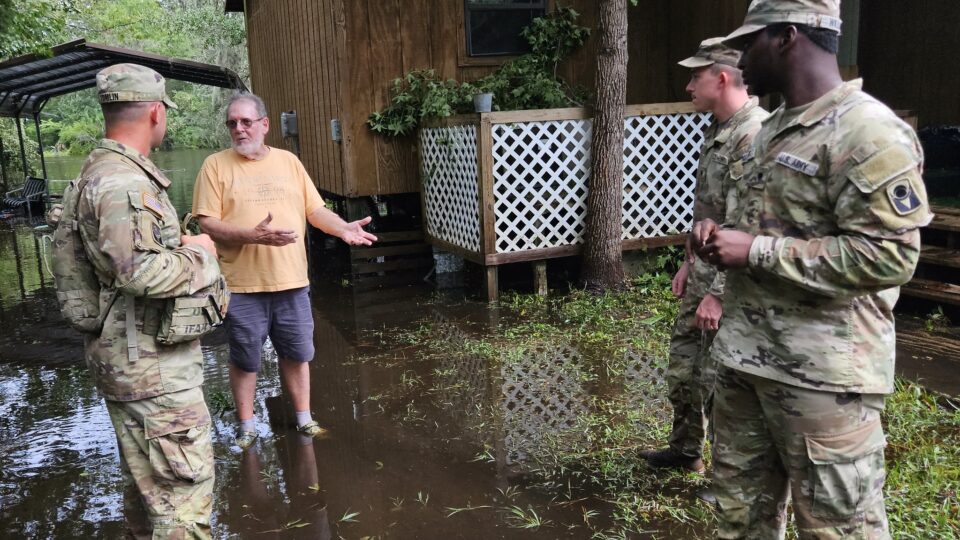
The unfortunate litany of events included two in August:  Hurricane Idalia, which struck Florida’s Big Bend region and the Lahaina fire storm on Maui.  Earlier in the year, winter storms in the Northeast, floods in California and Vermont, and 18 other severe storm events contributed to the record.

With a very active Atlantic hurricane season underway and the prospects for more wildfires in the west, it is likely that the record for billion-dollar disasters will climb even higher before the year ends.

The massive financial losses incurred this year highlight the need for more funding and attention to be directed toward climate resistance and adaptation.  The NOAA report urges policymakers to invest much more in getting out ahead of disasters before they strike rather than only looking for ways to help communities to pick up the pieces after disaster has struck.

Congress is currently considering $16 billion in additional funding for FEMA to keep the agency functioning in this very trying year.

As climate change continues to contribute to more intense storms and larger and more frequent wildfires, the price of adaptation and recovery efforts is likely to continue to grow.

**********

Web Links

2023 has already broken the US record for billion-dollar climate disasters

Photo, posted August 31, 2023, courtesy of Spc. Christian Wilson / The National Guard via Flickr.

Earth Wise is a production of WAMC Northeast Public Radio

Seaweed On The Way | Earth Wise

April 28, 2023 By EarthWise Leave a Comment

Massive blob of sargassum heading towards the Gulf of Mexico

A type of seaweed called sargassum has long formed large blooms in the Atlantic Ocean.  It gets its name from the Sargasso Sea in the western Atlantic.  Since 2011, scientists have been tracking massive accumulations of the stuff each year that starts out off the coast of Africa and works its way across the Atlantic to end up in the Gulf of Mexico. 

The amount of sargassum present each year can shift depending on factors like changes in nutrients, rainfall, and wind conditions.  But since the 1980s, nitrogen content in the Atlantic has gone up by 45%.  This is likely due to human activities such as agriculture and fossil fuel production dumping materials into the rivers that feed into the ocean.

According to recent observations, the mass of seaweed now heading for Florida and other coastlines throughout the Gulf of Mexico may be the largest on record.  The giant blob of sargassum spans more than 5,000 miles in extent.  It is moving west and will pass through the Caribbean and up into the Gulf during the summer.  The seaweed is expected to become prevalent on beaches in Florida around July.

The seaweed provides food and protection for fishes, mammals, marine birds, crabs, sea turtles, and more.  But unfortunately, when sargassum hits the beaches, it piles up in mounds that can be difficult to walk through and eventually emits a gas that smells like rotten eggs.

Tourist destinations in the Caribbean region have their work cut out for them to remove seaweed that can pile up several feet deep.  For example, in Barbados, locals were using 1,600 dump trucks a day to clean their beaches.  Caribbean and Florida resorts spend millions of dollars each year to remove sargassum seaweed.

**********

Web Links

A 5,000-mile-wide blob of seaweed is headed for Florida, threatening tourism across the Caribbean

Photo, posted February 24, 2020, courtesy of Bernard Dupont via Flickr.

Earth Wise is a production of WAMC Northeast Public Radio

Marine Predation And Climate Change | Earth Wise

July 11, 2022 By EarthWise Leave a Comment

Climate change is taking a toll on forests, farms, freshwater resources, and economies all around the world.  But ocean ecosystems remain the center of global warming.

Despite their vast ability to absorb heat and carbon dioxide, oceans are warming.  In fact, according to scientists, the oceans have absorbed 90% of all the warming that has occurred during the past 50 years. 

The ocean’s surface layer, which is home to most marine life, takes most of this heat.  As a result, the top 2,300 feet of global ocean water has warmed approximately 1.5°F since 1901.

Well it turns out that a hotter ocean is also a hungrier ocean.  According to a new study recently published in the journal Science, researchers discovered that predator impacts in the Atlantic and Pacific oceans peak at higher temperatures.  The effects of more intense marine predation could disrupt ecosystem balances that have existed for millennia. 

An international research team led by the Smithsonian Institution and Temple University analyzed predator and prey data collected from 36 sites, running along the Atlantic and Pacific coasts from Alaska in the north to Tierra de Fuego at the tip of South America.  The research team found that, in warmer waters, predators’ more voracious appetites left outsized marks on the prey community.  Total prey biomass plunged in warmer waters when prey were left unprotected.  However, in the coldest zones, leaving prey exposed or protected made nearly no difference at all.  

As the oceans continue to warm, more intense predation will create winners and losers and could jeopardize the overall health of marine ecosystems.  

***********

Web Links

As the ocean heats up hungrier predators take control

Photo, posted July 14, 2017, courtesy of Jonathan Chen via Flickr.

Earth Wise is a production of WAMC Northeast Public Radio.

Climate Change And Hurricanes In The Northeast | Earth Wise

February 9, 2022 By EarthWise Leave a Comment

Climate change making hurricanes in the Northeast more likely

According to a new study led by Yale University, more hurricanes are likely to hit Connecticut and the northeastern U.S. as global warming continues to increase temperatures in the region.

Hurricane Henri made landfall in August as a tropical storm on the Connecticut/Rhode Island border.  In September 2020, subtropical storm Alpha made landfall in Portugal, the first subtropical or tropical cyclone ever observed to make landfall in the mainland of that country.

Tropical cyclones, hurricanes, and typhoons are typically intense and destructive in the lower latitudes. 

The study concludes that violent storms could migrate northward in our hemisphere and southward in the southern hemisphere as a result of warming caused by greenhouse gas emissions.

The research predicts that tropical cyclones will likely occur over a wider range of latitudes than has been the case on Earth for the last 3 million years.

In Connecticut, Hurricane Henri was not the only tropical storm to affect the region in 2021.  The remnants of Hurricane Ida brought damaging winds and torrential rain that felled trees and flooded streets and basements.

The northern expansion of such violent storms is going on as water levels in the Atlantic Ocean and Long Island Sound keep rising.  Because of melting glaciers thousands of miles away, water levels in Long Island Sound could rise by as much as 20 inches by 2050, enough to submerge parts of Groton’s shore and cause regular flooding in roads and neighborhoods.

Future hurricane prediction is an inexact science, but the ongoing trends do not bode well for the region.

**********

Web Links

More hurricanes likely to slam Connecticut and region due to climate change, says study

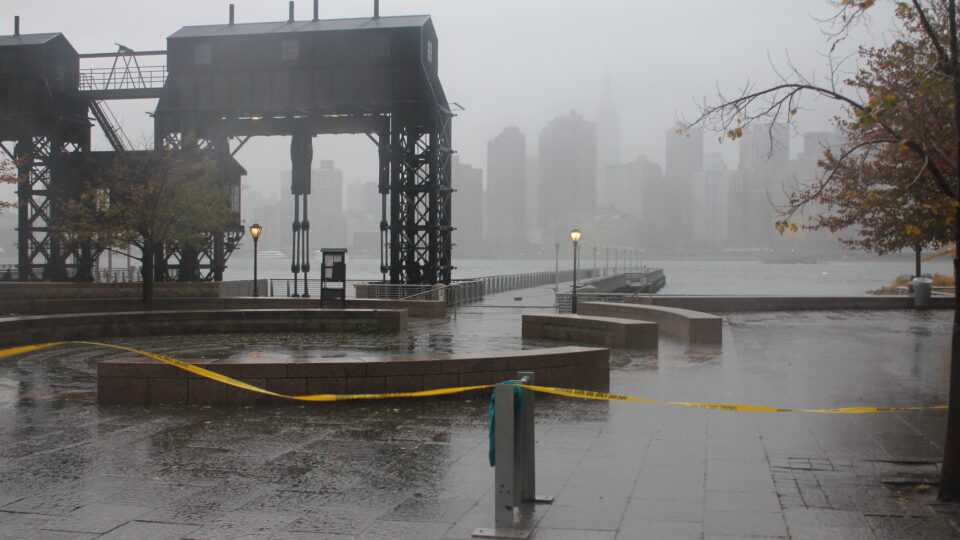
Photo, posted October 29, 2012, courtesy of Rachel via Flickr.

Earth Wise is a production of WAMC Northeast Public Radio.

Climate-Related Disasters | Earth Wise

January 27, 2022 By EarthWise Leave a Comment

Preparing communities for climate-related disasters

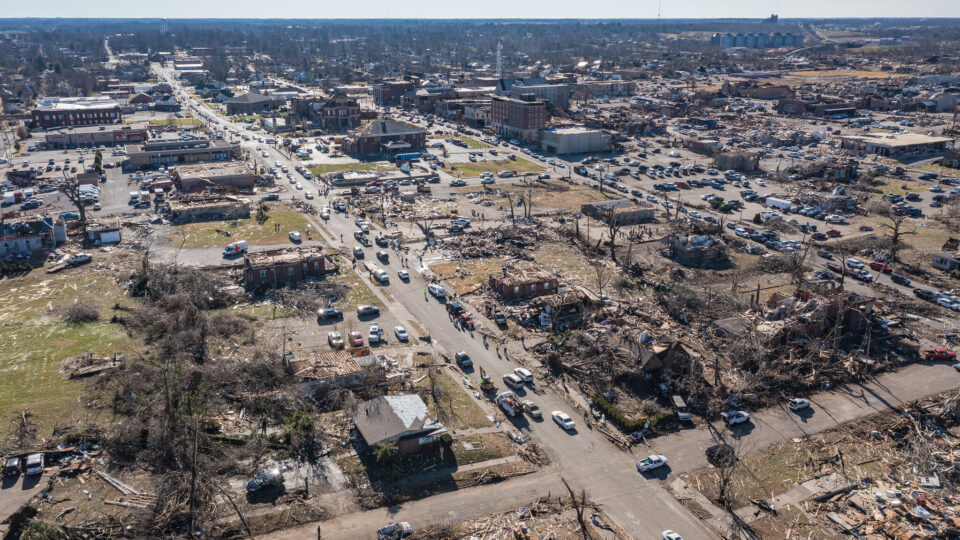
In early December, a series of tornadoes struck multiple states, killing nearly 100 people and producing widespread damage in whole communities.  These storms were at least the 19th weather or climate disaster that caused more than $1 billion in damage during 2021.  The year suffered from droughts, wildfires, severe cold snaps, hurricanes, and other severe weather incidents.

The Wharton Risk Management and Decision Processes Center at the University of Pennsylvania has been studying how communities can prepare for and bounce back from such disasters.

A key issue is that the location and timing of disasters continues to shift.  Homeowners along the Gulf and Atlantic coasts know that they need to prepare for and deal with hurricanes.  People who live in places like Oklahoma and Kansas are aware that tornadoes are a frequent threat.  But in recent years, strong storms are happening in areas where historically they haven’t.

Places need to start implementing changes to their infrastructure now in order to have an impact on risk reduction.

Presidential disaster declarations are just one part of recovery from disasters.  Other issues to grapple with are the role of government support and how it isn’t just the financial costs of disaster recovery but all the impact on human and other resources that are often not covered by governmental funds.  There is also the issue that low- and moderate-income households are disproportionately harmed and locked out of financial resources for recovery.

The Wharton study points out that innovative approaches will be needed to effectively prepare communities and individuals for disasters to come. 

**********

Web Links

Preparing, and paying for, climate change-induced disasters

Photo, posted December 12, 2021, courtesy of State Farm via Flickr.

Earth Wise is a production of WAMC Northeast Public Radio.

The Coastal Northeast Is A Hotspot | Earth Wise

November 16, 2021 By EarthWise Leave a Comment

Temperatures rising fast in the Coastal Northeast

Global warming is, obviously, a world-wide phenomenon.  When the concept of a 2 degrees Celsius temperature rise is discussed, it refers to the average global temperature and the effects that would have on such things as sea level rise and weather patterns.  But the effects of the changing climate are not homogeneous.  Very different things can happen and are happening in different places.

One such place is the coastal northeastern United States, which is a global warming hotspot.  The region is heating faster than most regions of North America and, indeed, 2 degrees of summer warming has already happened in the Northeast.

New research led by the University of Massachusetts Amherst has determined that this heating is linked to significant alterations in the ocean and atmospheric conditions over the North Atlantic.

Several studies have found that the Atlantic Meridional Circulation is slowing down.  The AMOC conveys warm, salty water from the tropics north towards Greenland, where it cools and sinks.  The cooled water than flows back south as deep-water currents.  As the warming climate melts glaciers in Greenland, the circulation slows down, less cooled water arrives in the south, and there is more heating of the ocean off the Northeastern coast.

At the same time, the North Atlantic Oscillation, a weather phenomenon that governs the strength and position of the winds that blow from the U.S. over the Atlantic, has tended to settle into a pattern that enhances the influence of ocean air on the eastern seaboard climate.  Warmer ocean air being blown over the region has led to rising temperatures in Boston, New York, and Providence, Rhode Island.

As the average temperature of the world rises, some places will warm more quickly and others more slowly.

**********

Web Links

The Coastal Northeastern U.S. Is A Global Warming Hotspot

Photo, posted August 8, 2010, courtesy of Doug Kerr via Flickr.

Earth Wise is a production of WAMC Northeast Public Radio.

July Was A Scorcher | Earth Wise

September 2, 2021 By EarthWise Leave a Comment

Record setting July 2021 was the hottest month ever

July 2021 has the unfortunate distinction as being the world’s hottest month ever recorded according to global data from the National Oceanic and Atmospheric Administration.   July is typically the warmest month of the year, but this July was the warmest month of any year on record.

The combined global land and ocean surface temperature was 62.07 degrees Fahrenheit, which is 1.67 degrees above the 20th century average.  This was the highest monthly average since records began 142 years ago.  It broke the previous record set in July 2016 and tied in 2019 and 2020.

The Northern Hemisphere was 2.77 degrees above average.  Asia had its hottest July on record.  Europe had its second hottest July on record.  Places like Africa, Australia, and New Zealand all had top-ten warmest Julys.

Other aspects of the changing climate included the observation that Arctic sea ice coverage for July was the fourth-smallest in the 43-year record.  Interestingly, Antarctic sea ice extent was actually above average in July.  Global tropic cyclone activity this year so far is above normal for the number of named storms.  In the Atlantic basin, the formation of the storm Elsa on July 1 was the earliest date for a 5th named storm.

It remains very likely that 2021 will rank among the 10 hottest years on record.  Extreme heat is a reflection on the long-term climate changes that were outlined recently in a major report released by the Intergovernmental Panel on Climate Change.  These latest global observations add to the disturbing and disruptive path that the changing climate has set for the world.

**********

Web Links

It’s official: July was Earth’s hottest month on record

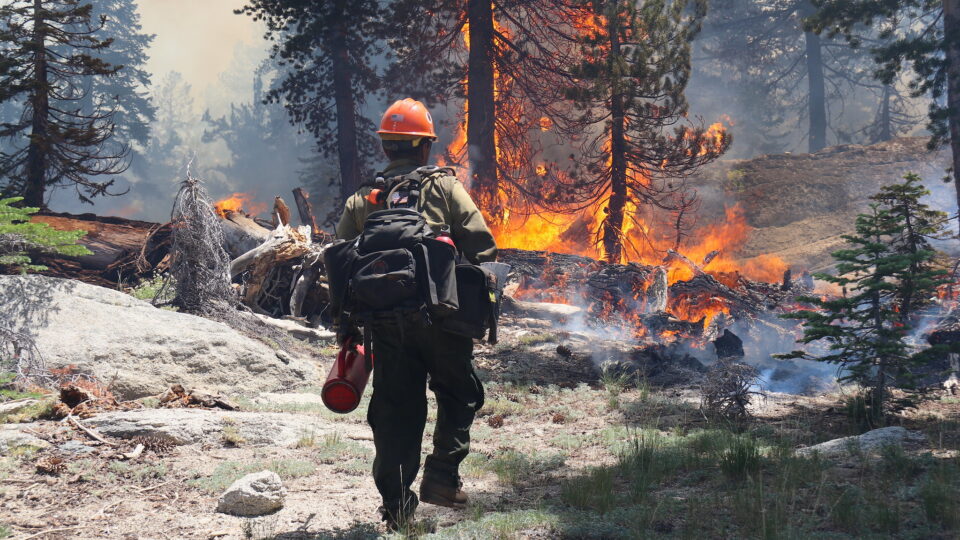
Photo, posted July 15, 2021, courtesy of Lori Iverson/National Interagency Fire Center via Flickr.

Earth Wise is a production of WAMC Northeast Public Radio.

California Offshore Wind | Earth Wise

June 28, 2021 By EarthWise Leave a Comment

Increasing support for California offshore wind

Offshore wind has been pretty much a non-starter in the U.S. until recently.  Now there is considerable activity in the Northeast Atlantic with major projects getting started off the coasts of Massachusetts, New York, and other eastern states.  The prospects for wind farms in the Pacific, on the other hand, have been pretty dismal.  There are significant logistical problems posed by a deep ocean floor and also opposition from the Navy that does not want obstacles for its ships.

A combination of progress in floating wind turbine technology and the arrival of an administration highly supportive of renewable energy technology has changed the situation.  In late May, the Navy abandoned its opposition to Pacific offshore wind and joined the Interior Department in giving support to allowing two areas off the California coast to be developed for wind turbines.

The plan allows commercial offshore wind farms in a 400-square-mile area in Morro Bay in central California, and in another area off the Humboldt Coast in Northern California.

The two California sites could support enough wind turbines to generate electricity to power 1.6 million homes.  That would make the California coast one of the largest generators of wind power in the world.  The forthcoming Vineyard Wind farm in Massachusetts is expected to have 84 giant turbines.  The two California sites could hold more than 300 turbines.

The offshore wind industry is booming around the world, especially near the coasts of Norway and the UK, where the water is shallow, and turbines can be anchored to the ocean floor.  By contrast, the Pacific Ocean floor drops steeply from the coastline, making it too deep to anchor wind towers.  The newly emerging technology of floating turbines is the key to establishing offshore wind in the Pacific.

**********

Web Links

Biden Opens California’s Coast to Wind Farms

Photo, posted August 7, 2013, courtesy of Ray Bouknight via Flickr.

Earth Wise is a production of WAMC Northeast Public Radio.

Sharks On The Decline | Earth Wise

September 4, 2020 By EarthWise Leave a Comment

shark populations declining

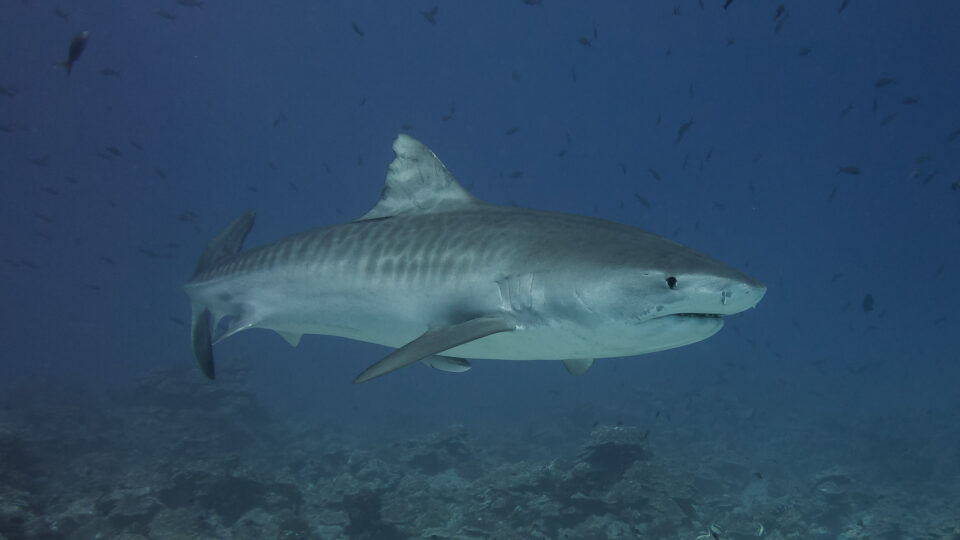
During the past 70 years, global shark populations have been on the decline.   Many species have become threatened or endangered.  Conservation efforts have been underway in many places, but shark populations continue to be at risk because of over-fishing and habitat loss.

A comprehensive study by marine biologists at Texas A&M University deployed more than 15,000 baited remote underwater video stations on 371 coral reefs in 58 countries.   The study included 59 different shark species in the Atlantic, Pacific and Indian Oceans.  The researchers were surprised to find that no sharks at all were detected in almost 20% of the locations surveyed and were almost completely absent from coral reefs in several nations. 

Scientists believe that demand for shark products, such as fins and meat, and bycatch (that is, sharks captured in nets by fisherman trapping other kinds of fish) are strong contributors to the widespread declines in shark numbers around the world.

The study shows that if corrective steps are not taken in regions where marine management is still ineffective, continued depletion of shark populations is highly likely. 

Sharks have important roles in marine ecosystems.  When their habitats deteriorate and their populations decrease, ecosystem stability and health is degraded because sharks help regulate prey populations.

Some countries, notably the Bahamas, are combating the problem by providing sanctuaries for sharks where fishing and harvesting is prohibited.  Such places support some of the healthiest shark populations in the world.  However, the decline of coral reefs is just another challenge facing shark populations around the world.

**********

Web Links

Study Shows Alarming Decline In Shark Numbers Around The World

Photo, posted January 9, 2017, courtesy of Kris-Mikael Krister via Flickr.

Earth Wise is a production of WAMC Northeast Public Radio.

Why The Arctic Is Warming So Fast | Earth Wise

April 7, 2020 By EarthWise Leave a Comment

rapid arctic warming

The Arctic has been warming at the fastest rate of any place on Earth.  There have long been observations of amplification of Arctic warming, meaning that its temperature increases have been well above what would be expected from the global temperature rise.

Many climate models have attributed this warming to the melting of sea ice.  As the bright white ice disappears for longer periods of the year, the dark surface waters that are exposed absorb sunlight rather than reflecting it back into space the way the ice does.  This is known as the ice-albedo feedback.  But it does not entirely explain the amount of warming in the Arctic.

Researchers at the Scripps Institution of Oceanography have developed a new theory that helps to explain what is going on.

In the areas of the Arctic Ocean where there is sea ice, the water is actually warmer at depth and colder near the surface.  The deeper waters are fed by the relatively warm Pacific and Atlantic Oceans while the surface water is cooled by the ice.  The increasing temperature difference between surface and deeper water causes a greater upward flow of heat.  This was first observed in research cruises that revealed evidence that the Arctic Ocean water was becoming more turbulent over time.

According to computer modeling, this phenomenon is responsible for about 20% of the amplification of global warming that occurs in the Arctic.

There are multiple ongoing studies looking at the Arctic warming trend.  Other factors that have contributed over time are the presence of chlorfluorocarbons in the atmosphere.   That contribution is waning since the use of CFCs has been phasing out over time.

**********

Web Links

Researchers Find New Reason Why Arctic is Warming So Fast

Photo, posted April 19, 2017, courtesy of Markus Trienke via Flickr.

Earth Wise is a production of WAMC Northeast Public Radio.

A First In The Climate Change Fight | Earth Wise

March 6, 2020 By EarthWise Leave a Comment

Under a new initiative, builders in New Jersey will have to take climate change into account in order to win government approval for projects.  New Jersey is the first state in the United States to enact such a requirement, which will leverage land-use rules to control what and where developers can build, and limit the volume of pollution. 

Through executive order, New Jersey Governor Phil Murphy will require the state Department of Environmental Protection to draft new building regulations.  The changes, to be adopted by January 2022, do not require legislative approval, but could face political and legal challenges. 

Climate change is expected to have a significant impact on New Jersey and its 130 miles of coastline.  According to a recent study from Rutgers University, the sea level along the New Jersey coast rose 1.5 feet since 1911, which was more than twice as much as the global average. The sea level is expected to rise by as much as another foot by 2030.  At the same time, some coastal areas of New Jersey are gradually sinking.

The initiative by New Jersey comes on the heels of a Trump administration proposal which would allow federal agencies to not take climate change into account when evaluating infrastructure projects. The federal changes are geared towards speeding up approvals for highway construction, pipelines, oil and gas leases, and other major infrastructure projects.   

In the absence of anything resembling leadership on climate change from the federal government, it remains for states like New Jersey to continue to press ahead.  In addition to the new building initiative, New Jersey also plans to produce 100% clean energy by 2050. 

**********

Web Links

Excluding Climate Change From Infrastructure Planning | Earth Wise

With 130-Mile Coast, New Jersey Marks a First in Climate Change Fight

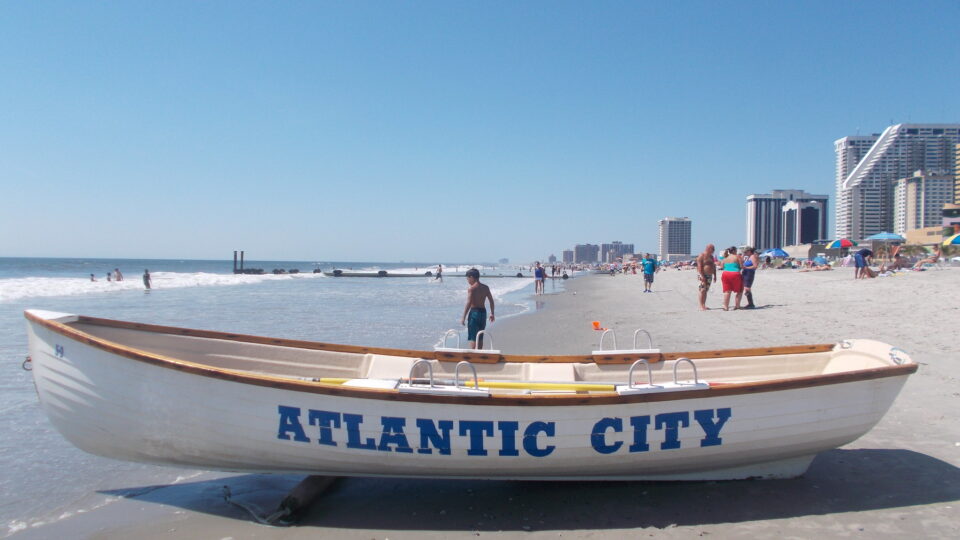
Photo, posted August 27, 2016, courtesy of Rashaad Jorden via Flickr.

Earth Wise is a production of WAMC Northeast Public Radio.

Can We Stop A Hurricane?

December 1, 2017 By EarthWise Leave a Comment

https://earthwiseradio.org/wp-content/uploads/2017/10/EW-12-01-17-Can-We-Stop-A-Hurricane.mp3

This has been a particularly terrible hurricane season.   Harvey, Irma, Jose, Maria, and Nate all formed in the Atlantic and headed for North America. People in Houston, Florida, all over the Caribbean, and especially Puerto Rico are trying to recover from the effects of these powerful storms.

[Read more…] about Can We Stop A Hurricane?

Tipping Points

August 9, 2017 By EarthWise

https://earthwiseradio.org/wp-content/uploads/2017/08/EW-08-09-17-Tipping-Points.mp3

A tipping point is a point in time when a small thing can make a big change happen.  The term was popularized in sociology in recent decades, but really comes from physics where is refers to adding a small amount of weight to a balanced object causing it to topple over.

[Read more…] about Tipping Points

Primary Sidebar

Recent Episodes

  • An uninsurable future
  • Clean energy and jobs
  • Insect declines in remote regions
  • Fossil fuel producing nations ignoring climate goals
  • Trouble for clownfishes

WAMC Northeast Public Radio
WAMC/Northeast Public Radio is a regional public radio network serving parts of seven northeastern states (more...)

Copyright © 2026 ·