• Skip to primary navigation
  • Skip to main content
  • Skip to primary sidebar

Earth Wise

A look at our changing environment.

  • Home
  • About Earth Wise
  • Where to Listen
  • All Articles
  • Show Search
Hide Search
You are here: Home / Archives for seals

seals

The largest iceberg runs aground

April 10, 2025 By EarthWise Leave a Comment

The largest iceberg in the world, which has been slowly drifting for nearly 5 years, has finally come to a halt.  The iceberg – called the unexciting name A-23A – came into existence in 1986 when it broke off from another iceberg A-23 that had calved or torn off from Antarctica earlier that year.  For decades, A-23A sat in the Weddell Sea, east of the Antarctic Peninsula.  Then, in 2020, it came loose from the seafloor and began to move.  By 2023, it finally left Antarctic Waters.

Late last year, it began spinning in place caught in an ocean current called a Taylor column.  Finally, it headed for South Georgia, a British-owned island that is home to a couple dozen people and lots of seals and penguins.  A-23A is now stuck on the continental shelf, about 50 miles from the island.

A-23A is around 1,300 square miles in area.  By comparison, New York City is 300 square miles.

Four years ago, a large iceberg called A-68A also came to ground in the vicinity of South Georgia.  It quickly broke apart and ultimately added 150 billion metric tons of fresh water to the ocean as well as various nutrients.  A-23A is also likely to succumb to the warmer waters, winds, and currents it now encounters and will affect the flora and fauna in the area.

The climate is changing and is impacting how ice shelves melt.  Calving and the creation of mammoth icebergs are a normal part of the lifecycle of polar ice sheets, but we are likely to see even more events like this in the future.

**********

Web Links

World’s Largest Iceberg Runs Aground

Photo, posted January 29, 2011, courtesy of Drew Avery via Flickr.

Earth Wise is a production of WAMC Northeast Public Radio
Polar bear population decline

March 13, 2025 By EarthWise Leave a Comment

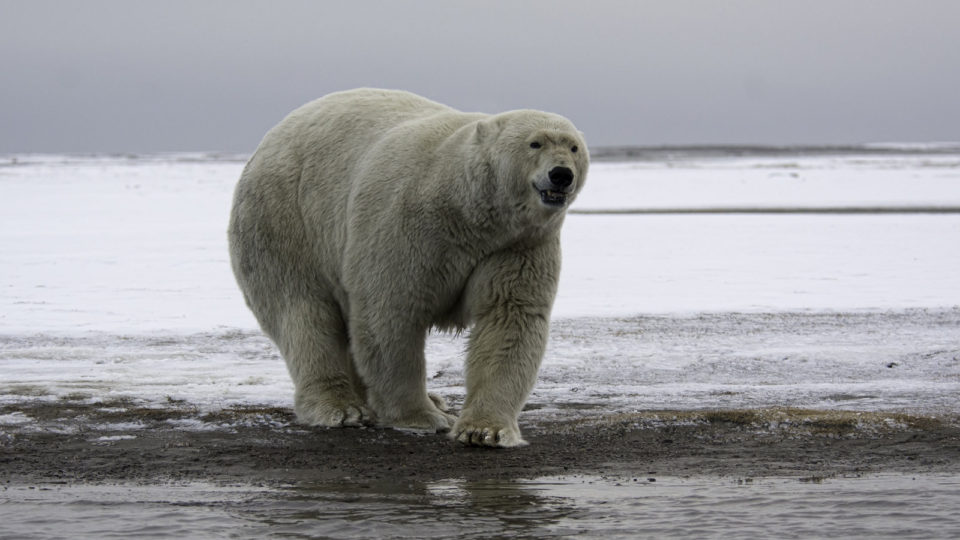
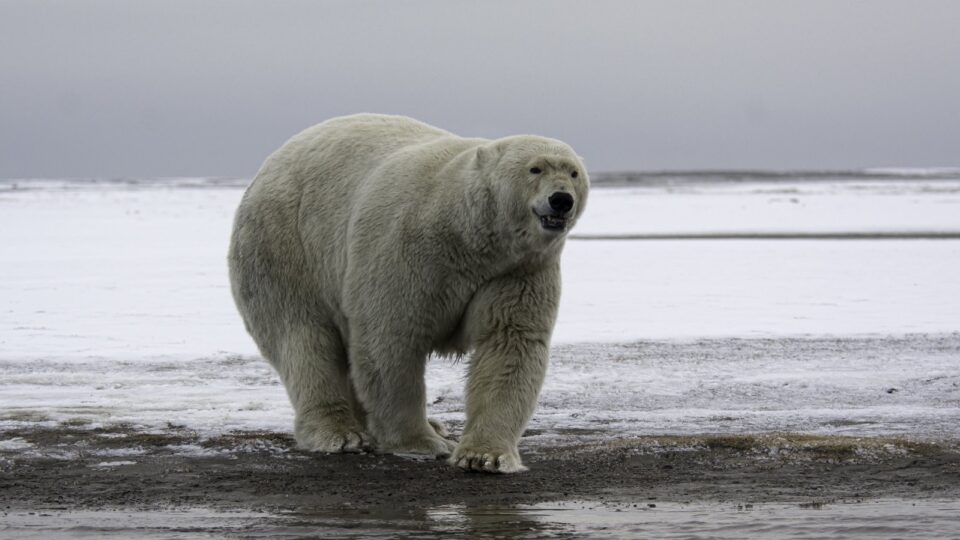
Researchers from the University of Toronto have directly linked the population decline in polar bears living in Canada’s Western Hudson Bay to climate change.  Between 1979 and 2021, the polar bear population in this region has declined by nearly 50%.

The monitoring data over this period shows that the average size of polar bears has declined, the size of cub litters has dropped, and cub survival rates are reduced.

The primary factor is the declining amount and duration of sea ice.  When there is less ice, bears have less feeding time and less energy overall.  The loss of sea ice means that bears spend less time hunting seals and more time fasting on land.  The lack of food leads to reduced reproduction, cub survival, and, ultimately, population decline. 

The average body mass of adult females has dropped by 86 pounds and of cubs by 47 pounds.  With shorter hunting periods and less food, mothers produce less milk.  Not only have cub litter sizes dropped over the monitoring period, but mothers are keeping their cubs longer because they are not strong enough to live on their own.  The bottom line is that the survival of cubs directly impacts the survival of the population.

Western Hudson Bay is considered to be a bellwether for polar bear populations globally.  It is one of the southernmost populations of polar bears and it has been monitored for a long time.  With the Arctic warming at a rate four times faster than the global average, polar bear populations in other Arctic regions are likely to be experiencing similar declines. 

**********

Web Links

Polar bear population decline the direct result of extended ‘energy deficit’ due to lack of food

Photo, posted October 23, 2015, courtesy of Anita Ritenour via Flickr.

Earth Wise is a production of WAMC Northeast Public Radio
An ice-free Arctic

April 9, 2024 By EarthWise Leave a Comment

A future ice-free Arctic is very likely as the climate warms

According to a new study by Colorado University, Boulder, the Arctic could see summer days with practically no sea ice as soon as sometime in the next few years.  Earlier predictions for when the first ice-free day in the Arctic could occur were sometime well into the 2030s.

By mid-century, the Arctic is likely to see an entire month without floating sea ice.  This would likely be in September, when ice coverage is at its minimum.  By the end of the century, the ice-free season could last for many months during the year.

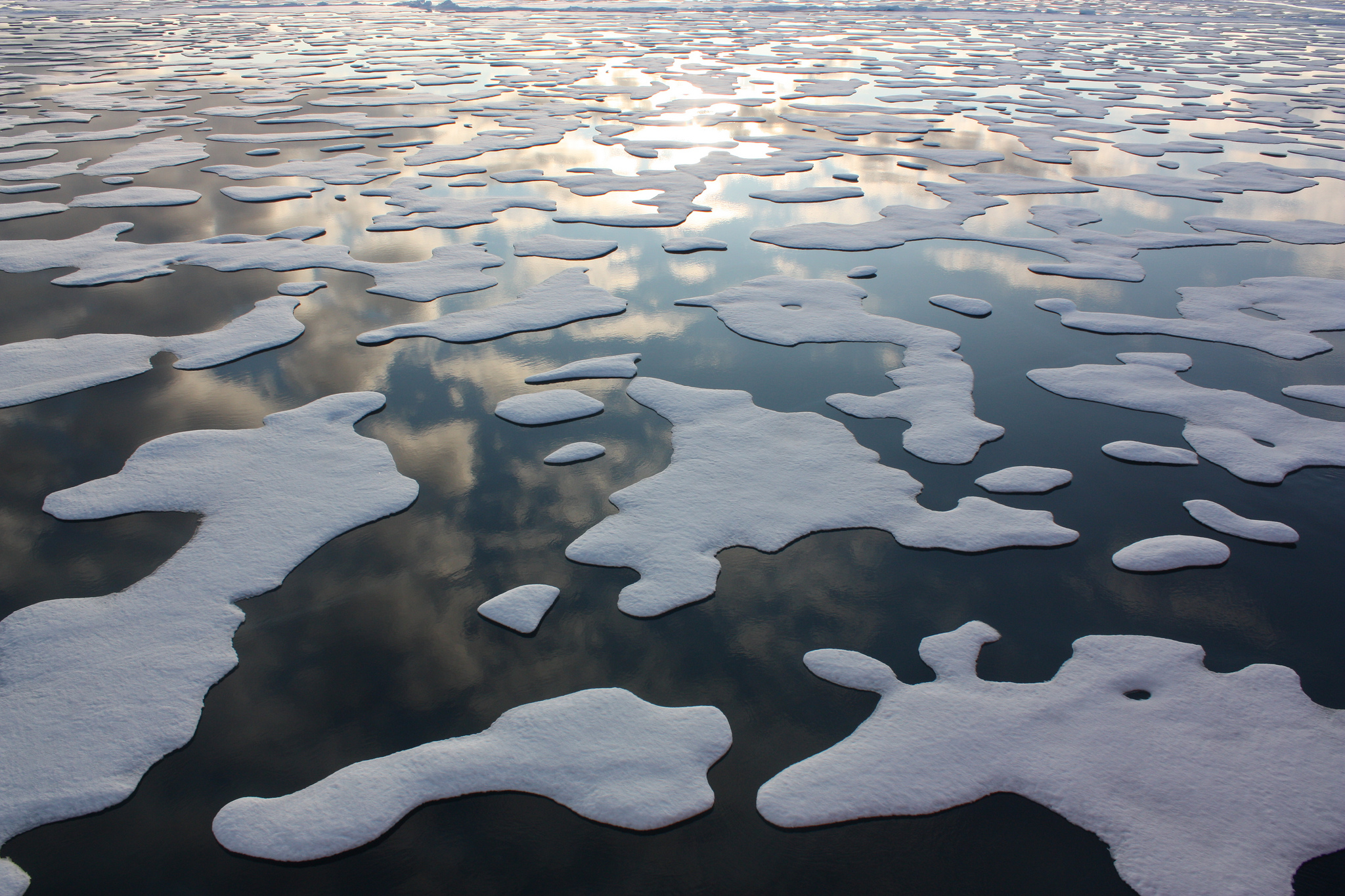
Technically, an ice-free Arctic does not mean zero ice in the water.  The working definition is less than 386,000 square miles of ice, which represents less than 20% of what the minimum ice coverage was in the 1980s. In recent years, the coverage has been about 1.25 million square miles.

Sea ice coverage is a big deal because many Arctic animals rely on sea ice for survival, including seals and polar bears.  With warmer ocean water, invasive fish species could move into the Arctic Ocean, upsetting local ecosystems.  Sea ice loss also is a risk for coastal communities because the ice buffers the impact of ocean waves on the coastal land.  As the ice retreats, ocean waves would get bigger, eroding the coasts.

At this point, an ice-free Arctic is basically inevitable, but its annual duration will depend on society’s efforts to reduce carbon emissions.  Lengthy periods of minimal sea ice would transform the Arctic into a completely different environment with global effects that are mostly highly undesirable.  However, Arctic sea ice is resilient and could return fairly quickly if the atmosphere cools down.

**********

Web Links

The Arctic could become ‘ice-free’ within a decade

Photo, posted July 9, 2022, courtesy of Reiner Ehlers via Flickr.

Earth Wise is a production of WAMC Northeast Public Radio
Polar bears and the changing climate

March 7, 2024 By EarthWise Leave a Comment

Polar bears struggling as the climate warms

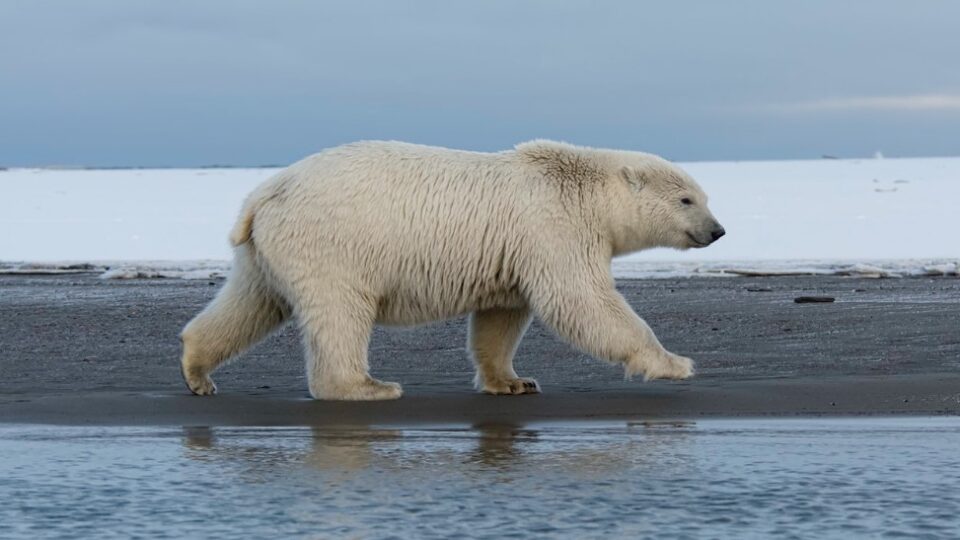
The changing climate poses a major threat to polar bear survival.  Polar bears, whose native range lies largely within the Arctic Circle, depend on sea ice for nearly all of their lifecycle functions.  Rising global temperatures are causing this sea ice to disappear.

With less sea ice, polar bears are forced to stay longer on land.  However, according to a new study led by researchers from Washington State University, more time stranded on land leads to a greater risk of polar bear starvation. 

During three summer weeks in Manitoba, Canada, 20 polar bears observed by researchers tried different strategies to maintain energy reserves.  But the research team found that nearly all of them lost weight – losing about 2.2 pounds per day on average.     

Some scientists have speculated that polar bears might be able to adapt to the changing climate by acting more like grizzly bears by either resting or eating terrestrial food.  But the polar bears tried versions of both strategies – with little success.

Polar bears can weigh nearly twice as much as grizzly bears.  To maintain this size, polar bears rely on the energy-rich fat of seals, which they best catch on ice.

In the study, which was recently published in Nature Communications, the researchers found that some polar bears laid down to conserve energy, while others searched on land for food.  But neither the activity nor the lack thereof paid off.  In fact, only one bear out of the 20 gained weight after stumbling across a dead marine mammal on land.

Polar bears across the Arctic are at risk of starvation as the ice-free period continues to grow.

**********

Web Links

Polar bears unlikely to adapt to longer summers

Photo, posted November 16, 2015, courtesy of Anita Ritenour via Flickr.

Earth Wise is a production of WAMC Northeast Public Radio
Return Of The Fin Whale | Earth Wise

August 15, 2022 By EarthWise Leave a Comment

Fin whales making a comeback

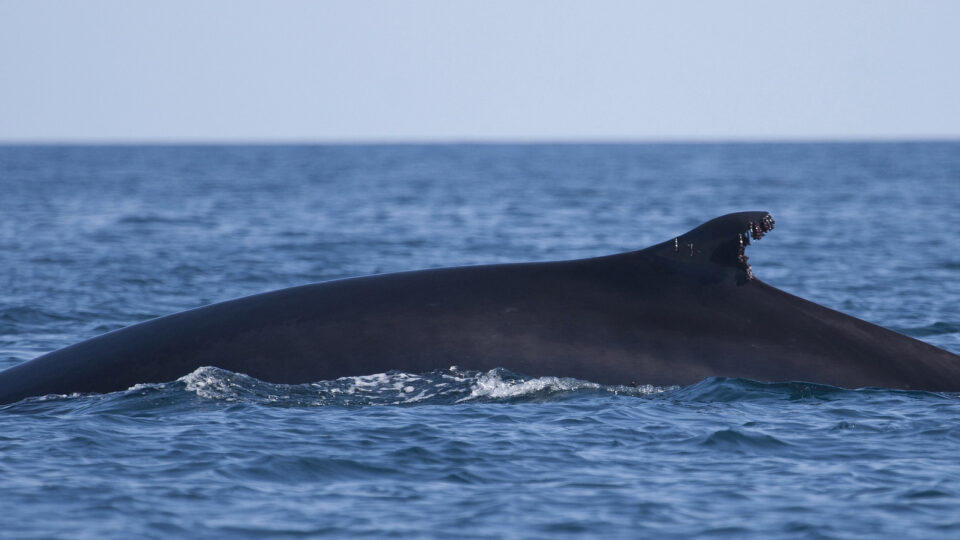
The fin whale is the second largest whale species and therefore the second largest creature on Earth.  They can grow to more than 80 feet in length.  From 1904 to 1976, there was massive industrial whaling in the Southern Ocean surrounding Antarctica.  During that period, whalers killed about 700,000 fin whales, reducing their population by 99%.  The species was nearly extinct.

In 1982, the International Whaling Commission voted to ban commercial whaling.  Since that time, fin whales started to make a comeback in their historical feeding grounds.

During a nine-week expedition in the waters around the Antarctic Peninsula, researchers encountered the largest gathering of fin whales ever documented.  About 150 fin whales were seen diving and lunging against the water’s surface.  It was a feeding frenzy triggered by large amounts of krill in the water.  The actions of the whales are known as a “whale pump” that drives the krill to the surface.  Not only does it provide huge amounts of food for the whales but also for other animals, including seabirds and seals.

Forty years after the commercial whaling ban, the number of fin whales has been increasing.  Large groups were observed in a 2013 survey.  Aerial surveys in 2018 and 2019 recorded 100 groups of fin whales, usually composed of a just a handful of individuals.  They did document eight large groups of up to 150 individuals.

Not all species of whales have rebounded so successfully since the whaling ban.  The rebound in fin whale population is not only good for the whales, but for the entire ecosystem in the Southern Ocean.  It is a glimmer of good news in a time of great challenges for global biodiversity and for marine life in particular.

**********

Web Links

Once Facing Extinction, Massive Fin Whales Have Returned to Antarctic Waters

Photo, posted November 15, 2007, courtesy of Gregory Smith via Flickr.

Earth Wise is a production of WAMC Northeast Public Radio.

Assessing Human-Caused Wildlife Mortality | Earth Wise

May 31, 2022 By EarthWise Leave a Comment

Assessing the impact humans have on wildlife mortality

Bycatch is the fishing industry term used to describe the deaths of non-target fish and ocean wildlife during the fishing process.  Some bycatch species are thrown away because regulations prohibit them from being kept.  Others are thrown out because they won’t fetch high enough prices.  According to some estimates, global bycatch amounts to about 10% of the world’s total catch. 

Approximately half of global bycatch is a result of trawling.  Trawling is a method of commercial fishing that involves pulling or dragging a fishing net – called a trawl – through the water or across the seabed in hopes of catching fish.  Commercial fishing companies favor towing trawl nets because large quantities of fish can be caught.  But the method is destructive to the seafloor and leads to the indiscriminate catch of all sorts of species, including whales, dolphins, porpoises, sharks, seals, rays, turtles, and seabirds. 

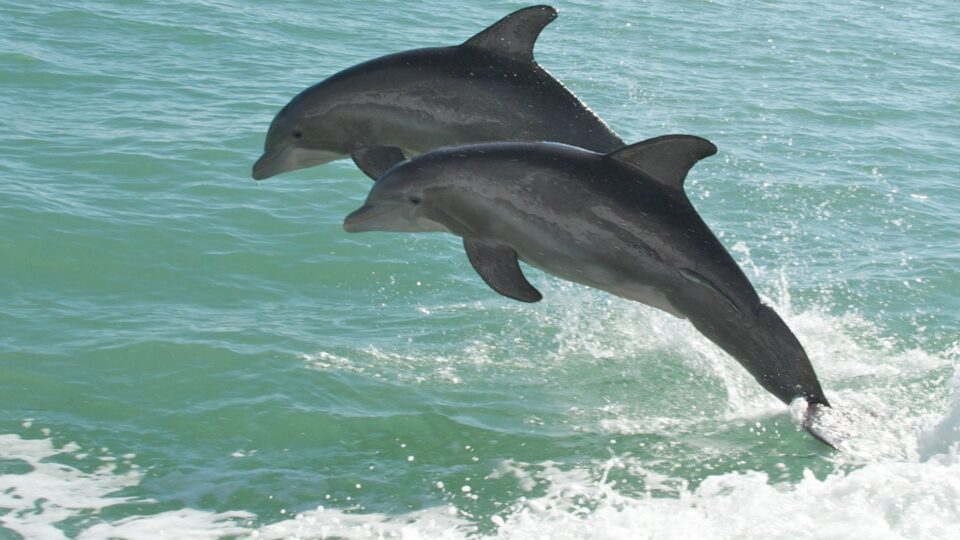
Researchers have developed a new method to assess the sustainable levels of human-caused wildlife mortality.  When this method is applied to a trawl fishery in Australia, it shows that the dolphin capture is not sustainable.  The study, led by scientists at the University of Bristol in the U.K. and United Arab Emirates University, modeled different levels of dolphin capture, including those reported in logbooks and those reported by independent observers.  According to the findings, which were recently published in the journal Conservation Biology, even the lowest recorded dolphin capture rates are not sustainable. 

The new approach is extremely adept at assessing human-caused mortality to wildlife, and can be applied to fisheries bycatch, hunting, lethal control measures, or even wind turbine collisions.

**********

Web Links

Wasted Catch

Dolphin bycatch from fishing practices unsustainable, study finds

Photo, posted May 18, 2011, courtesy of Pete Markham via Flickr.

Earth Wise is a production of WAMC Northeast Public Radio.

Polar Bears Are Struggling To Find Food

March 9, 2018 By EarthWise Leave a Comment

https://earthwiseradio.org/wp-content/uploads/2018/03/EW-03-09-18-Polar-Bears-Struggling.mp3

Climate change continues to pose a major threat to polar bear survival.  Polar bears, whose native range largely lies within the Arctic Circle, depend on sea ice for nearly all of their life cycle functions.  And rising global temperatures are causing that sea ice to disappear. 

[Read more…] about Polar Bears Are Struggling To Find Food

Melting Ice Adds Life To The Sea

May 19, 2017 By EarthWise

https://earthwiseradio.org/wp-content/uploads/2017/04/EW-05-19-17-Melting-Ice-Adds-Life-to-the-Sea.mp3

The changing climate has many effects upon the world’s ecosystems, some of which are surprising.  One of these relates to the effect of the increasing melting of ice in the Arctic.  The ice melt is leading to more life in the Arctic sea.

[Read more…] about Melting Ice Adds Life To The Sea

Why Do Animals Eat Ocean Plastic?

November 21, 2016 By WAMC WEB

https://earthwiseradio.org/wp-content/uploads/2016/11/EW-11-21-16-Ocean-Plastic-and-Animals.mp3

It’s no secret that there is a lot of plastic debris in our oceans.  In fact, scientists estimate that there is more than 165 million tons of plastic trash swirling about in our oceans today, with an additional 8.8 million tons flowing in every year.  And as the oceans swell with plastic litter, hundreds of marine species are ingesting the stuff – often with dire consequences.

[Read more…] about Why Do Animals Eat Ocean Plastic?

Sharks In Hot Water

August 25, 2016 By WAMC WEB

https://earthwiseradio.org/wp-content/uploads/2016/08/EW-08-25-16-Sharks-in-Hot-Water.mp3

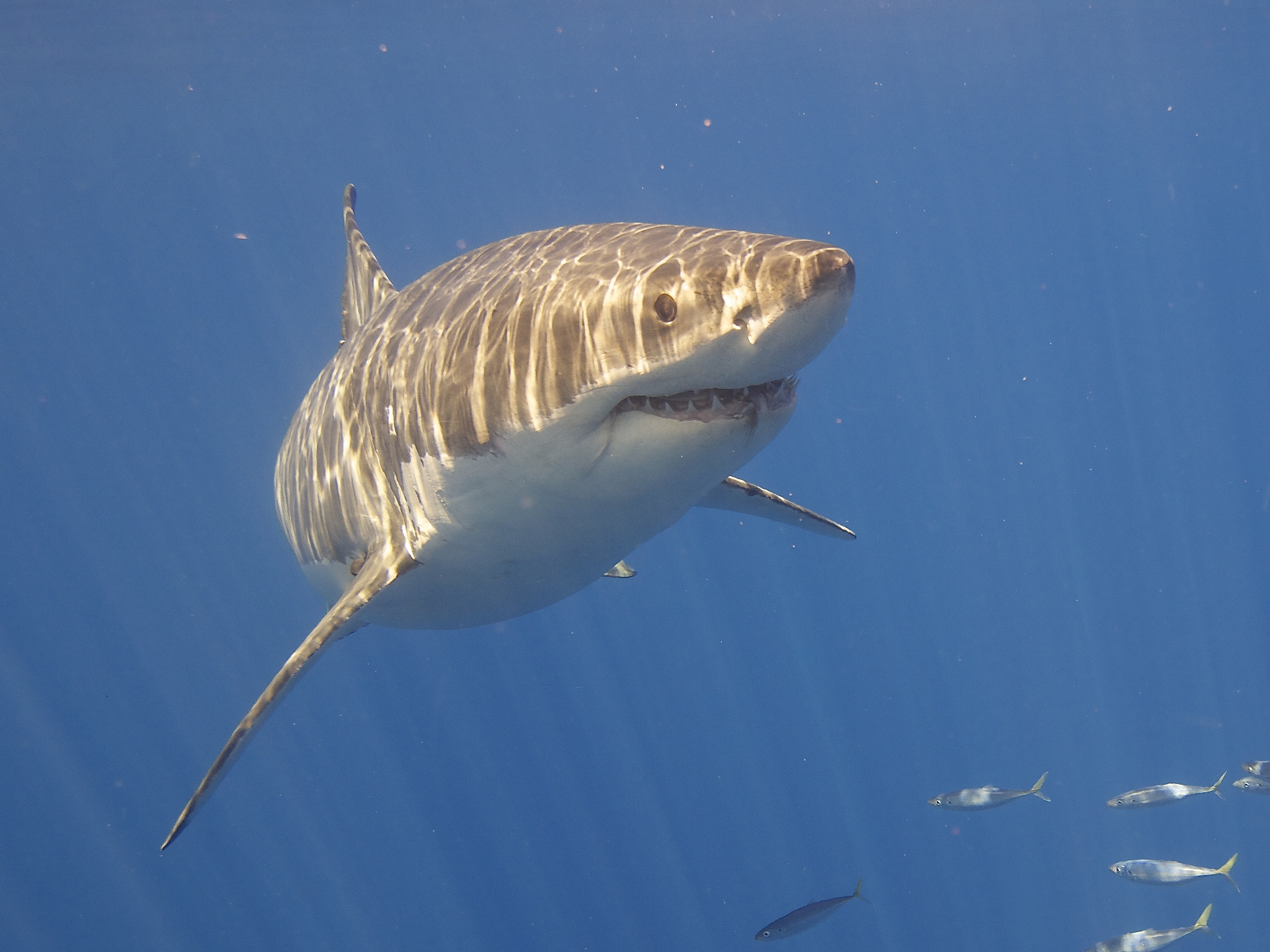
The majestic great white shark has been around for a very long time.  Its evolutionary origin dates back 14 to 16 million years.  And while great whites still enjoy decent populations off the coasts of Canada, Australia, and the United States, the same can’t be said for South Africa’s great whites. 

[Read more…] about Sharks In Hot Water

Food Insecurity In The Arctic

April 13, 2016 By WAMC WEB

https://earthwiseradio.org/wp-content/uploads/2016/03/EW-04-13-16-Food-Insecurity-in-the-Arctic.mp3

Food shortages have always been a challenge for the Inuit and other aboriginal people in the Arctic, because they depend on subsistence hunting and fishing, which often means living life on the edge.

[Read more…] about Food Insecurity In The Arctic

Arctic Ecosystems

February 11, 2016 By WAMC WEB

https://earthwiseradio.org/wp-content/uploads/2016/01/EW-02-11-16-Brighter-Oceans.mp3

Most of us are aware that shrinking ice cover is bad news for Arctic wildlife, with animals like polar bears and seals losing important breeding, nursery, and feeding grounds. What has received less attention is the impact ice loss has on life in Arctic waters. [Read more…] about Arctic Ecosystems

Primary Sidebar

Recent Episodes

  • An uninsurable future
  • Clean energy and jobs
  • Insect declines in remote regions
  • Fossil fuel producing nations ignoring climate goals
  • Trouble for clownfishes

WAMC Northeast Public Radio

WAMC/Northeast Public Radio is a regional public radio network serving parts of seven northeastern states (more...)

Copyright © 2026 ·