• Skip to primary navigation
  • Skip to main content
  • Skip to primary sidebar

Earth Wise

A look at our changing environment.

  • Home
  • About Earth Wise
  • Where to Listen
  • All Articles
  • Show Search
Hide Search
You are here: Home / Archives for radiation

radiation

How to make cities cooler

March 26, 2024 By EarthWise Leave a Comment

Green spaces and waterways help keep cities cool

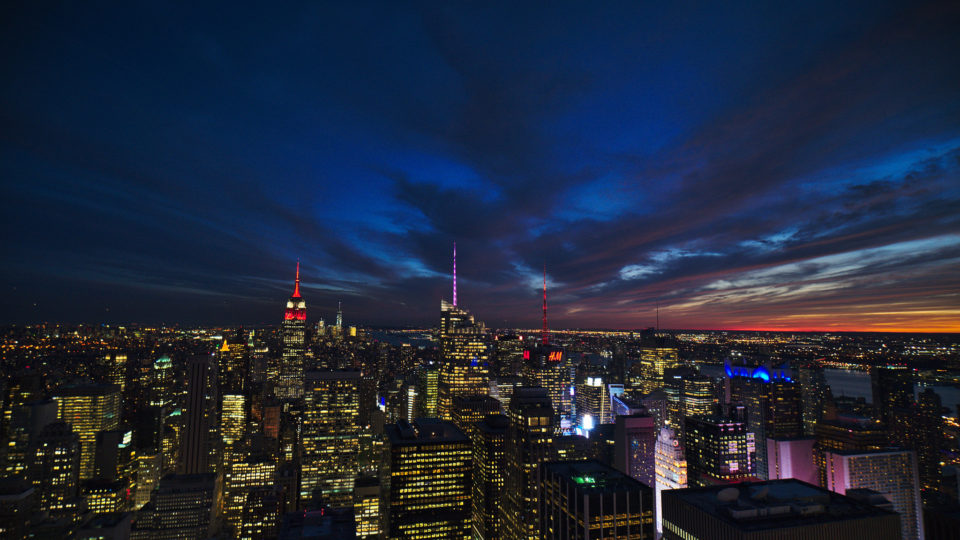
In cities, the air, surface, and soil temperatures are almost always warmer than in rural areas. This is known as the urban heat island effect.  Urban heat islands occur when cities replace natural land cover with dense concentrations of pavement, buildings, and other surfaces that absorb and retain heat.

Urban planners around the world have been researching ways to reduce the effects of heat in cities.  For example, trees, green roofs, and vegetation can help reduce urban heat island effects by shading building surfaces, deflecting radiation from the sun, and releasing moisture into the atmosphere.

A new study led by researchers from the University of Surrey in the U.K. has analyzed how well various green spaces and waterways are able to cool down cities.  The study, which was recently published in the journal The Innovation, found that wetlands, parks, and even botanical gardens are among the best ways to keep cities cool.   

In fact, the researchers found that botanical gardens can cool city air by a whopping 9°F during heatwaves on average.  Wetlands can cool city air by 8.5°F on average, followed by rain gardens at 8.1°F, green walls at 7.4°F, street trees at 6.8°F, city farms at 6.3°F, city parks at 5.8°F, and reservoirs and playgrounds at 5.2°F. 

The researchers also found that cities can unlock even greater benefits by connecting green spaces into green corridors.  Greening projects can also help remove carbon emissions and prevent flooding.

The research team hopes its findings will help urban planners design more resilient cities. 

**********

Web Links

Wetlands, parks and even botanical gardens among the best ways to cool cities during heatwaves

Photo, posted April 25, 2022, courtesy of Catherine Poh Huay Tan via Flickr.

Earth Wise is a production of WAMC Northeast Public Radio
Why Was the Summer So Hot? | Earth Wise

September 4, 2023 By EarthWise Leave a Comment

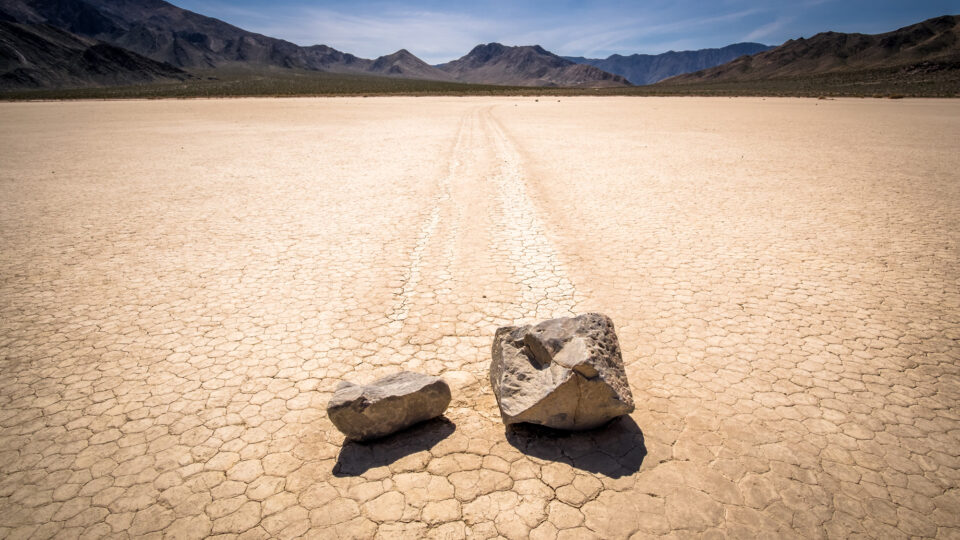
Many places around the world have experienced extraordinary heat waves this summer.  The 31 days of high temperatures 110 degrees or more in Phoenix is a prime example but many other places suffered from extreme and relentless heat.  Why did this happen?

The overarching reason is climate change, which has warmed the Earth by 2.2 degrees Fahrenheit since the preindustrial era.  This change on a global level is enough to make heatwaves far more likely.  For example, the concurrent heatwaves in Europe and North America were 1000 times more likely to have occurred because of climate change.

But there hasn’t been a sudden increase in global temperature that would make this summer so much hotter.  Instead, what really has happened is three other factors all came into play at the same time.

The first is the 2022 eruption of Hunga Tonga-Hunga Ha-apai, which is an underwater volcano in the South Pacific.  That eruption did not produce much in the way of planet-cooling aerosols in the atmosphere.  Instead, it vaporized huge amounts of seawater, sending water vapor into the atmosphere, which helps trap heat.

The second is a change in the amount of energy radiating from the sun.  That actually rises and falls a small amount every 11 years.  Currently, it is in the upswing and will reach its next peak in 2025.

Finally, there is the arrival of the El Niño in the Pacific, whose balmy ocean waters radiate heat into the air.

The combination of all these factors when added to the already warming climate is a recipe for temperatures to soar to uncharted highs.  We can expect more heat waves, forest fires, flash floods, and other sorts of extreme weather.

**********

Web Links

It’s Not Just Climate Change: Three Other Factors Driving This Summer’s Extreme Heat

Photo, posted February 27, 2017, courtesy of Giuseppe Milo via Flickr.

Earth Wise is a production of WAMC Northeast Public Radio

The Atmosphere Is Thirstier | Earth Wise      

May 9, 2022 By EarthWise Leave a Comment

The American West is in the throes of a two-decade-long drought.  The climate there is getting warmer and drier, which has led to increasing demand for water resources from both humans and ecosystems.  According to a new study by the Desert Research Institute and collaborators, the atmosphere across much of the U.S. is also demanding a greater share of water than it used to.

Evaporative demand, which is also called atmospheric thirst, is a measure of the potential loss of water from the earth’s surface up to the atmosphere.  It is a function of temperature, humidity, wind speed, and solar radiation.  The study, published in the Journal of Hydrometeorology, assessed trends in evaporative demand during a 40-year period from 1980-2020.

The study’s findings showed substantial increases in atmospheric thirst across much of the Western U.S. over that period, with the largest increases centered around the Rio Grande and Lower Colorado rivers.  This is important because atmospheric thirst is a persistent force in pushing Western landscapes and water supplies toward drought.

The study found that, on average, increases in temperature were responsible for 57% of the changes observed in atmospheric thirst, humidity 26%, and the other factors playing lesser roles.

For farmers and other water users, increases in atmospheric thirst mean that, in the future, more water will be required to meet existing water needs.  Crops already require more water than they did in the past and can be expected to require more water in the future.  Over time, for every drop of precipitation that falls, less and less water is likely to drain into streams, wetlands, aquifers, or other water bodies.

**********

Web Links

New study shows robust increases in atmospheric thirst across much of U.S. during past 40 years

Photo, posted August 9, 2007, courtesy of William Clifford via Flickr.

Earth Wise is a production of WAMC Northeast Public Radio.

The Importance Of City Trees | Earth Wise

January 28, 2022 By EarthWise Leave a Comment

The importance of street trees in cities

It is well known that green spaces can improve the quality of life and create a better climate in cities.  City trees and vegetation can help reduce urban heat island effects by shading buildings and roads, deflecting radiation from the sun, and releasing moisture into the atmosphere.  City trees and green spaces have also been proven to increase property values, promote wildlife and plant diversity, reduce noise pollution, and improve human health.  But how important are trees and vegetation for producing cleaner air in cities?

According to a new study led by researchers at the University of Gothenburg in Sweden, trees do contribute to cleaner air in cities, but the degree to which they do so varies greatly between different locations. 

The research team measured air pollutants across seven urban settings in the city of Gothenburg, and compared them with pollutants on the leaves of deciduous trees.  The researchers chose to focus on polycyclic aromatic hydrocarbons (PAHs), which are pollutants generated primarily during the incomplete combustion of organic materials, like coal, oil, and wood.

The results revealed that the pollutants in leaves did increase over time.  The researchers were able to show a clear correlation between the level of air pollutants and the concentration of pollutants in leaves. 

But at the same time, the researchers discovered that pollution levels varied greatly between measurement sites.  For example, the levels of PAHs were seven times higher at the most polluted site (the city’s main bus station) than they were at a location on the periphery of the city.

The research team hopes its findings will be used to help guide the planning of future urban landscapes.

**********

Web Links

Trees are important for cleaner air in cities

Photo, posted November 5, 2021, courtesy of Maria Eklind via Flickr.

Earth Wise is a production of WAMC Northeast Public Radio.

Sunscreen For Corals | Earth Wise

August 6, 2021 By EarthWise Leave a Comment

Scientists examine why some corals are better equipped to survive a changing environment

Sunscreen from beachgoers entering ocean waters is one of the greatest threats to coral reefs and there are global efforts to reduce or eliminate the use of many of the most harmful chemicals people use to protect themselves from the sun’s rays.  However, scientists at the Smithsonian Conservation Biology Institute have found that some corals have a natural sunscreen of their own that helps protect them from the effects of climate change.

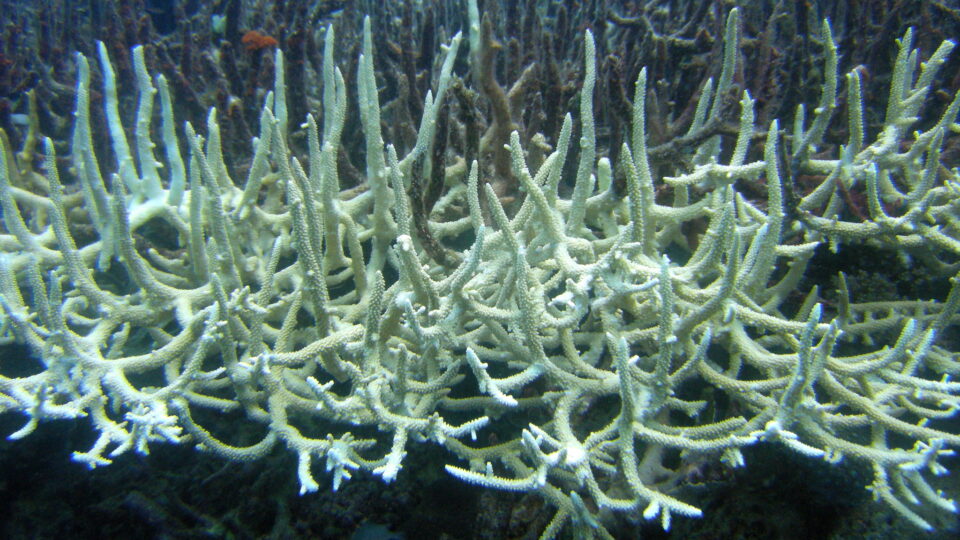
Hawaiian blue rice corals feature a deep blue pigment that is created by chromoprotein that filters out harmful ultraviolet radiation from the sun.  UV damage has harmful impacts to reproduction in many coral species, but it appears not to have the same effect on blue rice coral.

In a study published in Scientific Reports, Smithsonian researchers studied the devastating effects that bleaching had on brown rice coral in the Hawaiian bleaching events of 2014 and 2015.  During the same events, blue rice coral either recovered quickly or was not affected by the elevated ocean temperature at all.

The blue-pigmented corals had dramatically greater reproductive vigor than the brown-pigmented version.  The key factor appears to be the sun-screening ability of the blue pigment in the particular symbiotic algae that lives inside the coral tissue known as zooxanthellae.  The coral protects the algae and in turn the algae provide the coral with food in the form of sugars produced as a waste product from photosynthesis.  In the case of the blue version, the algae also produce sunscreen for the coral.

By better understanding the role UV-protective pigments play in mitigating the adverse effects of climate change and warming oceans, scientists can learn why some species are better equipped to survive in a changing environment.

**********

Web Links

Smithsonian Conservation Biology Institute Scientists Find Corals’ Natural “Sunscreen” May Help Them Weather Climate Change

Photo, posted September 28, 2009, courtesy of Matt Kieffer via Flickr.

Earth Wise is a production of WAMC Northeast Public Radio.

Improving Solar Cells With Human Hair | Earth Wise

June 1, 2021 By EarthWise Leave a Comment

Human hair may improve solar cell performance

Researchers at the Queensland University of Technology in Australia have been able to improve the performance of perovskite solar cells using material made from human hair.

Perovskite solar cells are an up-and-coming technology that offers the possibility of making solar cells less expensive, more efficient, and flexible so that there could be solar-powered clothing, backpacks, or even tents for camping.  While the technology has been shown to be as effective in converting sunlight to electricity as currently available silicon technology, it faces problems with stability and durability.

The Australian research centered on the use of carbon nanodots to improve perovskite solar cell performance.  The nanodots were created in a rather unique way.  The carbon came from hair scraps from a Brisbane barbershop that were first broken down and then burned at nearly 500 degrees Fahrenheit. 

By adding a solution of the carbon nanodots into the process of making the perovskites, the dots formed a wave-like layer in which the perovskite crystals in the cells are surrounded by the carbon dots.  It serves as a protective layer, essentially a kind of armor, for the active portions of the material.

The result was solar cells with a higher power conversion efficiency and greater stability.  The researchers did not explain why they chose human hair as the source of carbon, but it does make for an interesting sidelight to the promising research.

Perovskite solar cells could be very important for spacecraft applications where reducing weight is paramount.  But in order to be able to use them for this purpose, perovskite solar cells will need to be able to cope with the extreme radiation and temperature variations in space.

**********

Web Links

Carbon dots from human hair boost solar cells

Photo, posted October 3, 2009, courtesy of Arktoi via Flickr.

Earth Wise is a production of WAMC Northeast Public Radio.

Sunscreen And Coral Reefs | Earth Wise

May 18, 2021 By EarthWise Leave a Comment

Toxic sunscreens are killing corals

The dangers of overexposure to UV solar radiation have led to the extensive production and use of sunscreen products.  It is generally understood that many of the chemical compounds used in sunscreen products have toxic effects on marine organisms, but research in this area is relatively limited.

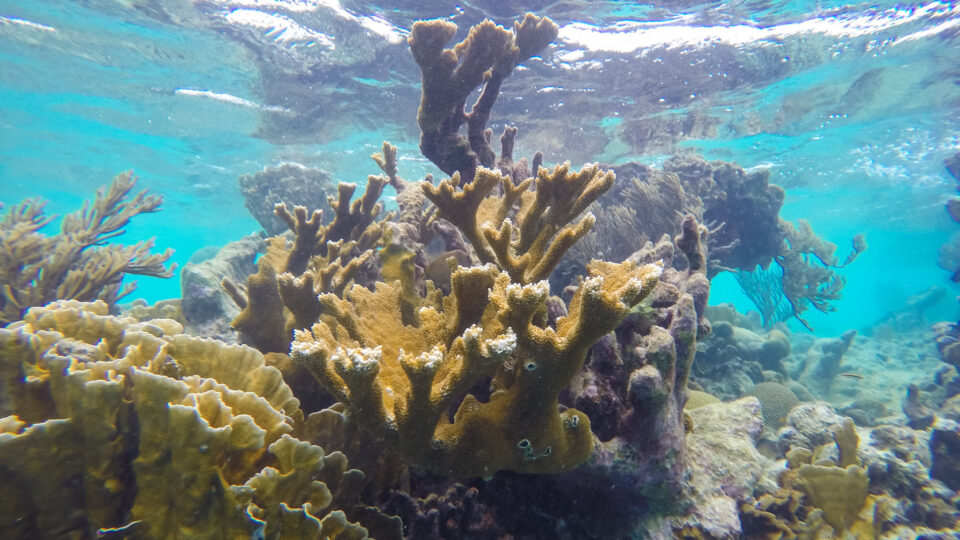
There are estimates that as many as 82,000 kinds of chemicals from personal care products have made their way into the world’s oceans.  In 2015, it was estimated that around 14,000 tons of sunscreen are ending up in the world’s coral reefs per year and causing irreparable damage.

Eighty-five percent of the Caribbean’s coral reefs died before the turn of the century, not as a result of global warming, but because of pollution.  Oxybenzone and octinoxate are two of the common sunscreen ingredients that are most toxic to corals.  Preservatives like parabens are also toxic.

There are much safer sunscreens such as those based on zinc oxide or titanium oxide.  In some places, such eco-friendly sunscreens are mandatory.  Sunscreens with SPF values above 30 contain a higher percentage of chemicals and have been shown to not really provide any more protection than SPF 30 products.

Apart from the choice of sunscreen product, if one really wants to reduce the negative impact sunscreen has on reefs and marine life, wearing sun-protective clothing such as rash-guards will allow the use of much less sunscreen and therefore result in less of it entering the ocean.

Products that can help protect against the harmful effects of UV radiation on human health are extremely important, but it is also important to identify and quantify the risks associated with these products to reef ecosystems.

**********

Web Links

How to Know If Your Sunscreen Is Killing Coral Reefs — and the Brands to Try Instead

Impacts of sunscreen on coral reefs needs urgent attention, say scientists

Photo, posted January 11, 2015, courtesy of Elch Korallen via Flickr.

Earth Wise is a production of WAMC Northeast Public Radio.

Cooling Cities With White Roofs

April 16, 2018 By EarthWise Leave a Comment

https://earthwiseradio.org/wp-content/uploads/2018/04/EW-04-16-18-Cooling-Cities-with-White-Roofs.mp3

The phenomenon of urban heat islands has been well known since the 19th century.  The materials from which city buildings and roads are made reflect much less solar radiation and absorb more of it than the vegetation they have replaced.  The absorbed energy is then radiated in the form of heat into the surrounding air making cities warmer.

[Read more…] about Cooling Cities With White Roofs

Primary Sidebar

Recent Episodes

  • An uninsurable future
  • Clean energy and jobs
  • Insect declines in remote regions
  • Fossil fuel producing nations ignoring climate goals
  • Trouble for clownfishes

WAMC Northeast Public Radio

WAMC/Northeast Public Radio is a regional public radio network serving parts of seven northeastern states (more...)

Copyright © 2026 ·