• Skip to primary navigation
  • Skip to main content
  • Skip to primary sidebar

Earth Wise

A look at our changing environment.

  • Home
  • About Earth Wise
  • Where to Listen
  • All Articles
  • Show Search
Hide Search
You are here: Home / Archives for protections

protections

Trouble for psychedelic toads

August 22, 2025 By EarthWise Leave a Comment

Back in the 1960s, it was discovered that secretions from toads native to the Sonoran Desert have psychedelic properties.  The information did not have much impact for over 40 years but about ten years ago, the story started having widespread exposure in U.S. media outlets and there was increasing publicity for the fact that the toad’s dried secretions could be smoked to produce a brief but intense high.

There was also a false narrative spreading around that this so-called toad medicine was part of an ancient practice of indigenous tribes in the Sonoran Desert.  The active agent in the toad secretion is a compound called 5-MeO-DMT and it became an increasingly popular item being sold by self-described shamans, new-age healers, and other underground practitioners. 

5-MeO-DMT is mostly banned as a controlled substance in the U.S., but many Mexican ranchers have been amassing the toads to sell to foreigners to take back home.  Despite the fact that 5-MeO-DMT has been successfully synthesized, the mystique surrounding the toads makes potential users want to use the natural version.

Researchers have found that trapping the toads in Mexico has decimated several populations of the amphibians and has sent others into steep decline. The species currently has no protections in Mexico.  These desert toads play key roles as both predators and prey and as their population declines, there are likely to be some serious ecological problems.  There is already anecdotal evidence that in many places in the desert, crop-eating insect populations have surged in recent years.

**********

Web Links

These Toads Have Psychedelic Powers, but They’d Prefer to Keep It Quiet

Photo, posted December 12, 2017, courtesy of K.S. Black via Flickr.

Earth Wise is a production of WAMC Northeast Public Radio

Growing safer potatoes

January 15, 2025 By EarthWise Leave a Comment

We are often advised to avoid eating green areas on potatoes.  The green comes from chlorophyll that occurs naturally when potatoes are exposed to light.  It is harmless but when it is there, it can be accompanied by a natural toxin – a substance called solanine, which is a steroidal glycoalkaloid or SGA.  Sunlight can produce solanine as well as chlorophyll.  Solanine is produced by plants to protect them from insects. 

Solanine is bitter tasting so one is unlikely to consume much of it.  But consuming enough of it can lead to gastrointestinal complications like diarrhea, abdominal pain, vomiting, and sweating. 

Researchers at the University of California Riverside have discovered a way to eliminate toxic compounds from potatoes, making them safer to eat and easier to store.  They have identified a key genetic mechanism in the production of SGAs.  They found a specific protein that controls the production and believe it will be possible to control where and when SGAs are produced.  Thus, it may be possible to have SGAs present in the leaves of potato plants, thereby protecting them from insects, while having none in the potatoes themselves.  By limiting SGAs to non-edible parts of plants, they can be safer and more versatile plants.  For example, modified potatoes could be stored in sunny places without worry and would always be safe to eat.

Plants have evolved ingenious ways to balance growth, reproduction, and defense.  Our growing understanding of these mechanisms can allow people to redesign crops to meet modern needs, increase food safety, and reduce food waste.

**********

Web Links

Growing safer spuds: Removing toxins from potatoes

Photo, posted October 14, 2013, courtesy of Elton Morris via Flickr.

Earth Wise is a production of WAMC Northeast Public Radio

Averting a mass extinction

July 19, 2024 By EarthWise Leave a Comment

Averting a sixth mass extinction

There has been widespread concern that biodiversity is under siege and that we are in the beginnings of a sixth mass extinction in the long history of the Earth, this time caused by the actions of humanity.  There has been considerable debate about what can be done about it and solutions generally involve protecting large areas of the planet from human disruptions.  Some countries have set a target of protecting 30% of land and sea.

A new study by a broad coalition of conservation organizations and published in Frontiers in Science, concludes that humans can preserve much of the great diversity of life on Earth by setting aside just 1.2% of the planet for protection.

The experts mapped the wilderness available to rare and threatened plants and animals.  They then identified specific hotspots for rare wildlife that have yet to be protected.  They found a total of 16,825 such sites which nevertheless all together add up an area smaller than the state of Wisconsin.

Some scientists have been warning that by focusing too much on the size of protected lands, we are not necessarily safeguarding areas that are especially rich in wildlife.  The new study pushes for prioritizing hotspots for rare species, which the authors claim would be sufficient to stave off a sixth mass extinction.  The truth is that most species on Earth are rare, meaning that they are few in number or cover a small range, or both.

The study estimated that the cost of protecting the identified hotspot sites would be $263 billion, which is certainly a large amount of money.  But the authors point out that this sum to save global biodiversity is less than the yearly revenue of Shell Oil.

**********

Web Links

To Avert a Mass Extinction, Protect 1 Percent of Earth

Photo, posted April 20, 2018, courtesy of Per Harald Olsen / AfricanBioServices via Flickr.

Earth Wise is a production of WAMC Northeast Public Radio

Large Lakes In Decline | Earth Wise

June 27, 2023 By EarthWise Leave a Comment

More than half of the world's largest lakes are shrinking

Globally, freshwater lakes and reservoirs hold 87% of the planet’s liquid freshwater, making them a valuable resource for both people and wildlife.  Despite their value, the long-term trends and changes to water levels of lakes have been largely unknown – until now.

According to a new assessment recently published in the journal Science, more than half of the largest lakes around the world are losing water.  Using satellite observations and climate data, the research team created a technique to measure changes in water levels in nearly 2,000 of the world’s biggest lakes and reservoirs, representing 95% of the total lake water storage on Earth.

The results are staggering.  According to the findings, 53% of Earth’s largest lakes and reservoirs now store significantly less water than they did in 1992.  The total amount of water lost is estimated to be 144.5 cubic miles, which is equivalent to the volume of 17 Lake Meads (the largest reservoir in the U.S.). 

Unsurprisingly, climate warming and human consumption were the main drivers of water loss from lakes, whereas sedimentation — the buildup of debris — was the biggest driver of water loss in reservoirs.  Roughly one-quarter of the world’s population – two billion people – live in the basin of a drying lake, indicating the urgent need for sustainable water resources management.

But the news is not entirely bleak.  According to the research team, the new method of tracking lake water storage trends can give water managers and communities insight into how to better protect this critical resource. 

**********

Web Links

Satellites reveal widespread decline in global lake water storage

Photo, posted February 10, 2010, courtesy of Ninara via Flickr.

Earth Wise is a production of WAMC Northeast Public Radio

How To Save Big Cats | Earth Wise

March 1, 2023 By EarthWise 1 Comment

Researchers suggest the best way to save large and often endangered carnivores

Big cats are among the most widely recognized and admired animals in the world. But these charismatic predators face many and varied threats, including the loss of habitat and prey, conflicts with humans, poaching, and the illegal wildlife trade.

Researchers from the University of Reading in the U.K. have studied the fortunes of 50 species of large carnivores worldwide over the past 50 years.  They found that social and economic factors, such as quality of life, were more closely associated with declines of large carnivore species than purely environmental factors, like habitat loss.   

The study, which was recently published in the journal Nature Communications, suggests that the best way to save large carnivores, including lynx, bears, and lions, is to encourage a sustainable model of social and economic development instead of focusing exclusively on issues like climate change.  

While rapid economic development pushes species to the brink of extinction, it’s also delivered enormous improvements in the quality of human life. But the analysis suggests that once people achieve a high quality of life and economic development slows, a turning point is reached and persecuted species have a chance to recover.

According to the research team, the recovery is a result of both improved habitat protections in advanced economies and a more harmonious relationship between people and predators.  What would have once been considered a dangerous pest is now recognized as being an important part of both the ecosystem and culture.  

In Western Europe, slower economic development and an improved quality of life have allowed populations of grey wolves to increase 1,800% since the 1960s.

**********

Web Links

Economics trump environment to save big cats, say ecologists

Photo, posted February 8, 2015, courtesy of Mathias Appel via Flickr.

Earth Wise is a production of WAMC Northeast Public Radio

Better Marine Protected Areas | Earth Wise

August 17, 2022 By EarthWise Leave a Comment

Marine protected areas are regions of seas, oceans, estuaries, and in the US, the Great Lakes, that are afforded special protections.  MPAs restrict human activity for conservation purposes, generally in order to protect natural or possibly cultural resources.   MPAs may limit such things as development, fishing practices, fishing seasons, catch limits, moorings, and removal or disruption of marine life.

A new study by the University of Plymouth in the UK looked at the effectiveness of MPAs in increasing the total abundance of reef species.  It looked at the MPAs in Lyme Bay, off the south coast of England, where two of them are co-located but governed by different constraints.

The study found that whole-site management of an MPA can increase the total abundance of reef species within its borders by up to 95%.  This is in contrast to the MPA where only known features are conserved and human activity is otherwise allowed to continue unchecked.  In that place, species abundance increased by only 15%.

The whole-site MPAs were observed to have other benefits as well.   They show higher levels of functional redundancy, meaning that when there are species losses, they are compensated by other species.  Whole-site MPAs also exhibit higher levels of species diversity.

MPAs are increasingly being recognized as a sustainable way to enhance the marine environment even while supporting coastal communities.  The Global Ocean Alliance, a 72-country alliance led by the UK, has set a target of protecting 30% of all marine areas by 2030.  The new study shows that even more important than simply establishing marine protected areas, it is essential that they are effectively implemented.

**********

Web Links

Whole-site management of Marine Protected Areas can lead to a 95% increase in reef species

Photo, posted October 28, 2011, courtesy of Benjamin Evans via Flickr.

Earth Wise is a production of WAMC Northeast Public Radio.

Protecting Bees From Pesticides | Earth Wise

July 15, 2021 By EarthWise Leave a Comment

A new technology that can protect bees from pesticides

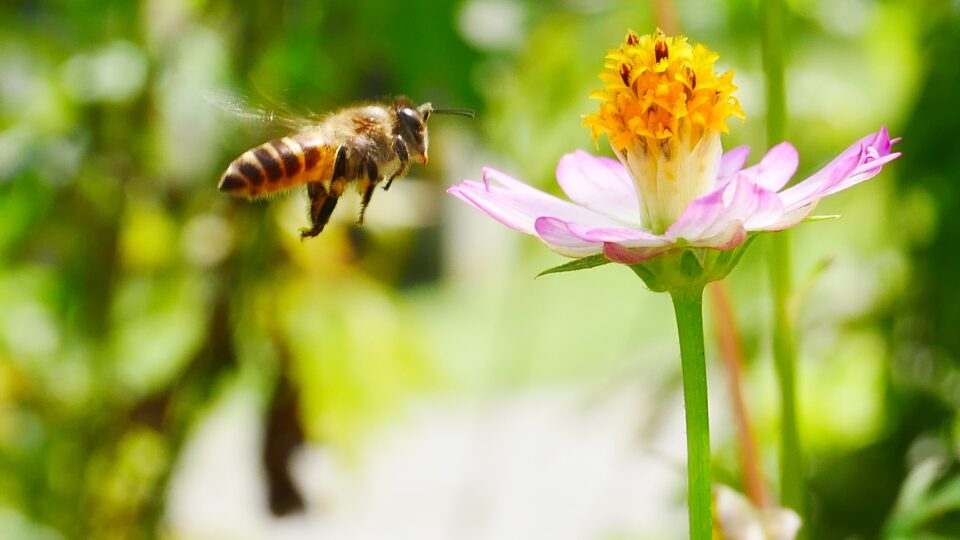
Studies have shown that the wax and pollen in 98% of beehives in the U.S. are contaminated with an average of six pesticides.  These substances lower bees’ immunity to devastating varroa mites and other pathogens.  By some estimates, pesticides cause beekeepers to lose about a third of their hives every year on average.

Researchers at Cornell University have developed a new technology that effectively protects bees from insecticides.  The insecticide antidote delivery method is now the basis of a new company called Beemunity.

The Cornell researchers developed a uniform pollen-sized microparticle filled with enzymes that detoxify organophosphate insecticides before they are absorbed and can harm bees.  Organophosphate insecticides account for about a third of the insecticides on the market.  The microparticles have a protective casing that allows the enzymes to move past the bees’ crop (basically the stomach), which is acidic and would otherwise break them down.  The safeguarded enzymes then enter the midgut, where digestion occurs and where toxins and nutrients are absorbed.  There the enzymes act to break down and detoxify the organophosphate insecticides.

In experimental tests, bees that were fed the enzyme-filled microparticles had a 100% survival rate after exposure to the insecticide malathion.  Unprotected control bees died within days.

The Cornell work appears to represent a low-cost, scalable solution to the insecticide toxicity issue and may help to protect essential pollinators.

**********

Web Links

Pollen-sized technology protects bees from deadly insecticides

Photo, posted January 30, 2020, courtesy of George Tan via Flick.

Earth Wise is a production of WAMC Northeast Public Radio.

Restoring Environmental Rules Will Take Time | Earth Wise

February 17, 2021 By EarthWise Leave a Comment

Restoring Obama-era environmental rules will take time

Over the previous four years, the Trump administration weakened or rolled back more than 100 rules and regulations on air, water, public lands, endangered species, and climate change.  The Biden administration has vowed to review these changes and restore the environmental protections that were removed or weakened.

The process of restoring environmental protections generally fall into a few broad categories.  Some changes can happen by executive order.  The President can cancel individual fossil fuel infrastructure projects or reinstate federal protection of specific places.  On his first day in office, President Biden rescinded the construction permit for the Keystone XL pipeline.

The President is also expected to restore federal protection to the Bears Ears and Grand Staircase-Escalante national monuments in Utah, which the Trump administration opened up to mining, logging, and drilling.

However, it could take two years or more to restore Obama-era climate change regulations including limits on emissions, rules on industrial emissions of toxic pollutants such as mercury, and protections on wetlands and waterways.

Reinstating comprehensive regulations on air, water, and climate pollution will take years because the Trump administration, rather than eliminating rules entirely, often replaced them with weaker regulations.  Replacing the weak regulations cannot just happen by executive order.  The process involves scientific and economic analysis, and that takes time.

After four years of shrinking budget and shrinking staff, the Environmental Protection Agency has a lot of catching up to do and will need to prioritize its actions in order to deal with the most damaging consequences of the previous administration.

**********

Web Links

Restoring Environmental Rules Rolled Back by Trump Could Take Years

Photo, posted September 25, 2012, courtesy of Tar Sands Blockade via Flickr.

Earth Wise is a production of WAMC Northeast Public Radio.

Wildfires And Superfund Sites | Earth Wise

January 14, 2021 By EarthWise Leave a Comment

Wildfires threaten Superfund sites

Thousands of contaminated sites exist nationally due to hazardous waste being dumped, left out in the open, or otherwise improperly managed. These sites include manufacturing facilities, processing plants, landfills, and mining sites.  A Congressional act in 1980 established authority by the EPA to ultimately clean up these “Superfund” sites.

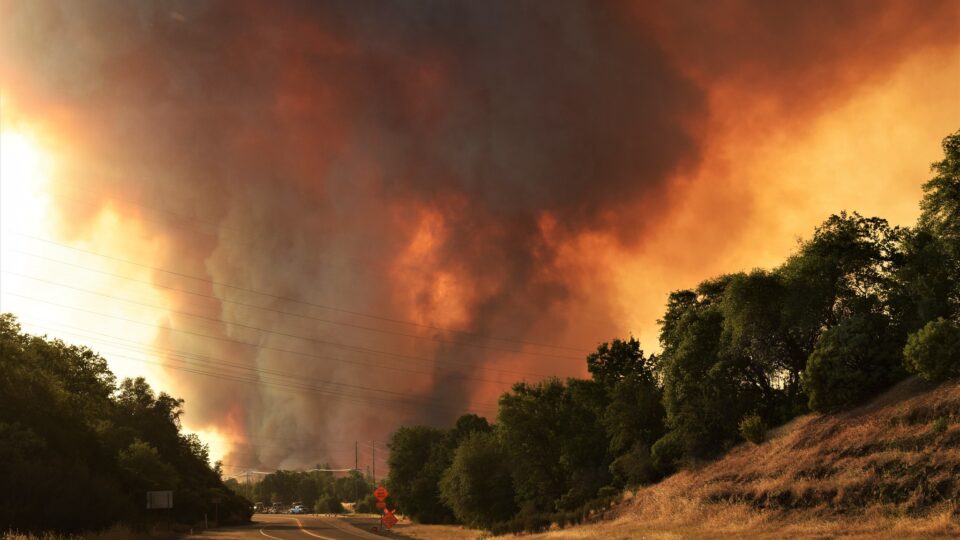
According to a government survey last year, 945 Superfund sites are vulnerable to hurricanes, flooding, sea level rise, increased precipitation, or wildfires, all of which are intensifying as the climate warms.   In particular, there are 245 sites vulnerable to wildfires and 68 of them have recently seen wildfires approach.

A comprehensive investigation by Inside Climate News, NBC News, and the Texas Observer has found that the threat presented by wildfires is exceeding authorities’ ability to adequately prepare and respond.  Fires at Superfund sites could release toxins ranging from acid mine drainage to radioactive smoke.

There have already been a number of close calls.  The 2013 Patch Springs Fire near Salt Lake City came within 10 miles of the Tooele Army Depot, a Superfund site with 902 ammunition bunkers along with soil and groundwater contaminated with hazardous chemicals.

The 2018 Carr Fire in Northern California over swept the Iron Mountain Mine Superfund site and threatened to release corrosive chemicals into the watershed.

For sites where no polluter can be made to pay and the EPA lacks cleanup funds, the agency will need to design protections that shield the sites from wildfires as long as the contamination remains. 

**********

Web Links

Fueled by Climate Change, Wildfires Threaten Toxic Superfund Sites

Photo, posted July 26, 2018, courtesy of the Bureau of Land Management California via Flickr.

Earth Wise is a production of WAMC Northeast Public Radio.

COVID-19 And The Wildlife Trade | Earth Wise

December 17, 2020 By EarthWise Leave a Comment

Disease outbreaks and the wildlife trade

Historically, many diseases have jumped from animals to people with serious consequences for the human host.  In fact, coronaviruses alone have caused outbreaks in humans three times in the past 20 years:  SARS, MERS, and COVID-19.  The majority of human pathogens that caused substantial damage to human health and economies during the past three decades have originated from wildlife or livestock.

According to a team of researchers from the University of Göttingen and other international institutions, more epidemics from animal hosts are inevitable unless urgent action is taken.  In order to help  protect against future pandemics, which could be even more severe than the current one, the researchers published a series of suggestions for governments to consider in the journal Trends in Ecology & Evolution.

The research team calls for governments around the world to establish effective legislation to do three things:  address the wildlife trade, protect habitats, and reduce the interaction between people, wildlife, and livestock. 

The wildlife trade and habitat fragmentation both facilitate disease outbreaks by increasing the potential for contact between humans and animals. Animals in wildlife markets are often kept in crowded and unsanitary conditions, which creates fertile breeding grounds for pathogens to jump to humans. Animals and humans are also forced closer together when natural habitats are cleared or otherwise fragmented in order to meet the various needs of a growing global population.  

Since the Covid-19 outbreak, China, Vietnam, and South Korea have introduced regulations to better manage the wildlife trade as well as support wildlife conservation.  According to the researchers, these actions serve as examples for other countries to consider.  The status quo isn’t good enough. 

**********

Web Links

COVID-19 highlights risks of wildlife trade

Photo, posted August 23, 2010, courtesy of the U.S. Fish and Wildlife Service Northeast Region via Flickr. Photo credit: Rosie Walunas/USFWS.

Earth Wise is a production of WAMC Northeast Public Radio.

Hunting Grizzly Bears

June 7, 2018 By EarthWise Leave a Comment

https://earthwiseradio.org/wp-content/uploads/2018/06/EW-06-07-18-Hunting-Grizzly-Bears.mp3

One year ago, the U.S. Department of the Interior announced that the grizzly bear population in the Yellowstone area would be delisted from the Endangered Species Act, and more recently, announced that those federal protections would not be restored.

[Read more…] about Hunting Grizzly Bears

Whom Should We Save?

April 27, 2018 By EarthWise Leave a Comment

https://earthwiseradio.org/wp-content/uploads/2018/04/EW-04-27-18-Whom-Should-We-Save.mp3

The list of endangered species continues to get longer around the world and society is increasingly faced with the nearly impossible decision of which ones to take off life support.

[Read more…] about Whom Should We Save?

Help For Pangolins

November 3, 2016 By WAMC WEB

https://earthwiseradio.org/wp-content/uploads/2016/10/EW-11-03-16-Help-for-Pangolins.mp3

Poaching and illegal trafficking in exotic animals is a world-wide problem that most of us are aware of.  What most of us are less aware of is that the most trafficked mammal in the world is the pangolin, which you may well have never even heard of.

[Read more…] about Help For Pangolins

Primary Sidebar

Recent Episodes

  • An uninsurable future
  • Clean energy and jobs
  • Insect declines in remote regions
  • Fossil fuel producing nations ignoring climate goals
  • Trouble for clownfishes

WAMC Northeast Public Radio

WAMC/Northeast Public Radio is a regional public radio network serving parts of seven northeastern states (more...)

Copyright © 2026 ·