
• Skip to primary navigation
  • Skip to main content
  • Skip to primary sidebar

Earth Wise

A look at our changing environment.

  • Home
  • About Earth Wise
  • Where to Listen
  • All Articles
  • Show Search
Hide Search
You are here: Home / Archives for pnas

pnas

Americans And Lead Exposure | Earth Wise

April 4, 2022 By EarthWise Leave a Comment

The legacy of lead remains a problem

Long-term exposure to lead can cause serious health problems, especially in children.  Children are particularly vulnerable because their early years are characterized by rapid growth and brain development.

Lead is a powerful neurotoxin that can cause damage even at low levels of exposure.  Lead poisoning can be acute, and can cause all sorts of health issues, including stomach pain, brain damage, and even death.  Because lead accumulates in the body over time, lead poisoning can develop slowly. Exposure to lead can also contribute to a lower IQ and behavioral problems that can last a lifetime.

Lead is a naturally occurring element found in small amounts in earth’s crust.  But as a result of human activities, lead can be found in all parts of the environment, including the air, soil, and water.

According to a new study recently published in the journal Proceedings of the National Academy of Sciences, approximately half of U.S. adults alive today were exposed to harmful levels of lead as children from the burning of leaded gasoline.  The research team estimates that lead contamination has lowered those Americans’ IQ scores by more than two points on average.

In the study, the researchers used data on childhood blood-lead levels, leaded gasoline use, and population to gauge the lifetime exposure of every American adult in 2015.  They found that more than 170 million Americans had exposure to concerning levels of lead as children.  Those who grew up in the 60s and 70s, when the burning of leaded gasoline was at its peak, had the greatest exposure, losing up to six IQ points on average. 

The legacy of lead exposure remains a persistent problem.

**********

Web Links

Half of Americans Exposed to Harmful Levels of Lead as Children

Lead Exposure Remains A Persistent Problem

Photo, posted February 13, 2010, courtesy of Steve Snodgrass via Flickr.

Earth Wise is a production of WAMC Northeast Public Radio.
The Corn Belt Is Losing Topsoil | Earth Wise

April 16, 2021 By EarthWise 2 Comments

Erosion is claiming the corn belt's topsoil

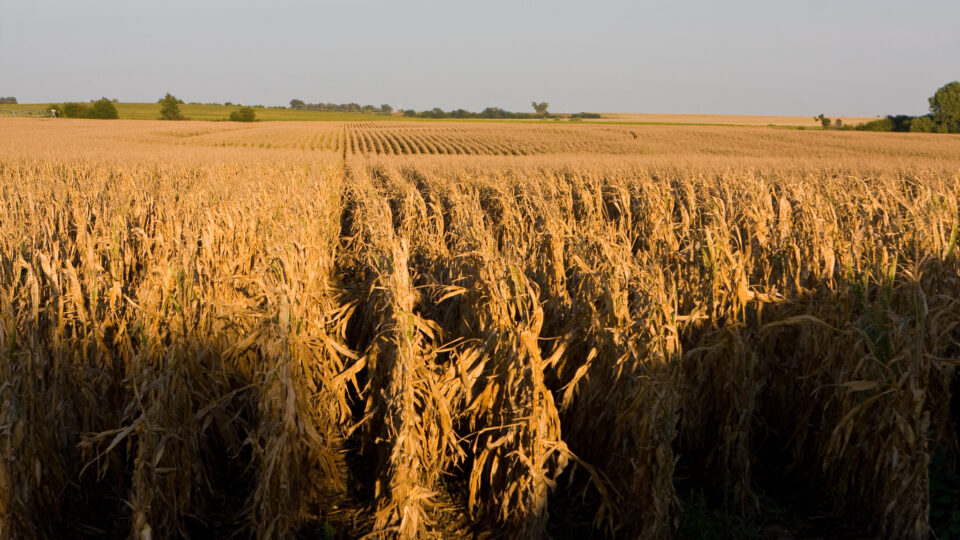
According to a new study published in the Proceedings of the National Academy of Sciences, more than a third of the farmland in the U.S. Corn Belt has completely lost its carbon-rich topsoil due to erosion.   The affected area is nearly 100 million acres and the amount of carbon loss is nearly 2 million tons.

The study, led by scientists at the University of Massachusetts, Amherst, found that the greatest loss of carbon-rich topsoil was on hilltops and ridgelines.  This indicates that tillage – the repeated plowing of fields – was the primary cause of the erosion because loosened soils move downslope.

The loss of topsoil has reduced corn and soybean yields in the Midwest by 6%, resulting in a loss of nearly $3 billion a year for farmers.  In addition, the loosening of the topsoil increases runoff of sediment and nutrients into nearly waterways, worsening water quality.

Previous studies have shown that no-till farming practices can have a significant impact on reducing erosion.  A study published last November found that if farmers shifted entirely to no-till practices, it would reduce soil erosion from U.S. agricultural fields by more than 70%, as well as significantly reducing nutrient and sediment runoff. 

No-till farming is the practice of planting crops without tilling the soil.  Instead, seeds are planted through the remains of previous crops by planters or drills that cut seed furrows, place the seeds, and close the furrow.  Currently less than 15% of farmland in the upper Mississippi River watershed is farmed with no-till practices. 

Even partial changes in tilling practices could produce positive results for topsoil retention and for waterways.

**********

Web Links

One-Third of Farmland in the U.S. Corn Belt Has Lost Its Topsoil

Photo, posted September 15, 2010, courtesy of the United Soybean Board / Soybean Checkoff via Flickr.

Earth Wise is a production of WAMC Northeast Public Radio.
Climate Change And Allergies | Earth Wise

March 23, 2021 By EarthWise Leave a Comment

Climate change is making allergy season worse

According to a new study published in the Proceedings of the National Academy of Sciences, an addition to the many hardships that climate change is causing around the world is the fact that it is making allergy season worse.

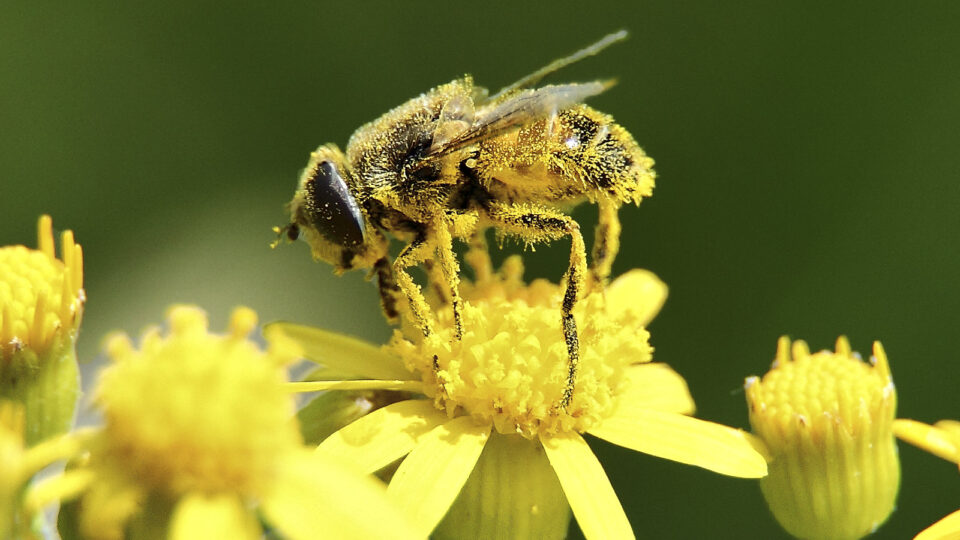
Researchers have found that there is a strong link between planetary warming and pollen seasons.  The combination of warming air and higher levels of carbon dioxide in the atmosphere has caused North American pollen seasons since 1990 to start some 20 days earlier, on average, and to have 21% more pollen.

The most pronounced effects were seen in Texas, the Midwest, and the Southeast.  The effects were less obvious in the northern United States, including New England and the Great Lakes states.  The greatest pollen increases came from trees, as opposed to grasses and weeds.

Allergies do not just trigger sniffles and sneezes; they have serious effects on public health in the form of asthma and other respiratory conditions.  Studies have shown that students do less well in school during peak pollen season.  Of special concern at the moment is that high-pollen periods have been associated with greater susceptibility to respiratory viruses.  The U.S. has nearly 25 million people with asthma and 19 million adults reported hay fever in the past 12 months.  Research suggests that the early onset of pollen season correlates with a higher risk of hospitalization for asthma.

There are far fewer pollen monitoring stations than those measuring particle pollutants and air quality.  As the climate warms, we need to pay more attention to pollen as an airborne pollutant.

**********

Web Links

Achoo! Climate Change Lengthening Pollen Season in U.S., Study Shows

Photo, posted May 18, 2012, courtesy of Forest Wander via Flickr.

Earth Wise is a production of WAMC Northeast Public Radio.

Living In Extreme Heat | Earth Wise

June 3, 2020 By EarthWise Leave a Comment

extreme heat from climate change

Global climate change has already left observable effects on the planet.  Glaciers have shrunk, trees are flowering sooner, plant and animal ranges have shifted, and so on. Many effects of climate change that scientists had predicted in the past are now occurring.  The loss of sea ice, intensifying heat waves, and accelerating sea level rise are some examples.

According to a new study recently published in the journal Proceedings of the National Academy of Sciences, climate change is going to affect humans earlier, harder, and more widely than previously projected.  The research team found that one billion people will be either displaced or endure insufferable heat for every one degree Celsius rise in global temperatures.  

Under a worst case climate scenario, land that one third of the world’s population currently calls home will be as hot as the hottest parts of the Sahara desert within 50 years.  Even under a more optimistic climate outlook, 1.2 billion people will still be exposed to temperatures outside the climate niche in which humans have thrived for at least 6,000 years.

The majority of the human population has always lived in regions where the average annual temperatures were between 43 degrees Fahrenheit and 82 degrees Fahrenheit.  These are ideal temperatures for human health and for food production.  But this temperature range is shrinking and shifting as a result of climate change. 

The study’s authors predict there will be more change in the next 50 years than there has been in the past 6,000 years.  They hope their findings will convince policymakers to accelerate their plans for emissions reductions and other climate mitigation strategies.   

**********

Web Links

Future of the human climate niche

One billion people will live in insufferable heat within 50 years – study

Photo, posted November 22, 2008, courtesy of Ronnie Finger via Flickr.

Earth Wise is a production of WAMC Northeast Public Radio.
Community Action And Coral Reefs

January 1, 2020 By EarthWise Leave a Comment

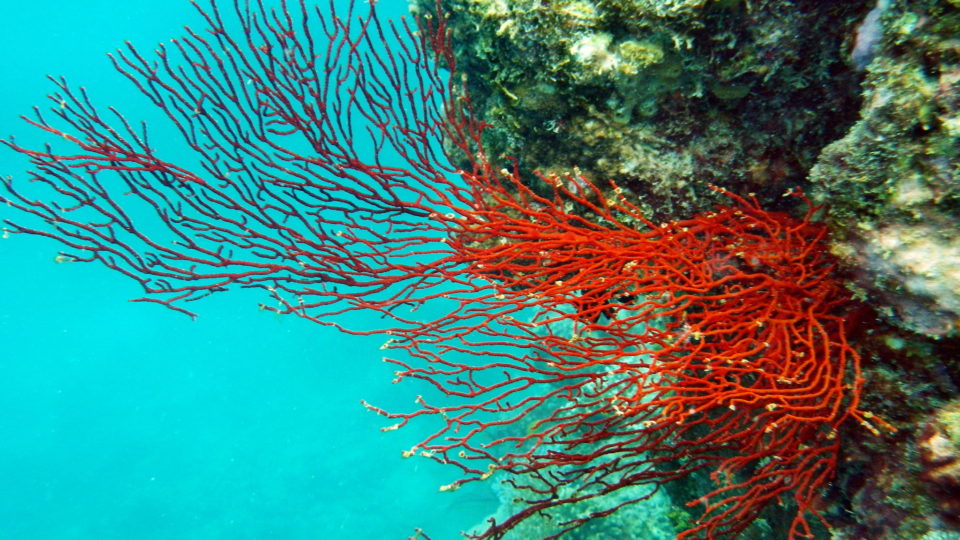
Coral reef habitats are some of the densest and most varied ecosystems on earth.  While coral reefs cover just 0.2% of the ocean floor, scientists estimate that nearly one million different species of fish, invertebrates, and algae can be found in or around coral reefs. 

However, climate change is wreaking havoc on the health of coral reefs.  Warming and acidifying oceans are resulting in enormous coral losses.  Overfishing, development, and pollution are also threatening coral reef health.

According to new research, positive community action can help boost fish populations in coral reefs and safeguard future fish numbers.  The paper, which was recently published in the journal Proceedings of the National Academy of Sciences, details the social and ecological outcomes of work being done in Papua New Guinea since 2001. 

These communities have established a traditional system of rotational fishing closures in order to manage their fisheries resources.   They ban fishing on part of their reefs for a few years, and then open these closures when village elders believe fish behavior has changed and fish populations have recovered.  They then close a different part of their reefs, and repeat the process. 

The researchers found that these rotational practices resulted in more than twice as many fish on the closed reefs as compared to open ones, and the closures made fish less scared of people and easier to catch.  But the researchers did caution that this short term boost in fish numbers may not be enough to stop the overall impact of fishing.

Globally, more than 500 million people depend on coral reefs for food, income, and coastal protection.  Balancing community needs with environmental needs can be tricky business.  

**********

Web Links

Positive community action can help coral reef health

Photo, posted October 11, 2011, courtesy of Paul Toogood via Flickr.

Earth Wise is a production of WAMC Northeast Public Radio.
Mammals Can’t Seem To Evolve Fast Enough

November 1, 2018 By EarthWise Leave a Comment

https://earthwiseradio.org/wp-content/uploads/2018/11/EW-11-01-18-Mammals-Just-Cannot-Keep-Up.mp3

Our planet has been through five upheavals over the past 450 million years.  During each one, the environment on earth changed so dramatically that most plant and animal species became extinct.  After each of these mass extinction events, evolution slowly filled the gaps in the environment with new species. 

[Read more…] about Mammals Can’t Seem To Evolve Fast Enough

Primary Sidebar

Recent Episodes

  • An uninsurable future
  • Clean energy and jobs
  • Insect declines in remote regions
  • Fossil fuel producing nations ignoring climate goals
  • Trouble for clownfishes

WAMC Northeast Public Radio

WAMC/Northeast Public Radio is a regional public radio network serving parts of seven northeastern states (more...)

Copyright © 2026 ·