• Skip to primary navigation
  • Skip to main content
  • Skip to primary sidebar

Earth Wise

A look at our changing environment.

  • Home
  • About Earth Wise
  • Where to Listen
  • All Articles
  • Show Search
Hide Search
You are here: Home / Archives for patent

patent

Fuel from Corn Waste

June 27, 2025 By EarthWise Leave a Comment

Making fuel from corn waste

A substantial amount of corn is grown in this country for the purpose of producing ethanol.  The value of doing so is debatable for many reasons.  Nevertheless, the majority of the corn crop is grown for food.  But along with all that corn, there is corn stover.  Stover is the dried stalks, leaves, and other plant parts that remain in the field after the corn itself has been harvested.  Corn stover is the largest quantity of biomass residue in the United States.  Around 250 million tons of it is produced annually and the majority of it is left unused.  Some is used for animal feed and other purposes and has monetary value, but much of it goes to waste.

Scientists at Washington State University have developed a way to produce low-cost sugar from stover that can be used to make biofuels and other bioproducts.

Corn stover is an abundant and cheap source of biomass, which holds great potential as a source of energy and valuable chemicals.  The challenge is to overcome the high cost of processing stover whose complex structural molecules like cellulose and lignin need to be broken down.

The new process uses potassium hydroxide and ammonium sulfite to convert stover into a sugar.  It is a mild-temperature process that allows enzymes to break down the cellulosic polymers in stover into sugar, which can then be fermented into biofuels.  The resulting sugar from the process would be cost-competitive with low-cost imported sugars. The researchers estimate that their patent-pending process could produce sugar that could be sold for as low as 28 cents per pound.

**********

Web Links

Scientists discover a new way to convert corn waste into low-cost sugar for biofuel

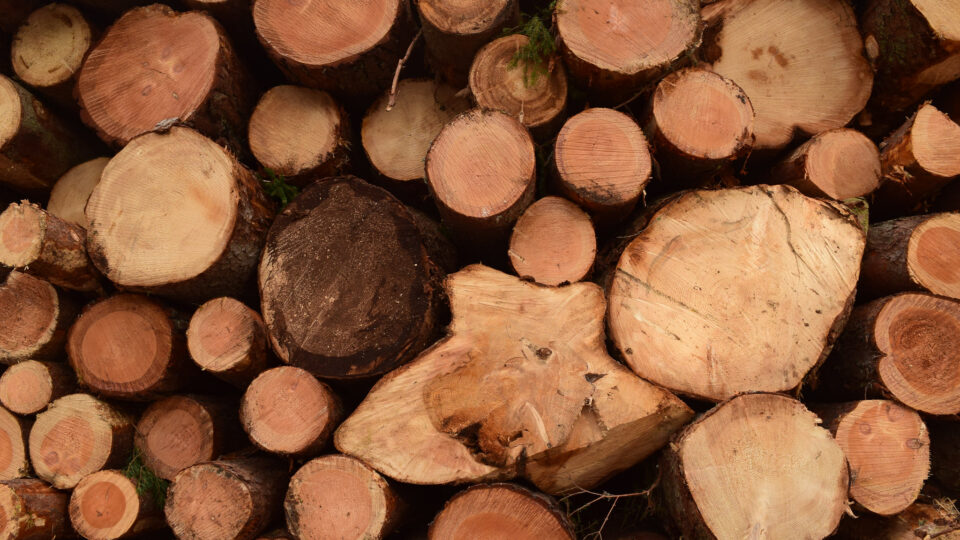
Photo, posted August 30, 2012, courtesy of Idaho National Laboratory Bioenergy Program via Flickr.

Earth Wise is a production of WAMC Northeast Public Radio
Electricity from chicken feathers

December 4, 2023 By EarthWise Leave a Comment

The food industry generates enormous amounts of waste and by-products.  Each year, 40 million tons of chicken feathers are incinerated, causing adverse environmental effects.  Not only does it release large amounts of carbon dioxide but also produces toxic gases such as sulfur dioxide.

Researchers at ETH Zurich in Switzerland and Nanyang Technological University in Singapore have developed a way to put chicken feathers to good use by using them to make fuel cells more cost-effective and sustainable.

Using a simple and environmentally friendly process, they extract the keratin from the feathers.  Keratin is the protein that helps form hair, nails, the outer layer of skin, and feathers.  The extracted keratin is then converted into ultra-fine fibers known as amyloid fibrils.  The keratin fibrils are used in the membrane of a fuel cell.

Fuel cells generate clean energy from hydrogen and oxygen with only heat and water as byproducts.  At the heart of every fuel cell is a semipermeable membrane that allows protons to pass through but blocks electrons, thereby producing an electric current.  Fuel cells are the primary way hydrogen is used to directly generate electricity.  Hydrogen cars run on fuel cells.

Conventional fuel cells typically use membranes made from highly toxic chemicals.  The new ETH membranes essentially replace these toxic substances with biological keratin. 

The researchers are investigating how stable and durable their keratin membrane is and to improve it if necessary.  The team has already applied for a joint patent and is looking for partners and investors to further develop the technology and bring it to market.

**********

Web Links

Generating clean electricity with chicken feathers

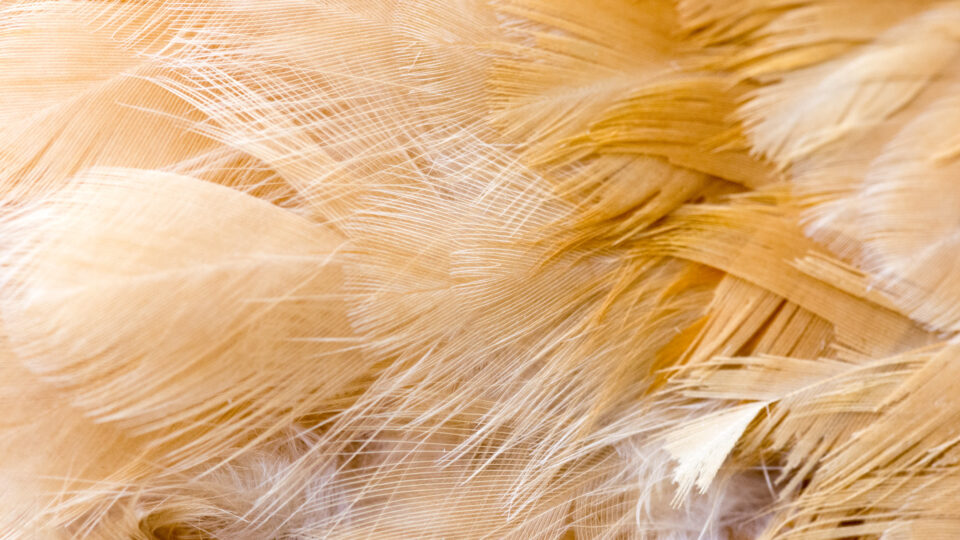
Photo, posted July 10, 2016, courtesy of Matthew Bellemare via Flickr.

Earth Wise is a production of WAMC Northeast Public Radio
Wastewater And Ammonia | Earth Wise

October 22, 2021 By EarthWise Leave a Comment

Ammonia is the second most produced chemical in the world.  More than half of it is used in agriculture to produce various kinds of fertilizer, to produce cotton defoliants that make cotton easier to pick, and to make antifungal agents for fruits.  Globally, ammonia represents more than a $50 billion a year market.

Current methods to make ammonia require enormous amounts of heat – generated by burning fossil fuels – to break apart nitrogen molecules so that they can bind to hydrogen to form the compound. Ammonia production accounts for about 2% of worldwide fossil energy use and generates over 400 million tons of CO2 annually.

Engineers at the University of Illinois Chicago have created a solar-powered electrochemical reaction that uses wastewater to make ammonia and does it with a solar-to-fuel efficiency that is 10 times better than previous comparable technologies.

The process uses nitrate – which is one of the most common groundwater contaminates – to supply nitrogen and uses sunlight to power the reaction.  The system produces nearly 100% ammonia with almost no hydrogen side reactions.  No fossil fuels are needed, and no carbon dioxide or other greenhouse gases are produced.  The new method makes use of a cobalt catalyst that selectively converts nitrate molecules into ammonia.

Not only is the reaction itself carbon-neutral, which is good for the environment, but if it is scaled up for industrial use, it will consume wastewater, thereby actually being good for the environment.  The new process is the subject of a patent filing and the researchers are already collaborating with municipal corporations, wastewater treatment centers, and others in industry to further develop the system.

**********

Web Links

Combining sunlight and wastewater nitrate to make the world’s No. 2 chemical

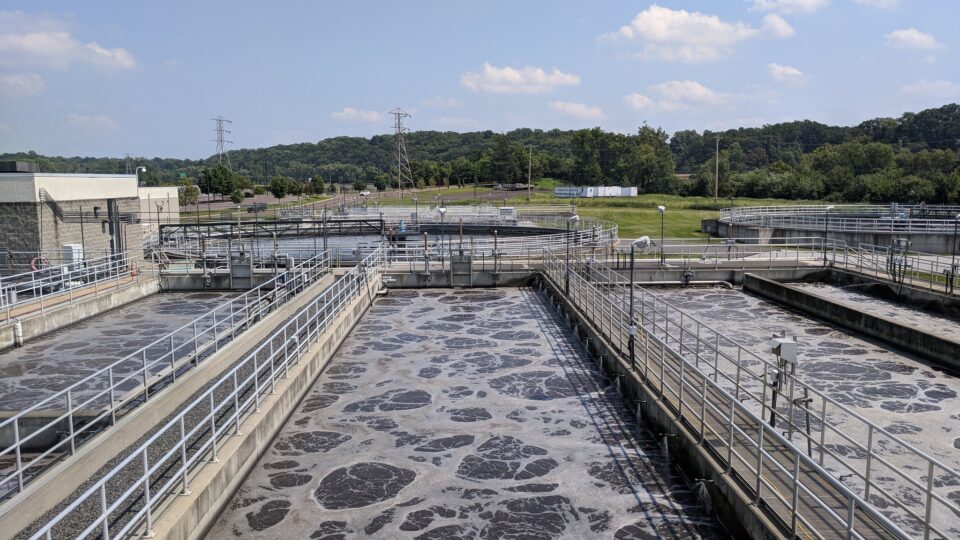
Photo, posted August 29, 2018, courtesy of Montgomery County Planning Commission via Flickr.

Earth Wise is a production of WAMC Northeast Public Radio.

A Sustainable Polymer From Wood | Earth Wise

February 24, 2021 By EarthWise Leave a Comment

A step closer to making plastics more sustainable

Scientists from the University of Bath in the UK have developed a sustainable polymer using xylose, a sugar found in wood.

The new polymer is a member of the polyether family.  It could be used in a variety of applications, including being a building block for polyurethane, used for example in mattresses and shoe soles. It could also be a bio-derived alternative to polyethylene glycol, a chemical widely used in biomedicine, or in polyethylene oxide, which is sometimes used as an electrolyte in batteries.

Xylose, also known as wood sugar, is one of the most abundant carbohydrates on earth, second only to glucose. Apart from comprising 5-20% of hardwoods, xylose is a major component of straw, corncobs, and many other plant materials.

The new polymer could reduce reliance on crude oil products and its properties can be easily controlled to make the material flexible or crystalline.  Added functionality could be added to it by binding other chemical groups such as fluorescent probes or dyes to the sugar molecule for biological or chemical sensing applications.

Tweaking the physical and chemical properties of bio-derived polymers has previously been a very difficult thing to do.  The Bath researchers discovered that combining two mirror-image chemical forms of xylose results in a stronger and more adaptable material.  They have filed a patent for their technology and are seeking industrial collaborators for further development.

The reliance of plastics and polymers on fossil fuels is a major problem.  Bio-derived polymers, such as this new one, are an important part of the effort to make plastics sustainable.

**********

Web Links

Scientists make sustainable polymer from sugars in wood

Photo, posted January 25, 2017, courtesy of Keith Double via Flickr.

Earth Wise is a production of WAMC Northeast Public Radio.

Safer Ways To Be Blue | Earth Wise

May 5, 2020 By EarthWise Leave a Comment

A safer way to create blue

Creating blue fabric has always been desirable for people.  It has never been easy, but the original way to do it – by using indigo from plants – has been around for 6,000 years.  Natural indigo is a rare commodity, often referred to as blue gold.  In the 19th century, synthetic indigo was developed and ultimately replaced the natural substance.

Synthetic indigo dye is not an environmentally friendly substance.  In order to get it to adhere to fabrics, substances called mordants are required.  These are commonly made from metals like chromium and aluminum, are generally toxic, and kill off plants exposed to factory wastewater, destroy ecosystems, and poison drinking water.   The dye itself is slow to decompose and is bad for the environment. 

Recently, an organic chemist in Brazil named Erick Bastos has figured out a new way to produce blue dye using, of all things, a pigment from beets.  By extracting the pigment and tweaking its molecular pattern, he has managed to transform the red color of the pigment to a brilliant blue.

Beet roots contain pigments called betalains and just a tiny amount of beetroot juice can render a lot of dye.  By mixing these pigments with a couple of ingredients, a chemical reaction occurred, and the color transformed from red, to yellow, then green, and finally blue.

Testing so far on human liver cells, retinal cells, and developing zebrafish has revealed no toxicity.  The results suggest that the new dye – dubbed BeetBlue – is safe.  Further testing is needed to know if it is truly safe and whether it will last in the wash.  Meanwhile, Professor Bastos is not patenting the dye and hopes it will provide a better way to be blue.

**********

Web Links

How Do You Make a Less Toxic Blue Dye? Start With Red Beets

Photo, posted November 7, 2005, courtesy of Lain Buchanan via Flickr.

Earth Wise is a production of WAMC Northeast Public Radio.

Controlling Malaria Without Chemicals

August 28, 2019 By EarthWise Leave a Comment

Nearly half of the world’s population lives in areas vulnerable to malaria.  The disease kills roughly 450,000 people each year, most of them children and pregnant women.  Malaria is spread by Anopheles mosquitoes and, over time, the mosquitoes have been developing resistance to the chemical insecticides that are used to control them.  In addition, there is great concern about the toxic side effects of the chemicals used on the mosquitoes.

About 30 years ago, scientists identified a type of bacteria that kills Anopheles, but the mechanism was not understood.  As a result, the bacteria could not be replicated or used as an alternative to chemical insecticides.

But now, an international research team, headed by researchers at UC Riverside, has identified the neurotoxin produced by the bacteria and has determined how it kills Anopheles.  The work is described in a paper published in Nature Communications.

It took the team 10 years to achieve a breakthrough in understanding the bacteria.  Modern gene sequencing techniques were the key.

While many neurotoxins target vertebrates and are highly toxic to humans, the neurotoxin that kills Anopheles mosquitoes does not affect humans, vertebrates, fish, or even other insects.  Known as PMP1, the substance is not even toxic to mice when given by direct injection.

The team has applied for a patent on this discovery and hopes to find partners to help them develop the bacteria-based insecticide.

There is a high likelihood that PMP1 actually evolved to kill the Anopheles mosquito.  This finding opens the door to new avenues of research into other environmentally friendly insecticides that would be targeted at other disease-spreading pests.

**********

Web Links

Controlling deadly malaria without chemicals

Photo, posted June 9, 2018, courtesy of Mario Yardanov via Flickr.

Earth Wise is a production of WAMC Northeast Public Radio.

Accelerating Sugarcane Growth

September 21, 2018 By EarthWise Leave a Comment

https://earthwiseradio.org/wp-content/uploads/2018/09/EW-09-21-18-Accelerating-Sugarcane-Growth.mp3

Brazil is the world’s second largest producer of ethanol fuel behind the United States.  More than that, it has the first sustainable biofuel economy, which is based on sugarcane ethanol, not corn ethanol.  It is sustainable because of Brazil’s advanced agri-industrial technology and its enormous amount of arable land.   Furthermore, producing sugarcane ethanol is far more energy-efficient than corn ethanol. It actually makes energy sense to produce it.

[Read more…] about Accelerating Sugarcane Growth

An App For Infection Testing

June 11, 2018 By EarthWise Leave a Comment

https://earthwiseradio.org/wp-content/uploads/2018/06/EW-06-11-18-An-App-for-Infection-Testing.mp3

Researchers at Washington State University have developed a low-cost, portable device that works with a smartphone to detect common viral and bacterial infections nearly as well as clinical laboratories.  Such a system could lead to faster and lower-cost lab results for fast-moving epidemics, especially in rural or lower-resource regions where laboratory equipment and medical personnel are not readily available.

[Read more…] about An App For Infection Testing

Food Waste Into Tires

April 21, 2017 By EarthWise

https://earthwiseradio.org/wp-content/uploads/2017/04/EW-04-21-17-Food-Waste-into-Tires.mp3

Researchers at Ohio State University have developed a way to use food waste to partially replace the petroleum-based filler that has been used in manufacturing tires for more than a century.

[Read more…] about Food Waste Into Tires

Primary Sidebar

Recent Episodes

  • An uninsurable future
  • Clean energy and jobs
  • Insect declines in remote regions
  • Fossil fuel producing nations ignoring climate goals
  • Trouble for clownfishes

WAMC Northeast Public Radio

WAMC/Northeast Public Radio is a regional public radio network serving parts of seven northeastern states (more...)

Copyright © 2026 ·