• Skip to primary navigation
  • Skip to main content
  • Skip to primary sidebar

Earth Wise

A look at our changing environment.

  • Home
  • About Earth Wise
  • Where to Listen
  • All Articles
  • Show Search
Hide Search
You are here: Home / Archives for filter

filter

Rain Gardens And Residential Pollution | Earth Wise

July 12, 2023 By EarthWise Leave a Comment

Rain gardens are a solution to residential pollution of waterways

Stormwater runoff has become the largest source of residential pollution for waterways.  As rainwater runs down roofs, over driveways and patios, and off other hard surfaces, it can pick up pollutants as it flows directly into streams, wetlands, lakes, and groundwater aquifers.  That water is typically routed directly through stormwater pipes and ditches with little filtering or treatment.  The main emphasis is on getting the water off of people‘s property as quickly and efficiently as possible to avoid flooding.

Many municipalities are dealing with the problem by installing rain gardens, which are a type of green infrastructure in commercial spaces that slow down and treat water before it enters streams, wetlands, and other bodies of waters.  When designed and installed properly with appropriate plants, rain gardens are like miniature water treatment facilities   Water gathers in the rain garden, soaks into the soil, and is taken up by plants.  The plants filter nutrients, sediments, and toxic materials from the runoff before excess water ever gets to waterways.

Homeowners are being encouraged to build their own rain gardens.  They need to familiarize themselves with how runoff from their roof, driveway, sidewalk, and roads is currently being routed and treated.  The idea is to try to incorporate that runoff into a rain garden design with sufficient area and infiltration rates.  The runoff would ultimately flow out from a safe, designated location into storm drains at a slower rate than from the previous impervious surfaces.  Homeowners would need to work with their local jurisdictions to find out the requirements for re-routing water in their area and make sure any modifications prevent erosion and protect nearby homes, roads, and other infrastructure.

**********

Web Links

Rain gardens help keep pollutants out of waterways

Photo, posted March 3, 2017, courtesy of Jeremy Jeziorski / Oregon Convention Center via Flickr.

Earth Wise is a production of WAMC Northeast Public Radio
Storing Carbon Dioxide In The Ocean | Earth Wise

May 11, 2023 By EarthWise 2 Comments

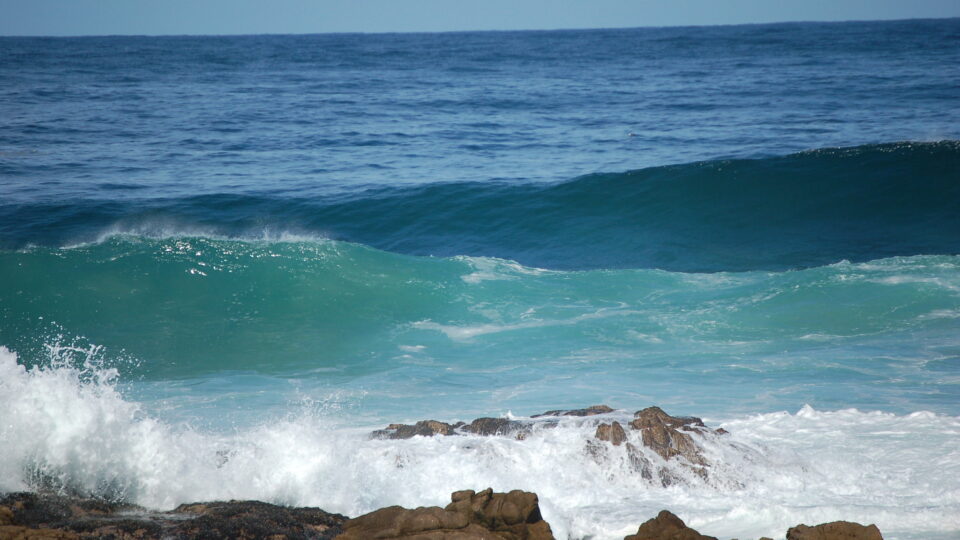
Storing carbon dioxide in the ocean

Reducing the amount of carbon dioxide entering the atmosphere means either shutting down emission sources (primarily curbing the use of fossil fuels) or capturing the CO2 as it is emitted.  Capturing carbon dioxide from smokestacks and other point sources with high concentrations is relatively efficient and can make economic sense.  Removing it from the air, which even at today’s dangerously high levels contains only 400 parts per million, is difficult and energy intensive.  And even when it is removed, it then must be stored somewhere.

Researchers at Lehigh University have developed a novel way to capture carbon dioxide from the air and store it in what is effectively the infinite sink of the ocean.  The approach uses an innovative copper-containing filter that essentially converts CO2 into sodium bicarbonate (better known as baking soda.)  The bicarbonate can be released harmlessly into the ocean.

This technique has produced a 300 percent increase in the amount of carbon dioxide captured compared with existing direct air capture methods.   It does not require any specific level of carbon dioxide to work.  The filter becomes saturated with the gas molecules as air is blown through it.  Once this occurs, seawater is passed through the filter and the CO2 is converted to dissolved bicarbonate.  Dumping it into the ocean has no adverse effect on the ocean.  It doesn’t change the salinity at all, and the stuff is slightly alkaline, which will help reduce ocean acidification.

Reusing the filter requires cleaning it with a sodium hydroxide solution, which can be created from seawater using electricity generated by waves, wind, or sun.

The filter, called DeCarbonHIX, is attracting interest from companies based in countries around the world.

**********

Web Links

Path to net-zero carbon capture and storage may lead to ocean

Photo, posted March 10, 2007, courtesy of Gail via Flickr.

Earth Wise is a production of WAMC Northeast Public Radio
Florida’s Starving Manatees | Earth Wise

January 12, 2022 By EarthWise Leave a Comment

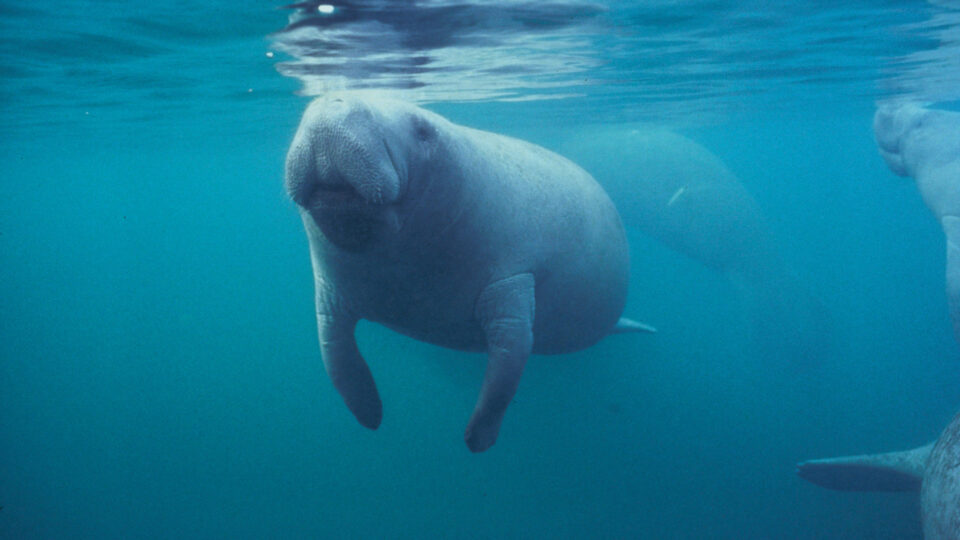
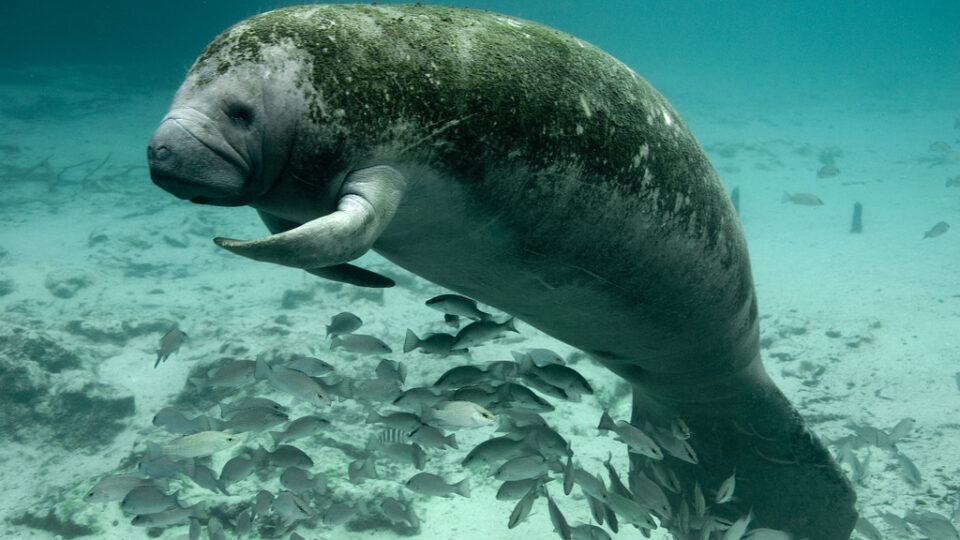
Manatees, also called “sea cows”, have been the victims of farm runoff.  They have starved to death by the hundreds along Florida’s east coast because algae blooms fed by nitrogen-rich fertilizer runoff are proliferating on the ocean surface and blocking sunlight from reaching seagrass below.  Seagrass is the primary source of food for manatees in the winter.  As seagrass dies off, so do the manatees.

Over 1,000 manatees have been found dead so far this year.  It is estimated that fewer than 8,000 remain in Florida waters.  Efforts are underway to restore coastal seagrass in the region as well as clams and oysters, which filter pollutants from water.  Unless the water is cleared up, it will be difficult to regrow the seagrass.  But the current situation is that manatees are so short on food that they are eating seagrass roots, killing the plants and thwarting efforts to help seagrass recovery.

Given this dire situation, the federal governmental has approved a program of feeding manatees.  The starving animals will be fed by hand in Florida, which is a rare wildlife intervention.  Conservation agencies tend to favor leaving wild animals to their own foraging and hunting so that they don’t become dependent on human handouts.

During the trial phase of the program, wildlife experts are likely to feed the animals romaine lettuce and cabbage, which is what manatees in captivity eat.  The hope is to give the animals enough additional food for them to get through the winter.  The trial feeding will begin on private property.  It remains illegal for the public to feed manatees.

**********

Web Links

Florida to feed starving manatees in rare conservation move

Photo, posted February 21, 2008, courtesy of Keith Ramos/USFWS via Flickr.

Earth Wise is a production of WAMC Northeast Public Radio.

Reducing COVID-19 Spread With UV Light | Earth Wise

November 24, 2021 By EarthWise 1 Comment

Using UV light to reduce COVID-19 spread

New research published by the University of Colorado Boulder analyzes the effects of different wavelengths of ultraviolet light on the SARS-CoV-2 virus.   The research found that a specific wavelength of UV light is not only extremely effective at killing the virus that causes COVID-19, but also that this wavelength is safer for use in public spaces.

UV light is naturally emitted by the sun and most forms of it are harmful to living things – including microorganisms and viruses.   The most harmful UV radiation from the sun is filtered out by the atmosphere’s ozone layer.   Human-engineered UV light sources screen out harmful UV rays with a phosphorus coating on the inside of the tube lamps.  Hospitals and some other public spaces already use UV light technology to disinfect surfaces when people are not present.

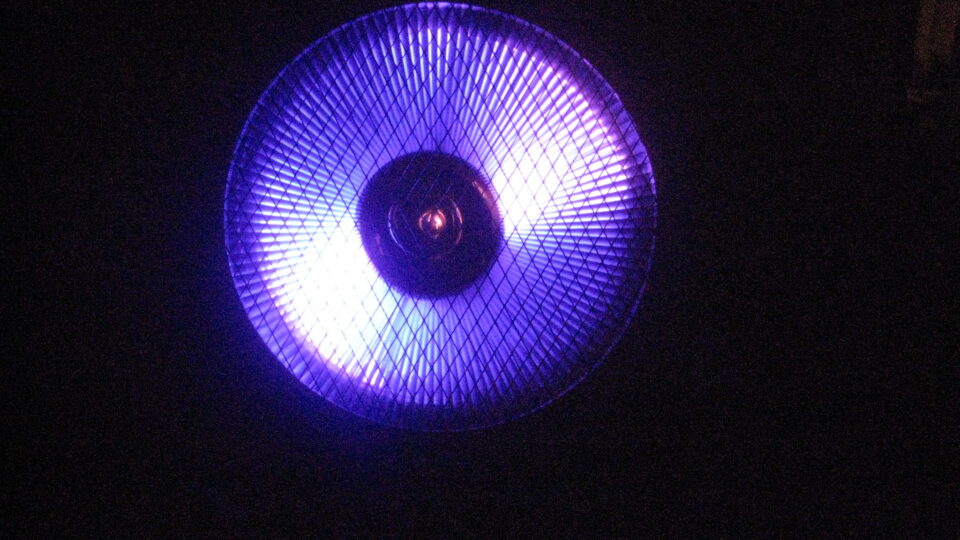
The new research found that a specific wavelength of far-ultraviolet-C, at 222 nanometers, was particularly effective at killing SARS-CoV-2, but that wavelength is blocked by the very top layers of human skin and eyes.  In other words, that light has essentially no detrimental health effects for people while it is very capable of killing off viruses.

The researchers argue that this safe wavelength of Far UV-C light could serve as a key mitigation measure against the COVID-19 pandemic.  They imagine systems that could cycle on and off in indoor spaces to routinely clean the air and surfaces or perhaps create an ongoing, invisible barrier between teachers and students, customers and service workers, and other places where social distancing is not practical.  Installing these specialized UV lights would be much cheaper than upgrading entire HVAC systems in buildings.

**********

Web Links

Specific UV light wavelength could offer low-cost, safe way to curb COVID-19 spread

Photo, posted January 18, 2008, courtesy of Phil Whitehouse via Flickr.

Earth Wise is a production of WAMC Northeast Public Radio.

Manatees And Pollution | Earth Wise

November 11, 2021 By EarthWise Leave a Comment

Pollution wreaking havoc on Florida manatees

Manatees are large, gentle, and curious marine mammals measuring up to 13 feet long and weighing up to 3,300 lbs.  There are three living species of manatees:  The Amazonian Manatee, the West African Manatee, and the West Indian Manatee, which is commonly found in Florida and the Gulf Coast.  Manatees inhabit the shallow, marshy coastal areas and rivers of the Caribbean Sea, the Gulf of Mexico, the Atlantic coast, the Amazon basin, and West Africa. 

The West Indian Manatee, which includes the Florida Manatee, is protected under the Endangered Species Act.  Today, the range-wide population is estimated to be at least 13,000 manatees, with more than 6,500 in the southeastern United States and Puerto Rico.

In Florida, an uptick in nutrient loading from nonpoint sources is triggering algal blooms in Indian River Lagoon and neighboring areas.  These algal blooms have decimated seagrass, manatees’ primary food source. 

As a result , manatees have starved to death by the hundreds along Florida’s east coast.  The state has recorded 974 manatee deaths in 2021, shattering previous annual all-time highs with still approximately two months to go.  Manatees, which need to eat between 100-200 pounds of seagrass daily, are now eating the seagrass roots, which permanently kills the aquatic plants.

Efforts are being made to replant seagrass and to restore clam and oyster beds so that the mollusks can help clean the water.  But manatees face a myriad of additional threats, including collisions with boats and ships, temperature changes, disease, and crocodile predation.

********** 

Web Links

Florida lawmakers hear Fish & Wildlife agency response to manatee death ‘catastrophe’

West Indian manatee

Preliminary 2021 Manatee Mortality Table by County

Photo, posted May 7, 2010, courtesy of Jim Reid/USFWS via Flickr.

Earth Wise is a production of WAMC Northeast Public Radio.

Generating Hydrogen From Poor-Quality Water | Earth Wise

September 8, 2020 By EarthWise Leave a Comment

generating hydrogen from polluted water

Hydrogen could be the basis of a complete energy system.  It could be stored and transported and could be used to power vehicles and to generate electricity in power plants.  Proponents of the so-called hydrogen economy contend that hydrogen is the best solution to the global energy challenge.  But among the challenges faced by a hydrogen economy is the development of an efficient and green method to produce hydrogen.

The primary carbon-free method of producing hydrogen is to break down water into its constituent elements – hydrogen and oxygen.  This can be done in a number of ways, notably by using electricity in a process called electrolysis.  A method that seems particularly attractive is to use sunlight as the energy source that breaks down the water molecule.

While there is an abundance of water on our planet, only some of it is suitable for people to drink and consume in other ways.    Much of the accessible water on earth is salty or polluted.  So, a technique to obtain hydrogen from water ideally should work with water that is otherwise of little use to people.

Researchers in Russia and the Czech Republic have recently developed a new material that efficiently generates hydrogen molecules by exposing water – even saltwater or polluted water – to sunlight. 

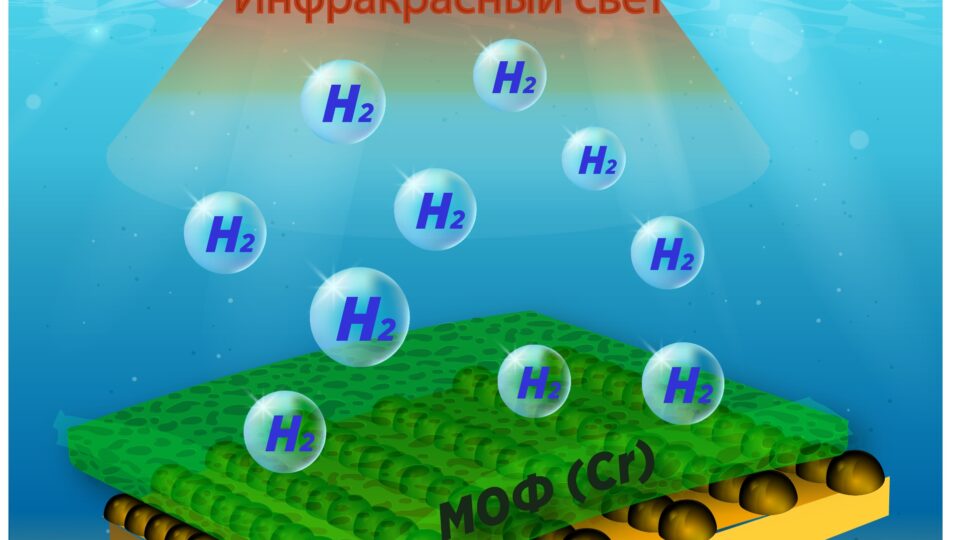
The new material is a three-layer structure composed of a thin film of gold, an ultra-thin layer of platinum, and a metal-organic framework or MOF of chromium compounds and organic molecules.  The MOF layer acts as a filter that gets rid of impurities.

Experiments have demonstrated that 100 square centimeters of the material can generate half a liter of hydrogen in an hour.  The researchers continue to improve the material and increase its efficiency over a broad range of the solar spectrum.

**********

Web Links

New Material Can Generate Hydrogen from Salt and Polluted Water

Photo courtesy of Tomsk Polytechnic University.

Earth Wise is a production of WAMC Northeast Public Radio.

A Better Filter For Saltwater

November 26, 2018 By EarthWise Leave a Comment

https://earthwiseradio.org/wp-content/uploads/2018/10/EW-11-26-18-A-Better-Saltwater-Filter.mp3

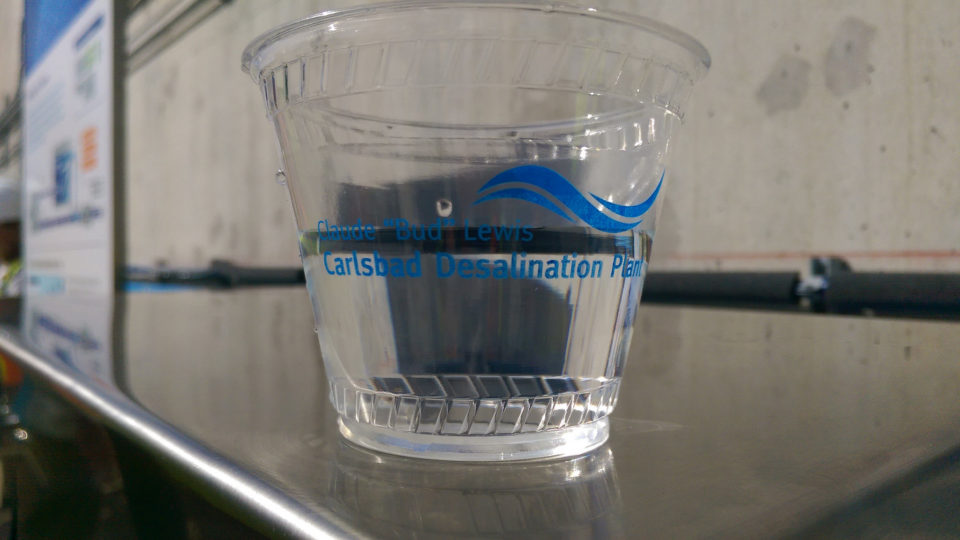
Turning seawater into drinkable water is a highly desirable capability given that fresh water is generally in short supply and seawater is endlessly abundant.  Desalination plants typically strain salt out of seawater by pumping it through films made of polyamide.  Polyamide filters are riddled with tiny pores that allow water molecules to squeeze through, but not sodium ions.

[Read more…] about A Better Filter For Saltwater

Making Cities Cooler

September 5, 2018 By EarthWise Leave a Comment

https://earthwiseradio.org/wp-content/uploads/2018/08/EW-09-05-18-Making-Cities-Cooler.mp3

Cities are particularly miserable during heatwaves.   With lots of concrete and asphalt surfaces, they soak up lots of heat and re-radiate it.  Lots of tall buildings block cooling breezes.  Factor in car exhaust and heat from air conditioners and it all adds up to the urban heat island effect.  Cities can be several degrees warmer during the day and as much as 20 degrees warmer at night.  All of this extra heat is not just a comfort issue, it is a serious health problem.

[Read more…] about Making Cities Cooler

Reducing Slavery In Seafood

August 28, 2018 By EarthWise Leave a Comment

https://earthwiseradio.org/wp-content/uploads/2018/08/EW-08-28-18-Reducing-Slavery-in-Seafood.mp3

The seafood industry is one of the largest employers in the world.  But according to a 2016 report, the seafood industry also contains widespread forced labor.   Forty seven seafood-producing countries were reported to utilize forced labor.  The seafood hub countries of Indonesia, Thailand, Vietnam, Peru, and the Philippines were also reported to use a significant percentage of child labor.

[Read more…] about Reducing Slavery In Seafood

Dioxane And Drinking Water

October 24, 2017 By EarthWise Leave a Comment

https://earthwiseradio.org/wp-content/uploads/2017/10/EW-10-24-17-Dioxane-And-Drinking-Water.mp3

A byproduct of plastics production, dioxane is a clear, synthetic, liquid solvent that easily mixes with water.  It’s frequently used in paint strippers, dyes, and varnishes, as well as shampoos and body washes – particularly those that are sudsy.  Dioxane doesn’t really biodegrade and is widely regarded as a contaminant.    

[Read more…] about Dioxane And Drinking Water

Removing Heavy Metals From Water

September 7, 2017 By EarthWise

https://earthwiseradio.org/wp-content/uploads/2017/09/EW-09-07-17-Removing-Heavy-Metals.mp3

Clean and abundant water is the most essential need for all human societies and the supply of it is threatened by increasing populations and volatile climate patterns.   The quality of water is threatened by a host of contaminants, most of our own making.

[Read more…] about Removing Heavy Metals From Water

Turning Seawater Into Drinking Water

May 10, 2017 By EarthWise

https://earthwiseradio.org/wp-content/uploads/2017/04/EW-05-10-17-Seawater-into-Drinking-Water.mp3

Graphene is often called the wonder material.   First isolated by scientists in 2004, it is a form of carbon that is just one atom thick, extremely light, two hundred times stronger than steel, highly flexible, and an excellent conductor of heat and electricity.   Scientists are finding numerous applications for it.

[Read more…] about Turning Seawater Into Drinking Water

A Soy-Based Air Filter

February 16, 2017 By EarthWise

https://earthwiseradio.org/wp-content/uploads/2017/02/EW-02-16-17-Soy-Based-Air-Filter.mp3

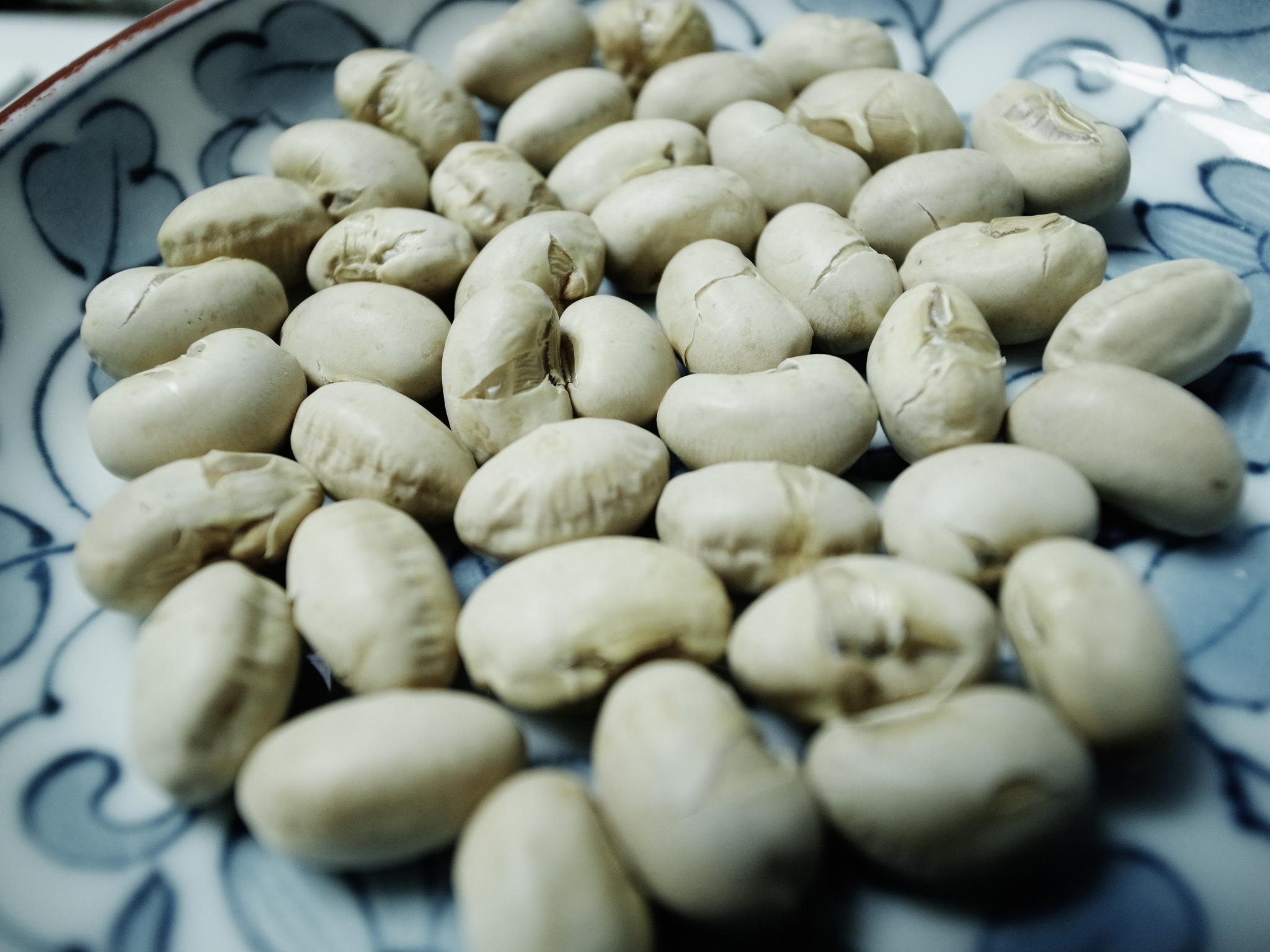
Particulate matter and toxic chemical pollutants are a pervasive problem in the air people breathe in many places.  Poor air quality causes health problems worldwide and is a factor in diseases such as asthma, heart disease and lung disease.

[Read more…] about A Soy-Based Air Filter

Primary Sidebar

Recent Episodes

  • An uninsurable future
  • Clean energy and jobs
  • Insect declines in remote regions
  • Fossil fuel producing nations ignoring climate goals
  • Trouble for clownfishes

WAMC Northeast Public Radio
WAMC/Northeast Public Radio is a regional public radio network serving parts of seven northeastern states (more...)

Copyright © 2025 ·