• Skip to primary navigation
  • Skip to main content
  • Skip to primary sidebar

Earth Wise

A look at our changing environment.

  • Home
  • About Earth Wise
  • Where to Listen
  • All Articles
  • Show Search
Hide Search
You are here: Home / Archives for energy

energy

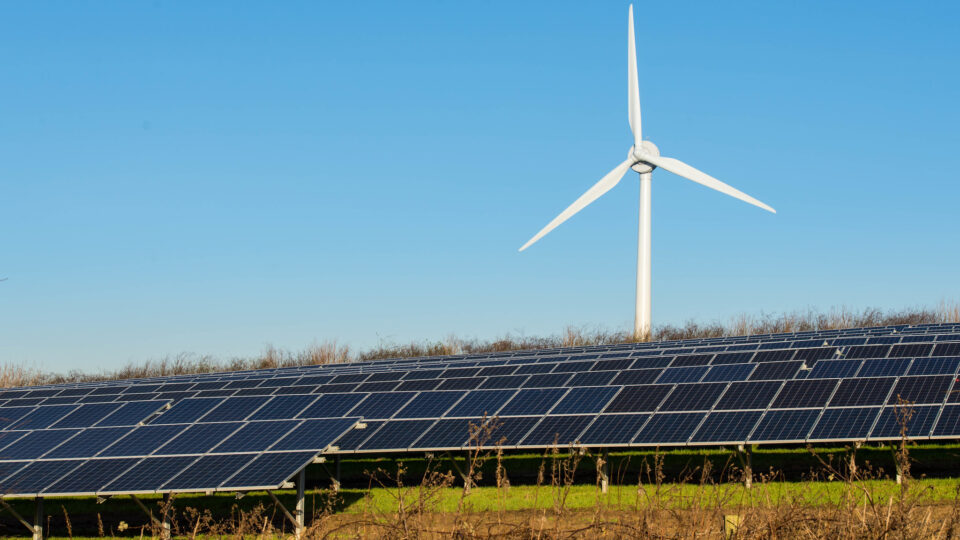
Electric Mail Trucks | Earth Wise

January 26, 2023 By EarthWise Leave a Comment

The USPS is electrifying its fleet

The US Postal Service recently announced that it plans to buy at least 66,000 electric vehicles by 2028.  With more than 231,000 total vehicles, the Postal Services operates one of the largest civilian vehicle fleets in the world.

Last February, the Postal Service announced a plan to replace up to 165,000 older mail trucks, many of which are as much as 30 years old.  The gas-powered trucks get an estimated 8.6 miles per gallon when air conditioning is running.  The plan was for only 10% of the new trucks to be electric, citing the high upfront costs of electric vehicles even though they generally make up the difference by saving on fuel and maintenance costs over time. 

Facing strong criticism from the Biden administration, the Postal Service shifted course and in July announced that 40% of the new trucks would be electric. With passage of the Inflation Reduction Act in August, the Postal Service received $3 billion for fleet electrification and has once again changed its plans.  It also announced that it intends to stop buying gas-powered delivery trucks altogether after 2026.

As part of the new plan, the Postal Service plans to upgrade hundreds of facilities across the country to accommodate electric vehicles.  This will include installing chargers and streamlining delivery operations to reduce unnecessary trips.

The Postal Service is no alone in working to clean up its fleets.  FedEx says it plans to completely electrify its pickup and delivery fleet by 2040.  Amazon has ordered 100,000 electric vans from the start-up company Rivian.

Electrifying the postal delivery system makes abundant sense.  Postal routes are predictable and there is ample charging time to meet the power needs of the fleet.

**********

Web Links

Your Mail Truck Is Going Electric

Photo, posted January 18, 2017, courtesy of Rusty Clark via Flickr.

Earth Wise is a production of WAMC Northeast Public Radio.
Carbon Capture In Wyoming | Earth Wise

January 25, 2023 By EarthWise Leave a Comment

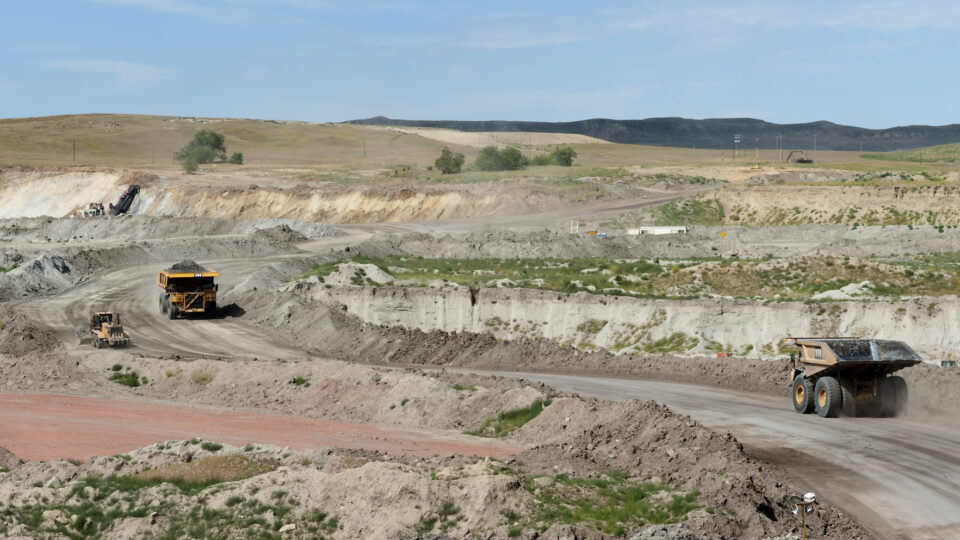
Wyoming produces about 40% of our country’s coal and many towns in the state were built because of and make their living from it.  With coal’s plummeting share in the nation’s electricity, there is a great deal of anxiety among residents of those towns.

As carbon dioxide levels in the atmosphere continue to climb, there is a growing sense that cutting emissions will not happen quickly enough and it will be necessary to pull the greenhouse gas out of the atmosphere.  The current long-term government climate strategy assumes that carbon removal will account for 6 to 8 percent of the nation’s greenhouse gas reductions by 2050.

The Inflation Reduction Act passed in August provides $3.5 billion to help build “direct air capture hubs” around the country, with an emphasis on fossil fuel-dependent communities such as many in Wyoming. 

The town of Rock Springs, Wyoming is home to the Jim Bridger Coal Plant. A company called CarbonCapture, Inc., is launching Project Bison, which will build a direct air capture facility outside of town that is set to begin operations next year.  It will initially capture 10,000 metric tons of CO2 per year but plans to expand that to 5 million tons a year by 2030. 

That would be far more than any current carbon capture plant can do. The largest plant in the world, located in Iceland, pulls in only about 4,000 metric tons a year.

There are many problems associated with carbon capture.  It uses up very large amounts of energy, possibly presents environmental problems, and is very expensive.  In short, the technology has a long way to go before becoming viable.  However, this may ultimately be another example where necessity is the mother of invention.

**********

Web Links

Carbon Removal Is Coming to Fossil Fuel Country. Can It Bring Jobs and Climate Action?

Photo, posted July 22, 2012, courtesy of Max Phillips via Flickr.

Earth Wise is a production of WAMC Northeast Public Radio

Fusion Power And The Climate Crisis | Earth Wise

January 24, 2023 By EarthWise Leave a Comment

In December, the Department of Energy announced that scientists at Lawrence Livermore National Laboratory in California had achieved a breakthrough in nuclear fusion technology.  Fusion is the process by which the sun generates energy.  If we had the means to produce nuclear fusion in a controlled fashion, it would be an almost limitless source of clean energy.

Scientists have been trying to develop controllable fusion since the advent of the hydrogen bomb in the 1950s.  H-Bombs are basically uncontrollable fusion.

There are massive experiments under development around the work seeking the means to create and control fusion.  There are multi-billion-dollar projects such as the ITER tokamak project in southern France, that have been ongoing for decades.  Colossal equipment is required to produce the temperatures of millions of degrees needed to fuse hydrogen atoms into helium atoms.

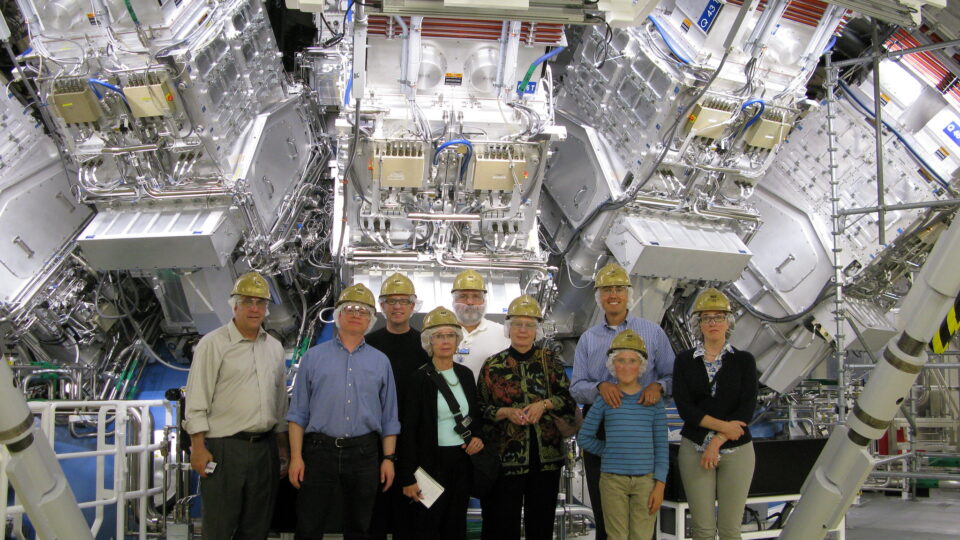
The Livermore project uses 192 powerful laser beams to vaporize a tiny pellet and provide the energy required to initiate fusion. The breakthrough is that the experiment released more energy than the lasers put in.  This was the first time a fusion experiment produced a net gain of energy.

Is fusion the solution to de-carbonizing the energy system?  Perhaps someday it might be.  However, even the most optimistic fusion researchers believe it will be at least another decade before even the experimental fusion systems around the world can reliably produce energy and the efforts will cost untold billions of dollars. 

The world cannot wait for fusion power to save the day.  The focus must remain on currently available renewable energy technologies if we are to achieve the necessary emission reductions in time to prevent the worst effects of climate change.

**********

Web Links

Can Fusion Solve the Climate Crisis?

Photo, posted July 29, 2010, courtesy of Steve Jurvetson via Flickr.

Earth Wise is a production of WAMC Northeast Public Radio.
Electric Cars And Cleaner Air | Earth Wise

January 20, 2023 By EarthWise Leave a Comment

Electric cars can help clean the air

Cities are awash in microscopic soot and other pollutants from the tailpipes of vehicles.  Apart from contributing substantially to the warming of the planet, these emissions have a significant impact on human health.  Research at Cornell University has determined that the continued growth of electric cars will lead to cleaner air and reduced human mortality in most if not all U.S. metropolitan areas.

The study, published in Renewable and Sustainable Energy Reviews, estimated the health impact and consequential economic impact of cleaner air in American cities as a result of the transition to electric vehicles.

For example, by 2050, Los Angeles will have 1,163 fewer premature deaths annually, corresponding to $12.6 billion in economic health benefits.  Greater New York City could see 574 fewer deaths a year leading to $6.24 billion in associated economic gains.

Global sales of electric cars have grown steadily.  In 2016, they accounted for less than 1% of the market.  That share grew to 2.2% in 2018, 4.1% in 2020, and 6.6% in 2021.

In the U.S., electric cars accounted for 4.5% of sales in 2021, but in many cities, the numbers were much higher. 

These trends are likely to accelerate as a combination of government policies and major decisions by automakers drive a rapid transition to electrification.  While mitigating the effects of climate change continues to be the main driving force for that transition, the human health benefits will be a very significant reward for doing the right thing for the planet.

**********

Web Links

Electric car sales drive toward cleaner air, less mortality

Photo, posted May 11, 2021, courtesy of Chris Yarzab via Flickr.

Earth Wise is a production of WAMC Northeast Public Radio

Renewables Will Overtake Coal | Earth Wise

January 17, 2023 By EarthWise Leave a Comment

According to a recent report by the International Energy Agency, worldwide growth in renewable power capacity is set to double in the next five years.  In fact, by 2027, the world will add as much renewable power as it did over the previous 20 years.

Of particular significance is that renewables are going to overtake coal as the largest source of electricity generation by early 2025.

The global energy crisis triggered by the war in Ukraine has had multiple effects on the evolution of the energy system.  While the war has driven a resurgence in fossil fuel consumption in Europe in order to replace gas from Russia, that resurgence is expected to be short-lived.  Instead, the current energy crisis may turn out to be an historic turning point toward a cleaner and more secure energy system.

Soaring fossil-fuel prices triggered by the war have caused many countries to respond by embracing wind turbines, solar panels, nuclear power plants, hydrogen fuels, electric vehicles, and electric heat pumps.  In the US, Congress approved more than $370 billion in spending for clean energy technologies as part of the Inflation Reduction Act.  China, India, South Korea, and Japan have all increased their national targets for renewable power.   However, heating and cooling buildings with renewable power remains a sector needing larger improvement, according to the energy agency.

Overall, the expansion of renewable power over the next five years is now projected to happen much faster than what was projected just one year ago. The new IEA report revised last year’s forecast for renewables growth by 30% as a result of the introduction of new policies by many of the world’s largest greenhouse gas emitters.

**********

Web Links

Renewables Will Overtake Coal by Early 2025, Energy Agency Says

Photo, posted March 8, 2021, courtesy of Stanze via Flickr.

Earth Wise is a production of WAMC Northeast Public Radio

California Offshore Wind Auction | Earth Wise

January 10, 2023 By EarthWise Leave a Comment

In December, the Bureau of Ocean Energy Management held the first auction for offshore wind energy leases on the West Coast.  The BOEM lease sale offered five lease areas covering 373,268 acres off the central and northern California coast.  The leased areas have the potential to produce over 4.6 gigawatts of wind energy, which is enough to power 1.5 million homes.

The auction drew competitive bids from five companies totaling over $750 million.  The winning bidders were RWE Offshore Wind Holdings, California North Floating, Equinor Wind, Central California Offshore Wind, and Invenergy California Offshore. 

RWE is a German company with subsidiaries across the globe.  California North Floating is an affiliate of the Danish developer Copenhagen Infrastructure Partners.  Equinor Wind is a Norwegian company already heavily involved in offshore wind projects on the East Coast.  Central California Offshore Wind is managed by a joint venture between Spanish and French energy companies.   Invenergy is a privately held global developer and operator of renewable energy headquartered in Chicago.

The bidders will receive credits for participating in programs that support work force training programs for the floating offshore wind industry and/or the development of a US domestic supply chain for that industry. 

Offshore wind off the Pacific coast has enormous potential for enhancing the country’s energy future but represents a significant challenge because the deep ocean floors necessitate the use of floating wind technology as opposed to turbines that are affixed to the sea floor.

**********

Web Links

Biden-Harris Administration Announces Winners of California Offshore Wind Energy Auction

Photo, posted December 30, 2013, courtesy of Derek Finch via Flickr.

Earth Wise is a production of WAMC Northeast Public Radio.

Solar Parking Lots In France | Earth Wise

January 6, 2023 By EarthWise Leave a Comment

France has passed legislation that will require all parking lots with more than 80 spaces to be covered over by solar panels.  This is part of a broader effort to put solar panels on vacant lots, empty land alongside roadways and train tracks, and even some farmland.  The overall program would add 11 gigawatts of solar power to the French electricity grid.

The legislation applies to both new and existing parking lots.  Owners of parking lots with more than 400 spaces would have 3 years to comply, while owners of lots with 80 to 400 spaces would have five years.

To produce 11 gigawatts of solar output, about half a percent of France’s urban land would need to be covered with solar panels.  This is quite a bit, but not an insurmountable obstacle.  Parking lots, however, could only provide a fraction of what is needed.  It would take something like 8 million parking spaces covered with solar panels to produce that much power.  That is probably at least twice as many as France has.

Several countries, most notably Germany, already have mandates for new construction to incorporate renewable energy.  This includes solar panels, biomass boilers, heat pumps, and wind turbines.  Many parking lots in southern Europe already have sunshades over them, which would make it pretty easy to install solar panels.  This is much rarer in cooler countries.

France is pursuing this policy to reduce its dependence on nuclear power, which currently provides 70% of the country’s electricity.  Apart from the general trend of opposition to nuclear power, reliance upon it during increasingly common droughts is problematic as the power plants require significant amounts of water to operate.

**********

Web Links

France’s plan for solar panels on all car parks is just the start of an urban renewable revolution

Photo, posted February 11, 2008, courtesy of Armando Jimenez / U.S. Army Environmental Command via Flickr.

Earth Wise is a production of WAMC Northeast Public Radio.
A Green New Year | Earth Wise

December 30, 2022 By EarthWise Leave a Comment

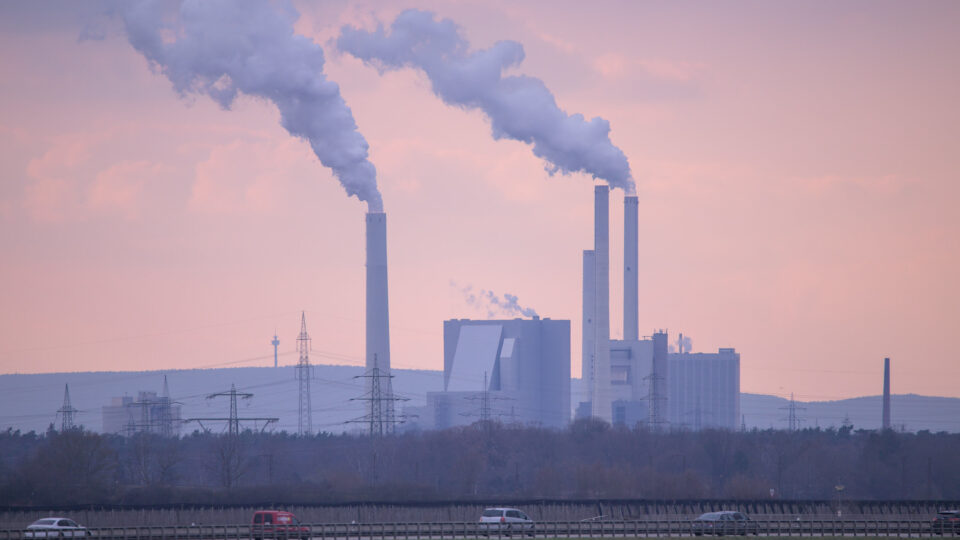
Every year, millions of people around the world make resolutions in hopes of sparking positive changes in the new year.  Popular resolutions include improving health and fitness, traveling more, spending less, and so on.  With the New Year just around the corner, here are seven resolutions we all could make that would collectively have a major impact on the planet: 

1) Eat less meat.  Resource-intensive animal-based foods like meat, dairy, and eggs are one of the chief contributors to climate change. 

2) Get a home energy audit.  It’s a great way to understand your home’s energy footprint and discover ways to improve the energy efficiency of your home. 

3) Buy local whenever possible.  Shopping locally supports the local economy and dramatically cuts down on the carbon emissions associated with shipping.

4) Carry reusable shopping bags on errands. While disposable shopping bags are convenient, they are difficult to recycle and are often thrown away. 

5) Air dry your laundry whenever possible.  Drying clothes outside or using an indoor drying rack can save money and energy.  Americans spend about $9 billion a year on electricity to dry clothing. 

6) Purchase used or pre-owned items.  The market for second-hand items is booming, making it possible to purchase pretty much anything you want at thrift stores or online. 

7) Bring a reusable water bottle everywhere.  According to the EPA, Americans throw away enough plastic bottles each year to circle the earth five times.  Carrying your own bottle helps reduce this waste and will save you money.

As we ring in the new year this weekend, let’s raise our glasses to a cleaner and greener 2023. 

**********

Web Links

10 Sustainable New Year’s Resolutions!

New Year’s Resolutions

Photo, posted December 31, 2014, courtesy of Doug Anderson via Flickr.

Earth Wise is a production of WAMC Northeast Public Radio

It Really Is Greenhouse Gases | Earth Wise

December 26, 2022 By EarthWise Leave a Comment

The scientific consensus that human-generated carbon dioxide is changing the climate began to form in the 1980s. 

For a long time, the changes to the climate were simply denied.  After a while, as those changes became increasingly hard to ignore, the argument shifted to the changes being real but not caused by anything people are doing.  The multi-trillion-dollar fossil fuel industry was strongly motivated to focus attention away from the association between carbon dioxide and climate change.

The greenhouse gas effect has been known since the 19th century.  It isn’t just real; it is essential to life on earth.  Without sufficient levels of carbon dioxide in the atmosphere to trap some of the sun’s heat, the earth would be an ice planet incapable of supporting much in the way of life.  But there can be too much of a good thing.

Naysayers continue to grasp at alternative explanations for the warming planet rather than the inconvenient truth.  Some people try to claim that it is the release of heat from all our energy-generating activities -power plants, heaters and air conditioners, vehicles, and so on – that is warming the planet.

That issue has been studied in detail.  Human activity does generate a lot of heat and, technically speaking, that heat does help warm the planet.  However, the sun dumps 10,000 times more heat on the earth than all of human energy production added together.  Just the normal fluctuations in solar energy are 10 times larger than everything we do put together.

What is increasingly warming the planet is not the continuing energy striking the earth; it is primarily the fact that growing levels of greenhouse gases in the atmosphere are trapping more and more of that heat and preventing it from escaping into space.

***********

Web Links

Integrating anthropogenic heat flux with global climate models

Photo, posted August 25, 2009, courtesy of Gerald Simmons via Flickr.

Earth Wise is a production of WAMC Northeast Public Radio

Rainforest Promises | Earth Wise

December 23, 2022 By EarthWise Leave a Comment

Rainforest promises in Brazil

The recent UN climate summit in Sharm el Sheikh, Egypt brought with it lots of pledges for action.   Among them was a promise from the three countries that are home to more than half of the world’s tropical rainforests to try to do something to protect them.

The ministers of Brazil, Indonesia, and the Democratic Republic of Congo signed an agreement pledging cooperation on sustainable management and conservation, restoration of critical ecosystems, and creation of economies that would ensure the health of both their people and their forests.

The plan has no financial backing of its own.  The countries are pledging to work together to establish a funding mechanism that could help to preserve the tropical forests that both help regulate the Earth’s climate and sustain a wide range of animals, plants, birds, and insects.

That such an agreement has come about at all is a result of the election of Luiz Lula da Silva as Brazilian president, replacing Jair Bolsonaro, who was famously an opponent of any and all environmental conservation or protections.  President Lula addressed the attendees of the climate summit promising that “Brazil is back.”   He described his country as having been in a cocoon for the past four years under his predecessor.  He declared that going forward, Brazil will be a force to combat climate change.  Given the importance of the Amazon rainforest, that is critical for the success of the world’s efforts.

Like all other issues on the table at the climate summit, the real challenge is not to come up with meaningful pledges on climate action, it is to be able to follow through on those pledges.  If past summits are any indication, that is not an easy task.

**********

Web Links

Brazil, Indonesia and Congo Sign Rainforest Protection Pact

Photo, posted September 15, 2013, courtesy of Moises Silva Lima via Flickr.

Earth Wise is a production of WAMC Northeast Public Radio

Climate A Winner In The Elections | Earth Wise

December 22, 2022 By EarthWise Leave a Comment

The climate was a big winner in recent elections

The dominant issues in midterm elections in November were the economy and abortion rights, but at the same time there were also ballot initiatives in various cities and states across the country related to climate.  What some describe as the ‘silent surprise’ of the election was that these initiatives generally passed and, in some cases, by large majorities.

The most significant of these ballot measures was in New York, where two-thirds  of voters passed the largest environmental bond measure in state history.  The measure funds up to $4.2 billion for environmental improvement projects including increasing flood resiliency, reducing greenhouse gas emissions, electrifying school buses, and creating more green and open spaces.

The Clean Water, Clean Air, and Green Jobs Environmental Bond Act provides up to $1.5 billion for projects aimed at climate change mitigation.  Another $1.1 billion is targeted for flood risk reduction and waterway restoration.  $650 million goes for water quality and infrastructure improvement. 

Rhode Island voters passed a green bonds act that will allow the state to invest in climate resiliency at the municipal level, as well as local recreation, open space protection, brownfields remediation, and forest and habitat restoration. 

Other climate-related ballot measures passed in Boulder, Colorado and in El Paso, Texas.  There were however a few climate measures that lost.  Proposition 30 in California that would have taxed very high-income residents to encourage sale of electric vehicles failed.  So did Arizona Proposition 310, which would have increased sales taxes by 0.1% to fund fire districts.

But overall, it was a good election for the climate.

**********

Web Links

Voters pass historic climate initiatives in ‘silent surprise’ of US midterms

Photo, posted September 24, 2021, courtesy of Ivan Radic via Flickr.

Earth Wise is a production of WAMC Northeast Public Radio

Are Companies Really Reducing Emissions? | Earth Wise

December 21, 2022 By EarthWise Leave a Comment

Many companies around the world are declaring tremendous progress in reducing their greenhouse gas emissions.  Sometimes these claims are the result of actions that really do  reduce emissions but other times they are the result of something called “market-based accounting”. Businesses buy credits from clean energy providers that allows them to say they are running on green power when they actually are not.

The market analysis firm Bloomberg Green analyzed almost 6,000 climate reports filed by corporations last year and found that over 1,300 of them employed market-based accounting to erase over 120 million tons of emissions from their records.

Some clean energy contracts do have major climate benefits.  For example, companies like Amazon, Nestle, and Target have signed long-term power purchase agreements that ultimately help renewable developers finance new energy projects.

On the other hand, renewable energy credits are often short-term transactions with existing facilities and do little to stimulate investment or otherwise lead to greater use of green power.  They simply shift around ownership of existing renewable energy without doing anything new for the climate.

Some companies have made meaningful cuts to their pollution by putting solar panels on their roofs, upgrading their lighting and air conditioning equipment, and so on.  But many are reluctant to spend their capital in this way, even if it eventually saves money through lower electric bills.

Customers and shareholders want to see corporations do their part in reducing emissions.  But too many are making grandiose claims enabled by market-based accounting while doing far too little to help the environment.  Dubious claims of climate progress are not harmless; it is essential for the world’s companies to really do their share.

**********

Web Links

What Really Happens When Emissions Vanish

Photo, posted July 16, 2014, courtesy of Mike Mozart via Flickr.

Earth Wise is a production of WAMC Northeast Public Radio

Getting Rid Of Hydrogen Sulfide | Earth Wise

December 20, 2022 By EarthWise Leave a Comment

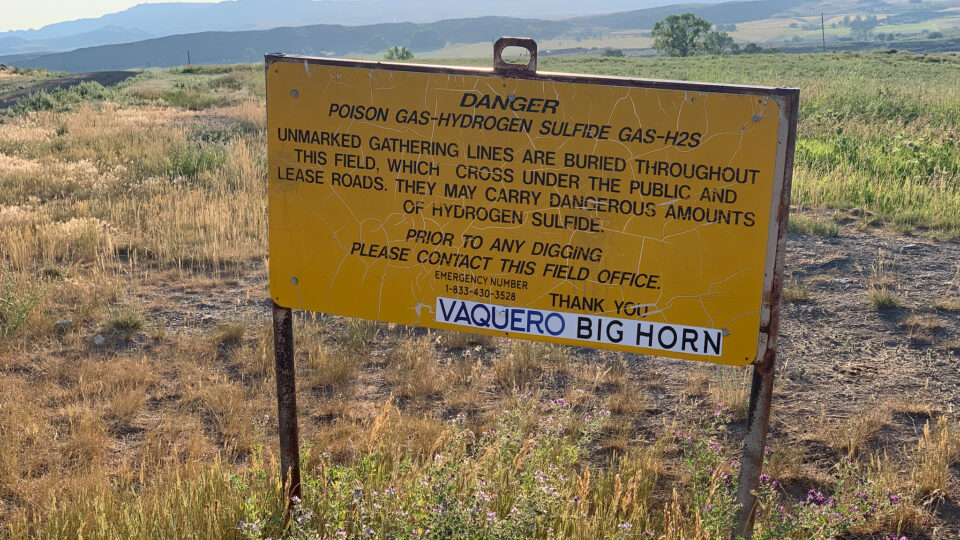
Hydrogen sulfide gas produces the characteristic smell of rotten eggs, sewers, stockyards, and landfills.  The petroleum industry produces thousands of tons of the stuff each year as a byproduct of the processes that remove sulfur from petroleum, natural gas, coal, and other products.  The industry faces substantial fines for emitting hydrogen sulfide, but remediation is expensive.

Researchers at Rice University have developed a method for turning hydrogen sulfide into hydrogen gas and sulfur in a single step.  Called plasmonic photocatalysis, it not only gets rid of an undesirable substance, it does so by producing valuable byproducts.

The established way of getting rid of hydrogen sulfide is called the Claus process.  It requires multiple steps, including some that require combustion chambers heated to 1,500 degrees Fahrenheit.  The end product is sulfur and water.

The Rice University process gets all of its energy from light.  A surface of grains of silicon dioxide is dotted with tiny gold nanoparticles.  These particles interact strongly with a specific wavelength of visible light and cause plasmonic reactions that create short-lived, high-energy electrons that drive the catalysis of hydrogen sulfide.  Given that the process requires only visible light and no external heating, it should be relatively straightforward to scale up using solar energy or very efficient LED lamps.

The new hydrogen sulfide remediation technology has been licensed by a Houston-based startup company with more than 60 employees whose founders include some of the Rice researchers.  The process may end up being efficient enough and cheap enough for cleaning up non-industrial sources of hydrogen sulfide such as sewers and animal waste.

**********

Web Links

New catalyst can turn smelly hydrogen sulfide into a cash cow

Photo, posted July 8, 2021, courtesy of Doug Letterman via Flickr.

Earth Wise is a production of WAMC Northeast Public Radio

Windows To Cool Buildings | Earth Wise

December 15, 2022 By EarthWise Leave a Comment

Developing windows that help to cool buildings

About 15% of global energy consumption is for cooling buildings.  Because of this, there is an ever- growing need for technologies that can more efficiently cool buildings.   Researchers at Notre Dame University have used advanced computing technology and artificial intelligence to design a transparent window coating that is able to lower the temperature inside buildings without using any energy.

The idea is to create a coating that blocks the sun’s ultraviolet and near-infrared light, which are parts of the solar spectrum that otherwise pass through glass and help to heat an enclosed room.  Cooling needs can be reduced further if the coating can radiate heat from the surface of the window so it can pass through the atmosphere into space.  Designing a coating that does both of those things simultaneously while transmitting visible light is difficult.  Coatings should not interfere with the view out the window.

The Notre Dame researchers used advanced computer modeling to create a so-called transparent radiative cooler that meets these goals.  The coating consists of alternating layers of common materials like silicon dioxide, silicon nitride, and aluminum oxide or titanium dioxide on top of a glass base and topped with a film of polydimethylsiloxane.  The computing method was able to optimize this structure far faster and better than conventional design techniques.

The researchers say that in hot, dry cities, the coating could potentially reduce cooling energy consumption by 31% compared with conventional windows.  The same materials could be used in other applications, such as car and truck windows.  In addition, the quantum computing-enabled optimization method used for this work could be used to design other composite materials.

**********

Web Links

Clear window coating could cool buildings without using energy

Photo, posted September 6, 2015, courtesy of Robert Otmn via Flickr.

Earth Wise is a production of WAMC Northeast Public Radio

New York Bans Some Crypto Mining | Earth Wise

December 13, 2022 By EarthWise Leave a Comment

New York bans some cryptocurrency mining

Crypto mining, the arcane process by which cryptocurrencies are generated, is incredibly energy-intensive.  As of this past summer, global electricity usage for the activity is as much as 240 billion kilowatt-hours per year, which is more than many entire countries use (for example Australia and Argentina.)  Crypto mining consumes as much electricity as all the conventional computer data centers in the world.

All that energy usage is problematic for the environment, but a growing practice has made it far worse.  Crypto miners have been re-powering decommissioned fossil fuel power plants to produce electricity strictly for mining operations.  Doing so eliminates the climate benefits achieved by shutting down those plants.

The New York State Legislature passed a bill in June that would place a two-year moratorium on permits to re-power fossil fuel plants.  It does not prevent crypto mining from existing generation sources.  The bill had sat on the governor’s desk until after the recent election.   But in late November, Governor Hochul signed the bill despite considerable lobbying against it.

The temporary ban was heavily opposed by cryptocurrency industry groups, to no surprise.  While some states actually offer tax incentives to lure crypto mining operations, supporters of the legislation hope that New York’s action may cause others to follow its lead and stop the reactivation of old fossil fuel plants.

The two-year moratorium will allow time to properly evaluate the impact of the crypto mining industry on the state’s climate goals.  It is pretty obvious that reactivating old, retired fossil fuel power plants as an energy source is a move in the wrong direction.

**********

Web Links

New York Enacts 2-Year Ban on Some Crypto-Mining Operations

Photo, posted February 27, 2021, courtesy of Ivan Radic via Flickr.

Earth Wise is a production of WAMC Northeast Public Radio

Fuel From Coffee Grounds | Earth Wise

December 8, 2022 By EarthWise Leave a Comment

Creating fuel from coffee waste

The world drinks a lot of coffee.  Americans alone consume 400 million cups a day.  Each cup of coffee results in about half an ounce of coffee grounds.  Adding that up, this country produces over 6,000 tons of coffee grounds each day.  While coffee grounds are not particularly harmful, that is an awful lot of waste that mostly ends up in landfills or is incinerated.

Researchers at Aston University in the UK have developed a method of producing high-quality biodiesel fuel from coffee grounds.  Their study was published in the journal Renewable and Sustainable Energy Reviews.

The technique consists of growing a particular species of microalgae (Chlorella vulgaris) directly on spent coffee grounds.  The coffee grounds provide both the nutrients for the microalgae and a structure upon which it can grow.   Exposing the algae to light for 20 hours a day and dark for just four hours a day produced the best quality biodiesel.

Microalgae is well-known as a feedstock for biodiesel production.  Previously, it has been grown on materials like polyurethane foam or nylon which don’t provide any nutrients.   Using the coffee grounds as the substrate for growth means that no external nutrients are needed.

The resultant enhanced biodiesel produces minimal emissions and good engine performance and meets both US and European specifications.  This feedstock for producing biodiesel is ideal since it doesn’t require any competition with food crops and instead makes use of a widely available waste product.  The hope is that it may reduce the cutting down of palm trees to extract oil for biofuel.  In southeast Asia, this has been a major source of deforestation and increased greenhouse gas emissions.

**********

Web Links

Aston University researchers ‘feed’ leftover coffee grounds to microalgae to produce low emission biodiesel

Photo, posted October 13, 2007, courtesy of David Joyce via Flickr.

Earth Wise is a production of WAMC Northeast Public Radio

Renewable Energy Booming in India | Earth Wise

December 6, 2022 By EarthWise Leave a Comment

Renewable power is booming in India

India is the country with the second largest population in the world – over 1.4 billion people – second only to China – and will undoubtedly pass China soon based on population trends in the two countries.   India is the third largest emitter of carbon dioxide, after China and the U.S.  With its rapidly growing population and an economy heavily dependent on coal and oil, emissions in India are on a steep upward trajectory.  Currently, fossil fuels account for about 60% of India’s installed energy capacity.  It is essential that actions are taken to curb its rapid increase in greenhouse gas emissions.

To that end, India’s renewables sector is booming.  The country is projected to add 35 to 40 gigawatts of renewable energy each year until 2030.  That’s enough energy to power up 30 million more homes each year.  The country has established a target of producing 50% of its electricity from non-fossil fuel sources by the end of this decade.

 India is expected to reach over 400 gigawatts of renewable energy capacity by 2030

according to the Institute for Energy Economics and Financial Analysis and Climate Energy Finance.  The Indian government’s own projections estimate that the country will reach 500 gigawatts of renewable capacity in that timeframe.

As is the case with China, a country with an enormous population undergoing major economic growth and modernization has vast energy needs.  While it is imperative for the entire world that India puts a cap on its growing greenhouse gas emissions, it is a difficult challenge for an energy-hungry country.

**********

Web Links

Renewable energy booms in India

Photo, posted November 14, 2011, courtesy of Amaury Laporte via Flickr.

Earth Wise is a production of WAMC Northeast Public Radio

The Clean Energy Transition Is Accelerating | Earth Wise

December 2, 2022 By EarthWise Leave a Comment

The transition to clean and renewable energy is accelerating

The world’s economies including its energy markets have been in turmoil in recent times but despite the chaotic conditions, the shift to clean energy is gaining momentum.  This year, for the first time, the world is investing more in wind and solar power than in oil and gas drilling.  Investments in renewables are expected to reach $494 billion this year, more than the $446 billion directed towards oil and gas extraction.  It is rather sobering to realize that the world is still spending nearly half a trillion dollars a year to dig up more oil and gas.

According to the International Energy Agency, there will be an estimated 340 gigawatts of new renewable power capacity installed in 2022.  This is roughly equal to the total installed power capacity of Japan, which has the world’s third-largest economy.  This year is also seeing tremendous growth in electric cars, which are projected to make up 13% of all light-duty vehicle sales across the globe.

According to analysis by Bloomberg Green, 87 countries are now getting at least 5% of their power from wind and solar.  This number is considered to be a critical tipping point at which emerging technologies become more widely adopted.  The United States reached that 5% threshold in 2011.  Last year, our country surpassed 20% solar and wind power.  If we follow trends set by pioneering countries like Denmark, Ireland, and others, wind and solar will supply at least half of our power within the next decade.

Despite the turbulence in global energy markets, the shift to clean power is ongoing.  Estimates are that global spending on renewables will double over the next 10 years. 

**********

Web Links

Despite Turmoil in Energy Markets, the Shift to Clean Energy Is Gaining Steam

Photo, posted June 12, 2013, courtesy of Activ Solar via Flickr.

Earth Wise is a production of WAMC Northeast Public Radio

Climate Promises | Earth Wise

November 23, 2022 By EarthWise Leave a Comment

Countries are making climate promises, but are they following through?

The United Nations climate change conference that recently took place in Egypt is an annual event.  Last year, the conference was in Glasgow, Scotland, and the participants – heads of state and business leaders – produced a long list of promises aimed at fighting global warming.  How have the countries and companies making those promises done so far?  Unfortunately, not very well.

Participants made pledges for progress in several major areas.

Countries promised to cut greenhouse gas emissions faster, but only 24 countries out of the 140 participants have actually done so.

Countries agreed to expedite the deployment of clean energy and the phasing out of government subsidies for fossil fuels.  There has been considerable progress on green power, but coal use actually reached record highs this year primarily because of Russia’s invasion of Ukraine, which caused natural gas prices to spike.

Countries pledged $100 billion a year to help poorer countries shift to cleaner energy sources.  There has been lots of effort in this area, but the target has not been met and it isn’t clear that all the money is going where it is supposed to.

More than 100 countries pledged to slash methane emissions, but most nations are only getting started.

More than 130 countries pledged to halt and reverse deforestation by 2030.  Deforestation is slowly declining, but not fast enough to meet the goals of the pledge.

An important goal for this year’s climate conference was to try to find a way to not just set admirable and valuable climate goals, but to actually accomplish them.  It isn’t easy, but it is essential.

**********

Web Links

Countries Made Bold Climate Promises Last Year. How Are They Doing?

Photo, posted July 25, 2009, courtesy of Wagner T. Cassimiro via Flickr.

Earth Wise is a production of WAMC Northeast Public Radio

Hybrid Renewable Energy Plants | Earth Wise

November 17, 2022 By EarthWise Leave a Comment

Hybrid renewable energy systems combine multiple renewable energy and/or energy storage technologies into a single plant.  The goal is to reduce costs and increase energy output relative to separate systems taking advantage of common infrastructure and the ability of one renewable energy source having appreciable output while a second one might not at a particular time.

Recently, the largest hybrid renewable power plant in the United States was completed in rural Oregon.  The Wheatridge Renewable Energy Facility combines a wind farm, a solar array, and battery storage.

Plants that include just solar power and energy storage are also called hybrid plants, but the Wheatridge Facility is special because it includes wind power.  The facility comprises a 200-megawatt wind farm, a 50-megawatt solar array, and a 30-megawatt battery system capable of providing power for four hours.  The combined system can provide for the electricity needs of about 100,000 homes.

There are about 140 projects in the United States that combine solar and storage.  There are 14 that combine solar and wind.  There are only four plants – with the completion of Wheatridge – that have wind, solar, and storage.  

Wind and solar energy are generally complementary technologies.  Wind is usually strongest at night while solar, of course, is a daytime source of energy.  Solar and wind plants don’t need to be close together to take advantage of this, but hybrid projects benefit from needing only one grid connection and one lease for land.

**********

Web Links

A Clean Energy Trifecta: Wind, Solar and Storage in the Same Project

Photo, posted December 27, 2015, courtesy of Gerry Machen via Flickr.

Earth Wise is a production of WAMC Northeast Public Radio

  • « Go to Previous Page
  • Page 1
  • Interim pages omitted …
  • Page 13
  • Page 14
  • Page 15
  • Page 16
  • Page 17
  • Interim pages omitted …
  • Page 36
  • Go to Next Page »

Primary Sidebar

Recent Episodes

  • An uninsurable future
  • Clean energy and jobs
  • Insect declines in remote regions
  • Fossil fuel producing nations ignoring climate goals
  • Trouble for clownfishes

WAMC Northeast Public Radio

WAMC/Northeast Public Radio is a regional public radio network serving parts of seven northeastern states (more...)

Copyright © 2026 ·