• Skip to primary navigation
  • Skip to main content
  • Skip to primary sidebar

Earth Wise

A look at our changing environment.

  • Home
  • About Earth Wise
  • Where to Listen
  • All Articles
  • Show Search
Hide Search
You are here: Home / Archives for developers

developers

A giant plane for giant wind turbines

May 22, 2025 By EarthWise Leave a Comment

Wind turbines have been getting bigger all the time.  Larger turbines have real advantages.  They can operate at lower speeds so they can be deployed in more places.  They capture more wind, so they make more power.  Large wind turbines can have blades more than 200 feet long and even larger ones are on the way.  An offshore wind farm in China has turbines with 400-foot blades.

Giant wind turbines face a thorny problem:  getting the blades to where they are to be installed.  The enormous blades can’t be easily shipped across aging roads and bridges.   Tunnels are too narrow, bridges are too low, and roads can be too tight to allow turns when transporting these massive turbine parts.  Some developers have actually had to build special roads for wind projects.

For nearly a decade, a Boulder Colorado company called Radia has been working on what would be the world’s largest plane.  The WindRunner aircraft would have a dozen times the cargo volume of a Boeing 747.  The WindRunner will be 356 feet long and 79 feet tall.  While its primary purpose would be transporting wind turbine blades, the plane could also be used to aid the military or businesses that are thinking really big.  Product developers often don’t even try to invent really big things because there is no way to transport them.  Radia expects the WindRunner to be rolled out before the end of the decade.

The wind industry is currently facing strong opposition from the Trump administration, but wind energy is not going away and bigger and better wind turbines will ultimately be built and will have to be transported.

**********

Web Links

Building the World’s Biggest Plane to Help Catch the Wind

Photo, October 10, 2013, courtesy of Allan Der via Flickr.

Earth Wise is a production of WAMC Northeast Public Radio
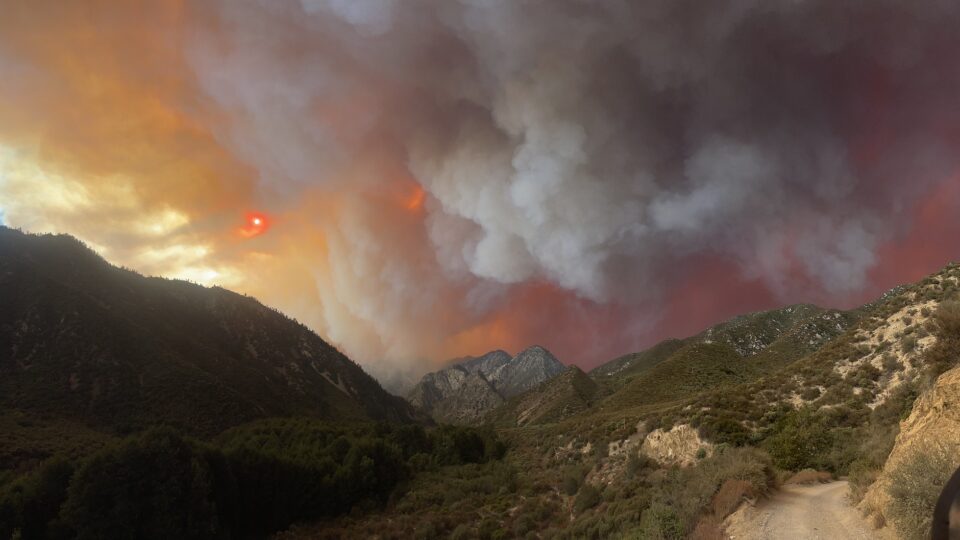
Fighting fires with man-made wind

March 12, 2025 By EarthWise Leave a Comment

Fighting fires with artificial wind

Researchers at Ohio State University have developed a new portable tool that may help firefighters battle blazes more efficiently and with less risk.

Traditional firefighting methods include chemical foams – which are toxic – and the use of hydrants, which can strain water resources.  The recent fires in Southern California demonstrated the need for efficient fire suppression methods.  The new device works to suppress flames using conductive aerosols, which are small particles that can direct electricity.

The device uses vortex rings – small donut-shaped bands of air – that transform the aerosol particles into short pulses of wind that convert nearby oxygen into ozone.  This accelerated airflow generates rapid turbulence, which disrupts the natural combustion process and quickly extinguishes the target fire.

The device resembles a small bucket, attached to an arm brace.  Firefighters would aim the bucket toward the fire, and it would use bursts of compressed air to deliver aerosols in an electric arc to fight the fire.

Testing identified a coarse copper solution for the vortex ring material and simulations showed that the device would succeed in suppressing fires.  They then worked on optimizing the power and range of the device.

Depending on the size of the fire and number of firefighters, it is likely that several of the devices would be required in a real emergency.  According to the developers, the design of the vortex launcher is actually very simple and is very scalable.  The device is maneuverable in tight spaces and could be taken through doors and indoor environments.  Vortex rings can carry chemical payloads over longer distances than other methods, making firefighters safe by staying further from flames. 

**********

Web Links

New device uses electrically assisted wind to fight fires

Photo, posted November 12, 2024, courtesy of the USDA Forest Service via Flickr.

Earth Wise is a production of WAMC Northeast Public Radio
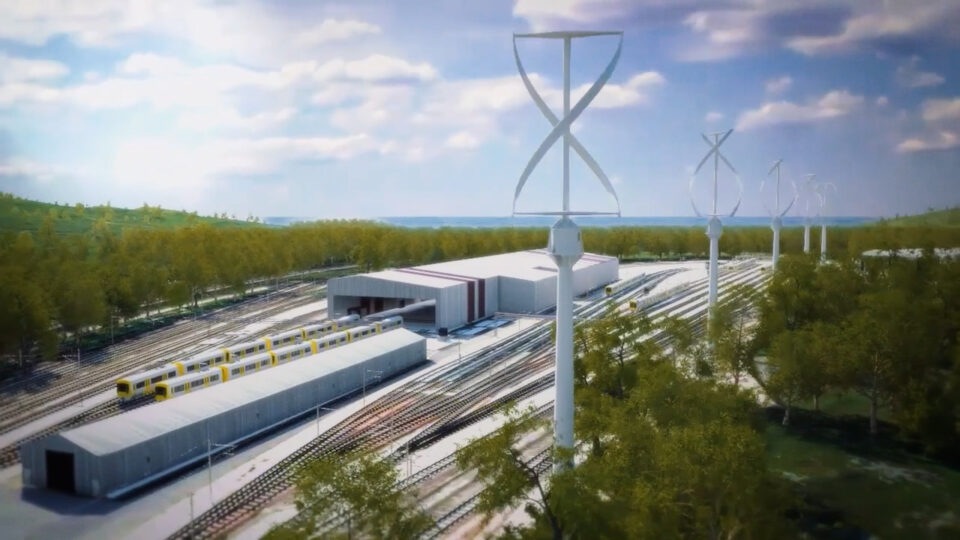
Vertical-axis wind turbines

February 19, 2025 By EarthWise Leave a Comment

Developing vertical-axis wind turbine technology

Nearly all wind turbines in use today are horizonal axis wind turbines.  They are a familiar sight with their three giant rotor blades spinning about an axis high above the ground attached to a nacelle containing the gearbox and generator. 

A vertical-axis wind turbine has its rotor shaft transverse to the wind; that is, the shaft rises up from the ground and the gearbox and generator are located close to the ground.

This type of wind turbine does not need to be pointed into the wind, which eliminates the need for wind-sensing and orienting mechanisms.  It is also considerably quieter in operation than horizontal axis wind turbines.  Vertical-axis wind turbines have enjoyed minimal success to date because of a variety of problems including reliability issues and complications related to how they respond to changing wind conditions.

A next-generation vertical wind turbine is going on trial in Australia as part of a research collaboration between Flinders University in South Australia and the start-up company VAWT-X Energy.  The 6KW prototype will be installed at a field site in Australia’s Fleurieu Peninsula.

According to the developers, the new turbine design will be as efficient, or even more efficient, as existing horizontal turbines and will be able to thrive across diverse environments including being part of urban infrastructure where their relative quiet is a real advantage.   Such turbines would be more accessible for applications like off-grid power and sustainable energy solutions for small businesses and farms.  The developers claim the technology can also be scaled up for large-scale windfarms.

**********

Web Links

Progress with new-look wind turbine

Photo courtesy of VAWT-X Energy.

Earth Wise is a production of WAMC Northeast Public Radio
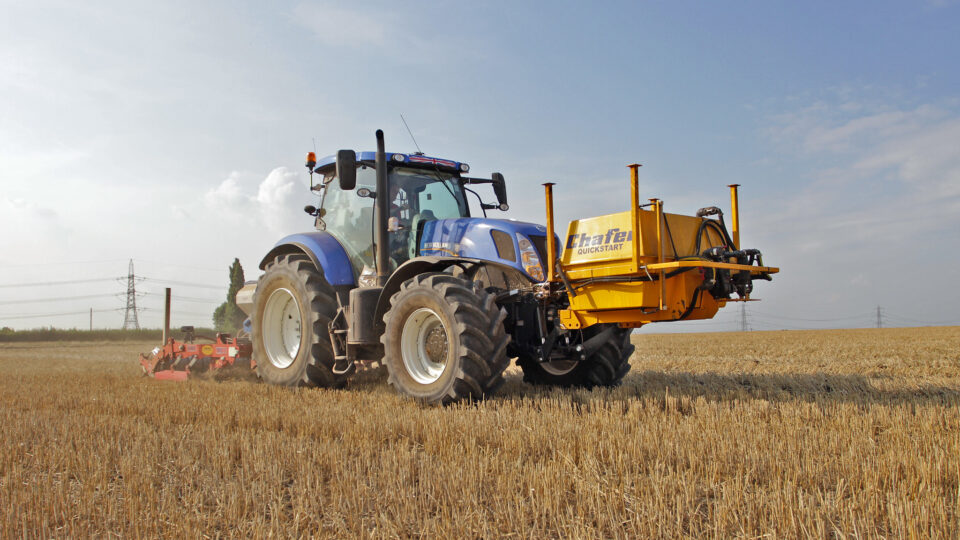
Fertilizer from thin air

January 16, 2025 By EarthWise Leave a Comment

Creating fertilizer from thin air

Ammonia is one of the largest-volume synthetic chemicals produced in the world. Globally, manufacturing plants produce about 200 million tons of it each year.  About 70% of ammonia is used to produce fertilizers.

Most ammonia is produced using the Haber-Bosch process, which converts hydrogen and nitrogen into ammonia.  The process is energy-hungry, running at over 900 degrees Fahrenheit, and therefore results in lots of greenhouse gas emissions – about 1% of the world’s annual CO2 emissions.

Researchers at Stanford University and King Fahd University in Saudi Arabia have developed a prototype device that can produce ammonia using wind energy to draw air through a mesh.  The method allows sustainable production of ammonia using the nitrogen in the air.

The process gets nitrogen from the air along with hydrogen from water vapor.  A mesh coated with catalysts facilitates the necessary chemical reactions.  The process operates at room temperature and standard atmospheric pressure, eliminating the need  for the high temperatures and high pressures of the Haber-Bosch process.

In principle, farmers could run a portable device onsite, eliminating the need to purchase and ship fertilizer from a manufacturer. 

The device is two or three years away from being market ready.  The developers are designing increasingly large mesh systems to produce greater quantities of ammonia.  Ammonia has more uses beyond fertilizers including its use as an energy carrier that can store and transport energy more efficiently than hydrogen gas.

**********

Web Links

New device produces critical fertilizer ingredient from thin air, cutting carbon emissions

Photo, posted September 2, 2013, courtesy of Chafer Machinery via Flickr.

Earth Wise is a production of WAMC Northeast Public Radio

A giant solar project for Google

November 21, 2024 By EarthWise Leave a Comment

Google is investing heavily in solar power

One of the largest solar projects in the US has recently come online in Texas.  Three solar farms built side-by-side in Buckholts, Texas by SB Energy can provide 875 megawatts of electricity, nearly the size of a typical nuclear power plant.  The project will supply the largest solar energy purchase ever made by Google and the electricity generated will be used to power its new operations in the area.  Google will use about 85% of the project’s solar power for data centers in Ellis County and for cloud computing in the Dallas Region.

In total, Google has contracted with clean energy developers to bring more than 2,800 megawatts of new wind and solar projects to Texas.  Google expects to spend $16 billion through 2040 to purchase clean energy for its global operations.

According to the International Energy Agency, data centers’ total electricity consumption could reach more than 1,000 terawatt-hours in 2026, which is more than double the amount used in 2022.  One terawatt-hour is enough energy to power 70,000 homes for a year.  So, it is not surprising that large technology companies are investing heavily in energy technologies.

Google, Amazon, and Microsoft have all recently announced investments in nuclear energy to power data centers.  These companies all have made commitments to seek sources of carbon-free electricity to power their data centers and their increasing efforts in artificial intelligence.  Because of the rise of artificial intelligence, the large companies are not meeting their commitments to reduce their carbon emissions and are needing to greatly increase their efforts to obtain clean power.

**********

Web Links

One of the largest solar projects in the US opens in Texas, backed by Google

Photo, posted March 27, 2016, courtesy of Ben Nuttall via Flickr.

Earth Wise is a production of WAMC Northeast Public Radio
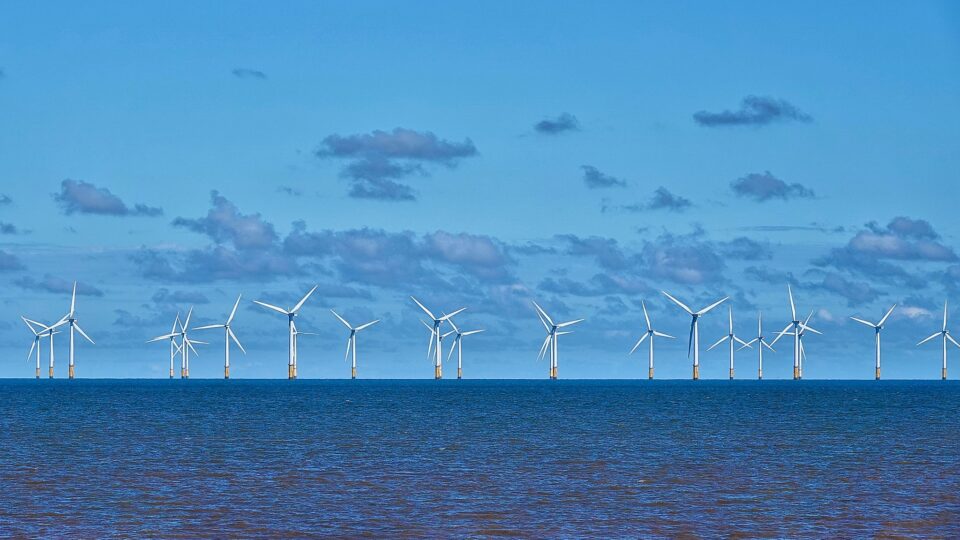
Offshore wind in Massachusetts

February 1, 2024 By EarthWise Leave a Comment

Offshore wind power in the United States at last

On January 2nd, the first large offshore wind farm in New England started producing electricity when its first turbine came online.  The Vineyard Wind project, located off the coast of Martha’s Vineyard, will by the end of the year have a total of 62 turbines with a capacity of 800 megawatts, enough electricity to power 400,000 homes.

Power finally flowing from Vineyard Wind is an important milestone for an industry that has struggled to get going.  It is the second utility-scale offshore wind farm in the U.S. to begin generating electricity.  The South Fork Wind project off the coast of New York began producing power in December.  That project will eventually produce 132 megawatts of electric power.

The offshore wind industry in the U.S. has faced some difficulties in recent times.  A combination of rising costs, high interest rates, supply chain delays, and incidents of local opposition have created headwinds.  Developers for several large planned windfarms in the northeast have terminated contracts because of inflation and high interest rates.  The second phase of Empire Wind, located southeast of Long Island, has been at least temporarily shelved awaiting more favorable contract terms.

To fight climate change, many Eastern states are hoping to install dozens of large wind farms in the Atlantic that can generate electricity without emitting greenhouse gases.  But as a result of the recent project cancellations, analysts are now projecting that U.S. offshore wind capacity in 2030 will likely be about a third less than previously predicted.

So far, the United States remains far behind Europe, which has already installed more than 32,000 megawatts of wind capacity in its waters.

**********

Web Links

Massachusetts Switches On Its First Large Offshore Wind Farm

Photo, posted August 31, 2022, courtesy of Nina Ali via Flickr.

Earth Wise is a production of WAMC Northeast Public Radio
More Offshore Wind Proposed For New Jersey | Earth Wise

September 13, 2023 By EarthWise Leave a Comment

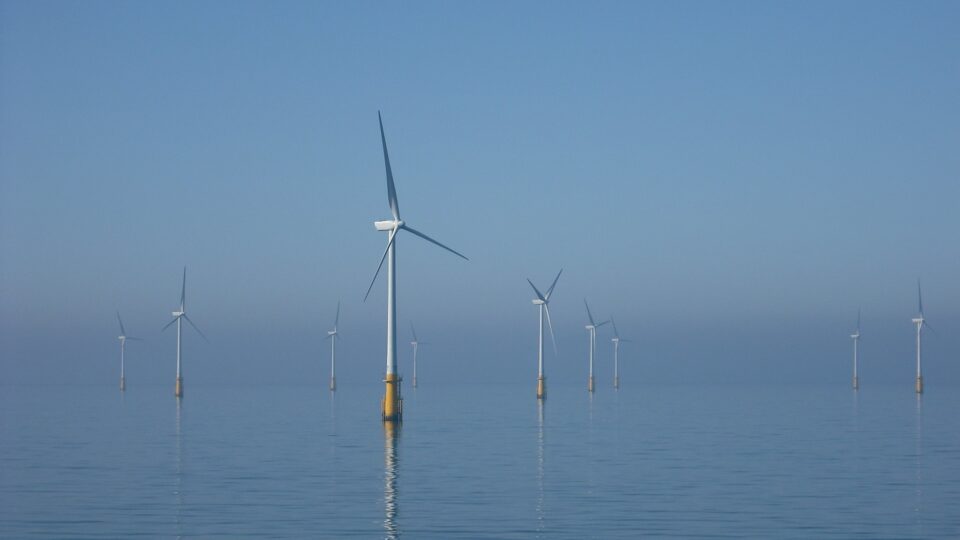
There have been three offshore wind projects previously approved by utility regulators in New Jersey.  New Jersey is vying to become an East Coast leader in the fast-growing offshore wind industry and now developers have proposed four new projects off the New Jersey Shore.

Two of the projects would be located far out to sea where they would not be visible at all from the shore.  One of them, called Community Offshore Wind, would be built 37 miles offshore from Long Beach Island.  It aims to generate enough electricity to power 500,000 homes.

A second project, called Leading Light Wind, would be located 40 miles off Long Beach Island and would consist of up to 100 turbines that would generate enough electricity to power 1 million homes.

The two companies that are building the already-approved Atlantic Shores Wind Farm have submitted a bid for a new project located 10 to 20 miles offshore.  In addition, a fourth application to the New Jersey Board of Public Utilities has also been submitted, but there is yet no public information about it.

Existing offshore projects have drawn intense opposition from homeowners in part because they are close enough to the Atlantic City and Ocean City shorelines to be seen by beachgoers, albeit as tiny objects on the horizon.  The new proposed projects located far offshore would not have this problem.

The new projects can take advantage of existing federal tax credits, but the bidders say they will not seek the tax breaks from New Jersey that the earlier project received as they have also been the subject of legal challenges by opponents of offshore wind.

**********

Web Links

4 new offshore wind power projects proposed for New Jersey Shore; 2 would be far out to sea

Photo, posted March 25, 2016, courtesy of TEIA via Flickr.

Earth Wise is a production of WAMC Northeast Public Radio
Offshore Wind In The Gulf Of Mexico | Earth Wise

April 4, 2023 By EarthWise Leave a Comment

The U.S. pursuing offshore wind development in the Gulf of Mexico

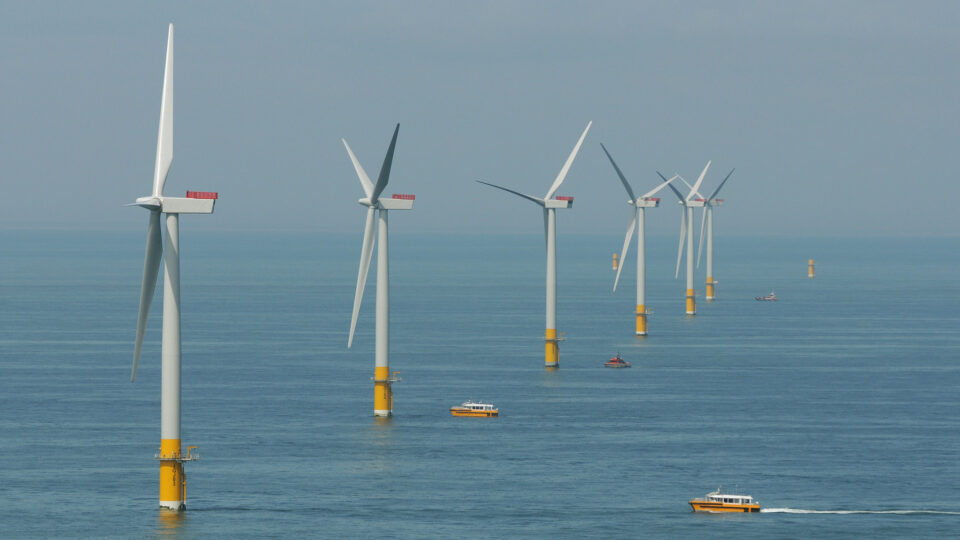
The US has a goal of deploying 30 GW of offshore wind energy capacity by 2030.  This is an ambitious goal given that the current installed offshore wind capacity in the US is a total of seven turbines capable of generating just 42 megawatts of power.  So, there is a long way to go in a relatively short amount of time.

Since 2021, the Bureau of Ocean Energy Management, a division of the Department of the Interior, has held three offshore wind lease auctions, which grant rights to developers to install offshore wind in specific marine areas.  The first two auctions involve sites in the northeast, including areas in New York.  The third auction, held last December, offered sites off the California Coast – the first US sites in the Pacific.

In February, the Department of the Interior proposed a new offshore wind lease sale in the Gulf of Mexico.  It identified a 102,480-acre area off the coast of Louisiana, and two similar-sized areas offshore from Galveston, Texas.

The proposal is now in a 60-day period of seeking public comments before deciding whether to move ahead with the sale.  As was the case for the other lease auctions, there would stipulations associated with accepted bids including efforts to build up domestic industry for the supply chain and labor force.  There would also be requirements to establish and contribute to a fisheries compensatory mitigation fund to address any potential negative impacts to the fishing industry.

About two-thirds of offshore wind resources in the US are located in deep-water areas that will require floating platforms.  A federal program called Floating Offshore Wind Shot has the goal of developing cost-effective technology for this purpose.

**********

Web Links

Gulf of Mexico may be next up for offshore wind leases

Photo, posted May 13, 2011, courtesy of the Department of Energy and Climate Change via Flickr.

Earth Wise is a production of WAMC Northeast Public Radio
Offshore Wind Industry In New York | Earth Wise

March 27, 2023 By EarthWise Leave a Comment

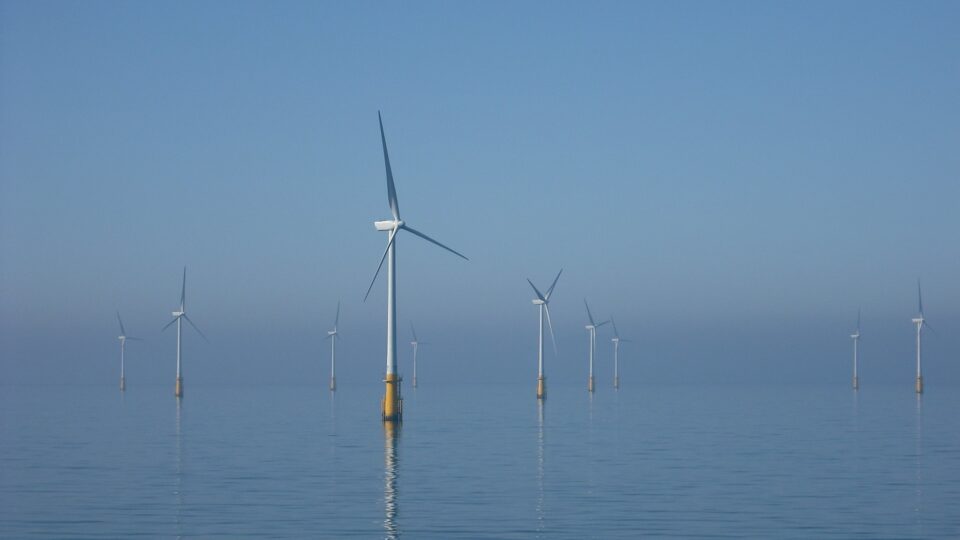
Last July, New York Governor Kathy Hochul announced the release of the state’s third competitive offshore wind solicitation, seeking to add generating capacity to power at least 1.5 million homes.  In response to the solicitation, the New York State Energy Research and Development Authority – NYSERDA -received more than 100 proposals for 8 new projects from six offshore wind developers.  An evaluation period is in progress and NYSERDA expects to announce awards sometime this spring.

Apart from the development and installation of offshore wind turbines and their associated infrastructure, participating in the program also involves supply chain investments to support the development of a strong, local supply chain that creates jobs for New Yorkers as well as bolstering the state’s standing as a regional hub for offshore wind manufacturing.

Siemens Gamesa Renewable Energy, a multi-billion-dollar Spanish-German wind engineering company, is one of the companies bidding to have its wind turbines used for the forthcoming New York offshore wind projects.   If Siemens Gamesa is selected for the project, the company has revealed that it will build a major offshore nacelle manufacturing facility at the Port of Coeymans, New York, some 15 miles from Albany.

The planned facility would create approximately 420 direct jobs and represent an investment of around $500 million in the region.  Siemens Gamesa said it would also commit to localizing several new component supplier facilities, including steel component fabrication, bearings, and composite components. 

Offshore wind will bring more than just electricity to New York; it will bring a whole new industry.

**********

Web Links

Siemens Gamesa reveals plans for New York offshore wind hub

Photo, posted March 24, 2016, courtesy of TEIA via Flickr.

Earth Wise is a production of WAMC Northeast Public Radio
Continued Renewables Growth | Earth Wise

June 17, 2022 By EarthWise Leave a Comment

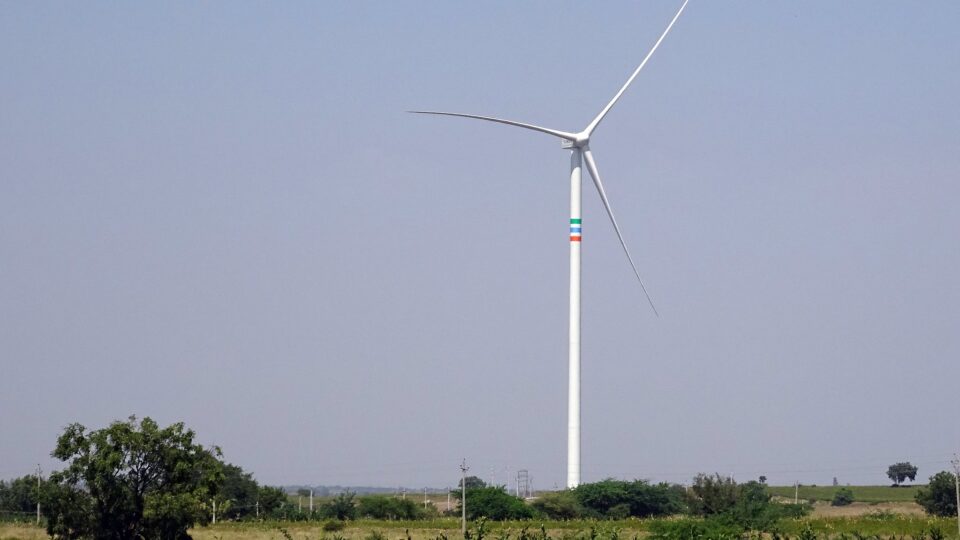
In 2021, the world added a record amount of 295 gigawatts of renewable power.  According to the International Energy Agency, it is on pace to surpass that amount in 2022.

Almost half of the renewable buildout in the world is taking place in China.  In 2021, China accounted for 46% of worldwide renewable energy additions.  The EU and United States are the next two leaders.  The rapid buildup is especially impressive given the challenges developers have faced from the coronavirus pandemic, supply chain issues, and various construction delays.

Predictions are that the global total added this year will be about 320 gigawatts of renewables.  This amount is equivalent to the total power demands of Germany, which is the world’s fourth-largest economy.  Solar photovoltaics are forecast to account for 60% of the increase in global renewable capacity this year. 

The rapid growth in China and the EU are driven by strong pro-renewable policies.  In our country, wrangling over climate legislation and investigations into potential trade violations by Asian suppliers have held back our progress.  But over the next several years, offshore wind will begin to have a real impact on U.S. renewable installations.

According to the report by the International Energy Agency, renewable energy growth is likely to plateau in 2023 unless stronger climate policies are enacted. 

There are now more than 3 terawatts – that’s 3,000 gigawatts – of renewable generation capacity globally.  This compares with a little over 4,000 terawatts of fossil fuel generation.  Global renewable energy generation is currently projected to surpass that of fossil fuels by 2035.

**********

Web Links

Following Record Growth in 2021, Renewables on Track for New High in 2022

Photo, posted October 17, 2016, courtesy of B Sarangi via Flickr.

Earth Wise is a production of WAMC Northeast Public Radio.

The Largest Renewable Energy Project In The World | Earth Wise

January 28, 2021 By EarthWise Leave a Comment

India is building the largest renewable energy project in the world

India has broken ground on what is planned to be the largest renewable energy project in the world:  a 30-gigawatt wind and solar power project in the state of Gujarat.

The renewable energy park will have two zones:  a 122,000-acre hybrid park zone that will accommodate 25 gigawatts of wind and solar power plants and a 57,000-acre zone entirely dedicated to wind power.  Multiple developers will be building the power plants in the hybrid zone.  A single company has been allotted the wind power zone.  The selected developers have to develop 50% of the total generation capacity in the next 3 years and finish the project in five years. The project is expected to create jobs for 100,000 people. Total investment in the project will be about $20 billion.

This is not technically a single standalone project but is rather an aggregation of multiple projects in a single general area.  Nonetheless, it represents the largest renewable energy development ever.  By comparison, the entire United States has a total of 50 gigawatts of installed solar power in large plants – which does not include any rooftop solar.  Total wind power capacity in the U.S. is a little over 100 gigawatts.  So, the 30-gigawatt Indian project is huge by any measure.

India already gets over 30% of its electricity from renewable sources, making it one of the largest renewable energy markets in the world.  The country has a goal of 60% renewable energy by 2030, amounting to 450 gigawatts of capacity.  This will require the country to double its already substantial renewable capacity in less than 10 years.  The Gujarat energy park will represent substantial progress towards that goal.

**********

Web Links

Largest Renewable Energy Project In World Will Be 30 Gigawatt Solar–Wind Project In India

Photo, posted October 16, 2019, courtesy of Jonathan Cutrer via Flickr.

Earth Wise is a production of WAMC Northeast Public Radio.

New York Offshore Wind

September 18, 2019 By EarthWise Leave a Comment

New York has passed ambitious legislation to reduce the carbon emissions that cause climate change, but the state needs to start taking action to make those reductions possible.  One such action it has taken is an agreement that will enable the construction of two large offshore wind projects.

The projects are to be built off the coast of Long Island.  One will be 14 miles south of Jones Beach and the other 30 miles north of Montauk.  The wind farms will be built by a division of Equinor, a major Danish energy company, and a joint venture between Orsted, another Danish company, and Eversource Energy, an American firm.

The two New York wind farms are expected to be operational within the next five years and have the capacity to produce 1,700 megawatts of electricity.  That is about 20% of Governor Andrew Cuomo’s overall goal for offshore wind.

Wind farms are a major energy source in the United States, now providing about 7% of the country’s electricity.  That compares with only 2% in 2010. But nearly all American wind turbines are on land.  There is only one small offshore wind farm in the US off the coast of Rhode Island.  Things are very different in Europe.  For example, Britain expects to get 10% of its electricity from offshore wind next year, which is up from less than 1% in 2010.

Developers of offshore wind farms have struggled to gain a foothold in the US.  Some projects have foundered because of cost issues, but others have faced opposition from politicians and coastal-property owners.  But assuming the New York wind projects clear permitting and environmental hurdles, offshore wind may finally be on the move in the US.

**********

Web Links

New York Awards Offshore Wind Contracts in Bid to Reduce Emissions

Photo, posted May 22, 2007, courtesy of Flickr.

Earth Wise is a production of WAMC Northeast Public Radio.

Drilling In California

May 16, 2019 By EarthWise Leave a Comment

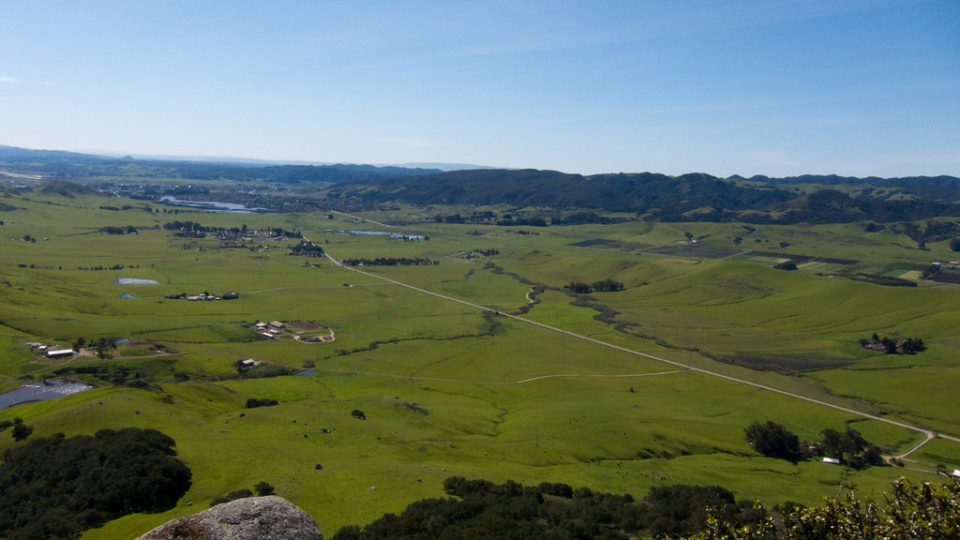
More than one million acres of public and private land in California may soon be opened up to oil drilling and hydraulic fracturing, according to a plan recently released by the Trump Administration.  The proposal raises environmental concerns, and comes at a time when opposition to oil and gas drilling in the state is growing.  

The plan, put forth by the Bureau of Land Management, would end a five-year moratorium in the state on leasing federal public land to oil and gas developers.  In 2013, a federal judge put the moratorium in place until the environmental risks of hydraulic fracturing, or fracking, could be better evaluated.

Fracking is the process of injecting liquid at high pressure underground in order to crack open rocks and extract oil or gas.  Well-documented risks associated with fracking include air and water pollution, as well as increased risks of oil spills and earthquakes.

Nevertheless, the Bureau of Land Management, which is part of the U.S. Department of the Interior, released its 174-page environmental impact statement with the proposal to open up 1,011,470 acres of land to fossil fuel extraction, impacting the California counties of Fresno, Kern, Kings, San Luis Obispo, Santa Barbara, Tulare, and Ventura. 

Unsurprisingly, the draft plan has been praised by industry groups who say concerns are misguided, and slammed by environmentalists who say the move poses a serious public health risk and could lead to a “fracking frenzy.”

The proposal is now subject to a 45-day period for public comment, after which the Interior Department will determine how to proceed.  A link to weigh in on the proposal can be found here.

*********

Web Links

Trump fracking plan targets over 1 million acres in California

Bakersfield Field Office Hydraulic Fracturing Draft Supplemental Environmental Impact Statement

Photo, posted March 14, 2010, courtesy of Mike Baird via Flickr.

Earth Wise is a production of WAMC Northeast Public Radio.

Bee Friendly Amsterdam

February 11, 2019 By EarthWise Leave a Comment

Scientists around the world have been sounding the alarm for years about the decline of bees and other pollinators that are crucial to the growth of crops.   One place where this trend has been bucked is in Amsterdam.  The diversity of wild bee and honeybee species in the Dutch capital has actually increased by 45% since 2000.

The city attributes this success to creating bee-friendly environments including the installation of so-called insect hotels.  There has also been a ban on the use of chemical pesticides on public land.

Four years ago, Amsterdam set a goal to convert half of all public green spaces to native plants including species that produce flowers and fruits that provide nourishment for bees.  Developers in Amsterdam are encouraged to install green roofs on new buildings which reduce reliance on heating and cooling systems and also create habitat for wildlife.

Residents can request to have a 16-inch strip of pavement adjacent to their homes removed in order to plant shrubs, flowers or climbing vines.  When a new highway was built in the area in 2015, local activists planted wildflowers along the sides of the road that otherwise would have been left with only gravel or grass.  This practice has spread to other major routes and along dikes and railways and is referred to as the Honey Highway.

All of these efforts seem to be having a positive effect.  An initial survey was conducted in 2000 to establish a baseline.  A 2015 survey of pollinators found 21 bee species not previously documented in the city.  The rest of the Netherlands has not done as well, and the Dutch government has recently introduced a pollinator strategy to revive bees, butterflies and other insects crucial to the country’s food crop.

**********

Web Links

Bees are dying at an alarming rate. Amsterdam may have the answer.

Photo, posted December 28, 2006, courtesy of Flickr.

Earth Wise is a production of WAMC Northeast Public Radio.

Making Self-Driving Cars Safer

March 6, 2018 By EarthWise 1 Comment

https://earthwiseradio.org/wp-content/uploads/2018/02/EW-03-06-18-Making-Self-Driving-Cars-Safer.mp3

We hear quite a bit about self-driving cars these days.  More and more cars on the road have at least some ability to do things on their own (steer, brake, or park) and some can do much more.

[Read more…] about Making Self-Driving Cars Safer

Amazon In Peril

August 18, 2016 By WAMC WEB

https://earthwiseradio.org/wp-content/uploads/2016/07/EW-08-18-16-Amazon-in-Peril.mp3

A constitutional amendment being discussed in the Brazilian Senate threatens to set back decades of conservation efforts in the Amazon.

[Read more…] about Amazon In Peril

Primary Sidebar

Recent Episodes

  • An uninsurable future
  • Clean energy and jobs
  • Insect declines in remote regions
  • Fossil fuel producing nations ignoring climate goals
  • Trouble for clownfishes

WAMC Northeast Public Radio
WAMC/Northeast Public Radio is a regional public radio network serving parts of seven northeastern states (more...)

Copyright © 2026 ·