• Skip to primary navigation
  • Skip to main content
  • Skip to primary sidebar

Earth Wise

A look at our changing environment.

  • Home
  • About Earth Wise
  • Where to Listen
  • All Articles
  • Show Search
Hide Search
You are here: Home / Archives for battery storage

battery storage

A big year for battery storage

January 29, 2025 By EarthWise Leave a Comment

2024 was a big year for battery storage

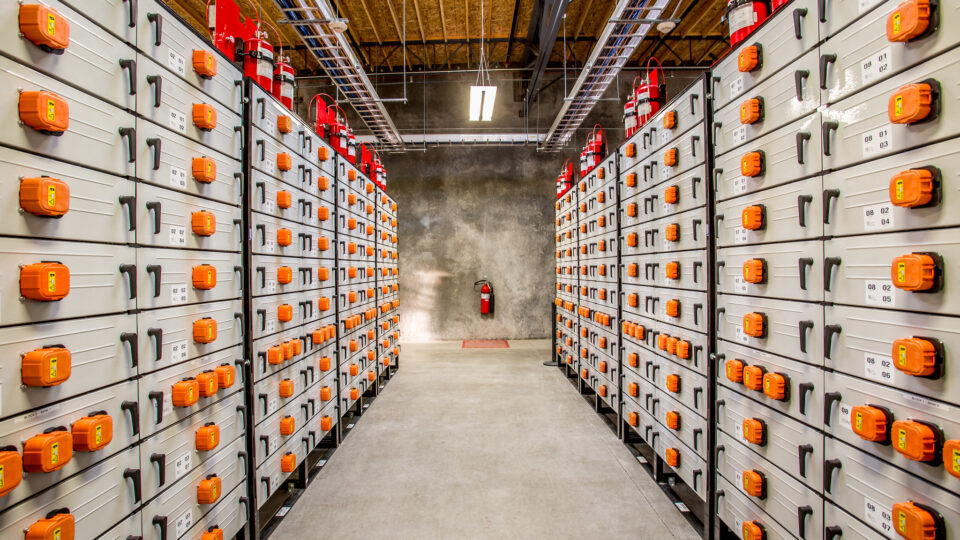
A decade ago, the ability of utilities to store large amounts of electricity in batteries was basically nonexistent.  In the past several years, growth in battery storage systems has exploded.  As of the end of November, the US had about 24 gigawatt-hours of storage capacity in place.  This is 71% more than just a year ago.  Nearly half of the battery storage in the US is located in California.  Texas, Arizona, and Nevada are also leaders in deploying battery storage.

Battery storage allows solar and wind generating plants to keep operating when there is reduced demand for their output and have the electricity that they produce be available later when demand rises.  Storing this excess electricity essentially extends the hours of the day when clean energy can be used.

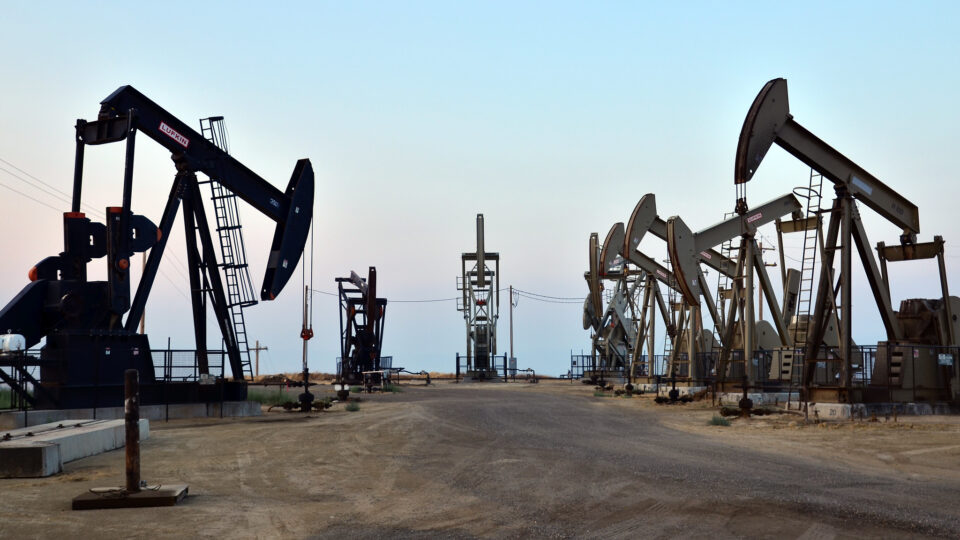
Equally important, the existence of battery storage reduces the need for peaker plants, the fossil-fueled power plants that only turn on at times of peak demand, such as during hot afternoons.

There are 1,000 peaker plants in the US and they are generally heavily polluting, inefficient, and expensive to operate.  Some 63 million people live within a three-mile radius of one of them and are exposed to harmful pollutants like nitrogen oxides and sulfur dioxide.  Peaker plants also release more greenhouse gases than other power plants do for every unit of electricity they generate.

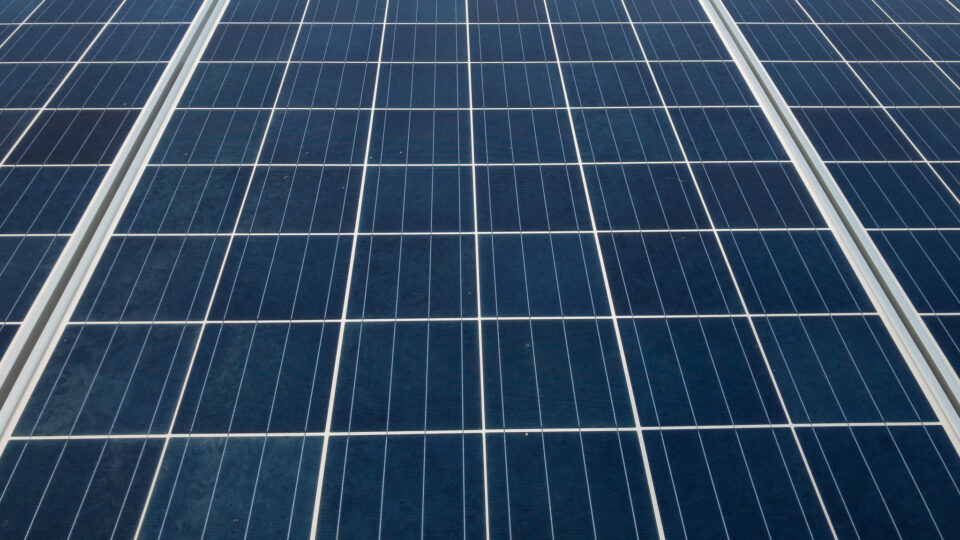
Many battery storage facilities are co-located with, or otherwise support, solar energy plants.  The amount of solar energy in the US is growing rapidly and surpassed the 100-gigawatt mark in 2024.  As solar power continues to expand, so will battery energy storage.

**********

Web Links

Battery projects soared again in 2024

Photo, posted August 3, 2024, courtesy of the Bureau of Ocean Energy Management via Flickr.

Earth Wise is a production of WAMC Northeast Public Radio
More wind power than coal power

September 12, 2024 By EarthWise Leave a Comment

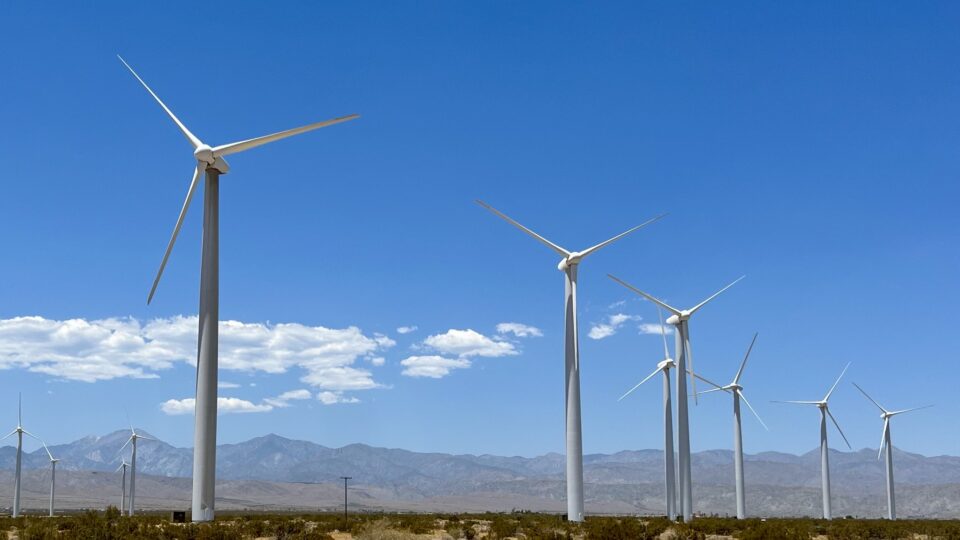
Wind power is starting to beat out coal in the United States

The U.S. used to get more of its electricity from burning coal than by any other means.  It wasn’t all that long ago; coal produced 51% of our electricity in 2001. But as of 2022, it was less than 20%.

In March and April, the U.S. generated more electricity from wind power than from coal.  This was the first time that wind outstripped coal for two consecutive months.

This crossover between wind and coal power is just another milestone in the energy transition to renewable energy sources.  Renewables collectively produce more electricity than coal and their share is steadily growing.  The explosive growth in renewable energy is primarily the result of three factors:  federal tax credits, state energy mandates away from fossil fuels, and, most importantly, shifts in the economics of energy.  Breakthroughs in technology and economies of scale have lowered the cost of building new wind turbines, solar panels, and battery storage. 

Coal plants have retired at a rapid pace over the past 25 years.  During that time, natural gas capacity has nearly tripled.   Gas began to replace coal starting around 2005 when the fracking boom led to the availability of large quantities of cheap natural gas. Because of this, fossil fuels are still the largest source of electricity generation in the U.S., but that is not likely to be the case for very long.

Analysts expect that wind energy will grow to provide about 35% of the country’s electricity by 2050.  The Department of Energy predicts that solar power will produce 45% of U.S. electricity by that year.

**********

Web Links

Wind Beat Coal Two Months in a Row for U.S. Electricity Generation

Photo, posted August 5, 2024, courtesy of Samir Luther via Flickr.

Earth Wise is a production of WAMC Northeast Public Radio
A giant solar plus storage facility

August 23, 2024 By EarthWise Leave a Comment

A massive solar and battery storage project is now operational

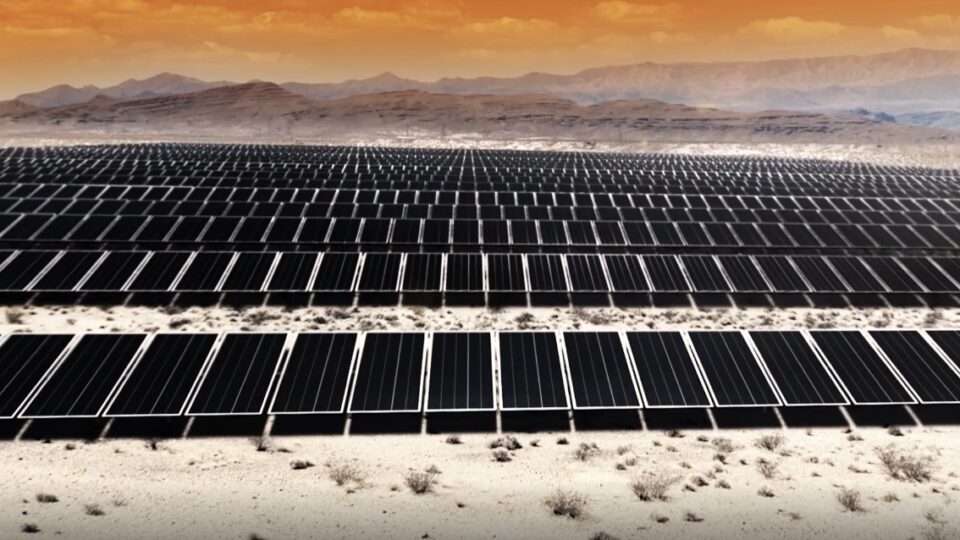
One of the country’s largest co-located solar and battery energy storage projects is now fully operational.  The Gemini Solar+Storage project is located in Clark County, Nevada, about 30 minutes outside of Las Vegas.

The project’s 1.8 million solar panels can generate up to 690 megawatts of electricity, which is enough to supply about 10% of Nevada’s peak demand.  The facility is co-located with 380 megawatts of 4-hour battery storage, which is enough to supply Nevadans with 1,400 MWh of power after sundown.

The project makes use of a unique storage configuration that allows the storage system to be charged directly from the solar panels, resulting in increased efficiency and maximizing the capture and storage of solar energy.

The project has minimized the environmental impacts to the nearly 5,000-acre site.  Primergy, the project developer, took measures to leave vegetation in place, installed solar panels to follow the ground’s natural contours, and reduced the overall footprint by more than 20% through careful design.  The project created 1,300 union and prevailing wage jobs and contributed $483 million to Nevada’s economy.

Solar facilities are increasingly co-located with battery storage plants.  There is a huge project in Kern County California that includes 1.9 million solar panels capable of generating 875 megawatts of solar power and storing 3,287 megawatt-hours of energy.  The deserts of the southwest are prime locations for such facilities.

**********

Web Links

The house always wins: Massive Gemini solar + storage outside of Las Vegas reaches commercial operations

Photo courtesy of Quinbrook Infrastructure Partners.

Earth Wise is a production of WAMC Northeast Public Radio
Giant batteries and the grid

May 31, 2024 By EarthWise Leave a Comment

Giant batteries are transforming how electricity is used

All across the country, electric utility companies are starting to use giant batteries to counteract the biggest weakness of renewable energy; namely, that the sun doesn’t always shine, and the wind doesn’t always blow.  Solar panels and wind turbines can keep generating energy when people don’t need it and batteries can store up that energy for when they do.

Over the past three years, battery storage capacity on US grids has grown by a factor of ten adding up to 16 gigawatts.  This year, it is expected to double again, led by massive growth in Texas, California, and Arizona.

California generates more electricity from solar power than any other state.  But it has a timing problem:  solar power is plentiful during the day, but it disappears in the evening when people get home from work and start using lots of electricity.  The previous solution was to burn lots of fossil fuel to produce it.

This has been changing thanks to battery storage.  Since 2020, California has installed more giant batteries than anywhere else in the world other than China.  Batteries are gradually replacing fossil fuels for California’s evening power needs.  On the evening of April 30th, for example, batteries supplied more than 20% of California’s electricity.  This is equivalent to the output of seven large nuclear reactors.

Batteries have multiple uses in the grid.  They handle big swings in generation from renewable sources, they reduce congestion on transmission lines, and they help to prevent blackouts during heat waves.  Batteries are starting to eat into the market for fossil fuels and will play an ever-growing role in the electricity grid.  As the role of renewables grows, so will the role of batteries.

**********

Web Links

Giant Batteries Are Transforming the Way the U.S. Uses Electricity

Photo, posted December 5, 2022, courtesy of Jonathan Cutrer via Flickr.

Earth Wise is a production of WAMC Northeast Public Radio
Hybrid Renewable Energy Plants | Earth Wise

November 17, 2022 By EarthWise Leave a Comment

Hybrid renewable energy systems combine multiple renewable energy and/or energy storage technologies into a single plant.  The goal is to reduce costs and increase energy output relative to separate systems taking advantage of common infrastructure and the ability of one renewable energy source having appreciable output while a second one might not at a particular time.

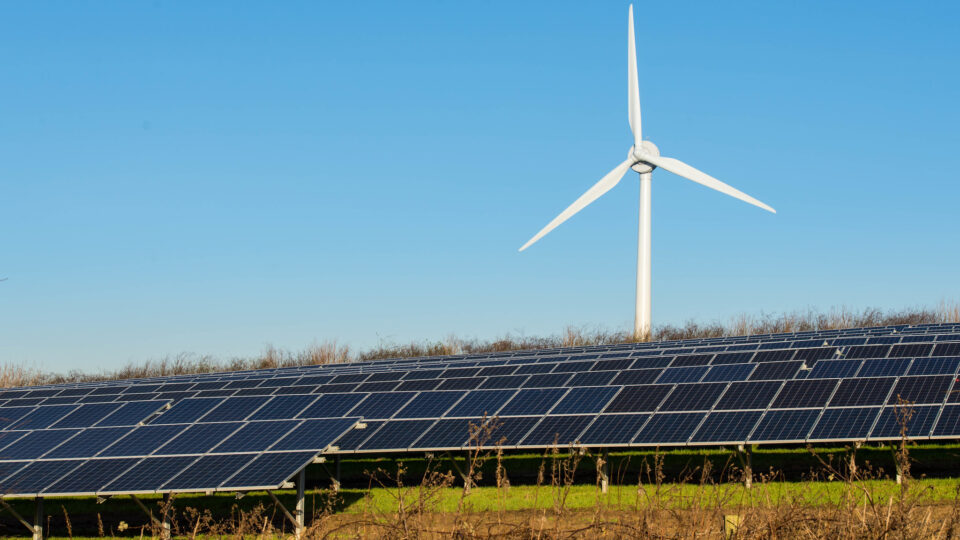
Recently, the largest hybrid renewable power plant in the United States was completed in rural Oregon.  The Wheatridge Renewable Energy Facility combines a wind farm, a solar array, and battery storage.

Plants that include just solar power and energy storage are also called hybrid plants, but the Wheatridge Facility is special because it includes wind power.  The facility comprises a 200-megawatt wind farm, a 50-megawatt solar array, and a 30-megawatt battery system capable of providing power for four hours.  The combined system can provide for the electricity needs of about 100,000 homes.

There are about 140 projects in the United States that combine solar and storage.  There are 14 that combine solar and wind.  There are only four plants – with the completion of Wheatridge – that have wind, solar, and storage.  

Wind and solar energy are generally complementary technologies.  Wind is usually strongest at night while solar, of course, is a daytime source of energy.  Solar and wind plants don’t need to be close together to take advantage of this, but hybrid projects benefit from needing only one grid connection and one lease for land.

**********

Web Links

A Clean Energy Trifecta: Wind, Solar and Storage in the Same Project

Photo, posted December 27, 2015, courtesy of Gerry Machen via Flickr.

Earth Wise is a production of WAMC Northeast Public Radio
Weaning Off Fossil Fuels | Earth Wise            

June 2, 2022 By EarthWise Leave a Comment

How to break free of our dependence on fossil fuel

We recently talked about California producing 97% of its electricity from renewables on one sunny afternoon in April.  On May 8th, the state produced enough renewable electricity to meet 103% of consumer demand.  These sorts of records are likely to be increasingly commonplace in the spring when the weather is still fairly mild.

But even while renewables were producing more electricity than California needed, natural gas power plants in the state were still running.

Turning off the gas power plants is not possible.  The reason is that as the sun sets and solar farms stop producing power, California has to quickly replace the power with electricity from other sources.  Natural gas plants are massive industrial facilities that cannot be turned on and off rapidly.  Some take as many as 4 to 8 hours to switch on.  Operators back them down as far as they can go, but even when there is plenty of solar power during the day, natural gas plants are still running.

The state is rapidly building huge battery storage projects as an alternative to gas plants, but so far, they are still only a small fraction of what is needed.   Wind power is another part of the solution along with hydropower.  California imports some power from other states as well and, in fact, also exports power when there is excess.  But keeping the energy system balanced and stable is an ongoing challenge.

California is building huge amounts of solar, huge amounts of wind, and huge amounts of energy storage, which should get the state to at least 90% of the way to a clean grid.  It’s the last 5-10% that is much harder to accomplish before natural gas is no longer part of the energy system.

**********

Web Links

California just ran on 100% renewable energy, but fossil fuels aren’t fading away yet

Photo, posted January 10, 2014, courtesy of F.G. via Flickr.

Earth Wise is a production of WAMC Northeast Public Radio.

Peak Natural Gas Generation | Earth Wise

May 17, 2022 By EarthWise Leave a Comment

Peak natural gas generation is in the past

According to a new report from the Institute for Energy Economics and Finance (the IEEFA), the U.S. most likely hit its peak usage of natural gas to generate electricity in 2020.  Growth in wind and solar power are beginning to erode the use of natural gas.

At the moment, natural gas prices are unusually high as a result of supply chain issues and the war in Ukraine.  The U.S. is shipping record amounts of gas to Europe in order to help allies to wean off of Russian gas imports.  As a result, U.S. natural gas prices are at their highest level in more than 13 years.  Heating bills in the Northeast have been exceptionally high this past winter.

These high gas prices have also thrown a temporary lifeline to coal, which has seen a recent surge.  Despite this, coal in the U.S. is continuing its long-term decline.  Several of the largest power companies – including the Tennessee Valley Authority, Duke Energy, and Georgia Power – are planning to phase out coal entirely by 2035 and shift to renewable power.

The surging prices in fossil fuels – at the gas pump and in the home – along with multiple disruptions in energy security, are supercharging the already rapid pace of growth in solar, wind, and battery energy storage projects.

Wind, solar, and hydropower currently account for about 20% of U.S. power generation.  According to the IEEFA, these renewable sources could provide more than a third of our power by 2027.  Including both renewables and nuclear power plants, the U.S. could generate more than half of its electricity from carbon-free sources by that year, which represents a massive transition from just five years ago.

**********

Web Links

U.S. May Have Hit Peak Natural Gas Power Generation, Report Says

Photo, posted July 11, 2017, courtesy of John Ciccarelli / BLM via Flickr.

Earth Wise is a production of WAMC Northeast Public Radio.

The Energy Storage Boom | Earth Wise

November 25, 2021 By EarthWise Leave a Comment

Innovations in energy storage

Global energy storage deployment is increasing at a very rapid pace.  According to recent industry forecasts, there will be 12.4 gigawatts of new energy storage capacity online in 2021 breaking the previous annual record of 4.9 gigawatts set last year.

To understand these numbers, the world only reached 1 gigawatt of new capacity in a year for the first time in 2016.  Five years later, 1 gigawatt represents a good month.

Industry projections are that new global storage capacity will increase each year, reaching 70 gigawatts by 2030.

Almost all of this new storage capacity is in the form of batteries and most of that is lithium-ion batteries.  The largest battery storage facility in the world – the Manatee Energy Storage Center in Florida – is scheduled to be completed before the end of this year.  But there are other battery technologies that offer promise and there are other storage technologies apart from batteries.

Pumped hydroelectric storage is long established technology that still represents the largest amount of storage capacity in the world with more than 181 GW of capacity.  There is not much room for expansion of pumped hydro, which is limited to specific locations.   But it will be years before battery storage catches up to this total.

The United States and China have a large majority of energy storage capacity and projections are that the two countries will still have nearly three-quarters of the world’s total capacity in 2030.

With the ongoing rapid expansion of wind and solar power, the need for energy storage continues to grow and is the driving force for the energy storage boom.   It is not clear how it will all shake out, but energy storage is going to be a big deal from now on.

**********

Web Links

Inside Clean Energy: Taking Stock of the Energy Storage Boom Happening Right Now

Photo, posted March 15, 2013, courtesy of Portland General Electric via Flickr.

Earth Wise is a production of WAMC Northeast Public Radio.

Major Funding For Novel Energy Storage | Earth Wise

October 21, 2021 By EarthWise Leave a Comment

The accelerating adoption of wind and solar energy is driving a growing interest in energy storage technologies.  An electric grid dominated by intermittent power sources will need large-scale energy storage.  Grid-scale energy storage is expected to increase at least 10 times over the next decade and this will require nearly $300 billion in investments over that time period.

Much of the effort in energy storage has focused on battery storage.  But there are other storage technologies that are attracting attention and investment.

Energy Vault is a Swiss-based company specializing in gravity and kinetic energy-based energy storage.  Their technology uses a multi-headed crane to store energy generated by renewable sources by stacking heavy blocks made of composite material into a tower, capturing potential energy from the elevation gain of the blocks.  To produce electricity, the crane lowers the blocks to the ground, driving generators in the process.  The company has just raised $100 million in funding from investors. 

Malta, Inc. is an energy storage company based in Cambridge, Massachusetts that is developing an electro-thermal energy storage system.  Energy generated from renewable (or other) sources drives a heat pump to create thermal energy producing both hot and cold reservoirs.  The heat is then stored in molten salt while the cold is stored in a chilled liquid.  To generate electricity, the temperature difference between the two reservoirs is used to drive a heat engine.  Malta has recently raised $60 million in new funding including significant support from Chevron Energy Ventures.

**********

Web Links

Energy Vault Raises $100 Million In Series C Funding

Chevron backs long-duration thermal energy storage developer Malta

Photo, posted October 16, 2019, courtesy of Jonathan Cutrer via Flickr.

Earth Wise is a production of WAMC Northeast Public Radio.

Grid-Scale Battery Storage is on the Rise | Earth Wise

February 4, 2021 By EarthWise Leave a Comment

Record growth in grid-scale battery storage

Driven by steeply falling prices and improving technology, grid-scale battery storage systems are seeing record growth in the U.S. and around the world. Battery storage is a way to overcome one of the biggest obstacles to renewable energy:  the cycling between oversupply when the sun shines or the wind blows, and shortage when the sun sets or the wind drops.  Storing excess energy in battery banks can smooth imbalances between supply and demand.

In California, a 300-megawatt lithium-ion battery plant is being readied for operation with another 100 megawatts to come online in 2021.  The system will be able to power roughly 300,000 California homes for four-hour periods when energy demand outstrips supply.  It will be the world’s largest battery system for a while until even larger systems in Florida and in Saudi Arabia come online.

Nationwide, a record 1.2 gigawatts of storage were installed last year and that number is projected to jump dramatically over the next five years to nearly 7.5 gigawatts in 2025.

The price tag for utility-scale battery storage in the U.S. has plummeted, dropping nearly 70% just between 2015 and 2018.  Prices are expected to drop by a further 45% over the next decade.  Battery performance has continued to improve dramatically with increased power capacity and the ability to store and discharge energy over ever-longer periods of time. 

Favorable energy policies including renewable energy mandates coupled with continued price drops will drive the widespread expansion of battery energy storage.

**********

Web Links

In Boost for Renewables, Grid-Scale Battery Storage Is on the Rise

Photo, posted November 17, 2016, courtesy of Steve Ryan via Flickr.

Earth Wise is a production of WAMC Northeast Public Radio.

Recycling Coal Plants | Earth Wise

April 27, 2020 By EarthWise Leave a Comment

Recycling coal plants

Over 300 coal-fired power plants in the US have stopping burning coal over the past decade.  Only about 224 plants still produce power by burning coal.  As a result, a new sort of recycling industry is taking shape:  repurposing of coal plants.

Across the country, utilities are finding ways to redevelop these facilities.  Some are industrial in nature and others a far cry from their original purpose.

In January, Beloit College in Wisconsin opened a student union and recreation center in what used to be an Alliant Energy coal-fired power plant.  On the southern coast of Massachusetts, a shuttered 1,600 MW coal plant is being demolished to make way for a logistical port and support center for a planned wind farm 35 miles off shore.

In Independence, Missouri, the city is considering competing plans to recycle the Blue Valley Power plant.  It may become a 50 MW battery storage facility, or possibly a biofuel plant.

Another popular reuse strategy is data centers.  Data centers use tremendous amounts of power and therefore can make use of the former coal plants’ capacity to handle large amounts of electricity.

Retired coal-fired plants have built-in infrastructure and components that can be repurposed for new industry.  The plants typically have access to rail, ports and waterways, as well as proximity to good highway transportation.  The electrical grids to which they are connected can be reused for solar or wind farms at the site.

Given that coal plants are continuing to close, the potential to redevelop them in various ways continues to grow as well.   There is a surge in interest in coal plant redevelopment because these facilities are assets of value.

**********

Web Links

Coal-fired power plants finding new uses as data centers, clean energy hubs

Photo, posted January 10, 2017, courtesy of Rusty Clark via Flickr.

Earth Wise is a production of WAMC Northeast Public Radio.

Building The World’s Largest Battery Energy Storage Plant | Earth Wise

April 6, 2020 By EarthWise Leave a Comment

The World’s Largest Battery Energy Storage Plant

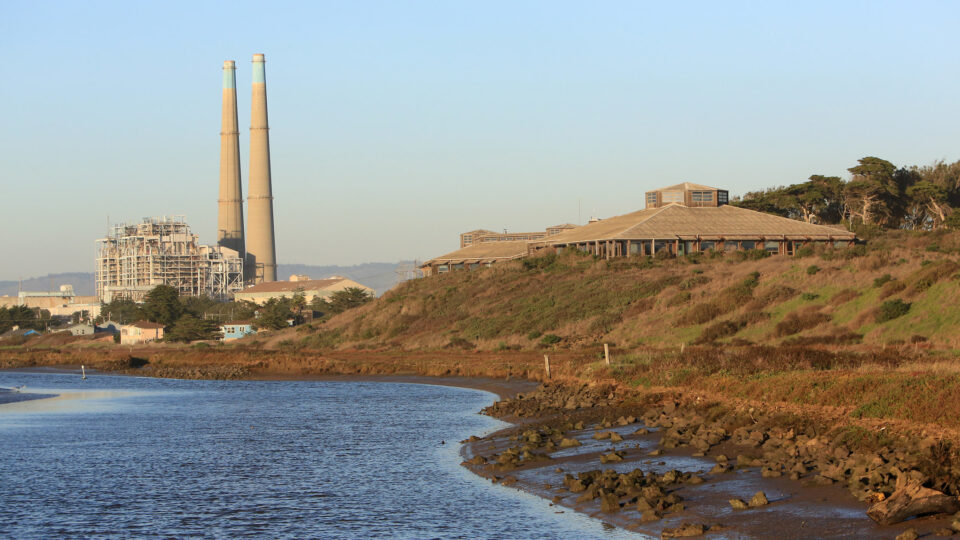
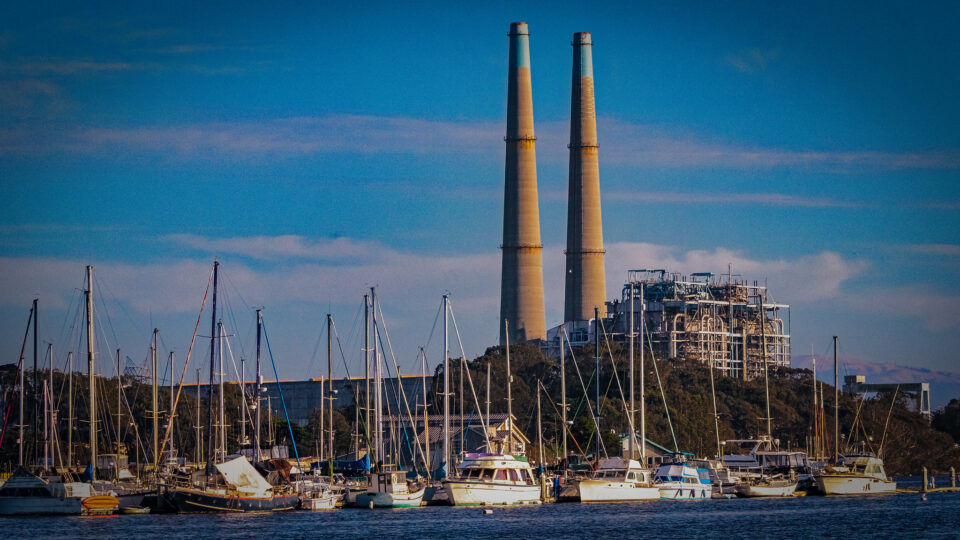
The Monterey County Planning Commission has unanimously approved a joint project between Tesla and Pacific Gas and Electric to turn the Moss Landing Power Plant in California into the world’s largest battery energy storage facility.

The Moss Landing Power Plant is a natural gas-powered electricity generation plant located at the midpoint of California’s Monterey Bay.  At one time, it was the largest power plant in the state of California with a generation capacity of 2560 MW but has been gradually shutting down over time.

The new facility will incorporate 1.2 GWh of storage capacity for energy generated by solar and wind systems.  The stored energy will be available for use during periods of high energy demand and lower output.  This is about ten times larger than Tesla’s Hornsdale energy storage project in Australia, which was three times bigger than any other batter storage facility when it was built a few years ago.  In 2018, the battery system at Hornsdale made back a third of its cost in just one year.  The systems make use of Tesla’s Megapack battery products which come in pre-assembled units that provide 3 MWh of energy storage capacity.

The project will make use of existing power lines to transmit energy around Monterey County and parts of Silicon Valley.  Tesla and PG&E hope to break ground in early spring with completion scheduled for the end of the year.  California has been adding massive amounts of wind and solar power to its electrical grid and incorporating energy storage is an important step towards creating a truly resilient power system.

**********

Web Links

Humongous Tesla Battery Plant Approved In California Is 10× Bigger Than World’s Biggest Battery Plant

Photo, posted September 22, 2019, courtesy of Flickr.

Earth Wise is a production of WAMC Northeast Public Radio.

The World’s Largest Storage Battery

May 24, 2019 By EarthWise Leave a Comment

Many homeowners are installing solar energy systems with battery backup.  Energy stored in the battery can be used when the sun isn’t shining.   As battery prices come down, utility-scale solar installations are also turning to battery-based energy storage.

Florida Power & Light has announced plans to build the world’s largest solar-storage combination facility in Manatee County.  The 409-MW Manatee Energy Storage Center will be the largest solar-battery system by a factor of four.  The specifics of the technology and source of the battery system components have yet to be announced.

The system, which is scheduled to be completed in late 2021, will be charged by a nearby FPL solar power plant.  The plan is to discharge batteries during times of higher demand, thereby offsetting the need to run other power plants.  As a result, there will be reduced emissions and customers will save as much as $100 million through avoided fuel costs.

Installing the mega-sized battery system will accelerate the retirements of two nearby 1970’s-era gas-fired generation units.  At peak efficiency, the Manatee energy storage system will be able to power 390,000 homes for up to two hours.

FPL has already been pursuing the use of battery storage technology.  Last year, they added a 10 MW battery storage system to its 74.5 MW Babcock Ranch Solar Energy Center in Charlotte County.

These large battery systems are increasingly practical because of dramatic reductions in lithium-ion battery costs.  The levelized cost of electricity from lithium-ion batteries has declined a remarkable 38% just since the beginning of 2018.  The economics of clean energy continue to get better and better.

**********

Web Links

FP&L Plans World’s Largest Energy Storage Battery To Support Its Renewable Energy Goals

Photo, posted April 21, 2010, courtesy of Frank Starmer via Flickr.

Earth Wise is a production of WAMC Northeast Public Radio.

Peak Fossil Fuel Demand

October 19, 2018 By EarthWise Leave a Comment

https://earthwiseradio.org/wp-content/uploads/2018/10/EW-10-19-18-Peak-Fossil-Fuel-Demand.mp3

There used to be a lot of talk about peak oil.  Peak oil was the theorized point in time when the maximum rate of extraction of petroleum was reached, after which there would be a terminal decline.  It was often presented as a looming catastrophe for civilization.

[Read more…] about Peak Fossil Fuel Demand

Los Angeles’ Giant Battery

August 3, 2016 By WAMC WEB

https://earthwiseradio.org/wp-content/uploads/2016/07/EW-08-03-16-Los-Angeles-Giant-Battery.mp3

Los Angeles has decided to replace a major gas-burning power plant with an energy storage device which, if not exceeded by another before it is completed, will be the world’s largest storage battery.

[Read more…] about Los Angeles’ Giant Battery

A Wind-Solar Streetlight

April 29, 2016 By WAMC WEB

https://earthwiseradio.org/wp-content/uploads/2016/04/EW-04-29-16-Wind-Solar-Streetlight.mp3

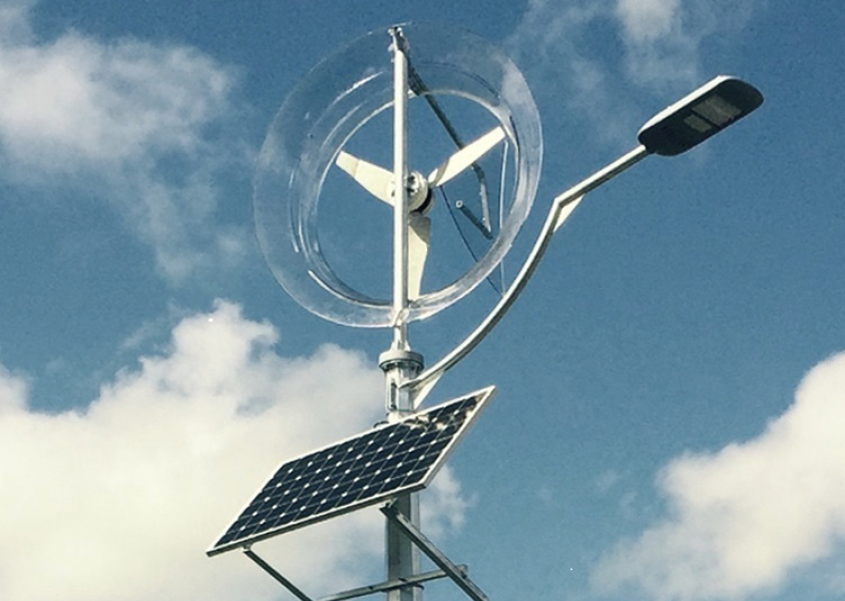
The Caribbean island nation of Grenada has installed a wind and solar powered off-grid streetlight.   An Irish company called airsynergy has developed the underlying technology which it calls a Remote Power Unit or RPU.

[Read more…] about A Wind-Solar Streetlight

Primary Sidebar

Recent Episodes

  • An uninsurable future
  • Clean energy and jobs
  • Insect declines in remote regions
  • Fossil fuel producing nations ignoring climate goals
  • Trouble for clownfishes

WAMC Northeast Public Radio
WAMC/Northeast Public Radio is a regional public radio network serving parts of seven northeastern states (more...)

Copyright © 2025 ·