• Skip to primary navigation
  • Skip to main content
  • Skip to primary sidebar

Earth Wise

A look at our changing environment.

  • Home
  • About Earth Wise
  • Where to Listen
  • All Articles
  • Show Search
Hide Search
You are here: Home / Archives for automakers

automakers

EV growth and oil demand

June 7, 2024 By EarthWise Leave a Comment

EV growth to slow oil demand

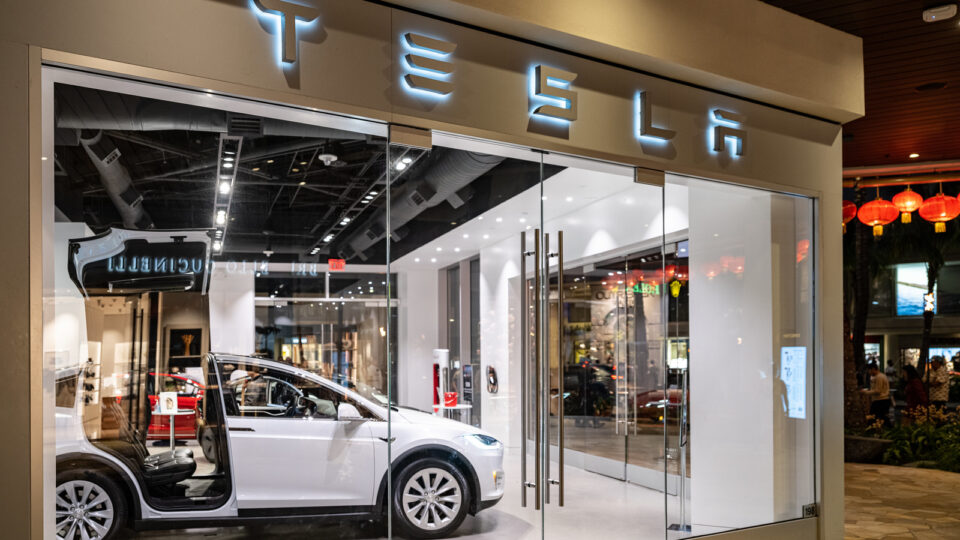
There has been lots of talk recently about the transition to electric vehicles sputtering out.  Several automakers have delayed their EV programs citing reduced demand for the vehicles and lack of profitability.  In the bigger picture, the auto industry as a whole is in a rough patch as rising interest rates and other factors have reduced car buying.

Despite all this doom and gloom talk, sales of electric vehicles will hit an all-time high this year.  Adoption of EVs is accelerating more quickly than many people expected and government policies in China, the United States, and Europe have had a significant impact on vehicle sales.  In China, 37% of new cars sold last year were electric.  The country hit its 2025 target three years early and this year the figure could hit 45%.

But even as electric car sales rapidly increase, oil demand has continued to climb, reaching 100 million barrels a day, slightly more than it was before the COVID-19 pandemic.  The International Energy Agency expects that oil demand will peak before the end of this decade, but oil consumption could remain strong for decades unless there is further policy action encouraging the transition away from it.

Some experts say that the IEA’s models don’t take into account how quickly the world is changing.  New emission rules are expected to speed the adoption of EVs and plug-in hybrids.  In addition, falling battery costs are making the economics of electric vehicles increasingly attractive.  If EV adoption accelerates more rapidly than these models predict, then oil consumption could drop much more quickly.

However, the oil industry is deeply embedded in modern life and is not likely to fade away without a fight.

**********

Web Links

EV Sales Are Taking Off. Why Is Oil Demand Still Climbing?

Photo, posted September 9, 2020, courtesy of Chris Yarzab via Flickr.

Earth Wise is a production of WAMC Northeast Public Radio
One in five cars will be electric this year

February 12, 2024 By EarthWise Leave a Comment

Electric cars are taking over

There has been lots of turbulence in the electric car industry of late.  Part of it is aggressive publicity campaigns spreading misinformation and part of it is the natural fits and starts associated with major change.  But apart from the ups and downs of individual companies and countries, analysts are projecting another record year for the sales of electric vehicles and are expecting that plug-in cars will account for 20% of all car sales globally.  Much of the growth will be driven by China, where 38% of new car sales will be electric cars.

Global sales of plug-in cars are expected to grow by 21% this year, according to Bloomberg New Energy Finance.  Total projected sales are 16.7 million cars, including 1.9 million in the U.S., 3.4 million in Europe, and 9.7 million in China.  Because of the rapid adoption of electric cars in China, that country is expected to reach peak gasoline demand this year.  In other words, the use of gasoline in China will be diminishing from now on.

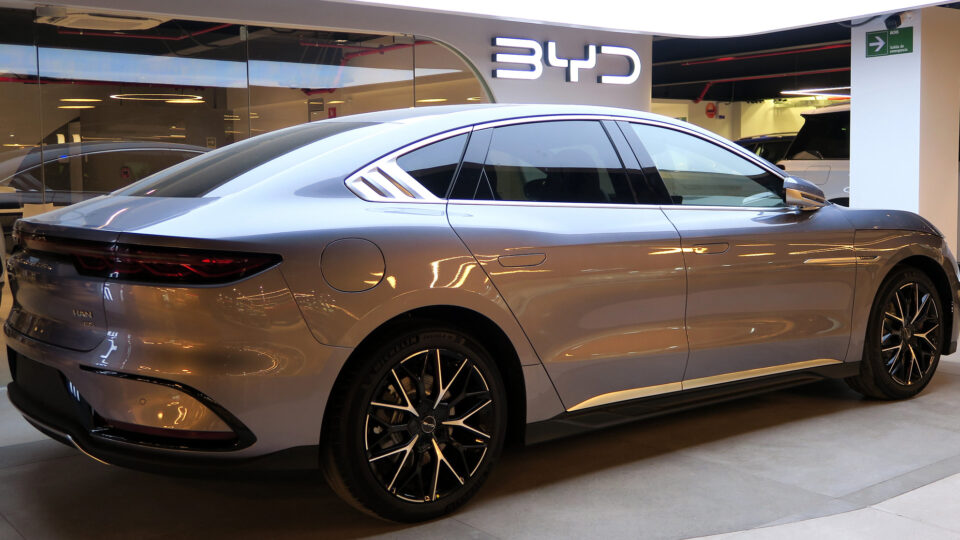
The auto industry is in flux.  The traditional big automakers are currently slowing down EV manufacturing as they work to come up to speed with the technology and market demand.  Meanwhile, EV-only carmakers such as Tesla in the U.S. and BYD in China are ratcheting up production. BYD is focusing on emerging economies with its lower-priced offerings.

In the U.S., EV adoption has been slowed somewhat by high interest rates and the slow rollout of EVs by the Big Three automakers.  But many new vehicles by a growing list of automakers will provide customers with more and more choices of EVs to suit diverse tastes and needs.

**********

Web Links

This Year One in Five Cars Sold Globally Will Be an EV

Photo, posted November 18, 2023, courtesy of RL via Flickr.

Earth Wise is a production of WAMC Northeast Public Radio

Banning Gas-Powered Cars | Earth Wise

May 12, 2023 By EarthWise Leave a Comment

The European Union has banned the sale of new gas-powered cars starting in 2035.  The vote came after weeks of negotiations related to possible exemptions to the rule.

Germany lobbied for an exemption to be made for cars powered by e-fuels.  These are made by combining hydrogen with carbon dioxide that has been removed from the atmosphere using processes powered by renewable energy.  Because of this source of the carbon dioxide, such fuels are considered to be carbon neutral.  The EU agreed to grant this exemption, so there can be cars that run only on e-fuels after 2035.

About a quarter of carbon emissions in the EU come from transportation.  The new law requires a 55% drop in carbon emissions from new cars by 2030.  Poland voted against the new law, while Bulgaria, Romania, and Italy abstained.  (Italy wanted an exemption for biofuels, but it was not granted).

Here in the US, seven states have adopted rules banning the sale of new gas-powered cars in 2035.  These are California, Maryland, Massachusetts, New Jersey, New York, Oregon, and Washington. 

California has committed to having 35% of new car sales being zero-emission vehicles by 2026, and the number rising to 68% by 2030.

As these policies proliferate around the world, the auto industry is moving ahead to keep up with them.  Most automakers are planning to have substantial parts of their product line be electric by 2030.  Given the financial and physical inertia involved in shifting to electric vehicle production, regardless of what happens with policies around the world, there is little possibility of turning back from the electric vehicle transition.

**********

Web Links

EU Approves 2035 Ban on Sales of Gas-Powered Cars

Photo, posted May 31, 2012, courtesy of Mike Norton via Flickr.

Earth Wise is a production of WAMC Northeast Public Radio
Electric Cars Getting Cheaper | Earth Wise

April 12, 2023 By EarthWise Leave a Comment

Electric cars are getting cheaper

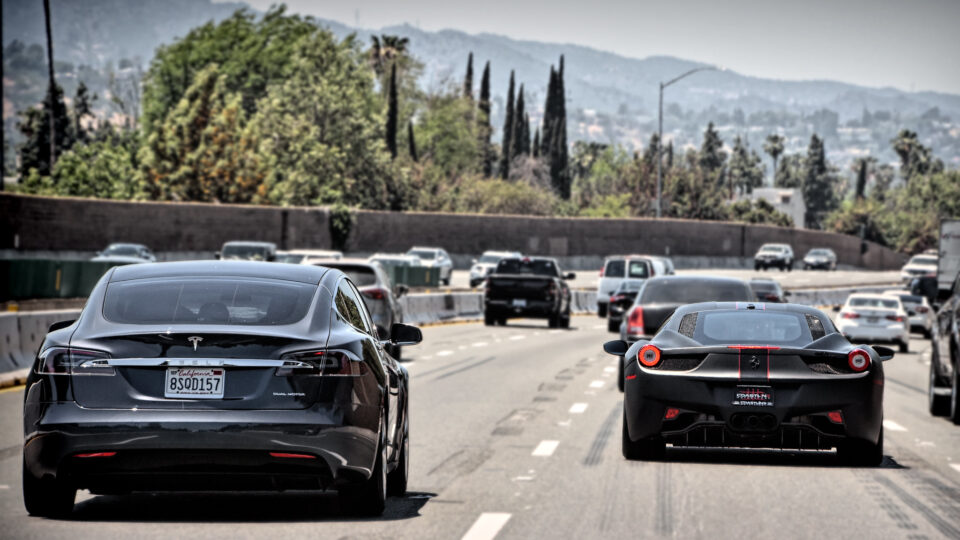
A sticking point for buying electric cars has always been that they are typically more expensive than equivalent gasoline-powered cars.  But increasing competition, government incentives, and falling prices for lithium and other battery materials is changing the equation.  In fact, the tipping point when electric cars are as cheap or even cheaper than internal combustion cars is likely to happen this year for many cars and, in fact, has already happened for some.

Battery production is ramping up for Tesla, General Motors, Ford, and others, creating cost savings from mass production. Companies manufacturing batteries in the United States are receiving government subsidies as part of a drive to establish a domestic supply chain and reduce dependence on China.  Before anyone cries foul, it should be noted that globally, oil companies received a trillion dollars in subsidies last year.  The Inflation Reduction Act is making it cheaper for automakers to build electric cars (provided they do it in the United States using US materials) and cheaper for consumers to buy them because of tax credits.

Multiple companies have lowered the price of their electric vehicles in recent months, including both the Tesla Model 3 and Model Y, which are the best-selling electric cars in the United States. GM’s electric Equinox crossover will start at about $30,000, which is still about $3,400 more than the gas-powered version.  But once the electric vehicle tax credit is figured in, it will actually be cheaper.

Electric cars are already cheaper to own and operate because of the much lower cost of powering with electricity instead of gas as well as the greatly reduced maintenance costs for the vehicles.  Once the purchase price of these cars is less than that of gas-powered cars, the economics becomes a no-brainer.

**********

Web Links

Electric Vehicles Could Match Gasoline Cars on Price This Year

Photo, posted May 11, 2021, courtesy of Chris Yarzab via Flickr.

Earth Wise is a production of WAMC Northeast Public Radio
Electric Vehicle Tax Credits | Earth Wise

February 17, 2023 By EarthWise Leave a Comment

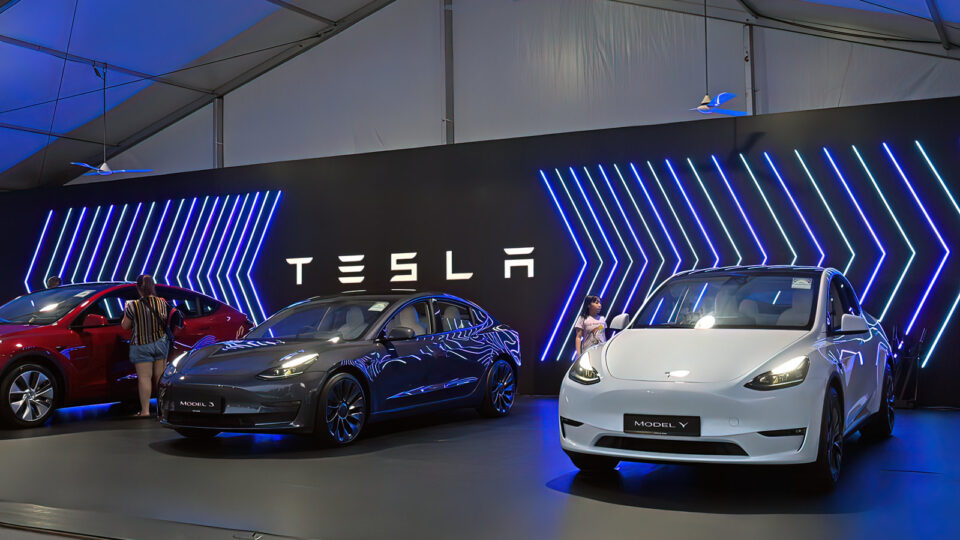
As of January 1, many Americans can qualify for a tax credit of up to $7,500 for buying an electric vehicle.  The credit is one of the changes enacted under last year’s Inflation Reduction Act.  The purpose is to encourage EV sales and thereby reduce greenhouse gas emissions and air pollution.

There has been a tax credit for EVs for more than a decade, but its provisions made cars from any manufacturer ineligible as soon as that manufacturer had sold more than 200,000 cars.  Notably, this eliminated the credit for purchasing cars from Tesla and General Motors.  Given that electric cars are now selling in the millions, the 200,000-unit cap on the tax credit essentially made it useless as a real force to grow the industry.

The new tax credit has a somewhat complex set of requirements for determining the applicability and amount of the credit.  There are price limits on eligible vehicles depending on vehicle type and there are requirements on where vehicles are manufactured, where batteries are manufactured, and where other components are made. The intent is to encourage American manufacturing of the cars and trucks to the greatest extent.  There are also income limitations on buyers who want to take advantage of the credit, but those are quite large.  The Department of the Treasury has online detailed information about the requirements for the credit and, of course, EV manufacturers can provide the specifics for their own vehicles.

For their part, automakers are adjusting prices, building domestic manufacturing plants and battery factories, and otherwise trying to position themselves for their customers to take advantage of the credit.

The new law also provides a smaller tax credit for the purchase of used electric vehicles.

**********

Web Links

Electric vehicle tax credits explained: What’s new in 2023?

Treasury Releases Additional Information on Clean Vehicle Provisions of Inflation Reduction Act

Photo, posted December 9, 2022, courtesy of Choo Yut Shing via Flickr.

Earth Wise is a production of WAMC Northeast Public Radio

Lithium Mining And Andes Ecosystems | Earth Wise

October 28, 2022 By EarthWise Leave a Comment

The global demand for lithium could be an ecological disaster

A remote region in the high Andes straddling the borders between Argentina, Bolivia, and Chile has become known as the Lithium Triangle.   The area has become the focus of a global rush for lithium to make batteries for electric cars.  The global demand for lithium is expected to quadruple by 2030 to 2.6 million tons a year.

According to the U.S. Geological Survey, more than half of the world’s lithium reserves are dissolved in ancient underground water within the Lithium Triangle.  The cheapest way to extract the lithium is to pump the underground water to the surface and evaporate it in the sun to concentrate the lithium carbonate contained in it.

Every ton of lithium carbonate extracted using this cheap, low-tech method dissipates into the air about half a million gallons of water that is vital to the arid high Andes.  The process lowers water tables and has the potential to dry up lakes, wetlands, springs, and rivers.  Hydrologists and conservationists say the lithium rush in Argentina is likely to turn the region’s delicate ecosystems to deserts.

The global drive for green vehicles to fight climate change has the potential to be an ecological disaster in this remote region of South America and for the indigenous people who live there.

The environmental impacts are not an inevitable price for the transition to electric vehicles.  First of all, there are alternatives to lithium.  Both zinc and nickel are potential substitutes in rechargeable batteries.  But, there are also ways of obtaining lithium that are less destructive than evaporating the metal from saline ecosystems.  It is up to battery manufacturers, automakers, and financiers to start demanding lithium from sources that are less environmentally destructive.

**********

Web Links

Why the Rush to Mine Lithium Could Dry Up the High Andes

Photo, posted September 25, 2015, courtesy of Nuno Luciano via Flickr.

Earth Wise is a production of WAMC Northeast Public Radio

Banning Gas-Powered Cars | Earth Wise

September 30, 2022 By EarthWise Leave a Comment

Banning gasoline powered vehicles

In June, the European Union voted to ban the sale of new gas- and diesel-powered vehicles starting in 2035.   The EU joined Canada, the United Kingdom, Japan, South Korea, and several other countries in imposing future gas car bans.

Here in the U.S., on August 25th, California adopted rules banning the sales of new gas-powered cars and light trucks by 2035.  New York passed a similar law last year and its ban will also cover heavy trucks by 2045.

California’s action is particularly significant because there are other states that have trigger laws that impose their own bans based on what California does.  Washington state, Massachusetts, and Virginia are in this category, although the governor of Virginia has said he plans to try to repeal the law.

An additional 12 states have policies tied to California’s and are likely to adopt their own versions of the 2035 ban.  These are Colorado, Connecticut, Delaware, Maine, Maryland, New Jersey, New Mexico, Nevada, Oregon, Pennsylvania, Rhode Island, and Vermont.

When these regulatory actions are coupled with the major investments in electric vehicles being made by virtually all automakers, the transition to electric vehicles appears to be inevitable.

As far as people who love their gas-powered cars are concerned, the new rules only apply to new car sales.  So, consumers can still buy and own used cars that run on gasoline.  If there are states that never impose bans on new gas-powered vehicles, then consumers can go to those states and buy one, assuming there are any being made at that point.   It seems likely that gas-powered cars will end up being made for hobbyists and aficionados only. 

**********

Web Links

California Just Banned Gas-Powered Cars. Here’s Everything You Need to Know

Photo, posted May 20, 2018, courtesy of James Loesch via Flickr.

Earth Wise is a production of WAMC Northeast Public Radio
Electric Cars On The Rise | Earth Wise           

May 16, 2022 By EarthWise Leave a Comment

Sales of electric vehicles surging

The first quarter of the year was a tough one for the U.S. auto industry.  Overall sales of cars and trucks were down 15.7% compared with last year.   Automakers have been dealing with shortages of computer chips and other supplies, resulting in slowdowns in production.

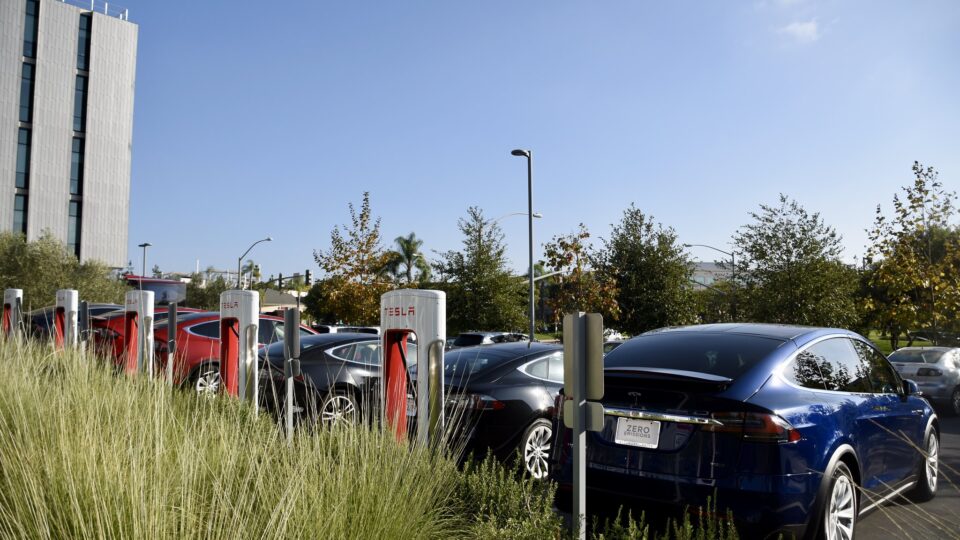
The one major exception to the trend has been sales of electric cars.  In the first quarter, U.S. electric vehicle sales were up 76% compared with last year.  This was enough to double EV’s market share to 5.2%, up from 2.5% last year.

Reaching a five percent market share is a significant indicator that electric vehicles are becoming mainstream.  According to many industry analysts, this is just the beginning of a major ramp-up in EV sales.

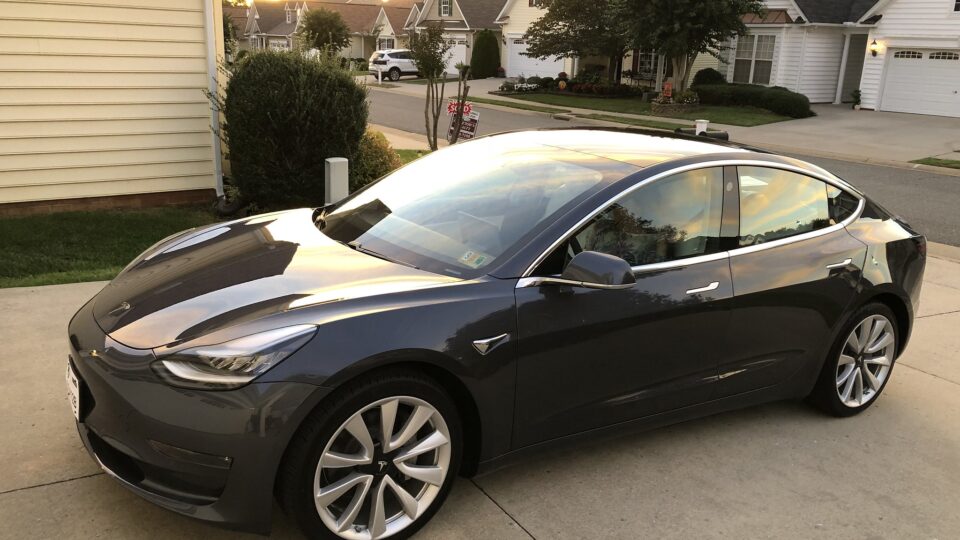
The strong results in the first quarter were largely driven by one company – namely, Tesla.  Tesla has been expanding rapidly and has been proactive and creative in avoiding delays due to parts shortages.  Tesla’s best-selling car is now the Model Y, which is an SUV implementation of its Model 3 design.  Overall, the company is now producing cars at a rate of more than 1 million per year and has recently opened new manufacturing plants in Texas and in Germany.

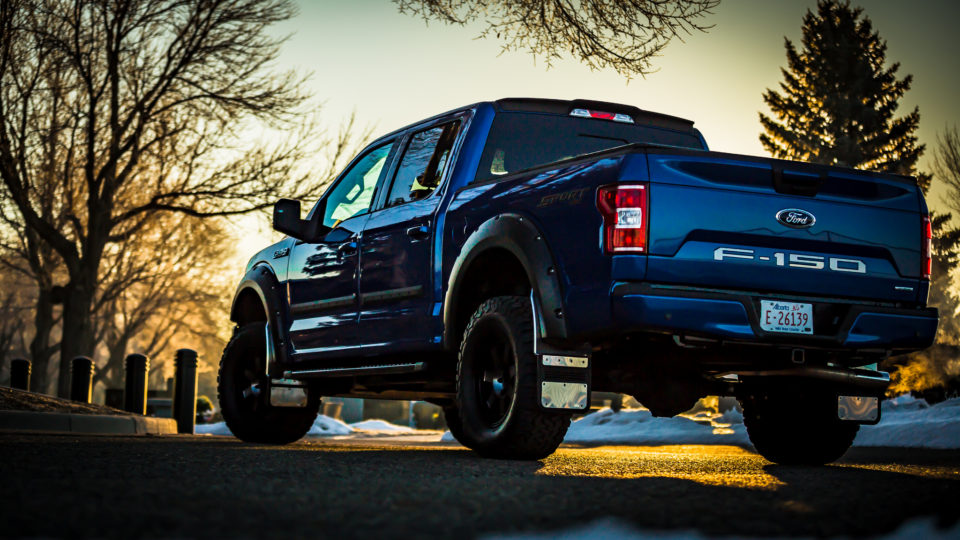
But Tesla is not the only story in the world of electric vehicles.  Mass production is beginning for Ford’s F-150 Lightning truck. 

Nissan, Hyundai and Kia have electric cars on the market and shortly near-twin electric models jointly developed by Subaru and Toyota will be available as well.

The electrification of vehicles is an essential step in reducing greenhouse gas emissions.  With gasoline at painfully high prices, electric cars are more attractive than ever.

**********

Web Links

Inside Clean Energy: US Electric Vehicle Sales Soared in First Quarter, while Overall Auto Sales Slid

Photo, posted October 13, 2017, courtesy of Rob Bertholf via Flickr.

Earth Wise is a production of WAMC Northeast Public Radio.

How Green Are Electric Cars? | Earth Wise

April 12, 2021 By EarthWise Leave a Comment

Electric cars are becoming even greener

Environmental groups, governments, and automakers are all promoting electric vehicles as an important technology to combat climate change.  For example, GM plans to stop selling gas-powered cars by 2035 and Volvo intends to be all-electric by 2030.

There are still those who question how green electric vehicles actually are.  All products and technologies do have their environmental impacts.  In general, today’s electric cars produce significantly fewer planet-warming emissions than gas-powered cars, but there are factors that affect the results for specific vehicles.

The biggest issue is the source of electricity used to charge up the cars.  In places where coal still provides a substantial fraction of electric generation, electric cars don’t fare as well.  But coal’s contributions to the grid are declining rapidly and even cleaner fossil fuels like natural gas are gradually being replaced by green generation from wind and solar power.  If the grid was entirely carbon-free, then there would be no emissions associated with operating the vehicle.

MIT has created an interactive online tool that incorporates a comprehensive set of factors contributing to the emissions associated with cars:  what it takes to manufacture the cars, how much gasoline conventional cars burn, and where the electricity to charge electric vehicles comes from.

The tool provides information like the average amount of carbon dioxide emitted for every mile driven over a car’s lifetime. 

Results will vary with location and various other vehicle factors, but in the great majority of cases, electric cars are much greener than gasoline cars, and as the grid becomes greener, the cars will become greener as well.

**********

Web Links

CarbonCounter 2021

How Green Are Electric Vehicles?

Photo, posted January 29, 2020, courtesy of Tony Webster via Flickr.

Earth Wise is a production of WAMC Northeast Public Radio.

Better Radar For Cars | Earth Wise

August 14, 2020 By EarthWise Leave a Comment

new radar technology for safer driving

Major automakers as well as dedicated specialized companies are actively developing autonomous vehicle technology.  Many cars already offer varying degrees of self-driving capability.  These vehicles have a variety of sensor systems that allow them to detect other objects on the road.  Many rely on lidar or on cameras using visible or near-infrared light and these sensors do a pretty good job of preventing collisions.   But all of these systems are pretty much limited to detecting objects within a car’s line of sight.  Of course, human drivers have the same limitation.  We can’t see things hidden around corners or blocked by other objects.

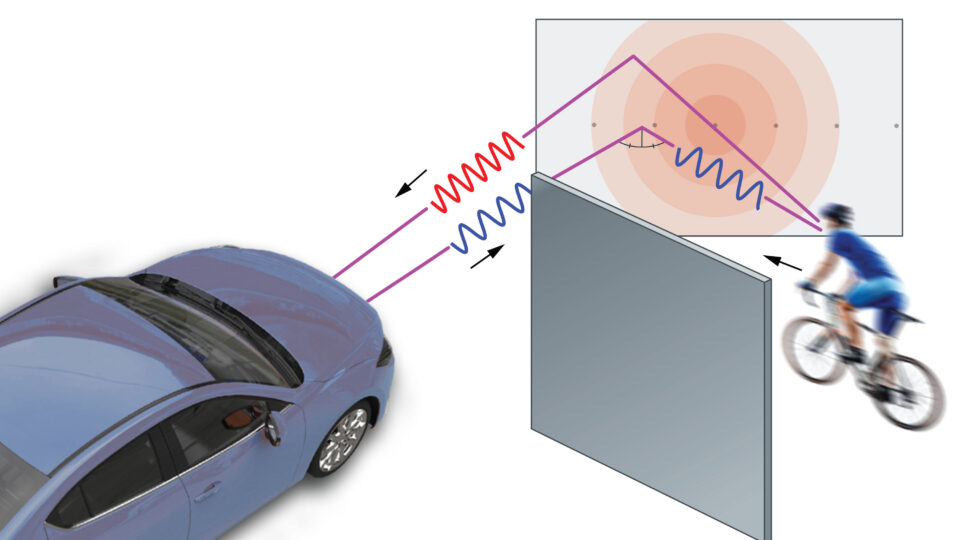
Researchers at Princeton University have developed an automated system that will allow cars to peer around corners and spot oncoming traffic and pedestrians.  The system uses Doppler radar to bounce radio waves off of surfaces such as buildings and parked automobiles.  The radar signal hits a surface at an angle and its reflection bounces off much like a cue ball hits the wall of a pool table.  The reflected signal then hits objects hidden around the corner.  Some of that radar signal bounces back to be detected by sensors on the car.  In this way, the system can see objects around the corner and even tell whether they are moving or stationary.

This new technology could easily be integrated into today’s vehicles.  It would enable cars to see objects that current sensor systems cannot record.  For example, it would allow a self-driving vehicle to see around a dangerous intersection.

The system will require further development, refinement, and testing before it can find its way into our vehicles, but it does represent yet another way that self-driving technology may ultimately result in a safer transportation system.

**********

Web Links

New radar lets cars spot hazards around corners

Photo courtesy of Princeton University.

Earth Wise is a production of WAMC Northeast Public Radio.

Hyping Electric Cars | Earth Wise

March 13, 2020 By EarthWise Leave a Comment

During this year’s Super Bowl, at least three car companies – GM, Porsche, and Audi – ran commercials for plug-in cars.  This is a sign that automakers are ramping up their efforts to persuade the public that electric cars really are the future.

The auto industry is investing billions of dollars to develop electric vehicles, spurred by stricter emissions rules in places like California and concerns about climate change.  In fact, more than 100 new plug-in models are expected to become available in the United States over the next five years.

In Europe, electric cars are increasingly popular.  Norwegians, for example, buy more electric cars than gas cars.  And several European countries have banned the sale of gas cars starting in 2025.

But in the US, enthusiasm for electric cars has been slow to build.  Automakers sold fewer than 330,00 electric vehicles in the US in 2019 and more than half of those were from Tesla, which actually does not even advertise its vehicles.

The auto industry spent nearly $9 billion in national and local advertising in the US last year, but less than half a percent of that went toward promoting electric vehicles.

A big part of the problem is that car dealers are not very enthusiastic about selling electric cars, which require far less maintenance than conventional cars and have far fewer costly replacement parts to sell.   As a result, the industry’s efforts to speed the transition to electric cars has been ambivalent at best.

World-wide, Tesla has sold about a million cars, mostly in the past 4 years, so there is clearly a growing demand for electric vehicles.  It is up to the rest of the industry to create demand for the new cars they have committed to produce.

**********

Web Links

Super Bowl Ads Hyped Electric Cars. But Will Anyone Buy Them?

Photo, posted October 6, 2018, courtesy of Mike Fonseca via Flickr.

Earth Wise is a production of WAMC Northeast Public Radio.

The Fight For Greener Cars

June 28, 2018 By EarthWise Leave a Comment

https://earthwiseradio.org/wp-content/uploads/2018/06/EW-06-28-18-The-Fight-for-Greener-Cars.mp3

U.S. automakers have always been reluctant partners in the nation’s efforts to reduce air pollution and improve fuel efficiency. There have been struggles for decades between the carmakers and the government in setting Corporate Average Fuel Economy (or CAFÉ) standards.  During the Obama administration, some of the most demanding fuel economy and emissions standards were mandated.

[Read more…] about The Fight For Greener Cars

Toyota’s Hydrogen Factory

January 15, 2018 By EarthWise 2 Comments

https://earthwiseradio.org/wp-content/uploads/2018/01/EW-01-15-18-Toyotas-Hydrogen-Factory.mp3

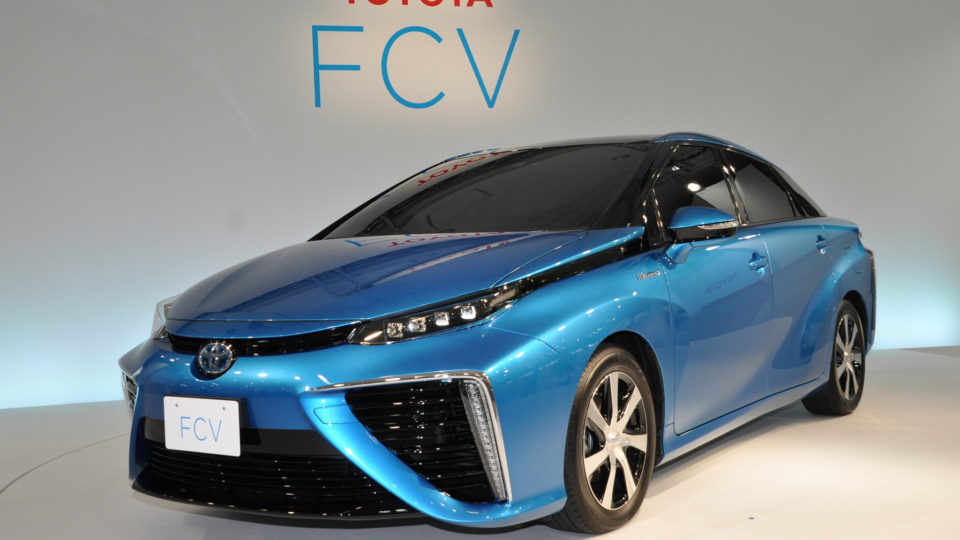
Toyota is one of several automakers that are promoting hydrogen fuel cell cars – electric cars that get their energy from fuel cells rather than batteries.  Fueling one of these cars is much like filling up the tank of a gasoline-powered car, except that the fuel in question is hydrogen.

[Read more…] about Toyota’s Hydrogen Factory

China And Electric Cars

December 19, 2017 By EarthWise Leave a Comment

https://earthwiseradio.org/wp-content/uploads/2017/12/EW-12-19-17-China-and-Electric-Cars.mp3

While American politicians were voting on eliminating tax credits for buyers of electric vehicles, auto executives from around the world were gathering to make ambitious plans to sell more electric cars in China.

[Read more…] about China And Electric Cars

A Climate-Friendlier Coolant

November 18, 2016 By WAMC WEB

https://earthwiseradio.org/wp-content/uploads/2016/11/EW-11-18-16-Climate-Friendlier-Coolant.mp3

Recently, negotiators from more than 170 countries reached a legally binding accord in Kigali, Rwanda to cut the use of hydroflurocarbons, or HFCs, which are chemical coolants used in air conditioners and refrigerators.  HFCs are just a small percentage of the greenhouse gases in the atmosphere, but they are supercharged greenhouse gases that have 1,000 times the heat-trapping potency of carbon dioxide.

[Read more…] about A Climate-Friendlier Coolant

We Like Cheap Gas

February 10, 2016 By WAMC WEB

https://earthwiseradio.org/wp-content/uploads/2016/02/EW-02-10-16-Cheap-Gas.mp3

The major auto makers agreed several years ago to a goal of achieving average fuel economy of over 54 miles per gallon by 2025.  Motivated by the desire to reduce emissions, getting twice as many miles out of a gallon of gas makes great sense.

[Read more…] about We Like Cheap Gas

Primary Sidebar

Recent Episodes

  • An uninsurable future
  • Clean energy and jobs
  • Insect declines in remote regions
  • Fossil fuel producing nations ignoring climate goals
  • Trouble for clownfishes

WAMC Northeast Public Radio
WAMC/Northeast Public Radio is a regional public radio network serving parts of seven northeastern states (more...)

Copyright © 2026 ·