• Skip to primary navigation
  • Skip to main content
  • Skip to primary sidebar

Earth Wise

A look at our changing environment.

  • Home
  • About Earth Wise
  • Where to Listen
  • All Articles
  • Show Search
Hide Search
You are here: Home / Archives for areas

areas

The coastal squeeze

June 26, 2025 By EarthWise Leave a Comment

Globally, coastal areas are being squeezed between rising seas on one side and human development on the other.  The average distance from the high waterline to the first built-up area with human structures or paved roads is less than 400 yards around the world.  The narrower a coast, the sooner rising sea levels cause problems.

Narrow coasts have reduced ability to defend against storm surges and other weather events.  Construction close to the sea makes coastal areas extra vulnerable.  Narrow coasts are also bad news for biodiversity.  A study by the Royal Netherlands Institute for Sea Research investigated plant diversity in both the Netherlands and the United States.  They found that the wider the coast was, the greater the plant diversity.

In Florida and Georgia, whenever coastal zones reached a couple of kilometers in width, diversity increased rapidly.  In the Netherlands, only coastal areas at least 3.8 kilometers wide reached their maximum plant diversity, but such areas are rare.  Dutch sand dune areas are typically no more than a kilometer wide, leaving plant diversity at no more than half the possible level.

Limited biodiversity in narrow coastal strips can be somewhat boosted by nature management but would benefit much more by spatial planning.  In the Netherlands, a spot called The Sand Motor is where a gigantic amount of sand was deposited off the coast in 2011.  Since then, natural forces have spread it along the coast.  Such coastal expansion could increase biodiversity.  Biodiversity is not a luxury.  It makes for a better future for coastal defense, a healthy drinking water supply, and a better human food supply.

**********

Web Links

Coastal squeeze is bad for biodiversity, and for us!

Photo, posted June 21, 2017, courtesy of Mark Bias via Flickr.

Earth Wise is a production of WAMC Northeast Public Radio

Climate risks for apple-growing areas

January 31, 2025 By EarthWise 2 Comments

The changing climate is creating challenges for some of the most productive apple growing regions in America.  A study by Washington State University analyzed over 40 years of climate conditions that impact the growth cycle of apple trees.

Many growing areas face increased climate risk, but the top three apple-producing counties are among the most impacted.  Yakima County in Washington is the country’s largest apple producer with more than 48,000 acres of apple orchards.  Kent County in Michigan and Wayne County in New York (located east of Rochester) are the next two largest.

The study looked at six metrics that affect apple production.  Two of these metrics relate to extremes:  extreme heat days (with temperatures above 93 degrees) that can cause multiple problems and warm nights (with minimum temperatures above 59 degrees) that adversely affect coloration.

Other metrics included the number of cold days, the last day of spring frost, and the number of growing degree days, which are the number of days above a certain temperature that are conducive for apples to grow.

Changes to these metrics can impact apple production, change the time when apple flowers bloom, increase risk of sunburn on apples, and affect apple appearance and quality.  In many places, nearly all of these metrics are changing in an undesirable direction.

Apples are the most consumed fruit in the United States.  27,000 American producers supply an industry with a downstream value of $23 billion.  Apples are a big deal.

**********

Web Links

Prime apple-growing areas in US face increasing climate risks

Photo, posted August 8, 2020, courtesy of Sue Thompson via Flickr.

Earth Wise is a production of WAMC Northeast Public Radio
Greenland is greening

March 21, 2024 By EarthWise Leave a Comment

Greenland is greening

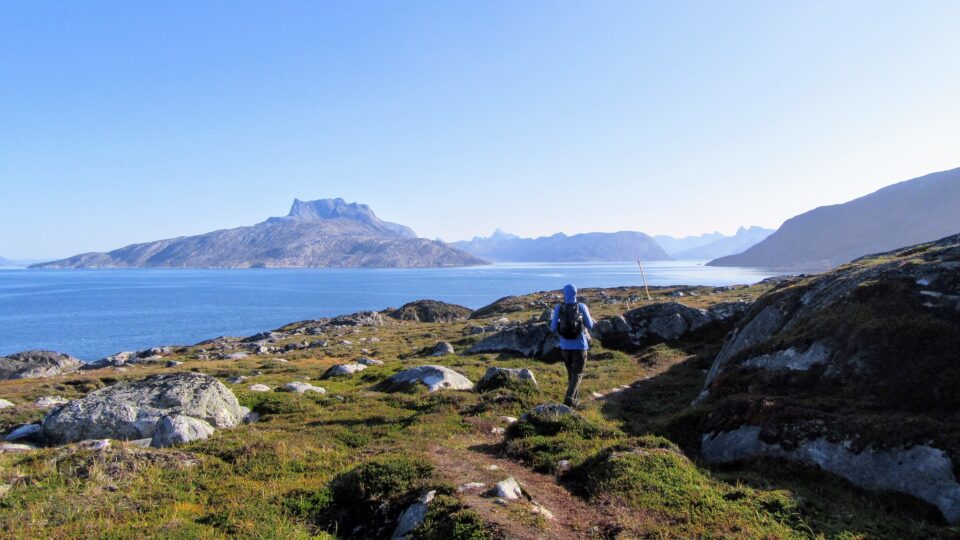
Despite their names, Iceland is very green, and Greenland is very icy.  But in Greenland, that is changing.  Temperatures in the world’s largest island are rising twice as fast as they are in the rest of the world and, as a result, the icy rocky landscape is turning increasingly green.

Satellite records reveal that over the last three decades Greenland has lost 11,000 square miles of ice, which is an area about the size of Massachusetts.  As the ice melts off, tundra and shrublands takes its place.  The ice melt moves sediment and silt and eventually wetlands and fenlands are formed.

Between the late 1980s and the late 2010s, the areas of Greenland covered by vegetation have more than doubled.  The new green areas cover roughly 33,000 square miles, which is an area the size of Maine.

Greenland’s dramatic changes are the result of the warming climate, but in turn, those changes are accelerating climate change.  Land covered with dark green vegetation absorbs more energy from the sun thereby warming the air whereas ice-covered landscapes reflect much of the sun’s energy back into space.  In addition, the rapidly expanding wetlands are a significant source of methane, which traps even more heat in the atmosphere.

Greenland is a poster child for the effects of climate change.  Its glaciers and icecaps are shrinking, glacier-fed lakes are expanding, permafrost lakes are draining, and rivers are transporting vast amounts of sediment and widening.  All of this is going on as its vegetation cover and species diversity is expanding.

**********

Web Links

In Icy Greenland, Area Covered by Vegetation Has More Than Doubled in Size

Photo, posted September 20, 2019, courtesy of Amanda via Flickr.

Earth Wise is a production of WAMC Northeast Public Radio
The importance of Alaska’s National Forests

December 22, 2023 By EarthWise Leave a Comment

The world’s forests play a crucial role in taking carbon out of the atmosphere and mitigating the effects of climate change.  An analysis of U.S. national forests shows that two southern Alaskan forests are key to meeting climate and biodiversity goals.

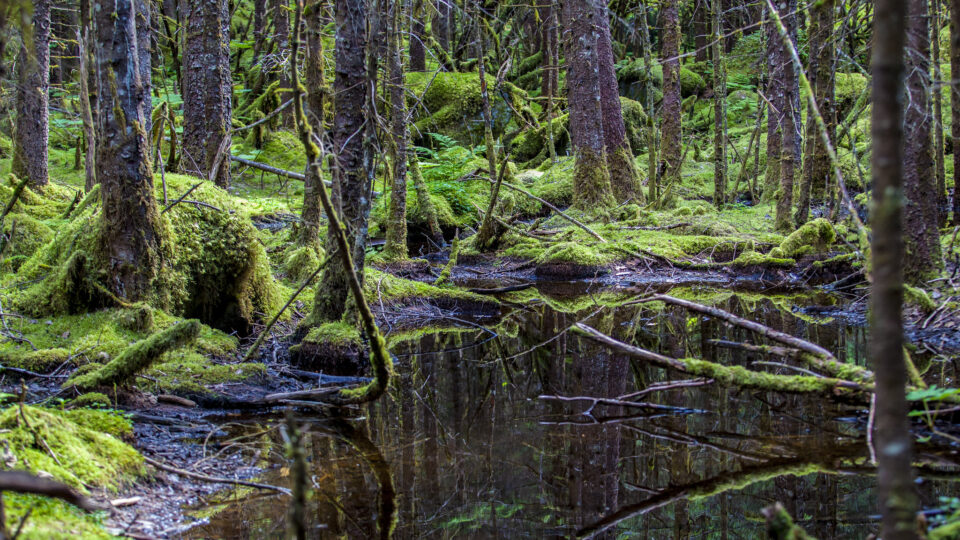
The Tongass Forest in Alaska is America’s largest national forest, encompassing 16.7 million acres.  Alaska’s Chugach Forest is the country’s second largest at just under 7 million acres.  These two forests are not only the largest national forests, they are also the most intact. 

A study by researchers at the Oregon State University College of Forestry looked at 152 national forests and compared them in terms of carbon density and accumulation, total biomass carbon stocks, habitat for eagles, bears, and wolves, and landscape integrity – which is the extent of modification by human activity.  According to the study, almost 31% of all high-landscape-integrity area found in national forests is in the Tongass and Chugach forests.  The Tongass alone represents over 25%.

These forests are cool and wet.  Their carbon stocks are only minimally affected by wildfire, unlike many other forests in the lower 48 states.  Given the size and stability of the two forests, protecting them is a high priority for making it possible to meet global goals relating to climate and diversity of species.

Ecosystems remove about 30% of all the carbon dioxide humans put into the atmosphere and intact forests with high carbon density do most of that work.  Protecting Alaska’s forests is crucial.

**********

Web Links

Southern Alaska’s national forests key to meeting climate, conservation goals, OSU study shows

Photo, posted August 4, 2014, courtesy of Jeff Canon via Flickr.

Earth Wise is a production of WAMC Northeast Public Radio
New York Is Sinking | Earth Wise

June 29, 2023 By EarthWise Leave a Comment

New York City is slowly sinking

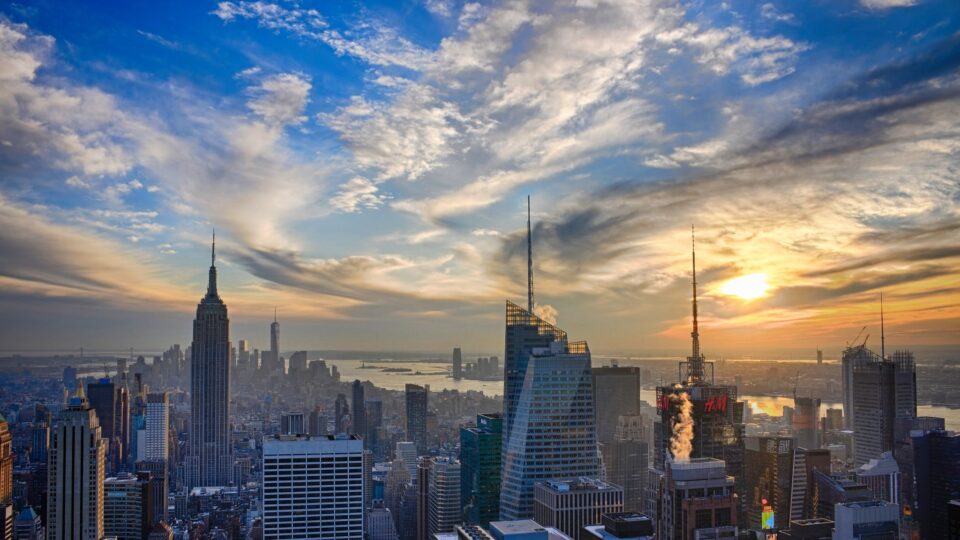
The rising seas represent a threat to coastal cities across the globe.  Increasing that threat is the fact that most global cities are slowly sinking as the earth beneath them settles and groundwater is removed.   Another factor that has seldom been considered is that in major metropolises, the weight of large, concrete-and-steel skyscrapers may be hastening the sinking.

A new study by the U.S. Geological Survey published in the journal Earth’s Future estimated the weight of every building in New York City – 1.085 million of them – which they determined to add up to 1.68 trillion pounds – and estimated the downward force of those structures across the city.

The study found that buildings have a greater effect in areas that are rich in clay compared with those areas where sand or bedrock predominate.  The softer the soil, the more compression there is from buildings.  It wasn’t a mistake to build large buildings in New York, but it is important to understand that doing so pushes down the ground more and more.

The study determined that New York is sinking by around 1 to 2 millimeters each year, although some areas are sinking much faster.  The researchers say that cities must plan for future sinking, which will exacerbate the impact of rising seas. Sea levels are rising 1 to 2 millimeter each year, so the subsidence caused by the weight of buildings is equivalent to moving a year ahead in time with regard to rising ocean levels.  This is not a cause for immediate panic, but it is important to understand that this ongoing process only increases the risk of inundation from flooding.

**********

Web Links

New York City Sinking Under Weight of Skyscrapers

Photo, posted January 29, 2016, courtesy of Always Shooting via Flickr.

Earth Wise is a production of WAMC Northeast Public Radio
Fires Are Larger And More Frequent | Earth Wise

May 6, 2022 By EarthWise Leave a Comment

Wildfires are becoming more frequent and larger

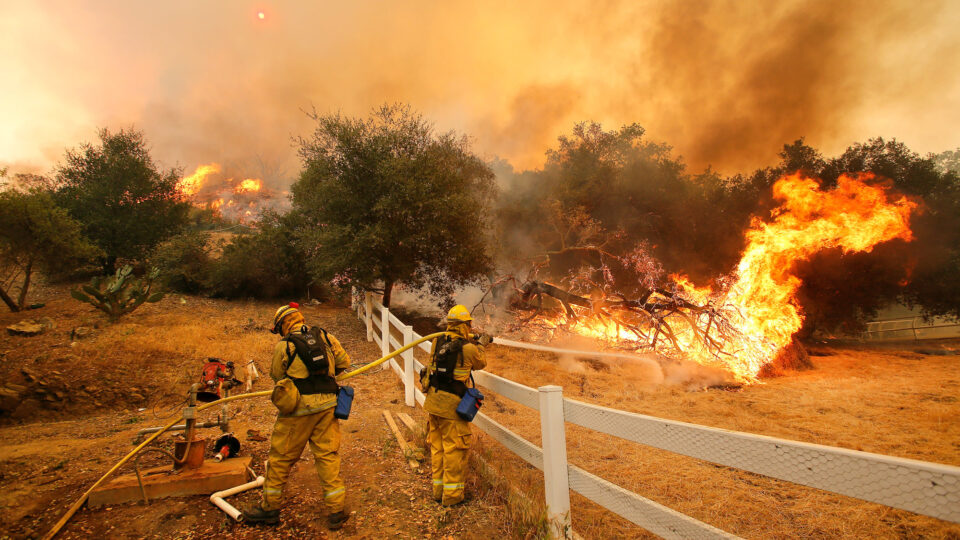
According to a new study by the University of Colorado Boulder, wildfires have gotten much larger and much more frequent across the United States since the year 2000.  The rise in wildfires in recent years has been attributed to the changing climate and the new research shows that large fires have become more common and have been spreading into new areas that previously did not burn.

The researchers analyzed data from over 28,000 fires that occurred between 1984 and 2018 using satellite imagery along with detailed state and federal fire history records.

The results are that there were more fires across all regions of the contiguous U.S. from 2005 to 2018 compared to the previous 20 years.  In the West and East, fire frequency doubled, and in the Great Plains, fire frequency quadrupled.  The amount of land burned each year at least tripled in those regions.

The team discovered that the size of fire-prone areas increased in all regions of the contiguous U.S. in the 2000s, meaning that the distance between individual fires has been getting smaller than it was in previous decades and the fires have been spreading into areas that did not burn in the past.

This comprehensive study confirms what has been assumed by the media, public, and firefighting officials.  The results also align with increasing risk trends such as the growing development of natural hazard zones. Projected changes in climate, fuel, and ignitions suggest that there will be more and larger fires in the future.  More large fires plus intensifying development mean that the worst fire disasters are still to come.

**********

Web Links

U.S. Fires Four Times Larger, Three Times More Frequent Since 2000

Photo, posted May 3, 2013, courtesy of Daria Devyatkina via Flickr.

Earth Wise is a production of WAMC Northeast Public Radio.

Animals And Wildfires | Earth Wise

December 8, 2021 By EarthWise Leave a Comment

How animals cope with wildfires

More than a century of fire suppression strategies coupled with climate change has led to wildfires that are much larger and more frequent than those of the past.  A question that arises is what happens to the animals in a region when a massive wildfire sweeps through the landscape?

For the most part, we don’t have much information on what animals do when the flames are burning or in the immediate days after the fire has ended.  By chance, a group of researchers from the University of California, Berkeley, the University of California, Santa Barbara, and the University of Washington had the opportunity to get that kind of information.

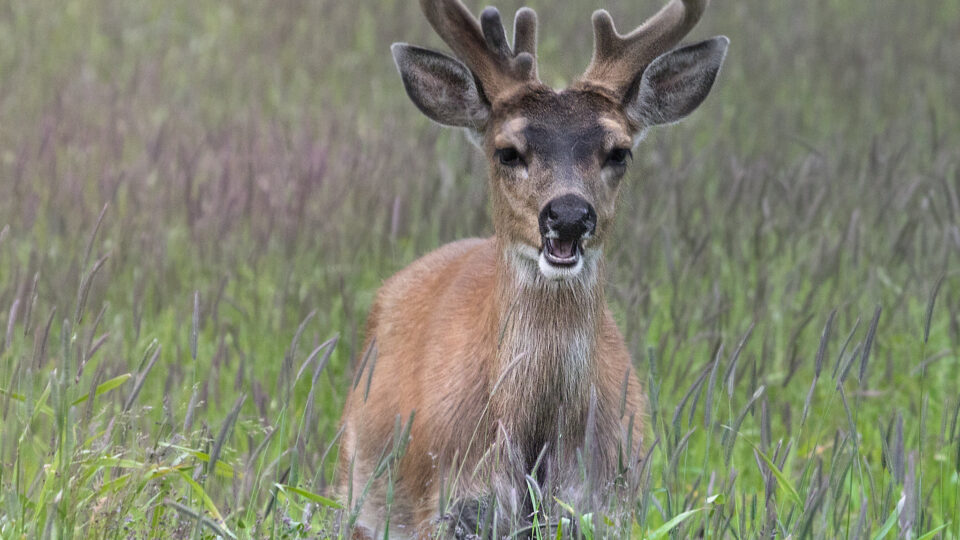
The researchers had been studying a group of black-tailed deer where the 2018 Mendocino Complex Fire occurred.  That megafire torched more than 450,000 acres in Northern California, including the site where the researchers were studying the movements and feeding patterns of the deer.

The researchers had to evacuate the area during the fire, but their cameras, tracking collars, and other equipment continued to function.  They learned that of the 18 deer studied, all survived.  Deer that had to flee the flames returned home, even though many areas were completely burned and devoid of vegetation to eat.  In fact, most of the deer returned within hours of the fire’s end while trees were still smoldering.   The researchers continue to monitor the deer to look at the long-term effects of the fire.

The researchers speculate that loyalty to home is a tactic that likely helped the species survive past wildfires.  Smaller fires encourage new vegetation growth, a tasty treat for deer.  Whether the strategy will pay off as fires get more intense and more frequent remains to be seen. 

**********

Web Links

After California’s 3rd-largest wildfire, deer returned home while trees were ‘still smoldering’

Photo, posted July 17, 2017, courtesy of C Watts via Flickr.

Earth Wise is a production of WAMC Northeast Public Radio.

Harvesting Water From Air | Earth Wise

May 17, 2021 By EarthWise Leave a Comment

Solving the water crisis by harvesting it from the air

Developing new technologies that harvest water from the air is a growing field of research driven by the fact that more and more people live in areas where fresh water is in short supply.  Estimates are that roughly half the world’s population lives in regions with severe freshwater shortages for at least one month each year.

We have previously discussed some of the novel approaches that researchers are taking to enhance water harvesting.  The work at UC Berkeley using metalorganic frameworks is a notable example.

One of the key problems in harvesting water from air is that many droplets that condense from water vapor in the air are too small to be collected and when they cover a surface, they can actually impede further condensation.

University of Texas at Dallas researchers have developed a novel surface that encourages tiny water droplets to move spontaneously into larger droplets.  The droplets actually self-climb along an oil, ramp-shaped meniscus.  The meniscus acts like a bridge along which microdroplets spontaneously climb upward and coalesce with larger water droplets.  They call this the coarsening droplet phenomenon.  It is enabled by a liquid lubricant with a unique hydrophilic nature.  They actually discovered the lubricant’s special properties by accident when in a lubricant test they observed smaller water droplets propel themselves into larger droplets.

Based on experimental data, the coarsening surface enhances the water harvesting rate 200% higher than other techniques.  The team continues to work on ways to use the new lubricant to make sustainable water harvesting systems that are mobile, smaller in size, lower in weight, and less expensive.  If they are successful, they will essentially be able to harvest water anywhere that has air.

**********

Web Links

New Physical Phenomenon Aids Harvest of Water from Air

Photo, posted April 26, 2014, courtesy of Toukou Sousui via Flickr.

Earth Wise is a production of WAMC Northeast Public Radio.

Moving Up And Away | Earth Wise

May 21, 2020 By EarthWise Leave a Comment

Climate change and habitat

A new study by the Wildlife Conservation Society, the US Forest Service, and UC Berkeley has shown that mountain-dwelling species trying to escape warming temperatures may also be finding refuge from human pressure.

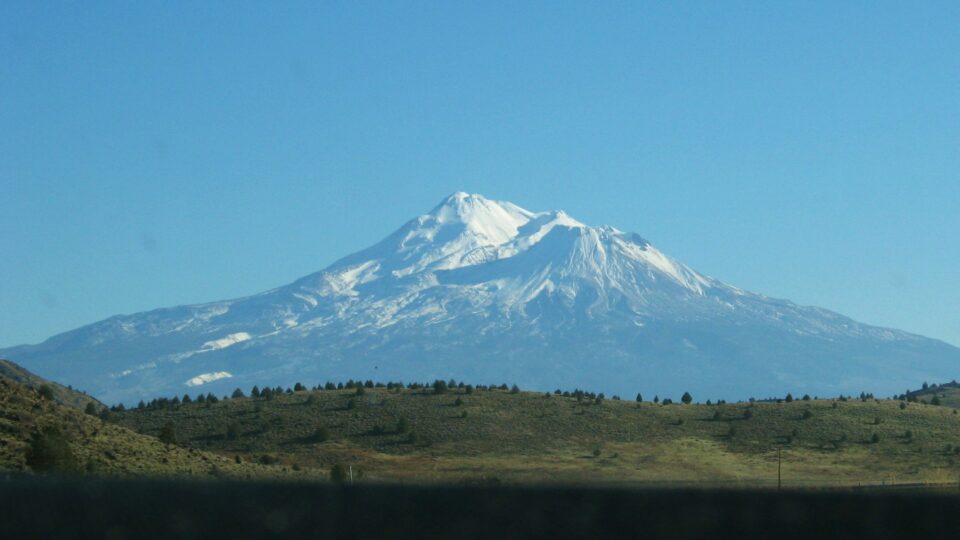
The study shows that nearly 60% of the world’s mountainous areas are under intense human pressure.  Most of that pressure occurs at lower elevations and mountain bases, where more people live, grow food, and build roads.  The researchers used climate models to predict how various species would move as the climate changes.   Based upon these predictions, they found that species tend to move to higher elevations, where temperatures are lower.  But those elevations also have more intact land for species because there is less human activity.

Mountains are home to over 85% of the world’s amphibians, birds, and mammals and these species are at risk from human activities such as agriculture, livestock grazing, and development.  These things reduce their habitats, but meanwhile the warming climate pushes them upslope as they struggle to find tolerable temperatures.

The researchers point to their study as new guidance for conservation efforts.  They warn that many conservation efforts don’t take into account the effects of human pressure.   Factoring in human pressure reveals the true extent of mountainous areas for species that are restricted to intact landscapes.  These are often the species that are of greatest concern to conservationists.  This true shape refers to how much land area is potentially available as habitat for a species as it moves up in elevation.  

The results offer a glimmer of hope for mountain-based species under climate change as they move away from the most intense human activity.

**********

Web Links

Climate change may push some species to higher elevations — and out of harm’s way

Photo, posted November 22, 2007, courtesy of Flickr.

Earth Wise is a production of WAMC Northeast Public Radio.

Metal From Plants | Earth Wise

March 31, 2020 By EarthWise 2 Comments

harvesting metal from plants

Large amounts of metal in soil are generally bad for plants.  But there are about 700 species of plants that thrive in metal-rich soils.  These plants don’t just tolerate minerals from soil in their bodies but actually seem to hoard them to ridiculous levels.

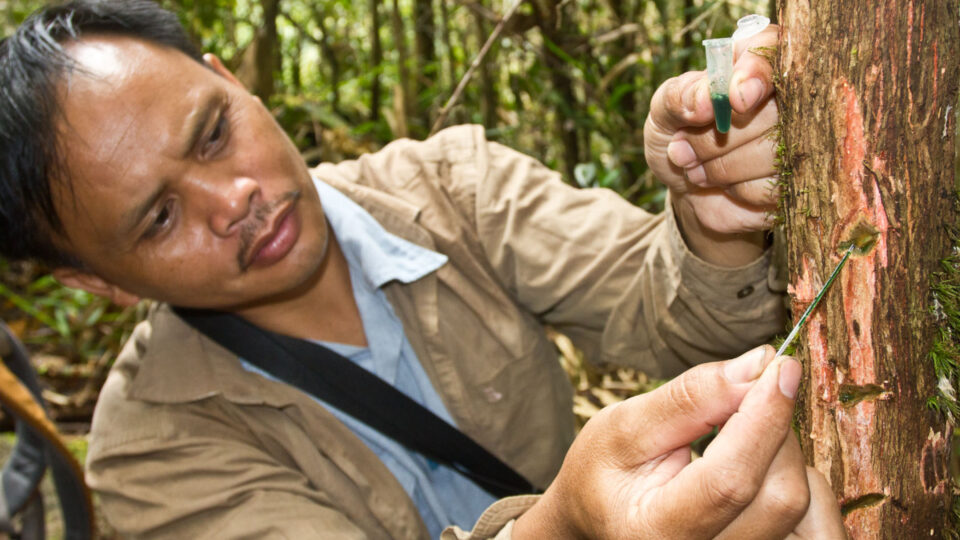
In areas where soils are naturally rich in nickel, typically in the tropics and Mediterranean basin, plants have either died off or have adapted to become nickel loving.  Slicing open a tree with this adaptation produces a neon blue-green sap that is actually one-quarter nickel, which is far more concentrated than the ore that typically feeds commercial nickel smelters.

A group of researchers from the University of Melbourne and other institutions is investigating whether this phenomenon is not just interesting but might also be of real commercial value.  They established a plot of land in a rural village in Borneo and have been harvesting growth from nickel-hyper accumulating plants.  Every six to twelve months, a farmer shaves off one foot of growth from these plants and either burns or squeezes the metal out.  After a short purification, they end up with about 500 pounds of nickel citrate, potentially worth thousands of dollars on international markets.

Phytomining – extracting minerals from hyper-accumulating plants – cannot fully replace traditional mining techniques.  But the technology could enable areas with toxic soils to be made productive and might allow mining companies to use plants to clean up their former mines and waste while actually collecting some revenue.

There are other plants that suck up cobalt, zinc, and similarly crucial metals.  With growing demand for metals, perhaps it is time to harvest them on the farm.

**********

Web Links

Down on the Farm That Harvests Metal From Plants

Photo courtesy of the University of Queensland.

Earth Wise is a production of WAMC Northeast Public Radio.

Ecology And Designing Future Cities

January 4, 2016 By WAMC WEB

https://earthwiseradio.org/wp-content/uploads/2015/12/EW-01-04-16-Building-with-Nature.mp3

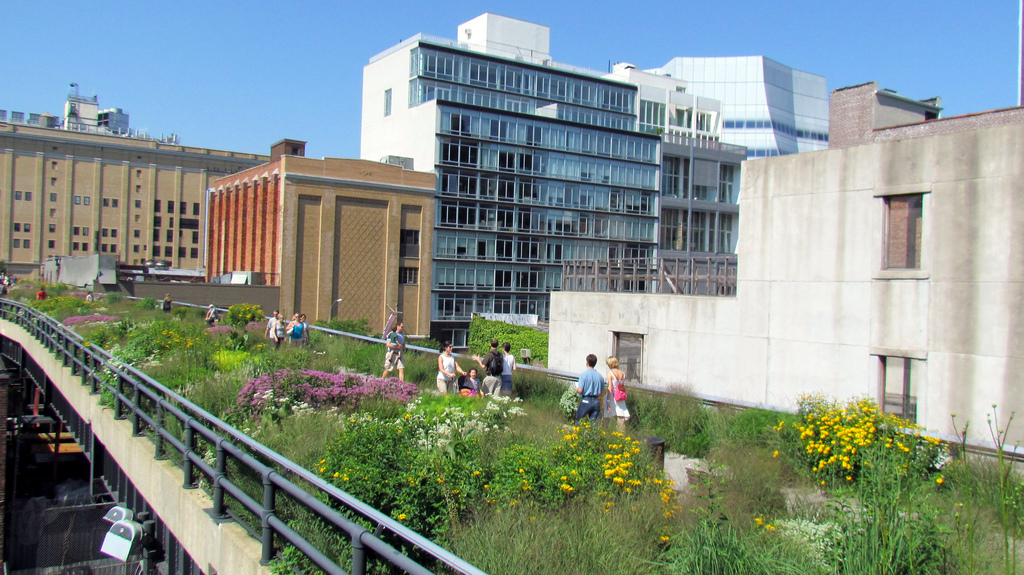
When most people hear the word ‘ecology’ – chances are it conjures up images of scientists working in distant, wild landscapes, such as old growth forests or remote mountain lakes. Increasingly, however, ecological studies are focused on urban and suburban areas.

[Read more…] about Ecology And Designing Future Cities

Primary Sidebar

Recent Episodes

  • An uninsurable future
  • Clean energy and jobs
  • Insect declines in remote regions
  • Fossil fuel producing nations ignoring climate goals
  • Trouble for clownfishes

WAMC Northeast Public Radio

WAMC/Northeast Public Radio is a regional public radio network serving parts of seven northeastern states (more...)

Copyright © 2026 ·