• Skip to primary navigation
  • Skip to main content
  • Skip to primary sidebar

Earth Wise

A look at our changing environment.

  • Home
  • About Earth Wise
  • Where to Listen
  • All Articles
  • Show Search
Hide Search
You are here: Home / Archives for water shortages

water shortages

Megadroughts

February 24, 2025 By EarthWise Leave a Comment

A new study by Swiss and Austrian scientists has found that persistent multi-year droughts have become increasingly common since 1980 and will continue to proliferate as the climate warms.

There are multiple examples in recent years in places ranging from California to Mongolia to Australia.  Fifteen years of persistent megadrought in Chile have nearly dried out the country’s water reserves and even affected Chile’s vital mining output.  These multi-year droughts have triggered acute water crises in vulnerable regions around the world.

Droughts tend to only be noticed when they damage agriculture or visibly affect forests.  An issue explored by the new study is whether megadroughts can be consistently identified and their impact on ecosystems understood.

The researchers analyzed global meteorological data and modeled droughts over a forty-year period beginning in 1980.  They found that multi-year droughts have become longer, more frequent, and more extreme, covering more land.  Every year since 1980, drought-stricken areas have spread by an additional fifty thousand square kilometers on average, an area the size of Vermont and New Hampshire combined. 

The trend of intensifying megadroughts is clearly leading to drier and browner ecosystems.  Tropical forests can offset the effects of drought as long as they have enough water reserves.  However, the long-term effects on the planet and its ecosystems remain largely unknown.  Ultimately, long-term extreme water shortages will result in trees in tropical and boreal regions dying, causing long-term and possibly irreversible damage to these ecosystems.

**********

Web Links

The Megadroughts Are upon Us

Photo, posted January 7, 2018, courtesy of Kathleen via Flickr.

Earth Wise is a production of WAMC Northeast Public Radio

Water from thin air

September 6, 2024 By EarthWise Leave a Comment

Creating drinking water from thin air

The Earth’s atmosphere contains enormous amounts of water.  Being able to efficiently and economically extract some of it to provide drinking water would be extremely beneficial to the billions of people across the globe who face chronic water shortages.

There are existing technologies for atmospheric water harvesting – or AWH.  But there are downsides associated with size, cost, and efficiency.   A new device developed by mechanical engineering researchers at the University of Utah has the potential to provide a new drinking water source in arid places.

The device is a compact, rapid-cycling, fuel-fired AWH device.  It relies on adsorbent materials that draw water molecules out of non-humid air and then applies heat to release those molecules into liquid form.

Hygroscopic materials are those that have an affinity for water and soak it up at every opportunity.  Such materials are used, for example, in disposable diapers.  The Utah device makes use of metal organic frameworks, which have enormous amounts of surface area on the molecular scale.

The initial work on the Utah device targeted a small compact water generation unit for soldiers in the field.  Instead of lugging around a large canteen filled with water, the small unit can produce water on demand.  The prototype was able to produce 5 liters of water per day per kilogram of adsorbent material.  Within three days in the field, the system outperforms packing water.  The heat required to precipitate the liquid water was provided by a standard-issue Army camping stove.

Non-military needs are the ultimate application for the device.  The researchers have applied for a patent for what they hope will be a potential solution to a persistent global problem.

*********

Web Links

Producing water out of thin air

Photo, posted August 9, 2012, courtesy of Enid Martindale via Flickr.

Earth Wise is a production of WAMC Northeast Public Radio
Saving Water At Power Plants | Earth Wise

September 21, 2021 By EarthWise Leave a Comment

Reducing the water needs of power plants

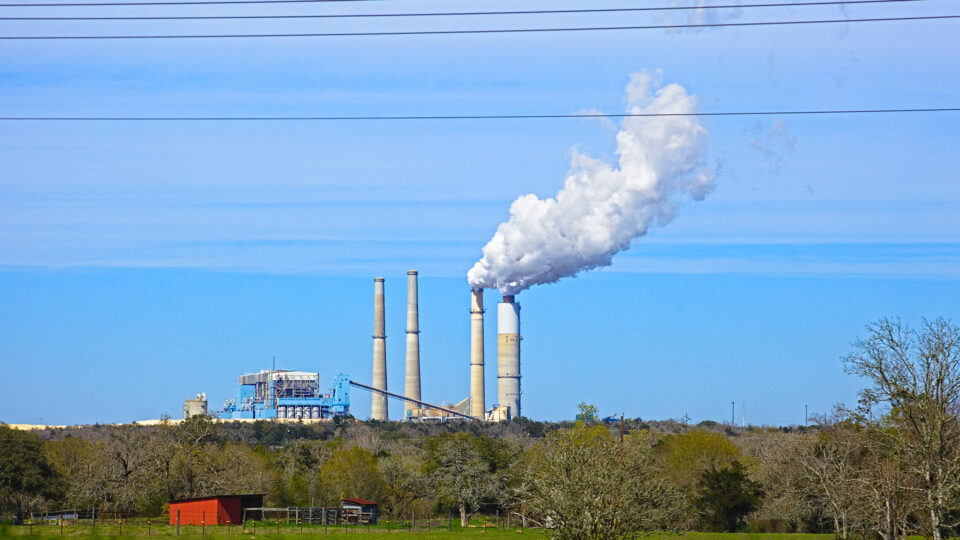
Nearly 40% of all the water taken from lakes, rivers, and wells in the U.S. isn’t used for agriculture, drinking, or sanitation.  It is used to cool power plants that produce electricity by burning fossil fuels or with nuclear reactors.   Two-thirds of these power plants use evaporative cooling, which produces huge white plumes billowing from cooling towers.

A new company using technology developed at MIT has the goal of reducing the water needs of power plants and helping to alleviate water shortages in areas where power plants strain the capacity of local water systems.

The technology is relatively simple in principle but developing it to the point where it can be applied at full scale at industrial power plants was a greater challenge. 

The basic idea is to capture water droplets from both natural fog and from the plumes from power plant cooling towers.  The MIT researchers had to improve the efficiency of fog-harvesting systems, which previously captured only 1-3% of the water droplets that pass through them.  They found that water vapor collection could be made much more efficient by zapping the tiny droplets of water with an ion beam, giving them a slight electric charge, thereby making it easy to capture them with the metal mesh of the harvesting system.

The system can essentially eliminate cooling tower plumes and produce large quantities of high-purity water in the process, which has uses at many power plants.  The new company, called Infinite Cooling, has arranged to install their equipment on two operating commercial power plants later this year.  They expect the system to reduce the overall need for water by 20%.

**********

Web Links

Vapor-collection technology saves water while clearing the air

Photo, posted March 5, 2019, courtesy of Sam LaRussa via Flickr.

Earth Wise is a production of WAMC Northeast Public Radio.

Can We Tow Icebergs To Use Their Water? | Earth Wise

February 23, 2021 By EarthWise Leave a Comment

Using icebergs for freshwater

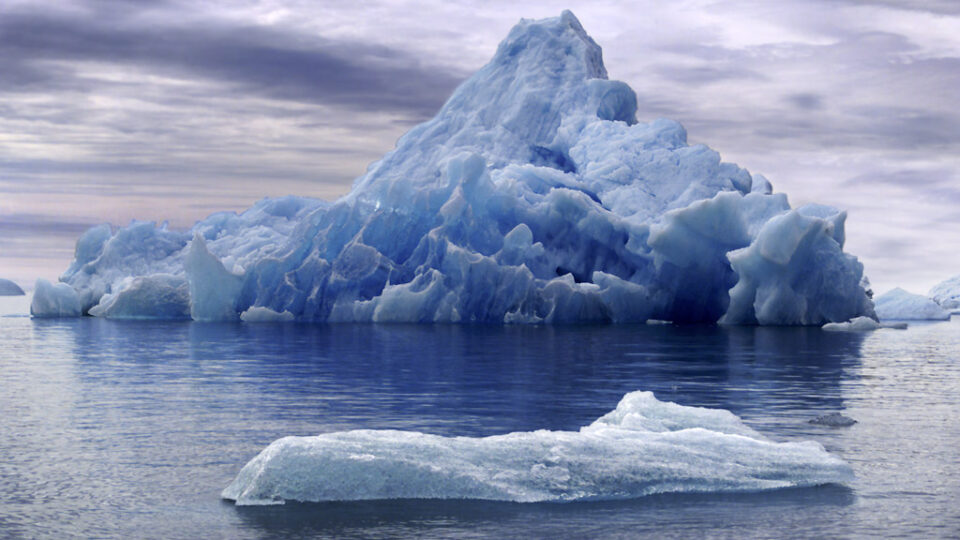
At any given time, there are thousands of icebergs adrift in Antarctica that are hundreds or even thousands of feet across.  For at least fifty years, there has been speculation about whether such icebergs could be towed from the Antarctic to places experiencing freshwater shortages.  The feasibility of such a scheme is still the subject of studies that nowadays include sophisticated computer modeling.

Places like the Persian Gulf, Cape Town, South Africa, and Perth, Australia all experience water shortages and could benefit tremendously from having a large iceberg towed to their waters.

How big an iceberg would it take to quench the thirst of a city like Cape Town?  Computer models show that an iceberg 2,000 feet long and 650 feet thick could produce enough water to supply the city for more than a year.  However, with water temperatures in the 60s in the area, even such a large iceberg would melt away within weeks.  So, to get enough water for a year, it would require a much larger iceberg – one at least a couple of miles long.

Daunting problems include figuring out how many and what sort of ships would be required.  An alternative to such giant icebergs would be finding a way to insulate the icebergs so they don’t melt as quickly, thereby allowing much smaller and more towable icebergs to be harvested.

Beyond these issues, there are the ecological issues of the effects of huge amounts of very cold fresh water affecting local marine ecosystems. 

Despite a wide range of challenges, there is continued interest in the idea of using icebergs as a source of very pure fresh water.  In an increasingly thirsty world, it might someday actually happen.

**********

Web Links

Can icebergs be towed to water-starved cities?

Photo, posted November 1, 2007, courtesy of M A Felton via Flickr.

Earth Wise is a production of WAMC Northeast Public Radio.

Disappearing Lakes

April 6, 2018 By EarthWise Leave a Comment

https://earthwiseradio.org/wp-content/uploads/2018/04/EW-04-06-18-Disappearing-Lakes.mp3

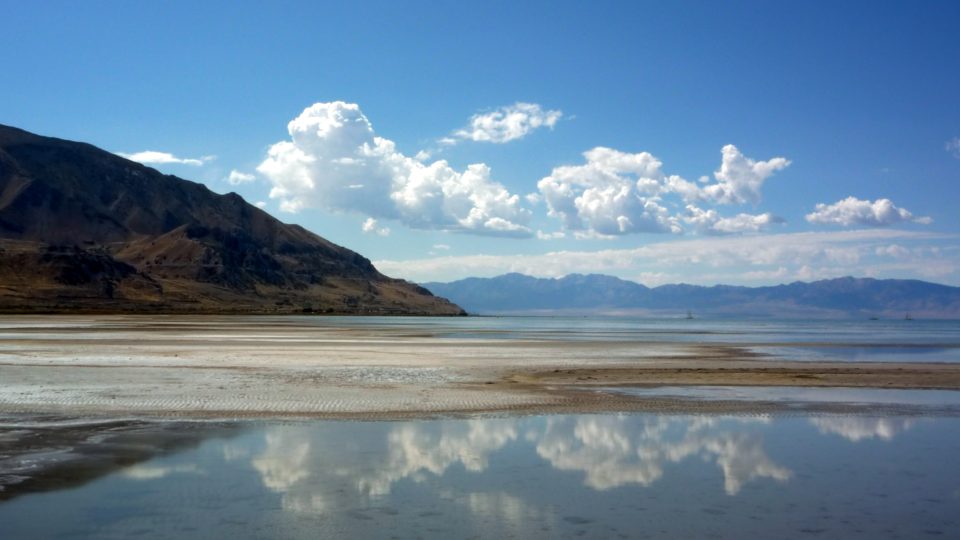
Some of the world’s biggest lakes are drying up as a consequence of the warming climate, persistent drought, and overuse by people draining crucial water sources.

[Read more…] about Disappearing Lakes

Solar Power And Drinkable Water

June 7, 2016 By WAMC WEB

https://earthwiseradio.org/wp-content/uploads/2016/05/EW-06-07-16-Solar-Power-And-Drinkable-Water.mp3

According to a report from the International Food Policy Research Institute, more than half the world’s population will be at risk of water shortages by 2050 if current trends continue.  As the climate continues to change, severe droughts are becoming increasingly commonplace.

[Read more…] about Solar Power And Drinkable Water

Primary Sidebar

Recent Episodes

  • An uninsurable future
  • Clean energy and jobs
  • Insect declines in remote regions
  • Fossil fuel producing nations ignoring climate goals
  • Trouble for clownfishes

WAMC Northeast Public Radio

WAMC/Northeast Public Radio is a regional public radio network serving parts of seven northeastern states (more...)

Copyright © 2026 ·