• Skip to primary navigation
  • Skip to main content
  • Skip to primary sidebar

Earth Wise

A look at our changing environment.

  • Home
  • About Earth Wise
  • Where to Listen
  • All Articles
  • Show Search
Hide Search
You are here: Home / Archives for support

support

Forest-based agroforestry

July 30, 2025 By EarthWise Leave a Comment

Exploring forest-based agroforestry as a natural climate solution

Tree plantings have become a go-to climate solution for governments and conservation groups due to the carbon-storing potential of trees.  While planting new trees on open farmland would help capture additional carbon, a new study led by scientists from Yale School of the Environment suggests a powerful alternative: forest-based agroforestry.

Instead of clearing land for crops or starting fresh with new trees, forest-based agroforestry (or FAF) brings agriculture into existing forests.  Think fruits, nuts, and medicinal plants, for example, grown sustainably under a forest canopy – all while maintaining biodiversity and storing carbon.

According to the researchers, human activity in forests is often seen as harmful. But for thousands of years, Indigenous and local communities have managed forests in ways that actually strengthen them.

The study, which was recently published in the journal Nature Climate Change, found that FAF not only rivals tree planting in terms of climate benefits, but it can also generate income and support cultural practices tied to the land.

Despite these benefits, forest-based agroforestry receives far less funding and policy support due to two key misconceptions. It’s frequently confused with industrial systems focused on global commodity crops, and results from tropical regions are wrongly assumed to apply to temperate and boreal forests.

The researchers recommend including FAF in agroforestry policies, clearly distinguishing it from harmful industrial practices, and expanding research on FAF in temperate and boreal regions to guide better land management.

Forest-based agroforestry appears to be a natural climate solution hiding in plain sight.

**********

Web Links

Agriculture in Forests Can Provide Climate and Economic Dividends

Photo, posted May 8, 2023, courtesy of Preston Keres / USDA Forest Service via Flickr.

Earth Wise is a production of WAMC Northeast Public Radio

Corals and climate change

December 24, 2024 By EarthWise Leave a Comment

Climate change is a major threat to coral reefs around the world.  Ocean warming triggers coral bleaching – a stress response where corals expel the symbiotic algae essential for their survival.  If coral bleaching is severe, it can lead to coral death.

A new study led by scientists from Newcastle University in England suggests that corals are unlikely to adapt to ocean warming quickly enough to keep pace with global warming, unless there are rapid reductions in global greenhouse gas emissions.

The study, which was recently published in the journal Science, found that coral heat tolerance adaptation via natural selection could keep pace with ocean warming, but only if the climate goals of the Paris Agreement are realized.  In the Paris Agreement, countries agreed to limit global warming by the end of the century to two degrees Celsius above pre-industrial levels.  

However, current climate policies around the world have the globe on track to warm by three degrees Celsius.  According to the research team, this could lead to significant reductions in reef health, elevated risks of local coral extinctions, and considerable uncertainty in the so-called “evolvability” of corals. 

Coral reefs are among the most biologically diverse ecosystems on Earth.  They are often referred to as the “rainforests of the sea” because they support an incredible variety of marine life.  They provide essential ecosystem services, such as protecting coastlines from erosion and storm surges, supporting fisheries, and serving as a source of income through tourism. Coral reef health is vital for the health of the planet.

**********

Web Links

Coral adaptation unlikely to keep pace with global warming

Photo, posted June 9, 2012, courtesy of Bokissa Private Island Resort via Flickr.

Earth Wise is a production of WAMC Northeast Public Radio
Just say ‘climate change’

September 20, 2024 By EarthWise Leave a Comment

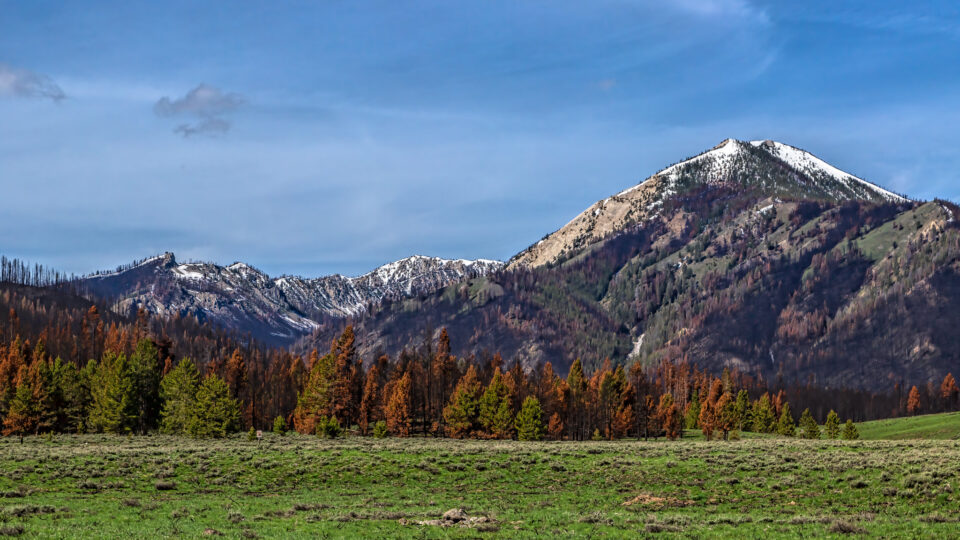
In recent years, climate advocates have pushed for the use of more dramatic language to describe ‘climate change.’  The notion was that phrases like ‘climate crisis’ and ‘climate emergency’ better convey the urgency of the planet’s plight, while terms like ‘climate change’ and ‘global warming’ are too gentle and vague.  However, it turns out that the gentler approach may actually be more effective.

According to a new study led by researchers from the University of Southern California, the terms ‘climate change’ and ‘global warming’ are not only more familiar to people than some of their common synonyms, but they also generate more concern about the warming of the Earth.

In the study, which was recently published in the journal Climatic Change, the research team found that nearly 90% of respondents were familiar with the terms ‘climate change’ and ‘global warming.’  However, familiarity dropped sharply for the other terms, including ‘climate crisis’ and ‘climate emergency.’  In fact, only 33% of respondents recognized the term ‘climate justice.’

The study, which surveyed more than 5,000 randomly selected U.S. residents, examined the degree to which each term generated concern, urgency, willingness to support climate-friendly policies, and willingness to eat less red meat. 

The research team found that the terms ‘climate change’ and ‘global warming’ were most concerning and most urgent.  ‘Climate justice’ was the least, with ‘climate crisis’ and ‘climate emergency’ falling in between.  The support for climate policy and willingness to eat less red meat was roughly the same, regardless of what terms were used. 

The research team hopes its findings will help us communicate more effectively about climate change in the future.

**********

Web Links

Just Say “Climate Change” – not “Climate Emergency”

Photo, posted July 1, 2023, courtesy of Sheila Sund via Flickr.

Earth Wise is a production of WAMC Northeast Public Radio

Biofuel refineries and toxic pollution

July 5, 2024 By EarthWise Leave a Comment

Toxic pollution from biofuel refineries.

There have been decades of government support for renewable, crop-based fuels – primarily corn ethanol.  In fact, it is a required component of gasoline sold in this country.  The biofuels industry has long claimed ethanol to be a clean, greener alternative to petroleum. 

There have been arguments all along that the environmental benefits of corn ethanol are dubious at best because of the energy required to produce the stuff.  There are also issues related to burning a food crop instead of feeding it to people and that the conversion of grasslands and forests to produce it releases massive amounts of carbon.

Recently, another serious concern has emerged.  A new review of industry data has found that the country’s biofuel refineries, mostly located in the Midwest, produce large amounts of toxic air pollutants, in some cases ever more than from their petroleum counterparts.

Emissions data from the country’s 275 ethanol, biodiesel, and renewable diesel plants revealed that they release carcinogenic formaldehyde as well as other potentially dangerous substances including acetaldehyde, hexane, and acrolein.  In 2022, biofuel refineries released 12.9 million pounds of hazardous air pollutants, compared to 14.9 million pounds emitted by oil refineries, and the biofuel plants actually emitted more of the four chemicals just mentioned than petroleum refineries did.

The broad use of crop ethanol is the result of intensive industry lobbying.  Ethanol plants are even exempt from some air pollution permitting requirements.  Perhaps the time has come to revisit its pervasive and mandated use.

**********

Web Links

Biofuel Refineries Are Releasing Toxic Air Pollutants in Farm Communities Across the US

Photo, posted February 27, 2021, courtesy of Sue Thompson via Flickr.

Earth Wise is a production of WAMC Northeast Public Radio
Why are bees making less honey?

February 8, 2024 By EarthWise Leave a Comment

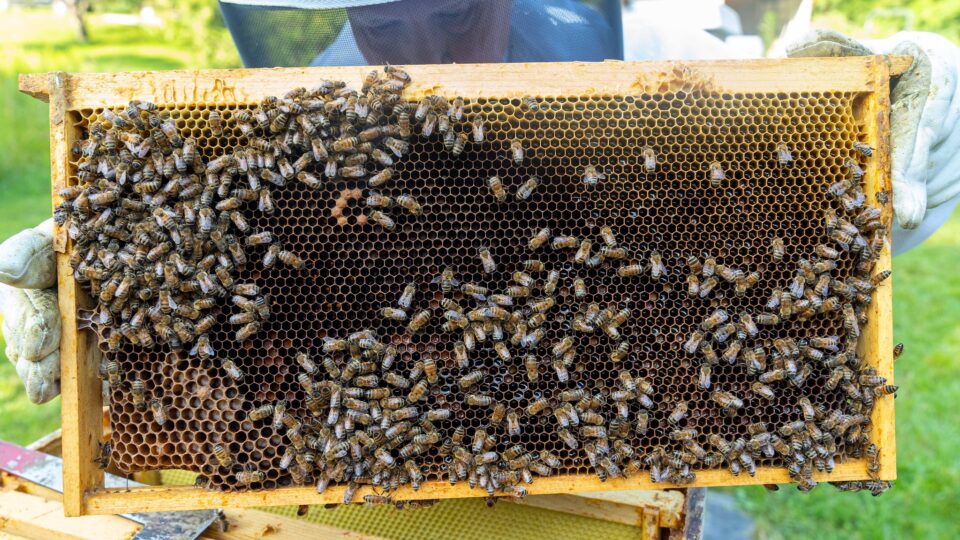
Honey bees are making less honey in the United States

Scientists have been sounding the alarm on the global struggle of pollinators for a long time.  According to the United Nations, nearly 35% of the invertebrate pollinator species, such as bees and butterflies, are facing extinction. And since 75% of the world’s food crops depend on pollination to some extent, the decline of pollinators poses a major threat to global food security.

Honey bees are among the struggling pollinators.  Honey bee colonies in the United States have experienced annual population declines since 2006.  But in addition to there being fewer bees, the bees that remain are also making less honey.  In fact, honey yields in the United States have been declining since the 1990s. 

A new study by researchers from Penn State University has solved some of the mystery.  Using five decades of data across the United States, the research team analyzed the factors that could be affecting the number of flowers growing in different regions, which, in turn, affects the amount of honey produced by bees. 

In the study, which was recently published in the journal Environmental Research, the scientists found that climate conditions and soil productivity were two of the biggest factors in estimating honey yields.  States in both warm and cool regions produced higher honey yields when they had productive soils.  These two factors set a baseline production level of honey, while herbicide use, weather, and land use changes influenced how much honey was produced in a given year. 

The study’s findings  provide valuable insights that should help beekeepers, growers, and land managers better support honey bees.

**********

Web Links

Why are bees making less honey? Study reveals clues in five decades of data

Photo, posted August 30, 2021, courtesy of Brandon O’Connor / NRCS via Flickr.

Earth Wise is a production of WAMC Northeast Public Radio
How To Support Pollinators | Earth Wise

August 4, 2023 By EarthWise Leave a Comment

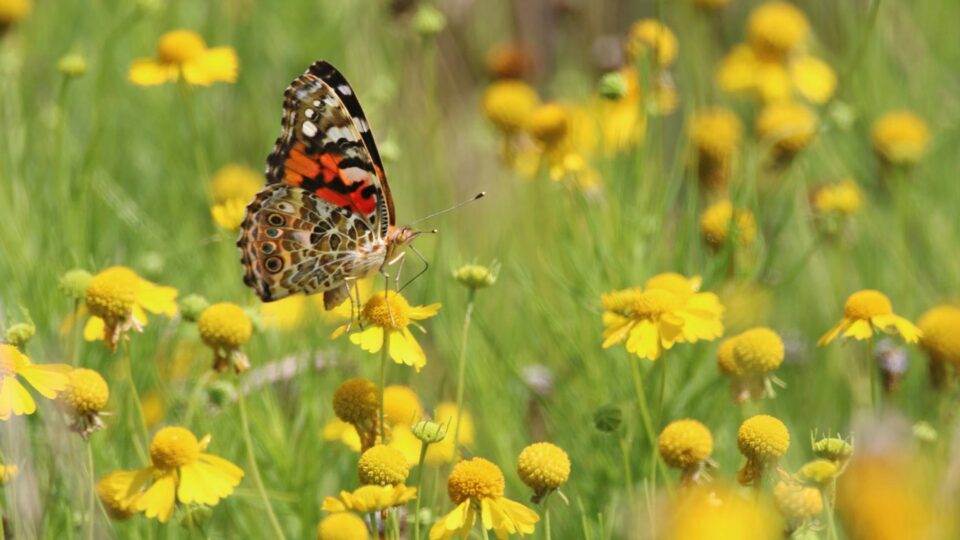
Pollinators of all sorts have been in decline for a while.  This is especially true of bees, bats, and monarch butterflies.  Without pollinators, fruits, vegetables, and other plants cannot provide their contributions to our food supply.  According to experts, about 30% of the food that ends up on our tables gets there because of pollinators.

Bees are the most efficient pollinators, but plenty of other insects do their share as well.  Butterflies and months, flies, beetles, and wasps all are good pollinators.  In addition to insects, birds and bats can also be pollinators. 

Entomologists at Texas A&M University have offered some science-based advice for homeowners who want to keep pollinators around and thriving during the summer months.

Pollinators need flowers that bloom at different times of the year.  So, home gardens should overlap blooms.  Native and drought-tolerant species are good additions to a garden or landscape.

Colorful gardens attract more pollinators because different pollinators are attracted to different colors.  Bumblebees like blues and purples; other bees are attracted to yellows and whites.  Butterflies like bright colors like oranges and pinks.

Plant flowers with different shapes and sizes because pollinators flower preferences come in all shapes and sizes.

Provide shelter for pollinators.  Houses for bees and other pollinators are available for purchase. Or people can make their own using plastic tubes.

And probably most importantly, go easy on pesticides.  If it is really necessary to apply pesticides, do it in the evening when most pollinators have called it a day.

Having a colorful garden with lots of variety is a fine addition to one’s home.  Beyond that, it is a valuable contribution to helping preserve essential pollinators.

**********

Web Links

Top Five Tips For Supporting Pollinators This Summer

Photo, posted August 14, 2017, courtesy of USFWS Midwest Region via Flickr.

Earth Wise is a production of WAMC Northeast Public Radio

Nantucket Residents Still Fighting Offshore Wind | Earth Wise

June 28, 2023 By EarthWise Leave a Comment

Nantucket residents continue to resist offshore wind

Offshore wind in the US has had to fight to exist for a long time.  The Cape Wind project in Nantucket Sound off the coast of Cape Cod was envisioned over 20 years ago as a 1.5-gigawatt wind farm.  Years of legal battles and other controversies saw the project start and stop multiple times with only minimal actual construction.  Primary opposition came from residents who considered the turbines far off on the distant horizon to be an eyesore and threat to their property values.  Eventually, the project was terminated in 2017.

Since then, offshore wind has gained substantial support in the US and multiple projects are either ongoing or in the permitting process.  The 800 MW Vineyard Wind project is on track to be the first commercial-scale offshore wind farm in the US, with plans to eventually generate enough electricity to power 400,000 homes.

Once again, Nantucket residents are fighting against an offshore wind farm.  Once again, they are making arguments that are not really what concerns them, in this case, saying that the wind turbines are a threat to the survival of endangered North Atlantic right whales.

A federal judge has recently rejected a lawsuit brought by the group Nantucket Residents Against Turbines that sought to stop the project.  The judge found that the group failed to show that either the US Bureau of Ocean Energy Management or the National Marine Fisheries Service violated the Endangered Species Act or the National Environmental Policy Act in its 2021 rulings on the impact of the proposed wind farm on the whales.

Undoubtedly there will be additional challenges from the group, possibly based on entirely different complaints.  It’s tough to build offshore wind in Massachusetts.

**********

Web Links

Judge rejects lawsuit by Nantucket residents to block offshore wind farm

Photo, posted November 21, 2016, courtesy of Adrian Scottow via Flickr.

Earth Wise is a production of WAMC Northeast Public Radio
What Is Healthy Soil? | Earth Wise

August 30, 2022 By EarthWise Leave a Comment

Defining what constitutes healthy soil

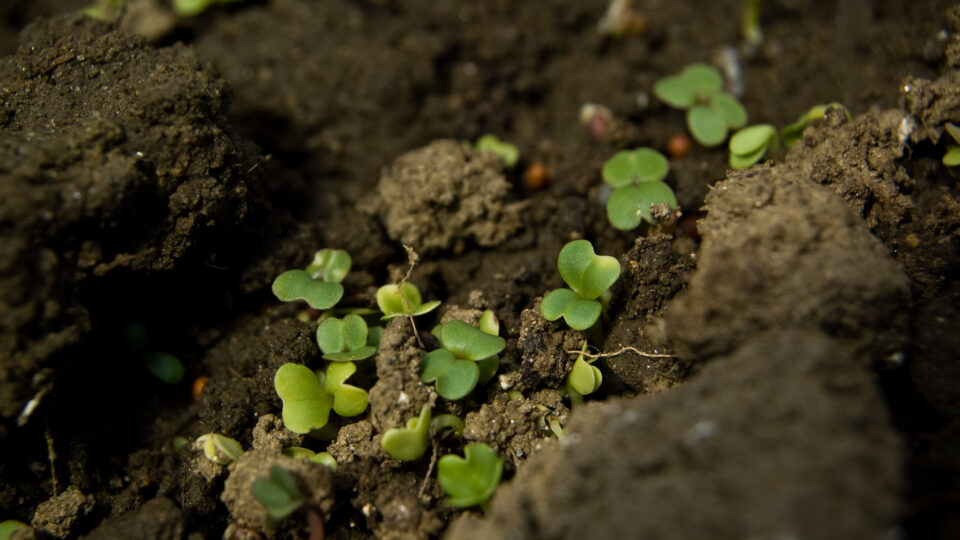
Soil supports life by providing many critical ecosystem services.  For example, soil acts as a water filter, a growing medium, and provides habitat for billions of organisms.  Soil is also the foundation of our cities and towns, and the basis of global agroecosystems, which provide humans with feed, fiber, food, and fuel.

For all of these reasons and many more, having healthy soil is vital.  But what does soil health mean? And how should it be measured?

According to new analysis by researchers from Cranfield University and Nottingham University in the U.K., how we think about, measure, and study soil must change in order to better understand how to manage this resource effectively. 

While the term ‘soil health’ is widely used, it means different things to different people.  There is no single agreed upon way to gauge the overall health of soil. 

Current approaches to assess soil health measure individual soil properties and use findings  to assign a single number giving an overall score.  But according to the research team, this does not reflect the wider system perspective that’s needed to fully evaluate the health of soil over time.

Instead, the researchers propose a new system to assess soil health based on a hierarchical framework that takes in several measures, including signs of life, signs of function, signs of complexity, and signs of emergence, which is the extent to which soils recover from multiple stressors. 

This new approach, which can be applied to all soils, moves us closer to an interdisciplinary understanding of the whole picture of soil health.  After all, healthy soil is fundamental to our survival.

**********

Web Links

We need to change how we think about soil

Photo, posted April 8, 2008, courtesy of Brian Boucheron via Flickr.

Earth Wise is a production of WAMC Northeast Public Radio.

Regulating Plastic Pollution | Earth Wise

August 11, 2021 By EarthWise Leave a Comment

Instituting regulations for plastics that transcend borders is complicated but necessary

Much of the world is united in the desire to do something about the problem of plastic waste.  But putting in place regulations that transcend national borders is complicated.

One hundred fifteen countries have established bans on plastic bags, but globally, there are seven different definitions of what is considered a plastic bag.  Things like bag thickness can determine whether something even counts as a plastic bag.  These differences create loopholes that enable illegal bags to be used.  For a global company like Nestle, which sells food products in 187 countries, it means complying with 187 different sets of national regulations on plastic packaging.

At least 100 nations have expressed support for a global plastic treaty.  Preliminary talks are dealing with issues like setting a specific date to eliminate plastic from spilling into the ocean, creating a harmonized set of definitions and standards, coordination of national targets and plans, and creating a fund to build waste management facilities where they are most needed in less developed countries.

New plastic waste is created at a rate of over 300 million tons a year.   To date, 75% of all plastic ever produced has become waste, and plastic production is expected to triple by 2050.

With public concern about plastic waste growing and increasing support by countries around the world, there is growing optimism that a global treaty to address plastic waste could be approved on a pace that could make a difference.  Negotiations for international treaties can drag on for a decade or more.  There is not that kind of time to spare in this case, so perhaps urgency will drive more efficient action.

**********

Web Links

Global treaty to regulate plastic pollution gains momentum

Photo, posted February 3, 2015, courtesy of Thad Zajdowicz via Flickr.

Earth Wise is a production of WAMC Northeast Public Radio.

Floating Solar In New York’s Capital Region | Earth Wise

June 8, 2021 By EarthWise Leave a Comment

Co-developing land for both solar and solar power could provide huge benefits with minimal costs

We have previously talked about installing solar arrays on the surface of bodies of water.  The idea is especially attractive in places like Japan where land resources are scarce.  There are several floating solar installations in the UK and the idea is starting to catch on elsewhere as well.

It is quite possible that the largest municipally owned floating solar array may get built in the city of Cohoes in New York’s Capital Region if a project under consideration for federal funding moves forward.

The proposal is for an installation of 8,000 solar panels to cover about 2/3 of the 10-acre Cohoes reservoir.  Cohoes has wanted to erect a solar installation to generate power for its buildings but needed to find suitable vacant land.  The 10-acre manmade reservoir could be an excellent location for a floating solar array.

Cohoes would be the first community in the US to build and own a floating array on a manmade reservoir and could serve as a model for municipalities across the nation.  Such a project makes additional use of land that is already municipal property.  According to the city, the 3.2-megawatt array would generate over 4 million kilowatt hours of electricity per year, saving the city $300-350,000 annually.

Cohoes is seeking $4.59 million in federal funding to support the project and has the support of U.S. Representative Paul Tonko for possible inclusion in the 2022 federal budget. 

Apart from generating electricity, putting solar panels on the surface of a reservoir reduces evaporation, lowers algae growth, and actually improves solar panel performance because of the cooling effect of the water.

**********

Web Links

Cohoes reservoir could be a floating solar power pioneer

Photo courtesy of Michael Coghlan via Flickr.

Earth Wise is a production of WAMC Northeast Public Radio.

The Largest Community Solar Program

November 22, 2019 By EarthWise Leave a Comment

Community solar projects allow customers to benefit from the economic and environmental attributes of solar energy when they don’t have the ability to invest in their own system for any number of reasons.

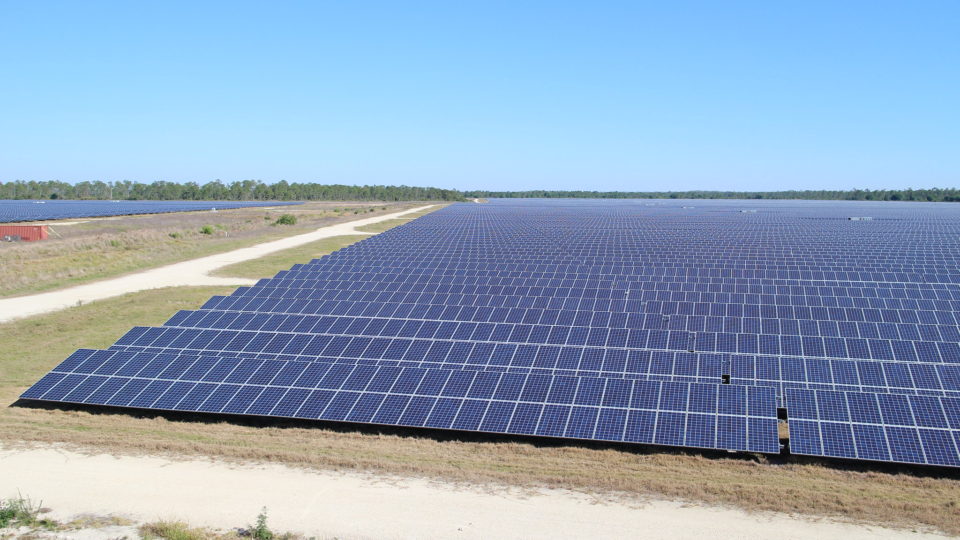
Florida Power & Light company is proposing to build the largest community solar program in the United States, pending regulatory review.  The planned installation of 1,490 MW of new solar capacity at 20 new power plants distributed across FPL’s service territory is expected to generate an estimated $249 million in net savings for all FPL customers over the long term.

In addition to becoming the largest community solar program in the country, the new program would also be the largest voluntary low-income solar offering in the country.  Low-income households are typically unable to benefit from solar energy because of not having the means to invest in the technology.  The new SolarTogether program will have more than 35 megawatts of capacity dedicated to low-income Florida families.  Solar energy is a critical tool for enabling low-income families to tap into energy savings. 

The SolarTogether program would provide direct savings in the form of bill credits, making solar an affordable option for any customer.  The Southern Alliance for Clean Energy and Vote Solar joined with FPL to help design the program to include a low-income component and request Florida Public Service Commission approval. There is broad support for the program from universities, county and city governments, and private companies.  In addition, more than 90,000 residential and small business customers have already signed up to receive more information.  The utility hopes to receive regulatory approval in time to launch during the first quarter of 2020.

**********

Web Links

FPL plans nation’s largest community solar program; includes low-income focus

Photo, posted March 8, 2018, courtesy of Babcock Ranch via Flickr.

Earth Wise is a production of WAMC Northeast Public Radio.

California vs. Fossil Fuels

September 19, 2018 By EarthWise Leave a Comment

https://earthwiseradio.org/wp-content/uploads/2018/09/EW-09-19-18-California-vs-Fossil-Fuels.mp3

California has led the way in deploying and committing to clean energy for a long time.  In August its legislature strengthened that commitment by passing a bill to stop using fossil fuels entirely by 2045.   It is the second state to do so, following Hawaii.  The bill still needs to be passed by the Senate and signed by the governor.  Both actions are expected to occur.

[Read more…] about California vs. Fossil Fuels

Lots Of Credit For Carbon Capture

March 23, 2018 By EarthWise Leave a Comment

https://earthwiseradio.org/wp-content/uploads/2018/03/EW-03-23-18-Lots-of-Credit-for-Carbon-Capture.mp3

These days, the federal government has mostly turned its back on efforts to mitigate climate change or, for that matter, to even recognize its existence.  However,the budget bill passed in February contained a major increase in the tax credit known as 45Q, which provides incentives to businesses to develop and utilize carbon capture, utilization and storage technologies.

[Read more…] about Lots Of Credit For Carbon Capture

A New Orangutan Species

November 29, 2017 By EarthWise Leave a Comment

https://earthwiseradio.org/wp-content/uploads/2017/11/EW-11-29-17-A-New-Orangutan-Species.mp3

Orangutans are some of the planet’s most intelligent animals.  In fact, orangutans and human beings share 97% of their DNA sequence.  Orangutans can only be found in the wild on the Indonesian island of Sumatra and the island of Borneo, which is a land mass shared by Indonesia, Malaysia and Brunei. 

[Read more…] about A New Orangutan Species

New York Steps Up

August 14, 2017 By EarthWise

https://earthwiseradio.org/wp-content/uploads/2017/07/EW-07-24-17-New-York-Steps-Up.mp3

Now that the Trump administration announced that the United States would cease implementation of the Paris Climate Agreement, various state, local and corporate entities in this country have been stepping up to assume climate leadership.

[Read more…] about New York Steps Up

Europe’s E-Mobility

March 22, 2017 By EarthWise

https://earthwiseradio.org/wp-content/uploads/2017/02/EW-03-22-17-Europe-and-Electric-Cars.mp3

With the arrival of the Chevy Bolt and the long waiting list for the forthcoming Tesla 3, there is starting to be some momentum for electric cars in the United States.  But we are still well behind Europe in terms of the significant growth of so-called e-mobility.

[Read more…] about Europe’s E-Mobility

Wilderness Lost

October 10, 2016 By WAMC WEB

https://earthwiseradio.org/wp-content/uploads/2016/10/EW-10-10-16-Wilderness-Lost.mp3

Wilderness areas are strongholds for biodiversity.  They buffer and regulate local climates, and they support many of the world’s most politically and economically marginalized communities.  While there is a great deal of attention being paid to the loss of species around the world, there is relatively little focus on the loss of entire ecosystems.  Simply put, wilderness is on the decline, and it has been ever since human civilization began its inexorable expansion.

[Read more…] about Wilderness Lost

Primary Sidebar

Recent Episodes

  • An uninsurable future
  • Clean energy and jobs
  • Insect declines in remote regions
  • Fossil fuel producing nations ignoring climate goals
  • Trouble for clownfishes

WAMC Northeast Public Radio

WAMC/Northeast Public Radio is a regional public radio network serving parts of seven northeastern states (more...)

Copyright © 2026 ·