• Skip to primary navigation
  • Skip to main content
  • Skip to primary sidebar

Earth Wise

A look at our changing environment.

  • Home
  • About Earth Wise
  • Where to Listen
  • All Articles
  • Show Search
Hide Search
You are here: Home / Archives for size

size

Shrinking Alaskan Salmon | Earth Wise

September 24, 2020 By EarthWise Leave a Comment

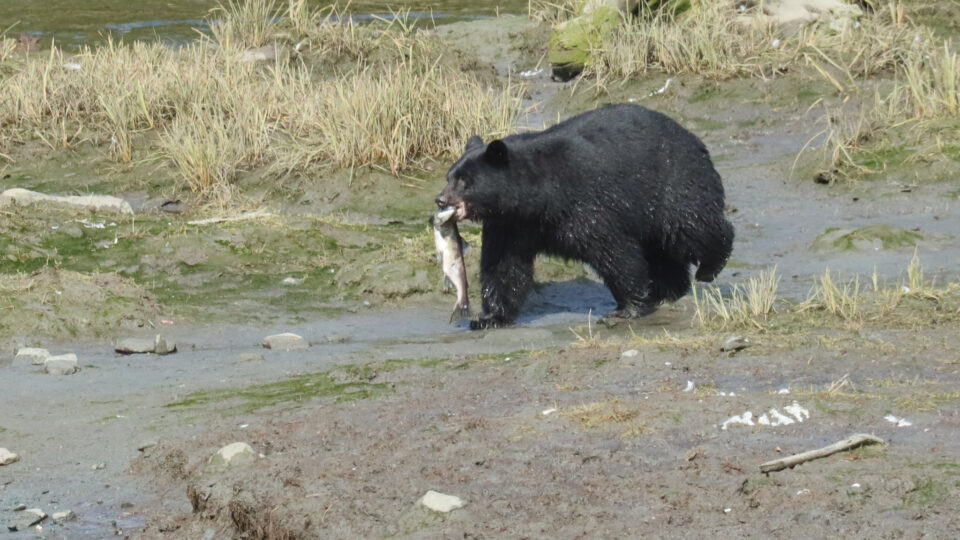
Salmon in Alaska are shrinking

According to a new study published in the journal Nature Communications, salmon returning to Alaskan rivers have become significantly smaller over the past 60 years.  As a result of climate change and competition from hatchery fish, wild salmon are spending less time at sea and are returning to spawning grounds at younger ages.

The study, by scientists at the University of Alaska at Fairbanks and the University of California Santa Cruz, examined measurements of over 12 million fish collected by the Alaska Department of Fish and Game from 1957 through 2018.  Over that time period, four out of Alaska’s five wild salmon species – Chinook, chum, coho, and sockeye – have shrunk in size.  Chinook salmon is the official state fish of Alaska and they used to stay out at sea for seven years before returning to spawn.  Many are now returning to rivers at just four years old and are on average 8% smaller than they were 30 years ago.

The shrinking size of Alaskan salmon has consequences for people, the economy, and ecosystems in Alaska.   Wild salmon is a staple food for many residents of the state, particularly among indigenous groups.  More generally, Alaska produces nearly all of the wild salmon in the U.S.   Commercial fishing of over 200 million wild salmon in 2019 resulted in $657 million in income.  The fish are also an important food source for bears and other wildlife and the spawning migration of salmon plays an important role in nutrient transportation in Alaskan river ecosystems.


Multiple factors are driving the changes in the salmon population, but the largest effects are the changing climate and the abundance of salmon in the ocean due in part to hatchery production that results in competition for the salmon’s food.

**********

Web Links

Alaska’s Salmon Are Significantly Smaller Than They Were 60 Years Ago

Photo, posted September 5, 2019, courtesy of Flickr.

Earth Wise is a production of WAMC Northeast Public Radio.
Ocean Currents And Climate Change | Earth Wise

September 22, 2020 By EarthWise Leave a Comment

Climate change intensifies marine heatwaves

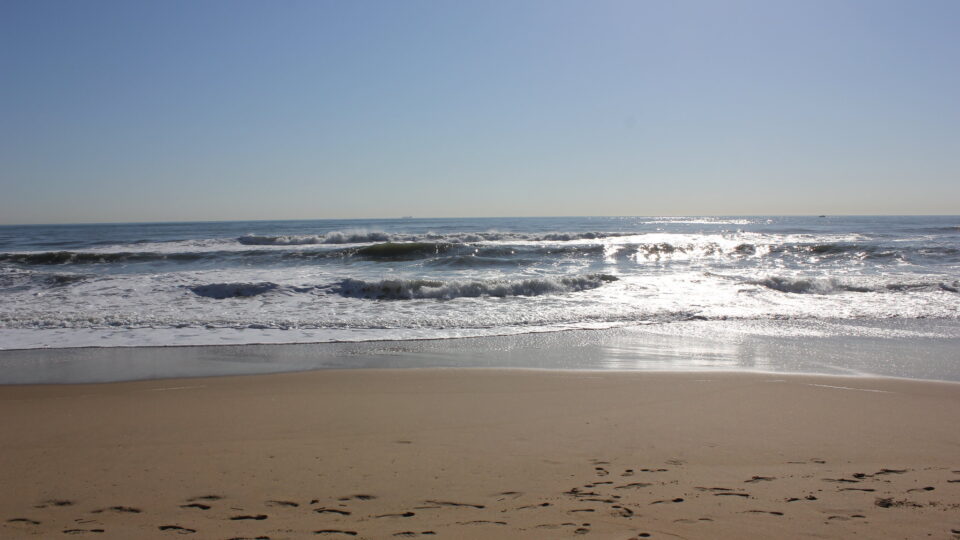
Oceans cover more than 70% of the earth and absorb 94% of incoming solar radiation.  As a result, oceans play a major role in the climate system.  With their massive size and capacity to store heat, oceans help keep temperature fluctuations in check.  But oceans also play a more active role.  Ocean currents are responsible for moving vast amounts of heat around the planet.  

According to a paper recently published in the journal Nature Communications, the world’s strongest ocean currents will experience more intense marine heatwaves than the global average in the coming decades.  These strong ocean currents play key roles in fisheries and ocean ecosystems.  

Sections of the Gulf Stream near the United States, the Kuroshio Current near Japan, the East Australian Current near Australia, and the Antarctic Circumpolar Current will all see more intense marine heatwaves over the next 30 years. 

Scientists from the University of Tasmania and CSIRO in Australia relied on high-resolution ocean modeling to carry out their research.  They confirmed the model’s accuracy by comparing outputs with observations from 1982-2018.  They then used the same model to project how marine heatwaves would alter with climate change out to 2050.

The model projects, for example, that intense marine heatwaves are more likely to form well off the coast of Tasmania, while more intense marine heatwaves along the Gulf Stream start to appear more frequently close to the shore from Virginia to New Brunswick, Canada. 

Marine heatwaves are on the rise globally, but knowing where they will occur and how much hotter they will be will help policymakers, ecologists, and fisheries experts in their regional decision-making. 

**********

Web Links

Where marine heatwaves will intensify fastest: New analysis

Photo, posted April 17, 2016, courtesy of Nicolas Henderson via Flickr.

Earth Wise is a production of WAMC Northeast Public Radio.
Giant Jellyfish | Earth Wise

August 28, 2020 By EarthWise Leave a Comment

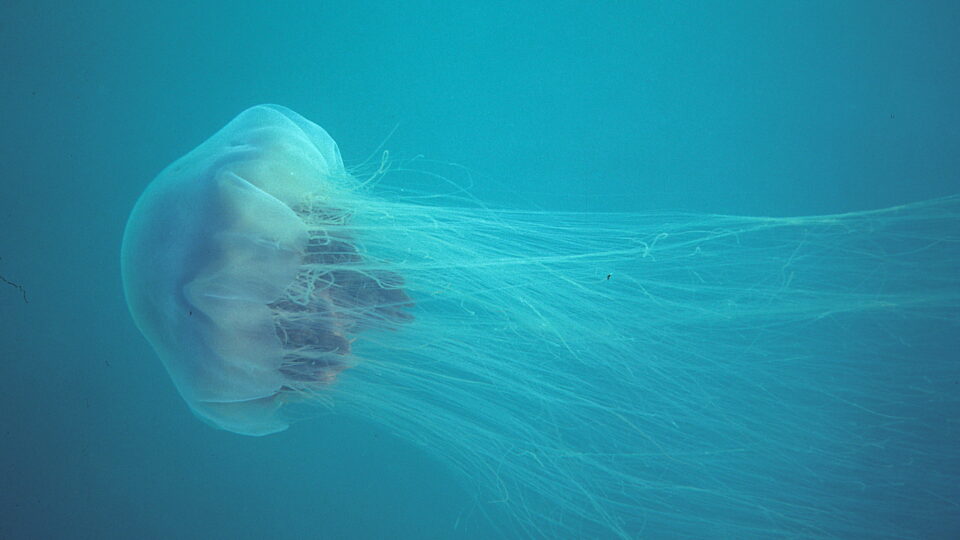
There have been recent news stories about giant jellyfish washing ashore from Maine to the south coast of Massachusetts.  These stories have claimed that some of these lion’s mane jellyfish have been the largest on record and even might be the largest animals in the ocean.

The truth of these accounts is rather suspect.  For one thing, it is rather difficult to measure the size of a jellyfish when it is out of the water.  Gravity compresses and spreads out the bell portion of the animal, and that makes up the bulk of its mass.  For example, a jellyfish bell that measures four feet across on the beach would appear to be much smaller if the animal was floating in the water.

Some claims that lion’s mane jellyfish are larger than blue whales date back a full century and are very much disputable.  The claimed size certainly included the animal’s long tentacles, and such things hardly compare with a blue whale.

In any event, the current spate of jellyfish sightings is not necessarily that unusual.  Many factors influence jellyfish populations, including water temperature and food supply.  It is possible that warming water temperatures may be influencing the jellyfish population this year, but there is not enough data to know for sure.

People do need to be cautious around lion’s mane jellyfish.  They do sting and while their stings are not as bad as those of a number of other species, they can be a problem for people who have allergic reactions.  Furthermore, the stinging cells remain active in a jellyfish that has washed ashore.

Sightings of these animals are continuing, and reports of larger specimens continue as well, even if they don’t compare with blue whales.

**********

Web Links

Jellyfish larger than blue whales?

Photo, posted September 13, 2015, courtesy Derek Keats via Flickr.

Earth Wise is a production of WAMC Northeast Public Radio.
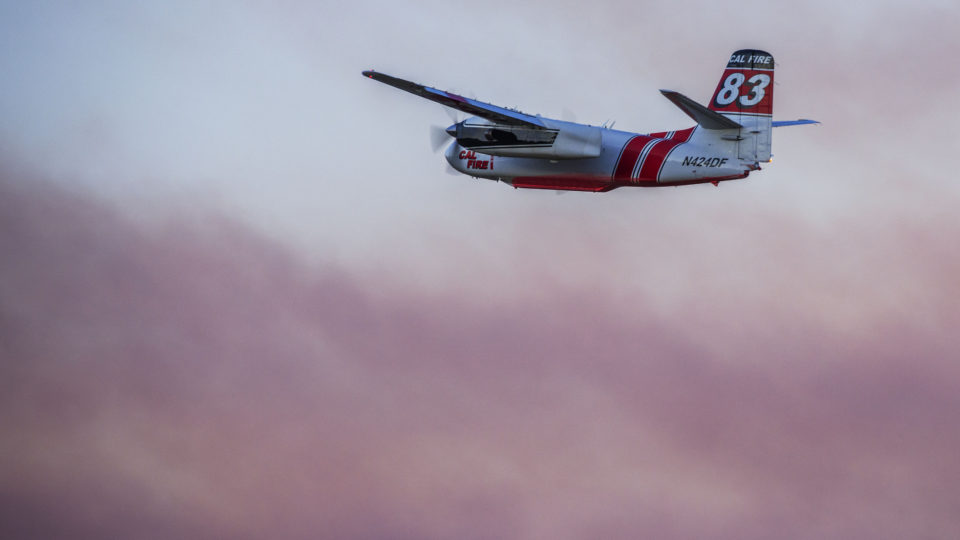
Wildfire Pollution

January 24, 2019 By EarthWise Leave a Comment

California’s record-breaking wildfires this past season have been an unmitigated disaster with respect to loss of life, property, impact on human health, and in multiple other ways.  And as if all of that was not bad enough, the impact on carbon emissions into the atmosphere was equally catastrophic.  The wildfires were deadly and cost billions of dollars but were also terrible for the environment and for the public’s health.

According to estimates from the U.S. Department of the Interior, the California wildfires released emissions equivalent to about 68 million tons of carbon dioxide into the atmosphere.  That is equal to the emissions from generating one year’s worth of electricity in the state, or about 15% of the total annual emissions in the state of California.

It is a vicious circle in which the changes to the climate that have lengthened the fire season and shortened the precipitation season are creating additional contributions to the warming of the climate.

Over the past century, California has warmed by about 3 degrees Fahrenheit.  That extra-warmed air sucks water out of plants and soils, resulting in trees, shrubs, and rolling grasslands that are dry and primed to burn. That vegetation-drying effect compounds with every additional degree of warming.  Plants lose their water more efficiently as temperatures get higher.

The result is that wildfires are increasing in size both in California and across the western United States. Fire experts at Columbia University estimate that since the 1980s, the warming climate has contributed to an extra 10 million acres of burning in western forests – an area about the size of Massachusetts and Connecticut combined.

It’s a bad situation that is getting worse.

**********

Web Links

California’s 2018 Wildfires Have Emitted A Year’s Worth of Power Pollution

Photo, posted October 11, 2017, courtesy of Bob Dass via Flickr. 

Earth Wise is a production of WAMC Northeast Public Radio.

Restoring The Taste Of Tomatoes

March 1, 2017 By EarthWise

https://earthwiseradio.org/wp-content/uploads/2017/03/EW-03-01-17-Restoring-the-Taste-of-Tomatoes.mp3

Over the years, tomatoes have been selectively bred for qualities such as size and firmness for shipping purposes and appearance, but selection for flavor has generally been overlooked.  Many of us find that the tomatoes we buy in the grocery store just don’t taste like they used to.  In fact, often they don’t taste like much of anything.  Comparing them to the delicious local-grown varieties we can find during the summer provides evidence for this conclusion.

[Read more…] about Restoring The Taste Of Tomatoes

Size Matters

August 10, 2016 By WAMC WEB

https://earthwiseradio.org/wp-content/uploads/2016/08/EW-08-10-16-Open-Space.mp3

One of the crowning achievements for wildlife protection in the US was the establishment of the National Wildlife Refuge system in the 1930s, when the populations of waterfowl were perilously low. Refuges provided breeding and migratory habitat that has allowed a remarkable recovery of many species of ducks and geese.

[Read more…] about Size Matters

  • « Go to Previous Page
  • Page 1
  • Page 2

Primary Sidebar

Recent Episodes

  • An uninsurable future
  • Clean energy and jobs
  • Insect declines in remote regions
  • Fossil fuel producing nations ignoring climate goals
  • Trouble for clownfishes

WAMC Northeast Public Radio

WAMC/Northeast Public Radio is a regional public radio network serving parts of seven northeastern states (more...)

Copyright © 2026 ·