• Skip to primary navigation
  • Skip to main content
  • Skip to primary sidebar

Earth Wise

A look at our changing environment.

  • Home
  • About Earth Wise
  • Where to Listen
  • All Articles
  • Show Search
Hide Search
You are here: Home / Archives for shrimp

shrimp

A Below-Average Dead Zone In The Gulf of Mexico | Earth Wise

July 20, 2023 By EarthWise Leave a Comment

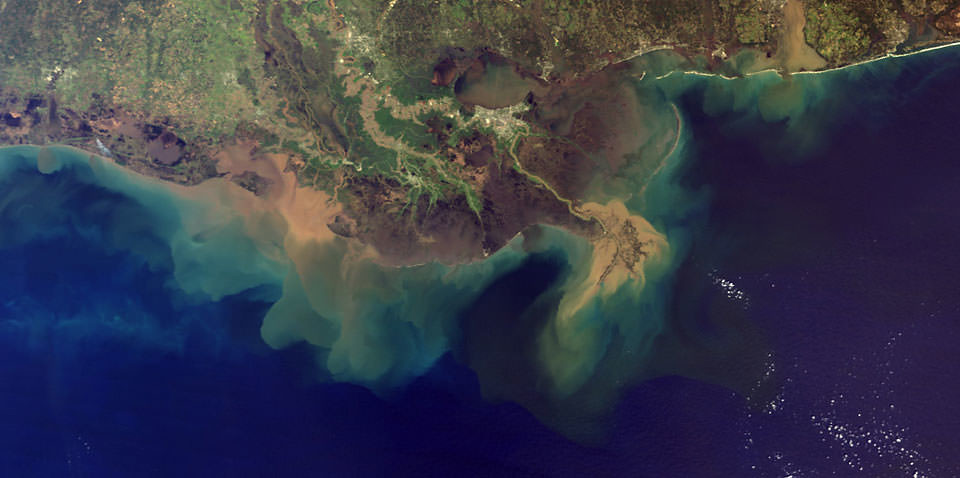
The Gulf of Mexico dead zone, or hypoxic area, is an area of low oxygen content that can kill fish and other marine life.  It occurs every summer and is mostly a result of excess nutrient pollution from human activities in cities and farms throughout the Mississippi River watershed.  The nutrients carried by the river into the gulf stimulate an overgrowth of algae, which eventually die and decompose, which depletes oxygen in the water as the algae sink to the bottom.

The resultant low oxygen levels near the bottom of the gulf cannot support most marine life.  Fish and shrimp often leave the area seeking better places to be.  Animals that can’t swim away – like mussels and crabs – can be stressed by the low oxygen level or even killed.

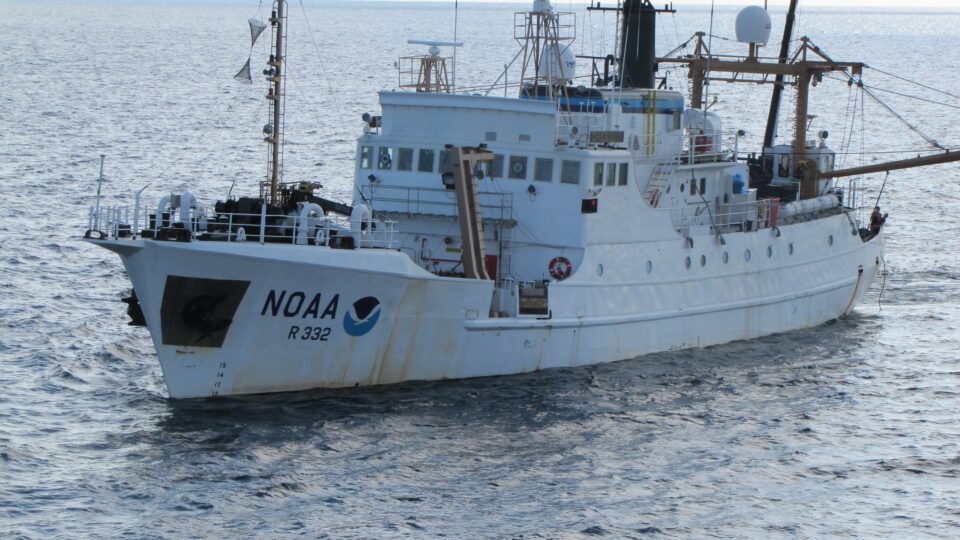
The National Oceanic and Atmospheric Administration produces a dead zone forecast each year based on a suite of models developed by NOAA and partners at multiple universities. 

The latest forecast, completed in May, found that the discharge of nutrients in the rivers was about one-third below the long-term average between 1980 and 2022.  Nitrate loads were down 42% and phosphorous levels down 5%.

Based on these measurements, the scientists forecast a summer dead zone that will cover an estimated 4,155 square miles, which is 22% lower than the 36-year average of 5,364 square miles.  Ongoing efforts by the Interagency Mississippi River and Gulf of Mexico Hypoxia Task Force to reduce nutrient levels seem to be paying off.

**********

Web Links

NOAA forecasts below-average summer ‘dead zone’ in Gulf of Mexico

Photo, posted September 6, 2013, courtesy of NOAA Photo Library via Flickr.

Earth Wise is a production of WAMC Northeast Public Radio
Great Salt Lake In Danger | Earth Wise

March 20, 2023 By EarthWise Leave a Comment

Great Salt Lake is threatened by the changing climate

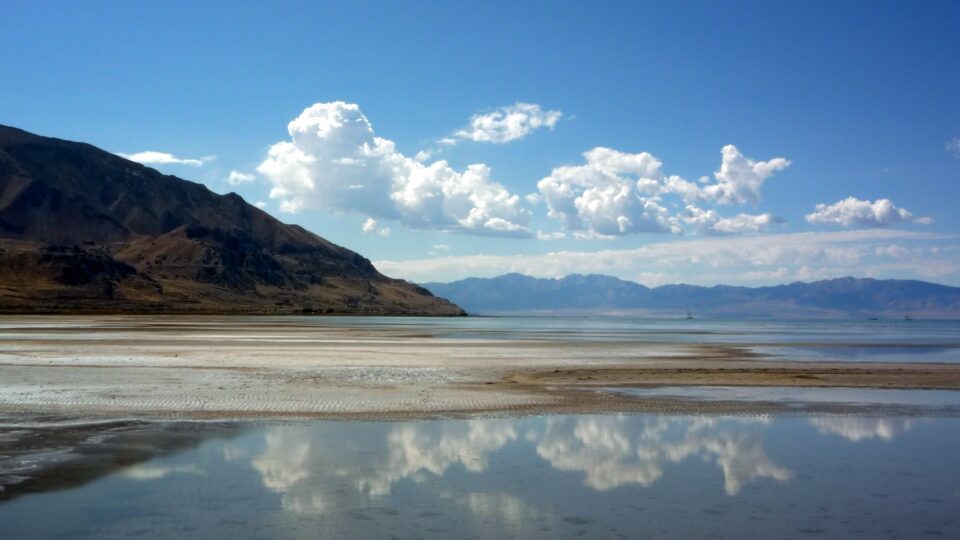
Utah’s Great Salt Lake has been plagued by excessive water use and extensive drought conditions.  As of January, the lake dropped to record-low water levels, losing 73% of its water and exposing 60% of its lakebed. According to scientists, the lake could disappear entirely within five years.

Great Salt Lake is what is known as a “terminal lake,” which means that it is fed only by rain, snow, and runoff and has no rivers that take water to the ocean.  As a result, salt and minerals build up over time.  With so much salt in the water, only brine flies and shrimp can survive in it.  The unique ecosystem supports 10 million migratory birds.  As the lake continues to dry up, the water is becoming too salty for even algae and microbes to survive.  With shallow mud replacing previous shallow water, the nests of the 80,000 white pelicans that annually come to the lake are endangered by predators that can simply walk over to the eggs.

The historic low water levels have exposed 800 square miles of lakebed.  This lakebed holds centuries of natural and manmade toxins like mercury, arsenic, and selenium.  The exposed mud ultimately turns to dust that is carried off into the air.  This is contributing to what is already some of the worst winter air pollution in the nation.  Scientists warn that the unfolding ecological disaster may become a human health disaster.

State officials and university researchers have formed a “Great Salt Lake Strike Team” looking for ways to get more water to the lake.  There are a number of so-called moonshot proposals to save the lake.  It remains to be seen what will be done, but the clock is ticking.

**********

Web Links

Great Salt Lake will disappear in 5 years without massive ‘emergency rescue,’ scientists say

Scientists fear a Great Toxic Dustbowl could soon emerge from the Great Salt Lake

Photo, posted September 19, 2009, courtesy of John Morgan via Flickr.

Earth Wise is a production of WAMC Northeast Public Radio
Is It Too Late To Save The Vaquita? | Earth Wise

June 6, 2022 By EarthWise Leave a Comment

Can the critically endangered vaquita be saved?

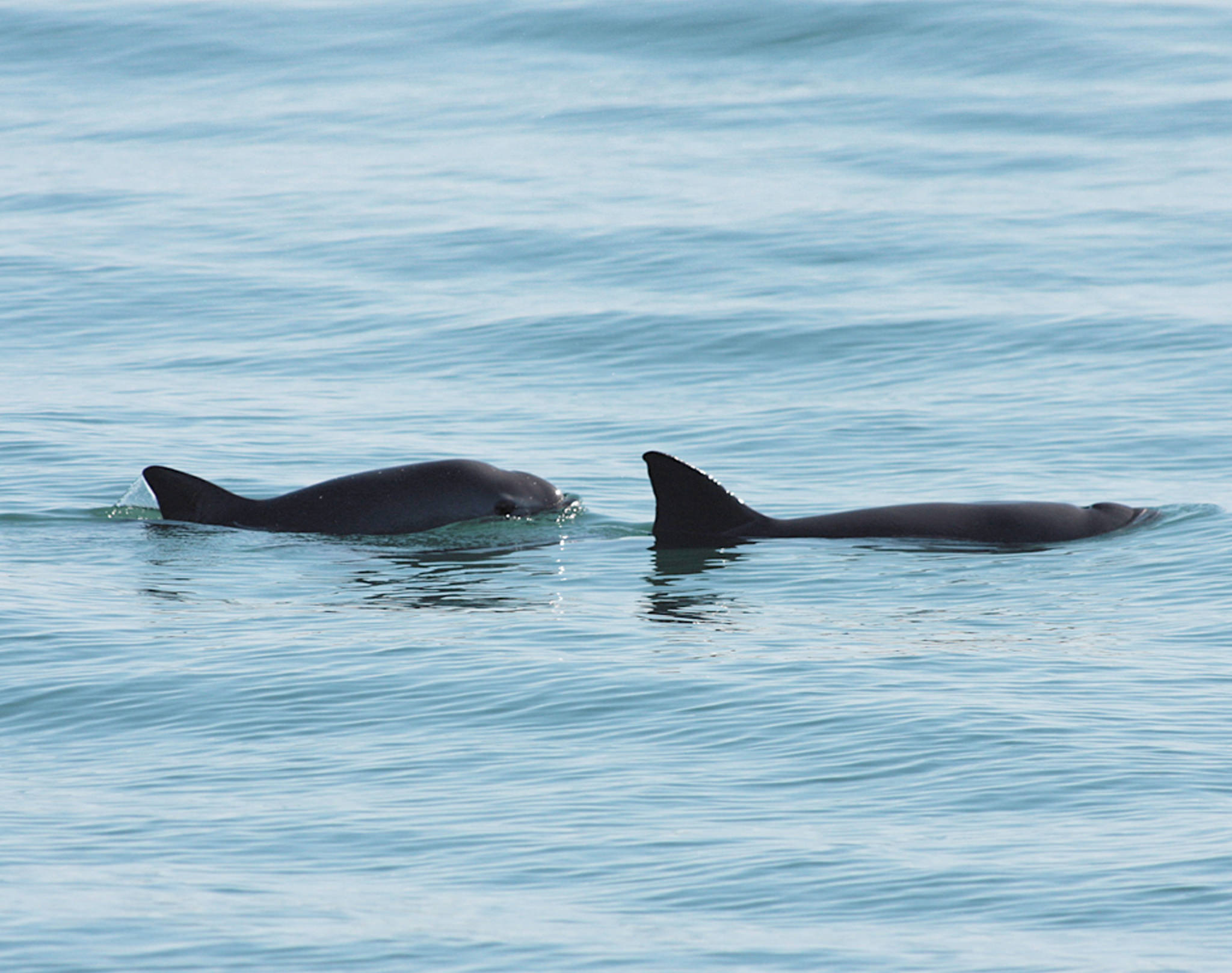
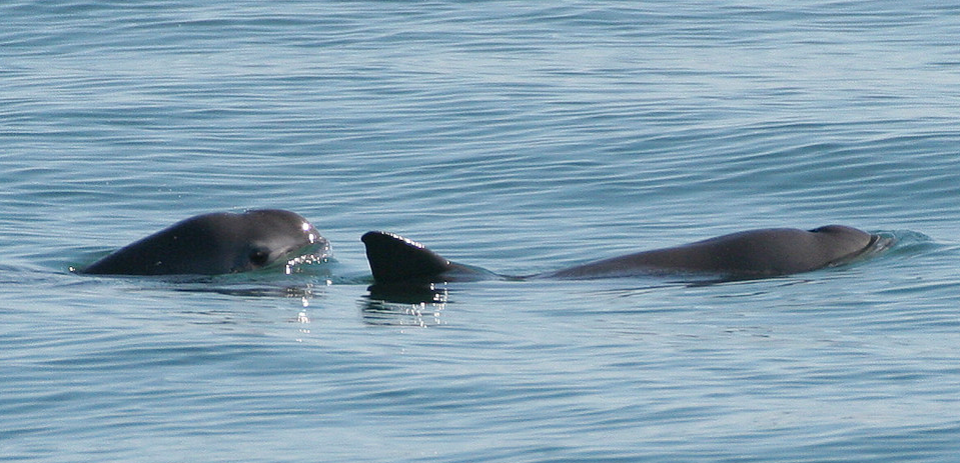
The vaquita porpoise, the world’s smallest marine mammal, is on the brink of extinction.  Scientists estimate that just 10 or fewer vaquitas are left despite international conservation efforts. Found only in Mexico’s Upper Gulf of California, the vaquita is the most endangered marine mammal on the planet. 

According to the International Committee for the Recovery of the Vaquita, the number one threat facing vaquitas is gillnets. The porpoises get trapped in these nets and drown.  Gillnets are often used illegally in the region to catch shrimp and fish, including the critically-endangered totoaba.  The totoaba’s swim bladder is considered a delicacy in Asia and can fetch thousands of dollars.  Despite Mexico banning both totoaba fishing and the use of gillnets in the vaquitas’ habitat, many say the bans are not always enforced.  

But there is a reason to be hopeful.  According to a genetic analysis led by researchers at UCLA, the critically-endangered species actually remains relatively healthy and can potentially survive if illegal fishing practices cease immediately. 

In the study, which was recently published in the journal Science, the research team analyzed the genomes of 20 vaquitas between 1985 and 2017 and ran simulations to predict the species’ extinction risk over the next 50 years.  The researchers concluded that if gillnet fishing ends immediately, the vaquita has a very high chance of recovery.  If the practice continues, however, even moderately, the likelihood of a recovery plummets. 

According to the research team, the surviving vaquitas are actively reproducing and seem healthy.  But poachers’ gillnets will continue to pose an existential threat to the species until more measures are taken to protect the vaquita. 

**********

Web Links

Only 10 vaquita porpoises survive, but species may not be doomed, scientists say

Photo, posted October 18, 2008, courtesy of Paul Olson / NOAA via Flickr.

Earth Wise is a production of WAMC Northeast Public Radio.

The Gulf Of Mexico Dead Zone | Earth Wise

July 19, 2021 By EarthWise Leave a Comment

Forecasting the 2021 dead zone in the Gulf of Mexico

Every summer, a so-called dead zone forms in the Gulf of Mexico.  It is primarily caused by excess nutrient pollution from human activities in urban and agricultural areas throughout the Mississippi River watershed. 

When these excess nutrients reach the Gulf, they stimulate excess growth of algae, which eventually die and decompose, depleting oxygen as they sink to the bottom.  These low oxygen levels near the Gulf bottom cannot support most marine life.  Animals that are sufficiently mobile – such as fish, shrimp, and crabs – generally swim out of the area.  Those that can’t move away are stressed or killed by the low oxygen.

A team of scientists funded by the National Oceanic and Atmospheric Administration issues an annual forecast for the dead zone based upon a suite of models that incorporate river flow and nutrient data. 

The 2021 forecasted area is somewhat smaller than, but close to, the five-year measured average for the dead zone, which is 5,400 square miles, roughly the size of the state of Connecticut.   Each year, these forecasts are reported as comparisons to long-term averages, but the problem is that the long-term average is unacceptable.

The Interagency Mississippi River and Gulf of Mexico Hypoxia Task Force has set a goal of reducing the size of the dead zone to a five-year average of 1,900 square miles – about a third of the current average.

Large reductions in nutrient loads have been called for in federal and state action plans for nearly 20 years, but clearly these reductions have not yet been sufficient. The Interagency Task Force continues to provide information for managing nutrient loads in the Mississippi River Basin. 

**********

Web Links

Average-sized ‘dead zone’ forecast for Gulf of Mexico

Photo, posted October 6, 2020, courtesy of Christine Warner via Flickr.

Earth Wise is a production of WAMC Northeast Public Radio.

The Costs Of Mislabeled Seafood | Earth Wise

January 27, 2021 By EarthWise Leave a Comment

Mislabeled seafood has huge hidden costs

Seafood is the world’s most highly traded food commodity and reports of seafood mislabeling have become increasingly common over time.  A new study by Arizona State University looked at the environmental effects of mislabeled seafood.

What is mislabeled seafood?  Sometimes the snapper you were served was really Pacific Ocean Perch.  Maybe grouper was really whitefin weakfish.  Many times white leg shrimp are actually giant tiger prawns.

Approximately 190,000 to 250,000 tons of mislabeled seafood are sold in the U.S. each year, or 3.4 to 4.3% of consumed seafood.  Previous studies focused on the economic aspects of getting cheaper fish when paying for more expensive fish.  The new research looks at the environmental costs associated with mislabeled seafood.

Substituted seafood is 28% more likely to be imported from other countries, which may have weaker environmental laws than the U.S.  In the United States, fishery management is pretty good.  There is strong monitoring and enforcement to support limits on fishing.  Metrics like fish abundance, fishing mortality, bycatch, and discards are all monitored.  In many other places, this is not the case.

To really evaluate the overall effects of seafood mislabeling, one has to take into account both the rates of substitution and the levels of consumption. 

Consuming fish from a well-managed fishery should not have a negative impact in terms of the population now or in the future.  But even inadvertently consuming fish from poorly managed fisheries in not sustainable.  It is good to get your seafood from a trusted source.

**********

Web Links

ASU Study Looks At The Environmental Effects Of Purchasing, Consuming Mislabeled Fish

Photo, posted August 1, 2014, courtesy of Ralph Daily via Flickr.

Earth Wise is a production of WAMC Northeast Public Radio.

The Dead Zone In The Gulf Of Mexico | Earth Wise

July 6, 2020 By EarthWise Leave a Comment

the gulf of mexico dead zone

The Gulf of Mexico has an area of low to no oxygen in the water that can kill fish and other marine life.  It is an annual event that is primarily caused by excess nutrient pollution from human activities in urban and agricultural areas throughout the Mississippi River watershed.   When these excess nutrients reach the Gulf, they stimulate the overgrowth of algae, which eventually die and decompose, depleting the oxygen in the water as the algae sink to the bottom.

These low oxygen levels near the bottom of the Gulf cannot support most marine life.  Some species – among them many fish, shrimp, and crabs – swim out of the area, but animals that can’t swim or move away are stressed or killed by the low oxygen.  The dead zone in the Gulf occurs every summer.

A recent forecast for this summer’s dead zone predicts that the area of low or no oxygen will be approximate 6,700 square miles, which is roughly the size of Connecticut and Delaware combined.  This is about 1,100 square miles smaller than last year’s dead zone and much less than the record of 8,776 square miles set in 2017.  But it is still larger than the long-term average size of 5,387 square miles.

Making comparisons to the long-term average ignores the fact that the long-term average itself is unacceptable.  The dead zone not only hurts marine life, but it also harms commercial and recreational fisheries and the communities they support.  The actions that have been taken so far to reduce pollution in the Mississippi watershed are clearly not sufficient to drastically reduce the dead zone in the Gulf.

**********

Web Links

Large ‘dead zone’ expected for Gulf of Mexico

Photo, posted October 17, 2017, courtesy of NOAA’s National Ocean Service via Flickr.

Earth Wise is a production of WAMC Northeast Public Radio.

Mealworms And Plastic | Earth Wise

January 21, 2020 By EarthWise Leave a Comment

Mealworms and Plastic

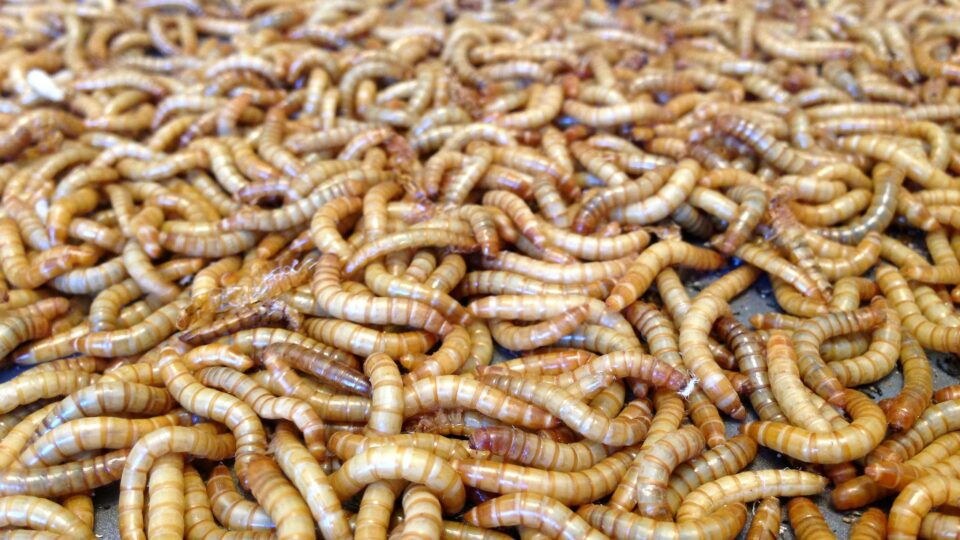
Mealworms are widely cultivated beetle larvae that people feed to pets and to wild birds.  But it turns out, they may have an even more valuable purpose:  they can eat plastic and even plastic containing dangerous chemical additives.

Four years ago, researchers at Stanford discovered that mealworms can actually subsist on a diet of various types of plastic.  They found that microorganisms in the worms’ guts actually biodegrade the plastic.  It might be possible to cultivate the worms using unrecyclable plastic, rather than feeding them grains and fruits.   However, there is the issue of whether it would be safe to feed the plastic-eating worms to other animals, given the possibility that harmful chemicals in plastic additives might accumulate in the worms over time.

Recently, the Stanford researchers studied what happens when the worms ingested Styrofoam or polystyrene.  The plastic commonly used for packaging and insulation typically contains a flame retardant called hexabromocyclododecane, or HBCD.  Studies have shown that HBCD can have significant health and environmental impacts, ranging from endocrine disruption to neurotoxicity.

According to the study, mealworms in the experiment excreted about half of the polystyrene they consumed as tiny, partially degraded fragments and the other half as carbon dioxide.  With it, they excreted the HBCD.  Mealworms fed a steady diet of HBCD-laden polystyrene were as healthy as those eating a normal diet.  And shrimp fed a steady diet of the HBCD-ingesting mealworms also had no ill effects.

It is true that the HBCD excreted by the worms still poses a hazard and must be dealt with in some manner, but mealworms may have a role to play in dealing with unrecyclable plastics like Styrofoam.

**********

Web Links

Stanford researchers show that mealworms can safely consume toxic additive-containing plastic

Photo, posted May 11, 2015, courtesy of Flickr.

Earth Wise is a production of WAMC Northeast Public Radio.

Vanishing Vaquitas

March 17, 2017 By EarthWise

https://earthwiseradio.org/wp-content/uploads/2017/03/EW-03-17-17-Vanishing-Vaquitas.mp3

The world’s smallest porpoise – the vaquita – is in real trouble.  According to a recent report by the International Committee for the Recovery of the Vaquita (or CIRVA), the vaquita population has plummeted to just 30 individuals –a 90% plunge since 2011 – despite international conservation efforts.  The vaquita, which is found only in Mexico’s Upper Gulf of California, is the most endangered marine mammal on Earth and is on the doorstep of extinction.

[Read more…] about Vanishing Vaquitas

Primary Sidebar

Recent Episodes

  • An uninsurable future
  • Clean energy and jobs
  • Insect declines in remote regions
  • Fossil fuel producing nations ignoring climate goals
  • Trouble for clownfishes

WAMC Northeast Public Radio

WAMC/Northeast Public Radio is a regional public radio network serving parts of seven northeastern states (more...)

Copyright © 2026 ·